
EPISODE · Aug 1, 2025 · 31 MIN
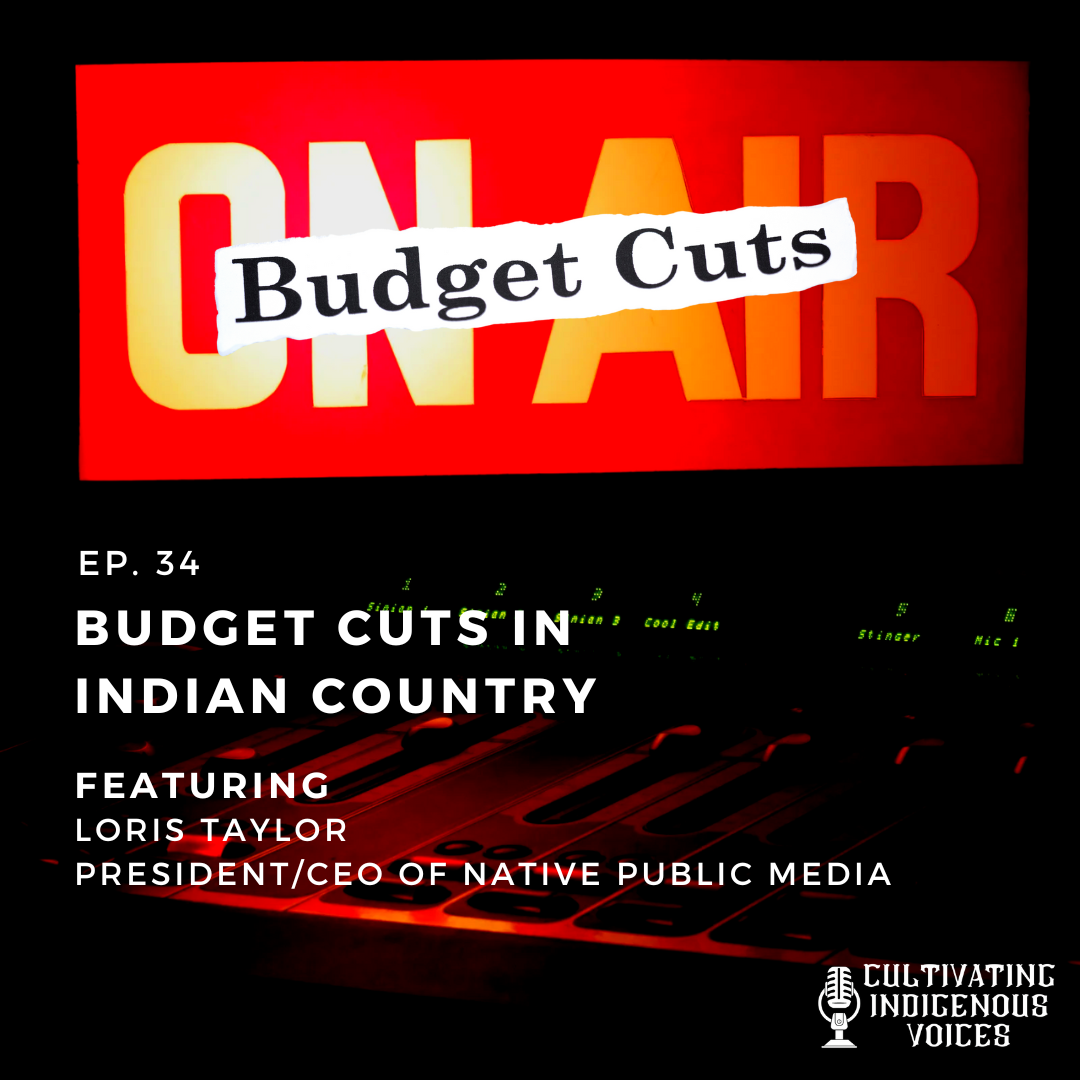
Ep. 43 Budget Cuts in Indian Country with Loris Taylor
from Cultivating Indigenous Voices · host KXCI
Episode 43 features Native Public Media President/CEO Loris Taylor, who has been on the frontlines voicing, and fighting to address the need and importance of radio and public media in Native/Indigenous communities as things unravel at the hands of the current U.S. administration. Currently, Congress has voted to claw back $1.9 billion dollars in federal funding from the Corporation for Public Broadcasting (CPB), which for some tribal radio stations is a tremendous loss in funding. Recently, the rescission package passed the House, and now after that decision all funding from the CPB that was previously approved for radio stations will be cut off starting as soon as October 2025 and the Corporation for Public Broadcasting will shut down. Loris also addresses the negative impacts tribal and non-commercial radio stations could face with the change in funding cuts and the importance public media has in tribal/rural communities who rely on readily available information that relates specifically to their tribal communities as well as Nationwide news on tribal radio stations. Here is a brief version of the interview that offers key highlights and insights from the full conversation. https://kxci.org/wp-content/uploads/2025/07/07-29-25-to-08-12-25-Native-Public-Media-Loris-Taylor-1.mp3 Photo of Loris Taylor speaking at the Native Broadcast Summit, held annually in Phoenix, AZ. Pop up sign of Native Public Media logo at the annual Native Broadcast Summit. Having worked at a tribal radio station as an on-air DJ and board operator at KWAK-LP and KOHN O’odham Hewel Niok Network for a few years, I understand firsthand how important radio is in rural communities. It’s a resource that shares immediate community information about local news, celebrations, memorials, tribal meetings, youth content, cultural and language programs. During my time working for my tribe’s radio station, the local long running newspaper called “The Runner,” had retired, shifting more people to tune in to radio for local tribal content/news. During the COVID-19 pandemic, radio broadcasting and related media services were widely recognized and designated as essential services by various governmental entities in the US and other countries, including tribal communities. It was then I realized that radio is a vital lifeline for communication and information during catastrophic events that impacts local communities within’ tribal lands. As radio broadcasters it’s not always just about the music, it is our duty to be of service to our community, and to be ready to deliver immediate information to the masses in times of celebration and uncertainty. About 92% of public tribal radio stations’ funding comes from the federal government, which puts them in a particularly fragile position. With the Department of Government Efficiency (DOGE), most tribes are already facing dramatic cut back with the loss of federal funding that affects resources such as health programs, educational programs, groups and organizations perceived as promoting diversity, equity, and inclusion etc. Graphic created by T. Andrew, KXCI Production Coordinator
What this episode covers
Episode 43 features Native Public Media President/CEO Loris Taylor, who has been on the frontlines voicing, and fighting to address the need and importance of radio and public media in Native/Indigenous communities as things unravel at the hands of the current U.S. administration. Currently, Congress has voted to claw back $1.9 billion dollars in federal funding from the Corporation for Public Broadcasting (CPB), which for some tribal radio stations is a tremendous loss in funding. Recently, the rescission package passed the House, and now after that decision all funding from the CPB that was previously approved for radio stations will be cut off starting as soon as October 2025 and the Corporation for Public Broadcasting will shut down. Loris also addresses the negative impacts tribal and non-commercial radio stations could face with the change in funding cuts and the importance public media has in tribal/rural communities who rely on readily available information that relates specifically to their tribal communities as well as Nationwide news on tribal radio stations. Here is a brief version of the interview that offers key highlights and insights from the full conversation. https://kxci.org/wp-content/uploads/2025/07/07-29-25-to-08-12-25-Native-Public-Media-Loris-Taylor-1.mp3 Photo of Loris Taylor speaking at the Native Broadcast Summit, held annually in Phoenix, AZ. Pop up sign of Native Public Media logo at the annual Native Broadcast Summit. Having worked at a tribal radio station as an on-air DJ and board operator at KWAK-LP and KOHN O’odham Hewel Niok Network for a few years, I understand firsthand how important radio is in rural communities. It’s a resource that shares immediate community information about local news, celebrations, memorials, tribal meetings, youth content, cultural and language programs. During my time working for my tribe’s radio station, the local long running newspaper called “The Runner,” had retired, shifting more people to tune in to radio for local tribal content/news. During the COVID-19 pandemic, radio broadcasting and related media services were widely recognized and designated as essential services by various governmental entities in the US and other countries, including tribal communities. It was then I realized that radio is a vital lifeline for communication and information during catastrophic events that impacts local communities within’ tribal lands. As radio broadcasters it’s not always just about the music, it is our duty to be of service to our community, and to be ready to deliver immediate information to the masses in times of celebration and uncertainty. About 92% of public tribal radio stations’ funding comes from the federal government, which puts them in a particularly fragile position. With the Department of Government Efficiency (DOGE), most tribes are already facing dramatic cut back with the loss of federal funding that affects resources such as health programs, educational programs, groups and organizations perceived as promoting diversity, equity, and inclusion etc. Graphic created by T. Andrew, KXCI Production Coordinator
NOW PLAYING
Ep. 43 Budget Cuts in Indian Country with Loris Taylor
No transcript for this episode yet
Similar Episodes
May 25, 2026 ·18m
May 24, 2026 ·23m