Ep. 5 - Freemen and King-men
from The Conservative Underground Hosted by Justin Stapley
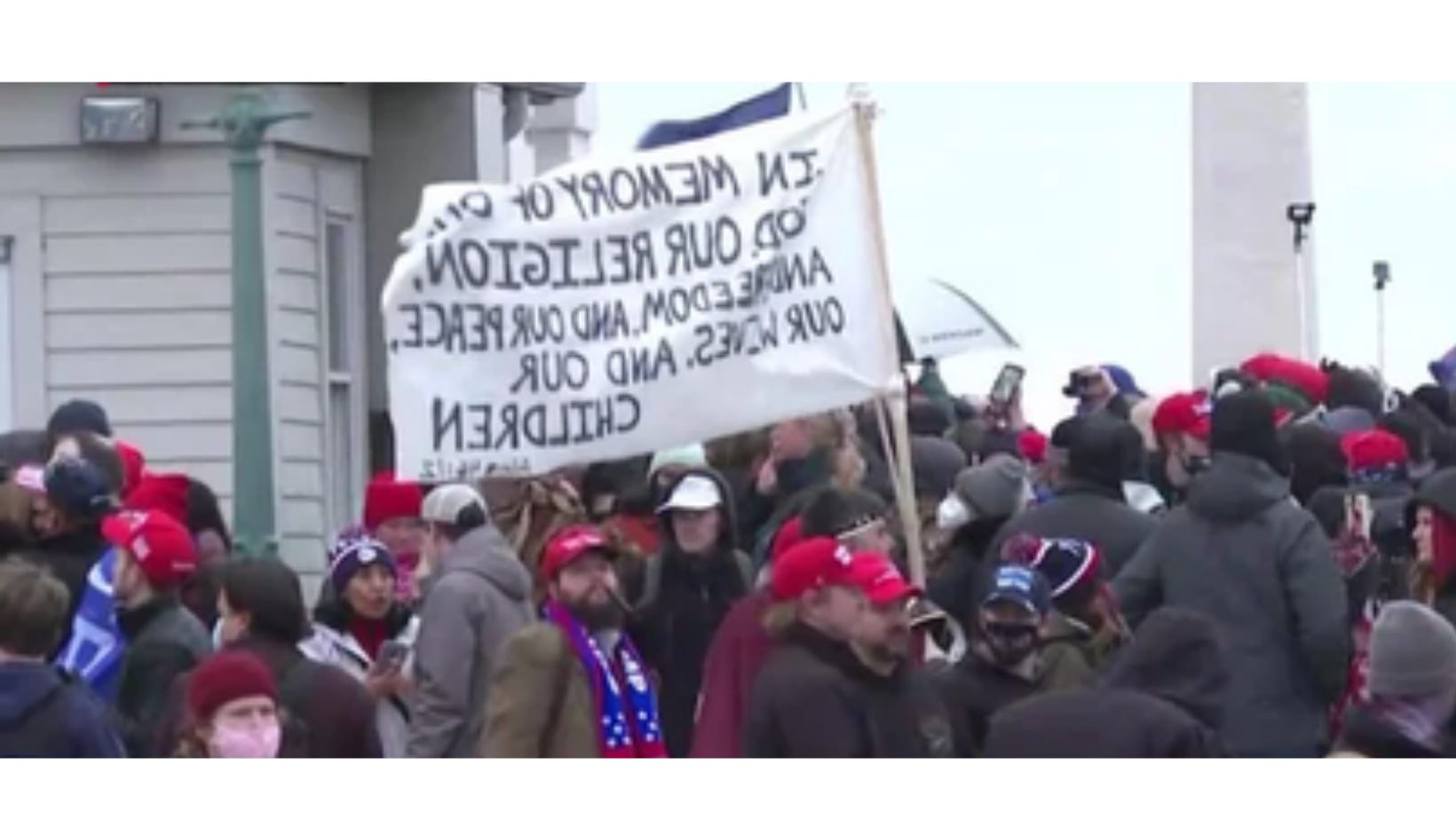
The last place the Title of Liberty belongs is above the angry voices of an insurrectionist mob. Welcome to the fifth episode of Self-Evident, a podcast about first principles, hosted on Substack along with the Self-Evident Newsletter. Self-Evident is currently available on Stitcher, Apple Podcasts, and Spotify. You can also subscribe and get future episodes as well as the newsletter in your inbox: Episode Transcript Hello folks, welcome to the Self-Evident podcast. This is the first episode on this side of January 6th. There’s just so much to say about what happened, what led to it happening, and what comes next. I have a lot to say and a lot to write, but with school started up again I have very little time. So, I thought I’d start out with my biggest issue first, here in podcast form, and then move on to other issues in article form in the near future. Last October, I wrote an open letter to Senator Mike Lee about Captain Moroni, a Book of Mormon military leader he had compared Donald Trump to at a rally in Arizona. In light of what appears to be Latter-day Saints involved in the insurrection at the US Capitol, who took Mike Lee at his word by hoisting what we Latter-day Saints call a Title of Liberty over the heads of the mob, I thought I’d address a few points of Latter-day Saint culture, imagery, scripture, and history to put that terrible image in context and offer my view of how just how backwards all of this is. Before I begin though, let me just say that I am not speaking on behalf of my church but simply offering my view and understanding of history and scripture. The Church of Jesus Christ of Latter-day Saints is officially politically neutral, rarely speaks out on matters of political concern, and encourages its members to be involved in their government as their consciences dictate. Captain Moroni Now, for those unfamiliar with Latter-day Saint scripture, Captain Moroni is one the most beloved figures from a book of scripture we believe tells the story of a Christian nation in ancient America. He was a strong and passionate leader who stoically defended the Nephite nation from enemies both within and without. He is often compared to Gideon and Joshua from the Old Testament. Of Captain Moroni, Mormon (who we believe to be the author of the record, and therefore its namesake) said, “If all men had been, and were, and ever would be, like unto Moroni, behold, the very powers of hell would have been shaken forever; yea, the devil would never have power over the hearts of the children of men.” Needless to say, Captain Moroni holds a special place in the hearts of Latter-day Saints, especially those of us who have served in the military or in law enforcement. Captain Moroni, along with another group of righteous warriors found in our scriptures known as the Sons of Helaman or Stripling Warriors, provide a spiritual and philosophical groundwork for being Warrior Saints within the Latter-day Saint tradition. Because we operate with a lay clergy, many of our leaders, especially those of the greatest generation, have served in the military, including those we consider prophets and apostles. I was often met with surprise but respect during my own military service that my piety was accompanied by a strong commitment to the mission of a soldier. The idea of a Christian soldier is not unique to the Latter-day Saint tradition, but it is uniquely intense for those of us who step forward to serve and peculiarly specific in what values and ideals we step forward to protect: liberty, justice, and free society. The Title of Liberty According to the Book of Mormon, the Nephites were not only an ancient American society of Christians, they also formed a republican form of government. Several times during the lifetime of Captain Moroni, the Nephite nation faced internal rebellion from groups who wanted to replace the republic with a monarchy and raise up a king. During one such rebellion, Captain Moroni rent his coat and made it into a flag, writing a message that he called the Title of Liberty. He went forth with this title and rallied his countrymen to the defense of their republic and the uprising was defeated. The words of the Title of Liberty are sacred to Latter-day Saints, especially those of us who have served in uniform, and are carried on pieces of cloth in the pockets of our uniforms, hung on barrack walls, and have even been flown from flag poles in Utah in times of strife for the American Republic, such as after the 9/11 attacks. The Title of Liberty reads as follows: “In memory of our God, our religion, and freedom, and our peace, our wives, and our children.” These are simple words, but they fill Latter-day Saint hearts with fire and a burning passion to preserve freedom for ourselves and our posterity at whatever cost. There are three major instances in Church history that typify this tradition and the sacrifices members of the Church of Jesus Christ of Latter-day Saints are willing to make in the name of liberty and a government that preserves it. Zions Camp The first occurred in 1834, and is known as Zions Camp. The previous year, Latter-day Saint settlers had been driven forcibly out of Jackson Country, Missouri by the “old settlers” who opposed the new religion in their midst as well as the abolitionist-oriented views of its members (who were largely from the New England region). The first leader of our church, Joseph Smith, sought redress for the violation of constitutional rights through the Missouri judicial system. It was intimated to Joseph Smith and other church leaders that state officials might be willing to assist in returning displaced Latter-day Saints to their property if the Church was able to provide an armed militia that could be deputized to protect the returning settlers. After declaring he had received a revelation to do so, Joseph Smith agreed to the proposal, organized a group of 200 volunteers, and embarked on an expedition from Kirtland, Ohio, marching South to Missouri. But by the time they reached Missouri, the judicial system had bogged down and authorities refused to support the Latter-day Saint claims to the property that had been seized by the anti-Mormon mobs. Absent the official sanction to protect the Latter-day Saints, Joseph Smith disbanded Zions Camp and returned to Kirtland. The Missouri legislature, however, did set aside Caldwell County for the resettlement of the Latter-day Saints that had been driven from Jackson County. Zions Camp may seem like a failure on its face, but the leadership of the Church would largely comprise of men who made the march for the next half-century. It is remembered in the Latter-day Saint tradition as a kind of pilgrimage, a holy march of godly men who were prepared to fight and die for their faith and their freedom. But it is also remembered as a cautionary tale about understanding the difference between a righteous cause and an unrighteous desire for conflict. Before Zions Camp had been disbanded, a mob composing of armed local Missouri militia had moved to confront this armed group of Latter-day Saints. Instead of preparing them for battle, Joseph Smith told his men that the Lord would fight their battles for them. As they took shelter, a storm moved in that flooded the nearby river and kept the Missourians from crossing. However, when Joseph Smith announced that the camp was disbanded and they would be returning to Kirtland, many of the men were angry. They wanted to fight, whether the local authorities would sanction them or not. Joseph Smith warned them that there would be consequences for their pride. Indeed, the camp was struck with cholera and several members died. The Mormon Battalion The second story from Latter-day Saint history relevant to our tradition of stepping forward to preserve and protect freedom begins in 1846. By this time, the Latter-day Saints had not only been set upon by mobs once more in Missouri and driven from the state entirely, they had also be… Get full access to The Self-Evident Newsletter at selfevidentnewsletter.substack.com/subscribe
Embed this episode
No transcript yet.