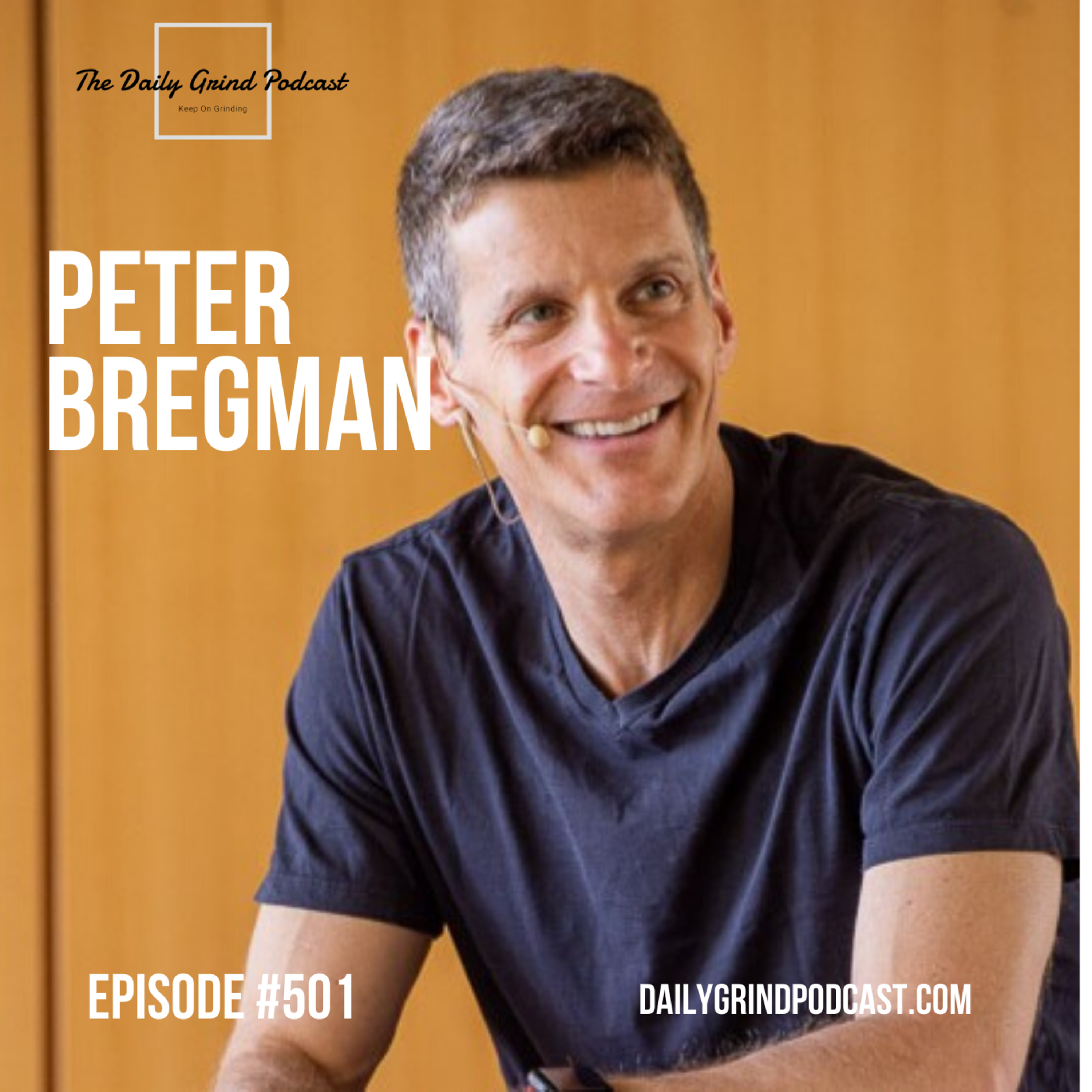
Hey everybody and welcome back to another episode here of the daily grind on today's episode We are sitting down with Peter Bragman. Peter is the number one executive coach in the entire world There's so much to learn from today's episode be sure as always you have the pen be sure as always you have a piece of paper Sit back really die deep and take one thing from today's episode that you can implement into your daily life It is times like these where you really must learn to innovate and do new things One of the things that I would highly encourage you to do is if you've been thinking about starting a podcast Now is the best time to do so I promise you there's no better time to get started if you are wanting to get started I show you how you can make fifteen thousand dollars minimum in your first year podcasting if you are interested to learn more Go to daily grind podcast calm sign up for a free 15 minute consult and I'll talk with you then Joining us today on the podcast as I mentioned is Peter Bragman Peter coaches CEOs and senior leaders and many of the world's premier organizations Having started his career teaching leadership on wilderness and mount nearing expeditions Peter is CEO of Bragman Partners an executive coaching company that helps successful people become exceptional leaders and stellar human beings Honestly guys, this is an unbelievable podcast today I'll be sure you take notes take something from today's podcast and I hope you all enjoy meeting mr. Peter Bragman enjoy Well Peter Bragman welcome to the daily grand my friend. How are you?
I'm well thanks for having me of course Peter What's new obviously some crazy times? What's been keeping you busy these days? Yeah, you know, I a lot of the things I did before coronavirus I still do I Coach CEOs and leadership teams I write these days. I'm shooting videos, which is kind of fun Yeah, and spend a lot of time with my family no doubt how has your coaching with CEOs and top executives?
How has that changed in the last few weeks? You know, it's I would say it's deepened in a certain way, you know, like that there's when everything's going great There's it's tremendously easy to just focus on business results and little problems and kind of managing politics Or or for large companies, you know structural changes and I think everything in this time has gotten more personal So, you know, like I think it's it's the which I love I mean the the person like we're all in these roles in life like we have roles it might be CEO might be entrepreneur it might be whatever, you know, parent like whatever role you're in is a role and that role defines you and defines us and And and I think there is a way in which we step out as human beings step out of our role I was coaching a CEO of a very well-known large tech company Silicon Valley company, okay, and he you know is they IPO'd over the last couple of years, you know multi-billion dollar valuation, you know super fast growth, you know, and he's the CEO and I'm having conversation with him And he's in his house and they're screaming in the background And he has to pause the conversation and his young son got his hands caught in the door And so he picked you know, I could hear him pick up his young son And I can hear the son being comforted and sort of the crying going to whimpering and like this is not The normal lens through which we see this CEO of a very successful fast-growing large Silicon Valley organization You know like company like it's it's it's the very very human side of who we are like in the end no matter who you are Your person with vulnerabilities with you know susceptible to coronavirus susceptible to the changes of the environment kids running around in the house You know, like that's the reality of the time and there's something, you know while while my heart wrenches for you know, I'm getting literally even like multiple emails a day of people in our community who died and and it's like it's ever present So my heart wrenches for that and and at the same time to to see people being people There's something also very sort of a collateral beauty. Is it something very beautiful that yeah, it's super interesting, right? Because it's it's difficult because even for anyone you're trying to help these people But you're going through something for the first time as well, too, right?
Right, right exactly. I'm scared I you know, I I'm in you know early 50s, but in my 50s and that's not in my 70s But I have two parents who are alive who are in their late 80s and you know, this would kill them and and it's yeah And so it's it's um, it's different for me. I'm also noticing and realizing how for myself personally How addicted to work I am like how hard it is for me to slow down like this is an ideal time The world is stopping right and because the world is stopping It's this incredible opportunity to stop and not lose pace and yet there's all this I watch all of this frenetic activity around me and myself include it, you know trying to figure out how we pivot and how do we do that and I Actually think there's you know, it's taking me a month It's you know, it's like we've been we've been sort of quarantining ourselves for almost a month now And I'm just I'm just realizing like I mean, this is a terrible thing to say, you know from an economic perspective It's a terrible thing to say certainly I hope the toll on people, you know dissipates as quickly as possible But there's this part of me for my own personal experience around this that says hold on I need more time like I'm just like I haven't learned how to slow down yet And that's really important at a time like this and I don't want to miss the opportunity of the world stopping So like it's like there's so many wrong things about saying that that can get me in trouble And and I also think there's some truth to it Well, I totally agree with that I think that I mean looking at this and and being obviously sympathetic to people but also looking at yourself and being like How can you grow from a scenario like this because there's only so many so many times throughout the day You can look back and soldier not like you have to move forward. We have to move forward So I think thinking that way although to some people, you know, it may seem a certain way But I think it's probably the correct way a lot of people need to need to be thinking and acting well, you know, my last book was called leading with emotional courage, which is the willingness to feel and We're we're certainly as a society and and you know, most people I know in leadership roles are entrepreneurs Or people who run their own businesses even like we become very very good at not feeling and and we push ourselves through it We use willpower.
We you know, we make things happen or we avoid things think of a difficult conversation You're not having like I'm not gonna make you say it out loud or think of a conversation You know, you should have but you haven't followed through and you're not having can you think of it? Yeah, of course right on the top right now consider why you haven't had it I bet you know everything you need to know to have the conversation I bet you're perfectly skilled enough to have the conversation I bet you've had time and I bet you've had opportunity and so those are the things we usually solve for when we're not taking action We train ourselves we develop we you know after manage our time I've written books about managing time I've written books about about, you know, managing our habits and changing our habits and creating and and I've written books about managing change in organizations and like there's you know, there's I have filled for the skill and the capability and the time and the opportunity and Still people has attained and don't follow through and that's the big challenge like the big challenge isn't what we know Like the big challenge is the gap between what we know what we do. We all know enough We can all run perfect businesses We could all you know have perfect relationships. We can't like we know what we need to know in order to live our ideal lives The question is why don't we follow through on what we know like if we really followed through on what we knew We would all be the perfect weight.
We would all be exactly the fitness level that we want I mean, that's that's easy. That's just like eating an exercise. That's not easy like we've you know, we've we've we've figured that part out So the reason is there's something we don't want to feel if you have that hard conversation You're gonna have to feel conflict You're gonna have to feel the defensiveness or passive aggressiveness or shame or embarrassment or maybe hurting someone else or the consequences of hurting someone or You know your own anger their anger like I don't know what you're gonna have to feel But you're gonna have to feel something that you don't want to feel and because you don't want to feel it You don't have that conversation And if you're willing to feel everything this is what emotional encourages if you're courageous emotionally if you're willing to feel Everything the shame the embarrassment the anger the passive aggressiveness the defensiveness the hurt if you're willing to feel everything Then you can do anything then you can follow through on anything you can close any gap And so I think what a moment like this like when I talk about myself and I say well, I'm not slowing down I'm you know moving at the same feverish pace. I'm still late for dinner Right and I and and yet the whole world has stopped and I'm still running as fast as I can the question I'm asking myself the scary question is what is it that I'm not willing to feel and what do I have to feel in when I went What would slowing down force me to feel what would slowing down force me to feel and am I willing to feel that?
And if I'm willing to feel that then I'll slow down and I'll be able to appreciate the collateral beauty of this You know really difficult challenging moment How can people sort of get to that point because I think you know a lot of that's due to not having say those difficult conversations Or doing something you know, you should but you don't like a lot of it probably to do with comfort and insecurities and learn behavior from Your parents or past situations like how do people get over that and lean into what you had just mentioned? It's a great question and it's You actually do it by doing it. So so in order to do that you have to start smaller So, you know, like the only emotional courage is a muscle first I break it up into these four elements of leadership which is confidence in yourself Connection to others commitment to purpose and emotional courage and actually if you go to my website at breggmanpartners.com I'm sure you could position up. There's an assessment There's a free assessment that kind of helps you say like, okay Where am I how am I strong or weak in confidence in self connection to others commitment to purpose and emotional courage?
And and you get a you get a sense of that and so it's good to start where you're strong But you can also start where you're weak But the the the challenge is to sort of understand these elements like what does it mean to be confident in myself? What does it mean to be connected to other people and it's not exactly what you would think What does it mean to be really committed to purpose and and what does it mean to be emotionally courageous? You really feel and then you take small baby steps like maybe maybe I'm trying to think of the smallest little step you can take maybe if you're really used to eating at a very particular time You delay it by half an hour and you see what in fact it has Maybe if you're used to waking up at you know You have a really hard time waking up before eight o'clock You wake up at six and you force yourself out of bed and you see what that feels like you start to do things That are a little bit risky for you So maybe you know from a connection to others standpoint Maybe you have a conversation with someone that maybe you know There's there's someone who you have a little bit of an antagonistic relationship with and you try coming up to them and just checking in on how they are With a real openness like with a real like that maybe they don't trust it Maybe they will but so you you don't you know go in and take your biggest move first But you start to take little risks little risks You take you know someone upsets you your kid triggers you and you just take a breath and you don't react immediately Even if you delay the reaction by 20 seconds like you're Developing your willingness to feel something the reason we react in any situation is because there's something we don't want to feel And if we act so if someone does something to me and I get angry when they do something to me It's it's vulnerable like let's say they push me right I'm just gonna use a very simple example Let's say they push me or let's say they derive to me or they say something negative about me I'm suddenly feeling vulnerable like it's a threat. I feel the vulnerability of that and and and that feels Risky and scary and maybe a little weak.
So then I get angry and anger is this very safe emotion of power But when I'm angry, I've got the you know, I'm strong. I'm yelling or I'm big or I'm like whatever it is anger is an emotional power So anger is it's like really easy emotion to go to to avoid the vulnerability that we might otherwise feel So if you delay that anger just a little bit if you don't react immediately when something happens and you just breathe then you feel you can feel that emotion you you you feel the emotion of that vulnerability and When you feel the emotion of the vulnerability what you realize is I can withstand that I don't I don't collapse Like I can actually I'm willing I could be vulnerable and I could feel the vulnerability and nothing happens And then that gives you real power because when you're willing to feel that When you can feel vulnerable and not have to react now you're free to choose your reactions because you're not choosing reactions Based on some need to be on top again. You're choosing your reactions based on a strategic intentional Decision about what needs to be done next to move forward and what's important to you and that is true power So true power comes from a willingness to endure vulnerability That's super interesting and super powerful too because I you know you think of some of the powerful people I think of some of the powerful powerful people I met and how you know in certain moments They don't react or you look at say you take the pushing example you take someone who say has been trained in Mixed martial arts or something to do in that sense They're not going to react in the same way that someone who is on edge would react and you really see that dynamic and because they've been put in that position They've been trained like the way that they react is different and it does like you see it when someone pushes someone and they don't react It almost gives you a sense of like, okay, you know, right, right? It's really amazing like they have they they I really respect those people By the way, you could choose to react like there's this uh story of a Buddhist monk who was teaching in a meditation retreat And he was talking with one of the participants and he was kind of laughing and joking and then he saw another participant more by And he said, you know, hold on a minute and he looked at that other participant and he got angry and he goes What are you doing?
You're not meditating. You're just fidgeting go back over there sit down and don't move for 20 minutes And then he turns back to the person he was talking to any laughing He needed that way then and you know, it was like he was acting in anger to the benefit of the person That was passing by not because he was totally uncontrolled So when when you can when you when you're not compelled to act in a certain way you can make choices Sometimes that choice will be anger because that's the smart thing to do in that moment But it's not going to be because there's no other choice Yeah, it makes a lot it's you know, as you're saying that it's always difficult as i'm thinking as a leader and leaders in the positions That they're in because some people will react well to that and some people don't react well to that And it's how does someone find the balance, right? Like maybe they're they're running a team right now or a company How do you find the balance of understanding the different people within the organization and how to get the best out of them? Uh, you know, it's a it's a great question and I think the you know, there's not an easy answer to it Um, which I think is the right answer which says you have to sort of watch you have to get to know people So, you know, you watch them and you say, huh?
What are they responding to and where their strengths and where their weakness and by the way When they feel seen and heard and understood they will perform at their best So just watching them and listening to them and being present to them that itself cures many ends Right because people yeah, you know, talk about this element of connecting to others What do people want they want to be seen they want to be heard they want to be understood And by the way in order to do that you have to be willing to be seen and heard and understood also Right, which some people have strengths in one side the others have strengths in the other side But in order to really bring out their best you have to see and hear and understand them and then Um, that does two things for you one is it gives them an experience of being seen heard and understood in which case they will perform better And two is you will learn things about them because you're watching them and you're listening to them and you're understanding them And when that happens then you'll will be in a much better position to advise them and support them and tell them the truth I love that. So you've been doing this for over 30 years now. Yeah, what's what drew you into? Into becoming a leadership coach.
What drew you into this? Well, I um A little bit of an accident. I mean I entered college really focused on politics. I was Um, you know, I was the youngest board member of americans for democratic action as president of organization and high school Uh, the political organization high school.
I was going to DC every couple of months for board news and so I went to college very focused on politics And I got very disillusioned very quickly in college and and then I didn't know what to do and my father really gave me this tremendous advice Um, I I called him and I said, you know, I think I want to go studying france for a year And he said, look if there's something you want to go study in france if there's someone you want to study with There's some particular thing that's drawing you to france then I'll support you and and kind of help you figure out how to make it happen if If you're doing it because you're bored in college where you are then figure that out Where you are because you're going to face that the rest of your life And it was really really great advice and so I stayed and and I and actually my daughter's now applying to colleges and and uh, actually has, you know, making choices as to which college is here and uh, I was talking with her about kind of Why I loved the school that I went to and it's because it had it was a great school But I had the breath that I could go in had a very particular public policy school So one of the reasons I went was for politics because it had this great public policy school And it also had the breath that I could go in As you know, uh politics public policy focus and I could leave doing like outdoor leadership in the wilderness So I by mistake went into a camping trip. I never really done camping before and uh long story short But I was on this camping trip and I fell in love with it It was like I just had an amazing time and then within six months I was I was Leading trips and then training people to leave trips and teaching first aid and climbing and kayaking It was just living in the outdoors and southern when I graduated college I went off and became an outwardbound instructor and a moles instructor national outdoor leadership school And I started teaching leadership in the outdoors and the wilderness on 30 day expeditions or without rebound I was in New York working with corporate executives and urban youth on programs together And really teaching leadership and taught at Columbia Business School as an adjunct faculty And you know, this was in my early 20s. Yeah, I started a couple of companies Focused on leadership and teaching leadership and then joined a consulting firm and learned all about business and and started a practice with a few other people and transformational change in organizations Uh, another consulting firm and then I started my current company, which is about 22 years old now Um teaching, you know executive coaching and working with CEOs and leadership teams So it really was all born out of this camping trip that that I fell in love with and and and leadership in the outdoors Well, I love that story if people were to like if people hear this or have been thinking for a while They want to lean into something similar that similar path that you took and whether that's a leadership or or something else What what advice would you give someone? Um, you know, my advice would be I my career has been um Sort of slow intentional self-driven pivots that is deeply unstrategic Okay, and and totally opportunistic like I was you know, I was started.
You know, I was in one company I really liked it. I liked a lot. I didn't executive MBA and then they weren't like nothing changed after my decade I'm like, I want to do new bigger things and they were like, but you're doing a really great job What you're doing and we don't really want you to do anything new and so I laughed and I joined another company Then I was in that company and and and it I hated it. It was not my environment at all So I'm like, all right, this doesn't work.
I'm gonna go start coming So so then I started my company and I was really kind of falling love of coaching and I thought it was super super interesting This was the early early days of coaching like coaching didn't really exist there was yeah, you know one coaching school And uh, when when this was before the international coach federation, which is the coaching association and when they had to design competencies to Certified people that came to us because I was you know running the largest coaching company at the time and and you know We had I was me and some coaches who worked for me who designed the competencies that the ICF used It was people who worked for me that were kind of running things there And so it was like early days and I thought it was a really, you know, great modality for change I came out of this, you know leadership world, which was all about facilitating growth and teaching And then I went to the consulting world, which was all about being the expert And then I was like, huh, there's a model in between these two things where you know stuff But you're not there to just tell everybody what to do like there's you know, like people make their own change So like there was something about coaching that I was really really drawn to and then I did it And then I grew a kind of a big company for me It was a big company we had a hundred coaches and offices in five places around the world and And I woke up with dreams of like being under a car turning screws and like like the first of all I mean, I'm curious from New York So like I've never really been under a car So the fact that I actually thought there were screws to turn under a car, you know, like I've later found out That's really it's mostly about the screws But but it was like I just it wasn't fun for me and then and so and then you know, September 11th hit and The internet boom crashed and we were profitable every year But I realized like this is an opportunity I don't really like running a big company or to me big I mean, I work with CEOs who run companies of over a hundred thousand people But but to me like a hundred people in a bunch of places in the world was like big enough that it wasn't fun for me So I sort of blew it out myself and I stopped doing that and I started writing a lot and then I wrote some decimal books and and I Kind of really liked writing and and and teaching and doing very high level coaching and then I started to grow it again Because I came up with some ideas that required more people like I I looked at how coaching was being done in organizations And I saw a problem with it And and I thought I could do better and like when you're coaching multiple people in an organization I can go to the specifics of that, but I don't know that it would be interesting to listen to it But I so I sort of started to grow it again. I found a fantastic COO Who helped me to grow it and then she laughed and then I was like I don't know that I want to be running a big company again It's not so much fun and and so now I'm sort of in a pivot and you know last year I I got a whole bunch of awards. I was you know recognized as the number one executive coach in the world. I was right at the top 30 thought leader in the world.
I was on a short list for the top eight thought leaders I was one of the top eight thought leaders in leadership in the world I got on three global guru lists and so then I'm sort of sitting here now thinking like, you know I think I might want to you know commit a hundred percent to it being more me and and bringing in coaches sort of when I mean There's some coaching I'm doing with people as opposed to people working for me Marshall Goldsmith Who's been the number one executive coach forever he and I are coaching someone together and I'm learning it from Menace amount. It's really yeah, because this is a place where I haven't had colleagues in the same kind of way And and so now it's kind of fun to be you know with this group of other thought leaders and colleagues and so I you know I feel like this is a law I mean I just kind of meander through my career a little bit to answer your question I'm not even sure I answered but I would say you know my advice to people would be to slow down enough to notice what's going on for you and make Moves and changes that feel like they will draw you closer to what you love doing Not because other people are telling you to do it Not because you know the textbook says this is the right next place for growth Like everything the textbook says about growing a successful company is to work on your business not in your business But I really like working on my business. I kind of like working in my business So there's a model that says I could be very successful and very Contributive in the world and by like working in my business by being the guy like yeah, there's some vulnerability So how do I dress as vulnerabilities? Well, I guess I want more money in the bank because if it's just me and something happens to me and I can't bring in money Then I need to find another way to be secure So that means creating independent wealth which means having a lifestyle that's smaller than the amount of money I bring in so that I can save money and then grow money and and then I'm free to do whatever I want to do So like I'm kind of approaching it in your own way But leading from this place of what gives you joy and what do you like about what you're doing and how do you build the kind of life?
I mean I have three kids there in private school. They're gonna go to college my lifestyle is not inexpensive So it's like how do you build like given the constraints that you have How do you build the life that you want to build while while like loving it and following Like the who you are so that you use the best of who you are and that ends up succeeding Great great advice there. I don't know if it's like went off on a ramble or not. No, it's a great ramble It was a great.
I like the direction you took it in. I actually forgot what I asked but I like the direction you took it Alright Peter, we're gonna move into our next little segment called do or do not. Alright, you ready for it? Absolutely.
I don't know what the second is, but I will explain it. I'm gonna explain it to you So I'm gonna present you with today. We got three scenarios three scenarios You're gonna tell me whether you do it or whether you wouldn't and then you're reasoning behind it So these are more funny scenarios for you. Okay, okay, so picture this you go to a nice restaurant You're with your wife with your family and you see someone that you've worked with They're mid meal.
They don't see you. Do you go up and say hi or do you let them just leave them off to themselves? It's a do I would I would go say hi? I would go say hi and and Unless like I'm kind of trying to avoid them at that point Am I not but but I would say hi for two reasons One is because I probably would like to see them and it would be kind of nice and it's a moment of connection And that's kind of yes The other is if I don't say hi and I've seen them that is gonna be distracting to the rest of my meal So the rest of my meal I'm gonna know that they're there and I haven't seen me and I see them like what's a dynamic And like that kind of thing can like take over your life So if there's a situation that could otherwise be disruptive I would much rather just confront it and get it over with say the truth or kind of acknowledge what is in the room I'll say 90% of my success with leadership teams is figuring out what the elephants are in the room and putting them on the table and making Them talk about the undiscusables.
I do I have tremendous success Helping people talk about things. They don't otherwise talk about it And I think that's true in relationships and that's true in organization So so the elephant in the room is the fact that we know each other but we haven't acknowledged each other and maybe seen each other Maybe not but if I've seen the person I don't want that hanging over me I love it because I think so many of us can relate to that where it's like if you don't you have to act like they're not there And then you're always kind of looking over your shoulder All right, we're moving on to the next one here This one's a funny one for you So you've been waiting for an important phone call from someone Maybe it's been the last few days you're waiting for it You're in the bathroom and you get the phone call. Do you pick it up? I'm a little embarrassed to say yeah, I mean, I'm not gonna make it a FaceTime call And I'm not gonna fluff the toilet without muting but yeah, I pick it up and have the conversation and uh for sure I do that I think we'll have our own bathroom story You don't know that I'm not doing that right now I mean, this is not a video call so I might be doing this entire podcast from the bathroom.
Sorry. It would be epic. It would be epic All right, well, I think I know your answer to this one But I'm gonna say it anyway, so say you're out Maybe you're in an event or you're just out with your family in a day or at a park or whatnot Someone comes up to you and they clearly know who you are and they're like, hey, Peter How are you how are things? But you have you know that you've probably met the person because you have no idea who they are Do you ask like sorry?
I don't I forget who you are or do you just roll with it like you know them? You know, this is actually so I think you you said you know what I would answer But this is actually a tough one for me because and it's a tough one for me because I don't really have a great memory Uh, I mean people I know really well, but I've gotten myself in trouble with doing what I would normally do Which is like I'm so I can remind you of your name or you know And and people have gotten really upset like like are you serious? You've met me three times before And I'm also public enough that more people know me than I know Yep, and and and I meet a lot of people and you know, I've got my own podcast You know do a lot of tv stuff I do and so like it's so this is actually a very tough situation for me Because there are times when people expect and when I'm with someone I'm very true and very real with them And so if if we've had this really real interaction and then we leave and a year later I'm kind of like it really stuck with them and it kind of stuck with me, but I don't really remember them and I don't really Um, it's sort of offensive to them and so like this is actually a very difficult situation to me And I often get stuck I too often get stuck in it and I would say sometimes I You know, sometimes I say I'm sorry, like can you just remind me? But the truth is more often than not Rather than just pretend I know them.
I will have someone who's with me You know, and this is one of the things that my COO when she was in there It was really really great at my wife is really great at where I don't know if you've watched v but you know the show vep where julia Luis Dreyfas has this person and she's like walking through a crowd and and yes I remember his name, but he's like, you know three kids runs the coal industry check on his wife You know, like I kind of want someone like that walking around with me all the time And and sometimes I have that and I love it It's really helpful because it's not like I'm making stuff up It just reminds me of who the person is in a way where I can then have an authentic Relationship with them, but that you've like caught me in a situation that I kind of like it Right I like it. I always wondered is that does the president have someone like that around? No question the president like that or no question. Yeah, because it's all but it's got to be impossible to remember ever People like that around.
Yeah We gotta get you one of those people Peter That's the next find Oh, I love it. Well, thank you for being a good sport. I enjoyed those answers Thanks. They were good questions.
You got it. Well, Peter I think you mentioned it, but if people wanted to connect with you kind of learn more, um, maybe check out your podcast Where's the best place everyone can go best thing is breggman partners.com. B-R-E-G-M-A-M partners plural.com You know that podcast is a breggman leadership podcast if I do But breggman partners.com you can kind of find out everything you find out and that's where you can take the assessment if you're interested too And leading with emotional courage beautiful Well, I will share that in the show notes section everyone Um, and the way we on the show here Peter is we're gonna give you the floor today And you have the chance to share with the audience a thought of the day So it could be something you're thinking about or a message you want the audience to go home with today Um, I'm gonna shift you thoughts one is my my appreciation for you and for this podcast like you do a great job And it's it's very connected and uh, you know, I really enjoyed being on it with you and and and my thought of the day is you know Check in with yourself find one Point today if you're listening to this find one Moment today When you are considering doing something that scares you a little and do it doesn't scare you a lot It could just scare you a little and do it and then feel everything you feel when you do feel the application feel the excitement feel the nervousness feel Slow down enough to feel everything that you have to feel in order to follow through when doing something that scares you just a little I love that everyone lean into that Peter. Thank you so much for taking time out of your schedule and jumping on the podcast with us today My pleasure.
Thanks so much for having me Do as well everyone we hope you enjoyed today's show if you did hit the subscribe button but more importantly than that If you listen to this podcast was resonated with it share this out with a friend You feel like it really benefit from today's show We'll be back next week with another episode until then call them we're gonna signing off and always remember to keep on writing