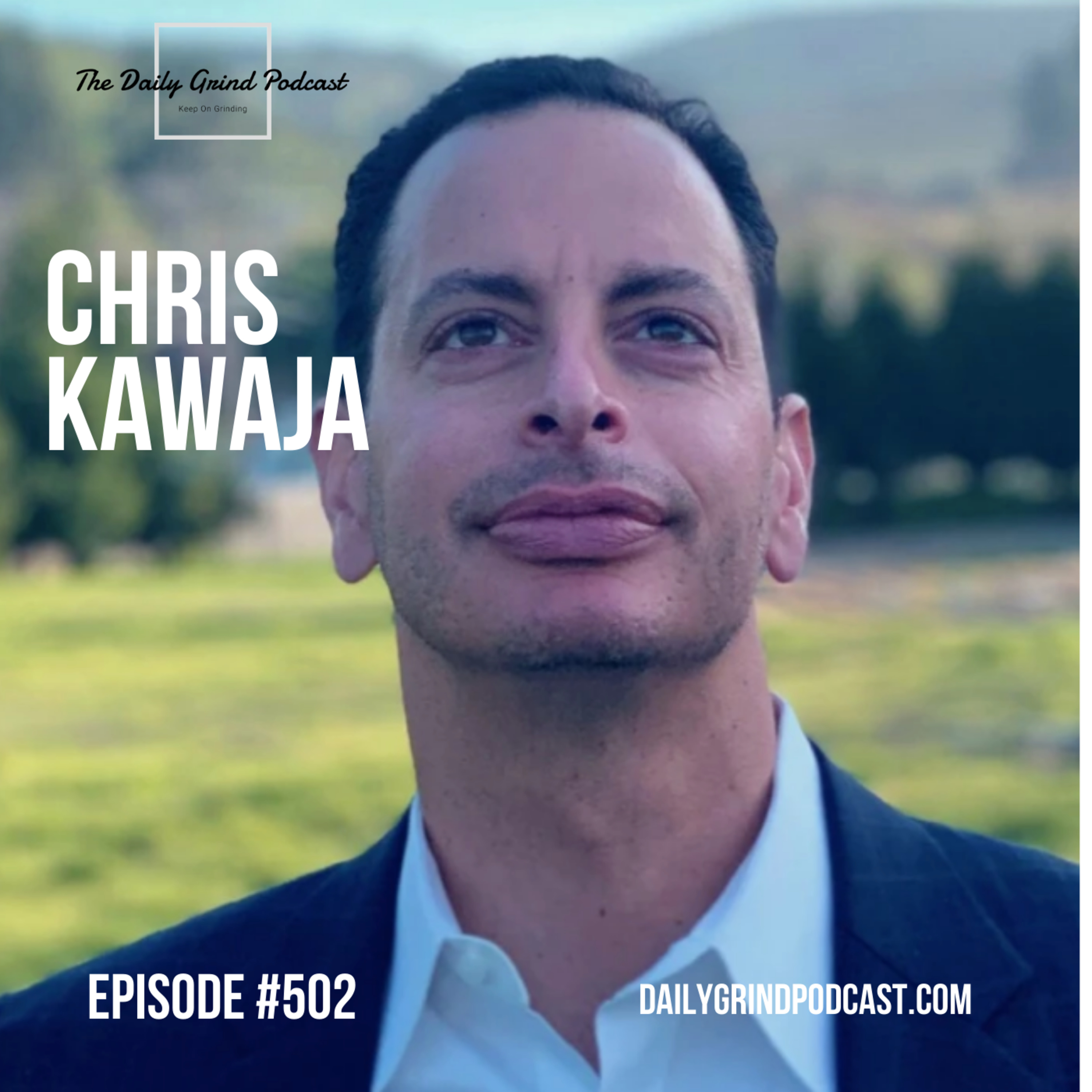
Hey everybody, and welcome back to another episode of the Daily Grind. Joining us today on the show is Chris Kawaja. Chris holds a BA from Stanford University and an MBA with high distinction from Harvard Business School. Chris spent the early years of his career on Wall Street, specifically at Goldman Sachs and Bridgewater Associates, the world's largest hedge fund, where he developed his skeptical eye towards traditional financial advice.
Today's episode is amazing, everyone. As always, you have a pen piece of paper, sit back and really dive deep in today's episode with Chris Kawaja. Today's episode is brought to you by Skillshare. Skillshare is an online learning community with thousands of inspiring classes for creative and curious people.
You can explore new skills, deepen existing passions, and get lost in creativity. There are so many ways Skillshare's membership with meaning is valuable in this moment right now for all of you. Strong community is essential in times of hardship. Tap into the support of fellow creatives who provide encouragement, communication, and inspiration.
This in Skillshare offers creative classes designed for real life and all the circumstances that come with it. It's always the right time to stay inspired, express yourself, and connect with communities of millions if you're feeling uncertain about what's next. A creative challenge or productivity class may offer a helpful structure for setting small goals and feeling a fulfilling sense of accomplishment. Drawing, writing, and journaling classes can be a great way to help manage stress, practice mindfulness, and feel connected to one another.
Take your hobbies and passions deeper, explore the next level of skills that can provide a rewarding sense of mastery. Listen, there's a couple of ones that I'm looking at here, specifically a couple of classes I'm looking to dive into. Everyday minimalism, finding calm and creativity, and living simply taught by Aaron Boyle and simple productivity. How to accomplish more with less by Greg McAllen.
Super excited for the Skillshare, everyone is also incredibly affordable, especially when compared to pricey in-person classes and workshops. An annual subscription is less than $10 a month. You can start with two free months of premium membership and explore your creativity at skillshare.com forward slash grind again, you can start today with two free months of a premium membership by going to skillshare.com forward slash grind. Welcome back to the podcast, everyone.
As I mentioned, today's episode is about your finances and how you can manage your money better. Chris Kowaja developed his unique investing outlook for his own personal portfolio, and he now owns a variety of assets ranging from e-commerce businesses to legal sediments to real estate. He is the owner of the e-commerce business, Biggachill.com, and the founder of the author of Upwarding.com where he discusses topics ranging from mindfulness to crowdfunding. Today's episode is amazing, everyone.
As always, take something from today's episode, implement it in your life. We'd love to hear your thoughts, subscribe to the podcast, share, but without further ado, please meet Chris Kowaja. Hey, well, Chris Kowaja, welcome to The Daily Grind, my friend. How are you?
I'm awesome, and it's a pleasure to talk to you with this crazy COVID time. I know. What's been keeping you busy? Obviously, these are unprecedented times.
What's new in your world? So what's new is, particularly what's new and keeping you busy is I've found a bunch of new passion projects related to trying to help the COVID efforts that usually I spend my time. Let's say split between my business, my real estate investing, and a little bit of nonprofit work. And recently just seen with the demands of COVID and what's been needed by various hospitals and stuff.
I've taken on different projects. Believe it or not, one thing I'm working very hard on right now is fine. I'm finding swabs that you can put in your nose for virus testing because I'm talking about ventilator shortages and it turns out the real shortage is swabs, you can stick up your nose because it's not a huge tip. And the two big factories that made them, one was in Central China and one was in Northern Italy.
So I'm trying to help University of California, San Francisco find swabs. Wow. And how's that been going? You know, it is an adventure.
It's amazing. You know, the global shortage, I've never seen a global shortage, like it's not double them in my various businesses, but this one's crazy because there are a lot of power dynamics and a lot of nationalist dynamics. So although you have a factory and Italy making 10 million of them a week, they're getting constrained on their exports because all medical products are sort of being nationally prioritized. So you know, you have a bunch of very bad options.
You can buy, product is not proven. You can, you know, try to smuggle it out of the country. I mean, they're a bunch of kind of. And so we're just trying to scrape together what we can, but it's a real challenge.
You know, labs that are set up with 200 people trying to test 2,500 people a day and they're testing 200 people. And it's been a challenge so far, but we're starting to make a little bit of headway here and there. That's good. Well, for people kind of listening, being first introduced to you, Chris, if you wouldn't just kind of in your own words, sharing a little bit more is like who you are and what does that you do?
Sure. So I grew up in Toronto, Canada. And when I was in grade 12, I was going to have enough credits to graduate that year or I could have stayed a fifth year, which back then we had grade 13. And I just decided to apply to some U.S.
colleges. I got in Stanford and left Toronto and it was freezing cold and snow on the ground. And when I arrived in California, it was sunny and there were people in Dikinis. So whether that was a good decision or a bad decision, I decided to go to Stanford and I've pretty much been attached to Bay Area ever since I live up here just about 30 minutes north of the city, halfway between San Francisco and Sonoma.
But in addition to having the wife and three kids, which is a pretty normal part of my life, I do a diverse range of things. I've got a business called Big Chill, which makes designer appliances. It's an e-commerce business. I do a lot of real estate investing, I do a lot of alternative investing and that's in things ranging from farmland to lawsuits, things like that.
And then I have philanthropic side where I've been on the board of an organization called Heroes Journey, which is really about how to be your best self. So those are the big ways and then obviously just trying to follow my passions as they lead me every day in a way that's aligned with how I want to be in this world. Very cool. I kind of started your career on Wall Street, you worked for some massive companies like Goldman Sachs and Bridgewater, which people know from Ray Dalio, I got to ask what was it like working alongside or with Ray Dalio?
Yeah. Ray is, look, he's a brilliant guy. It's funny. As you and I started recording, I was actually watching the video and it said, look, I think whenever you're with people of that level of brilliance, you have to deal with the extremes of everything.
And interestingly enough, look, I think Bridgewater is a wonderful place and it runs in a brilliant way and I learned a ton from it that I still carry over to this day, but it was also important for me to leave there and reflect on what lessons I didn't want to take. And so the most important lesson I'd say I did take was he just believes in being brutally honest with yourself and everybody. And I have to say that is a big obstacle for people is being honest with yourself because that's how we're going to learn best is to take those ego heads. So I thought that was a brilliant lesson and something that I just practice every day all day and it's influenced everything from how I parent to how I mentor people to just how I reflect on things.
You know, for me, the challenging thing was there's definitely not as much a prioritization of people's emotions. You know, when you're struggling that hard to get the correct logical answer, it's probably best for the business. But I do have a softer side and I think some of these softer things matter a little more in my life, probably than they did in that business context. So I think learning the right lessons was important there, but brilliant man, I learned a ton from him.
I have a lot of gratitude for him, like, you know, he and I just exchanged emails. In fact, a couple of months ago where I gave him a big thank you, but he's, um, he's an amazing guy. And I think reading his book is something that really everybody should consider totally it's interesting. You say like, when did you kind of come to the realization yourself that you kind of more had that softer sex?
I know it's kind of really cutthroats in those industries in a way. Maybe they think is like you had exactly like you had mentioned when did you sort of discover that? Or did you always kind of know that that was who you were? Right.
So I think, look, there's a difference between discovering it and actually facing it, right? How was it discovered? It's discovered in this little, these little gut feelings you have to go along things where you're looking at the people who seem to be thriving around you and something about what they're enjoying doesn't seem like the kind of life you want to live. But maybe you can't articulate it.
And I'd say that stuff happened more in my twenties. You know, when did I start having the real reflections on how I could be my best self or my essential self? That's more kind of mid thirties. And the real catalyst for that was I went on something called a hero's journey with a group called the Hero's Journey Foundation, which not speaking more highly of.
But in there are a lot of different ways to get there, but I think ultimately getting to a place where you have a time of reflection and deep reflection that's typically away from where you come from or live is just absolutely critical. So that's when it went from just this spark and vague concept to really being able to articulate where I was out of alignment and starting on a path to getting more to the kinds of things I wanted to be dealing. When you went through that period of discovery, like what were some of the things you started to do to get in line? I know ultimately you left those positions, but what are some other things you did?
Sure. So, you know, the number one practice, and there's a great page to study that backs this up. Look, the number one practice that seems to be essential to, let's just call it spiritual development for lack of a better term, maybe it's personal development. The number one practice is some kind of self-reflective habit.
And typically that's meditation for most people, but it can equally be journaling, but just some kind of regular practice that I would say gets you a little bit out of the reactive mind. That's my first instinct. And kind of into more, you know, what are your senses? What's your body telling you?
You know, why are things happening? Something just a little calmer, more contemplative. So that was true for me. I mean, I've actually been meditating for probably more than 25 years at this point every single day, but whether it's a meditative practice or a journaling practice, some kind of reflective practice I think is just absolutely essential.
And you know, again, it's one of those things I can't recommend more highly. And then the second thing is I said, you know, in this one, I think there are a lot of, again, a lot of different ways to skim the cap, but somehow getting out of your normal pattern, right? And that's, I think, what this current period is teaching us is, you know, we're all in this current scene and it's a little bit of an interference pattern. And those can often be real accelerators of change as well.
So I think creating the internal circumstance, which would be a meditation or calming practice, and then having or choosing an external circumstance in the case of the quarantines, it's a circumstance that happened upon us in the case of, you know, showing up on Mountain West Virginia for a week. It's a circumstance that I chose. Yeah, it's interesting. I mean, obviously we didn't want this to happen.
We don't want this to happen. But it's funny how when you talk about being reflective and taking that time out how this is this period of time is almost forcing it upon all of us. Oh, I think it's amazing. I think it's amazing for society.
I think that people will take great lessons from it. Look, obviously none of us wants tragedy and hardship. But you know, the world's complicated. And, you know, sometimes I think that things, we have this sense of like, give this, then that like, hey, if there's a pandemic, it's terrible for everybody.
But you know, what if this leads to a greater sense of national vision in different countries, you know, I think there are a lot of different things that can come out of this. What if we started dressing, you know, some of the health care inequalities that are challenging people to the extent that it can solve those issues, I think, or begin to make steps in those directions, you know, maybe looking back on this, it could have been an inflection point for a change upwards, rather than necessarily something that's just bad and goes away. I'm really resistant to this idea of we're going to go back to normal, you know, when do we go back to normal? I see people fasting.
When are we going to go back to normal? Like, why don't we go? You know what? There is no normal.
Right? We're always walking along a path. This nudges us off the path. And now there's, you know, normal 2.0 called Canada 2.0, America 2.0.0.
And how do we want that to look? We have a lovely opportunity to envision that future. So whatever that means to you. Yeah.
No doubt. Well, obviously, you're an investment, you know, advisor and entrepreneur and yourself. You're, you're recently, I'm not sure if it's come out yet or it will come out, but your new book, how to stash that cash, when's the release date on that? So how to stash that cash just came out April 1st and it's doing awesome.
You know, this is not a book I wrote, I wrote it with a lady called Shannon Matisse and brilliant co-author. Yeah. And it's not a book we did for the purposes of having some kind of income source. It really was a story that we felt was critical to tell to particularly North American investors that applies very strongly to Canadian and American investors, but has some broad implications.
And really, it's just a classic case of you have this status quo, which is everybody has a sense of, hey, you know, if I want to save my money. You know, money for an emergency fund, I'm going to put it in a high old savings account that, you know, RBC or Citibank or, you know, what have you. And it just turns out that it's very bad advice now because the world has changed. You live in a world with ETFs.
You live in a world with low commissions and you live in a world where an individual investor with $1,000 can have partnership in every company in the United States and a wide swab of Treasury bonds. And so with that revolution is a new way of investing that just is going to serve investors better. So when people, you know, grab a hold of your book, like, what's the main message you want people to take out of it? Sure.
Look, the main message is this. You need money to do the job you assigned for. So I'd say it's sort of a two-part message. The first is divide your money into buckets, okay?
Let's just call three broad buckets. The first bucket is you've got your money for your savings, right? Or just write your checking, not even your savings, which is just your day-to-day month-to-month expenses, right? That's not money that should have any risk, right?
You're just writing checks, you know, you're not investing in your, you know, your utility bill funds in the stock market, and there's good reason you have that. Okay. So that's a bucket one. And the job of that is really just to provide for these essential monthly expenses.
Let's just call bucket three, which is retirement, and that's what I would say long-term planning five years now. And there's some pretty established ways to do that. It depends on your risk tolerance, but typically that's in longer-term or volatile vehicles, like stocks, maybe a little bit and some other assets, but that's a pretty well-known and established group. But there is this middle category, and it's actually a very essential and often overlooked category.
And we can call it an emergency fund, we can call it an opportunity fund, but really it's where you stash this cash that you don't need, it's not for retirement. You might need it before retirement, but you don't really need it for your monthly expenses. And so typically, your bank would say, hey, you've got a check-in account, just put in a savings account. And there have been periods where those savings accounts pay you some reasonable interest.
I bet if you look today, the rates in Canada are probably 0.2% in the US, they're averaging 0.7% and then depending on where you live and what your tax situation is, by the time it's all said and done, let's just call it functionally zero. Okay. And you've got inflation. So if the job of the emergency fund is to provide for emergencies, right, you really shouldn't have it in that because that's chewing away your value every year because the dog gets worth less and less.
So the fundamental insight is, look, divide your money into buckets, nobody's bucket is for, and then deal with each bucket appropriate. We know how to deal with retirement, how do we deal with this middle bucket, how to stash that cash? And that's where times have changed. And in the US, it's 12% to the total stock market index and 88% bonds, which, and the surprise is people, it's actually a lot safer than putting all of your money in bonds.
And Canada, we don't have the exact percentages because it really depends on your tax situation. In Canada, you should typically have a little bit more money in stocks to optimize the portfolio and that just has to deal with how investments are taxed in Canada. But the gist of it is you can have a very safe, short-term portfolio that actually keeps up with an embedded inflation. And the cool sub-insight is, in fact, in experience, you're probably going to do better than that even in stocks because the average investor is really bad at investing in stocks, mostly because they buy when prices are high and they sell when prices are low.
So it's exactly what they should be doing because when a panic hits, it hits everybody. So that's another kind of side effect of this, not that I necessarily recommend it, but it's an interesting component of what the performance history has been. That's super interesting. So I mean, for people listening to that who want to invest properly, what would you recommend in terms of finding the right advisor or finding the right person to deal with the money and deal with those stocks and investments?
Sure. So I always recommend having someone you go to for advice. Obviously, there are people who are very well trained in this and I would recommend them over me in a moment. You can obviously download the book and read it and agree or disagree with it.
I think we have a pretty logical case. We go back nine decades and talk about how it's performed. But it's most important you have someone who's comfortable and also is willing to listen to you. So much of investing is about what is appropriate for you and your situation.
And my concern always is blanket advice because blanket advice, by definition, is just wrong for everybody. And so the challenge I always see, look, there are really two challenges with financial buyers. One is they get paid a lot more for certain products than others, even though those products might not be better for you. So you definitely want to have a situation where that advisor really has a long-term incentive to make you most aligned with what you want, which isn't necessarily going to be their fees.
So a fixed rate advisor could work in that situation. And then you want someone who really listens to you and understands that. And then if you bring them an idea like, hey, I'm thinking of putting my spare cash in this, walk me through. And if they just have some formula plan and they're not willing to listen, that's always a bit of a red flag for me.
Because if you just want somebody's plan, I can buy that online in a document for $15. It really is a personal exercise. It's about your values. It's about how you behave, what you're susceptible to.
Like, for example, I'm a guy who is strangely risk-seeking. So I need things that stop me from adding risk when stocks go down and getting too crazy, right? Other people might be too conservative, right? So you really need someone who understands your personality, your needs, you know, I have this very college need for this kid and creates a plan for you.
So it's a lot about that personal comfort and more importantly, are they listening, right? Are they listening? Yeah, I think that's a big problem that everyone faces is the blanket advice and whether it's investing or other things. I think that people fall into that category a lot of times and I'm sure a lot of people have done it themselves too.
Right. You know, I'm robo-advisors have slightly filled that gap. I mean, in fairness to everybody, you can't be completely thoughtful about everything in your life all the time, right? Like, I can't be a perfect parent, a perfect investor, a perfect everything.
So we need to rely on other people. And so for me, this is about building a team of people around you. I use the same strategy, whether it's building my business, finding real estate, you know, working with people on a nonprofit opportunity. It's really about, you know, building a team where, you know, we live in this connected world and we're especially feeling that now and you can't be expected to get everything right on your own.
But, you know, I think you can get this 80% right really quickly. Like, if you just pick a money with a robo-advisor, like, that's probably going to get most of your problems solved. You know, interesting. I wish they had autopilot for parents and unfortunately they don't, but, you know, we do our best.
That's funny. How has parenting changed the way you've done business, if at all? So that's a good question. Look, I think the main thing that's changed in my life is I was always excited about trying everything, right?
I'm a big believer in experimenting because my fundamental premise in life is, you know, we need to become better learners. And if, you know, we talked about Ray Dalio, like Ray Dalio is an absolute phenomenon when it comes to how you learn and improve yourself. So anyway, I'm going to, let me skip back to what I was saying, but the essential things I used to experiment in order to learn and I throw a ton of energy at every new project. So I've done every kind of real estate investing under the sun.
I've owned mobile home parks. I've developed mobile home parks. I've done high-fixing flips. I've developed housing, you know, or, you know, real housing.
I've invested in land. I've invested in oil royalties. I've done everything. But, you know, each of those things takes quite a bit of energy and I think what's happened over time is as my priorities have shifted, I just don't want to be as busy.
And so the nature of the things I do aren't driven as much by just maximizing return, but really maximizing a bunch of factors, right? Like I want to be in business with people who I love getting on the phone with every day. Like I absolutely love the people I work with in my business. They happen to be brilliant also, right?
They're a great team. But I would say that I really want to get more than just work done. Like I want them to be, I want there to be like mutually beneficial relationships. I want to be a problem with their kid.
I want to help them with their kid as much as they're going to help me. So kind of mutuality, I think, is increased. And also just, I'd say really protecting my time much, much more, you know? If something's not a fit, if it's not a hell of guess, it's definitely a no-no.
I just don't have to pay things on unless they really make a lot of sense. Yeah, that's awesome. So talk to us a little bit about your business. What's new and what's exciting?
Great. So, you know, business obviously is in great flux right now. You know, we, bigchill.com, we sell what we call it. We make the price you interact with every day more beautiful and fun.
And so rather than stainless steel fridge, you know, you can get from us in 1950s bubble looking retro fridge that's pink with a pivoting handle. So these really gorgeous fun designer appliances, which is cool because, you know, you're going to touch your fridge. I think it's 5,000 times a year. And so if every time you touch that, you have a little smile because the handle sort of cool and it's your favorite color, we think that those little things add up.
And so it's a nice mission for our business and look, it's expanded a ton since we got involved, you know, let's say about 10, 12 years ago. What's new and exciting? Look, we're in the ever changing world of internet commerce and we're just watching kind of wave after wave of change is happening when we started, you know, we were charging in some cases, shipping was costing us, you know, five, six, $700 and charge a margin on our shipping just like we charge a margin on our products. And then you have Amazon come in and everything's free shipping, right?
So that changes things. And now there's kind of a blowback on that. And I just think the way that we can use video and images to tell our story has been really incredible. You know, I'm seeing now people doing augmented reality, you know, take a picture of your kitchen and put our appliances in it.
I mean, that's the kind of future we're talking about. And so, look, especially as people get more comfortable shopping at home, I think e-commerce, if you think of the first things that were sold online, it was, you know, Pez dispensers and books, right? And that was internet 1.0. And now we're internet 3.0 where, I mean, who can imagine buying a mattress without lying down on it?
Well, you know, billions of dollars of mattress is being sold without some setting foot in store. So I think we're seeing this evolution where people are just more trusting and, you know, instead of spending $7, there will only spend $7,000 without even seeing a product, which is pretty wild. You know, I don't think it's like people would have predicted. And I was in San Francisco when this internet generation was born in a wild ride.
What got you into this business? Like, what got you into this type of business? Like, was it something where you looked at data and saw there was an opportunity? Like, I'm interested as to what drew you into it.
Sure. So this was truly opportunistic. So I co-own businesses with a group of other people. And this one just happened upon us.
Actually, it turns out we have a paint business that sells powder paint, which is this environmentally friendly paint. So instead of liquid, it's a powder spray and this one of the salespeople came to us and said, Hey, there's this really cool little company in Boulder, Colorado that's making these really cool fridges. I think you guys might want to talk to them. Well, next thing you know, we were in the internet appliance business, you know, we're all big believers and kind of keeping our ears open.
And, you know, one thing I practice very religiously is I screen a lot of opportunities very quickly. And, you know, that could have just been any of a number of phone calls like that that we received that week. Or we received that phone call. But just having your open to the ground on the opportunity and then seen, you know, I think these things kind of become obvious.
And if you just wait for something obvious to come to your door, it will come eventually. You just got to make sure you turn over enough stones. Yeah. I think that's a great lesson just in general is to be to be open to new things.
I think so many of us get it's easy to get closed off because whether you're comfortable or whether you think that you're not smart enough to do something and oftentimes those opportunities are right in front of you. You're just not seeing them. Yeah. I think look, it's a combination of that.
And honestly, people narrow people start going too far down the decision funnel too fast. So, you know, like I've seen people who will say, Hey, I want to buy, I want to buy a house and fix it and flip it, you know, in my neighborhood, right? And they'll look at three houses and they'll pick the best option of the three and then they'll go and do it. Well, my answer would be don't get three houses.
Look at 3000 houses, right? Take the best three and make offers on those that are so obvious that you're going to just make money no matter what. And then pick the best out of those, right? And so I think happens is people start screening too early.
You know, everyone I was dating, I joked to my wife, I said, Look, I said, I did the math. And if I want to be a one in a million person, I have to be a thousand people a month or a thousand months. It's actually not how the math statistically works, but it was sort of joke and I was like, you know, I was a very early adopter of internet dating because I was like, Look, you just meet a lot of people. And as a result, I have an amazing wife, we've got an incredibly happy marriage.
And, you know, back then it was, it was in those days and people were like, I can't believe they met on the internet, which I know is now, but when we met, it was still very kind of rare and crazy thing. That's funny. All right, Chris, we're going to move into a next little fun segment here called do or do not, okay? Oh geez, okay, let's do it.
All right. So I'm going to present you with a scenario and I want you to say do or do not. And then I want you to give a little context behind it. Okay.
So there's things that you may have experienced or you probably will experience at one point. Okay, let's start. History or theory. Like you read.
Yeah. Okay. All right. So let's say you and your wife are going out to a nice restaurant.
You walk in and you're about to sit down, but you see someone that you know you've that you've worked with, but they don't see you. Okay. They're mid meal. Do you go up and say hi or do you sit down and ignore them?
So I think it depends on the context for sure if they were by themselves, I would, I would go up because typically I find something by myself, they like having company if it looked like they were on a hot first date and I was looking pre silent and my wife was looking silent and I felt like I was going to be cool. I might, I might do it. If they're in a business, if they're in a business, I might wave as I go by, but typically I do, I do do that because I think you can modulate the amount of interaction, like you can walk by and wave or you can go all the way to walking up to them. So I would say you can modulate your answer depending on the context.
So that's a bit of a cheap answer, but mostly I'd say I would got to think so too, right? Because you don't want to be looking at it. The thing that I look at is I don't want to be looking over my shoulder all meals and if you make that awkward eye contact and then you got to get out from there or just act like you didn't see them. Yeah, look, a passing wave goes a long way because then they can come over to you as well, right?
So definitely I would answer. Cool. All right. Next one.
This is actually, this has happened to me. It happens to me more than often. I don't know why I'm admitting that. But here we go.
So say you're waiting for an important phone call. You've been waiting a while, but you're in the bathroom and you get this phone call. It rings. Do you pick it up?
Or do you, or do you let it go to voicemail? I kind of let it go to voicemail guy, you know, I feel like I feel like we're letting our phones start to dictate our schedules so much. It's just like a personal thing where, look, I believe in having our own independent space and I just have the same and this goes with my kids when they, you know, all my time. We don't always have to be available at all times.
That's just the reality of life. And in this always on internet society, I think we think we need to answer every phone call and apply to every email. And I've kind of tested not answering phone calls and not find emails and my looks better. So I just don't think you always have to be available.
I agree. The other thing I've done recently, which I found is like really refreshing is I've taken all my emails and notifications off my phone. So unless I'm on my computer, I actually go into my inbox, I'm not getting those dings all day. It's almost like crazy anxiety.
Oh, yeah. I turned off all my notifications and I was with friends who was a very busy guy. And I looked at his phone and I was like, this would drive me bananas, right? Like, would you just drive me crazy?
You know, we were kind of losing deep thought because everything's pain at us all the time. Deep thoughts kind of what's going to get us forward in anything in life. So anything that's preventing that I think is a real burden, I would say turn up our notifications. I also have a managed workflow process that I worked on recently with a really great life coach where it takes another step further where, you know, now those emails sitting your inbox don't nag you because you're inbox zero all the time.
So that's been a real upgrade as well. And just a process for dealing with, hey, I had this idea in the middle of the night for my blog. You know, how do you turn that into something that's not kind of tickling your brain for the next couple of hours and you've really kind of got it out and dealt with and I have a process for knowing you're going to go back and clean it up. The process is called Zamboni, very funny.
Yeah. It's cleaning up all your straight tasks. There you go. So before I go into the next one, how long have you been working with a life coach?
And, you know, as many people may have a negative connotation towards one, maybe some use them. What's been the benefits for you and how long have you been using one? Right. So pretty recent for both.
Two different life coaches for two very distinct purposes. One was a guy named K. Hi, he's the author of a really popular newsletter and blog called RadReads.co. He's been called Millennial.
Really famous guy. Super, super, super focused on productivity tools. And so in my case, I saw that I had this really kind of nagging problem around organizing my workflows. I just didn't know where things were stored.
I had notes. I had some kind of combination of a paper system and a digital system. And so I hired him for the very specific task and we just did it for two months of cleaning up my systems. That was worth its weight in gold.
So that was two months. That was this year. We just spent the last month. It was amazing and couldn't recommend it more highly.
The other was actually an outcropping of the work I've done kind of a let's just call it the self discovery journey. You're leading in case the nurse is what's like five seven stones calm and her work is around figuring out and really crystallizing what are your values and who are you at your essence with the idea that if you're acting in accordance with who you really are and always have been that you're going to be a best service to yourself and society. So it's a bunch of exercises as an example, you have six people who've known you really well, five traits that describe you and it is incredible. It doesn't matter how diverse this group is the trait they describe you as will be almost within half a word of each other.
It's crazy. And so her idea is to start with that is reflect on what that means for you. And then ask yourself what you're living your life where that stuff is being held in high purpose. So that was great.
That was more like sort of a seven or eight, seven or eight months meeting once every three weeks, an incredible process and really for me just like a capstone project on some of this work around self discovering being my best self. So really just kind of his technique, just you know, alignment much more and frankly able to say no to the things that don't fit. Yeah, very cool. Awesome.
Okay. So last one here for you. So maybe maybe you've had this happen to you. Maybe you will in the future once all this is over, but say you're out an event, a public event.
You're walking. They clearly know who you are. They're like, hey, Chris, man, what's happening in house life. You have no clue who this person is.
Do you play along or do you tell them, excuse me, you have to remind me who you are. I usually would do my typical that has happened to me and typically it was, I just say, I'm so sorry, my brain is getting going places can you remind me how I know you like, I'm so out of context right now. My mind's on something else. And then you just be like, oh my, because then I'll tell you, you'll be like, of course, you know, we want to get together with whatever is right.
So yeah, because I think it's true. Like, if you see someone out of context, it can kind of shock you. It's a little more uncomfortable. I find when you see some of you should know, meaning like I will run into a parent of, you know, my son's friend at school and not remember their name.
That's not true for me. They're the random person. So that's my bigger time that I do not have to answer that. And there I just, there is a tough ball to leave and I hope my wife says their name is on the way.
It's a tough situation, right? Because you don't want to be rude, but at the same time you're thinking like, if I play along, how long is this going to go for? Oh, yeah. No, I can get brutal.
There are people I've known for two years. I'm pretty sure I saw another name. That's funny. Nice.
Well, for people who wanted to like reach out, connect, learn more about you, grab a copy of how to stash that cash. Where's the best place everyone can go? Where's the hub? Sure.
So look, too, Hubs, for the book itself, how to stash that cash.com. Anything either by there, it works on Amazon and both paperback and e-book. If you want kind of the thing that people like the most that I do, it's funny. I just started doing it offhand about, you know, six months ago.
But now that I'm into it, it's really, it's been growing gangbusters and just been really awesome is I do a weekly newsletter that goes out on Fridays. And it just summarizes, you know, the five best ideas of the week and it could be anything from, you know, why driving a Tesla that's terrible idea for trying to reduce carbon emissions to, hey, the, you know, the true shortage and the COVID time is swabs to here are three ways to break bad habits or, you know, here's a better way of working out. It really just is like a jumbled together list. But people seem to really like that and then I'll do it with a quote typically an inspiring quote.
So that's the most popular thing you can sign up for my newsletter and read my blog at Upwarding.com and that's Upward is in Forward, U-T-W-A-R-D-I-N-G.com. And you can send me an alternative to be frank, as I've been telling people, you know, I do read all of them. I don't really respond to that, any of them. But I promise I read every, you know, that comes in.
I just don't promise I respond to everyone. So I will read you. Yeah. Very cool.
And then anyway, we can support you on the swabs. The Schwab mission you're going on? Look, I think right now I think that there are swabs sitting in closed or partly closed pediatric clinics, ENT clinics, you know, general practitioners offices where they have boxes of these things just sitting on shelves that they don't need. Those boxes can easily get replaced in the next, you know, four weeks.
But the need is now. And so I would just say, if someone has a connection into one of those offices, you know, just act if you can go and grab the swabs and just drop them off at a local lab. These testing labs are doing really good work and they're all very desperate, it is a global shortage. And what makes me sad is that, you know, probably down the street from the hospital is a closed office.
It's only just unlocked. And we can really supplement efforts that way. As far as the global sourcing, I feel like we're pretty on top of that and we may have found a way to pick up about a million swabs a week, which, you know, would increase the US testing capacity significantly. So we're working really hard on that.
It's a big challenge and, you know, I think if we want to kind of overcome these things as a globe, we need to be thinking about these things creatively and, you know, what that means to spend patents on these things. I mean, there are a lot of different ways to do it. So the number one thing that was just figure out someone lying around with a doctor's office from something, you know, close clean. You got to do a lot of the lab I like working with.
The Chan Zuckerberg Biohub. That's just, I think, Jodoreezy is doing, you know, some fantastic work. He's got to discover the SARS virus and I think he's going to be the guy who helps to figure out what's happening with this virus. So that's going to be a place to ship them so you can just ship them directly to Jodoree there.
So there you have it, everyone. We hope you enjoyed today's episode. Be sure to check out more about Chris, you can visit LinkedIn or his website. Thank you so much for tuning in to today's episode.
If you enjoyed the episode, subscribe to the podcast and share this out with someone who you feel like really benefit from today's learning. We'll be back next week with another episode until then, always remember to keep on grinding.