Hey everybody and welcome back to another episode of the Daily Grind. Listen, today's episode is about sales. The heartbeat of any business is sales. You need to drive revenue and the way you do that is you have to sell.
But we've been told a lie. We've been told that we need to sell in a way that doesn't feel good when we do it. It maybe doesn't serve the customer, make us feel and they feel good at the end of the day. If you want to learn how to sell it a different way, how to sell the conscious way, today's episode is for you.
Enjoy. Today's episode is brought to you by the Just Go Grind Podcast with Justin Gordon. As many of you know, I went from five days a week here on the Daily Grind to one day a week. That leaves plenty of days and a lot to learn from so many other people and Just Go Grind and the podcast and Justin is absolutely amazing.
I would encourage you all to go and check out that podcast, the Interviews Entrepreneurs, CEOs and other Go-Getters giving you actual insight each and every episode. Some of the episodes and people and guests you've had on are absolutely amazing from Vanessa Dew, who's the founder of a hundred plus million revenue dollar company, Health Ait Gambucha and Rob Mather, founder and CEO of Against Malaria Foundation, one of the world's top rated charities, which is now raised more than 230 plus million dollars, which is absolutely amazing. To Austin, re-fuse the co-founder of Morning Brew, the Daily newsletter with more than two million subscribers. As you can tell from those interviews alone, this podcast is phenomenal.
So be sure guys, go and check out the Just Go Grind Podcast with Justin Gordon today. Subscribe to the show and Apple Podcasts, Spotify or wherever you listen to podcasts, simply search Just Go Grind to find it. You can also find it in the show notes section of this podcast. Everyone, keep grinding.
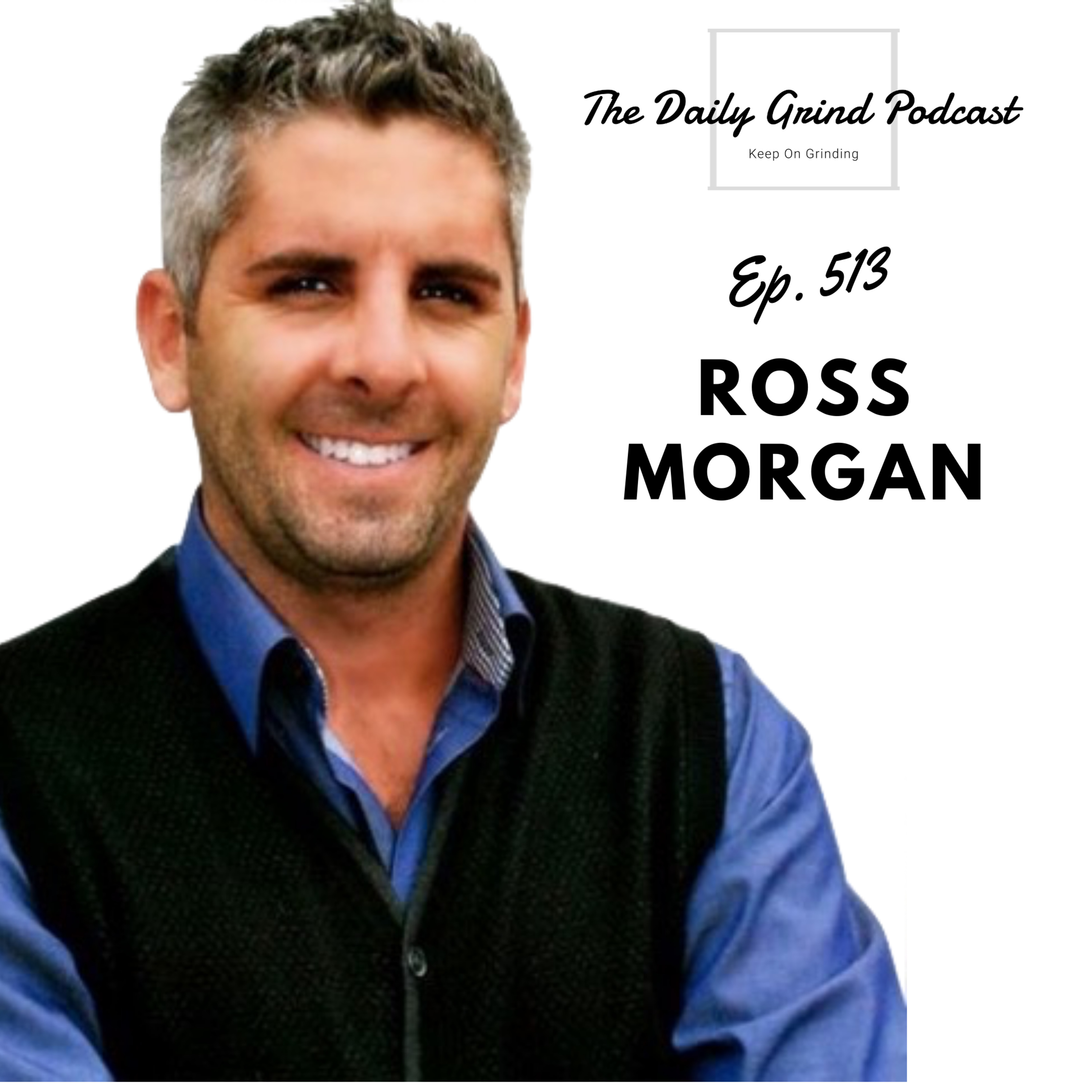
Hey everybody, welcome back to another episode of the Daily Grind. Today is a unique and special episode for you all. I am joined by a family member. I'm joined by my brother, Ross Morgan.
Ross, what's happening? What's happening, man? Can you believe it's taken over 500 episodes to get us together here? 500, but we're here.
Ross, for people who don't know you, maybe they don't, but for people who don't. What do you do? Who are you? Give us a little rundown.
Sure. Well, you probably know me better than most people, but I am Colin Morgan's older, better-looking, definitely more charismatic brother. Mustn't actually tell a different story, but yeah, I mean, I was born in Western Canada. I know Colin wasn't, but born and raised in Ontario, I now live in Niagara.
So when I am not building my business, when I am not training, I am taking care of my family. Jessica and I have three kids, right? We got Henry, we got Emmet, and we got Garrett, who was in the pipeline, and we're expecting him in October. So think of me as a sales enablement guy, sales trainer.
I work with large organizations. They usually bring us in to strengthen the overall efficiency and effectiveness of their sales folks. I'd say 99% of the companies I work with are software, SAS, high-tech companies. So what got you into that?
What drew your first interest in sales and how did you get to where you are being a sales trainer that you are? When I was 26 years old, I was working at a golf course. I was running a food and beverage department, and they brought in a sales trainer, and that was great. It was an incredible couple of days.
I took a lot of the tactics and advice and strategy. I started to see some results. That sparked something. I went back home, started to Google, found the grant cardones of the world, the push you have noxious, talked to much-served sales reps, because that's what I thought sales was all about.
I tried a whole bunch of different things. I mean, you and I even remember pounding door-to-door or selling whatever, how we were trying to sell when we were younger. Sales is definitely a passion of mine. I've been doing it for quite some time.
I didn't really start to figure out sales until I was about 30 years old. When I started to work with high-tech companies, I started meeting the right people. I realized I wasn't learning enough, and I still had a lot to learn. That's where I got my degree with sale.
I met Ganesh, who was the founder of Contrace selling. He's my mentor, good friend, saw him in action five, six years ago, and again, something sparked. I took a lot of the advice and lessons that he gave us, brought it back into my real world when I was in sales leadership, and within a couple of years we started talking, and now we're partners. What's the main fundamental difference?
A lot of people don't know necessarily what you do. A lot of people don't know Ganesh, but a majority of people, when they think of sales, if they're on here, they're business owners, they're thinking of Grant Cardone. They're thinking of Jordan Belfort. When they think of sales, it's pushy, it's numbers, it's hitting doors.
What's the main fundamental difference between what they do and what you guys do? It's a completely different approach. It's a 360. As you mentioned, we all grew up thinking if you were going to be successful in sales, you had to be a convinceer.
You had to be really good at manipulating people to do things, wrestling them down and getting a decision. The thing with conscious selling is that's not what sales is all about. I don't know about you and I and all your listeners, but we don't like to get manipulated. Conscious selling is taking the emotional pressure out of the sale.
We believe that sales is about inspiring the other side to do whatever is in their best interest, and people do things for their own reasons. Unless the prospect likes and trusts you, unless you've demonstrated competency early on, unless you know what you're doing, these buyers are going to drag you all over the place. It's what we call the moment of truth. If you're on a call with a seller and they don't know what they're doing, the buyer is going to push the seller around.
They're going to make very few commitments. They're going to lie to you and they're going to ghost you. You could take the car don't approach, which is let's jam this product down your throat, but it's not good revenue. Grants and all these guys are about convincing people to do things.
The great sellers are facilitators. They're by facilitating a series of human-to-human interactions. Whereby it's not my job as a seller to do the convincing, it's the buyer's job to convince me. When that happens, selling becomes very enjoyable.
Interesting. Say for someone who's thinking about they have a business, whether they have a product or shares, they talk to people, they have those human interactions. Or maybe some of the things that you see people make big mistakes doing. People are always in too big of a hurry to give a demonstration.
They're always in too big of a hurry to talk about their products and services. One on one, again, everything we teach is common sense, but it's really uncommon in the professional world of sales. If we were to jump on a live sales call and listen to most of the time, these sales reps and whether you want a business or you work for a company, it's awful. It just sounds like pitch, pitch, pitch, pitch, pitch, go on the defensive.
The only way they hit their numbers is through pure volume. If I can just talk to thousands of people a day, I'll hit my number. That's not a very relaxing way of selling. That's not a good way of making a living.
With conscious selling, we're inspiring these organizations to do whatever is in the best interest of the other side. We are trying to help these organizations create a pipeline that has got a ton of really good opportunities and has a high probability of doing business together. Again, it's a little backwards, it's counterintuitive because we were all taught something a little bit different. It makes sense though because I think we've all been through it where you get sold something and you give the money to the person and then after you don't feel good about it.
What happens is I know at least for me, I'm not going to get my money back to that person again. You're going to get them back one way or the other. Again, we talked about good revenue and bad revenue. It's what called buyer remorse, buyer resentment.
If I feel like you're trying to get your way and your needs met, especially when we're negotiating, even if the deal does close, I'm going to get you back one way or another. Whether it's I decide to churn, I don't decide to renew, I say something negative about you, and usually the seller isn't around. Also, the big issue with sales today too is the way that they're compensated. A sales rep is compensated when a deal is cut.
As soon as the ACV crosses the line, they get their compensation. They're not on the hook anymore. You're right. If you don't sell it properly, it will come back to hurt you.
What would be the ideal way of a sales person getting compensated? Say someone joins your team. Instead of doing it, however else does it, deals done. Here's your commission check move on, the car salesman that you would see everyone get.
What's a way differently that you've seen someone else do or you feel like if they implemented it would really work? It depends on the size of the deal. If you're selling large enterprise deals, you're probably going to also want to manage that account. The intent is to continue to hit it out of the park for that client.
They engaged upsell, cross sell at every single opportunity. Some sales people out there, just like myself, 50, 60% of revenue is from existing business. The transactional seller is a little bit different. To answer your question, there are clawbacks, i.e.
buy sell, use software, and they don't go live or implementation fails. They will not get that commission. The issue is generally after 30, 40 days, they're safe. It sounds to me like it's almost like it needs to be a fundamental shift in the leadership more so than it does in the actual salespeople themselves.
If a business owner say or a top executive, if they're only pushing revenue revenue, that's all that the salesperson is worried about. Exactly right. If you were to walk most sales floor, that's what it feels like. Sales leaders, sales managers, asking for the updated forecast every day.
There's nothing wrong with that. When you're pressuring opportunities to close that are not ready to close, again, that's bad business. Let's talk about dead-no decision. It's called DND.
Almost 40, 50% of opportunities today go dead. The number one reason they go dead is because the other side goes unresponsive, which means the buyer didn't get any value, which means they've realized that talking to that sales person is a complete waste of time. I'm on the side of the buyer. Always have been.
If I can take care of them, if I meet or exceed the success criteria, I get them the results that they're looking for. I'll be able to always feed my family. You have to make that decision, even in your business. You only want to work with people who you know you're going to have a phenomenal future with.
The best indication of the future is the past. If I'm interacting with a prospective client and it's a pain in the ass, that's a preview of what it's going to be like working with them. Again, the other thing that's conscious is being very selective of who you decide to work with. You need a big pipeline to do it.
Once again, great way to make money if your pipeline is filled with good, high quality opportunities. What if you found the best way or the best way you've seen to fill that pipeline so that people can be very selective of who they're working with and can go down that line? I want to walk through a little further down the road, the process of that, but let's talk pipeline first. Sure.
What are pipelines usually going to come from three or four spots? One that comes from marketing. Marketing goes out, generates as much top of funnel as possible. Some of it's pure inbound.
Other of it is maybe a download on a white paper. Someone not necessarily down as far as they should be on the buying process. You have channel, which is partnerships. Whether they're value added resellers, they could be any type of partner, but what a great way to build businesses together when you're both building pipeline for one another.
It's a tough thing to do because you have to enable the other side and continue to keep them sharp. Then the other way is the rep goes out and makes money themselves, generating pipeline of the rep opportunity. The best revenue usually comes from referrals. Some of the best advice I got early on when I started my sales training career was, here's when you know you're successful.
Two years in and at least 75% of your business is referral. That's an indicator that you are doing the right thing. If you continue to have to go look for net new, net new, net new, net new, it's going to take a very long time to grow that revenue. But so, yeah, that's my answer.
Prospecting at the rep level, partnerships, and marketing's got to contribute also. Love it. Let's talk about how do you, as say the person, the business owner, say I'm just going to talk about the business owner, you have the product, you have the service you're selling. How do we determine if they are right to be working with?
If they are going to be someone that is going to turn into a long term customer, if they are someone that is going to lead to referrals? What are some questions? What are some ways that you found that helps? I think first it's in the pre-work.
You have to identify your ideal customer profile. You got to know what they look, sound, and feel like. You got to know problems in areas where you have solutions. You got to know if you're getting a room with them and ask them, trouble in areas where you have solutions, you exactly know what that trouble sounds like.
So, your business acumen has to be through the roof. The more precise you can get with the ideal customer profile, then you can start to target companies and individuals. Now, when you're interacting with these prospective clients, if it's going well and there's a mutual level of commitment at every step, and they've convinced you that finding a better way is not just a high priority to themselves, but to the business, well, let's engage because I got some stuff that you need. So what are some questions or what are some of the techniques?
Because I think a lot of people that are going to find a situation, I've heard this so many times, it's even happened to me, you get in a situation and then they're like, listen, can you just walk me through what you do? Walk me through what you do? How can you help? And that seems like the most common ones that people recognize early on.
Yeah, so you've got to be able to set it up. If you don't have a plan in sales, you will default to the way the buyers buy. And we talked about it on the front end. They're going to lie to you, push you around, make no commitments and go stew.
That's what their plan is. So you've got to be able to take control of it early and say, hey, Colin, I appreciate your time today. How important is it if we do think about doing business together, it precisely hits the center of the target for what you're trying to accomplish? Now, you've got to convince me that that's important.
And I come back and say, well, the only way I can do that is to identify your success criteria. You've got to take some time to really understand your world, what's working, what's not working, where you are now, where you want to be, then Colin, I'll be in a much better position to tell you if I think I can help. So that's an example of something that you can say early on in a stage two opportunity to get the buyer in the mindset of, okay, this guy on the other end has my best interest at heart. Sounds like this guy knows what he's doing.
And I'm not going to tell you anything. I'm not going to give you pricing until I make the decision that, hey, Colin has got challenges in areas where I have solutions. I can help this guy. Then I'll start to give them a little bit of information, but you really have to take control early on or the buyer will walk all over you.
So it's understanding who the buyer is. It's understanding their pain points. It's knowing where they're struggling right now. Then it's working through your process to determine if they're right to work with you only and if you get to that point, then you present what you do.
Exactly. And to your point, you've got to demonstrate that competency piece. I'm trying to sell you something and we've never met. And competency is defined as doing something successfully and efficiently.
So I've got to come right out of the gate and say, hey, Colin, I don't know yet if I'm going to be right for you. I've done a little bit of pre-work, but it's too early to tell. Now generally when I get in front of owners like yourself, they realize we might be able to help them out in a few different areas with their business. And then I start laying those areas out and that gets the other side's imagination going.
And they go, interesting. Sounds like this guy has done this before. Maybe he can help me. So where a lot of people go wrong, this is what we do, this is how we do it, this is who we do it for.
It's not going to get you very far. Yeah. That's like you're taking the walls down from the buyer because we all have those moments. We all go through those where it's just been ingrained in us.
If we're going to call with a salesman, we think we're going to be sold something. And most of the time we don't want to be sold something. Well, here's the thing, man. It's 20 feet of reinforced steel up there.
And I cannot start selling you anything until I get you out of what's called defensive mode and into growth mode. And the only way I can do that is to demonstrate early on that I'm different. And I give a shit that I'm in the business of providing solutions that really hit the center of the target from my perspective clients. And I don't know yet if I can help you as soon as you relax them and the walls come down, they move out of defensive mode and into growth mode.
Now I can have a substantive conversation for as long as I want. What happens if you find you go through that process and you realize that they're not for you. This isn't the right fit. You got to walk away.
And it takes guts to do it. But it starts with a guiding principle. I only want to do business until both parties are convinced it's the right thing to do. I mean, I disqualify all the time.
If you listen to one of my sales calls, all I'm trying to do is throw objections out on the table because I don't want to waste my time. So if I am in some sort of situation where I'm thinking I can't help this person, yeah, nor do I want to continue to engage. Then I'll say, I'm sorry. I told you on the front end, I'll tell you if we're not right for you.
Something I'll say, hey, we may get 10 minutes into this, 20 minutes into this. I may realize you may realize that we're not right for one another. Do I have permission to tell you that if I get that feeling? They go, yeah, of course.
Well, then I can be honest. Hey, don't hate me. Yeah, we're not right for you. It's OK.
I'll go recommend you somewhere else. I end the call and I get to go spend some more time with my kids. And probably the result of that, like for companies you're working with, for the sales people, they feel better about what they're doing. They're happier.
They want to stay. It helps with retention and employees. They're not wanting to jump ship because of the way you're doing it. You want to keep coming back.
And that's the beauty of sales is you find your sales groove. You start to do it the right way, which is integrity based. And you feel good about yourself because you're adding value and you're helping people with some of their biggest challenges. If you take a look at top sellers out there, top one, two percent that make a pile of money, they're not convinced.
There's man. They're just phenomenal facilitators. They sit back, ask a series of questions, build a phenomenal environment that's based on trust. And it's a very relaxing way of doing business.
So, you know, totally. Well, if you haven't noticed by now, everyone, I didn't bring Ross on because he's my brother. He's an expert on what he's doing. And you probably noticed that by now.
For people out there, they're getting started, like walk through your journey of like how you got to this point of becoming an expert. How long did it take? How much do you work on your craft? A lot.
Nonstop. I got obsessed with it when I was 27, 28. Instead of watching movies going out, doing anything that I thought was enjoyable. I just surrounded myself with as much knowledge as I possibly could.
Because that's the advice I was given. The issue was I wasn't listening to the right people in the beginning. I was getting my information from the wrong source. And then I was applying it and not getting the results, not until I started to get my information from the right people.
By the way, I think that's the biggest hack on the planet that I start to then apply it because that's the only thing that transfers knowledge into skill. Then I started to see those results. But if I take a look at where I am now and my potential, I'm very hard on myself. Yes, I'm happy about where I am, but I'm nowhere near where I want to go.
And I will continue to be a lifelong learner. I will continue to put podcasts in my ears because that's what fuels me. If I'm not getting smarter, I'm in trouble. And in my world, see, I'm an unconventional sales trainer.
Most of these sales trainers are older. I look like I'm 60 guys, but I'm only 36 years old. So I got a long way to go. And I got a lot to do to continue to get better in advanced.
But I mean, just like you, right, we talk about it all the time offline. You got to get obsessed with your craft and continue to find new sources of information, new people. Like when I found Ganesh, that was an absolute game changer for me. Why not go surround yourself with the best in the world and learn from them?
There's another hack. Yeah, I think what's important too, with what you said is like it's all it's not always the people that you're seeing online. It's not always the person you follow on social media or it's not always a grant or picking on grants in this episode. But fuck you, Grand up skin.
Where it's not always that case. Like a lot of times the experts, even the people you don't know, I know for sure. Marking people out there that you haven't heard of that are phenomenal at what they do. There's sales people like Ross said, like Guru, phenomenal at what they do.
Who are some people right now say, Sko, that maybe someone doesn't know that you're following that you feel is just like, that's that's your go to. Hmm. It depends what you want to learn. It depends in areas where you want to get better.
And outside of some podcasts, I like the Daily Grind, you got some great guests that come on here. Pretty inspiring stuff. I find a lot of my stuff on webinars, like to your point, the Guru sometimes are not the ones posting six times a day on social media. Hey, there's a reason they got a post six times a day on social media.
Yeah. So, I find that sometimes working inside a large organization that get invited in to a webinar, that's where I find the hidden gems. You come across a SPP worldwide sales that works for a global organization that talks about some of the stuff that we're talking about. That's where I get the nuggets.
So, there's not necessarily one or two people that I go to all the time. When I was younger, it used to be that way. Now I'm more interested in topics. Now I'm more interested in, you know, for example, a big thing with Conchicillin is the emotional impact that you have on the other side.
It's the number one determining factor behind anybody's sales success. So now I'm into the neuroscience. I've decided to study that a little bit. All right.
Well, I got to go find something that knows what the hell they're talking about. So sorry if that's not the answer you were looking for, but I'm more looking for areas specific that I want to get better at. And then after some searches, after some questions that I ask other people, I usually fall over the unknowns that no one's ever heard of. I've always found, and I don't know if you found this too, I feel like the Uber's successful, most successful people that I've talked to, they don't turn to a source.
They don't turn to a person. They don't turn to something. They'll learn from everyone around them. And they're usually focused on one or two things.
One or two specific things. And whether you're an expert or not, they'll take that information and they'll use it and say, okay, how is that working for that person? Whether it's how they say it, whether it's how they're using it, and then they implement it. Totally.
100%. And do it your way. Like your personal presence is also so very important. So you try to be someone who you're not.
And that's a other issue, separate issue with sales. It's the only profession on earth when you assign someone a quota and common sense goes out the window because they think they need to sound like someone who they're not because they are operating from a place of fear. Fear that no one wants to talk to them, fear that they're not smart enough to interact with the other side, fear that they're never going to close another deal. So I know a lot of people who listen to a lot of stuff every single day, but do not improve ever.
They've got every book, every audio, they attend every live webinar. But if you look at the growth process, there's this self awareness piece, which is I know what I'm good at. I know what I'm not good at. That's mission critical.
After that is this knowledge transfer. Go get your webinars, read your books, watch your videos, consume as much information as you can. Just make sure it's the good stuff. Step three, though, is where people fall over.
Application. What are you going to do with all this information? Talk about it, put it to work, train with it. Makes sense.
So for you, with what you're doing, obviously things change, things are developing you're younger than everyone else. You're implementing and innovating the way sales training is being done. What do you see for yourself? Five, 10 years down the road.
What are you trying to accomplish long term? Massive presence, massive impact. Figure out how to scale this thing the right way. 95% of the business we do is live trainings.
Now recently because of COVID, now we're online and we've managed, we've enforced to adapt, we've made some changes and it's going great. But the next step is to leverage technology. It's the reinforcement piece. We're very good at winning a room and getting the buy and getting people excited.
But it's reinforcement because all these skills we teach are perishable skills. They go away. If you don't work at it, you will lose it. So that's what's exciting for us as we move into the future.
But massive impact, man. That's all I'm trying to do every day. Baby steps to become better known. Yeah, there is lots of opportunity.
Right. Like I look at augmented reality or artificial intelligence and the technology that those are going to start to come out with and how you can implement those, say, within a company and have people be training on those on a consistent basis. Like it's going to change dramatically over time. Right.
And I think that's what you kind of said, it's important just to understand where it's going and then follow with those times precisely. Yeah. Yeah. Love it.
So people wanted to connect. People want to learn more about you. People want to become a better salesperson. What's the best place they can go?
Best place and probably the only place is LinkedIn. If you're not on LinkedIn, get on LinkedIn. If you are on LinkedIn, search me. I'm trying to put out drips of content here and there.
I love to hear some feedback about today's episode. If any of your audience has some questions, I promise I'll get back to you. Just connect, send me a message. We do have some resources coming out in the near future.
We have a ganesh live ganesh prime conscious selling coming out with some books, audio programs, stuff, not just for organizations, but for individual sellers. So I'll update you as that stuff comes out, but that's the best way to follow me and me follow you as LinkedIn. There you go, everyone. I'll put those in the show notes section, visit Ross on LinkedIn, best way to do it.
Connect with him, reach out. Like he said, anytime you can learn from someone who is an expert in their field and has the results and is proven to see those results and especially with the things that people say, even about Ross, from what I've known, not just my brother, but he's a super expert and what he does to go ahead and follow him. And so I will see you up on the links on Saturday. Yeah, I'm looking forward to it, man.
See you soon. And there you have it, everyone. We hope you enjoyed today's episode. If you did, as always hit that subscribe button, share this out with someone who you feel like would benefit from today's episode.
We'll be back next week with another one. Thanks again to the Just Go Grind podcast for sponsoring today's episode. We'll be back next week with another one until then. Call them.
We're going to sign off and always remember to keep on grinding.