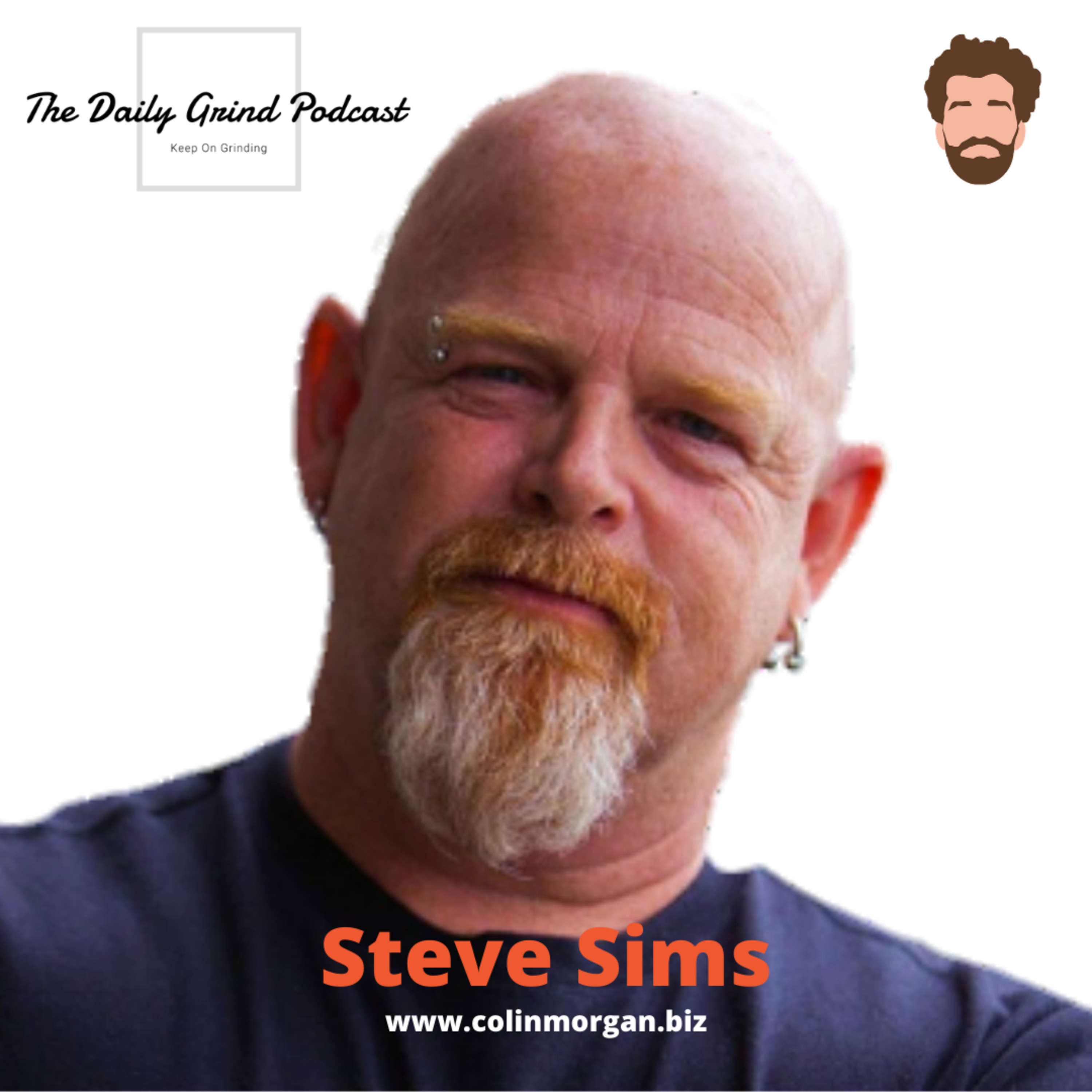
Hey everybody, and welcome back to another episode here of The Daily Grind. On today's episode is the man who can truly make anything happen, Mr. Steve Sims. Enjoy today's episode.
Today's episode is brought to you by eBay Canada. eBay Canada continues to help retailers bring their businesses online quickly through the Up and Running program. When you sell on eBay as a retailer, you can continue to serve your existing customers while gaining access to more than 180 million buyers in 190 countries, allowing you to stay local yet sell global. This Up and Running program is incredible, and as a Canadian business seller, you gain access to no listing fees on up to 200 listings per month where you only pay fees when you sell, access to the eBay community group where you can get real-time advice and inspiration from experienced sellers and eBay team members, powerful selling tools and insights, and access to eBay's 180 million plus buyers around the world.
eBay Canada is here to help you. They've been supporting Canadian small business retailers for 25 years and launched this Up and Running program to meet an urgent need today. So if you're a Canadian small business retailer or you know someone who is, visit ebay.ca forward slash up and running and get started with this today. Again, that is ebay.ca forward slash up and running.
Hi everyone. Now today on The Daily Grind, we have with us the author of the new book, Blue Fishing, The Art of Making Things Happen. And this man really does make things happen. I can honestly say he probably has the coolest job I've ever heard of in the entire world.
And what I want you to do, all listening today, is kind of think of like the two most, like the two biggest things you want to do or you've ever wanted to do. I guarantee you that this man can make it happen. He's helped people visit the International Space Station, take a submarine trip to the Titanic, become James Bond for a weekend in Monte Carlo. I don't know how you did that.
Sing on stage with the legendary rock band Journey, do meet and greets with renowned recording artists and celebrities and even help people get a walk on roll on a hit TV show. I want to introduce you all to the man that makes all that happen, Mr. Steve Sims. Steve, what's happening?
How are you today? Well, what an intro. I'll try and live up to that. Steve, say for those people who maybe are just being first introduced to you or a little unfamiliar with you, if you don't mind just kind of breaking down a little bit more about who you are and what you do.
I am a, I suppose the easiest way to put it is Forbes called me the real life Wizard of Oz. We are a high end concierge firm, invitation only, and clients come from all over the planet, royalty, famous, the richer and unfamous. And they come to us about travel, about access and also to make amazing birthday parties, including elephants and rock stars or, you know, piano lessons or drum lessons with Guns N' Roses. Anything that the client can dream of and afford.
We're the people to make it happen. Amazing. So I got to ask you, like before we dive into this a little bit, I mean, you've worked with a ton of these people, wealthy, well-known people for sure. Like what's been the craziest request that you've gotten and say like actually executed it for them?
I'm glad you asked that because there's actually two parts of that question. The craziest request that we did not do was because this guy contacted me and wanted to detonate a nuclear warhead. So, yeah, that one we refused. OK, I'm glad you did that.
Yeah. I will say straight off the bat, we've never done anything crazy. OK. And the reason I say crazy is because what may be crazy to you may be passionate to somebody else.
So nothing that we do is crazy, but I would say probably one of our most interesting fun events. You know, we had a client that wanted to meet the rock band Journey. We didn't feel that was good enough. So we actually managed to negotiate that he got on stage with them live in San Diego and sang Fortunes with his favorite rock band with the entire band, the entire concert.
That's like in a rock band experience as far as you can. But I would say probably one of the coolest ones for me being a European guy was when we were challenged to come up with the ultimate exclusive restaurant in Florence. And we actually took over a museum. The house is Michelangelo's David, set up a table of six at the feet of the iconic statue at nine o'clock at night with a completely empty museum and then had the maestro Andrea Bocelli come in and serenade them during dinner.
That was quite cool. Those are all cool. I mean, I think everyone listening today, I think, I think everyone listening has like the same thought in their head, like, how do you do it? Um, well, for start, you don't recognize it as crazy.
But more important than that, you don't recognize it as impossible. Yeah. I love it when people come to me and they go, I want to do this, but it's impossible. Just makes me look more spectacular when we've done it.
It's never impossible. Or as the old saying goes, it's only impossible until someone does it. So with us, we just break it down. You want to, you want to close down a museum?
Okay, it's a venue. It's a location. You know, don't glorify things. Don't put them on pedestals.
The second you start looking at something and going, Oh, I'm not going to be able to do that. Guess what? You're absolutely right. So it's all mindset.
I love it. And what I kind of want to do with this is like, how did you get started in this? Like, if you don't mind kind of sharing your story a little bit, your journey, like, how did you get involved in this? How did you start Bluefish?
So, um, this is where credibility goes if I had any. I was an East London bricklayer. I managed to talk my way into getting a stockbroking job in Hong Kong. I landed on the Saturday from London into Hong Kong.
I got drunk with him on the Saturday, drunk with him on the Sunday, did orientation on the Monday and was fired on the Tuesday. Then I started working on the door of some very dubious nightclubs in Wan Chai. And that's how it started. I never knew what I wanted to do, but I knew most passionately what I didn't want to do.
So I kept on moving away from stuff that I just did not like, hoping that I would bumble into something I do like. So I wasn't the guy that sat down with a plan. I just knew I didn't like bricklaying. So I went to be a stockbroker and that failed.
And I ended up on the door and I knew I didn't want to be a doorman. So I started basically befriending the rich people that would come into the clubs and even turning them away. One of my highlights was I started turning rich folks away if the club wasn't kicking. You know, I would say, look, tonight.
And they would look at me thinking I wanted to punch him in. And I would say, no, no, I'm just telling you that tonight's not good for you. You know, you want to get that's where it's happening tonight. So I started befriending them.
And my idea was if you want if you want if you want a rich job with rich people, go where rich people are. And it wasn't good for me to form relationships with poor people because poor people couldn't afford me or hire me. So I started just building up a network of very affluent, powerful people with the idea that eventually I could turn around to them and go, hey, Bobby, we've known each other for five years. Have you got any occupations around that would suit my my traits, my skill sets, of which I didn't know what I had.
But before I ever got to that, I was actually building up a position as a man who can. So without realizing it, I was trying to do this just to befriend them and have them rely on me and have them into my circle and have them trust me before I knew it. I was actually becoming a source that a lot more affluent people wanted. And I was getting all my business with referral.
And before you know it, I was I was the man that can. And that's when someone said to me before, oh, you're you're like an elite concierge. You know, no one knew what a concierge was back in the 90s. But that's that's where it started.
You know, it's a really interesting story. And one thing I really take from that is, like, obviously, from a young age, even you at the door, relationship building has been sort of your number one focus. Even with these celebrities when they were coming into the club, like a lot of people wouldn't have the nuts, so to speak, to be able to turn these people down. But you weren't doing it to seem impressive.
You're just trying to do it in order to help them. Like, listen, this isn't rocking tonight. Find somewhere else. Here's a spot to go.
And then you started to build their trust a little bit. You didn't like you said earlier, you're not putting people on pedestals. You were building that relationship. And then from that, that formulated something for you.
Yeah, 100 percent. I wasn't trying to be a dick. I was just trying to help people. And quite simply, from an early stage, without realizing it, I was building a relationship.
And that's where it's worked. That's fantastic. And I love what you're doing right now because obviously you have now written this book and now Geneva, Palm Beach, and I'm now here in Los Angeles. We're damn good at what we do, and we're rated as one of the best on the planet.
And you can't even contact us if you don't pay five grand. So we're up there, okay? Now, that's arrogant, but I'm trying to preempt it with it. Halfway through my life, and again, if anyone looks me up, I'm a guy in a black T-shirt and jeans, and I don't even have a car.
I ride motorcycles everywhere. I live in California, perfect weather, but I'm on two wheels, hopefully until, sadly, the day comes along when I'm no longer. There was a point in my life where I wanted the company to be bigger and better, i.e. more profitable.
And what do all entrepreneurs do the second that they come up with that mindset? The second they go, oh, I need to scale this. I need to make it larger. I need to get more profit margins.
I need to get more revenues. What do we do? We fuck it up. Every entrepreneur screws up their own magic.
They do, and I did. And the first thing I did was I looked at myself in the mirror, and I went, hang on a minute. I pull up to some of the richest people in Europe and Asia on a motorcycle, black T-shirt and jeans, earrings, you know? No, that's not cool.
And so I literally took out one of my earrings, and I've got eye piercings and all that stupid stuff, and I bought a car. And I bought a Ferrari. And I actually turned up at these clients in a Ferrari, in a suit, and I would go up there. I had so many layers of show on me.
I'm surprised I could walk up the bloody stairs, you know? And the trouble is, there's so much front that's now on you, so many layers of costume, of what you want the other person to acknowledge and be impressed with, that you're spending so much energy walking away from that Ferrari as though you don't care too much and that you're cool with it, you know, rolling up, you know? You're so concerned with how you look, you actually appear, you have no energy left to actually do what you're supposed to be doing. Yeah.
Now, I actually found that two things happened. One, I got richer, not wealthier, okay? And I have a big divide between rich and wealth, and we'll come back to it if you wish. But I became richer.
And I know you're thinking, well, that's not really a failure. But here's the downside. I got more clients that I no longer were connected with because they didn't know who Steve Sims was. They saw this guy turn up on a fancy Ferrari, expensive watch, and a sharp suit.
They didn't know who I was. Yeah. And I was putting on such an act that how could these people possibly resonate with me? So I had no connection with my clients.
The clients I did have, they stopped calling me. They stopped communicating with me because I was lost. And I remember throwing a party in Monaco, and we had photographs taken of it. And this was back in '97, the days where you used to get a film out the back of the camera, shove it in an envelope, and somewhere within the next decade, you'd get those photos back.
I was flicking through these photographs, and there was a picture of me laid up against my Ferrari outside this yacht in Monte Carlo. And the startling scary thing was, there's this picture, but I wasn't in it. This avatar, this perception was, but it wasn't me. And do you know, honestly, still today, I can't remember much about that party because I was putting so much effort into not grabbing a fine whiskey and telling dirty jokes and just having a laugh with people that I didn't enjoy it.
I was physically not there. So that actually sent me into a spiral. I actually went head down into depression for about three or four days. And I came out.
The suits were good, but I decided I'm going to wear them. They're not going to wear me. I put the car up for sale. I put the suits in the back of the wardrobe, started turning up everywhere on the motorbike, which I still thankfully had.
And two things happened. The old clients came back. The new clients went away. But because now I can say, hang on, this is me.
This is who I am. I actually came back stronger and I was able to turn around to my clients and go, what do I do wrong for you? And they would go, you do nothing wrong. Good.
Tell me five friends that should have me on speed dial. And all of a sudden I was getting more business and I was more me. So there was a little bit of fluctuation like everyone's revenues. But the biggest problem I ever had was me trying to second guess who I was.
You know what? I really love that because I think it's a big problem in our society today. I mean, you look around on the internet, you can go on your phone and people idolize people with Ferraris and nice suits and beautiful watches. And they're on yachts.
And even though, yeah, some of those things are really nice. It can be, like Steve said, it can be tiresome if that's not you. And I think that's what I really appreciate about you and sharing that is when you had mentioned transparency, I think that that's a huge key because transparency for all the other haters out there too, it really gives them nothing to hate on. Like you are who you are.
Everything's out there for the open to see, right? And I think that that's truly important, especially if you're getting into business. And I think that's the value of, like you had said, so if you don't mind building on what you had mentioned about the difference between what you value as being rich and wealthy. So that was in my time where I was flying around the planet.
I was seeing all of these icons and trinkets of show off. And I noticed that I had clients that were incredibly rich, i.e. had a lot of digits in that bank account, could afford small countries like England. And then I had other clients that maybe weren't as rich as that, but were incredibly wealthy.
And I noticed that wealth was basically how well you love, live, and laugh. And wealth is knowing that when you fall down, someone's not going to judge you. Someone's not going to get that camera out and take a picture of you. Sometimes you've got to put their hand down and pick you up.
Something's going to go wrong and someone's going to go right. Let's sit down. Let's make sure this works. Someone's going to say, hey, let's go and have a party.
And you can rely on everyone in that party to be good genuine people. Wealth is about your circle of life. I have whiskey inside the house. I have gas in my motorcycle tanks.
My family's fed. My family's safe. My family's warm. I therefore am the wealthiest man in the world.
And as soon as you can actually get a benchmark and, okay, what's wealth for you? It's being able to know that your kids haven't got to worry about school fees. It's knowing that if something happens to any one of your family, you can sort it out, whether it be flying them somewhere, getting them the medical aid they need, the support systems in place. That's wealth.
Not having a bunch of digits in the bank account. Now, yeah, you're going to go, oh, yeah, it's easy to say that without money. Money's not the problem. Your attitude's the problem.
If you've got a problem that can go away by you signing a check, you don't have a problem. You have a cash flow issue. And so you've really got to be able to dissect the difference between rich and wealth. And I know a lot of financially poor people that are far wealthier than some of the richest clients I've got.
Yeah, I can totally attest to that too. And I'm sure you, being hanging around with all these people who are wealthy and who are rich, like what I found in my short time here is that when I speak to people who are rich, they're focused on things, right? And the problem with that is there's always nicer things. So it's like there's always – they're just looking for instant gratification, whereas people who are more wealthy have more of a vision, like you had said, where they're focused on creating a healthy environment for their family and making sure that they have the best options for themselves or making sure that the world's a better place.
Their vision, money just comes to them based on their vision. They're not focused on money. That's not their number one thing. Yeah, exactly.
You know, the money is nothing more than the paper that gives you experiences, gives you reassurance, gives you comfort, but the paper is not important. Yeah, absolutely. And, you know, it's obviously you had mentioned before this podcast how you're a part of masterminds and learning and learning from your failures has been a huge part of your life to get you where you are. I'm wondering, say, if there's been a mentor or someone involved in your life that's had a real impact on where you are.
Oh, yeah, tons. We don't have enough minutes in this day and I ain't got enough breath in me to name them. But I'm a great believer in I love being third, second, fifth, tenth best in the room. Okay, I don't ever want to be number one.
I never want to be the smartest person in the room, as they say, otherwise you're in the wrong room. So I have people in my circle that I can go out to and that have come to me that are there to support. That's part of the wealth. Knowing that you have a Rolodex of people you can Transparency.
That's it. Now, Steve, we've heard a lot from you today. You've shared a ton of great content. We covered a lot of topics.
Say my audience remembers nothing from today's podcast, but they can go home with one thought. What do you want that one thought to be? You ready? No one ever drowned by falling in the water.
They drowned by staying there. Mic drop. I like that. Now, everyone, as you can see it from this podcast today, success is driven by passion, hunger, and today transparency.
Everyone has to overcome obstacles. Everyone has a story. Start building yours today. We had the chance to speak with Steve Sims today.
Steve, thank you so much for coming on the show. Yeah, it's been a pleasure. Thanks so much for having me. And Steve, just quick, what's the best way for our audience to connect with you and learn more about what you've got going on?
Get over to stevedsims.com. So that's steved for dynamite or Diablo or dog. Sims, S-I-M-S, stevedsims.com. That's stevedsims.com.
I will share that link and best way to connect with Steve. And until next time, everyone, Colin Morgan signing off. And always remember to keep on grinding.