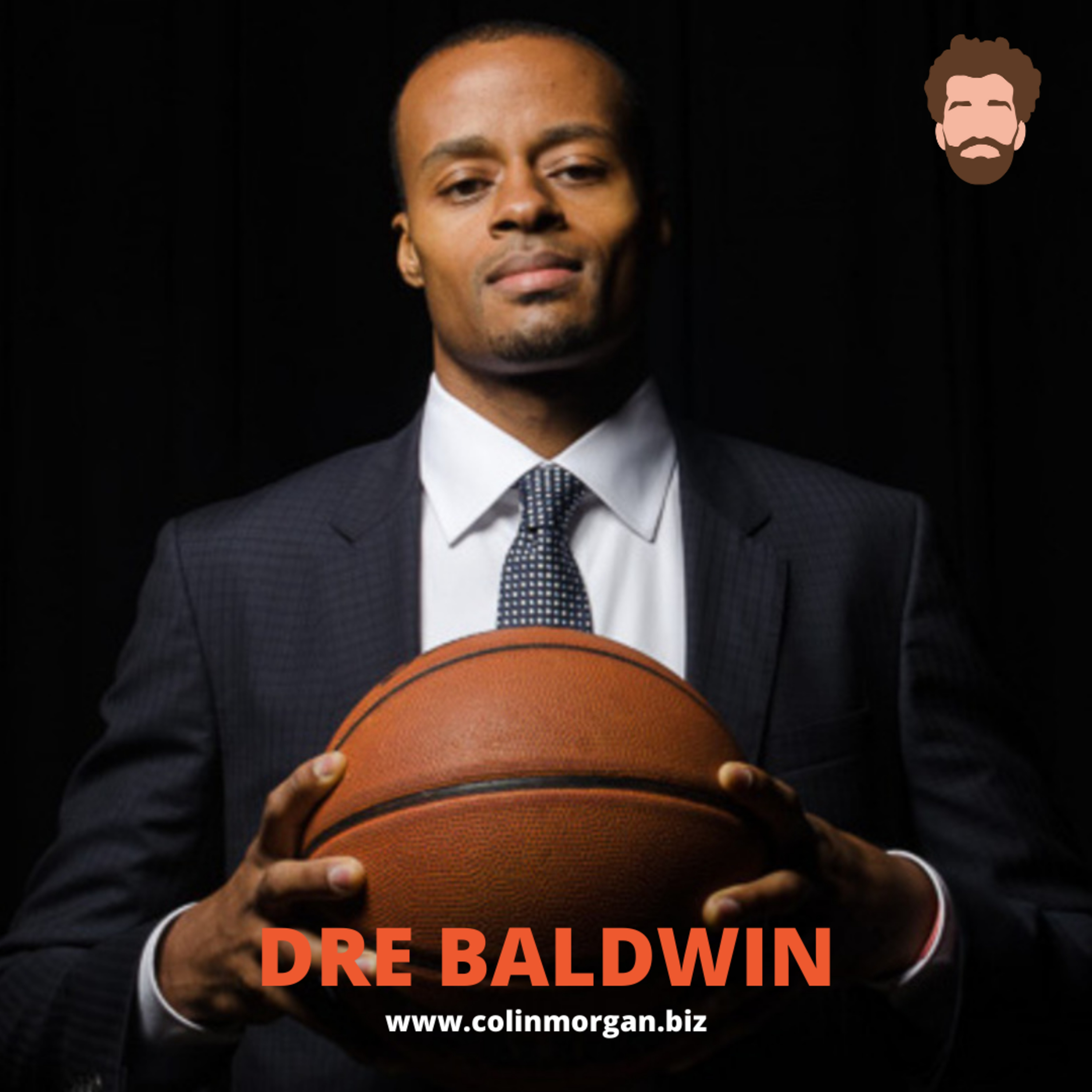
Hey everyone and welcome back to another episode here of The Daily Grind on today's episode we are sitting down with Dre Baldwin. Hashtag Dre all day. You guys are going to love this episode. This man is a true grinder in every sense of the word.
Be sure as always you have a pen, piece of paper, sit back and dive deep in today's interview with Dre Baldwin. Today's episode is brought to you by eBay, Canada. eBay, Canada continues to help retailers bring their businesses online quickly through the up and running program. When you sell on eBay as a retailer, you can continue to serve your existing customers while gaining access to more than 180 million buyers in 190 countries.
Having you to stay local, get sell global. This up and running program is incredible and as a Canadian business seller, you gain access to no listing fees on up to 200 listings per month where you only pay fees when you sell, access to the eBay community group where you can get real-time advice and inspiration from experienced sellers and eBay team members, powerful selling tools and insights and access to eBay's 180 million plus buyers around the world. eBay Canada is here to help you. They've been supporting Canadian small business retailers for 25 years and launched this up and running program to meet an urgent need today.
So if you're a Canadian small business retailer or you know someone who is, visit ebay.ca forward slash up and running and get started with this today. Again, that is ebay.ca forward slash up and running. Have any of you guys thought about starting a podcast? Maybe you have a podcast right now, but it's not quite working as you expect it.
So you start a podcast, you have all these hopes and dreams that people are going to listen. Ultimately, you're going to make money and you can do what you want to do from the comfort of your own home and you can do it anywhere in the world. The reality is there are hundreds of thousands of new podcasts being released every single month. The world of odds that your podcast is going to stand out is tough.
But let me tell you, there's a different way of podcast, a way that I podcast that has allowed me to grow my audience to over 15,000 people, that's allowed me to create amazing life for myself to have ad dollars to start a business. And I'm going to show you exactly how I did it. I have created a complete five week course that I'm going to break down everything that I did, how I did it and how you can too. Be sure not to miss this guys.
All you have to do is if you're interested, I'm trying to get a little bit of a focus group in here, 20 people. We already have 15, but I'm looking for five more. If you were interested in joining this focus group, all you have to do is visit my website, callimorgon.biz, email me that you are interested in this five week course. I'm going to share with you all the details and we're going to get started in the first week of October.
Again, just go to callimorgon.biz. I look forward to speaking with you. Well, Dray Baldwin, welcome to the Daily Grand, my friend. How are you?
I appreciate you having me. You want to talk about grind? I'm all in, so thank you for having me on site to be here. Of course, man.
And for the people being first introduced to you, don't know who you are, let the people know who's Dray and what it is that you do. Sure. Two minute background. I've come from the city of Philadelphia, Pennsylvania, started playing sports at a very young age.
I've always been in sports, played football on the driveway, kickball, that kind of stuff. First team sport that I ever tried was football, and I thought I was doing pretty well. And coach said one day, I'll bring your equipment tomorrow, the practice, I told my parents, they said, well, we can't afford equipment. I was in my football career.
Then I went and played some baseball. I'm a father. I wanted to coach the local team. He was into baseball.
And despite the fact that he was coaching, I was trash at baseball. So after several years of trying, I realized I was no good. So after another game, striking out three or four times, striking out looking, I walked off the baseball field over to the basketball court, and I haven't left there since well, I did, but I didn't leave there since. Sounds better that way.
When I first started playing, I was around age 14. I wasn't that good, but I kept practicing because something to me told me that I at least had some potential in basketball, which I did not see in football, did make my high school teams in my senior year. So at the bench, every two points a game had to walk on in college because obviously I had no recruiting, no offers, no invites, no nothing. Walked on at the NCAA Division III level, where most athletes do not become professionals in any sport.
But it was able to hustle my way into professional basketball while at the same time, I started putting content on this brand new site called YouTube.com. This was around 2005, right when it first came out, and not many people knew about it. So I kind of had two parallel careers known at the same time. It was then fast forward to now.
I've written a bunch of books, not some TED talks. I run my own company, work on your game, incorporate it. It was all about taking the mentality needed to become a professional in sports and teach on how that same, those same mental tools can apply to business and life. And I've been a full-time entrepreneur for the last five years, I stopped playing football in 2015.
So that's what we are today. Now, nobody may be not affiliated anymore. And that's that. That's awesome, man.
So we'll talk about your sports first. When you're playing basketball, obviously you're not highly recruited. You mentioned you're walking on D through school. I played D2, so I know the journey there.
What was internally? Did you have the drive to know you were going to play professional, or was it just something that you just loved to do? I had to drive to know that I was going to play. It was probably around the age of 16 that I decided that's what I wanted to do with my life.
I didn't know how to do it, or where or when. I didn't know when you wanted to do it. And this is, I graduated from high school in 2000, 2000, 2004. So this was the internet existed, but it wasn't how it is now where it's too much information.
Back then, there was actually not enough information. So I didn't know anything about how to do it or where to get started. But for me, it was always just that internal drive to want to do it. And at the same time, you're an athlete who's not really having success, but you keep trying an environment that I come from, you get ridiculed for that.
So I had always had to drive to shut those people up or quote unquote prove them wrong. It wasn't really about them. It was just my internal drive to, I heard the things that they said, and a lot of it was based in truth, because I hadn't achieved any of them. So I wanted to get some achievement so that I could prove to myself that whatever those people were saying wasn't accurate.
And I think over the years, I was able to do that. What age did you, because I mean, obviously, you always had to drive to become a professional, but at what age did you realize this could actually be viable? Like teams are going to look for me, I can sign up for a contract, like what age was that? It was 23 when it actually happened.
So this was, I graduated college. I was 22. So I had a business degree from Penn State. I told my parents when I graduated that I want to become a professional athlete.
And they just didn't see that. Didn't make any sense. Because they were like, all right, here's our kid who tried out for the team at 12 years old, came home crying because he got to didn't make the high school team until he was a senior. And then in college, he went to the D3 level, which my parents aren't big sports geeks, but you can Google and know that D3 athletes usually don't go pro.
So they logically, rationally understood, all right, you're going to have your fun, play college basketball when it's over. Now it's time to get serious and be in the real world. But you come home from college with this pipe dream that's going to be a professional athlete. It sounded ridiculous.
It sounded ridiculous. And reasonably say, that sounded ridiculous. So that first year out of college, I worked a couple of quote unquote regular jobs. I worked at Foot Locker as an assistant manager.
I worked at a gym called Valley Total Fitness on the memberships. And then that next year, a year removed from graduation, I saved up my money and I went to this event, a town that they call an exposure camp. And I'm not sure you know about those, but for athletes, basically, it's like a job fair for athletes. So it's a place that you show up as an athlete and you're trying to show your awareness, show your abilities.
So as opposed to the job fair world, where you hand out your resume and shake hands, at a exposure camp, you actually bring your sneakers and you play your sport in front of the decision makers who can help you get a job. So anyone who started the NBA Combine or the NFL Combine is a similar set up to that, but an exposure camp is a for-profit event. So the NFL Combine invites the best players, right? All the players who you know are going to get drafted is just sorting them out.
An exposure camp is a wide open event where anybody can show up as long as they're willing to pay the $250 or $500, whatever it is, and then you go play and audience is full of decision makers. So these are the coaches, agents, scouts, managers, and team owners from around the world who are looking for players for their professional teams. So I went to one of those events that was down in Orlando, Florida, being a couple of my college teammates and drove from Philly to Orlando on a Friday. I started Saturday morning at 9am, and I played at that exposure camp.
I did my thing there, did pretty well, got that game footage, and I utilized that game footage to get myself an agent, an agent is the one who helped me get my contract. So to answer your question, I knew that it could be real after that exposure camp ended. It was a two-day camp, Collins, so we played two games, each of the two days, after those four games were over, and I saw the way that scouts were coming up to me after the game asking me questions, shaking my hand. Nobody offered me a contract on the spot, but I could just tell from their response to me, I knew I had done well and I said, okay, now this is real, because playing at the D3 level, most of your teammates and Collins, you probably experienced this even at the D2 level, most of your teammates don't have professional ambitions.
So when I was playing at the D3 level, even though I could be great in the pick up games there, I'm like, I'm playing against guys who are not even trying to go pro. So when I went to the exposure camp and did my thing, now I'm like, okay, I did this against some people who actually want to play pro. Now this proves that I can actually do it. I always believed it, but I need it, I'm a type of person who I try to look at myself as objectively as possible.
So I could believe whatever I wanted, but until I had some proof, I couldn't really say it with my chest, that's Kevin Hart was saying, I had to have some proof. So once I had the proof, that's when I knew it was real. And what team, what team gave you that gave you the chance, what team gave you the first contract and where was it? The first contract was in countless Lithuania, and the team was called at the left us at the time.
But I think they changed their names. I don't know what their name is now, but I know it's not the same name. Is it where same league that the Angelo ball played? The metal ball.
The metal ball. Yeah. Well, it was the same country. It's not the same league.
I'm not sure they were even playing in the first division. Who knows what the ball ball had to be? Gotcha, man. So during all this, I mean, in 06 or right, 06, you know, 05, sorry, you discovered YouTube.
What was what was kind of the content you were throwing on YouTube at that time? All right. Well, go back to the story again. When I went to that exposure camp, you at the time, when you went to nowadays, let me say, when you went to an exposure camp, the game footage is part of the package.
So if you pay $450 to go to an exposure camp, you get to play in, they promise you X number of games and all the footage from all the games you played, they email it to you after the event. That's pretty normal because videos ubiquitous back then, though, we didn't have cameras on our phones. So if you want the video, something you had to have an actual camera, so you paid extra for your game footage. If you wanted your game footage, you had to pay them 20 bucks.
And when the event was over, they would physically mail you. Come on, I think you remember this, a VHS tape with all your games on the tape. So I had a VHS tape with these games on it. Now, mind you, this is the best game footage I had ever recorded in my life that I had in my hand.
This is my golden ticket to the pros. But I knew that VHS tapes can break, they can get wet, they can get destroyed, and something happens to this footage. There goes my career. So I took that VHS tape to an audio visual store, got to put it on a data CD, and I put that data CD on YouTube.
And all it was was just a two minute highlight of myself at that exposure camp. So players saw that video, didn't know who I was. I hadn't even played Pro yet. I played D3.
So my name did not ring out. I had no wait. I was just saw the video and they start asking questions, say, who teaches you how to play, how often do you work out to make videos about dunking? And you teach people how to do a crossover.
So what I realized was even though I wasn't nobody, there was a void in the market, nobody was putting out workout videos for sports, period at that time. So I was filming a void, even though they weren't looking for Drake's balls, and they was looking for help. So that's how I put that started. What was your work ethic during that time?
Like, say, during college, during those two years where you are working in a footlocker, you are selling memberships at a jam, like what was your work ethic off when you were like had time to work on your game? Oh, at that time, any minute that I wasn't at work, I wasn't at the gym. So I remember my first, when I got my job at footlocker for anyone who's ever worked that kind of job, you know that you don't get your first paycheck. So like three or four weeks later, because you missed a pay period and the manager explains it to you.
You're like, you're not going to get to the next one. So the first paycheck, I didn't get it for a month. So I couldn't even afford a gym membership. So I hadn't even played basketball for a whole month because I was working at footlocker every day, like five, six days a week.
But I hadn't got paid yet. So when I finally got paid, I could finally afford the $30 a month membership to LA Fitness. I only got me at LA Fitness memberships every minute that I wasn't at work. I wasn't at gym working out because I couldn't afford to do anything else anyway.
I couldn't afford to go on dates. I couldn't do anything. I was living in my parents house. I was sleeping on a couch.
We're going to footlocker and going to the gym. That's all I did. Did anyone provide you any direction at that time? Or was it just all your hustle?
Like, is there someone who is like, man, you should go to the exposure camp or do this or do that? Was there anyone telling you these things? Well, it was two of my college teammates, Brandon Battles and West Piper. We all played at a D3 level and luckily all three of us had aspirations to go pro and we were all able to make it happen on some level.
So they were the ones who they actually had some more promising statistics in college than I had. So they actually got invites to these exposure camps and different ones that I didn't get. So when they got invites, they said, well, Drake, you should go to me. They'll take anybody's money.
So that's how I knew about exposure camps because I saw teammates and mine were actually getting invited to these events. But the events were not invite only. They just sent those invites. This is basically like market.
But anybody can show up to those events and pay their money. Long as you're willing to pay, they'll take your money. So that's how I, that's the only insight that I had to answer your question. Cool.
So I mean, obviously at a successful career, you played for nine years. You really transitioned well from sports into business and what you're doing now. And I think that's something that, you know, a lot of athletes could probably learn from because that's something that someone, people definitely have struggled with. When you were playing in those nine years, where was your mindset?
Was it just in basketball or were you looking ahead and knowing that, you know, this isn't going to last my whole life. I need to do something else. Okay. Let me tell you how I got lucky by being unlucky as a basketball player.
Once I got into playing ball overseas for players who go for people who don't understand, usually it oversees basketball as a contract or year to year. So every season you have to sign a new contract. It's not like LeBron James, you get a five year contract, guaranteed money. It's not like that.
So overseas, I would be only team and signed to a contract and offer team and a free agent. Have a job, not have a job. It was a lot of up and down. So even my first agent, my first agent quit the agency business during my first season.
He said, I'm not going to be agent anymore. Your free agent after this is over because he thought the game was so dirty, the agent game, he just didn't like the people's ethics. It seems to be a lawyer. He went back to being a lawyer.
But anyway, there were many times that I didn't have a contract found. So what I did was, probably about 2008, 2009, I had to have a conversation with myself because I'm getting into my minutes away 20s and I'm like, man, I have to really have some control over my life over my destiny because I didn't often know my next paycheck is coming from. So I asked myself a really good question. I said, how can I take these things that I really enjoy and am good at, which was basketball and always been a computer geek, computer slash internet geek.
So I'm going to combine internet with basketball and make money from it. Now, I didn't know if there was a way that that could even happen, but I just asked myself the question. And at the time, I was reading a lot of Tim Ferriss, because I was around the time I worked week came up. So he had, I think it was either on his blog or on his books, he talked about how to test out a product, put $5 in Google ads, send it to a one-page website, and this is back when for all the online marketers listening.
This is back when you can spend $5 in Google ads and actually do a result. That's awesome. Yeah, no way. You might get half a result.
So if I was in Google ads, I put up this one-page dummy website that said I'm selling basketball training programs that cost $4.99 a piece. If you want one, click this button. And when people click the button, it wouldn't be the actual product or even the sales page. What it would be is that this email form that said this product is in development.
But if you want to know as soon as it's ready, put in your email address. And Tim's instruction was, if you get email addresses, that means people are going to buy this program at this price. That means you have a viable product. You should go ahead and make it and sell it.
So that's how I got an entrepreneurship. And this was around 2008, 2009. And at the same time, I started investing more and putting content online, which is a thing that a lot of people know me for. Most basketball players who know Dre Baldwin don't know me for playing overseas.
They know me for all the videos I put on YouTube. So it was all basketball content for the first five, six, seven years on YouTube. And that the YouTube videos were actually, they was my lead magnets. I spent money on advertising.
I always put videos on YouTube and people would just buy my products off of YouTube. And I was until the YouTube Slap came around 2014, 15-ish when they started penalizing you for taking people off of YouTube to other websites. But for a good four or five years, I ate pretty well with it. That's how I got started entrepreneurship.
That's interesting, man. It's how people like, I mean, you put out a ton of content, like how much content you put now? Well, today I published over 15,000 pieces of content. I don't think anyone has put out more content to me individually all the time.
But as far as today, I still put out a YouTube video every day, I still write articles every day. I have an audio show. It comes out every day. And that's my brand.
My brand is all built around, putting out material every day. So I challenge myself to keep going, sometimes I'm like, man, am I going to have enough content to keep doing this? So I challenge myself to see if I can keep doing it and just putting material out every day is where what people know me for. So as long as it's working, I'll keep doing it.
All right. So I want to know this. Because there's people bitching about putting out one piece of content today or even a week. You're put.
How do you structure it? How are you structuring your time? So for those listening, batching is like when you kind of do one day for 12, 14 hours, you're putting out as much content and then you release it daily. Is that what you're doing?
Or is it like an everyday thing for you? So when I first started, I would do it every day, especially on YouTube because I was going into every day. But then I realized, and I think I got my head to credit to Tim Ferris for this again. He talked about that.
Batching. It's just doing a whole bunch of it at once. But I like to sandbag mine. So it's not like I'll record 30 days of content on the first and then do nothing for the rest of the month.
I started especially with Batsky BallCon. I was recording 20, 30 videos a day. Wow. This is day.
I still have probably 10,000 videos of Batsky Ball. I never put out because I stopped playing Batsky Ball, so I stopped really putting out Batsky Ball Focus content. But I try to create way more content than there are actual days. So with my material, let's say if I'm recording for a week, I try to do at least eight pieces of content so that I'm giving myself that extra data that I earn.
So then, let's say six months from now, I want to take a vacation. I know that I have 50 days of extra content in just in case I fall off the wagon, just in case I get tired, my computer breaks, whatever could stop me from creating content. I know I have some extra space for myself. So I definitely batch my material these days, written audio and video.
How much is your first piece of content improved from now? Well, which piece? Audio written over here. Any of them.
Because you do it every day. So video, I am an amateur video editor still to this very day. I do very little editing of my videos. I usually shoot them 99% of the time in one take, all I do is slap it in the eye movie on my phone.
I record on my phone. Slap in the eye movie on my phone. I got an intro and an outro. And I just uploaded to drive in YouTube and I have my assistant put the titles on it.
That's it. I do not do any editing. Even in the best of all days. I wasn't doing a lot of editing.
So when I start seeing other people get into it and they have these heavy edits and they look at it, I can't compete with these guys in editing, but I can't put out more content than them. As far as the writing, I write my own stuff, all of my material. I go through and proofread and edit that stuff and then put it out. And then with the audio material, I have audio, you know, edits the quality of the audio.
But as far as the stuff that I say, I record the 99% of my material was recorded in one take. And that's not because I'm some genius who's just super talented. I do have a gift for creating content, but I also have the proverbial 10,000 hours of practice and doing this stuff. So that's how I'm able to create as much as I can.
I don't really need to edit that much because I've housed my process. Interesting. Someone getting started creating content, whether they're behind the mic for the first time or video, would you suggest that the way you did it or would you suggest like really kind of cutting it up and making it look good? I would suggest they just get something out.
That's the first step is that you just have to start, I mean, at the beginning, just to get started, just to get something out, whether you want to do it, like you said, written content, microphone content, video content, just create something and hit the publish button. You just have to, as Seth Godin says, you have to ship your products, just put it out, hit publish. And the thing is, most people are not going to see it anyway because nobody knows you. You don't have an audience.
Nobody's googling you. Just know that you've got over the hump of putting something out, even if it gets zero views or clicks or downloads, just put something out and you'll get better as you continue to do it. But you have to get started. Yeah, love that.
So what I want to kind of transition in now is like, you mentioned early on how you're helping businesses kind of think in terms of being a professional athlete, whether it's entrepreneurs or business owners, walk me through that process. Like when did you come to the realization, like, wow, there's a market for this and I really can fit into it. Great question. So what happened was around 2010, as I'm putting out these basketball videos every day, when I first started on YouTube, I was just putting out the video of me doing the drill and I wouldn't even talk on the video.
All you just watching a guy on empty court doing drills. So players were asking me questions in the comments and I would always reply to the comments. That's another idea for anyone listening. If you want to get content ideas, put out content and read them in reply to all your comments because the people who are telling you exactly what they want.
So I always reply to the comments and people would ask me, well, where'd you come from? Where'd you play at? Like, who are you? Because they knew what it was.
But I looked like I could play. So they got, they weren't intrigued. So every once in a while, I would make a commentary video. I was just sitting in front of Cameron explaining to people.
Okay, here's where I'm from. Here's how I got. I didn't get recruited. Here's the college I played at.
So people started asking me, once they started piecing the story, I said, man, well, what kept you believing in yourself when you got cut from the high school team three years in a row? Or how can you drag practice an empty gym to be good, but then take that same confidence and translate it when you're in a full gym with a thousand people watching and have that same level of confidence because a lot of athletes deal with performance anxiety. Or what keeps you showing up to a gym every day and practicing when you say you're a pro basketball player, but here you are in Miami, an empty gym practicing every day, all right, you don't have a job. Why do you keep showing up and working on your game?
What is it? Or how do you even get started in this stuff? I don't need to, not about me, but it inspired me. So I'm making a video every Monday.
I was talking about basketball content other six days a week. I started putting out this video called the weekly motivation for basically, I was just off to the camera. Just about some mindset idea or concept that I was just coming up with off the top of my head. And it would be, I mean, a two to four minute video every Monday.
Sometimes I recorded while I was driving. Sometimes I recorded in the gym. I might record at home. Just a very raw, very, very Instagram story-ish quality.
And I would do that every Monday and I would do that for about 400 weeks in a row, starting around 2010. And while I was doing that, I started getting messages from people who were not athletes. And they would say, I'm subscribed to your YouTube channel and I don't even play basketball. But the stuff you talk about on Mondays, those weekly motivations, I want to let you know that stuff applies to people who don't even play sports.
So I appreciate you putting that out. So that planted the seed in my mind. Okay. When I stopped playing basketball, I already have an exit strategy.
I can smoothly go into this because there's a whole audience of people who want to hear it from me. Maybe they dislike my style. They like that. I was kind of off the beaten path.
I wasn't the normal thought leader. I was coming from the sports world, but I could articulate my thoughts and explain them to people in a way that they could get value out of it even though they never played a minute of sports. And that's how I could smoothly transition from the sports world to the business world. So I kind of had a head start building this audience by the time I decided to stop playing basketball, I already had an audience and I already knew exactly what I was doing.
So it was not like there was this big ceremony. It could be Brian. But I wasn't like that. I moved because straight into it because I was already building that audience.
That's interesting, man. I mean, I've always said, you know, for me, there are two professions that translate so perfectly into entrepreneurship or one professional athletes and members of the military and it's just like though, it's the work ethic that is instilled in you as an athlete or a member of the military that you can translate over into whatever you're doing because you're always going to have it. It's in you. Right.
Exactly. You know, so walk us through kind of what you're doing now with businesses. So when someone needs help, right, like someone's looking for help or someone knows that I can do more. I just don't know how they want to become more competitive say like, how do you help a business?
How do you help those people? Sure. Well, my whole philosophy and brand and my company is all called work on your game. And it's a four part philosophy, four parts and number one discipline showing up every single day to do the work kind of like what you just said.
Second one is confidence putting yourself out there boldly and offensively next to mental toughness, continuing to show up doing the work every day, putting yourself out there even when the success you've expected to achieve because you did everything right has not yet happened. And fourth one is personal initiative to go and make things happen instead of waiting for things to happen. So we put all that together and work on your game and the whole purpose of working on your game, that is not the end where you work on your game to create an opportunity. When you get an opportunity, then you have to perform and when you perform, you have to produce a result.
When you produce results, that's when you get what you want, the goal, the girl, the money, the attention, it likes the followers. That's what I help people do is take those four pieces, those four mental game elements, apply them to what they're doing so that they can produce the result that they want. What do you feel like is lacking? Whether it's a commonality between the people you're working with or entrepreneurs you see, is it mental toughness?
Is it showing up? What's the one thing that you typically would start with first? Man, that's a really good question. There's so many.
The number one thing that I've seen people not having is discipline. It's discipline. I think the reason why a lot of people aren't willing to show up every day and do certain work is because they do not believe that doing X, Y, Z work is actually going to produce a result so they're hesitant to go all in on it. So you could also make that as confidence.
And at the same time, maybe they've gotten some results, but not the kind of results that they see other influencers or some famous person that they're comparing themselves to. They don't have their results. So they're like, well, I only got 10 views on my video. This person's getting a million views in the first 10 minutes, so why should I make another video?
So this is a lack of mental toughness. And then you have people who don't even want to get started because they say, well, I'll never be as good as this guy or that guy or this person. So this is a lack of initiative. So all this stuff works together.
There's a little bit of all that I see in entrepreneurs and business people, but really, once I get people to really open up to me, that's what I can really find out. What people tell you on the surface, like an email or a comment, it's usually not the real issue. That's the surface level issue. But when I get deeper with people, usually it's one of those four things.
Yeah, you find out they're insecurities, right? Right. Exactly. So when you find out they're insecurities, what are some things, like for those listening, whether it's like a little nugget, like what are some things you find help people with those insecurities?
Is it structure? Is it like laying out a schedule? Is it like creating a plan? What are some of those things?
I think the biggest thing is giving people a plan, like you said, where they can see where they are right now. It's kind of like being in a mall and you go to a little directory that says, you are here. And then it shows them how to get to the Nordstrom or whatever store they're trying to get to. Being able to show people, here's where you are right now.
Here's why you're here so that they know that you know what their situation is and then you show them. All right. In order to get to the next step, we need to do these things. We'll achieve this.
Then we need to do these things. We'll achieve this and these things. And show them the roadmap of them actually getting to where they want to go. Now, even though your roadmap could be perfect, but if that person does not believe, not just in you, but also in themselves and their own ability to actually execute the roadmap because executing the roadmap requires work and not everybody wants to do work.
So if you are willing to do the work and you follow everything that this roadmap shows you, you will get to this result. But the biggest thing for people is you have to have the belief and it's not your belief in the program or the product or the person who's helping you, but the belief in yourself. Do you actually believe that you can do this? You believe that you're even worthy of achieving this outcome.
I think the biggest thing that holds most people back in life is what they see when they look in the mirror. It is not the product or the service or offering because there's got to be somebody out here who knows what they're doing. So the challenges is people looking at themselves. So what's your plan going forward?
I mean, you play basketball. It seems like everything you do, kind of you always have that next step in mind. You always have that next vision. So whether it's looking two, five years down the road, whatever it is, what do you envision for you?
I want to take the work on your game philosophy and make it, I want to put it on the same level as Nike's, just do it. Some people say, just do it. You know that's Nike. Someone says work on your game.
I mean, it sounds good, but people don't associate it directly with me. So this is a philosophy and the message that I want to get out to more people, which means I need to expand my reach. I still have a lot of athlete audience, but I would say I'm still in a very niche category, which is cool to have a niche. But at the same time, I think there's a wider audience of people who can hear and benefit from my message.
So I still got a lot of marketing and sales working through town. I love it, man. Well, if people wanted to learn more about you, they want to see how you can help them. Where's the best place everyone can go?
And the best place that people can go, well, I'm on every social media platform. I think that's the quickest place that most people go is in social media. So right now I'm probably most active on Instagram. My Instagram is at Dray Baldwin for people more business focus.
I'm on LinkedIn. Just look at my name, Dray Baldwin. YouTube posts videos every day. I'm on all the social media.
Everything is that TikTok. I use everything every day. Gotcha. Cool.
And then a website, is there a hub that people wanted to learn more about how you can directly help them? Sure. Well, I have a book that I offer free of people coverage. Yeah.
Sure. Well, that book is called The Mirror of Motivation. Another title is The Self-God, The Self-Discipline. And the reason why I've written a lot of books, the reason why I made that book, the one that I want people to start with, is because any life, most people, most people who listen to this have gold.
Sorry. You want to listen to a show called The Daily Grind if you don't have a gold. All right. So everyone knows they want something.
And everyone listens to this. Also understands that they can't get something for nothing. You have to put something working. So everyone understands this is what I'm going to have.
This is what I need to do. Or I mean, they think they know what they need to do. Most people never ask themselves a third question, which is who do I need to be? And that is, I think the key question to anyone becoming successful in life, because these days there are plenty of strategies and tactics out there to tell people what to do, and even how to do it.
But who are you being as a person determines the kind of energy that you bring to those actions. Because I think anyone listening here can agree that there have been times on life that you were doing certain things, and you weren't getting the result. But then when your energy changed, and you did the exact same thing, you got a completely different result, because who you are being changed. So what the mirror motivation is about is teaching you how to look in the mirror so that you can alter who you are being, whenever you want to.
And that level of being will affect what you're doing, which will in turn, of course, affect what you're having. It's probably because not because something's wrong with your strategy, because who you are being as a person, the mirror motivation will help you solve that challenge from within. I'll share that link right in the show notes section to make it super simple for everyone to grab a copy of that. And be sure that you do.
Obviously, you listen to Dre's episode today, he knows what he's talking about. He can help you grab that book. I'll share all the social links. And Dre, thank you so much for coming on the show and sharing some knowledge with the audience today.
Absolutely. Thank you for having me. Hope we gave some value. You got it, man.
And that is it for today's interview everyone. We hope you enjoyed it. If you did, hit that subscribe button. We benefit from today's episode.
Leave us a rating and review on iTunes. We'll be back next week with another episode until then. Call them. We're going to sign off.
And always remember to keep on grinding.