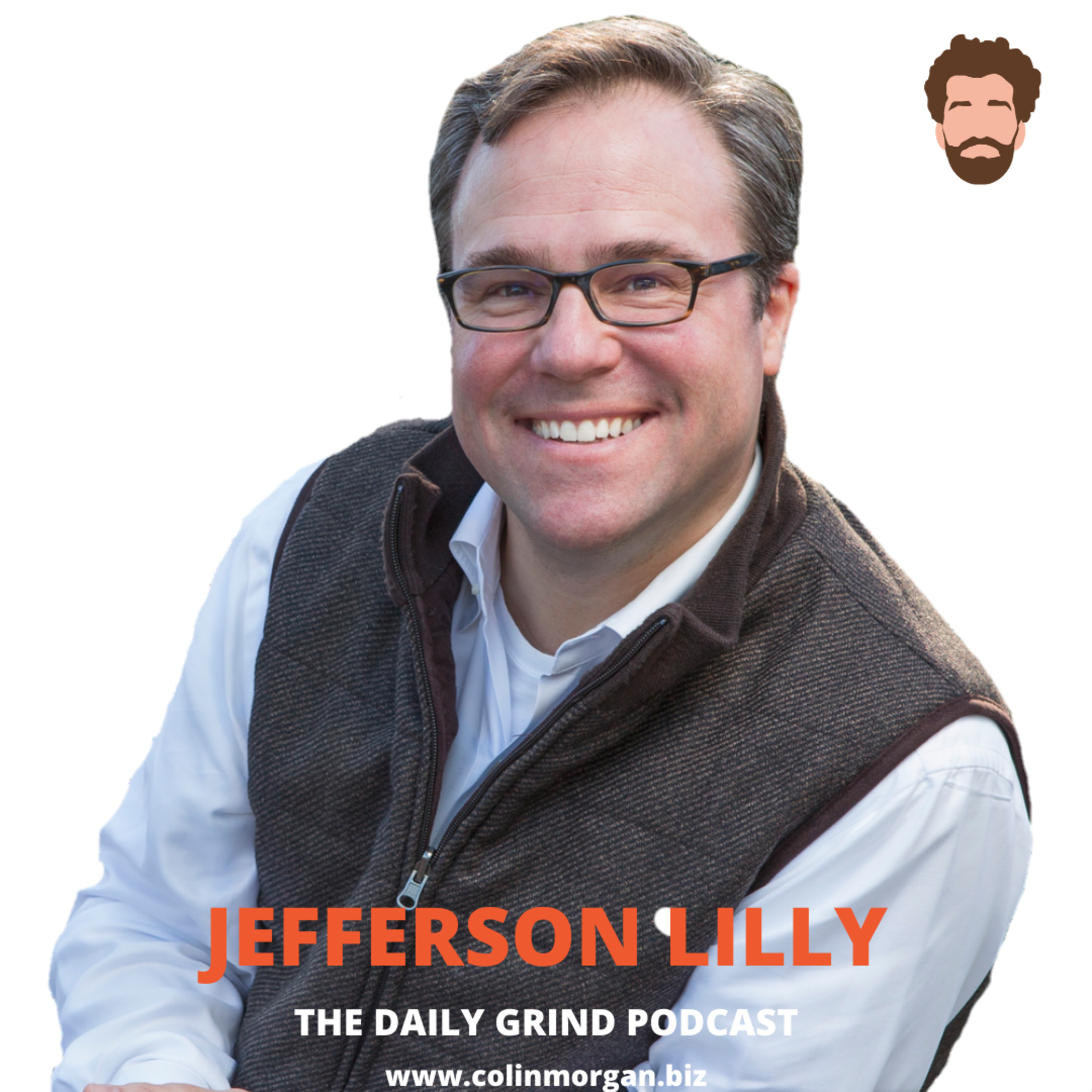
Good morning, everybody, and welcome back to another episode here of The Daily Grind. Today we have a very special guest for you lined up. We're joined by Mr. Jefferson Lilly.
Jefferson is a self-made millionaire real estate investor in mobile home parks. He has purchased nearly $100 million worth of mobile home parks, generated double-digit returns for his 200-plus investors, and expanded the supply of affordable housing throughout the U.S. Jefferson's business both makes a lot of money and does social good for lower-income Americans. He is media savvy and started the mobile home park industry's first podcast, Mobile Home Park Investors, and has raised several tons of millions of dollars through his shows.
As always, everyone, be sure you have a pen and piece of paper, sit back. Jefferson shares a lot of important messages in today's episode, and it's something that I learned, as well, so I hope you all enjoy. And without further ado, here is Jefferson Lilly. Well, Jefferson Lilly, my friend, how are you?
I'm great, Colin. Thanks for having me on. Of course, Jefferson. For people listening, kind of being first introduced to Jefferson today, if you wouldn't mind just kind of in your own words sharing a little bit more as to who you are and what it is that you do.
So I buy mobile home parks. I improve them. I expand the supply of affordable housing. I do that by raising money from accredited investors into my funds.
And I have acquired over the last dozen, no, 13 years now, acquired about 33 mobile home parks. So I transitioned here from working a day job as it was 13, 14 years ago, and I enjoy working for myself now. I've transitioned into real estate full-time. Cool.
What was your day job? I spent about a decade working in three different startups, Silicon Valley startups, all venture-backed. So I was basically in sales. I was selling wireless messaging solutions.
So you think about pre-iPhone that like the only way you would get a flight delay alert would be a text message. There was no iPhone, no apps. So we routed in text messages. So as I say, Colin, I migrated from mobile phones to mobile homes.
How did that migration happen? What got you into the mobile home market for real estate? Because, you know, we've got a lot of people on real estate, different things, but I've never had someone kind of focused on mobile homes. Yeah.
So, you know, I guess, as I say, when I woke up from the concussion, it just seemed like a good idea to buy a mobile home park. But no, more seriously, so I was working in high tech kind of before, during and after the whole dot-com boom and bust. And basically I was looking for some more stable income to kind of even out the stock options. And I thought initially that I'd buy an apartment complex.
I'd always either lived in a house or an apartment complex. And I just figured, you know, hey, I'll get a little leverage. I'll buy more than a house. It'll be an apartment.
And I don't mind going to work. Figured I'd, you know, put in some new kitchens, make it better for tenants, bump the rents, make it better for me. And then just in researching multifamily properties for sale, I came across mobile home parks and they were priced better. And of course, I initially thought, you know, with my first search, I thought, well, that's absurd.
I'm not buying a friggin' mobile home park. And then I did, you know, the search again and again. I was looking in Lubbock, Texas and Peoria, Illinois and Oklahoma City, Oklahoma. Anyway, so I got hit over the head, Colin, probably five times or 10 before it finally occurred to me, like, hey, if these things really are more profitable, they seem to be multifamily.
You know, why don't I look into it? So it was part plan and just part dumb luck that I kind of stumbled into and discovered why they're such a good investment. So for people listening, right, like I think what comes to mind with mobile homes is like, you know, why mobile homes over something else? You know, you kind of get that what do people, I don't say this, but some people would say like, oh, you get the trailer trash.
That's like a common term out there. Not that I I know people and I have actually families who rent mobile homes and like vacation. So I'm not the one saying that. But, you know, like, what would you say to someone like that?
So mobile home parks suffer from what I call mobile home park PR, which means, of course, whenever there is a drug bust or a tornado hits a trailer park, the media is right there within minutes just filming it all. That's what makes the news, unfortunately, is the negative side of the business, which is very small. And frankly, you know, it might just be one or two percent of sort of, you know, the worst trailer parks that have tarnished the image for the whole industry. Frankly, that the bottom one or two percent of apartments are also quite rough in the bottom.
One or two percent of site built houses. But for some reason, again, mobile home parks seem to get the worst of the PR. It just never makes the news when, you know, when it's like, hey, all the rent has come in today and their kids playing down at the end of the street. This mobile home park and it's sunny and it's a beautiful day here in the mobile home.
All the rents have come in on time. It's just a great day to be alive and paying a low rate for your housing. That never makes the news, but that's the reality. That's the truth about mobile home parks, you know, ninety nine percent of the time in ninety nine percent of the parks.
So you talked about as you were kind of looking at into mobile home parks, like the profitability seemed to be quite attractive. What was that that kind of attracted you when you're kind of talking more from a profit center and a revenue center? Yeah, so mobile home parks and this was, you know, going back 12 or 13 years ago when I got into the business, parks were probably, you know, let's say 25, 30 percent less expensive than mobile home parks. So there's what's called the cap rate, which is basically your return on your investment.
If you have no debt, if you just pay all cash. So I was looking again, this was more than a decade ago. I was looking in, say, you know, Omaha, Nebraska. There would be a hundred apartment buildings at an eight cap, which means, again, if you paid all cash, you'd get an eight percent return on your money.
And then there'd be like one mobile home park at 10 or 11 percent pricing has gone up, which is to say your cap rates have come down for both apartment and mobile home parks over the last decade. But mobile home parks were just trading at a higher cap rate. That is to say a lower price. And I started looking into it for that reason.
I simply wanted a site. I wanted reliable income, passive income coming in. So the things that make this a very unique space and I think a more compelling investment than apartments is first that in general, the tenants own their own mobile homes. The implication there is that your tenants own all those leaky toilets and leaky roofs and other proverbial maintenance headaches.
We really look at this business as being the parking lot business. These mobile homes actually like a car do have a VIN number and title trades through the DMV. Interesting. Yeah.
Again, these are mobile homes, not RVs. An RV would be like a Winnebago, have an engine in it. And as I say, those cash flows drive off. But mobile homes are really permanently anchored into the ground.
Not that they can't be moved, but but they're not an RV. So we as a landlord really just have to maintain the land. We do have repair and maintenance. It's just that it's about one third the level of expenses as the apartment building world.
Again, we do, of course, maintain we mow lawns. Our parks up in the north, we have to shovel snow, plow snow in the winter and then their inevitable plumbing stop ups. So we maintain the land and we pave and fix potholes. But again, our repair and maintenance budget is about one third what it is in the apartment world where people are doing all that.
Plus, then the landlords have to also pay to replace those leaky toilets and the roof and fix broken locks and appliances that are stolen by tenants and on and on. And we don't have those expenses again because we don't own most of the mobile homes. Another thing that makes this a particularly compelling niche is that new competition is illegal over probably been over the last 30 or 40 years. Pretty much every city and county has outlawed any new mobile home park construction.
Oh, really? Yeah. So politicians on both sides of the aisle talk out of both sides of their mouth and they'll say, oh, sure, we love affordable housing. And again, they then either make it literally illegal to build more mobile home parks or they change the law such that it's just not economic to build a mobile home park.
For instance, I got my start in a little town in Oklahoma called Slaughterville, Oklahoma. I went to school in Oklahoma, so I know where Slaughterville is. Oh, you did? Were you at OU there in the middle?
UCO is called. UCO. OK, Central Oklahoma. Yeah.
Central Oklahoma. OK, got it. So, yeah, we're just about 10 miles right down Highway 77 from Norman where OU is. Anyway, so a couple of years after I bought and started expanding properties that we will have cobbled together over about a year and a half.
And then maybe later in 2021, we'll launch another fund. So when did, I guess before that, so the first deal, did you do with your own money or did you have partners in that? Oh yeah, great question. Yeah, so I got started with my own capital.
Yeah, it was less than $100,000 down in that first deal. And then I ended up, after about a year of still keeping my day job in high tech, I left that job. When I could see that that last startup wasn't doing well and my mobile home park was doing reasonably well and I was putting no time or money into it. So I started putting time and money into it, buying more houses, renovating houses, again, expanding the supply of affordable housing.
We only sell the houses on usually rent to own agreements. We don't rent. Again, we want to build communities of owners. We want to help people that typically are making $30,000, $35,000 a year household income.
We want to help them become homeowners. So yeah, so I started investing then more of my own money into the mobile homes and built up that property. Then I acquired a second property on my own. And then I started raising funds.
So I've been, I'm now on my third fund and I've raised cumulatively something around almost a little over $35 million cumulatively across the three funds over now about the last six and a half years. Interesting. And what type of people do you kind of, you know, are investing? Are you looking for investors or like everyday people like your friends?
Yeah, so we are an SEC registered fund, 506 Reg D. So that means, for instance, I could come on your podcast and shoot off my mouth about the fund and promote it. But in exchange for widely marketing my fund, I have to only take money from accredited investors. So that's generally folks with a $1 million and up net worth or a $200,000 a year income or $300,000 if married.
Not all of that, you know, any one of those will qualify you to be an accredited investor. So I can't raise money from quote unquote regular folks. The SEC would view that as me preying on widows and orphans. You know, anyway, it actually drives income inequality.
The SEC's regulations, if funds like mine can only take money from people that are already rich and make them even richer. But that's a whole separate discussion. But, yeah, I have to only take money from accredited investors. $50,000 is our minimum.
And we've had some folks, several folks invest over a million with us. Interesting. So how did, I guess, before that, so the first deal did you do with your own money or did you have partners in that? Oh, yeah.
Great question. Yeah, so I got started with my own capital. Yeah, it was less than $100,000 down in that first deal. And then I ended up, after about a year of still keeping my day job in high tech, I left that job.
When I could see that that last startup wasn't doing well and my mobile home park was doing reasonably well and I was putting no time or money into it. So I started putting time and money into it, buying more houses, renovating houses. Again, expanding the supply of affordable housing. We only sell the houses on usually rent to own agreements.
We don't rent. Again, we want to build communities of owners. We want to help people that typically are making $30,000, $35,000 a year household income. We want to help them become homeowners.
So, yeah. So I started investing then more of my own money into the mobile homes and built up that property. Then I acquired a second property on my own. And then I started raising funds.
So I've been, I'm now on my third fund and I've raised cumulatively something around almost a little over $35 million cumulatively across the three funds over now about the last six and a half years. And what type of people do you kind of, you know, are investing? Are you looking for investors or like everyday people like your friends? Yeah.
So we are an SEC registered fund, 506 Reg D. So that means, for instance, I could come on your podcast and shoot off my mouth about the fund and promote it. But in exchange for widely marketing my fund, I have to only take money from accredited investors. So that's generally folks with a $1 million and up net worth or a $200,000 a year income or $300,000 if married.
Not all of that. You know, any one of those will qualify you to be an accredited investor. So I can't raise money from quote unquote regular folks. The SEC would view that as me preying on widows and orphans, you know.
Anyway, it actually drives income inequality. The SEC's regulations, if funds like mine can only take money from people that are already rich and make them even richer, but that's a whole separate discussion. But yeah, I have to only take money from accredited investors. $50,000 is our minimum.
And we've had some folks, several folks invest over a million with us. Interesting. So how did, how was that transition? Like, because obviously you go in with the first two, you're kind of investing your own money and now you're looking at, you know, this is a great business.
I need money. Let's start a fund. What was that transition like? Yeah.
So, uh, I, at that point I knew, uh, some friends, uh, and, and just some other colleagues, uh, other investors. Um, and I found some folks online. Uh, it, it was not easy raising my first, uh, it wasn't even a fund actually. I got started, uh, with a business partner then doing our first deal by deal.
So he and I started, uh, raising money just, just in, in an LLC just to make that one acquisition. We did three of those deal by deals. We then had enough of a track record to raise a fund. But just trying to get that first deal done was very difficult.
Um, so I'll encourage your listeners, if you're doing this in any business, be it real estate, uh, or, or startups or anything, it does, it does get easier. But that first deal was a very good one. We still own it. Uh, we had one investor, I call him Mr.
Wyoming, uh, who had some real estate experience. You know, he was very gung ho for the deal. He, uh, spent an hour and a half or so with me on the phone, asked good questions, then wanted to meet my business partner. So we scheduled a follow-up call and all three of us spent another sort of hour and a half or so on the phone.
He then had some other follow-up questions. Uh, you know, he, he was gung ho until he then said, well, how about if I just do half of the deal? You know, and we said, okay, do half. Like just please commit.
Tell us what you're going to do. Um, then he came back and said, no, no, I'm doing the whole deal. Then he had many of the same questions. He was now repeating himself again with questions.
He was just getting a little squirrely. Uh, and at that point, uh, it was a little late, but we did finally, you know, figure out this guy was not likely to do the deal. We started talking to other folks. Um, so Mr.
Wyoming ultimately sent us after about a month, sent us a single sentence email just saying, my wife won't let me do this deal. And he didn't even have the chutzpah to pick up the phone after spending hours and hours with him and talk to us. He sent us an email. Meanwhile, I had, for instance, sent an email with our presentation to a friend of mine that, uh, it was a former neighbor from when I was living in Boston 20 years prior.
I had not laid eyes on the guy in 20 years, but we were part of an extended investment group. He knew what I was doing. Um, and so I sent him an email. He sent me a text and said, okay, I'm in.
What's your bank account information? And I texted him back. I said, okay, I'll get it to you. But when do you want to talk this week so I can tell you about the deal?
He texted me back and said, Jefferson, I'm in. What's your bank account? I'm wiring you $100,000 in the morning. So that's Mr.
Boston. So we've, we've never had as much trouble since raising money as we had with Mr. Wyoming. And it's never been as easy as an email and a text with Mr.
Boston. But it's just ironic that with our very first deal, we hit both bookends from, you know, the impossible investor to the impossibly easy investor. And it was all right there in our first deal. So everybody else has been in between those two extremes.
I've, I've raised money now cumulatively from, I believe around about 210 people, people, trusts, investment partnerships, what have you, but about 200. I've got about 210 subscription agreements signed across those first three deals and the subsequent three funds. So it gets, it does get easier as you build more of a track record. So that was, it was little fits and starts, but again, then it just got easier to find other investors.
And of course, some of our investors came back and have reinvested with us all the way through. Anyway, so it, uh, it can be hard to start Truly appreciate it if you have been listening to this podcast for a long time. We'll be back next week with another epic interview. Until then, Colin Morgan signing off.
And as always, keep on grinding.