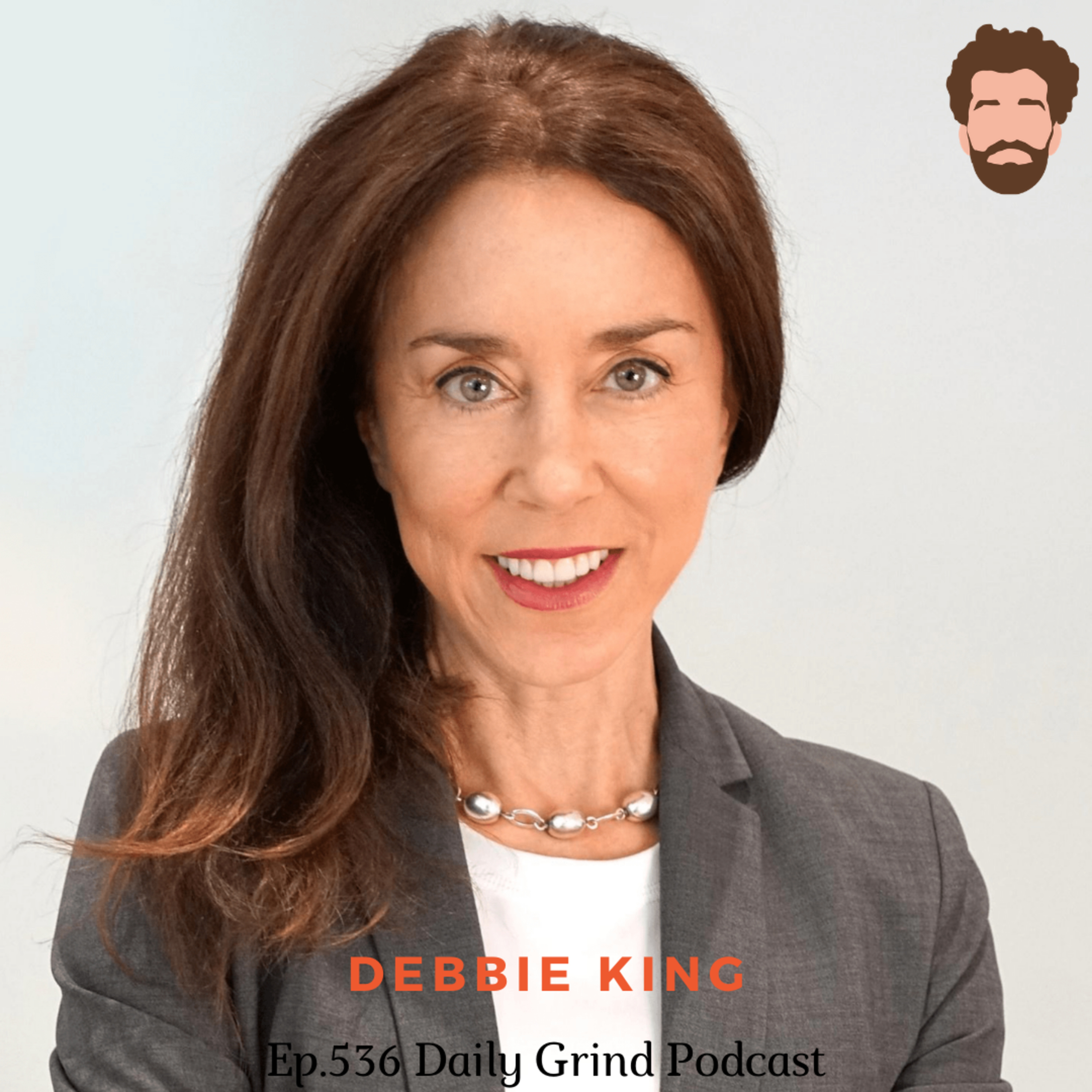
Hey everybody, and welcome back to another episode here on The Daily Grind. Today we are sitting down with Debbie King. Now, what's the first word that comes to mind when you think of your business? Debbie thinks it should be love, but it's hard to love your business when you feel trapped by it, especially during hard times.
Business owners tend to believe that any failure in the business is a direct reflection of themselves. On today's episode, Debbie is going to show you how you can start loving your business more. As always, be sure you have a pen, piece of paper, sit back, and dive deep in today's interview with Debbie King. Enjoy.
The new year is here, and marks a fresh start for your small business. Whether you're shifting business hours or hiring more remote employees, one thing that remains unchanged is the importance of having the right people on your team. When your business is ready to make that next hire, LinkedIn Jobs can help by matching your role with qualified candidates so that you can find the right person quickly. And to lend a helping hand, your first job is free.
Whether you're looking for a rock star to help you with your marketing, whether you're looking for a talented proven sales professional, or you're looking for someone to help you with bookkeeping, keeping your business on track, LinkedIn Jobs is there for you. LinkedIn is an active community of professionals. As you know, they have more than 722 million members worldwide, which means when you post a job, you know and you can be confident that you're going to find the right person. Getting started is easier than ever.
These new features help you find qualified candidates, as I mentioned super quickly. You get to post a job with their targeted screening questions, LinkedIn will then quickly get your role in front of more qualified candidates. You're able to manage job posts and contact candidates from a single view, which you all know on LinkedIn.com. It's not a separate website, and you can even use it mobile.
That's how LinkedIn Jobs can help you hire the right person faster. When your business is ready to make that next hire, find the right person with LinkedIn Jobs, and now you can post a job for free. You just have to visit LinkedIn.com slash daily grind. Again, that's LinkedIn.com slash daily grind to post a job for free.
Terms and conditions apply. Well, Debbie King, welcome to the Daily Grind. How are you? Doing great.
Colin, how about you? I'm fantastic. It's Christmas season. We'll rent for people listening, and though this isn't coming out on Christmas, but it's Christmas week.
So it's like an exciting time of year. Yes, it is. The end of 2020. We're all ready for that for sure.
I know. Hopefully new things are coming. Hopefully we get out of what we're in right now, but that aside, for people listening, Debbie kind of being first introduced to you, if you wouldn't mind kind of just explaining a little bit as to who Debbie is and what it is that you do. Yeah, thanks.
I started my first business 20 years ago, I think it is now, and I was so excited, right, because I was tired of working for somebody else. I was working like 70 hours a week, and I thought, if I'm going to work that hard, I'm going to work for myself, right? So I'm going to make all the money. I'm going to have all the time and how the freedom that was my drive.
Plus, I wanted to do it my way, right? I wanted to do things the way I thought it should be done. And the problem was, after about five years, I realized I didn't have any time. I didn't have any freedom at all.
And although I had some money, I was always worried about it, right, because in order to grow, you have to invest. And so, you know, it was a technical consulting company, and really what I did was I started it out the wrong way to begin with. And you know, that's, that has been my journey is figuring out, you know, how do you build a company that can take care of you instead of you working for it? And so over 18 years, I finally figured it out.
And that's what led me to turn the company from a services model into sort of a solutions model where we were able to scale. And then I wrote a book about it. Wow, it's amazing. I mean, it's one of those funny things.
I always use this analogy of like, as an entrepreneur, anyone can, like, you can wake up and be like, I'm going to start my own business, right? Like, I'm an entrepreneur. You can't do that with sports. You can't do that as a musician.
So, like, people get started and it's very exciting at the beginning, but really you're starting off on something like completely new to you, right? Right. Yeah. It takes a lot of courage.
And I just love entrepreneurs. I just, I feel like we are the people who built this country, right? I mean, we have so much courage to do something new for us, right? To break out.
I don't know if it's the same for your listeners, but for me, you know, everybody told me, I was crazy. You know, my husband thought I was a lunatic. My parents couldn't understand. They're like, why are you leaving this good job, quote, where you're making this good salary and you even have benefits?
Like, because I'm miserable and I can do it better, I thought. So, and so then what happens is somewhere along the way, though, you can, you can start to lose your compass. If you don't, I mean, my mission really calling and why I'm happy to be on your podcast today is to help entrepreneurs set it up right to begin with so that they don't build themselves a trap. So, so what are those things that you can kind of do early on?
Like, someone's listening, they're wanting to start a business. They're in those stages. Like, what are some things that you've like that are proven to work? Well, the hardest thing is that in the beginning, you think any revenue is good revenue, right?
Because you need the money. So you're chasing after the money so that you can stay afloat. And what I would encourage is that if you take the time to really figure out who your ideal customer avatar is, like, who really is it that you want to serve? Whether it's a B2B or a B2C, it doesn't matter.
Still, you want to sort of identify the characteristics of the ideal customer for you. And then focus what you do to serve them instead of figuring out, I do this, and then going out and try to figure out who will buy it. You find the customer base that you feel connected to, that you know you can add value to. And when you do that, you can communicate in your marketing so clearly that they, they think to themselves, she gets me, right?
Or he gets me. And then you can work with them. And so your marketing becomes more effective, and then you can scale your business by owning your niche. I mean, we've all heard the richest are in the niches, but it really is true.
Because you can become an expert when you focus in on a niche. And once you own that niche, of course, you can broaden it. But the biggest mistake that I see early stage entrepreneurs make is they're trying to do too many different types of things for too many different types of customers. Yeah.
I see that as well. Do you feel like there's a value in someone having some, like maybe like six months of leeway, like cash in the bank account? So they're not forced. Because a lot of times it's hard, right?
Like when you're kind of early and like, this is your income, it's like, oh, someone's willing to give me $1,000 to do some posts. Like, all right, we're into this now, right? Yeah, it is. It is helpful to have money to tide you over while you're considering what to do.
But it's not essential. You know, you know, it does make sense that you will take in the very beginning, whatever you can get. And sometimes you don't know who your ideal customer even is. And in the process of taking these gigs, you figure that out.
So the main point that I'm making is that, yes, it's better if you have six months of revenue for sure. And as you scale, you should always have six months of reserve, but I can tell you, I didn't always. And of course, I suffered for it too. I remember in 2008 when we had the financial crisis, I mean, I was in a catastrophe situation.
The banks called your line of credit, nobody else would loan you any money. I couldn't make payroll. I had to get a second on my house. So there are times like that.
So it is better to be prepared if you can. How fast did your company grow early on? Like you said, you started the consultancy 20 years ago. Yeah.
How fast did it grow? I think the first year it was just me, and then the second year I hired an assistant. She wasn't like an assistant, she was a programmer. So she assisted me in programming because I did sort of data analytics work back in the day before it was cool.
So I was in the data before it was even cool. And you know, that's what most of us do, right? We're technicians. We start the business doing the thing we know how to do.
And so after about the third year, I remember I had like four people working in my house. I had taken over the basement and the upstairs desk room and like computer equipment everywhere it was hilarious. My husband didn't think it was funny. For me, you know, it's just I didn't want to pay for an office.
It seemed like such a big deal to rent an office, you know. So I had four people around your three. And then I think that's when I decided to get an office. And then, you know, after that, I eventually got to 20.
Wow. What was the what was kind of the transition? Like, because obviously early on, you know, your boots on the ground, you're getting your hands involved in everything. Now when you kind of have 20, you know, even four people, you're more transitioning that leadership role.
What was that transition like for you? Well, it was very difficult. And most of the people that I know will tell you the same thing. If you're really good at doing the work of the business, trying to turn that over to someone else is painful because typically they don't do it the same way you would.
And then of course you have all these judgments about that. And usually it's not as good in your mind as you would do it. The people that you hire don't like that feeling. They don't like the feeling that you're not happy with their work.
So the biggest challenge is in turning over your baby, the thing that you're really good at to other people to do and then managing them and trying to make them do it your way. That's a mistake. The best thing you can do is hire people that have the same core values as you have that have experience doing what you want them to do. Because when you're early stage, a lot of times I see people hire someone they like, you know, that like they like a person, even if they have never done the job before.
And because we're entrepreneurs, we're really optimists. So like we see what we want to see. So we hire this person, they tell us they can do the job and they were dumbfounded when it turns out they actually can't do it. Do you feel like there's a lot of stubbornness in entrepreneurship and business owners?
Because I see all the time. Like people know, like they know that they're spending too much time on the business. They talk about it during dinners, like if they're completely unorganized, you find like that it's kind of weird. I find that as well.
Yeah. It's totally true. It's like this mass psychosis that all of us have, you know, it's what God has here won't get us there in the famous book, right? And so relying on ourselves and our own husband, our grit and our willpower, that's what got us like to the point where we're at.
So of course, it's natural that we would be reluctant to give that up. The idea of letting go, although somebody can tell you intellectually, all the reasons why it's a good idea, the primitive part of our brain is screaming danger, danger, you know, your survival is at stake. And so the primitive part of our brain is always going to win out. It's much older than the neocortex and when fear gets involved, we revert back to what we know best.
And this is why it takes so long for many of us to grow our businesses. So true. So what would you suggest to someone who's like, they know they're stubborn, they don't want to change everything at once. Is it like changing small things and little increments?
Is that what you would suggest? Well, I have a tool that I use called the model. Okay. And the model has changed my life completely and those, my clients as well.
And really, it works like this. So there are circumstances, which is just neutral facts, something happens, an employee quits, for example, or you lose a contract. Then we have thoughts about what that means. Like human beings are meaning making machines is what we do.
We interpret reality with our thoughts. So an event happens and then we have a thought. The thought might be, this is terrible. What am I going to do now?
I'm never going to make it, right? And then the feeling comes right after the thought and the feeling is usually in that case going to be anxiety or worry, right? And the problem with that is that our feelings are the fuel for the actions that we take. So when we're feeling worried or anxious, we don't take the actions that are going to give us the result we want.
We take the actions that are aligned with how we feel. And when we're feeling anxious or worried, typically we're going to, well, what many of us entrepreneurs do. In fact, people do is we buffer or we try to escape, you know, we like try to avoid. So we'll, you know, over drink or over eat or over shop or overwatch TV or we'll take some sort of frantic action from this place of fear, like throwing all of our effort in a scattered way that makes no measurable difference and we're not even evaluating what we're doing.
We're just hoping something works. All of this coming from fear. And the result is that we don't actually get what we want. So in the case of losing a client or losing an employee, what we want is a stable team and happy customers.
But the behavior, the things we do that come from fear are not going to lead to that. So in the model, I just every day, whenever something happens, I write down this thing happened and this is my thought. And when I think like this right now, I'm feeling X and that that's usually enough for me to realize that if I'm feeling any negative emotion, like fear or worry or inadequacy, we all have like this imposter syndrome when we're starting off, that is not going to lead me to take the actions that are going to get the result. What I need to feel as an entrepreneur is confident, clear, capable, focused, excited.
These are the feelings that fuel my actions. I just wrote a whole thing on this for Forbes this month. It's the feeling that fuels the action you take. So that's what I do.
But yeah, small steps are important, but I like to look at the way my mind is interpreting reality around me because you have a choice. You can choose to let it go on default, which is, you know, the primitive brain is usually going to take any input and interpret it as negative. We have a negativity bias for survival and you can just decide different thoughts. How is this good for me?
What can I learn here? What do I do next? It will get me what I want. You know what I mean?
You have to manage your mind on purpose. Yeah. So I mean, you say feelings. I know a lot of people say like it's kind of your state, like it's like getting in the right state.
Robins used to say that all the time. Yeah, exactly. Yeah. I love that.
So he kind of mentioned that you mentioned feelings and you mentioned the idea of, I mean, first and foremost, it's like having an awareness for it. Is there anything like, does that typically, if for you, is there exercises that you do in order to try to get you out of the current feelings or current state into a new one? It's just asking questions, right? Like I think that the questions are the most important thing and I talk about that, you know, in my book, like just trying to figure out, you know, how is this good for me?
Like what else could this mean? You know, things like that to get my brain. I remember actually Tony Robbins saying once I went to a event of his in Australia and he was saying that, you know, the quality of our life is correlated to the quality of the questions we ask ourselves, you know? And so a lot of times we're like, why did I do that stupid thing or how come this is never going to work?
Well, those kinds of questions are not going to give you answers that are going to help you get what you want, right? So so I think that's the most important thing is the questions we ask ourselves. Cool. I know that people can't see it, but you have a book in front of you loving your business.
How long did you ever think you would write a book? No, I did not. And you know, I was able to scale my business and sell it. And I mean, that was a long journey and I can tell you that whole story if you're interested or the listeners want to know.
But the hardest part of the journey was when I was tired and I didn't want the business anymore was exactly the wrong time to ever ask anybody to buy it, right? Everyone's your problem child. Yeah. And so that's when I had to decide on purpose to manage my mind and fall in love with it.
So that's why I called the business, the book, loving your business. And actually I call my business that too, because it all started with a conscious decision to look for what I loved because it made me feel better. And then I was able to actually do the things that you need to do, like even further narrow my niche, turn my services into solutions that could scale, change the way I got paid so that I got paid up front and I didn't have cash flow issues and monitor my numbers and then make sure that I had a team that could run the business without me. So in order to do those things to make a business something someone else would want to buy, I had to love it.
Because if you're putting in the energy of, oh, I can't stand this another minute. I don't want to do this. I'm tired. You just, you don't have the fuel to take those things.
So after I sold the business, you know, I traveled the world for a year and then I thought, well, you know, I'm going to write a book about it. And it took 18 months to write this freaking book. I know I had someone on recently, it took them eight years. I was like, wow, a little more of like a science back base, but still absolutely wild.
Do you feel like when you were making that transition, you weren't in love with your business at that time? And that's why you were like, I'm kind of get like, you almost felt sick of it. I got to tell you, Colin, I hated my business. There was a time where I hated my business.
And that's what I would love for your listeners to think about. Don't build your business like a trap. I mean, this is what happens when you take any kind of business and you're just trying to grow the money. The other thing is there's some dysfunctional things that we do as entrepreneurs.
I see this over and over and over again. We work so hard that we burn ourselves out because we're trying to control everything because we make it mean that the success of the business is our identity. If the business is doing well, then we're okay. If the business is doing poorly, there's something wrong with us.
So when you have that kind of a mindset, you'll try to control everything. That's what leads to burn out. Then when you burn out, you're resenting the business and you try to escape from it with all these other things I was talking about. Like typically over drinking, overeating, you stop exercising and your whole life sort of starts to crumble apart.
And then you think, well, I deserve, I deserve this because I work so hard. And then before you know what you're spending your money on stuff you don't need, I remember at one point, I was traveling to New Zealand, I'm like, I am so frustrated, I'm just going to go on a trip. So off I went to New Zealand for three weeks to ride horses. Like I abdicated the business, I'm like, to my right-hand person, I'm like, here, you figured it out.
And you know that doesn't work. You cannot run away. Fuck your business. It's still there.
And so I think that there's a problem when you resent your business, it's something you built. You built this thing and then you resent it. So it all comes back to how you think and feel. And so I had to decide, I had a coach at the time and she told me, she's like, you will never sell this business if you hate it.
You have to love it again. And so I decided to do that. And in order to figure out how to love it again, I had to change it because it wasn't lovable, frankly. You know, it was taking everything from me, wasn't giving anything to me.
And so I had to change what I gave to it, right? I had to give it more structure. I had to give it more intention. I had to be clear on where I was going.
I had to grow as a leader. In order to grow your business, you have to grow yourself. And so loving your business means four things, loving yourself, loving your customers, loving your team and loving your solution. And so sometimes I'll have somebody say, well, what does love have to do with it?
That sounds so silly, soft. You know, I'm like, well, it has everything to do with it because when you love something you want it, you're not trying to escape it. You care about it. You pay attention to it.
You show up. You prioritize it. Like if you think about it, you appreciate it. So all the things that happen in a healthy relationship where there's love is present, you want to bring those to your business.
Totally. And we see it with the most successful entrepreneurs in the world, right? Like they all love what they do. And that's the reason why they are where they are because they put in the extra work.
It doesn't feel like work. It's like it's a hobby to them almost, right? Exactly. Yeah.
When you love it, you never work at the end. You're like, you know that. So go ahead. It starts with the intention.
Like I think that some of us think that the business should just work for us. But what it is is that we have to decide to look for what we love and to build it in a way that we love. And then it works for us. And then we love it.
And then it becomes a beautiful virtuous circle, but it all starts with how we think and feel about it. Interesting. When you made that transition yourself, like in your business, and you decided, I'm going to remove the things that frustrate me. I'm going to start focusing on what I truly love and what I want to do and who I want to serve.
Was there a step back period? I'm curious. Yes. Okay.
Can you talk about that? Well, for me, there was a time where I turned down a very large project. And I knew that if we did that project, it was going to keep me from being able to build the solution that I knew was going to be the ultimate way for me to scale the company. So most entrepreneurs in America are in the world, really, are services businesses.
And so when we're trading time for money, we know that doesn't scale, but most of us don't know how to get out of it. And the way I think, the way I got out of it, and what I've seen my clients do is to focus on the 80% that each of your services engagements have in common, you know, and build a solution for that so that each new client, which I like to call them customers, because customers are used to paying for things in advance, whereas a client wants to be built. So each new customer is using the system you built. And then you might only have to configure, you know, 20%, and this doesn't just apply to software.
I mean, you can create a system for anything, you know, bookkeepers, designers, accountants, physical therapy, people, any kind of services, look for what's in common, system ties that turn it into solution, brand it like a product and charge for it in advance. So when I was going through that with my technical consulting company, I had to turn away this one very large and very prestigious engagement to do a custom data warehouse for a company, because I was in the middle of building a solution that would scale. And so I took a revenue hit that year, but it paid off so well. I mean, that was the reason I was able to sell the company.
And it was also one of the reasons I fell back in love with it, because it wasn't custom development for every client. That was like reinventing the wheel. You mentioned you had a coach at the time who was kind of helping you walking you through it. Where did you meet?
Where did you meet the coach? Was it someone referred to you? Or did you kind of do your own research there? Well, actually, I did a master's at Georgetown in leadership.
So I did a whole master's degree there, and they talked about that they had this Institute for Transformational Leadership, which was a separate division that had a coaching program. And so I thought, oh, that'd be fun. I would like to be a coach. And so I took the class, and one of the professors there was my coach, and she was the one who could see that I was struggling.
You know, when you become a coach, or I like to call myself a mindset expert now, is that you're really starting with yourself, right? You're your first client. So I like to think that you learn what you teach, too. So you reinforce it.
Gotcha. So now you kind of mentioned that, like your mindset coach now, it's kind of how you refer yourself. What types of people do you work with? Who's your ideal customer and client now?
My ideal customer. Yeah. My ideal customer is someone who's been in business for five years or more, and typically generating over, well, I'm not going to put a limit on it here, but they have at least five staff. They've had business for at least five years.
And really what they're running into is, I don't know if you've ever heard of this great book called The Big Leap. They're running into what's called an upper limit problem. Like they can't seem to break through the limit of what they believe is possible. Because you know what's interesting, Colin, is that we look at the world through the lens of our beliefs, right?
Because the brain cannot take in all of the information coming in from outside stimulus. So the way that it filters what we notice is based on what we believe. And then confirmation bias shows us more evidence for the things we already believe. So this is what keeps us stuck.
We decide it's hard to make money or we don't have enough time. I hear those a lot. We start to make money and we don't have enough time. So we believe this.
Like we stop questioning that it's an optional thought. We believe these things are true. And so then we start looking at the world through the lens of scarcity of money and time. And we see evidence for it everywhere we go.
So I think that, you know, when I work with clients, I'm about breaking that down. It's not, it's not true. It's a thought. And you could just as easily choose a different thought and make that be true for you and have that belief that there's plenty of money and there's as much time, everybody has the same amount of time and that time is your friend and it works for you.
So it's really exciting when we think about how much, how much we can really influence our lives by the way we manage our minds. Totally. 100%. So if people wanted to, obviously, I mean, I think it's so important when you're, when you're starting a business or you're in business, I mean, you have to love what you do and I see it too.
Like there's so many people that have businesses, people that close to me that don't and they're kind of in that stock and that's where I see your book being so, so helpful and valuable to people. If people want to grab a copy, where's the best place they can do that? Yeah, it's on Amazon. So loving your business and also they can find out more about it from lovingyourbusiness.com.
Awesome. I'll share both those links in the show notes to make it simple and then following along on your journey because obviously it doesn't stop with the book here, obviously someone that's going to continue to push forward and do things where we're, where can everyone follow you where maybe are you most active on social media? Well, LinkedIn is probably the place that you'll find me the most, although of course I have, you know, Facebook presence and IG, but really I'm finding that most of the people that I'm interacting with are on LinkedIn. Awesome.
So you can find me there. Debbie S King. Perfect. I'll share that as well.
And Debbie, I can't thank you enough for coming on here. I know what you're doing in the book. You wrote is going to help and transform so many people and thank you for sharing your wisdom on the podcast today. Thanks for having me Colin.
Absolutely. It was an honor. Thank you so much. And there you have it for today's interview everyone.
If you did hit that subscribe button, share this out with a friend. If you feel inclined, go to iTunes, leave a rating and review. We'll be back next week with another interview until then Colin Morgan signing off and always remember to keep on grinding.