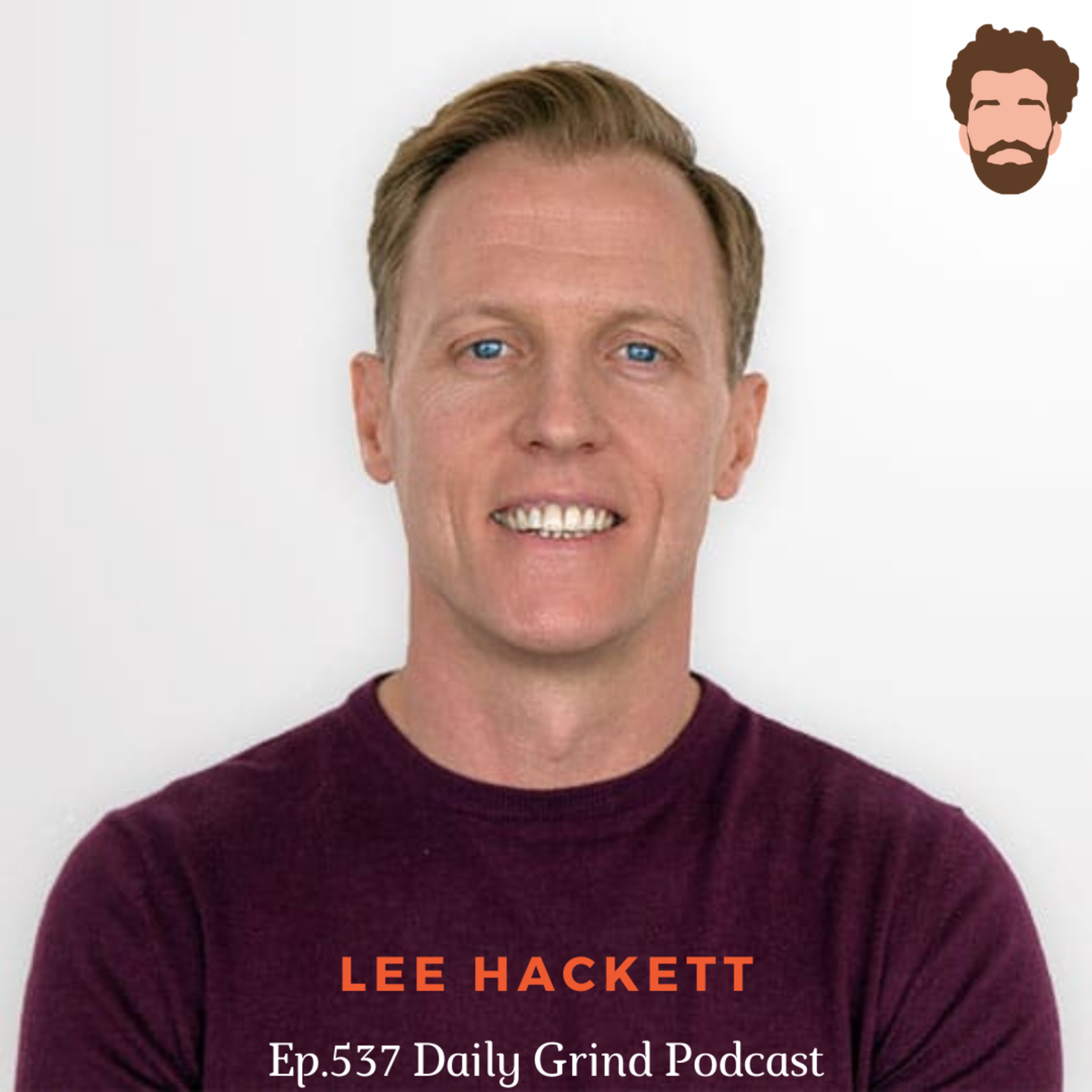
Hi everyone, and welcome back to another episode here on The Daily Grind. Today's episode is brought to you by Mint Mobile. After the year we've all been through, saving money should be at the top of everyone's resolution list. So if you're still paying insane amounts of money every month for wireless, what are you doing?
Switching to Mint Mobile is the easiest way to save this year. As the first company to sell premium wireless service online only, Mint Mobile lets you maximize your savings with plans starting at just $15 a month. So for people looking to save a little bit extra money this month, this makes so much that Mint Mobile offers these premium wireless services for just $15 a month, and by going online only, so switching and eliminating these traditional costs of retail, Mint Mobile passes significant savings onto you. All plans, just so you know come with unlimited talking tax, high speed data, delivered on the nation's largest 5G network, you get to use your own phone with any Mint Mobile plan and keep the same number, along with all your existing contacts, photo, everything.
So this is a no brainer to switch to Mint Mobile and get premium wireless service starting at just $15 a month. To get your new wireless plan for just $15 a month and get the plan shipped to your door for free, go to mintmobile.com slash daily grind, that's mintmobile.com slash daily grind. Cut your wireless bill to $15 a month at mintmobile.com slash daily grind. Joining us today on the podcast is Lee Hackett.
Lee is the CEO of BlueprintX, responsible for their strategic growth. He specializes in straight talking consultancy for C-level on how to drive revenue and improve scalability through the power of data and technology. He has played a leading role in the creation and scaling of 7 startups in 4 continents over the last 10 years. All of those startups became market leaders within one to three years, leading to trade sales for FTSE 200 organizations and global companies.
In 2013, Lee set up BlueprintX, which is now a global agency advising some of the world's biggest organizations on how to drive revenue through their use of technology. Lee hosts Blueprint's podcast series Making Marketing Heroes, which invites insight and hot topic discussions from industry leaders. Lee also documents a raw insight into real business issues in his vlog series Level Up. Today on the podcast, Lee shares his amazing entrepreneurial journey with us along with some really valuable lessons that you as young entrepreneurs can start to take with you and implement.
So as always, everyone, be sure you grab that pen, notepad, sit back, and really dive deep in today's interview with Lee Hackett. Enjoy. Will Lee Hackett welcome to the Daily Grind. How are you today?
I'm good calling you. Fantastic. Thanks so much for asking. And, Lee, if you want mine, say for some listeners and audience members out there being first introduced to you today, just kind of sharing a little bit more of who you are and what it is that you do.
Yeah. So, Colin, I really appreciate you asking me to do the podcast as well. But I'm Lee Hackett. I'm the CEO, Apple Upronex, and we're a MoTEC agency based out of the UK, but global.
So we're working with marketing folks and, you know, CEOs globally, helping them drive more revenue. And what's your story? Like, I'm interested to know before we kind of get into that and what it is that you're doing now and some exciting things. Like, what's your backstory?
How did you become the expert in this? How did you start this company? Yeah. Okay.
Well, I'll give you the short version. Gotcha. So first of all, I'm right out of the gate. I'm a startup junkie, really.
Okay. I kind of have been since my last, say, 15, 16 years. This is my fifth, sixth startup that I've been involved in. Wow.
But, you know, going back earlier, you know, I'm from a place called Liverpool in England. I come from a really, really tough area of Liverpool. If anyone knows Liverpool back in the 80s, 70s, 80s, it was a really working-class, tough place, which, you know, really should, you know, I can definitely say shaped my business career heavily, but maybe we can get into that. Yeah.
You know, I originally was at school, not really, didn't do school, didn't do well. I was very slowly, very athletic, ended up playing professional football for a soccer team over here in the UK, come out of contract when it was 21, 22, went into a business program run by a big blue chip over here, got into M&A. So my career moved unbelievably fast and, you know, I put that down to my bringing and athletic career and then moving into startups and because I've seen the opportunity to take the kind of methodology that I've made out around sales and marketing and businesses and how to scale them really fast. And that's kind of been my, you know, sense is, you know, how to scale businesses quick, successfully, profitably and excellent and that led to me to, you know, to run a blueprint next today.
Totally. And, you know, for you, you had mentioned, you know, you grew up in Liverpool. It's tough upbringing. I mean, everyone kind of knows when they hear that a little bit, but how do you think that sort of shaped you?
I know you had mentioned that kind of helped you in business. How do you feel like that upbringing shaped you? Yeah, I think it was, you know, where I grew up, it was, you know, the people were fantastic. But it was also at the same time, you know, you had to have your wits about that.
You know, you had to understand, you had to understand people really quickly, you know, you had to be able to assess whether this individual that you were, you know, you were just meeting on the street that day was going to, you know, help you or hear you and, you know, as a kid, you know, you had to, you know, really be able to make, you know, be streetwise super, super quick and I think in business, you know, that's a tremendous asset. And then because, you know, it's all about people and you have to make assumptions on people accurately, really, really quick. So for me, I never knew it at the time, of course, you know, I, you know, that's something you, you know, you look back on years later and you're able to join the dots. But for me, that kind of working class upbringing, hard work, you know, I was told so many times by so many people that I would amount to nothing, you know, particularly when going through my school days, you know, you won't be a professional footballer, you know, you won't have an education.
And these were just people putting their kind of insecurities on to me and that just made me more determined to be successful. Yeah. And I think those are two, I mean, I think two of the biggest, you know, most underrated qualities that make someone successful and being an entrepreneur like yourself or toughness and resiliency. And I think that's what sort of that muscle you built growing up and even in sports, I mean, I played sports and that's one thing that you learn, right?
You learn discipline, you learn toughness, you learn resiliency, all those different things and that was sort of shaped into you from from how you grew up. Yeah, look, I think what I learned from playing sports is, you know, yeah, our resilience has been coached every year constantly. And, you know, it's interesting that we have some people here in our business who come from an athletic background and they just, you know, naturally have that resilience much more than anybody else because they've gone through that similar experience and naturally tough because, you know, business is really, really difficult and really challenging. So, you know, that those kind of, you know, exposure to those experiences really on, you know, can be a tremendous experience or a tremendous advantage in building a career and building a business as well.
Totally. And, you know, what I've been, what I'm interested, I mean, you've done five, you said six startups now, right? Yeah. Wow.
So, first of all, did you go to, did you go to college university there? Yeah. So, I did my, when I was playing soccer, I left, I played soccer straight from school. Okay.
So, 16 went straight in, but we had to go to college. So, I was lucky enough to go to college and I was not academic, but I, you know, we had to do it. So, I was forced to do it to go. I did business at college for a period of time, which massively helped me get along, you know, the whole, you know, the language of business while I was playing football.
Got you. So, you were doing that. What was your first introduction to that first startup you did? Well, first of all, what was the business?
So, was it, it was construction products? Okay. It kind of happened by accident. So, I was, I was really happy working for a blue chip here in the UK.
They were extremely inquisitive. They were buying businesses. Now, I'm in my mid twenties. The average age of my peer was, you know, dull that.
So, I was kind of a unicorn. I was the youngest manager ever at my level in that business by about 20 years. Wow. So, I was, I was street ahead and I was traveling the country buying businesses on the behalf of a, you know, a PLC, a footy culture business here.
At that age, I'm tremendous fun going in, turning around the business, you know, re-organizing it, changing it, and integrating it. All of these kind of things. So, I learned so much of it was a, I was like a student in the United States. And it was actually my brother who'd already established the business.
So, he was in the industry, the construction industry in terms of construction products. And he approached me to say, look, you know, you're doing this. I'm in a similar space. He'd been really well established, established in his, that business at that time already.
And going up to three or four people and he said, look, you know, why don't you join us? You understand the corporate structure. You understand management structures. You understand, you know, how to go profit and loss.
You know, all this kind of business language. He was extremely entrepreneurial, still is. And, and said, look, why don't you come and do it? And I actually turned him down the first time.
Really? Because I just enjoyed what I was doing so much. And I was learning so much. I was working directly to the CEO.
Right. And he was a mentor of mine. So, but the second time it come, kind of come by accident and you approach me again. And I was privileged enough to ask me again.
And I said, yes. And that was my, my jump into my own business. And, but I, you know, so I had to then prove myself in an official year, really. Okay.
But we, you know, we've managed to scale out over the next three to four years unbelievably quickly and ultimately sell it to a footy business, basically in the UK. Wow. And what was the mindset? I'm interested to know, like, for you, what was the mindset switch from when you first turned down your brother to getting that second opportunity and you jumping on that?
I think it was just from a point I always knew I was going to do it. It was just when? Time again. And how?
And I think that was my first startup, which, you know, my brother had already kind of done some of the hard yards, you know, which the first year or two of any startup is definitely the hardest because you have to get the wheels in motion. So I kind of recognized at the time, look, this is the probably the right time. It's the right industry. We, the conditions were right.
So I kind of knew it was the right thing. So the mindset to me was, yeah, look, this is something I need to do right now and, and make that jump. Got you. And then, you know, fast forward, the five, six startups that you've done, have they all been successful?
Yeah. Wow. So there's people listening to this who are dreaming of the situation that you're in, right? Maybe they're in a job that they're unhappy with and they're trying to break out into something else and, you know, kind of find that passion and business themselves.
What's, what's some words of wisdom or what are some pieces of advice you would give people who are looking to get started with that first one? Yeah, look, I think, make sure it's the, you know, it's the right one. I think it's the key. Now, okay, how do you do that?
My, when I think, and I've done a lot of mentorship with people over years as well in terms of, you know, I like to be an operator in the business. I've done some investment and I still do what I prefer to operate. And I've learned that for myself. But what I mean by the right one is, look, I see sometimes what happens is people take this leap from being in a business and let's say that business is retail and then all of a sudden want to go to run a hotel, right?
Now, for me, you're just increasing the risk of failure exponentially by doing that. Often, for me, I'd spend, you know, nearly seven or eight years working in the construction products industry. I knew the industry inside out. I knew how the regulations worked.
I knew who the main person is where I knew where to procure the products from. Yeah. And so all of these things. So my probability of success was 10x and it couldn't fail.
You know, it's as simple as that. There was no way it would fail. So with, you know, my mindset of, I'll do what it takes to make it successful, but I also have the insight and the knowledge to guarantee it makes it's a success. Then, you know, that for me is the key thing.
So, you know, what I would say to people is, look, just make sure you do what you know, you know. Don't do too much of a leap into the dark because you actually think you might be passionate about this or that when actually do what you're good at, not really what you think you might want to do because you think it's a lifestyle choice. I honestly don't mistake all the time. And that's the day in age we're in, right?
And it's funny. I mean, being an athlete, you being an athlete, you see it, right? Like, you can't just decide one day that you're going to be a professional football player. Like, it takes years of growing up and practicing and developing that scale and going through teams and failing.
But in entrepreneurship, you can decide today, someone can decide today and build a website that they're going to be an expert in, you know, kitchen supplies or whatever it is, right? And you're going up against industries of people who are experts like professional athletes, but it's just a really funny time. So, I think that piece of advice makes so much sense. Yeah, look, I think I've seen over the years, even before, I think it is actually exacerbated now.
Yeah. But I think it's more of people have a perception of, you know, that they want to do that. And, rather than say, it's not really good at this. So, actually, I'm going to be a success at this in my own business.
And I think that, again, it's just all about probabilities. It's, you know, it's about increasing the chances of success. And I think that's why I've never failed so far. I don't think I ever will in the businesses that I operate because I don't go too far from where my skill set is.
And I'm totally why I set up BPS because, you know, this is a business which really helps companies on, you know, their marketing and sales operations and drive revenue. And I think, you know, that's always been something I've been very strong about. So, if I'm talking to a CEO of an extremely large client, then, you know, I'm talking from a point of view that I know what I'm talking about. I'm, you know, not just a gentleman.
Got you. And, you know, you said you haven't failed yet, but obviously there are challenges that you face in doing five or six startups. There's a bunch of them. But instead of kind of for you going into, you know, what were those challenges, I'm interested to know how you look at those challenges.
Like, when something pops up, because obviously you're doing something different, because other people fail and you have yet to. So, when you look at a challenge, when you look at, you know, something that has come across your desk that's like, wow, this is going to take a lot. How do you, how do you deal with that? So, I'll have to add two ways.
So, now, I actually, you know, I thrive on that. So, I actually run towards those things. I look for them, because I built up an inherent confidence that, you know, maybe some people may say misguided, but, you know, for me, it's very simple. It's very logical.
Is that I actually looked at those challenges. I want to hit them head off. You know, we have really big audacious goals here at BPX. You know, we're looking to build a kind of business that, like it's never been before.
And a real big scope globally. You know, we're acquiring businesses and our business is only three or four years old anyway. You know, these are things that are unbelievably challenging. And that's, I need it to be that way.
But I put it like this, you know, you'll get this from an athlete perspective. You know, as an athlete, you have to thrive on pressure. Yes. You know, you have to look for that big game.
You're looking for that big moment. You're looking for that opponent that you have to play against that is, you know, is really going to push you on. You know, you know, you need that. I think that's what the best athletes do, right?
Even at the level that I was at, I learned that. And so for me, it's kind of bringing up, right? You know, the bigger the challenge, the bigger the opportunity. It doesn't mean that it's not tough, right?
It doesn't mean that, you know, I don't get pissed off. It doesn't mean I don't get frustrated. I do. But inherently you build that confidence like an athlete would build a confidence over the years that, you know, look, we're two shots down, we're two goals down, we're two minutes ago.
But I know I'm going to turn this around because I've got that inherent confidence. Does that make sense? 100%. And I think that you get that confidence through experience, but also I think you get that confidence through, you know, the habits and behaviors that you consistently practice on a daily basis.
For you, what are some, like kind of breaking down what you do on a daily basis? It doesn't have to be a routine, but what are some like consistent things that you do which help you stay motivated, confident, push through those challenges and get things done throughout the day? Yeah, I'm really routine based. So I have to be okay.
I've done it since I was, you know, eight years old, nine years old. So my dad did it and my son does it now. So I have to get really, I get up around four a.m. Every morning.
That's my time, right? So that's that's the bit where I get myself ready. I hate, and I mean hate being behind the ball. Right?
So if I'm behind, if I'm people that chase me for stuff, if I'm not, you know, I need to be the aggressor, I need to be on the offense. And I need that window every day. So that'll start with getting up before I am, you know, I'll kick around for a bit. I'll drink some green tea.
You know, I may just do a bit of stretching, then I'll do a little bit of work. And I'll hit the gym about 6 a.m. 6 30 every day. And I'll come back from the gym.
This is if I'm at home, if I'm in a hotel, same routine, but just in places. And then I'll, you know, then get into the, into the, into the meeting cycle throughout the day. And then I'll kind of have a routine at the end of the day where it's just really just about picking a few things up. We prioritise them for the next day.
And so those kind of have it for me, having that time and morning. Or even if I go on holiday, which I do with the family, I'll do that even on holiday. Because I do different types of work. So I might not be in my email.
I might not be working on deals. I might not be, you know, working in the business. But I might start to think and spend a couple of hours every day. Just really think about things about on the business strategy.
You know, things that need to deal with drawing stuff out, making some notes that kind of stuff. Got you. And I think a part of that strategy and new challenge I see you taking on is, is you on YouTube and building this personal brand. And I respect you for it because a lot of people will do it without any experience or any proven track record of success.
They just hop on and we'll share their insight and say what they want to say. But you've built businesses. What made you want to start doing that, building your personal brand and sharing it out with everyone? Yeah.
It was really practical. I, you know, I think in businesses that I've developed for, I've used marketing quite effectively and say in channels and like PR, you know, public relations in previous businesses, I've been really successful in scaling them and building the brand. I think, you know, this is just a different time. It's just a different era.
And I like to talk. I think I know what I'm talking about. And we knew, you know, with B.P.X, we have audacious goals. We want to grow it.
And it was just a practical step to say, okay, I think this is a step we need to make. And I knew nothing about it. I don't think I'd ever before started this journey on building my personal brand. I don't think I'd ever posted on social media walls.
Really? Yeah. It was never something that I was kind of interested in. You know, I'm quite a private person.
Yeah. Don't share. Don't feel a need to share anything personally. So for me, social media and my personal brand was my kind of first step into that.
And a big learning curve. But something that I'm really, really enjoying. I kind of like working new things out. So, you know, I think we're learning every day.
And I think it's a journey like anything else. But for me, it was kind of natural step, but a practical step. Yeah, totally. Let's talk about, I'm always interested.
Okay? Like vlog one for you. The first time, right? You're not posting on social media very much.
All of a sudden, you got this camera on you. What were you feeling? How uncomfortable were you? You know what?
This might sound really odd and quite egotistical, but I just didn't. Really? No. I've done quite a bit of public speaking.
Okay, so that helps. Yes, definitely. I've done quite a bit of public speaking. Kind of like, you know, going into the room and, you know, waking on deals and pitching and, you know, waking up clients and all of those kind of things.
So it was kind of a natural jump to just basically get in front of the camera. I think it's like anything else though. It's you have to, but it's still. 100%.
You have to do it consistently, kind of every day to get good at it or whatever it is good is. And you have to have something to set. Yeah. Again, you know, the conditions for me in terms of being quite opinionated.
You know, I'm quite a direct person. So what are the kind of conditions with that? It was just doing it. I'm like everything.
I kind of have to go full of this. You know, I'm like, I'm extremely self aware. So I know if I don't go all in, then I best not go in at all. Yeah.
Yeah. I think a lot of people are like that, but aren't aware of it. And I know I certainly was, you know, that's why I failed a whole bunch of stuff. Kind of, as I transitioned out of sports into businesses, you kind of go in with one foot in there, right?
Yeah. I mean, you're going to make a quick buck. And you all learn as I go, but you have to immerse yourself. Yeah, definitely.
You know what? I think the, I think the lot, you have to play the long game. Yeah. I think, and this is, this is no different.
I think I've seen some people come onto social media do some really great stuff. And I actually messaged a guy yesterday on this. And he hadn't posted on social media for about two or three months. But the stuff he was doing for about two or three months before that was fantastic.
I thought it was amazing. And I said to him, Hey, look, you know, what's going on? He just fell out of the pocket. You know, I just got busy with other stuff.
And I think consistency always wins. Yeah. So I don't think you have to be that good at anything. But if you do it consistently, you know, you're always going to surpass probably most people anyway.
And that was another lesson I learned from sport, probably as you did. Yep. 100%. And you know, one question I love to ask, you know, people like yourself Lee is, I'm wondering, say you could go back in time and sit down with an 18 year old version of yourself.
And not change anything, but offer a piece of advice or piece of guidance for you. I'm wondering what that would be. I think I needed to, it would definitely be, you know, for sure around, you know, how to handle pressure. I think in my sporting career, I do believe I would have had the equipment.
I had the, you know, I know talent. I had, you know, I know work ethic. I had, you know, the attributes of it with athlete, but I didn't, I wasn't able to handle pressure. And at 16, 14, 16, 18, it's, you know, these are, these are really difficult years.
But I think if I, if I didn't move then, what I know now about, you know, how to, you know, handle that pressure and drive towards it and thrive on it, you know, I think my career in sport could have lasted a lot longer. So I think I definitely have no regrets because I love what I do now. I think it's led me a hell of a lot in terms of the business, you know, the similarities between, you know, I think life is an athletic support sport. So, you know, the similarities between business and sport is, is unbelievably close.
But I think if I had the new how to handle pressure at 16, I think that would be, that would be something good. Totally. And Leaf, you know, listeners are out there who want to reach out, connect with you, learn more about what you do. Where's the best place they can go?
Yeah, look, I think two places I'm on most of the channels, but two places I would definitely say most of my best stuff goes out on is Instagram. So, make sure that you hack it. And, of course, LinkedIn, at Vpx. And, you know, I really do welcome that kind of stuff.
I love working with young entrepreneurs or, you know, giving them any tips or advice that I could help with in terms of their journey. I do that on a consistent basis. So, you know, I truly do welcome people to message me directly. Amazing.
Well, I will share all these links. Be sure you follow me on Instagram and LinkedIn. If you're looking to get started in business, if you're trying to break out of what you're doing, you might as well follow someone like Lee who has been successful in everything that he's done. So, again, reach out to him on Instagram and LinkedIn.
And now, Lee, the way we end the show here on The Daily Grind is I'm going to give you the floor and you have the opportunity today to share with our audience the thought of the day. So, one thing or one thought that we can all go home with? Oh, look, I think I said earlier, and this is for me my kind of number one principle is consistency. I think if you can do anything consistently over a medium to long period of time, I'm talking, you know, one, two, three years, you're going to be successful at it.
If you immerse yourself in that and can be consistent at it, you're going to win. So, for me, that's a very, very simple thing that people can do. So, that's definitely my thought of the day and definitely my thoughts every day. Amazing.
Well, as you can see from this interview, everyone's success is driven by passion, hunger and today consistency. Everyone has to overcome obstacles. Everyone has a story. Start building yours today.
Today, we had the chance to speak with the amazing Lee Hackett. Lee, I want to thank you so much for taking time out of your schedule there in London and coming on the show here with us today. It's been great being a pleasure and really appreciate taking time to get me on here. Of course, the pleasure is all mine and everyone, if you liked today's episode, you found value in it.
Leave us a comment, share this link with your friends, until next time, call them organs, signing off and always remember to keep on riding.