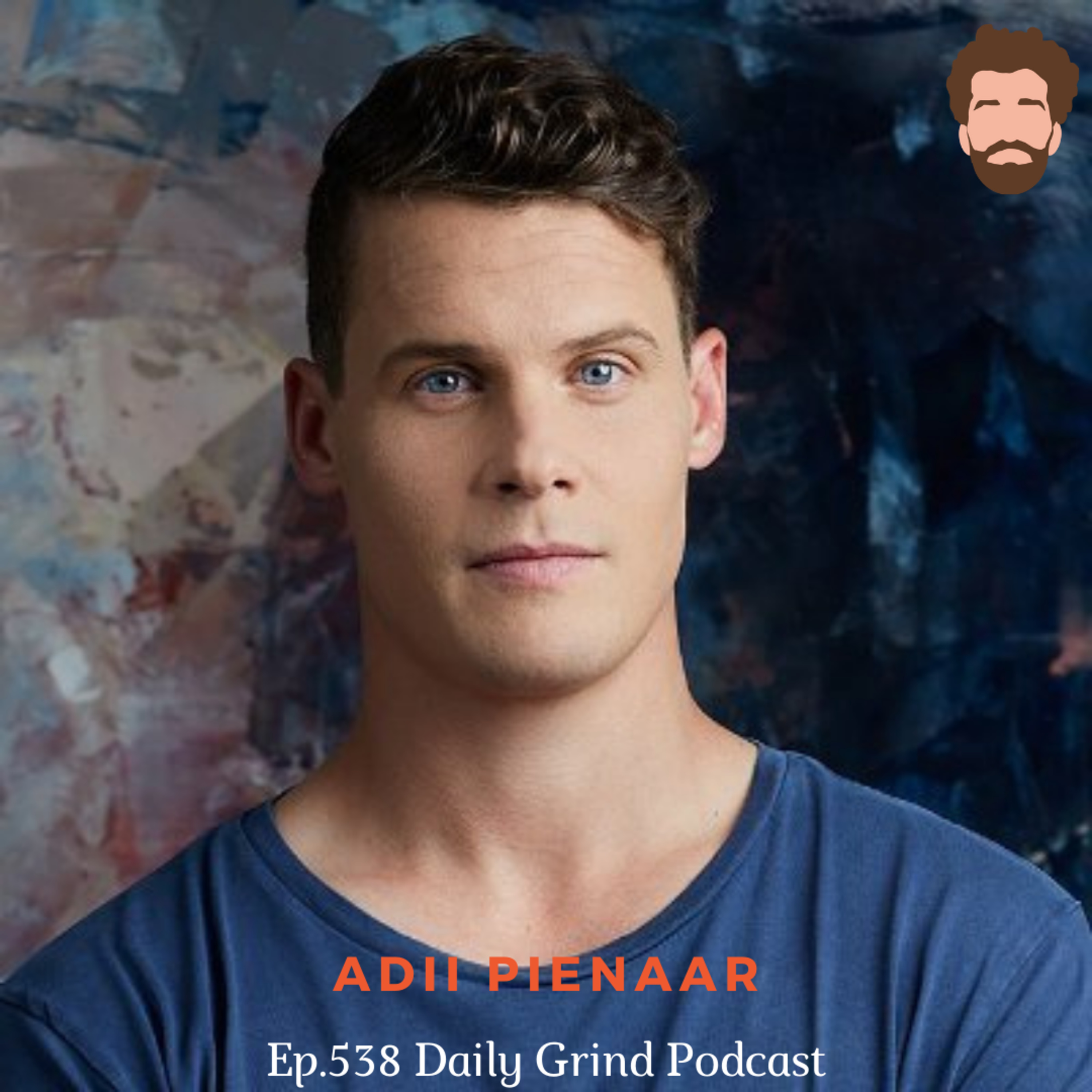
Hey everybody, and welcome back to another episode here on The Daily Grind. Today, we are joined by ADPR, who is an entrepreneur and founder of two global multi-million dollar companies. ADPRIDE themself on the commercial and life profitability of his businesses. ADPR's personal journey enabled him to discover a rich, fulfilling life that coincides with a sustainable strategy for success in the workplace.
His concept of life profitability is now gaining momentum in the business world. A native of South Africa, AD lives in the winelands of Cape Town with his wife and their two children. And today, AD shares some amazing concepts with you, so be sure to always have a pen, piece of paper, sit back, and enjoy today's episode with ADPR. Enjoy.
Today's episode and specific is brought to you by LinkedIn Talent Solutions. 2021 is looking up. New beginnings means new opportunity to grow your business. If part of your strategy is adding new members to your team, LinkedIn Jobs finds the right person quickly.
To make things better, your first job you post through this ad is completely free. Whether you're looking for someone as a marketing role, whether you're looking for a content strategist, you're looking for an assistant to help you with day-to-day, or you're looking for someone on your sales team to really help accelerate your business and take it to the next level. LinkedIn Jobs is there for you. It's an active community of professionals with more than 722 million members worldwide.
Getting started is easier than ever with the new features. They can help you find qualified candidates quickly. You post a job with targeted screening questions, LinkedIn then goes and finds your role quickly. Get you in front of qualified candidates quickly, and that's really the goals.
When you're looking for someone, you're looking for someone immediately. You don't want it to be two, three months before you hire for that position. You want to find someone right away. It's easy to manage posts and contact candidates.
And now you can do all this from your mobile device. So, no matter where the day takes you, that's how LinkedIn Jobs can help you hire the right person faster. When your business is ready to make that next hire, find the right person with LinkedIn Jobs. And now you can post a job for free.
Just visit linkedin.com slash dailygrine. Again, that's linkedin.com slash dailygrine to post a job for free. Terms and conditions apply. Well, ADP and I are welcome for the dailygrine, my friend.
How are you? I'm really good. Thanks for having me, Colin. Of course, ADP.
And if you want my kind of people will be first introduced to you, which you do today, kind of give a little rundown as to who AD is and what is it you do? Yeah, so I think maybe when we started pre-recording as well, we spoke about me being from Cape Town. So, I'm born from Cape Town. I've lived in Cape Town all my life.
The elevator pitch to who I am and why I'm here is the fact that I think I've built and sold, but not think I've built and sold to software businesses over the years. The first was WooCommerce, WooCommerce, WooCommerce, WooCommerce, which is the biggest open source e-commerce from the world. Sold that to automatic and then build conversion, which we got into email marketing automation for e-commerce brands. Sold that about 18 months ago.
And as of today, in the last couple of weeks at least, I've been kind of a released a new book called Life Profitability, The New Measure of Entrepreneurial Success. As well as starting up a new software business. Well, where for you? I mean, obviously you're an entrepreneur from Cape Town.
Where does this entrepreneurial spirit come from? How did you get introduced to it? Yeah, I think my first exposure to entrepreneurship was my dad. Ever since I can remember as a young kid, as a toddler at least, my dad had his own businesses.
And I think that's where I at least got exposed to the idea that this is viable, that you don't have to necessarily work for someone else. And then I think the next step in that kind of progression at least was, for whatever reason, I stumbled onto Richard Branson's books, both as, I think, a biography of his and a autobiography of his. And read both of them. And I just absolutely, back then I think the context as well as a teenager, I was heavy and too punk music.
And there was a bit of that kind of rebellion and rebellious spirit that Richard Branson had that just got me really excited about what this could mean to be an entrepreneur and kind of literally design and build your own legacy. That I think just poured fuel on those flames with regards to actually being an entrepreneur myself. And what age was that when you read those books? I would say like early teens, if I, like if I'm writing like 1112, I would imagine.
So just as I got into like proper reading, I could read like, you know, fiction stuff. And I can't actually remember, like, how I got into which Branson had, like, how I heard about it. But I just remember, like, I read, like, either his biography or what to worry for. And then sooner after I convinced my parents that I also need the other book.
Like, you have to find this book. Library doesn't have it. And you need to find this book because I'm fascinated by this individual. Very cool.
So you go through a little bit of a rebellious stage. Did you end up going to post secondary, like a university or college? Yeah. So post high school, I started off doing a bachelor's degree in accounting.
Because that stage, in high school at least, the closest that I could get to actual business in terms of my subject matter, right, at school, was doing accounting. And I really loved it at school. And I started doing that at university. And I realized that, you know, being an accountant and being a charge of accountant, which was the ultimate aim here, was very kind of a very narrow path.
Like, very rigid, very specific, like, apply the rules, stay within the lines. And I think within the first couple weeks I realized this was nothing for me. And I told my dad that and he said, you know what, I'm paying for this and you should be grateful. So you're going to stick with this.
So I finished that for kind of three years, ultimately with my honors degree and business management, slightly wider, and I actually loved that. And I said, like, I almost just just passed my bachelor's degree because I was trying to start business inside and not going to class much, ultimately. But a lot of my honors degree and ultimately never got into accounting. I, you know, post-versity spent six months, six weeks at a corporate before I jumped up to work on within WooCommerce full-time.
Wow. Very cool. So you go on, you work full-time. At what point did you realize, like, now you're working for someone else?
At what point did you realize that it's not for me? I got to do something myself. Was it, you started a business as you were working for that company? Or what was the story there?
Yeah. So the very first product that I built on top of new WordPress, literally just at that stage, WordPress templates, that also became WooThemes and I say became WooThemes. That was the first product that allowed me to meet my co-founders, Magazine Mark, and we kind of ultimately, you know, formalized the business couple months after that. But I built that product about a month before I graduated from university.
So by that stage, I'd already committed to taking this job, kind of first university. It was also that I think, as far as I know, it was the best job out of all my classmates. We had a small class of about 30, 35 people. Really, really, really great job.
But by the time I started through this, like, top, say, second week of January, right, just after a couple of years and years, WooThemes and this product is already making money. And at that stage already, like, I'm making the same amount of money on the side on this nights and evenings gig for me that I am for my corporate job. And I have zero flexibility and not zero fun, but not as much fun in the corporate job. So I tried to see it out for about six weeks, and then I was like, this is not going to work.
It makes total sense for me to at least try my hand at this thing that keeps growing, right? And revenue keeps growing up. And I keep earning more money from doing that versus actually going into a day job. And what year was that?
2008, beginning 2008. Oh, wow. So kind of like early stages, I guess of that, right? So you kind of got in an early stage building those templates for WordPress.
Yeah, totally. And I think, you know, if anyone that's followed, kind of, you're both with themes and WooCommerce's trajectory over the years, I think that is the key part that we, the part that is luck is the timing. None of us, like, we knew that stage of WordPress itself was growing exponentially. We never knew to what extent it would continue growing, but that's kind of riding that way.
It definitely helped us, right? So we obviously had to do hard work and get many other things right as well. But having that kind of, you know, the force, literally the force of nature, right, of WordPress is growing to that stage and it's kind of winning our sales, I think, helped a lot in those early days. For sure.
So you mentioned timing and it's one of those things that have been preached a lot. I mean, you have to obviously have a good product. People want to buy it, but timing is a big part of business success. Like, as you move in, say, to your new business venture and starting that, how much of timing did you look at in terms of how this is going to work for you?
Yeah, that's a really great question because I think my gut-feel answer column is that timing generally makes more sense in hindsight, right? When we can kind of see, like, oh, that was good timing, right? Or something happens, like, even hindsight, meaning, like, I did something last week and this week I realized, oh, that was a good call doing that last week, right? So I think timing, realizing it's often hindsight.
But the way I probably think about timing is in two buckets, right? I think one part of it is literally like market timing and understanding the market. So I mentioned that I'm building a new business at this stage. And when I look at that, I tell myself, listen, the incumbents in the space, they're all six, seven, eight years old.
They haven't really, you know, they're bigger companies. They haven't innovated for a while. There are now these other kind of macro things that are shifting, which means that there's going to be focus and investment at growth in this area. So theoretically, or hypothetically, that the timing makes sense, right?
So I think that's the one bucket, but that's very hypothetical. I think the more important part there for me is really to think through, like, why should I do this now, right? And that has nothing to do with that kind of macro external kind of thing. It really is about kind of, you know, me being able to sit down and say, you know, especially since, I mean, again, like, I sold my last business 18 months ago.
Was life-changing exit spent a little more than a year with a choir? I have no financial pressure at least to start earning a salary again, right? So there has to be other reasons for me to kind of think through why does this timing make sense for me to work on this thing right now? And I think those things are much more personal.
Like, I would probably tell you things like, or probably I will tell you, like, my desire to have a team again, like, my desire to build a team. My desire to create something from scratch, like, all those things are somewhat in the vicinity of what I would call my highest values. And that's why the timing makes sense for me right now. Makes sense.
So you've built, grown, sold, successfully two businesses now. There's a lot of people listening who want to do that themselves. Maybe they're in the process, they're in those early stages. For someone in the early stage of that, what's the biggest piece of advice when someone's looking to, you know, I'm planning on starting this business to sell it?
What are some things that people can do early on to set themselves up? Yeah. So I think the first is probably less tactical, and I think more illuminating the value of the true value of an exit, right? So I think whenever we look at exits, we tend to think through what is the dollar amount that I get in my bank balance, like once I sign those papers, right?
And by all means, that's part of how to judge that. But I think the other part of that value proposition for selling a business is what that allows you to do next. And that's actually what I would kind of think through. So I often think that, you know, if you look at stats, very few founders ever sell business, right?
And what I actually mean to say here is, you know, getting to an exit that has positive value is a great, great milestone to get to. And you probably need less money to do that. And the reason I say that is neither of my exits or the valuations from my exits have been publicized, right? I could know, and this is not even a humble bag, but based just based off of my reputation as someone that has built and sold to software businesses, I was able to really quickly get incredible investors to back my new venture, right?
So there are downstream events or downstream benefits from actually selling a business. I think that's probably something I would keep in mind there is not peg this as, hey, I need to get $10 million or $100 million or $1 billion. That's the kind of exit that I want. There is a stair-step approach there.
My good friend Rob Welling, he talks about stair-stepping your way into that. And getting to any material exit I think is important. So that's probably the first idea that I would put out there. I think the other things is really, it's sort of tactics, you know, make it easy for you to transfer the business, which means keep things clean, don't run personal expenses through the business, like keep your data, you're counting everything in order, like all of those things, like keep your SOPs or playbooks or whatever, like nicely updated, because all those things, once you get to a point where you actually want to sell this business, like those are a huge advantage to any buyer firstly, but to you as a seller, it just makes that process so much easier.
Out of curiosity, when you started the businesses, did you plan on selling them? Or is it something that just kind of organically happened? Yeah, so in both cases, it would happen organically. With we teams, with Commerce, I got to a point where I felt I needed a new challenge, and that was that trigger I wanted to prove that I could build another new business.
And that's when I decided to exit, right? So again, very personal consideration there. With conversion, there was probably a multitude of things, but very much kind of your personally kind of driven. I don't like this idea that you start a business to exit it.
I think that creates kind of short-term thinking. And that's not to say, don't plan on exiting. There's a difference to that, but exit should never be the goal, right? I think in many cases, because what often happens, right?
Maybe I'm some size one, but I've proven this, right? I sell one SaaS business that's profitable, that's growing, only to start a new SaaS business, right? So it's often the gross cleaner on the other side as well. So hence why I think long-term, and when the opportunity arises, or when you feel like there is a fork in the road, and this doesn't make as much sense as three, four, five years ago when you started this thing, then look at what are your, let's say, not even exit options, but literally the quality options rise, because sometimes that's getting a partner on board to divest some of the value you have in the business.
It doesn't have to be a full exit rights. So that's the way I would think about it. I would still keep things clean, keep things transferable, but I wouldn't necessarily plan to exit. I wouldn't build just exit.
I think it's great advice, incredible advice, actually. And then fast forwarding, after the two businesses you said, you have a new book that is just being released. Walk me through, like, first of all, why you wanted to write a book, and how was the process in doing that? Yeah, so I started working on the book just after selling the business, which means I had a little bit more time, a little bit more kind of fun to invest to it.
I think one of my biggest learnings as an entrepreneur is literally this notion of, you know, most problems in business and in life is a who problem, not a how problem, i.e., it's not the question, how do I accomplish this, it's who do I need to help me accomplish it. And I think with the book, I went into the process having tried to write a full proper book before. I know it's hard, so I really wanted to get the top-notch team in place, and I wanted a publishing team in place. So hence why I did a post-exit.
And the book really was to, I think, to crystallize many of the learnings that I had in building a conversion in my second business. And very much, if I look at my own personal journey at least, is the first part was with themes, and the second part is conversion, contrasting these learnings in building the second business versus the first. And what I really wanted to do there and where the name, life profitability, comes from, as well, is really this idea that I think the key to life here is to build a business or to pursue a career that is not just financially profitable in the narrow sense of the world, but much kind of more broadly, or realistically profitable in the work kind of sense of life profitability. So how do I build a business that is truly life-profitable, and truly kind of both honors and energizes and fuels all of these things in my life, not just this one thing which is work slash ambition, slash relevance, like all those things that either play into bank balance or ego.
Gotcha. So when you're saying life profitability, it's about kind of outside of money. It's kind of more of how you want your lifestyle to be, how you want your life to feel, how you want your life to look. Yeah, exactly right.
So the way I think about that, Colin, is very simply that we often, again, like one of my, perhaps, you know, hot takes here is always that I don't think work-life balance works. For most people, like, you buy the can and it proposes this thing, and I don't think it ever gets anyone that outcome writes. And the reason I don't think it works is because work-life are not these two separate things that are isolated, that can keep each other in balance. And what I instead think is work is just part of life.
So when I think about life profitability, yes, for me, as an entrepreneur, as an ambitious person, as many people listening to this, for example, you want to kind of, you want to feed that. You want to feed that thing called ambition and drive, dreaming, all of those things. But then we also have so many other things in our life portfolio that needs love, attention, investment, presence, energy, all of those things as well, right? For me, that's my family.
It's my love of magic tonight, right? It's me kicking out and drinking kind of good wine, right? Because that's something that I enjoy. It's being involved in my community and trying to give back, like so many other things.
For me, it was writing this book, right? This book for me is not kind of a profitable pursuit as much as it is, you know, more about legacy and mostly legacy for my boys, right? Wanting to put and crystallize some of these ideas that their dad had, right, when they were too young to understand. Like it's more about that, it's more about inspiring.
So all of those things are important to me, which means, and if I was very narrow about just my business, I would probably neglect many other things that are also important in my life. Yeah, I think it makes so much sense. And I think you look at so many businesses out there and why they fail and why people aren't happy with what they're doing, and it's because they don't have that balance, right? And everything's based around their work.
They don't have an ability to separate what they do from who they are. And I think that that's such a, you know, you bring it up because I'm such a believer in it, like, at myself, it's like, match what you do around who you are as a person, right? First and foremost. Yeah, exactly, right.
And I think what we often find kind of is, again, this sounds like, you know, the kind of thing that successful people tell you after they've been successful, right? But I think, like, if you ask many people that have made money, like, ultimately, like, what is the goal of making money, right? Like, you get that money and you're going to reinvest, you're going to do something else with money. Like, money buys things, buys experiences, et cetera, right?
So money, I would argue money is never really the goal, right? Money is always just, you know, something that opens more doors, right? And I think being clear about how you want to use the money once you get there is much more important, right? And then, like, I totally argue that, like, yes, something's there is probably a threshold, right?
Like, if your dream is to drive a Ferrari, right? You need to earn a certain amount of money to drive a Ferrari. There's no way for you to then drive a Ferrari today. But I think there's some other things, right, to say that, you know what, you know, once I make a million dollars, I'm totally going, you know, on a great vacation with my family, right?
That's probably something that you can say, you know what, I don't need a million dollars. I can probably change the definition of what that vacation needs to be. But I can still, maybe it's a weekend away, like, every other month with my family, because my family is important. I want to create those shared memories with it, right?
And I think, because the key is when we sequence events and we delay, because as entrepreneurs have always taught this, right? You know, short-term pain leads to long-term gain. And that's perfectly fine. I'm not advocating against hard-working compromise.
But that's really risky, because we ultimately, like, we're mortal beings. We literally do not know, like, how much time we actually have to get to that kind of outcome that we hope will unlock all these other things. So, again, having that clarity about what really matters and how I would, you know, apply myself and the money I make once I get to that outcome, right? And then trying to pull some of that back and try to integrate that in your life every day, right?
Right now, every day, every month, and not waiting for that future event that may or may not happen. Who did you write the book for? Now, I'm assuming, like, it's obviously for everyone at every stage, right? Because it makes so much sense, whether it's early stage or your in-business, even a business for 20 years.
But when you wrote it, like, what was the inspiration behind it? Who specifically were you focused on? Yeah, so I think my policy would be part of me for, you know, repeating this verbatim. But our ideal reader avatar was called Gina.
And Gina is a single mum in her early 30s. She has a kid. She runs her own business that is growing successful, but she gets stuck into this kind of almost as hamster wheel of never ending to new lists. And then she starts feeling guilty because she's not spending enough time with her toddler.
And, you know, it means she's not getting to her friends. And she's neglecting sleep, right? Which I think many kind of young parents understand, like, that comes from your parking parcel. But also means she's not exercising.
So she has all these things that's pulling her in different directions. But the only thing that's truly getting her attention is her business, right? Because she knows, she feels at least that that's the way to unlock all those other things. And I really wanted to write this book for Gina to help her understand that she probably doesn't have to, like, I'm not going to add to her to the list.
Like, that's the last thing that I want to do. You know, anyone that's already got a list that's kind of yay long and they can't get anything, like adding to it is not going to be helpful. But what I propose for Gina Gina, in that sense, is reorientating her to her highest values. And in doing that, she probably creates some space initially in life that she can then start reinvesting in those other pockets in her life.
So the book really is, as I've written, for Gina, I think that the reader finds most value out of this as an entrepreneur, as a business owner at the moment. But many ideas, I think, resonate with anyone that is ambitious and wants to achieve things in life, right? Love it. What would you say to someone who's kind of maybe stuck in their ways a little bit?
Maybe doesn't want to admit it, but they've been doing things a certain way. They're like, hey, man, I hear you. But it's going to take forever me to change my whole business process. I've got to change things.
What would you say to that person? Yeah. I would probably also like to go back to that kind of very first moment that they decided to work on their business. And what I would tell them is, I imagine that part of their decision to work on this business was included a definition and desire of freedom, right?
So I think often for entrepreneurs, there's a definition of, hey, I want to work on what I want. I want to work with whom I want. I want to work when I want. I want to work how I want to, et cetera.
So it's freedom. And I think what we often find is we get those freedoms as soon as you start your own business, but you take on, you make some of the sacrifices, right? And I think the biggest sacrifice that all of us make at this stage, whether you're running kind of a digital technology business or not, like we literally have our businesses in our pockets, on our smartphones. So having your own business literally means, yes, you can close the office door, but as long as you have your phone nearby and you're that paying or the buzz, you're still connected to the business, that's a freedom that you've essentially given up for these other freedoms.
So someone that's stuck, I would take them back to the first version. And if they can't realign around that and if that version doesn't make sense to where they are at this stage in life, I would actually propose radical change. I don't think this is a case of iterating incrementally or small steps out of it. Because this was probably not the best, I would say the wrong thing, but not the best decision to start off with.
I think, you know, we live in so many semi-rancier, I think we live in such a world these days with mainstream media and entrepreneurship that it gets totally romanticized. And I will never discourage anyone that tells me, you know what, I really have this big, big dream to be an entrepreneur. I will do my utmost support that person. I will also always ask them, do you really, like, is being an entrepreneur really going to get you to where you want to be, right?
What are the alternatives? Because I often think that many people can actually get what they want by finding a really great team where it's really kind of an interesting challenge. And they just don't have all of the extra baggage that comes with being an entrepreneur. And yes, when you're successful, being an entrepreneur is, like, it is definitely profitable and highly rewarding.
But it's also tough for us. And we need to acknowledge the success rates there. So I don't think it's an obvious path that everyone should consider, for example. 100%.
I 100% think it's romanticized so many people think it's easy, but those early days and when you're struggling, I think it takes a certain type of person to persevere through that because it's so easy to say, you know what, this isn't working. I can't do this. I might as well just go get that job. I can be comfortable with my friends.
Have a beer on the weekend. Hang out. Sometimes it's cushy for people, right? Exactly.
And that's where, like, on those stuff days, you need something else to pull you through this. And that thing doesn't become business success anymore, right? The best, like, this crystallized me, I read a book by Dr. Dina Bluberman, and she writes a book which has the most fascinating title, and it's The Joy of Burnout.
And she defines burnout as, you know, burnout happens when the meaning gets lost in the structures you've built, right? So in those stuff days, in your business, what you want is that hire me. Like, why am I doing this? And if you're only, like, if you're doing it for, I would say superficial, not to be just mental, right?
But again, I don't think money is ever the real goal here, right? There has to be something bigger, because I honestly know that money in itself and business was, like, in my tough days, that was not the thing that pulled me through, right? It had to have that bigger narrative, that thing that wasn't just about me anymore. It wasn't just about my bank balance.
Like, it had to ripple outwards. Like, that's the kind of meaning that helps you get through those tougher days in business, because those tough days will come. 100%. Before a few more questions.
If people want to grab a copy of the new book, Life Profitability, where's the best place everyone can do that? To easiest places, from most people, probably Amazon. Just find it on Amazon. It's there as Kindle version, digital version, right?
As well as paperback. Alternatively, my website, ad.me. .me. .me.
Perfect. I'll share those in the show notes. You mentioned early on your big Manchester United fan, big football fan, for those North Americans listening. It's not American football.
We're talking about soccer. Okay, that'll help you out. Is soccer football in your case? Is that the only sport you follow multiple sports?
That's the only sport that I follow religiously these days. I mean, I used to play rugby at school. Okay. But I think it's been very technical.
It almost loses. It comes to a point where even as some of them understand the rules, I am shouting word to ref for them. Which is not helpful. Whereas I think with football or soccer at least, you know if Christianity gets kicked in the shin and he rolls around twice, it's yellow card.
If he rolls around three and a half times, it's likely a red card. That's absurd. I don't necessarily agree with the rules, but it seems to be more simple. That's the one sport that I followed since the kid.
I have no geographical ties to Manchester. I think at the time, there were, I forget these big coverage of two teams, Manchester United and Liverpool. I had friends like Liverpool. I like Manchester United.
So I was like, no, I'll just do that as well. That's really the only sport that I truly follow. Gotcha. Well, two things.
I think people who play rugby are psychopaths. That's a physical sport there. That is absolutely intense. I didn't even know if there's penalties in that sport.
Secondly, have you been to a Manchester United game? I've had a good fortune at being twice. I managed to see, I managed to see before it was announced that Sir Alex Ferguson, probably the most decorated football manager in the world, was coached for 27 years. In his final year, I managed to see United beat Liverpool at Old Trafford 2-1, which was my first time.
And then a couple of weeks after that, he announced his retirement that happened in the scene. So I managed to do that. And I actually managed to, like, very impulsive trip in 2015. My dad and I got tickets like days before the game to see South Africa play New Zealand in the rugby World Cup, same final.
And the next day was the Manchester Derby, so United against City. And I managed to take my dad to a game. Unfortunately, it was a truly dull, normal draw. That's the only worst sport.
You get those games in football. This was just a dull, shitty game. And it was, like, those 90 minutes that I wasted in my life. That's the problem, right?
It's like watching baseball here when I go to a days game and I end up one-nothing for the other team. I'm like, why did I come here for six hours? But yeah. I managed to see one baseball game in my life, in my childhood states.
And the best part of it was the beer and the hot dogs. There you go. 100%. You're absolutely right.
I'm not the only fan of so many people that listen to your show as well, Colin. No, I'm sure everyone deep down probably feels the same way. That's 80 man. I can't thank you enough for coming on the show, sharing your wisdom, who you are.
Truly, I appreciate it, man. Thanks so much. Thanks for having me, Colin. And that is it for today's interview with 80, everyone.
We hope you enjoyed today's episode. If you did, smash that subscribe button. Share this with a friend, leave a comment, rating, and review on iTunes and Apple Podcasts. We'll be back next week with another episode.
Thank you so much to the LinkedIn talent solutions on sponsoring today's show. Again, you can visit linkedin.com forward slash daily grind. We'll be back next week. Until then, keep grinding.