Hi everyone and welcome back to another episode here on The Daily Grind. Today's episode is brought to you by Mint Mobile. After the year we've all been through, saving money should be at the top of everyone's resolution list. So if you're still paying insane amounts of money every month for wireless, what are you doing?
Switching to Mint Mobile is the easiest way to save this year. As the first company to sell premium wireless service online only, Mint Mobile lets you maximize your savings with plans starting at just $15 a month. So for people looking to save a little bit extra money this month, this makes so much that Mint Mobile offers these premium wireless services for just $15 a month and by going online only. So switching and eliminating these traditional costs of retail, Mint Mobile passes significant savings onto you.
All plans, just so you know come with unlimited talk and text, high speed data delivered on the nation's largest 5G network, you get to use your own phone with any Mint Mobile plan and keep the same number along with all your existing contacts, photo, everything. So this is a no brainer to switch to Mint Mobile and get premium wireless service starting at just $15 a month. To get your new wireless plan for just $15 a month and get the plan shipped to your door for free. So go to mintmobile.com slash daily grind.
That's mintmobile.com slash daily grind. Cut your wireless bill to $15 a month at mintmobile.com slash daily grind. What is happening everybody? Welcome back to another episode here on the Daily Grind.
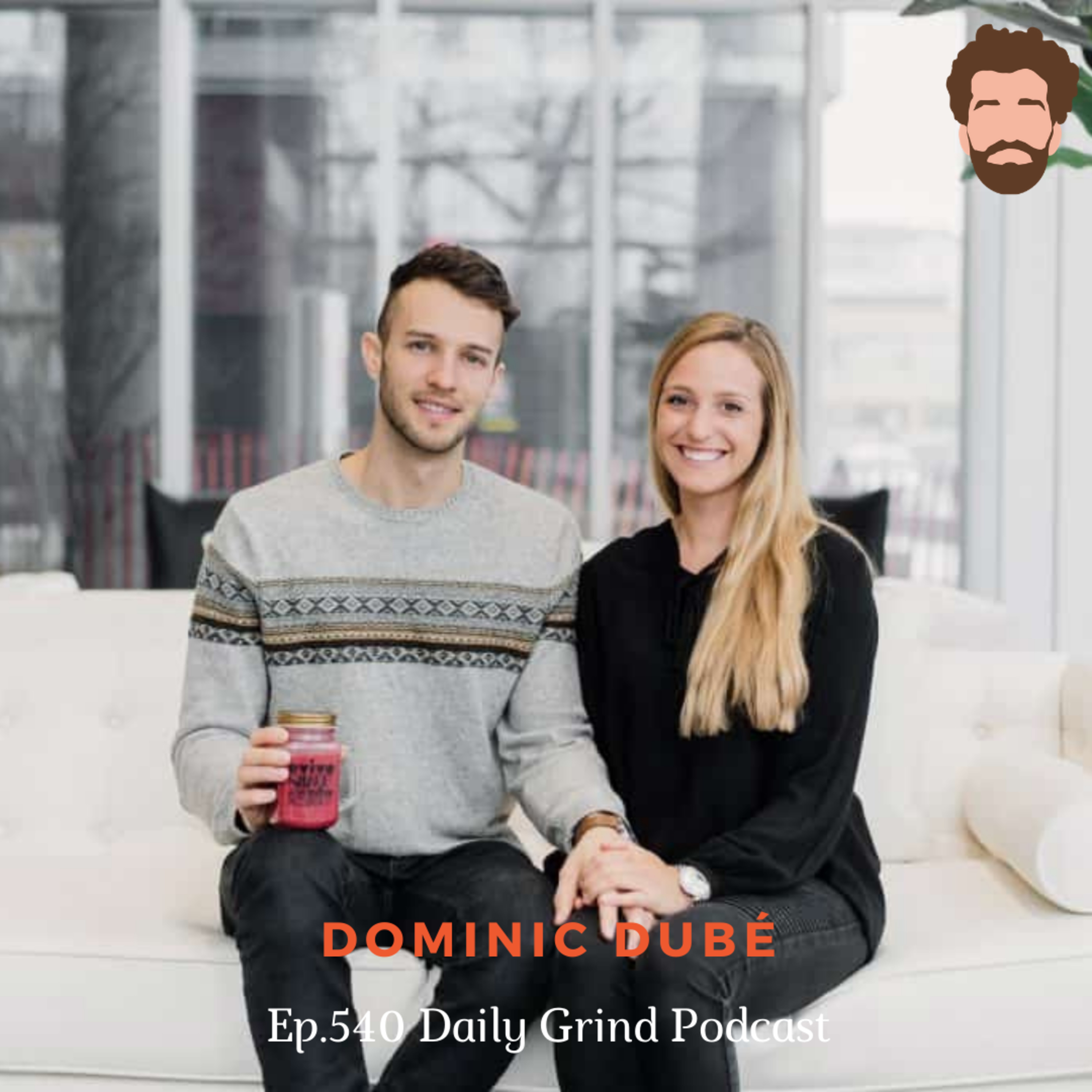
Today I'm super excited to be joined by a co-founder of a Vive Nutrition Dominic Dubey. Dominic has an amazing journey, he's a true entrepreneur, him along with his partner Claudia. What they have done with this company, how they have grown it, it's one of my favorite conversations I've had here on the Daily Grind, I'm super excited to introduce you to him and without further ado, let's jump right into the podcast. Well Dominic Dubey, welcome to the Daily Grind, my friend, how are you?
Very good, darling. Thanks for having me. Of course, man. How are things?
How's life? How's life just outside of Montreal? Yeah, life is good, man. It's been like no surprise there.
It's been an interesting year, but we finished a year and we're like pretty happy of how things end up and positive about next year for sure, so we're happy to dive into what happened this year. But yeah, very happy. And we're going to take a little bit of vacation the next coming week, just to calm down and be ready for 2021, yeah. Nice.
Well, we'll get into a little bit of that. I mean, don't know who Dominic is. If you want to share a little bit more, it's kind of who you are and what you do. Sure.
Yeah. So I co-founded the, well, I'm Dominic Dubey. I'm from, originally from Chirbroke, I lived in Montreal for four years. I co-founded the company Evieve Nutrition, previously was called Evie Smootie with my wife, the Claudia.
Five and a half years ago now, and we started a company right off the college really. It was with the intention of simplifying the preparation of Smootie in the morning. Claudia, my wife, was making those very complete and green Smootie every morning with all those ingredients, the kale, the hemp seeds and all that. And we just had that like breakthrough idea of pre-making it in little cubes.
So in the morning, when you're busy, you're running around, you just pop the cube in an amazing jar of a shaker, you add water out in the milk, and then you let a milk and you shake it up. So it was like this no blender Smootie idea. And so we started that in a couple of retailers and built over the last five years to a point where I'm pretty happy where it is, I sell across Canada and a little bit in the US. And now we have Evieve meals, which are with the same idea, but simplifying the preparation of soups and bowls.
Awesome. So I mean, you and your, right after college, you and your wife, girlfriend at the time? You go for the time, yeah. Okay.
You guys have this idea? Once you have the idea, what's next? What was the first step you guys took? Yeah.
So we're not from a, no background in entrepreneurship and really nobody in their families or friends were entrepreneurs. So it was a bit of a mess, you know, the first year, honestly, we didn't really know what we're doing. It was just like the idea. And so we were selling on a Facebook page and people would order and we would just like deliver it to their doors, a couple of bags and then we're like, okay, that's not scalable.
And then we tried another thing, which was we had like pick up points and by then we had a website and then people would pick up at like a restaurant, so listen, that's all. We got up to one and we're like, yeah, that's not scalable either. And then we entered the grocery stores and got distributors, got distributors in. And so we, that was like on the second year and that got to a certain interesting level.
And then we, we decided to launch online back then. That was three years ago. I believe we were the first company to sell frozen food online, so we had to figure out how to ship those frozen food. We'd dry highs and this and that.
So yeah, it was sort of a very short, the brief of the steps that got us to like, understanding your business models of selling online and in the retail stores. Very cool. So what went through the, I mean, you mentioned like, you know, it's a no blender smoothie. So you had like, I'm looking like, it's almost like an ice cube kind of shape.
Is that right? Yeah. How did that, like who did someone help you with that design? Did you guys just create that yourself?
What went into that? Yeah, it's a good question. So when we started, we're like, how can we like, we had the idea of a cube, but it could be any shape really was like a small, a small portion that could thaw rapidly, right? That was the idea.
Yeah. We had like, get it making ice trays, but it was not, you know, we couldn't produce like enough. So what we did is we would make the smoothies for it in the, in a big slab. And then we had those big nice and we were cutting in a little cubes by hand.
And that was the first prototype. And then we were like, yeah, that's not scalable. And so we had the idea of a little recyclable, a classic mold that would be, we filled with this and then flash freeze it. And then you just pop the little cubes up.
I wish I had a simple to show you, but it's like, it's like, it's like, just this whole wheel that makes it super easy and easy to manufacture as well. So you go through that first year, there's kind of some, some, some learning pains going on. What, was there like a breakthrough moment you guys look at, like whether it was, you know, a moment in time, something like, kind of click, like, what was that kind of that breakthrough moment for you guys? Yeah.
A couple of breakthrough moments, I'd say, you know, since we, we started the, we call it a project for the Fisher because we didn't know that it was a, it was going to be a company. But when we sort of realized that, you know, you have, you needed a distributor to sell in the grocery stores and we signed our first distributors, that we sort of got us to, to interesting point, because when we had those sales team in the distributor's company to help us out, you know, distribute and sell the product, that really lift the company up. And then the other pivotal moment was we were featured in two TV shows, so Free publicity, Dragon's Den in, in Canada. And the equivalent in Quebec is called in the eye of the dragon.
So, and that was very, very important because before that, the only way to really, for us to discover rent, because we had limited resources was like to send, sampling in the grocery stores and, you know, events and this and that. But like overnight, we had like a million people that saw our brand for free. And so that was, that was pivotal. And then the third one would be when we launched online, we figured out a way to make it work.
And that allowed people to, to discover the brand, not only in the freezer space, because like, you know, like you go in the freezer space and the grocery store, it's a terrible place to discover a brand. Like, you know, it's behind the door. You're there to buy whatever French fries or, you're not there to discover something new. But getting out of there, into the, on the web was very pivotal because people could try it on one click, you know.
Very cool. What was the, what was the drag into then process like? Yeah, it was, so we did the kiddick show before. So we had a little idea of how things work.
And then a couple months later, we did the, the dragons then, but it's a funny, funny story because when we did the show in Quebec, my wife told me like, yeah, that was incredible. But I'm never going to do the dragons and show because back then, it was like three years ago, English was not super good. So she was like, never going to go there. So I'm like, all right.
But you know, it's free publicity. But then it ended up like that. But when I saw a posting on, on internet, so I, I send my application for dragons then, but I'm telling her, like, you know, if we get to like, we'll have to talk. And so we got selected for an interview.
So I went without telling her. And then we got really selected. So then we needed to have the talk and she decided to go and we had an incredible time going on in Toronto and doing the show. We had offers from all the dragons.
It was, it was a fantastic moment and very good for building different outside of Quebec as well. Very cool. What stage of business were you guys out when you went into dragons then? At that moment, I think we were just over a million in sales.
So things were going fast, but we were just starting online. So and I think just starting outside of Canada as well. And then after that, things sort of really took off. Yeah, very cool.
What's been the process like being a business with your wife? Because I mean, for people listening, some people are, I know like my father and mom were and things were fine. But for other people, it's a bit of a, a bit of a challenge. What's the kind of dynamic?
Like what roles do you guys play? Yeah. It's been very good, honestly. And I have friends also like that are coupled in business and, and some that, you know, are not in business together, but you know, they have their challenge because one of them is just working in his house house and that having time for a couple.
So I'd say for us, it's been good because we're always aligning on, on, on, you know, working hard. We had to work hard. Rest when we have to rest. We're pretty much aligned on that.
And we have separate roles released since day one. We realized that, you know, Clove was a mastermind of marketing and, and I was more like operation than I like to sell. So I did that part and she did all the branding and marketing. I didn't do anything really on that part.
So we had a little bit of our own business to manage, you know, yeah, which is helpful, right? Because you're not stepping on each other's toes. Yeah. Yeah.
Very cool. And how big is your team now? So we're, we're 40 in the, in the office. We did a big bit about two years ago, we had a manufacturing facility and we read a point where it was too small.
So we had to move out and either build a bigger facility and it was like massive investment or, or find a partner. So we, we found a fantastic partner to, to help us with production. So we're more like, it is not more focused on R&D marketing and sales and we work with this partner who has manufacturing and they're, they're about 40 at the manufacturing plant. So happy to say that we hire roughly 80 people to, to, to do what we do.
Wow. What was the transition like for, for you and your wife kind of, you know, at the beginning, you guys are doing everything. You're making a smoothies, you're selling them, you're delivering it. And now you're more in a, in a leadership role where like people are kind of looking at you and you're kind of playing, what, what was the process there like for you?
Yeah. Lots of learnings. Yeah. For the first year and a half, we were, we were two, only Chloe and I and volunteering really because we didn't had any, any, any salaries.
So, so, so, and then after that, we decided to pay actually for simply instead of paying yourself, you know, to get things going. And so it took us really slowly in the first couple of, I said, first two and a half, three years. And then, and then we got a bit of funding, we, the sale we're taking off. So we started adding people and, and yeah, like you're saying, like a role was just evolving all the time.
Like, I was, you know, the manufacturing facility director for, for a year and a half. And then I was not doing that anymore. So I had to, I always had like a transition period of like maybe a month or just like, what am I supposed to do now? I was just hired that super intelligent person to do that.
So he was like, I have to get out of the way. And then I would, you know, focus on other things. Today, I'm, I'm really excited about the new, the new upcoming project. So like new lines of product scaling in the US, building the infrastructure to, to make you be successful in the US.
That's really my drive. And so the team is like taking over pretty much everything else. Very cool. One thing I'm curious about, which I want to go with it.
I lost my turn. Give me a second. I find it in a second. Yeah.
Okay. Let's check. What's that? You guys have a bit of followers in the US?
Yeah. You know what about 65% of listeners are in the US. Wow. Which is so funny being a Canadian podcast, right?
Yeah. But yeah, I think it's just, no, I think it's just like population, right? Because when you release it out on like iTunes and Spotify goes everywhere, you got more of a chance. Typically speaking, people will have more listeners out of the US.
Yeah. That makes sense. Okay. Let's just go on your transition.
Okay. So let's talk a little bit about that transition. Like new products are coming along. You know, you had mentioned you went from smoothies.
Now you got like kind of little meal kits going on. Talk through with it with the plans are with that. Yeah. So we did, we did, we sort of, as we saw what we had in mind for the smoothie for the first four years.
And we got to the point where, you know, it was helping people like we had intended that we had like 15 different flavors online, retails. We had signed up like all the major retails in Canada, the Lost Hobies, and we were about to enter the US. And since like the second year, if you've got this idea of like, you know, those little cubes, if we, if we do them a little differently, they can make, they can, they can solve soup. You know, soup prep.
You know, you just pop the cubes and you add, you know, hot water and you have yourself a lunch really. And then, so we started playing a little bit with that. And we realized, you know, those cubes, if you pop into water, it makes a soup, if you pop it on rice, it makes a very nice bowl, like literally a complete bowl, like it can be a chili or Indian food. So, so that's how the, I guess sort of happened.
And, and we decided to release it, you know, in September this year, and as a test and people really got it. You know, they're just like, oh yeah, okay, get it, you know, it's like the smoothies, but you can do shoots and goals. And so right now it's, it's distributed online and it's going to launch across Canada in February. Very cool.
So, I mean, there's, I mean, that's a great lesson. You kind of launch a test. I think so many people like are listening have a business and they only have that idea. What goes into, I mean, when you have an idea like that and you want to launch a test, what's a, for you?
Like what, what did you see as a success with that test? Yeah. It's a good question. And we're, honestly, we're still asking yourself that and yeah, but, but yeah, we, we sort of set ourselves, like, if we can get that amount of units out, just, you know, with, with our current, uh, communication channel, like emailing and, and social media, you know, that means that there's, there's, there's a little traction that we want.
And then the other things like, was if we present to retailers, are they going to be excited about the idea or are we going to have to push and pay those massive listings to get it in? You know, push it down the throat. And so we, we, we, we, we got to start to the level of units in the first three months that we wanted. So that means like, okay, people, you know, they get it.
They want to try it. And at the retail level, we got a lot of excitement from retailers are like, oh, wow, yeah, we don't have that. You know, this is going to solve this and that we're bringing it in. So we're like, okay, there's something there.
Very cool. I have like three questions for you here, rapid fire, you know, it doesn't have to be rapid fire. You can answer them as quicker as long as you want. Um, when you go into a business like this, like, say someone has, has an idea, right?
They're like, oh, I could make a bar or I could do this. What's the most challenging part of your business? Um, I'll talk for my experience in food, um, for us, it was manufacturing all along. Um, it like, if you want to make a bar, there's probably a ton of tons of co-packers that make exactly that.
But that probably means that there's tons of competition, right? If you want to make something unique in her case, it was unique to her. At first, it was literally the local packers that could make exactly what we want. They could adapt their production line to do what we want, but we didn't have the volume at that time.
So that there's that period where you still have to do it yourself if you're bringing something innovative. And that is really challenging if you're not like expert in manufacturing and that's been very painful those first, those first years. Um, so yeah, manufacturing has been by far the biggest challenge. Very cool.
And then, uh, when you kind of moved online, I'm sure the marketing, did the marketing strategy kind of switch for you? Yeah. Yeah. A lot.
Um, before that marketing strategy was pretty simple. We were making a sampling in the grocery stores, you know, that's, that's sort of the way to go. If you have a food company in retail, you have people to try it. So we had a team of like, I don't know, like 20 part-time students all around Canada making sampling in the, between the weekend and the grocery stores.
And then when we launched online, like, oh my God, we can have all those people discover it, you know, through an ads or an influencer or an ambassador. And so we sort of started to build this community, uh, online of people that, you know, talked about the product and, and, and people could just try there. So yeah. It's been a massive switch.
Very cool. So you would mention the influencer marketing, which is kind of so big right now. Would you say that that was kind of the biggest, the biggest form of marketing you guys did, the most successful? Uh, like in percentage, no, but it's, uh, it's, it's, it's a good portion.
I say it's among the top three pack acquisition channels that we have, um, like I said, it's more Claudia that does marketing. I'm not the expert. I see the numbers. I, I, I get my very high level understanding on it, but, um, but yeah, it's, it's, it's like for us, it's good to build a brand, like a community and everything.
And then there's a sale that's like, I think we invest a lot in that because we want to be the brand and, and this community around the beef more than, than just, you know, looking at the sales. Very cool. Um, that question just came back to me as you were talking. So early stages when you were like, we didn't pay each other, like you and your wife didn't make any money the first year.
Did you have another job, um, during that process? Yeah. Well, I did for the first, uh, I think six months. Okay.
So my criteria at the point, I, I, I had a degree in the mechanical engineering. So I could, you know, work in the, I couldn't work in a full-time job and expect the, the bill of you. So I was looking for a job that could make a lot of money with a, not a lot of time invested. So I found this opportunity of a door to door selling, um, in the weekend and was selling driveways, basically.
Okay. And so no salaries, no based salaries, but, uh, I think it was 20% commission. So, uh, so when you, once you sold a driveways, like a thousand bucks, you made, you made $200 in a day. Some days I wouldn't make any money, but, uh, it was like the way I was spending my weekends and it worked.
It paid the, it paid the bill for the first, uh, first year. Very cool. So you were just going, were you like knocking on doors? Is that what you were doing?
Yeah. Knocking on doors, the thing, the company and, you know, looking for the house with the shitty driveways and trying to get them to invest in their driveways. It's so funny because like there's so many, I've spoken to so many entrepreneurs and so many of them have that. And I have that like that door to door experience, right?
And it's so valuable because when you do get into business and you can piggyback off this, it's difficult, right? Like you face so much rejection and you face so much failure and just having gone to a house and someone slammed the door and tell you it's off, you know, like that, like it builds that muscle. So you're not afraid to ask, right? Yeah.
It does. Yeah. It's, it's, it's one of the good life experience that I had of. And I'll be honest, like the first, the first day, the first day that I did that, that's so many rejection.
My pitch was horrible. It was terrible. And at the end, I was like crying and just like, what am I doing? You know, it's, I'm, I did all that degree in mechanical engineering.
Here I am, it's right to sell driveways and, and blend in smoothies and it just didn't make sense. And then I'm like, okay, I'm going to try another day. And then, and then that other day I sold one driveways and, and so I like, okay, there's, it's possible. We got hope.
Yeah. Entrepreneurship. Was it in you from a young age? Like, is it something that you was on your radar or was it more just, you know, university, the idea kind of sparked and you, and you rolled with it?
I would say no. I, I, I had a bunch of ideas, like always like a lot of ideas. I had this idea of like an, an, an hospital bed that had some features, um, cause I encountered that needs during my mind degree. And then another idea is like a canning system for people that make beer at home.
Um, and, and yeah, I had those idea, but I didn't know that it was like, to start a company. It was just like, I had those ideas of things, you know, I wanted to build things. Um, and it's really when Chloe and I, you know, uh, had this idea, it really like clicked, like passionate heard that the nutrition side of things and finding a way to make a little pubes passionate me. And so it really combines both and, and we're like, let's start a project.
And then the project became a company took a year for us to call it a company. Yeah. Well, that's sometimes it, right? Like sometimes it takes a year, even though it was probably a company the first year.
Like if you look back on it, you know what I mean? Yeah, you know what I mean? Yeah. Definitely a company.
Um, so moving forward, you know, obviously, uh, things have changed this year, but we're hoping things kind of get back to normal. What do you, I mean, you're going in the US, you're coming up with new products. What's the goal? Two, three years down the road with the beat?
Yeah. Um, yeah. I think that's, that's, that's one of the things that we, that we've definitely learned, you know, throughout that journey and about having a destination, I could be a part of the destination and yearly destination. So, uh, we put in place like, I don't know if you're familiar with OKRs, uh, goal setting systems, but it's the way that Google managed goal setting.
Um, I came across the book, uh, measure what matters from John Doar and just explain this way of goal setting. And I was like, it really clicked with me. Um, so yeah, we built quarterly and yearly OKRs, uh, align with the strategy and really sort of align all the team. So next year, it's really about, you know, making, making it a success in the US and, and, and that at least we really became a V with, with, with this successful, uh, meal line.
Uh, so working towards that and in the long run, I think, you know, this, the concept that we designed, both the concept that we designed, uh, can, can work in other content, you know, where we have our eyes and we're up and, but, but, you know, we, we, we, we, we test and learn really, we try things, iterate and, and, and then real life strategy, which is probably the best way to always do it. You know? Um, when it comes to goal setting, um, how specific are you when you, when you're setting your goals for the company? Yeah.
Pretty, pretty specific. Uh, uh, we, you know, we make sure that it's measureable, um, you know, the, the, the goal is like, it can be, for example, if you just, when you become a V, um, but then in the details, what does that mean? Like how many units you must sell if that new line of product, um, how many flavors are you going to launch? Uh, how many listings are you going to get?
Uh, so pretty specific on the way that we measure, that we measure your goals. Um, so, you know, at the end of the year, you're like, yes or no, there's no, there's no in between. It's like, I want to become a better person. Yeah.
What's that? You know, uh, it has to be measurable. And it's so important. Like, you mentioned goal setting and I'm a big proponent of it.
I come from a sports background. So like if you look at sports teams, right? Like their goal every year is to win a championship. But within that, like there's little mini goals that they set and they're constantly evaluating is this working?
What do we need to do? Who do we need to move out, bring in? Um, and I think in business, people start, but people aren't, you know, like I can't just become a basketball player tomorrow, but someone can become an entrepreneur. So it's definitely like a learn skill and you always have to be, to be learning.
Is that something you focus on as well as like always kind of learning and improving yourself? Yeah. Yeah. So when we, when we started implementing OKRs, like goal setting things at the company level, it took me like a year and a half, two years to realize like I didn't had personal goals in the fight.
I, my goals were the company's goal. And, and so I, at that point, I realized like I need personal goals because I'm going to become the company and I have different goals and the company has. So I started to build my personal OKRs goals for, for every quarter, every year. And it can be, you know, physical training or things that I want to accomplish and spiritual things.
You know, I want to meditate the bad amount of time. And that I feel really improved my, my wellbeing because I was not, it's sort of separate a little bit, the company and dumb, you know, 100%. I think this is just in my opinion, because I suffered from it. And I think I see so many people as well as like when you do have a business, like you align your happiness with a business's success and you have to separate that and realize that like those things are opposite.
Like you being happy doesn't have to correlate over to your success, to your business being successful, right? That's a really, like I find that that's, and I still do struggle with that. Like that's such a struggle for people. But I think as you mentioned, you could, you just have to be aware, once you're aware of it, then things become like you can start to work on it, right?
Yeah. Yeah. Could, could agree more. Yeah.
So it's when it's a council struggle, like you say, it's the hops and downs are still there and then there probably always be, but there will be dead over time. 100%. Or people listening who are wanting to start something, right? Like they have that idea in mind, maybe they're in a job, maybe they're not, maybe they're coming out of college.
When you have that idea, based on your experience, what would you suggest to someone like that? What would you suggest they do first? Should they test their product in service? Like how do you, how do you go about taking that idea and then actually starting to transform into a business?
Yeah. Yeah. It's a good question. We, when we had the idea in 2015, we, one of the first thing we did was go to an incubator, you know, that was our organization to help to scale your, your idea.
And so we sat down with the people that made the decision, if you're in or not, and they're like, you know, yeah, yeah, it's really cool, but, you know, you have to prove yourself. So what about you go, you know, spend the summer, try to sell it, you know, whatever way you can. Come back in September. And if you've been able to sell your ideas, we'll take you in the program.
So that's what we did. We, we, we start to sell on their Instagram page and Facebook page and deliver door to door. And we, I think we got to a point where we're making like $5,000 a month. And we, we, we came back to the incubator and they're like, yeah, okay, you do your own work, it's working.
And we're going to help you out, you know, build your business model and everything. So I'd say that, that's, that's a very good idea that I've received to just go out there and try to sell your idea, even though it means delivering it by hand or cutting cubes with, with a knife, you know, just have to do it. So true. And even now with like online, it makes it easy where, say you don't have a product like that.
Say you have maybe a service or like you're trying to sell an e-book, say just throw on that out there. Like you can make a landing page and you can spend, you know, a couple hundred bucks to be able to see, can I drive traffic and are people converting? Like, is this something that I could actually do? I think that's so important to do before you go and invest all this time because it's as much as you could do it for a very limited amount of money, the amount of time it takes to kind of set everything up is so much, it costs a lot of money at the end, you know?
Yeah, it does. It doesn't, and your first idea is probably not going to be the one that's, that will scale, you know, there's probably 20 iterations. Like we have those iterations. The first product that we sold in the retail stores was $15 for a bag.
And I don't know what we thought, but we thought it's better to put more product so people would have it for longer time. But it's not what works. In the retail store, you need those perfect price bag, you know, to make it work. So there's so many information on the packaging, on the format, on the way it's produced, with flavors.
Anyway, yeah. So, I agree. A ton of it was. Well, people wanted to learn more about the, like where can everyone go?
On the website, ifevennutrition.com, Facebook page, if even nutrition, Instagram, and yeah, I'm not marketing. I don't know the perfect endo, but yeah, all those platforms were there and people can try it online. There's movies and the lunches. And in every retail is really across Canada, a little Boston sobs and Whole Foods.
Oh, very cool. And then if people wanted to follow along with you, like, is there a social media platform you're most active? Yeah, LinkedIn. Yeah.
Right now, LinkedIn. That would be the best place. Awesome. Well, I'll share all those links.
Dominic, can't thank you enough for coming on here, sharing your journey. I know people are listening right now and probably very inspired to do something themselves because what you and your wife have done is amazing, looks like you're constantly evolving and I'm super excited personally to kind of watch where you guys take this. Very nice of you, Colin. Thanks for having me and glad I could share a bit of a story and if it can inspire a few, it's awesome.
Absolutely. Well, everyone, thank you so much for listening. If you enjoyed today's episode first, go to avenutritionnutrition.com, check these guys out. They're absolutely amazing.
We'll be back next week with another interview until then, Colin Morgan signing off and always remember to keep on grinding.