
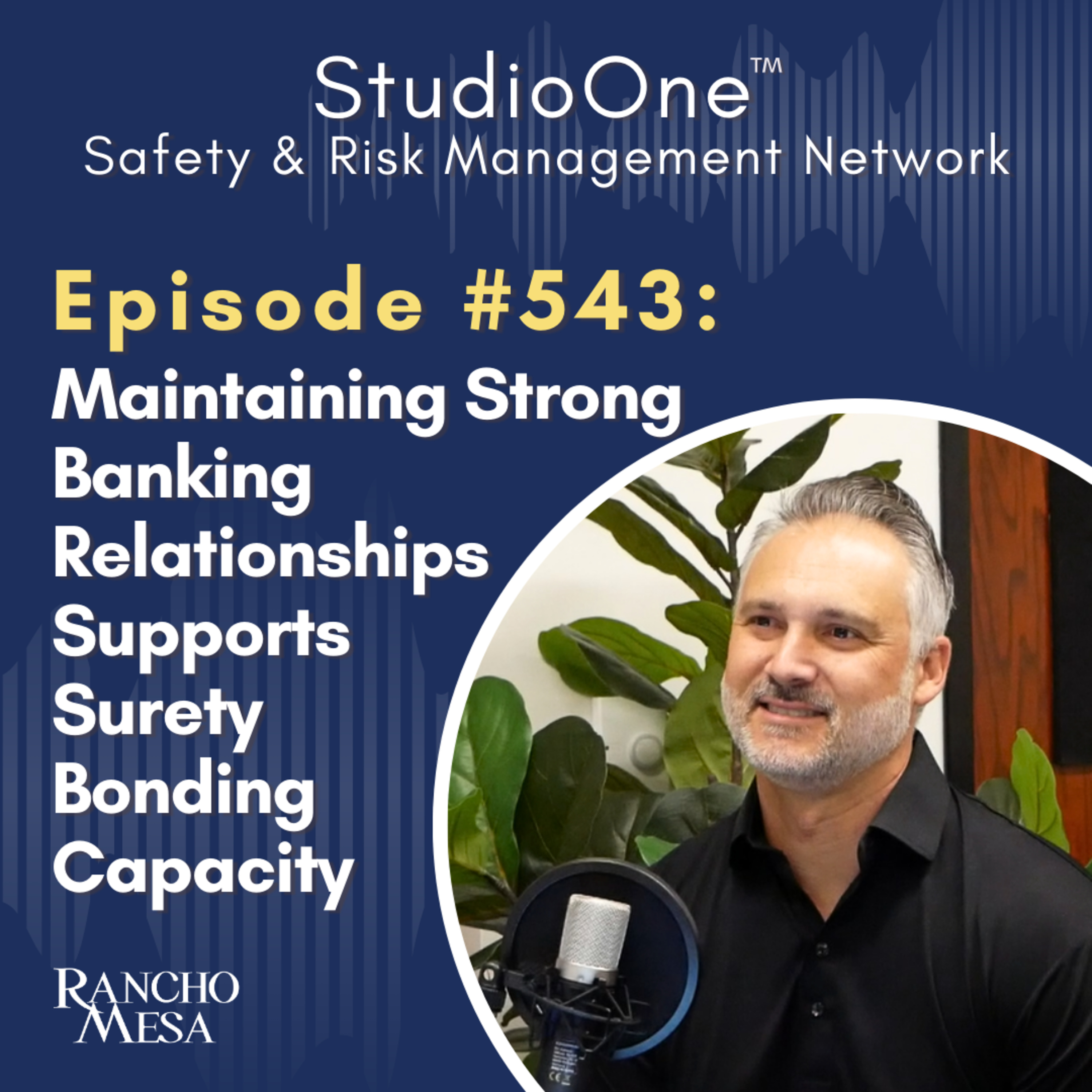
This episode is brought to you by Century Insurance. Century Insurance is an A-plus-rated, mutual insurance company specializing in providing all lines of insurance protection for artists and hand-trade contractors through a very limited number of select agency partners like Rancho Mesa Insurance. You're listening to Rancho Mesa Studio and Podcast where each week we break down complex insurance and safety topics to help your business thrive. I'm your host, Alyssa Burley, and I'm joined by Josh Hill, Account Executive in the Shurity Group with Rancho Mesa.
Today, we're going to talk about maintaining strong banking relationships that support a business's Shurity Bonding Capacity. Josh, welcome to the show. Thank you for having me. Well, we're happy to have you.
Now, you recently wrote an article addressing this issue and with your previous experience in banking, what are the most common mistakes business owners make when managing their line of credit that jeopardizes their relationship with their banker? Yeah, so it could be a number of things. You know, a lot of times, you know, when you have a newer company that's, say, $10 million in revenue or less. They may not know what the requirements are of that line of credit and oftentimes with bankers who fall into smaller businesses, you may have a banker that's not as experienced, maybe they're new to it.
They're still training, they're still learning. That's not to say they won't get a seasoned banker because there are lots of bankers have been doing this for 10. 15, 20, 30 years and a specializing in that field. But sometimes the borrowers just don't know what the requirements are of the line.
So usually there's a respiratory is going to be 30 days. So if they're using the line of credit for a contractor, they just want to make sure that they can rest that line because what you don't want them to do is the borrow against that line and just have it be permanently outstanding. And if they don't rest, that what it looks like is they could be funding losses. They could be just using it for permanent working capital, which in that case, the bank doesn't want to see if they want to see it revolve to some extent.
So it's just understanding what the requirements are of that line of credit and hopefully you have a banker that's going through the documents with you and saying, OK, these are the requirements of the line. There's going to be a rest period. So if you have some seasonality of the business, so you have a rainy year and you need to flow to some payroll or something like that, just understand that you need to manage those cash flows. Because the last thing you want to do with your bank is give them a situation where you've had the line for a year, you've borrowed against it, say it's a million dollar line, you've borrowed a million bucks, you didn't revolve it.
And then when it comes time for renewal, the bank says, hey, you didn't revolve the line, we need to look at turning this out and it's going to be a steep payment over three years. That's really going to hurt your cash flow to borrower. So it's really working with a banker who understands the line of credit, what's required the line of credit and asking those questions at the banker. So you know what you need to do.
OK, so for smaller or newer businesses that may not have an experienced banker guiding them, what practical steps can they take to ensure their line of credit is being managed in a way that both the bank and their surety will view positively? Yeah, so read your own documents. It's usually in the business loan agreement where you're going to find the language that talks about what the requirements are for your line of credit. I think a lot of business owners, especially when they're a newer company, they're only three, four, five years old, they're concerned with running the business.
They're not really concerned about, OK, how do I keep my bank caveats? I got to manage my projects, I got to manage my payroll, my people, my materials, all these things. And looking at a business loan agreement is not top of mind. And they may not have an experienced controller or CFO who's going to say, hey, I know I need to look at these loan documents.
There's things in there that we need to know. So as a business owner, you just need to realize that when you're working with the bank and you get a loan facility from them, you know, they're lending money out to you and it's other depositors money. So there's going to be some requirements and things that you need to do for them to get access to that capital. So I would just encourage any borrower who's working with their banker to have a relationship with that banker and not just be kind of like a 1-800 number call and to talk about the line of credit and just ask, hey, is there anything I need to know specific to my line of credit?
Do I need to rest it? How long is my maturity? What financial statements do I need to give you every year? Do I need to give you financial statements?
Do I have covenants, financial reportings? So these are things that a business owner just mean. I think about it, especially if they're new to getting a line of credit. So it's just open dialogue with the bank.
It's always best to have that. Alright. So in your recent article, you did mention that lines of credit are often misused as a permanent working capital like you just mentioned. How can business owners recognize early warning signs that they're headed down that road then correct those actions before they become an actual problem?
Yeah. So being a banking for 18 years, I can tell you this, the banker's always kind of the last to know when something's happening that's not good. So as a business owner, you know, if you're losing money, you know, if something's not going right. So it's really important to give this information to your banker ahead of time because the bankers report to the chief credit officers and they're the ones who decide whether they're going to renew that line of credit or not.
If you're open with your banker and you say, hey, you know what, I'm having a problem on a job. This is what's going on. I want you to know ahead of time, just because this is what I'm trying to do to manage through that. That goes so far with the credit administrators.
If you can give them the news upfront and we don't have to collect the financial statements and we're two months behind finding out there's a problem, which is now compounded because it's been 60 or 90 days. You know, if they know ahead of time, they can start preparing credit for what's going to happen. You know, they're going to breach a covenant. And this is why, and this is what we're doing about it.
That will give you so much more flexibility with the credit team within the bank. If you're upfront, honest with what's going on, then if they find out 60 or 90 days later, that's the last place you want to be in. Yeah. And that's almost a counterintuitive.
I think a lot of business owners would not want to tell their banker. Yes. And they're having an issue, but it doesn't make sense that, you know, if you talk about what's happening, then you can prepare for it and you can help mitigate any of those negative consequences. So Josh, if listeners have questions about how their surety program is working or what they can do, what's the best way to get in touch with you?
Yeah. So I would just tell them to reach out to me. My cell phone is going to be the best way to get hold of me, which is 623-687-4325, or you can always reach me by email at jhillardantrownlice.com. And I'm happy to answer any questions regarding, you know, obviously surety because that's what I do.
But obviously with 18 years of banking experience and underwriting experience, if there's questions working with the bank or, hey, what steps do I need to take? I don't have a line of credit yet. What do I need to do? I'm happy to walk them through that too, because it's always best to ask for a line of credit when you don't need a line of credit.
Yeah, absolutely. So Josh, thanks for joining me in Studio One. Thank you. Thanks for tuning in to our latest episode, Produced by Studio One.
If you enjoyed my report, please share this episode and subscribe. For more insights like this, visit us at ranchingist.com and subscribe to our weekly newsletter.