
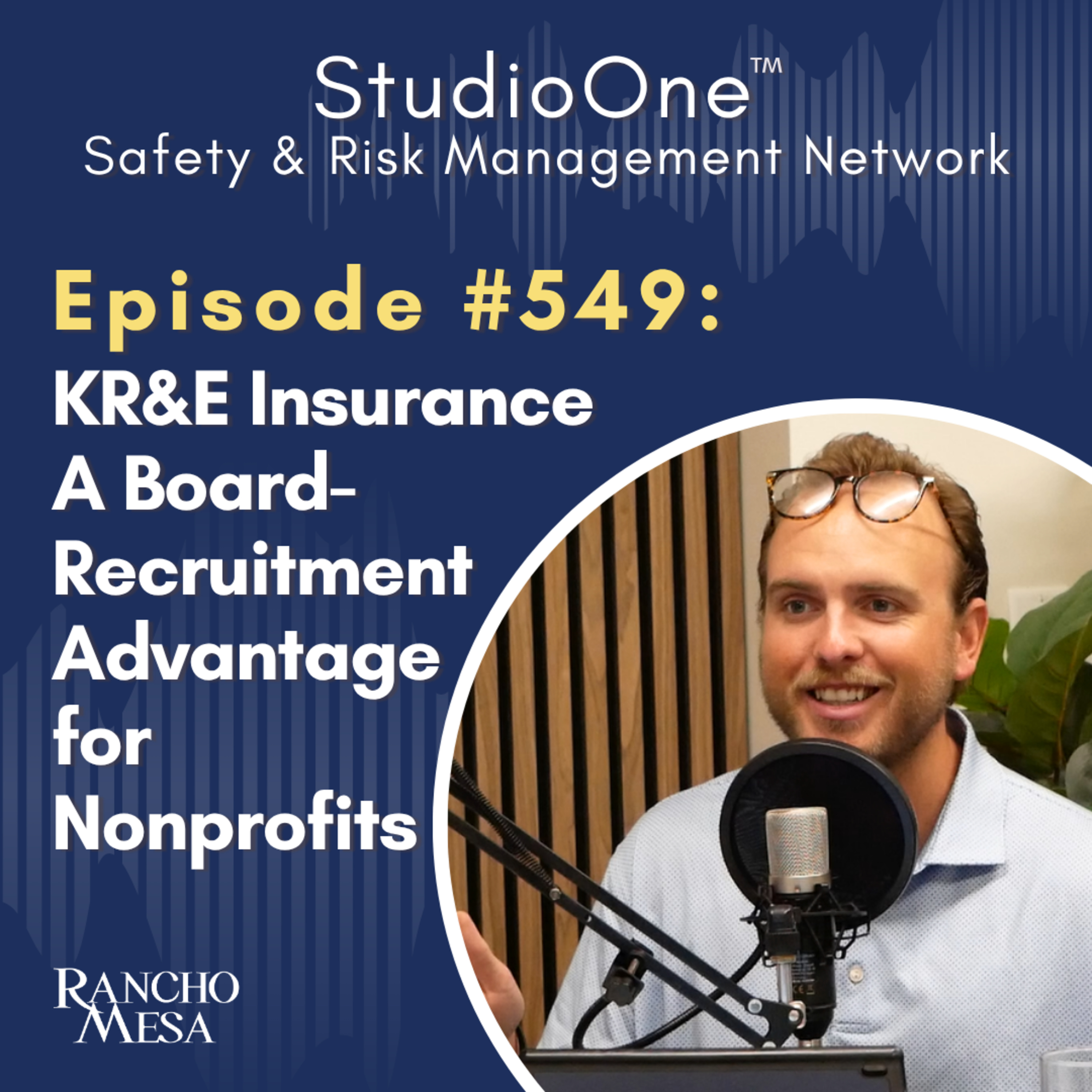
This episode is brought to you by IPFS Corporation, a premium finance billing and document signature and collection company. Visit IPFS.com to learn more. You're listening to Rancher Mesa Studio and Podcast, where each week we break down complex insurance and safety topics to help your business thrive. I'm your host, Alyssa Burley, and today I'm joined by Jack Mars, a County Executive with the Human Services Group with Rancher Mesa.
And we're going to discuss how having kidnap, ransom, and extortion, or KR&E insurance, benefits board recruitment for nonprofits. So Jack, welcome to the show. Thanks for having me, Alyssa. Now, we ensure many nonprofit organizations, and actually I myself has sat on a few nonprofit boards in the past.
And prior to working with Rancher Mesa, this type of insurance really wasn't a concern of mine. So will you explain what kidnap, ransom, and extortion insurance provides for nonprofit organizations and their board members? Yeah, absolutely. I'd say the best way to explain it in plain English is it's going to give you a team of professionals and a budget if something were to go sideways.
There's kidnap being extortion threats, wrongful, detention, hijacking, or even a disappearance. You're going to get access to 24-7 crisis professionals who jump in right away, coordinating with local authorities, securing translators, and council handling communication, and guiding the playbook so you're not improvising under stress. Then it's also going to reimburse you for the real-world cost at PILOP, which can be consultant fees, security, medical, travel, and we're allowed ransom and extortion payments. Yeah, so it sounds like some of the bigger nonprofits definitely need to have this type of coverage, and maybe even some of the smaller ones as well.
So why is KR&E insurance such an important factor when recruiting high caliber board candidates, especially those with public profiles or international responsibilities? Yeah, that's a great question. I'd say KR&E coverage is definitely putting a pretty little bow on top of the coverage. It's going to make your board members know that you're actually thinking of them, and I guess the footwork to acknowledge that, hey, potentially there is a threat you're looking out for their personal safety, and obviously we're hoping that nothing comes to using this coverage, but if there ever was a need, it's going to give them access to those professionals right then and there.
And then I'd also just like to point out, like, seasoned board members, they're not just going to blindly say yes to join your board. They're going to want to look at your D&O, your travel protocols, and then they usually ask myself, well, you know, if I am targeted, because of my role, or while traveling, how are we going to be protected? And being able to point to your K&E policy and provide them with a 24-7 response number is a confidence move. It's in a tell, serious candidates, you thought ahead, you can put real help in motion any hour of the day, that lowers their personal risk, and removes a big barrier, especially for public figures or leaders with international duties.
Yeah, I think that's something that maybe not every nonprofit is thinking about, that if you want to bring in high quality people onto your board, they're going to want those things. So will you describe the kinds of situations that put nonprofits at risk, and how does K&E help in those specific scenarios? Yeah, absolutely. The hotspots are pretty familiar, international site visits or launches in higher risk regions, higher profile board and advisory members who might be targeted for influence or perceived wealth, and fast-moving donors or fundraising trips where visibility is higher and plans change, K&E is built for exactly those moments to deliver expert help on the ground and covering the costs so you can focus on people and resolutions and not just scrambling logistics.
I'd also like to just point out and circle back, I guess I'd say again, it's really just going to provide you with the team professionals who are familiar with the country, speak the language, know the laws, and they're the number you're going to call when things go south, if things go south, and provide you with the team to really make sure that your board members or your executives are safe. Yeah, I can see how this would be important, especially if you are going into another country, maybe you're not as familiar, but there are potential risks. If your organization is working in multiple locations throughout the world and even here in the United States, it could also be an issue as well. So, Jack, if listeners have questions, what's the best way to get in contact with you?
Clients can contact me either at my email with jmarz.org.org or at ranchamasa.com or give me a call directly at 619-486-6569. Alright, well, Jack, thank you for joining me in Studio One. Thanks for having me, Lisa. Thanks for tuning in to our latest episode produced by Studio One.
If you enjoyed what you heard, please share this episode and subscribe. For more insights like this, visit us at ranchamasa.com and subscribe to our weekly newsletter.