
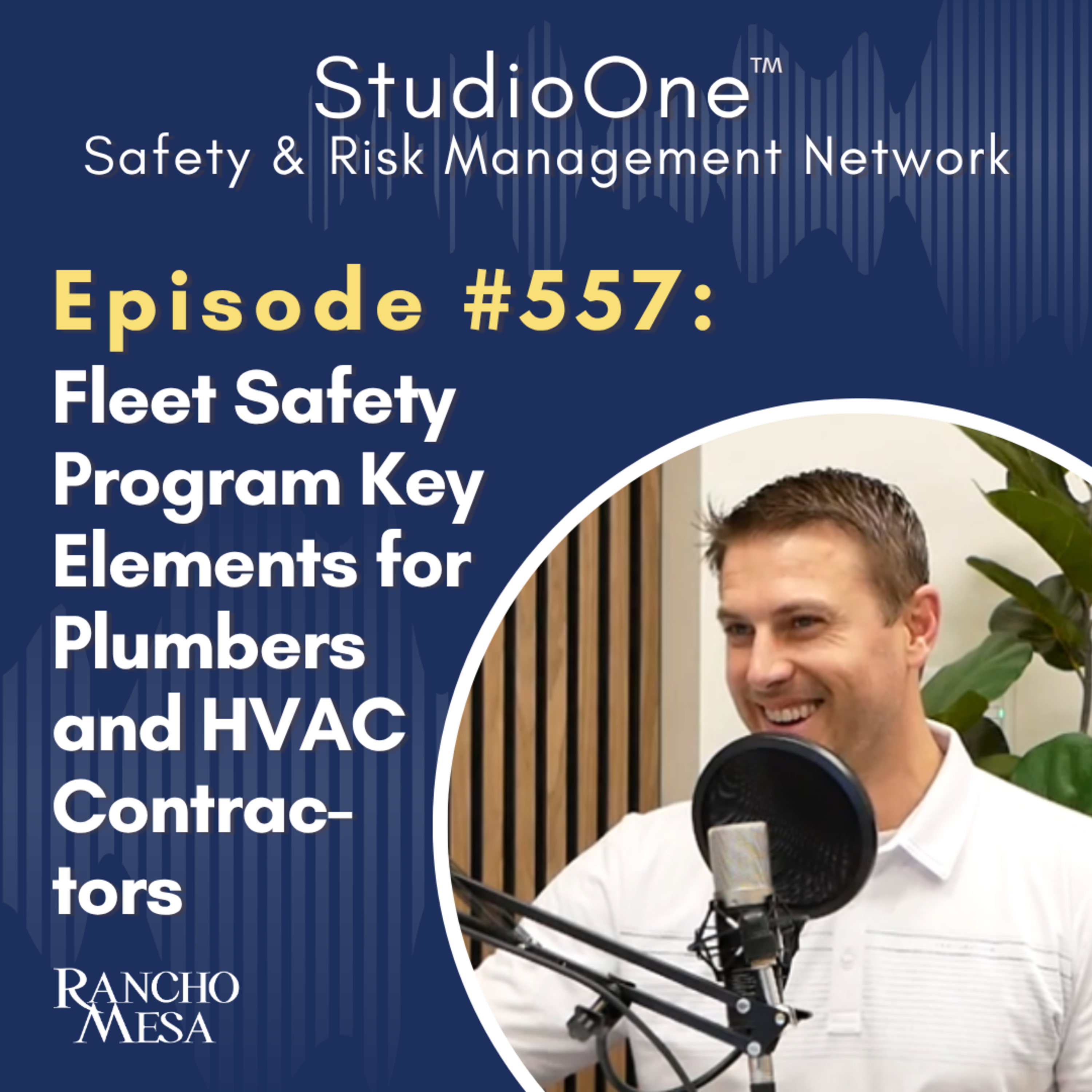
This episode is brought to you by IPFS Corporation, a premium finance billing and document signature and collection company. Visit IPFS.com to learn more. You're listening to Rancho Mesa's Studio One podcast where each week we break down complex insurance and safety topics to help your business thrive. I'm your host today, Megan Lockhart, and I'm joined by Matt Gorman, a County Executive with Rancho Mesa.
And he specializes in risk management for plumbers and HVAC contractors. And we're gonna talk about three key elements plumbers and HVAC contractors should include in their fleet safety program today. So Matt, welcome to the show. Yeah, Megan.
Great to be back. Thanks for having me. Well, happy to have you. Now, commercial auto insurance continues to be a talking point for plumbers and HVAC contractors as premiums continue to rise.
So will you tell us why contractors are seeing such a sharp increase in these auto insurance premiums? Yeah, short answer to be very frank, Megan is profitability. In the insurance world, commercial auto insurance simply isn't profitable. We've all felt it on personal lines as well as seeing increases, but on the commercial side, there are a lot of factors that are contributing to this.
But what I think is a stat that really indicates the state of the market. For 14 consecutive years, commercial auto has posted an underwriting loss. And in just the last two years, they've developed more than $10 billion combined in net underwriting losses. So the auto insurance industry really can't continue this direction.
But as of right now, early indicators show that the trend is continuing. So carriers are responding. A lot of carriers are not writing auto insurance anymore, or if they are, they're being very selective about who they're writing and what carverages they're willing to offer. So the primary driver behind the poor results in auto insurance is auto liability, damage or bodily injury to a third party.
This has been fueled by third-party litigation funding, social engineering and shifting views of corporate responsibility, which are driving nuclear and thermonuclear verdicts, which are all working together to abandon the auto insurance marketplace. It's caused a lot of carriers to reevaluate their willingness to even offer commercial auto policies. And for those carriers that are still writing commercial auto, they are increasing the premiums, they are tightening their underwriting guidelines, and they're really scrutinizing claims history and the quality of written fleet safety programs so much more closely now than they have been before. Okay, so can you explain for listeners what is a fleet safety program?
Yeah, absolutely. The fleet safety program is a collection of policies that set the rules for a company on really driving traders. Who's allowed to drive? What condition?
When are they allowed to drive? What's expected of them when they're driving vehicle maintenance, maybe accident investigation or incident responses, as well as including possibly technology solutions like cameras and telematics? Okay, now recently you wrote an article where you address three key main policies that should be included in a fleet safety program. Can you tell us what those are?
Yeah, so there are a lot of different policies that I think are key to a fleet safety program, but there were three in particular that I wanted to talk about that I think often get overlooked. It's the personal use policy, alcohol and substance policy, and distracted driving policy. So the first of those, the personal use policy, really spells out the company's rules around an employee's ability to use a company vehicle for personal use, or whether that's allowed at all. That can be things like, who's allowed in the company vehicle, when are they allowed to use it, and whether anyone else out other than the employee themselves might be able to use it.
In the HBC in the planning world, we commonly see sort of struck, scared, driven home after work, and be amazed at some of the situations that we see of significant others driving the truck outside of work purposes. So really being able to clearly stipulate who was allowed to drive the vehicle and whether they're allowed to drive the vehicle outside of company use is really important. Personal use policies also address the company use of personal vehicles. So some companies do have their technicians or their employees drive their personal vehicles for company work, and it's important that companies do hold their employees to minimum standards for insurance requirements and have some kind of frequency of preventative maintenance performed on their vehicles.
The second is alcohol and substance policy. I feel like this is pretty self-explanatory. It does amaze me how often we hear stories about drugs or alcohol or paraphernalia being found in service trucks in particular. So it's important that companies do have written and clear guidelines and policies around what they will allow and how any infractions will be handled.
And the third is a distracted driving policy. Now there are so many different distractions that can be present on the road. One of the most important ones, of course, is technology, cell phones or mobile devices in general. We see all the time people look at maps or changing music or sending text messages, even face timing, while they're driving.
And it's important for companies to set rules around what is expected of their drivers when it comes to cell phones. Here in California, it is, of course, now illegal to even have your cell phone in your hand while you're driving. But I'm sure if you're looking around right now, if you happen to be on the road, you may have already picked up your cell phone while you're driving, stopped at a stoplight or stuck in traffic. So just because it's illegal doesn't necessarily stop people from doing it, so having company policies that dictate that it's not safe is really important.
And again, it's not just about cell phones, but we do see things like people eating while they're driving or putting on makeup while they're driving, or even getting changed behind the wheel. So again, as a company, it's important that you're not just setting the rules for what's expected of your drivers behind the wheel, but what happens if your drivers aren't following the rules? Okay, that's really good information. So how can having this week's safety program in place help businesses address premium increases?
That's a great question, Megan. Ultimately, that's what we're trying to address. Like I mentioned, there's just a huge lack of profitability in commercial auto line of coverage right now. And so even companies that are performing really well are still seeing increases, but it's about minimizing increases that we're seeing, or wherever possible looking for savings as well.
It had been considered best practices to have these written fleet safety programs in place. And at this point, it's really considered minimum standards for most carriers. So when these written fleet safety programs are not just in place, but actively implemented, it can help your drivers make better driving decisions and reinforce better driving behaviors behind the wheel, which avoid accidents from happening. That in itself can help to mitigate premium increases.
But as brokers, it also gives us leverage when we do go to market on your behalf to more effectively negotiate with carriers on commitment to safe driving that a company has. And one question that we get often enough is if there's a premium discount for installing cameras within company vehicles and as things stand currently, there really isn't a specific discount for that. And I think it's important to recognize that cameras on their own don't create safer or better drivers. But what things like cameras and telematics allow for is better enforcement and implementation of the written fleet safety program.
And all those together can contribute to premium savings. Alright, well this was a lot of great information Matt. So if listeners have questions about their fleet safety or how it affects their premiums, what's the best way to get in touch with me is Tommy 619-48-6554 or to email me at mboram at ranchomasa.com. Alright, well Matt, thanks for joining me in Studio One.
Thanks again for having me, Megan. Thanks for tuning in to our latest episode produced by Studio One. If you enjoyed what you heard, please share this episode and subscribe. For more insights like this visit us at ranchomasa.com and subscribe to our weekly newsletter.