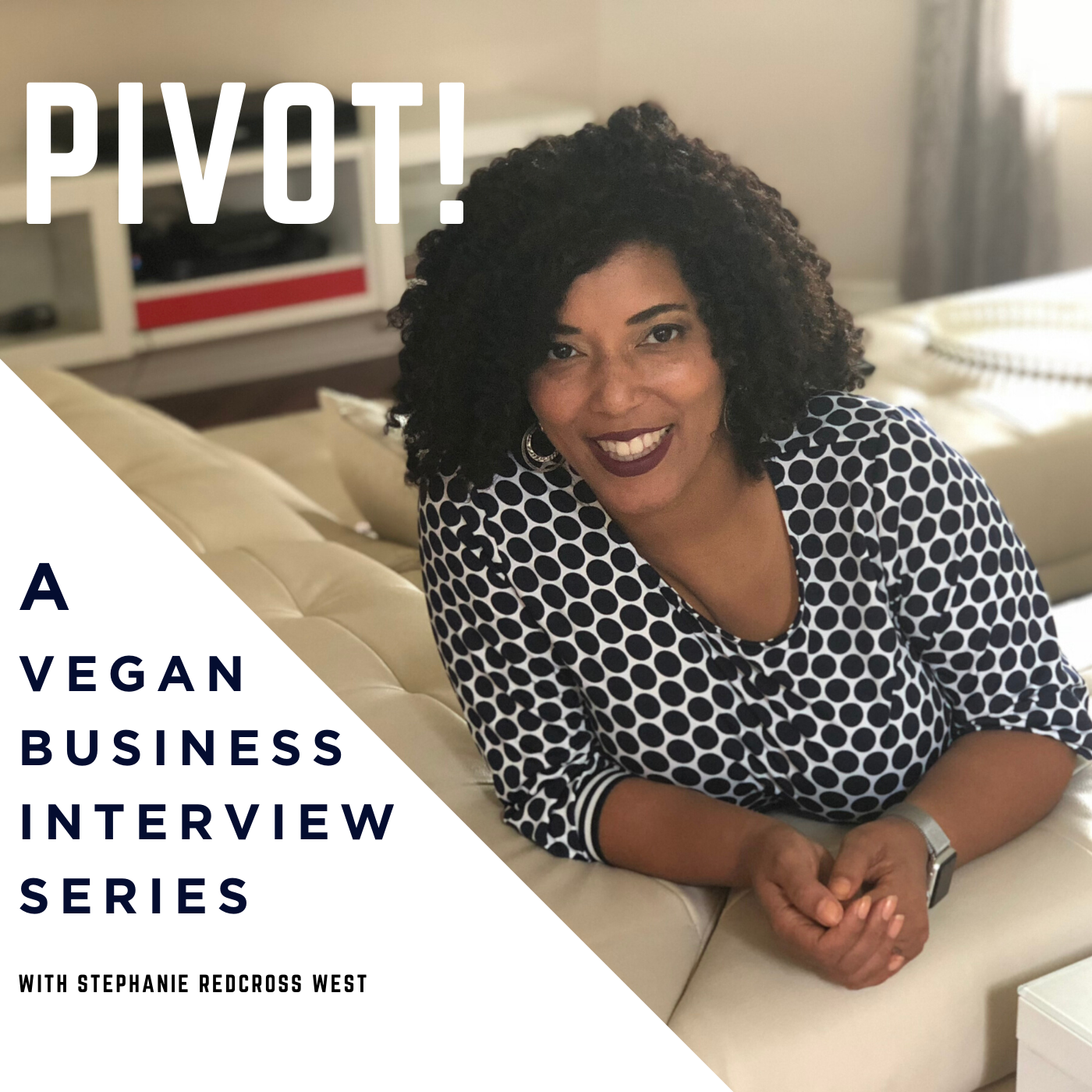
As vegan and plant-based business owners and entrepreneurs, we're often adapting to a new reality. This new podcast series from Vegan Mainstream is an opportunity to help you when it's time to pivot. These interviews will come from inside and outside of our community, and I hope as your host Stephanie Red Cross West, I can inspire you and give you the tools that you need to move forward. Hello everyone and welcome to our topic that we're going to be talking about today, which is Vegan Investing.
For many of us out there, we're curious where we should put our money when we invest. Whether we're investing from a retirement standpoint, whether we're just generally investing because, you know, we were told we should get one of those IRA accounts and a friend of ours and a friend of a friend, or you're starting your new job, the idea is investing is really one of those strategic things that we all should be considering. And as vegans, the question is, where should we put our money? Many of us want to make sure that our dollars are supporting our values, our ethics.
So when you talk about and think about the world of investing, at times you may have questions. At times you may wonder, am I putting my money into ABC or XYZ, mutual fund, or this option, or that option? Am I making sure that I'm investing in the vegan future that I believe in? And what I want to make sure today is that we have kind of a panel of experts that can help you navigate that path.
Whether you're nearing retirement age, whether you're just getting started, or whether you've been wondering, should I be doing it now, or should I be doing it later, or maybe you're procrastinating a little bit, or anything in between? I want to make sure today is an opportunity to inspire you to start thinking differently about how you invest, thinking differently about the questions you ask yourself, and also thinking differently about strategically making sure that the money you have no matter the size. Because I think sometimes we think, do I need to be a gazillionaire to be thinking about investing? And the idea is that many of us can invest in different ways, no matter how much, is in our bank account.
And I want to make sure today is an opportunity for everyone to take away something around kind of investing, especially as we're looking at vegan plant-based and eco-friendly businesses. So with that, let's start to introduce our panelists. Let's get everyone to know who we have today, because I'm really excited that we not only have this amazing panel, but Brenda, who I've known for years and been so fortunate to work with before, has helped us pull this panel together. So Brenda, let's kick it off with you.
Let's give everyone a little bit of background on what you do day-to-day and a little bit of background on how you got to the point of being an expert for us. Sure. Well, I started human investing a long, long time ago, probably in 2008 or 2009. And when I did, I didn't know anyone else in the field who was already doing this.
So I struggled for a long time trying to figure out what my mission was for my client. And now I got with the globe. I literally looked in Australia, the UK, for any other advisors who are already doing this with a take on animal welfare in particular. And over the years, we pulled together this wonderful team, and I believe you have the website now, but we just launched vegan financial advisors and the two gentlemen with us today, I'm so excited because I met each of them separately and independently, and Stefan.
I just wanted to say how I met Stefan when we were at a conference, and it was an investing conference. And I got a page, huge plate of tofu for breakfast, and I couldn't wait to dive in, and he goes, wait, stop, that's not vegan. And I'll never forget that, because we were doing a vegan investing table, and this is just an example that you all are familiar with, and some people still don't understand what vegan is, they'd actually put eggs in a chalet. So the only people that wanted chalet is terrible weren't able to eat it.
So thank you, Stefan. But anyhow, we've been doing vegan investing for a long time, and now I feel like this is such a great time for it, because when people used to call in the past and say, are there any vegan companies, there weren't any, but as we all know, that is not the key thing. Absolutely. And then I think we're also excited about how much the world has changed, you know, how many of these companies are coming about, and then also how much, you know, which I hope we get into today, that the businesses that we consider are not maybe what we would traditionally think about a vegan company.
You know, I mean, their products may be naturally vegan, or what they offer is, and that creates a whole new space. I'm hoping that we get to talk about today, even for people to do some investing. So thank you, Brenda. Let's jump to our next panelist, Stefan Kirby.
Would you give us a little bit of background on yourself as well? Well, thanks for having me. And yes, it's one of my favorite stories I've been to shared, because I took us 20 minutes to figure out why it wasn't vegan. I mean, we finally had to go back and ask ourselves, why isn't this vegan?
And sure enough, they put eggs in it. And to me, that was new. I'm a little bit newer to the scene in the sense that I just became a vegan about four and a half years ago, so still fairly new to this, although I've been a financial advisor for 25 years, almost. So that was my first conference that I went to that was the topic.
And I found it interesting that, again, as we're talking about it, where the conference is talking about the environment and social responsibility, we're eating bacon and steaks at all these other strange things. So that was my first scene on to the social responsible investing vegan scene. And it wasn't a pretty one. But like I said, I'm pretty new to the scene.
I've been here for about four and a half years. But once, like probably anybody on the panel, once you kind of go down that rabbit hole a little bit, you can't put back on the blinders, so to speak. So for the last four and a half years, it's been my mission is how do I educate people, not just on veganism from the standpoint of animal welfare and the environment, but also because it's a good investment opportunity, right? So it's always, I'm a vegan.
I guess I have to invest this way. And to me, it's changing that mindset to folks like, wow, that's an opportunity, whether I believe in that from a dietary standpoint or not, that's a good route to make mine. So, yeah, so thank you for having me. Absolutely.
So glad you joined us today. And I'm really glad to brought up that point that this is becoming a kind of investment portfolio for many to support. Many people who may be not ready to wear like their vegan t-shirt, you know what I mean? They may be vegan after six.
They may have a niece or a daughter or someone who's vegan in their household. So they're familiar with it, but this can be an opportunity for them to invest and help us grow the movement. And also, I love it because just my marketing hat on, it's so great when something becomes viable, it becomes something that really becomes an investment engine. I think we become not just a trend line.
We can become the standard offering and standard option. That's me taking a leap, but we'll talk a little bit more about it in today's session. So Justin, let me welcome you as well. Do you want to give everyone a little bit of background on yourself?
Yes, I'm so happy to be here and join the three of you from the US. I'm coming from Canada today. So I'm a vegan financial advisor. I've been vegan for 11 years since 2010 and I've been a financial advisor since 2016.
And unlike these two who specialize in registered investments, I actually specialize in insurance planning for Canadians for their wealth management and their extended health benefits. So I find myself working with vegan plant-based companies and naturally the business owners of these companies. And so I'm thrilled to be here because it's such a valuable conversation to have. And right off the top, I'll just say, again, I'm not a registered investment advisor, but I do bring a lot of experience and resources to the table.
So I'm so happy to be here. Thank you. Absolutely. And I'm so glad you're here because many of our listeners are business owners.
Many of them are thinking about what they should be doing, you know, how, what do they do with their proceeds that come from their business. And I know with you located in Canada, we have some folks who hang out with us from Canada as well. So I'm hoping this is going to be great advice for them as well. And I think we'll be able to really help a lot of our listeners with some great input that you're going to be bringing on to the table today as well.
So let's kick things off. Let's just start doing some definitions. Because I think for a lot of people, maybe thinking, what do you mean by vegan investing? Like, are we putting our blinders up?
And the idea is that the food company, are we putting up our blinders up? And we literally are saying, well, what constitutes vegan investing or kind of, you know, what kind of you guys defined it? Maybe if we can do just a quick round table to just see if everyone kind of defines it a little bit differently, as well as we're using the title of vegan investing because our audience is vegan. For many of them, they want to get a sense of, you know, allowing their values and their dollars, like I mentioned.
But I really feel like that investing portfolio is a little bit wider. Kirby, you had, you know, used the term of social, what did you use? What term did you use? Social?
Just social responsible. Yes. Yeah, social responsible investing. So maybe we could just go around and kind of say, how do you define it in your world?
And especially, how do you define it to your customers so that everyone who's listening today, they can understand what they should take away or what they should be thinking about when they think about investing? Brenda, do you want to kick it off for us? Yeah, that's a great question because that's one that I mentioned earlier. I struggled with my belt because we didn't have any vegan companies for so long.
So I was trying to define that. At the same time, I was telling clients about this idea I had. So it took a long time for me to be able to answer what you're asking me. And it's evolved over the years because when I started, we were exclusively using mutual funds.
And as everyone who I think of most people knows, very few, if any, call themselves vegan. So now we have a vegan ETF at the very first time, which is exclusively vegan. But prior to that, we would have to pick and choose funds that were the least bad. I mean, literally the least bad.
And so it was hard for, I think, people who trusted me initially because I was telling them I'm trying to make it more humane, but the money managers wouldn't listen to me because that was too small for us to influence them. So it was really, I feel like a leap of faith for people who started with me early on because I was trying to figure it out. And I'm one of those people where I don't mind failure. I will put myself out there and do whatever I can to make something happen, but defining what I want to have happened was tough.
So to answer that now, I use funds for some clients and I use individual securities for others. And the part of my job that's tough is personally is I like things to be black and white and this is still not black and white. So one of our clients had, definitely, been in her portfolio. And one of the money managers, they defended a thing.
Well, they have a vegan burger. They have this. They have that. And she said, I know too many bad things about Netflix at that.
I got level. I still don't want it. So we got rid of it. I wrote to them and let them know why we were selling it.
But between you and me, I feel like that's where some of that impact in life is when we have those discussions with the money managers. So they know why we're getting rid of it. And they might decide not to buy something like that in the future. So it feels good if they just drop it from our personal accounts.
At the end of the day, if they got a grand level, can we impact the world. And that's why I started that vegan financial by their side because I feel like I'm too little to do it myself. But all these people who are doing vegan financial advising, it's so wonderful because now we have a whole team. That can trickle down and operate for our money managers.
So that's my take. No, I think it's great. And I think it's so important that you're doing the work that you're doing. We're bringing kind of financial advisors and really people in this space that can support people making these decisions because it's hard to know and navigate the world, especially if you're not from that world.
You know, if your career isn't aligned in this kind of arena, it can sometimes feel like it's something that can be overwhelming. It can be a lot of research to be done or you think you're investing, even like you mentioned, you think you're investing in the fun that does less harm. And then when you start to dig a little bit deeper, you may be disappointed. So being able to work, I think, with an financial advisor that can help someone navigate, I think it's really, really important.
And I'm really glad that you're bringing together the community of advisors. Yeah, I'll just say I love what Stefan said about investing with your consumer dollars. That's a concept or conversation that I thoroughly enjoy and that's voting with your dollar. We have the power to change individually, massive power each of us individually with how we choose to vote with our dollar.
Whether it's investing for retirement or like Stefan said, going and supporting or shopping local, which is really big up where I am in Canada. For me, vegan equals anti-animal abuse. And I don't know if I'm an outlier in this, but I feel as though it's fact humans are animals. So in my opinion, when it comes to vegan investing, not only are we looking at things that are important for the animals, but also how is human welfare in the conversation, in the investment?
Like what are they doing to their staff or their employees? Like how are they treating their people? So to me, vegan investing is that cruelty-free anti-animal abuse and that could be food, it could be fashion, it could be energy. There's so many different offshoots.
There's accidentally vegan as well by nature that defaults to cruelty-free or anti-animal abuse. So that's what vegan investing means to me. And again, back to what Stefan said, very passionate about supporting the change makers in your community. I think that's huge.
Absolutely. And I'm really glad that you talked about not just looking at a company and saying for a food standpoint, are they vegan or they're not? But looking at how they treat their employees, looking at how they run their business, even the sustainable side of things. I think more and more light is being kind of illuminated on businesses to look at their full practice because it is key that the impact you make in our community.
In our local communities on businesses around the corner, the impact that these businesses can make on where they put their dollars really matter, especially when you start to dig into that culture because that really can be key as you're thinking about these businesses. And also thinking about investing, which is a long-term strategy in many cases. I think it's really interesting to start to understand what makes many of these businesses or organizations or even funds, in a sense, what makes them tick. So I'm really glad that you added that.
So let's dive in. Let's talk practical about investing. Because I think for a lot of people, it can feel like an intimidating world. It can feel like investing is when you have X amount of money is when you have that discussion.
So maybe if anyone's in China and feel free, maybe Stefan, I'll throw this out to you first. Can you give me an example, maybe two examples of the type of customers you work with and how you walk them through this investment kind of process? Because I think for a lot of people, when they're first starting out, should they just get their 401 from their company, just go with it and wait until they get enough money to do individual investing, maybe a kind of question that people have. And I'm just curious, as you walk through maybe some examples, you can help people kind of understand when they should be maybe playing more active role in their investing, whether it's a certain point in their life, certain career change, certain family changes, and so forth.
I think it might be helpful to clarify that for people. Yeah. Great question. And I'm going to take a step back to what something you guys were just talking about briefly.
And I apologize that the ADHD kicks in. You guys have one of those long hooks that kind of drags somebody off the stage. Feel free to use it on me or just signal that I've gone on a hand. But I say one, what you're mentioning about understanding the roots and the internal mechanism of the company is crucial.
I think moving forward especially, right? So as vegan becomes more mainstream, it becomes a buzzword and it becomes what's happening, right? My concern is now that's a trend and we know what happens with trends. People take advantage of trends.
Now we're a vegan company. Are we really? So I think moving forward, I think it's going to be really important to dive into the nitty-gritty of what makes that company. And you can know, I mean, your point was great.
How the employers are treated. I'd love to see a vegan. I'd be shy. I'd be shocked to see a vegan company treating employees for an idea.
I sure signed you that there's something wrong, right? You know, just based on the fact that how we treat animals. So I think what we're going to see moving forward is it becomes more mainstream where people see if there's opportunity there. That is people stepping to this space that maybe aren't ready for this space or maybe shouldn't be in this space.
It's going to be important that we really understand who they are, why they're there, what their motives are. What are they doing with their dollars? Are they pouring them back in the community? Are they going somewhere else?
So that was a great point. I'm going to understand what makes the company the company. And to tackle your question, I guess briefly, everybody's different, right? So it depends where I meet folks.
My business may be a little bit unique to Brenda's because I was doing this for so long. The majority of my clients aren't vegan or weren't vegan. So part of me is part of my job is we've done the math. We know for every, I want to say for every $10,000 invested in the S&P 500, I think it's, I think the number is somewhere in the range of about 100 animals are killed, right?
So they would go back, look at the numbers on the S&P 500, what that represents as far as animals. And by pulling money off of this index, you're able to technically save animals, right? That's what money does not be and it's being money that's diverted from going to this. So it seems simple to me for every, you know, for, they say an average vegan saves about 100 animals a year by not eating, right?
By not eating meat. Same to me. It gave every $10,000. I pull off the S&P 500.
I'm essentially creating a vegan. So my mission for my folks is to go to the folks that aren't in the vegan portfolios and show to them numerically and statistically look, you're doing better or if not good, you know, without even trying it. So how do you convert those current people into believers? And part of that is the marketing and let's just be honest, like my portfolio is called Compassionate Planet, right?
For some of the reasons that it's more than just a vegan investing, there's generally quality. There's a million pieces, but also being perfectly honest, I called it the vegan portfolio. How many people would I scare away from that portfolio? So I don't care who invests in it because in my mind for every 10 grand going into it, I'm free and vegan.
So don't be a vegan investment. I'll take your money too. And we're going to do a great job with it. You're going to make money with it.
You're going to be happy with it. So to me, it's converting people that don't necessarily, they're not investing because they're conscious they're investing because they want to make money, right? And then the other group of folks that come to you specifically, and the money is, it's funny how we can have complete opposites. I mean, I've had clients say, I don't really care about the rate of return.
I'm like, hang on, what do you mean? This is your time. They don't care. It's, they're more interested in what that is doing, how that capital is actually working for them.
It's our trying to create or dial things in specifically towards their ones or values and what they like. I don't know if you have a combination of different investments. Again, mutual fund stocks or even recommending, recommending people locally that they can support. They will also have an impact.
Yeah. And I love that. I love that. What you mentioned, the idea that by taking that money away from the S&P, we are literally saving.
You know what I mean? The idea is that, at least in the example, I gave where I was like, honestly, just put it in your 401k. I just put it wherever your business is going to put it. The idea is by taking action, you can actually save animals.
And I think for a lot of vegans that are maybe watching this. A lot of people who want to figure out more ways that they can take action and save animals, I think you've given them an amazing kind of way to take action right away. Right. And hopefully, I'm a tricky motivator in that standpoint too, that if you are a vegan and you're listening and you don't understand that, well, now you understand it.
Now you understand it, that you're investment and I love the term vote. My book is called, You Are The Changes A Beginner's Guide to Social Response? It's on Amazon. But that's what we're talking about.
You're literally voting with every dollar. So to me, I hit my wife and I, and we're at the grocery store, we're vegan. We're feeling good about ourselves now. And I'm looking at our cart.
I'm like, nothing in it. It's clear that you go money more than you invest your retirement. Kind of like, I just supported times in, I just supported everybody that I avoided. So do you think they care that I didn't put the food in my cart?
I'm still sending them the money. So if you are listening to this and you aren't being understand that you are still investing in those, and for every $10,000 invested in these major indexes is pretty much depleting what you're doing. So by understanding that you can make some significant changes, you really multiply the changes you make by understanding that your folks are voting with your dollar for sure. Love it, love it, love it.
Brenda, Justin, do you have any thoughts on that as well? Or maybe talking a little bit more about how you approach it for your client base, especially depending on the example we're talking about right now, whether people are already vegan or not vegan, how do you approach it? Yeah, I'll jump in. Investing in my opinion is one piece of personal finance.
And across Canada, across the globe, in the US, there's a confusion around financial literacy. There's a big gap in financial literacy and what personal finance is. So for me, wherever we're meeting people where they're at, I really do like to start at the foundational level, right? I'm not a lawyer, but I firmly believe that somebody having their will, however, attorney and representation agreement is where they should be starting their financial literacy, personal finance foundation.
Above that, I think they should be taking care of and investing in themselves through insurance. What does that look like? Different for everybody, depending on their situation. Then we're going to get into the conversation around debt.
People are so freaked out about debt that they don't even want to open their bank account app on their phone. They get anxiety all about it. So in my humble opinion, it's about building a strong financial foundation with some of the non-controlables, some of the things that I just mentioned, and then we can start getting into the conversation about investing, where, how, why, what, all of that different stuff. But for me, I think the most important piece is starting to educate clients on financial literacy and personal finance as a whole and not just only investing.
Because let's be honest, investing is the fun part, the sexy part, all the other stuff. You talk to people and they say, oh, I know I got to do that. I've been on my to-do list for three years, kind of things. So we really got to start with a strong, solid financial foundation in my humble opinion.
That's a really good point you bring up, because I think some of those topics, just like I said, people that like log into their bank accounts and look at how much money they have or even logging into their accounts and see how much debt they're carrying, that it can cause so much anxiety that we just try to avoid these things. We just try to kind of, you know, sometimes I think we're running away from it just because we don't have that financial literacy, like you said. Do you have any recommendations for people who either, you struggle with them when you mention these items because they're like, oh, yes, I have not done these things. What's the best way for them to get, you know, educated?
You know, do you help with that process? Do you have any resources or anything that you would recommend? Yeah, most, Brenda and Stefan will probably tell you that, you know, most advisors are going to give you maybe 15, 30 minutes of their time to try and help initially, you know, there are some fee-for-service advisors that will charge you right off the bat to talk to them, but a lot of professionals will not charge you for a first sort of discovery or information session or if you have, especially in today's world, you have a couple questions, you shoot somebody an email, generally they're going to share some resources with you. So anyone is welcome to reach out to me for sure.
And each one of those pieces, you know, like I said, like I'm not a lawyer, a lawyer can help you with this. Insurance is a whole nother piece, debt is a whole nother piece, but anybody can reach out to me if they want specific to debt. There's an app, it's called Mint, M-I-N-T, Mint is a good resource for people to start to, essentially, you know, write down the numbers and begin getting comfortable, I guess being comfortable with being uncomfortable in budgeting. So Mint app is a good resource for people, but anybody can reach out to me at the end as well.
Perfect. And I wanted to add another question. And Brindy, you can jump in anywhere you want to. This popped in my head because this is something that I experience in my world, meaning a lot of people who run vegan businesses, they have a hard time with the money side of things.
They have a hard time making money. They have a hard time sometimes participating in the capital system that sometimes they're trying to reconcile their ethics, their belief, or their kind of free spirit that they want to approach the world with, that the capitalist side of things feels like taking me away from my vegan values. So, therefore, I wonder at times the financial literacy that they should have their approach to their finances, their debt. Sometimes there's like an internal war because of that, because they're trying to avoid the capital side, the capitalistic side of things and balance kind of how they define their veganism.
I don't even know if I asked a really great question there, but I guess the way I would pose it, maybe Brindy, I'll pose it to you and you can let me know if you want to take a bite of this apple. But the idea that do you feel that people need help not just with the literacy side of things, but also getting comfortable with these type of financial discussions? Because sometimes there's a little bit of an ethical challenge with feeling comfortable with money discussions, numbers, investing, and so forth. What do you think, Brindy?
I think you hit on something important. I probably told you this before, but when I started, I used to table the animal rights conference, and I was treated like a plague. They would see my table and I was like, what is this capitalist doing at our beautiful animal rights conference? I mean, I had to be pushing for me.
In talking to people when I was trying to do, that's when they ate the transition more over, at least hearing my side of what I was saying. But that's the part of my job. I love it, the collaborative part. Because when I got started, I was focused on like, that's the responsibility of responsible investing, and I can't tell you how many people come up and pick on something about solar.
I remember hearing for the first time about how wind power hurts birds, and I was going, oh, you're making my head hurt with all these things. So I do think it's so important, like Justin said, to reach out to people like any of us here as more of a coach in that capacity, because I do encourage clients if they have a 401k and they get a match, I don't care if it's invested in a horrible F&P 500. Don't give away free money. And people need to hear that, because they'll say, well, no, I don't want to.
That goes against everything you and I are talking about. That's wonderful. Please put a crush on your HR department, be if they can add something more humane, but don't give up your own financial security in the process. So it's kind of like the last question you're asking about the clients you work with.
The beautiful thing about financial planning is most of the things we're talking about are a lot investing. Like, that doesn't affect the fun part of our job. And in my next life, I would love to be a vegan portfolio manager because I actually enjoy that. But most of the time, we're talking about things other than investing.
And it's neat to do it with someone who has values that are lying to viewers. So I selfishly have really enjoyed my job in the last few years because I'm working with people I truly love and will zoom and sit down together and figure things out. Oh, yes, let's look at my investments too. So they already know they don't have to worry about that part of it.
It's the other stuff that's so important. And last year, I was so busy with work that I wasn't going to take on any more financial planning plan, but I missed that. I actually had told a few people I couldn't do it anymore. And it's something I selfishly enjoyed doing.
So I went back to doing it. And so if someone doesn't have any assets yet, they just want to like, where do I get started? I feel that technology now has made it so easy that we can help a lot of people efficiently and effectively with very little time. So like Justin said, you might just need a short call with someone and maybe we'll just validate what you're doing or tell you in some way you should be doing.
And I tell you nine times out of 10 later on when they need something to come back to you and that's happening at the time. So I don't know if that answers that, but I feel like there's a financial planning asset and then the investment investing asset. And I'm lucky that I really enjoyed that. No, I think it's a great way of answering the question because I think sometimes, you know, these things can become like a black box.
You know, they can be like, I don't know what I need yet. I just know I needed to do something different. Or, you know what I mean? I know that I should be planning for the future, but I don't know if I'm investing land.
Am I an advisory land? Where am I? And I think breaking that down, I think, is helpful for people to hear. But I also think it helps people find a place to start because, like I've been saying before, I really think investing at times can sound, you know, sounds like it's the hurdle to the next leap to make.
And therefore, when they start to really break it down, just like you did, Justin, and we had a quick comment that came in that you made the point about having kind of a good financial foundation before considering investing as gold, you know, saying that many people don't have will's insurances in debt. Thank you, Sandra, for dropping that comment in because that really does, I think, happen to a lot of people and a lot of people along the way. And even, you know, as we look at headlines, we'll even hear about celebrities that unfortunately pass away and they don't have will's, which just completely shocks me. So it really can happen kind of across the board.
So if we wanted to give some people advice today, and maybe we'll do another kind of round robin, if we wanted to help anyone kind of today, I know everyone's going to be starting in different places, if you had to give them a checklist of things that they should either become aware of, something that they should do, or when they should give you a call. So those are going to be my three different buckets, something they should be aware of, what they should do, or when they should give you a call. I'd love to just because I'm always about helping people take action. I'd love for you to maybe give everyone a quick, give everyone a quick recommendation on what they should be doing as they start from today, start from this month, and start looking at their finances differently from your perspective, what should they do?
What should they become aware of? What should they do? And when should they give you a call? Justin, do you want to kick it off for us?
Yeah, absolutely. I'm big on democratizing information, and that comes from surrounding yourself with like-minded folks in a group setting. It's never been easier to do that before, so I'm just going to give three resources. The first one, Brenda mentioned earlier, and Stefan also had mentioned, you know, cruelty-free investing.
So one resource is a website, it's called crueltyfreeinvesting.org. Somebody can go on there and they can actually look and see on two sides of the screen, which companies are cruelty-free and which ones aren't. Okay, so that's one resource is crueltyfreeinvesting.org. And then two other resources are private Facebook groups that I would encourage everybody to join who's interested in vegan investing.
One is called Vegan Investing Club, and the second one is called Plant-Based Stock Investors. I think that these are two amazing places to be in a community with people just like you, where you can ask questions, and you know, it's always preface with, hey, newbie here, I got this question, blah, blah, blah, blah. And it's the same question that, you know, 20 other people had. And then there's a group of people in there who are there to literally have this conversation and help and add value because they enjoy it and they are the change that we want to see.
It's not a group where people are trying to get your business or get you as a client. It's really just a community of people who are having these conversations. And so that would be my recommendation, Plant-Based Stock Investors, vegan investing club on Facebook, and then crueltyfreeinvesting.org. And anybody can call me anytime.
Now they want to get in touch with you. What would be the best way to do it? Definitely my website, www.justinmanning.com. It has my YouTube, Instagram, Twitter, LinkedIn, phone, email, everything on there.
So that's justinmanning.com. Perfect. All right, Stefan, you ready to go next for me? Sure.
First off, Justin's a spot on. I'd say whatever you said, go with that. Because I think that's just particularly solid advice. And even the advice you gave earlier is creating a foundation.
You'd be amazed how many houses we walk into that there is no foundation for the financial. Everybody doesn't want to talk about the exciting stuff, but they don't understand, well, if a disability even happened tomorrow, basically this other stuff is useless. So it's important to have a solid foundation. So that's a great point.
I'd also like to pick you back on the crueltyfreeinvesting site. That was a huge site for me. I still use the stock investments that we run. We use that as our screener, right?
So if they're on that screen, it's considered a cool company. You won't find them in any of our investments. So I really appreciate what they're doing on that site and the expertise and that they're bringing to that. I'd say, depending on where you're at, right?
So that's the complexities. We have folks all over the board. We have folks that know nothing about it. We have folks that know a lot about it.
I'd say start off just understanding what you have. I find it interesting. The next book I'm working on right now is called What You Should Have Learned in School, right? So most of us here have need insurance, have retirement, accounts, mortgages, car payments, credit cards, just life.
There's no classes being taught, right? I mean, I can Google search what happened in 13, 12, but I can't get the information I need. So we're meeting folks that are highly educated, but when it comes to their basic finances, they're completely uneducated. So I'd say as a foundation, understand it.
Decide if you don't want to be involved in it more later, that's why I'm set out. But I think when it comes to this, I tell folks all the time, I want to help you, but nobody's going to care about you and your money more than you. Period. No matter what, how good of a person I think I am, you have to care about it.
You have to understand it because in most cases, clients are just like, good luck. Tell me when I'm broke. And to me, I want them to understand what they have, so they understand what we're trying to do. So I'd say just as a foundation, understand what you have.
And if it's nothing, you're just starting off great. Understand what you need. Everything Justin did a great intro on that. Again, start with your basics.
Folks that have been investing for a while that have more involved. Understand what you have. So for folks that are vegans that are listening to this, you know what, I'm interested in this concept. I can quote you for your investments right in another group that I'm a big fan of.
These guys are your sake. Y-O-U-R-Sake, S-T-A-K-E.com. Love these young guys. Essentially, they've created where you can take a mutual fund and input it into their system.
And it will tell you all the companies in this mutual fund and which ones are considered cool or not cool. So for you folks that have mutual funds, but you're probably the majority of people listening, you can put your entire portfolio in there and within 10 minutes, know where you stand. You don't have to do anything with that, but you'll understand how much of my investments are supporting cool companies, how much are art, and then you can make determinations. But just understanding what you have, right, is a foundation for all investing, all financials, regardless of vegan or non-vegan, as a starting point of where am I right now?
What do I have? What am I trying to accomplish? Okay, let's then start taking this layer by layer. But I say for new folks, just understand where you're at.
Understand where you're at. Understand where you're at. Understand the basics because you may just want to stop there. Other folks may want to be able to deeper and start going to some Facebook sites and start doing some of their own investing, even which I think is fantastic.
But understand what you have, I think is a good foundation. I mean, you say what they have. But just almost doing a committee audit in a sense and saying, okay, you know, like he said, by 401k, you know, how cruelty free is it or otherwise? Is it just going through the checklist like Justin said, okay, do I have a will?
You know, where am I with my debt and so forth? Are there anything else that should be on that checklist that people should be looking at so that they're even prepared as they maybe want to have the phone and give you a call? Yeah, I think you can Google searches a million groups out there that just are offering basic literacy, just a simplistic financial plan event, just a simple planning to plan. Again, we talked about investing, but if you did a simple financial plan, all the just points would become very obvious.
You don't have a will. I don't have a basic venture. So you can just really do an audit on yourself and it seems overwhelming to people, right? But this is the interesting part.
It's like, I don't feel sick. We'll go to the doctor. I don't want to hear what you've got to say. So I feel people approach their finances very similarly.
I'm good. I'd rather just keep letting this truck move along until I get to retirement than hope for the best, which just seems insane to me, right? But that's just kind of the society that we have right now is worry about it later. I don't worry about it now in a good way.
Understand what you have to do a basic audit on yourself. And then again, it's just go find out what's wrong. Then if you want to take the prescription or not, that's up to you, but you should at least know what's wrong or where you're at so you can make some moves accordingly. And again, if you're vegan and you're putting this time and energy and you're socially engaged, like I know most of us are, boy, you're missing a huge opportunity to really use these folks for change.
If I see on the street protesting, but you're still buying traditional investments, I've got nothing for you anymore, right? Because your actions speak a lot. I could barely hear you. There's so many votes in your investment dollars right now.
We could literally change the world. If everybody out there was listening to this and we changed our investments accordingly, the amount of change, we wouldn't need these. We wouldn't need the show. We'd be able to make all the change in the world that we would need, right?
So to me, understand where you're at, understand what your purpose is, and just move towards that and try to make just a little bit of a difference if you can. Yeah. I don't think that's the key. Oh, sorry, go ahead.
Sorry, Stephanie. Before Breda jumps in, I was just going to say what Stephanie's talking about is the concept of a map. You can have a map, the best map in the world. And on that map, it's got the location that you're trying to get to.
But if you don't actually know where you're starting, that map, although the best map in the world is completely useless. So figuring out where you're starting is exactly what he's talking about. Yeah, I just wanted to touch on that for sure. So, so important.
And one of the best parts, most exciting parts about our careers and careers of other advisors to your question, Stephanie, about what else would you add to that checklist? It's the dream setting, the goal setting. Those are the most valuable, exciting, impactful conversations to have. So financial planning is not doing a boom.
It's actually exciting. It's changing towards this fun, cool, open world for people. So just definitely reach out because the best time to plant a tree was 20 years ago, the second best time is now the same exact thing goes for what we're all talking about in terms of the investing and personal finance. I love that.
And I love to get people active now and get people kind of building that map in that starting point. So can you give everyone website email? What's the best way to get in touch with you? It's a book of kmfadvisors.com.
That's our company website. Again, I'll pitch the book one more time if you're interested. We'll get a little closer to the screen so people can see it. This is my cheap copy on it.
But again, if you want to copy it, send it to you for nothing. It's not, this book was never designed to make a dollar on it. It's basically, we're discussing all the things that we discussed here and give you some tools. But check it out if I can help anyway.
I obviously would love to. Thank you. Great. And then Brenda, wrap us up here, you know, on what people should be doing.
What action they should be taking, especially as, you know, our trailblazer here on the panel. What are your thoughts? I wish I had a love button for what they both did. No, they really nailed it.
The one thing I would add is one of my passions, because they've all heard me say I know that I'm working with the Farm Animal Investment Risk and Return folks. And that's a website and a resource that it might be something that people don't want to spend more than five minutes on. But what I've had success with is getting money managers to acknowledge animal agriculture in their portfolios. So at the very low bar, it doesn't mean it's going to be a vegan portfolio or even what I would necessarily consider humane.
I'm talking to portfolio managers and saying if you're not acknowledging the risk associated with animal agriculture, which is a lot easier conversation post-COVID. I joke about this, but I've had a pandemic in my office for the last 10 years, pandemic with factory farming and lo and behold, here we are. So I feel like people are paying more attention. And when they hear that this is the risk to their portfolios, it's going to actually affect their bottom line, feel more interested in joining fair, and it's a free membership for investment dollars.
And when I think I met with them several years ago and they only had 10 trillion, they only had 10 trillion of assets that had been committed. They're up to over 25 trillion now. So these are half the managers all over the world who are now, again, at the very low bar, are at least acknowledging animal agriculture in their investment portfolios. So with the great resource, you can see the money managers that you use or the mutual funds that you use are network members.
And if they're not, it's so easy to just say, hey, have you thought about joining fair? And I guarantee they don't know what you're talking about because they don't know about fair when they do. There's not really a strong even not situation. So that's my one plug, but I love the financial aspect.
I say that don't let perfect be the enemy of good. I feel like that happens a lot as people don't even want to think about it because they feel like it is too intimidating. As they both said, and I just want to chime in, there's so much out there that people I got distracted. But yeah, there's no reason not to start today.
And one that you commented on earlier is approaching HR because for most people their investment starts with their employer. Like that's where it all kind of begins and for many people that's when they start young. It's like, okay, yeah, I'm going to contribute and match fund and so forth. Do you have any recommendations on the best way to approach HR to maybe change the way or what is in those funds that the companies are investing in?
Is there a good way to do it so you can walk out of that meeting? I don't know. Much Justin will probably know it. You can put it in the chat.
It's social, I think it's socialfunds.com or socialfunds.org where you can actually see all the social responsible funds lifted. And I'm glad you asked that because I haven't been on it for a while. But it always had animal welfare as one of the criteria as whether or not they screen for it either positively or negatively. So one of the things that I'm thinking, I'm sorry, I mentioned that social responsible funds are obviously going first and they are already going to be screened for environmental causes and they're already going to be screened against usually tobacco firearms.
And the usual offenders, but then this is just one step further. Do they do any screening for animal testing versus animal agriculture? That is a good one to walk into HR with. Potentially you can add any of these funds in there and even just definitely what you already have at the target date one.
But again, I would walk away from three money if you have a match at your employer. Absolutely. That definitely makes sense because that money one day could be reinvested into kind of the vegan world. So looking at the time, I have as usual had so much fun, maybe to talk, talk, talk that we go to our traditional clients, but I want to make sure I give everyone just a quick moment to maybe share any recommendations, any inspiration, any final words with our audience as we wrap up today, whether we're talking on the financial planning side, whether we're talking about just getting that financial literacy going or even on the vegan investing side of things just so we can wrap up today and kind of leave everyone with something to either aspire towards or a thought that might make that light bulb go off and get people to start taking the right action.
If you're trying to find, let me create videos that I can't believe I neglected to mention on the vegan mainstream side. So he says I did get so many questions about basic financial planning early on. I do need to go back and update them, Stephanie, you're amazing. Thank you for having those on there.
It was a project I'd always wanted to do, and you gave me the motivation to do it. So that would be mine as the investing. I don't pretend to be great at being engaged, but I really enjoyed helping people. Oh, I think that would be great.
And you know what? That should be a little to do. I know we've chatted about it before, but maybe it should be a little to do it on our list to update those videos and see if we can get something out, maybe following this video because it might be exciting for people to get started there. I'm glad you reminded me.
It didn't pop in my head until you said it today. So thank you from Brenda. Stephanie, do you want to go next? Yeah, I'll just, I think everybody brought up some really good points and just brought up a good point.
Talk about it. Have some fun with it, right? Like finances, unfortunately. My wife's a marriage family therapist.
Finances have a major impact in all of our lives, right? Single marriage doesn't matter. It's having an impact in our lives. Have fun with it to some degree, right?
But again, I think part of that is going back to what I mentioned earlier, just understanding what you have. You don't have to be, you know, get your doctorate in finance. Just understand the basis of what you have, what's happening with your money on a month-month basis, understand what that looks like that alleviate a lot of stress and alleviate a lot of pressure, and then put you in a position where, again, I always tell folks, my job is just to do the diligence and give you the information. You're smart enough to make your own decisions.
It's just trying to help folks with getting some of the information. So help yourself get some information. Yeah, folks like those that will help you, just to mention it before. If I never picked up another client, I'd be A-OK, but if there's somebody that comes to me that's like serious about making a change with their investment dollars, that's like having lunch with someone that says, I want to go vegan.
I'm going to do that all day, every day. So don't hesitate to reach out to one of us, and I'm assuming Brenda's in the same way. We're very passionate about this. And it's not from just a job standpoint, it's something that we care about.
And that's where I feel blessed. I get to care about something and it'll be part of my job. But understand where you're at. Enjoy the process.
Understand that you can't make even more change with what you're doing with almost no effort. So this is not a big effort that you have to put into it. Want to understand how this world works. As far as the finances and the veganism concern, you can really multiply your impact.
And if you're enjoying doing what you're doing now, you're really going to see that the fruition of that take place, especially again, as you start really multiplying your impact out there with other folks. So that's what I've got. Thank you for having me. I appreciate it.
Thanks so much for joining us. Justin? There we go. Financial coaching is for everybody.
Single couples families in debt, high net worth. Financial coaching is for everybody. So let's put the egos. My advice is let's put the egos aside.
Let's get started. Again, the best time to plan a tree was 20 years ago, second by second is now. Same thing goes with your planning for yourself, your spouse and your family. So my advice again is start to dream a little bit.
Start to get excited about the goals. There's nothing better than when us as planners, we have clients come to us with a clear vision of what they're trying to achieve and we can get them there in short order. So my advice is financial coaching is definitely for everyone. Perfect.
Thank you so much everyone for joining me today. I love, love, love. The quotes that are going to be coming out of this session is really, really exciting to hear how much action we can all take, whether it's on the HR front, whether it's diverting dollars or whether it's, you know, some of it putting their egos, but also some of it, you know, putting away some of our anxiety and our fears, getting coach, getting financial literate. I think it's so important and I'm hoping today's session really inspired many vegans out there, many individuals who are listening, joining maybe our vegan friendly family out there that's watching these sessions that this is an opportunity for you to really kind of take hold of your financial future.
So we have three amazing guests today that not only hopefully give you some inspiration, but are also resources for you after today's session so that you can get started on that journey. So thank you so much, Brenda, Justin, and Stefan for joining me today. I really appreciate it. Thank you everyone else who joined us live or if you watched us as a replay, let us know in the comments if you have any other questions.
We will definitely pass them over to our guests and I just thank you for taking the time to think about investing differently and thinking differently about your financials as a vegan because it's important for us to continue to invest in the movement and continue to move forward in all walks and all disciplines and in all markets. So thank you everyone. Good night. Everybody.
Thank you.