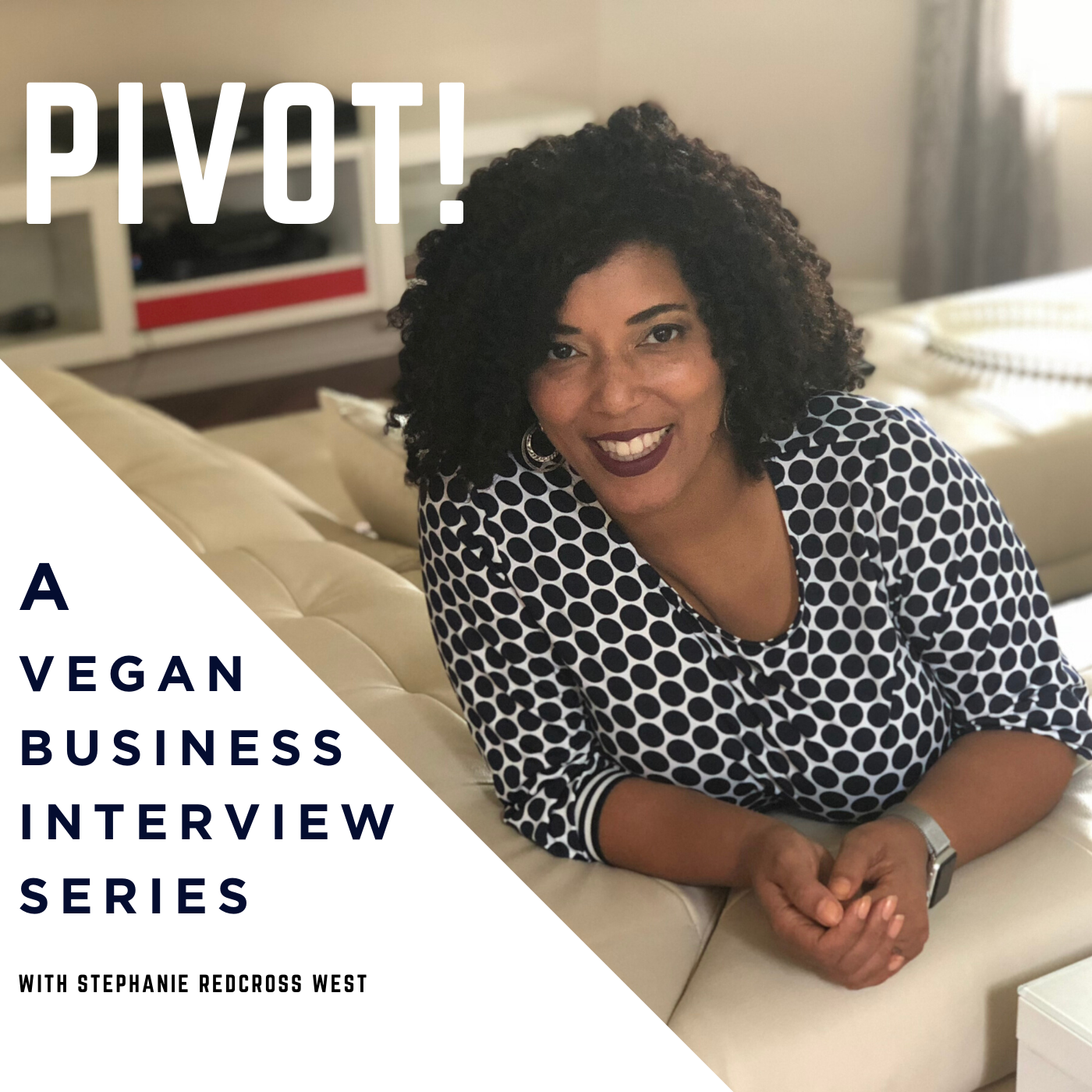
As vegan and plant-based business owners and entrepreneurs, we're often adapting to a new reality. This new podcast series from Vegan Mainstream is an opportunity to help you when it's time to pivot. These interviews will come from inside and outside of our community, and I hope as your host, Stephanie Red Cross West, I can inspire you and give you the tools that you need to move forward. Hello everyone, and welcome to our next interview.
I'm excited today to have a food safety expert here with Heather Lendex. Love how did I say that correctly, last name? Yeah, you did perfect. Perfect.
And I'm really excited today to dive in, because not only are we talking about Heather's new book, which is hot off the press, I also want to talk about how kind of veganism and food safety and the kind of challenges that many of us and many people have been struggling with as far as managing things like allergies and so forth, how does that translate into their veganism makeup, translate into maybe how the restaurant industry is going to develop over time, and more importantly, how Heather is making change happen through not only her personal experiences, but bringing these expertise to the table. So first, I just want to say welcome Heather. Thanks for joining me today. Thank you so much for having me.
I'm excited to be here. There's a dive master. And the point of being a dive master was that I could become a reef survey. So I could basically scuba dive around tropical reefs for a living.
I never ended up getting back to Australia. I went back to the UK, mostly because I've exhausted all of the music options already, trying to live the Australian lifestyle. But when I went back to the UK, I quickly trained to an environmental health practitioner. So I went and did a master's degree in that.
And that basically teaches you how to enforce the law. And obviously, I have a background with bacteria in biology. And I have an actual affinity for food. And my first job when I graduated was in a council.
Working in the public sector is also a bit like punishing people, judging people. You maybe have to really persuade them just to meet the legal minimum. So it wasn't really to my friendly personality. So I quickly switched to the private sector.
And I really like, I like training people. I like talking about examples. I have a lot of humor around bacteria infections, these sort of things that people don't really feel comfortable talking about. And then I moved to Denmark.
So I married a dean. I had a couple of Danish children. And one of the jobs I did during maternity and those sort of things was inspector tells for safety. And then more recently, until COVID hit, I was looking at brand standards in restaurants.
So I've been in thousands of restaurants, kitchens, trained a lot of stuff. But in this time in about 2018, I became vegan. And then about six months later, I had a severe allergy attack. And this sort of changed my perspective about some of the things you read on the back of vegan food.
Like, make and take milk, for example. Because last time I was at the hospital thinking I was dying to have a laxity, I was in the back of an ambulance. And I thought at that time, I thought for about 20 minutes, I was going to die. And then it just turned out, it was about allergy.
They gave me some drugs and that sort of thing. But the anxiety was there for ages. And it took a long time to see a specialist. And they lost my results once as well, which didn't help.
But for those four months, the doctor had sort of indicated it might be milk. And I said, but I'm vegan. And I've been safety specialist. I should know these things.
And you said it's really common that people have a reaction to vegan food because it's not at all legislated, what that means. So if you said it was free from milk, that means zero milk can be in that product. But if it's vegan, the contamination isn't really a legal matter. And that's maybe a bit angry, enough to write a book, do lockdown, about how it's inclusive, if you're inclusive.
So if you can include vegans, especially if you had a vegan option that also is allergy friendly, you can promote that. No one seems to promote the fact something is contamination free. And it would sort of compare every two of the other products. So if you have a product out there that is free from milk, egg, shellfish, and fish, very common allergies, and life threatening allergies.
And often in different age groups as well, like milk and egg is very common in children, fish and shellfish might come on later in life. And for me, I was in my 30s, and suddenly I've potentially got life threatening allergy. Surprise. I think life as an allergy sufferer is really restricted, because you can't be anywhere where there's food.
And that affects every business. That's not just food businesses and restaurants and hotels, although they're my favourite, given my background. But if you have a workplace and it involves food or meetings or conferences or any of this stuff, it's from using clients, you have to think of a place that's inclusive. Well, you might have a client that can't eat.
And that's where the idea behind the book started. But in the book, there's 50 other expert opinions from the industry. And so I got into marketing and finance and all these parts with a niche like labeling and manufacturers. And there's 50 expert opinions, including people with allergies on their own little mission to help their little part of the world, even the vegan brands and the vegan standards.
It's like they don't see each other. So if you do have a vegan food business, bear in mind that the milk-free market is 10 times bigger than the vegan market. And it's a similar thing with plant-based that 80% of the people eating a vegan restaurant are not vegan. So why are they there?
Are they there because they're with the vegan, which you might assume, are they there because they're plant-based and they don't want to call themselves vegan? Or are they there because they have a life-friendly analogy to one of the animal products? Or is it because they feel comfortable because it's not in their local area? There's not, maybe, a religion isn't supported.
There's other minority groups where they might have a health condition where they have to avoid a certain ingredient. And it seems like these people at the moment, in general, are very excluded and they're not part of the community. And it's quite sad, but it's also leaving money on the table, which is a subtitle of the book because it's basically a perspective shift. You've changed your mindset and you see these people that are just waiting to be served.
You have a really open market. There's no competition. Yeah. And I think that's the key is in vegans we want to be inclusive.
They're going to be like, we have a desire to be. But I think what's nice about your book, and even just the time that I've gotten to know you, is it's helped me think of it differently, to think about, like you said, why are some of these individuals going to these restaurants? Why are they buying these products? And when we start to understand the underlying kind of challenge that they're facing, or if I was in the shoes of someone who ran a food business, I'm saying, let me make sure I understand why my customers are buying their product.
Then there may be more steps I can do so they not only enjoy my product, but feel inclusive. Feel like what I'm doing is designed for them and for them to be there. I think that's a really important part of how we run businesses, an important part of how we develop products and marketing and all that good stuff. And it's funny, because when I compare the UK to the States, they use vegan on everything.
Whereas in other countries, it might be that plant-based is cooler or more accepted, or vegan might be disliked by some people. But it also symbolizes something else. So it's not just ethics. It's not just environment.
If it was a plant-based thing, it's not just health. It's some people, it means safe because they can't even eat. So if you think of so many scenarios in our daily life where we have to eat, like even in a stay with a friend or go into an office somewhere, you don't have to take a pat lunch everywhere. I travel a lot for work.
I basically didn't eat performance because I was too scared to eat in the 7-Eleven because I have seen a pepperoni pizza on top of a vegetarian pizza and have vegan. And I said, oh, that's funny. Is it still vegetarian? So you just separate them and he was like, are you happy?
And I'm like, I just laughed. Like, oh, great. Now there's all the juice on there. It's so gross.
And I think the more I notice these things, even when I stay in a hotel, I would choose which hotel to stay in. Based on how easy is it for me to have breakfast without having to ask questions and be awkward, is there usually something in this restaurant? I guess quite a lot of the same brand of hotel because I know they have this fridge on the buffet in the morning. And I know I can at least have breakfast.
It might not be very exciting, but sometimes it is. It's also important because when you travel, when you have plans or you're going to be with a group, it's important to feel comfortable. And I think as vegans, we understand that because many of us have traveled and know what it's like to not have a dish. But I don't know if all of us are thinking about the other side of that, which is a person that can't eat because of the anxiety that it might have something that could be life-threatening, something that could make me sick, something that could really impact my life.
And I feel like this is such an important thing for us to be thinking about and talking about as vegans, whether we run businesses that are food-based businesses or even have businesses, locations, you know, run events, activities, so really I feel like it can touch all types of vegan businesses to make sure we're aware of this because we can serve communities better. We can help people have a true safe haven and make it a safe haven for not just vegans, but for a larger group of people that could use the support that we could give them. Yeah, and it'll probably amplify business because if you demonstrate that you've considered someone and what they could possibly not eat rather than what they could eat, I think that it delights customers or clients or partners. It makes them think that you've thought about them.
And it's so strange because I think veganism is about being empathetic to animals, obviously, but probably animals include tubids. And it generally is that you already have this skill to put yourself into another body. You know, you have the skill of putting your mind in someone else's shoes or hooves or whatever you want to call it. And I think you're already at an advantage if you were to try and do something that involved milk free or equity or anything to do with shampoos and things like that.
We vegans are used to looking at labels. We understand exactly how hard it is sometimes to be able to eat. And I think just understanding even about lactose intolerance, understanding some of the potential problems you can have with food, there'll be a lot of vegans that have those problems. And when they became vegan, they felt better.
I don't realize maybe I was lactose intolerant. Maybe I had an intolerance to something else or analogy. And it's amazing how many vegans don't know that if you've stopped eating milk, maybe for a few months, can be 25 years, you will gradually become lactose intolerant. It's natural to be lactose intolerant.
And I call it milk poisoning. If you get milk poisoned, you might think you have ideas or you might think you have food poisoning because the symptoms are very similar. And for me, they're even worse than food poisoning sometimes because I'm very sensitive. But if someone mixes two products that look the same because you've got the non-dairy in the dairy, then that's why I get this really extreme reaction because it contains milk.
And there's probably very little in terms of the law that protects us from that. And I'm saying in my book that just because we haven't got a life-read analogy, doesn't mean that we don't have injury from eating something we don't want to eat. So in terms of veganism, if someone's vegetarian, you should be able to suit or at least go to a plane and be taken seriously because it is being sold something that's not suitable and that's a consumer protection. So there are all these different aspects of the same problem that vegan food is not always free from animal products.
Yeah. And I think it's going to be... And I think it's going to be tricky, especially when you start to die not non-vegan restaurants, meaning restaurants that aren't completely vegan, and they're trying to accommodate however that cross-contamination can be something that can be a little bit tricky to navigate in some of those food environments, especially depending on how much care they take to it. So walk me through how do you work with restaurants, with food services?
How do you work with individuals that might be either a little bit skeptical, they might be just pushing back because they're already overworked. It's not like they don't care, it's just that their current situation is already stressing them so thin that it's hard for them to see how to move forward and accommodate people. How do you work with them? How do you get them to see the perspective and understand that this is not only good for their customers, it's good for their business and it's the right thing to do?
Well, in the UK at the moment, so in October this year they're going to change the law so that manufacturers, including restaurants that put anything in a packet, or cafes that, you know, package sandwiches in advance, that's something you have to have a full ingredient label and all the allergy information on the packet. So that's a big deal for some food businesses, and the other food businesses like restaurants may think it doesn't affect them, but obviously the consumer certainly expects more. Absolutely. Now, do you feel that the consumer will understand everything that's going on?
And the reason I say that is sometimes there's like the laws that are moving forward, there's the practice of it in the restaurants in our places, and then there's the hope and dream that we have as consumers, and not all three of those things line up. So do you feel like there's something that's going to help bring those things together or do you think there's going to be a lot of time where we have to figure out what we think and what is, and what's in packaged versus restaurants, all those things will start to gel together so that you can develop like in the right expectation. There's a huge development in this area like menus that are now electronic, that the potential is so huge that you can actually deliver really accurate information about ingredients. What then is the problem is you need to deliver information about what the risk of contamination in the restaurant is, and what your controls are, and how you're trained, because there's a chronic lack of training across the world, that even they're naming, it sounds really dramatic, but they're naming laws after dead children.
That's what they're doing out in the world. There's Natasha's Law in the UK, which is a big deal across the pond, I've seen in the press there as well, and it's because it was a loophole in the law that caused her death, because it was a fair assumption she made, like I couldn't understand why you can see what you think that, because she ate a sandwich that didn't have the things she's allergic to, which is SME, which is now on the US, coming on the US list, and then she's on the plane, and what can you do about it? There's other laws as well that is about EpiPens, because it's not like they're available everywhere, there's all these rules about medications, and then in the States, there's Elijah, who was a little boy that was fed a cheese sandwich when he had a dairy allergy and he died, so now they want to train that particular focus group on being allergy aware, but I think what the main problem is in the world, including the allergy sufferers, everyone thinks it's an extreme minority when it's becoming normal, and it's definitely normal to have a dietary preference if it's not an allergy and intolerance, or vegans or plant-based, and there's all the religions as well that want to avoid animal products. So you can have this inclusive dish that's basically hardcore allergy-friendly vegan option, is the answer to a lot of restaurants problem because they don't even have to think, someone ought to think, they can even add animal products to it later if they want to, it's the customer would want that.
If they're avoiding milk, they can add some of the other things we probably don't want to add, but this inclusive dish is just a simple solution to a very complex problem. And I think this is something, the reason I'm so happy that we are talking about this and we're bringing it to our audience, is that, you know, as we all want a vegan world, as we're hoping for these things, I think we have to understand what that means in reality, in what type of products, what type of approaches we have to have to take, to make sure it is not just a vegan world, but it's a world that's friendly to other groups, that represents other groups. And also, like you said, where the assumption is, well, you know, the vegans are the minority, allergy sufferers are the minorities, and we start pushing individuals to the side, and we start to say this is our main way of delivering food, and the idea is that we need to change the way we deliver food, not just for vegans, but we really need to make sure it's inclusive for everyone. And that inclusive approach, I really feel like it aligns well with veganism because not only from a kind of practical and also, like I said, from an ethical standpoint of, you know, putting ourselves in other people's shoes, but we can start to create dishes that cause less harm.
We can start to create dishes that feel safe, and I really feel like this is something as vegan as we should be thinking about, we should be figuring out how do we champion, and how do we get behind it as well. And I think with vegan products, it's not just vegans that are attracted to the word vegan, and I think you can really target these extreme allergic people, because your product is superior to the mainstream products, and when you're advertising, if you say it's like a bit like if you say it's something ethical or cruelty-free, nobody wants an ethical or a lot more cruelty-please, and I think when it's allergy-friendly, you can just say it's clean, you can say it's not contaminated, no one wants extra stuff they're not sure about in their food or in their products, and I think it's the transparency that you're offering as well. And there's a whole sustainability goals, and if the whole world is going to return to that, I think once they stop using disposable items because they're scared of COVID, I think it's going to be back, but it used to be very high priority to be more sustainable. Yeah, and I really hope, I really hope the world kind of continues to move this direction of transparency in food, because it is kind of, you know, sometimes like playing roulette when you go into a restaurant at times, because you are hoping the dish that comes out is the dish that you negotiate it with the waiter or waitress.
You really sometimes feel like what I ask for, and what I'm looking for, you know, I've even been in those situations, especially when, you know, in the early stages of meeting vegan, where I would taste things and be like, wait a minute, is this really vegan? And especially as how food has evolved, especially on the vegan side, a lot of the foods are starting to now mimic a lot of the animal foods, the textures and so forth, that it even is becoming harder and harder to distinguish between the vegan options and the non-vegan options. So that's why I think this transparency is such a needed step, because you know, like my senses that I used to use before are just not as strong because there's been so much advancement in food tech. It's quite strange to say that there, because I think we mentioned it before to each other.
You can be the opposite way as well, so there's a warning against pretending to be meat, pretending to be the usual, because as well for allergie sufferers, you don't want to be made of nuts when actually you've said on your menu, you're chicken. Even if it says plant-based on one menu, you need to be really obvious that it's not really chicken, it is plant-based chicken, or whatever you want to call it, peanut, replica, I don't know, I think alternative is quite a nice way of saying it, because it's an alternative to have the same taste, but I think sometimes that marketing is exploited to emphasize things, it's the same statistics. You've probably experienced this yourself during the pandemic, something's reworded for politics, or they get reworded for drama in the media, and it's the same with allergies, like peanuts are really dramatic because they have the reputation for being killers and children, okay, but they're not actually the priority, the number one spot is milk for killing children even, and actually the highest number of milk allergies is in the under fives, so that's not even their consent if it's their parents deciding what they're going to eat, sometimes it's all lost in communication, and I think it's just everyone needs to pay more attention to allergies because it's a phenomenon, modern phenomenon, modern hazard that you're even more likely to die of a food allergy than 50% of the last year's COVID death toll, that is amazing statistic, I haven't got any way to back it up for the original data, but that's what's reported on Wikipedia, so everyone's thinking about peanuts, we're actually, they should be worried about milk. And that's the thing, like when you hear this information, when you find out, maybe for a lot of people, this is kind of an episode because I know for me it was when I was doing a little bit in advance research before we talked, do you feel like there's a role for vegans to play in helping support this, like what should we be doing, even not just as business owners, but just as consumers to help create this transparency, help create this safe space, how much of that responsibility should be on our shoulders?
Definitely complain, be vocal when you're treated like you're being annoying, you are entitled to ask about ingredients, you can mention you have a lot of those intolerance very likely if you're vegan, because it's not taken seriously, it's not even respected, it might be cooked in the thing or touching the thing you're trying to avoid, and I think it's a taboo subject, as are all health issues like related to allergies and stuff, even intolerance can cause some uncomfortable to talk about symptoms, that these people in these minorities are actually making up 40% of the population, at least in the UK, that they're not alone, they are, do you have a right to be included, and of course there's always the extreme, the food standards agency in the UK say it's one in a thousand people have enough access to food, so just as a round number, but actually one, it's 20% of the population report themselves that they have an allergy to food, and some of those will be saying it when they have an intolerance, because an intolerance is also an adverse reaction to food, that is the definition of allergy, it's just they distinguish because it's one's extremely serious and one's, they call it, on the health services call it discomfort, and I call it, you get really sick, and I think when it's discomfort, it's disregarded, but it's actually painful, and it can last, it can last days, whereas I think you know you get gas, you know, gluten intolerance, it's fab, and all these things when some people are like critically chronically, it's a disability, in lots, in lots of ways and on a huge gradient, depending what your issues are, and I think it's not seen by the rest of the population, because no one talks about it, they've accepted, they're not included. And that's the thing, I think it's, it's one thing about how we feel about it, because it's easy for us to kind of judge and say well what about those or what about that, but the reality is, we don't want anyone to feel uncomfortable, we don't want anyone to walk into a restaurant and have anxiety, I don't want someone that I'm eating for dinner to be concerned of like should I either, should I not, and I think those are situations that we all don't want to be in, we don't want to be in individually, and we don't want to put other people in those scenarios, so I think it's important for us to know which restaurants respect, you know dietary preferences, we need to know which restaurants respect and understand how to handle allergies, and also which ones do not, not because we're always trying to even wag their finger at, and people that don't do what we want them to do, it's just that I think it's important to reward the companies that do support us, you know that do support, because it's easy for them to do a lot of that work, you know, in the back of the house, a lot of that work on educating, cleaning up their menus, and not be recognized for that hard work, and be really seen as a distinguishing factor when you're choosing a restaurant, choosing food products, choosing businesses to support, so I think this is something that you know we all should be thinking about, because it's important to reward businesses that support our way of life. I do talk about this a little bit, I did call it vegan magnetism, but we've run out space in the book, and it is that if someone with a dietary preference, such as a vegan or an allergy sufferer, recommends to you a place to go that they're nice to you, you know they're not going to be jerks, so you walk in, you know, unlikely to get poisoned, unlikely to be embarrassed or ridiculed, and unlikely to have consequences afterwards, or whilst be there in my case sometimes, and that risk is part of the consumer journey, but they do that, they do the whole, you know that you don't have any resistance people paying, you don't want them to be resistant from ordering, well why are allergies sufferers sent to a pdf, or not even, they have to ask, they have to ring in to ask or they have to wait at the side of the kitchen if they want to try and get someone who probably doesn't know to ask about ingredients, or you're in a queue, and you have to queue, just to find out if you can eat because the information isn't available, all those things, I'm just not going to eat with you, I'm just going to get somewhere better, whenever there's an option sometimes, such as airports are terrible at this, if you're trapped in an airport because your flight is delayed, quite often you have to starve, and especially for allergy sufferers, they don't want to eat before they go on a flight, because that's what happens in a tasher, so if there was something wrong with their food, that is a critical time that they would be, know about your services? Yeah, and I think that's the key, is we forget, like if you're in a business trip, if you're traveling, you're probably going on a plane, or a train, or even any type of transport, you don't want to have a challenge, and you know, when you need something, and it gives you a reaction, you don't know what that reaction is, sometimes how long it's going to last, all that stuff, and I think that's a real concern, I feel like that's not something that we should take lightly, and I think sometimes we forget that, like you said, that there's not this small group in the corner, that once this and once that, this is serious, and this is something where, even like you said, as a vegan, if I'm picking up, or someone gives me milk or something like that, it's going to impact me, I'm going to feel it, and if I had to do it when I was on, if it happened to me while I was on a business trip, that would be a lot for me to have to manage and show up at a meeting, do a presentation, and feel that way.
And it'd be likely to see for damages, and it's definitely not going to say, because somebody did it for, yeah, and as well with vegan, it might not stand up in court, because vegan has no typical definition, although in 2020, veganism became a protected belief for a philosophical belief, so it has the characteristic, you can't discriminate against someone based on being vegan, and so that will become worldwide too, because now it's proven in court that it is a characteristic, you can discriminate against. Yeah, and I think, I don't think that's an issue, I'm not as litigious as a person to say, well then can I say, can I do that, that's just more my personality. If you want to be fired for being vegan, then you might think differently, it's the same for an allergy surfer, they have a disability, and should they be told to not enter, it's sometimes I've seen these notices, if you have an allergy beware, don't eat it, we're not going to guarantee your safety, now if you have a business that's open to the public, you can't exclude someone with an allergy. I definitely responsible for everybody's safety, including your employees.
Absolutely, I definitely believe you're responsible for everyone's safety and great in the environment, but that's, I'm going to throw out one question, I'm going to see how social media treats me if you're even asking this, but how do you balance that, because the question would mean, like we take an example, and I'll use peanuts only because I was recently in a restaurant that had like an open box of peanuts, the question is, do those things have to then be removed from our society, like how do people manage that, because I think sometimes the question is, if I'm making every space that safe space, which I do believe in, how do you balance the other side of it of items then start to be 100% removed from the culture, from the world, and from things, especially I think where people struggle to run the other side of it, there are certain dishes that are made with certain things for cultural reasons, there are certain things that do lean into it, so you start to get this crossroads of, you know what I mean, it's trying to be safe for one group, but it may often impact another group. Yeah, you can't, and I understand the question, because a lot of chefs, when I talk about having a vegan friendly allergy friendly vegan option, they think I mean 14, because that's the European number of allergies, 14 different ingredients they shouldn't have in that dish, and what I'm saying is no, make it allergy friendly for the products like egg, milk, fish, shellfish that they expect it, not to having it, and if you can make it gluten free or peanut free or nut free, then great, but you can also make a dish especially for someone using this ingredient that isn't a vegan, and I think that just having that anticipation that you should expect people within the population have allergies, it's expected and you should treat them all the same as far as you can, and I think the same with people who have a wheelchair, this is a very good example, because it's visible, whereas this is a hidden disability, you have to make reasonable accommodation, so if you had someone who is paralyzed from the neck down, and in a case of a fire in a hotel, you don't want to put them in the penthouse suite, they have to be on the ground floor, that's reasonable, that's not discrimination, you're trying your best to make them safe and be included, and you might want to take them up there if they want to view, there's a short term thing, and I think that's how it should be treated with allergies, and some allergies are more common, milk, people avoiding milk is expected, it's at least a fifth if not a quarter of the population, have some milk free options. Yeah, and I think that's the case, having those options, and also setting up your store so you can have that, you know, one thing I love, I can't remember the restaurant I was in, but one of the restaurants, they had like a separate station for the dishes that they cooked that were vegan, so that they didn't have that challenge, sometimes it happens in the back of the house where it's like the same pans, the same utensils and everything being used for the vegan and the mind vegan dish, so therefore it's hard for them to really guarantee that you don't have that cross-contamination, so I guess that even goes back to my earlier point, I love, love, love rewarding restaurants that take those steps, I love businesses that take those steps and talk about how they choose co-packers that don't have, you know, the facilities. And then I need to market that, because they might not even make the most out of that, and I think it's the same with the, like you said, separate equipment, they think it has to be 14 allergy free.
Well, no, you can use that equipment so that you always have a pristinely clean set of equipment ready for any special dish, and I think they don't see the practicality, they're already assuming it's really extreme, they're scared of the anaphylactic customer, and not the 99% of people with allergies and intolerances that just want to avoid that ingredient, and some of them will even accept may contains and not mention to you that they have an allergy, you want to avoid that situation, because then it's more likely, it's very high risk that they get something they didn't ask for in their food. So it's just, again, it comes back to transparency and about ingredients. Now, if people are interested, whether they run a food business, whether they have events or host events, especially as we're all starting to get back to meeting each other and going to events, or even, like you said, you want to begin business, you want to be able to be scared, like, how should they reach out to you to get help, or to make sure that what they're doing is, like you said, the most reasonable option for them, because I think a lot of times, people just need someone to talk to and talk it through, so that they can make the right decision. Should they reach out to you, email, social media, website, what's the best way?
Well, it's very helpful as I'm the only head of the landex on the internet. But this book is written for chefs who can use it. For chefs, anyone in a food business, anyone with an allergy, because it's written for the everyday person to try and help you get either the person's perspective with all the different types of references and it explains what they are and why they come about and why the law doesn't necessarily cover all of them. But I also have an open membership area, which is members.headhelandex.com, and that's just to help people.
There's a forum on there, it's just to help people get the basics. So sometimes it just comes down to confidence because actually, a lot of chefs are very capable of doing this, and it's the fear of the allergies that they need to get over, because if they have a close communication, there'll be a lot of people they can serve, and always there will be an extreme you can't serve, but you can always be more inclusive, including especially vegan restaurants, because in plant-based restaurants it's also the same principle people assume, but plant-based has different meanings for different people in different countries. Sometimes it just means the meat is taken out, because if you think about it, what's plant-based? Because mushrooms are not, salt isn't, sometimes things are synthetic or chemical.
So you can't actually use that, it's made of plants as a definition, it is quite complicated in legal terms. And I think that's always been my challenge with plant-based is it really isn't as well-defined, and it's not well-defined even if you're just traveling within the US, let alone you start to go international. You really have very, very different definitions, so I think it is important that we start to become more and more inclusive and more and more transparent. So I'm really glad that we took some time to talk about this, because I think it's not something that we always cover in the vegan community, and also as our vegan business community that listens to this podcast, I think it's so important to think about it, because it is a way to expand your reach, it is a way to expand your business and your brand, it is a way to market differently to make sure people are aware if you are a more inclusive brand that people are aware of it.
And I also think it's so important for us to never make sure we marginalize any groups as vegans. It's so important that we don't forget the anyone who's suffering. I think it's important for us to figure out how do we help and how do we support zone hoping today. People are getting some ideas and things that they can do, even at their favorite vegan restaurant, their favorite plant-based restaurant, even at their restaurant, there's getting a few dishes on the menu that are going to be vegan, you know, continue to work with them and help them become more and more inclusive.
Not only will maybe that dish expand from the one dish to more dishes as the word spreads that they are more inclusive, but I also think it just creates a great relationship with the consumer and the business when we're both communicating. Well, you can even say to a restaurant that has a vegan option, does this vegan option get you 10% more revenue? And if they say no, they're not doing it properly. That's how potent it is to be inclusive because you will get a raving fan just by including them.
And I'm sure we've all been in that situation where we're left out because we're vegan or outed in front of everyone and it was annoying and really uncomfortable and embarrassing, especially in work situations. But if you can avoid all of that, they'll just keep coming back. They'll recommend you. It'll be the first place they think of when they have to serve someone who they don't know what they eat because that's the really important thing about vegan food is very inclusive.
It includes the religions. If it's vegan, it matches most religions and obviously you're not going to get baptized or any prayers said just because it's vegan. But it might be the only option for a lot of people and a life saver in some situations if they don't want to compromise their ethics or health. Absolutely.
No, absolutely. So thank you Heather for taking a little bit of time with me today to cover this topic, to expose people to this challenge that we all as a community should think about how we can play a role to move things forward. And also as we start to understand, like I said, the impact of a vegan world, what does it mean and how do we be more inclusive? I think it's so important as we move forward, as we continue to ask, people in the world to change, we want to make sure it becomes a safe haven for everyone.
So thank you Heather for joining me today. Thank you so much for having me. Oh, you can add a conference tomorrow at a panel right tomorrow, right? So in the UK there's food matters live and it's all about free from foods and consumer trends.
And I'll be on a panel there at 2pm in CET time. Perfect. So if anybody is listening, watch and make sure you check it out. If you miss it, do you know if there's going to be a reply?
I'm just curious. I think if you go it's on for two days and you get replays, I think you have to sign register and then you get access. But if you miss it, guess what? You could always get a copy of Heather's book.
We actually have a coupon code in the description, so make sure you grab it so you can get a discount. And it can be a great way for you to get started on the process by getting Heather's book, whether you're a consumer or whether you're a business. I think it's going to be a great asset for all of us as we start to move forward and make change and be more inclusive. So thank you, Heather, for your time.
Thank you, everyone who's watched us live and enjoyed us live. Let us know in the comments what you think. Let us know if an aha moment popped off from today's session or if you're still thinking about it and you want to post something later on, we will definitely monitor the comments. If you have any questions or anything, we'll make sure we get those back over to Heather as well.
And we just want to thank you for your time. Whether you're watching this live or as a replay, it's so great to have everyone here. It's so great to hopefully inspire you and introduce new topics to you as vegan business owners, leaders, and trailblazers out there. And we're so glad that you joined us today.
So thank you, everyone, and once again, thank you, Heather.