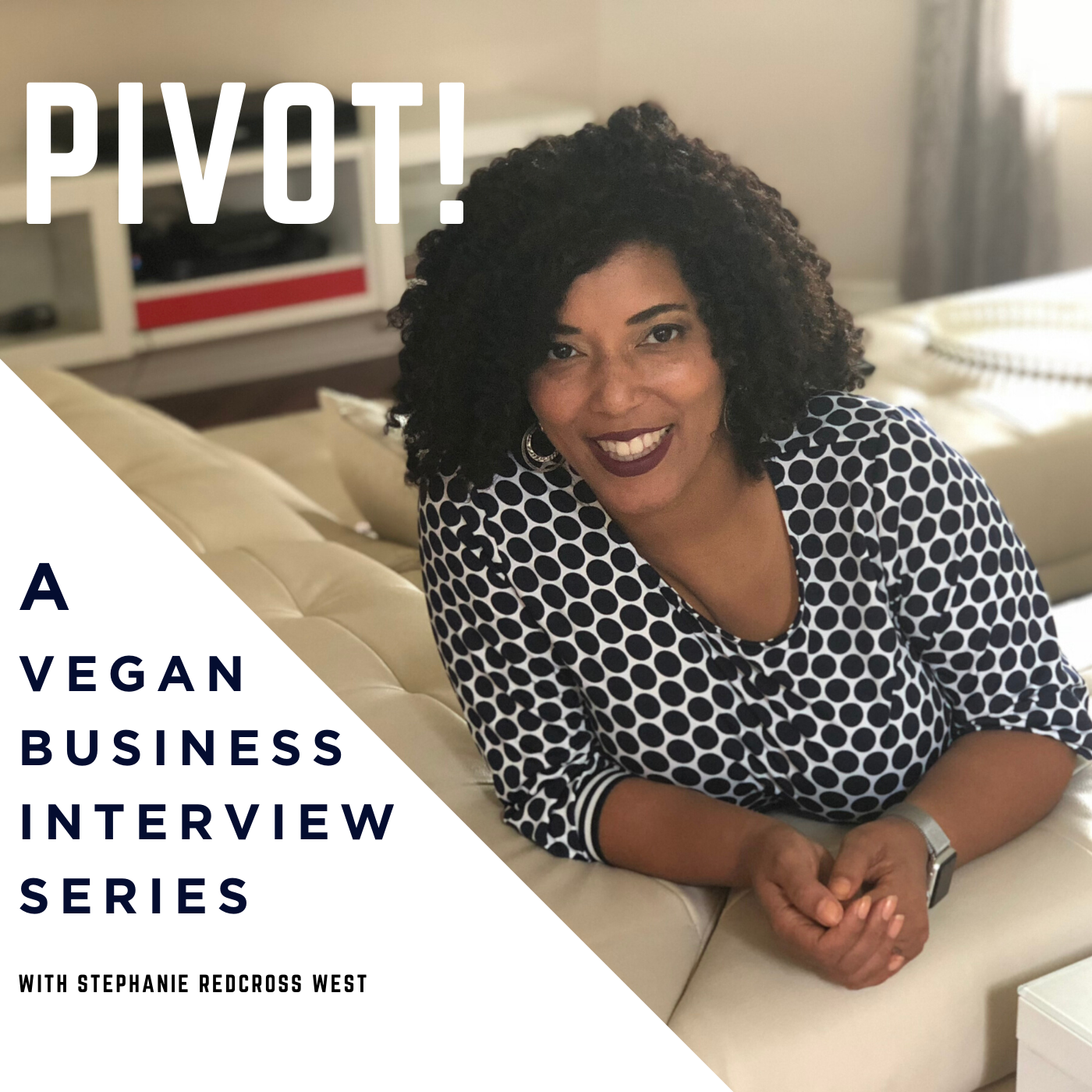
As vegan and plant-based business owners and entrepreneurs, we're often adapting to a new reality. This new podcast series from Vegan Mainstream is an opportunity to help you when it's time to pivot. These interviews will come from inside and outside of our community, and I hope as your host Stephanie Red Cross West, I can inspire you and give you the tools that you need to move forward. Everyone, and welcome to our next interview.
Today's interview is with Robert Schwartz, and today we're going to be talking about building a business that makes a difference in our society. Building a business that can change the way people eat or even have access to food, and also we're going to hopefully cover some of the behind-the-scenes journey that Robert was on and how he transitioned from being a ballroom dancer to creating the organic sprout box. Robert, I just wanted to give a minute to say welcome and thank you for being here with me today. Well, hi, thank you for that enthusiastic introduction.
I love that. So, before we start talking about the business, before we start talking about all the great things that you're doing, let's set the stage, let's give people a little bit of insight into how you decided to start your business and how you need that transition from being a ballroom dancer applying what skills that you had learned there to starting a business. Thank you. So, obviously, when COVID hit, that shut me down.
And I had always loved sprouting. I got into it when I was in my late teens and would love to get into that story and have relied on it, on and off, that people were and thought, and I always wondered why people didn't sprout more because it's just so easy, so convenient, so it's so healthy, but it's easy and convenient and it tastes really good when prepared, right? And I realized after talking to a lot of people that the raw food crowd kind of makes it inaccessible to sprout because a lot of people aren't willing to go that direction. And if they sprout at home, if they don't do it with a nice kit, which I made one, it can be a little bit messy and a little bit hard to clean because a lot of this stuff is made out of plastic.
I, of course, don't use plastic. And so I just started throwing it together, wondering, you know, like, I wonder if I can do this. Last time I started a business, there was no internet, right? So it's like the learning curve of trying to break through the internet clutter has been extremely exciting and disheartening.
But anyways, yeah, so I created my business and people are now ordering them and more people are having sprouts. And I realized a lot of it is, like I said before, making it easy, accessible, and delicious, which is why I have a lot of recipes on the website. Nice. Now I want to talk a lot about sprouts and sprouting and why people should do it, but before I do that, I wanted to touch on one thing that I want to make sure our listeners heard is that you started this business when we were all uncertain.
All of us were going through this pandemic. And one question I guess I want to ask you is, how did you find the courage to make that leap? How did you find the confidence to say, you know what, this is the right time to do it? So what made me realize it was the right time is about a week after the whole lockdown thing started in, I guess, late March, early April, I went for a bike ride in my neighborhood.
And a lot of birds were out and animals were out and I'm looking at them and way more out than usual and thinking, you know, these guys aren't like babies. So they've always been here just always living in fear because it's normally busier when there's not lockdown. And that made me feel pretty bad. And then I have neighbors who are minimalists and who'd like barely throw any garbage away.
And I always wondered, I wonder if we could get everyone doing that, you know, when walking to the store and they're driving like, how can I participate in making the world a kinder, more ethical place? And then it just made sense to sprout because I did it myself for so long. And here comes the cat and came up with a way. We love cats.
And came up with a fast, easy way to do the sprouting and thought that it would be a really good idea to share that with people because the government was hyper focused on social distancing and masks and there was little or no thought put into diet or getting them enough sleep or getting some exercise every now and then. And that's just a really dangerous trend for society to be going to kind of completely put all of their faith in pharmaceutical companies and the governments who are funded by them. So that's why I came up with sprouting box and it's been a lot of fun getting people to start. And I've been surprised that in the portion of the people who do it aren't vegan.
They're just, you know, people who want to get a little healthier in the ballroom dance community. Of course, there's always people who are looking for hats on how they can lose weight faster and how they can make their skin better and, you know, how they can have more energy without work calories. And so of course I have a natural kind of base with that. But the people who've gotten into it, it's taken a really lot of hand holding to get them to do it right, to cook with them correctly.
And so they'll continue doing it because the trick is to just make it a normal part of your routine. Years ago, during World War II, people had victory gardens and it was generally in Chicago where I'm from and I wasn't around for this, but the lots are, there are a lot of people. So people would generally have like one or two pepper plants and a tomato plants and an onion. And it's not like that did all that much to help the war effort except it really showed a fidelity to the population working as a group to solve a problem.
And that's basically, you know, the sprout boxes, the 21st century victory garden, if environmentalism and if personal health and the health of our, of our neighbors is of any concern to us. Yeah, and I'm not that you're looking at the right way because one thing that I'm finding that I think is just so important during the pandemic is not everyone had access to fresh vegetables, not everyone had access to a lot of these items. So showing and teaching and helping people understand that there is an option and I'm really excited that you feel that void is to help people kind of empower them to be able to sprout at home, empower them to be able to have these items within reach. And I also love in your story that you mentioned that you went to your own community when you started this business.
So reaching out to more room dancers and so forth, I think it's such an amazing way to always start a business is to start with the community that you know. No, absolutely. And it will certainly kind of move on from there. But getting back to the, what you were saying about the pandemic and people having access to fresh vegetables.
So for a huge amount of the population, that's always true, right? So the pandemic has no effect on people who live in certain low-income rural areas, but also more and more, I mean, urban areas, but more and more in rural areas, the best or the closest shopping food store is the dollar store. And if people might want to kind of roll through there one day and see what kind of food items are available at the dollar store, but I will tell you that if you are my age or older, your grandparents would not recognize the things that they sell there as food. And we really have to look at, you know, if you decide that ever you put in your mouth as a life or death decision, which kind of is in the long run, we need to really rethink as a society how much effort we want to put in to making sure people have at least access to minimal, necessary nutrition.
And the sprouting is three to five days is all it takes, and it doesn't take any soil or lighting system. And so it's extremely accessible, even if you're in a college student with no space at all, you have to stick to the size of a shoebox. There's a covering in the kit to keep the sprouts dark and all you need is water. And then every three to five days, you get a nice, healthy amount of sprouts that will supercharge your nutritional life.
Now, you mentioned earlier that you've been doing all the hand-holding, helping people through this process, because I'm sure for some people it's new, they haven't done it before, everyone always has questions. Do you put together a lot of videos and training? How do you kind of walk people through the process of not only getting comfortable with sprouting, but to your point earlier, turning it into kind of something they do as part of their morning routine, or their kind of natural life? Yeah, so that was one of the things I learned, is that people aren't very proactive in terms of learning a new skill.
So to my kind of great pleasure, people have taken into calling me or FaceTiming me when they hit a brick wall, say, hey, what should I do? I don't know if these are ready. And so with a minimal investment of time on my part, I can create a really lifelong customer. Now, if this thing scales out, I'm going to run into some real problems.
But I have made some videos, and so occasionally if someone texts me, I can just text them a YouTube link to a video, and that'll take care of it. But I'm really willing to do whatever it takes to get as many people adding this to their diet as possible. And the reasons for personal health are pretty dramatic, but on top of that, we have reduced pollution from packaging, refrigeration, and transportation, because you're all doing it yourself. You're not using any pesticides and any fertilizers.
And people are going to look at those as little mistakes that we made, putting all that kind of stuff in the soil constantly. And most important, it's accessible for everyone. So it's not a bourgeoisie type of thing where you don't need a $1,000 lighting system, and to have a special kind of soil and make your microgreens. And it's just more accessible.
And what I'm really trying to do right now is come up with recipes that are culturally sensitive to basically everyone. And if I sound, I love coming up with recipes and cooking. And so I wish I was doing that altruistically, but I just kind of decided, hey, what if I could get every culture on Earth to have one dish that features sprouts? How cool would that be?
So if you want to see my progress on that, you can go to my website. But I think that's a really good goal to have, because I think at times we forget how much food is cultural. Like how much the food that we eat is really based on how we were raised, or is a great dish that someone made for us, or we made with a family member or a friend or something like that. It has these experiences tangled or kind of weaved in.
So it's so important that when you want someone to incorporate something, especially into a daily habit and to something that they do almost instinctively, that it needs to incorporate their palate, their types of foods, and in way they're preparing it. So I think it's really important, and I like to hear that you're doing that. So anybody who's listening, if they have any recommendations or if you want to see that progress, I really think it would be great to support your efforts in that. Well, thank you.
And yeah, I can't even tell you how much fun it is. You know, I have to tell you for a second how I started eating sprouts on a pretty big level, because it's a little interesting. So I grew up in a low-income section of Chicago called Uptown, which is a nutritional wasteland, or was it the time anyway, where it was just kind of how thoughts and pizza and the occasional convenience store, which would be kind of a low-end 7-11. And then once summer, a friend of mine asked me to help them at a farmer's market, selling sprouts, which I did not know what they were.
So and this is 1989. So we're selling sprouts, and people are mostly buying alfalfa sprouts, and wheat grass juice. And this was in Chicago. And so we also had like the zucchini sprouts, and lentil sprouts, and garbanzo sprouts, and other kinds of sprouts that people, that was a heavy lift to get people to buy those.
And so when we're done, they can't resale them, right? And so they just gave them to us, and so I would take them home. And then I would keep them at the house. And then if I was too lazy to go to the hotdog stand or too broke to get a slice of pizza, I would break into the sprouts.
And then it became, well, if I wasn't feeling good, I'd break into the sprouts. And I was like, well, I think I'll start my day with the sprouts. And so it kind of built from there. And then I started experimenting a lot with cooking.
So I could make things for my friends and kind of show off basically. And that was in my 20s at the time. And yeah, it was just really fun, a really fun evolution. And the reason why I mention it is because that is the population, the people who are living like that, who would benefit the greatest from having every three to five days, a bunch of food, organic, highly supercharged nutritional food, just kind of a pure in a jar.
Absolutely. And like you said, the cost barrier. When we were young, we were in school or in college, although those things sometimes price can keep us out of either certain stores, or we feel like that healthy stuff is just out of reach. And that's one thing I love about sprouts because it's really good then reach for everyone because it is economical.
And it's something that everyone can participate in. Yeah. And it's, I'm glad you mentioned the economic part because the economics of especially the meat industry has really led to what will be looked on by people years from now as us literally insane. Like they're going to, when they see pictures of the milking things and chicken situation, they were rightfully think that we had a mass delusion mental problem.
And it's different. When you live out here in Oregon, like even though I don't do it, if I wanted eggs, I could get them from the neighbor who has chickens that my dogs play with, that my children play with, and that when the chickens are done laying eggs, they're allowed to stay on the property as pets until they pass on. And, you know, not everyone is obviously, you know, you wouldn't want that in a city. Everyone with chickens.
But in rural areas, sometimes I think the ethical component to being vegan is lost a little bit because like these guys out here, they hunt. So although that's, you know, cruel in some ways, it's far less cruel than having an animal in prison since it was born, living a crap life and then getting tortured prior to its death. And so there's degrees of, you know, unethical behavior and the milk industry probably tops the sooner those guys go away, the happier it will all be. Yeah, and I think that's the key is we really don't want to, you know, we want animals to be able to live their lives.
We want them to really be able to enjoy their lives and not be in servitude to us. So I really think it's one of those things where it's not just eliminating factory farming, but also making sure that we're looking at how we interact, how we take care of animals, because I think as a society, we have forgotten and lost that touch with them as centience. We've really forgotten that, you know, we really should be taking care of them as opposed to, in many cases, people are abusing them. But I agree with you, it is different degrees of what people see as what is ethical and what isn't.
I obviously have my personal opinion where I went all the animals are just run free. But I think the key here is often, you know, we have to remember there is a difference between the often the meat that people are getting in their homes and if they have chickens on their farm. And I think sometimes we mix those two ideas up that people think, well, just because I have chickens on my farm, all the rest of the meat I have is okay. And the idea is that that meat is also slaughtered, that meat is also impacted.
So I often try to help people kind of see where there's opportunities to make that change. And also that opportunity because it costs so much to take care of these animals so that people can use them. Yeah, it costs us a lot of ways. I mean, it costs us with environmental.
I mean, there's there's this guy named Dr. Rao, who's a systems engineer, very high level in India. And he decided to do to look at climate change from a systems engineering point of view and learn that agriculture is 87% of our problem. And the vast majority of that is going to be, you know, cutting down forests or how does it ever take place to graze and the crazy amount of greenhouse gases that are caused by just the agricultural systems with when it comes to animals.
And so we really need to just chip away at that. I mean, that's another thing. People 100 years, I think, what were you guys actually thinking? But all this is relatively new, like factory farming is known in the course of human history is new.
And a lot of times people get excited over something that's new and then they end up already later smoking, for instance, social media, you know, they... If it's smoking in social media, that's interesting. I'm not going to unpack that right now. I think sometimes people think they're being innovative and they really lost sight of the impact.
So I'm glad now we're having a lot of great organizations getting out there and helping people get educated on the impact of factory farming. How do you really understand the impact for health and environmental? The latest thing where the governments all got together and they had a big environmental meeting, and then they celebrated it by having a steak and lobster dinner while watching flier planes drive around. And then the young woman from Sweden, they're somewhere over there, your Greta Thamberg.
She was like, I'm glad this you guys, you started, you know, you jumped into act, wait, when she said something like you jumped into acting or you're acting on it. And I don't mean acting to say the environment. I'm acting, I'm talking about acting like pretending, which was true. And then the thing I just learned about lobsters is that there's, they're almost as intelligent by our standards as an octopus and they have no nervous system.
So that means when you're, I mean, they have a nervous system, but they don't have an ability to go into shock. So when you boil it alive, it feels like the whole time. And often, even up until they rip the tail off. Yeah.
And that's the thing. I want to be careful for our listeners because I know some people get triggered when they hear some of these things. So I just want to make sure everyone's kind of prepared. But I agree with you.
I think that's the key is we have to keep shining light on this because people are not aware. They're not being educated. And just like you said, people are forgetting that they're daily actions, you know, saying that you want to make a difference about the climate. And then sitting down to a steak dinner, it doesn't add up.
You have to change. Yeah. The way you do things. You have to change the way you eat.
You have to change the way the products that you purchase. The products that we're buying. You have to look at the supply chain. There's a lot of change that has to happen so that we can really show our actions are in line with our talk.
And I think that's what gets me excited about what you're doing with sprouting is it gives people that lane. It gives people an opportunity for individuals that want to eat healthier, individuals that maybe want to make those changes and maybe start taking meat out. The idea is by doing sprouting, by getting your kit, now they have that nutrition at their fingertips. Now they have something that they can really make that change and take that action almost immediately.
And I love the fact that you said at their fingertips because that's the most important part of this is that if we really want to break through, instead of so that ethical people will take care of themselves, but we have to kind of reach everyone else. And the easiest way to reach them is convenience and taste. And so sprouting could not be more convenient. And for people where the real education needs to happen is how to cook with them so you can create all of your childhood favorites except use on what sprouts.
Like I make a chicken salad except we use garbanzo sprouts and I make a tuna salad except garbanzo sprouts and taco meat except we use lentils sprouts. And it would be very difficult for most people to be able to tell the difference except maybe a little tiny bit of texture difference, which I'm very, very proud of. And people should look at that on the website. I think that's great because I think sometimes these texture differences, we really get caught in them until we start tasting them, until we start using them, until we start really incorporating them in.
And what I really like about sprouts when I add them to dishes is they give dishes sometimes that extra crunch, you know, they give them that like extra flavor. So sometimes when I'm trying to do more of its sprouts and I really need to do more with them is that sometimes it's not even just a substitute for me for sprouts. It's adding it to a dish that I already make or favorite dish that I make because it gives it like burst of water, that burst of flavor, that freshness that you can even incorporate into a dish that I think for a lot of people they don't realize that putting some sprouts on top is a great way to even kind of flavor up a dish if that's a good way to say it. Well, it'll flavor up the dish for sure, but it'll also add the crunch that you mentioned and that's so important if we can get people to even eat one less chip and replace it with sprouts, that would be a huge plus for people's health.
And most important makes the dish look amazing. So the sprouts have half will make it look amazing. And then there's two kinds of fiber, a water soluble fiber, which will be in the alfalfa sprouts or radish sprouts or whatever leafy sprouts to use as a garnish. And then the fiber that's in, which is normally fat soluble fiber, which is in the, you know, the bean dish or whatever it is that you're eating.
And it's pretty important to have both because as you know, one of them sprouts are out of reason, the other one pushes the stuff out. Yeah, and that's enough fiber or vitamin B. So get outside. That's true.
We definitely all need to get outside. I just want to say hello to Brenda. Brenda is not right. Brenda, it's so good to see you.
Brenda is a really good friend of mine who lives in San Diego and when I used to live out in San Diego, we stay hang out a lot. So it was great to stop by and sit sprouts are awesome as well as Brenda. Thanks for passing along the interview. I think this is going to be great to get this out to more people.
So let's help people understand how they can get access to your kit. If they're looking for your kit, if they're interested, do they go to your website, social media, what's the best way to get in touch with you? So sprouting convictions is the Instagram handle. And then the website, which would be the best way, is organic sproutbox.com.
And my phone number is on there. And so if you have any questions at all, you can just go ahead and shoot us a text or call and someone will get back to you on that where we might just answer. And the important thing is for people to get started because it's not scary. It's really easy to do.
You can see here. So it's about the size of a shoebox. Can you lift it up to bring a little closer? Is it too heavy to lift up?
There would be free glasses. And then you'd storm upside down some of the time so the water could just come out. So sprouting is basically, you're doing a hack on the growing system. So you soak them in water for eight hours first, and that's very forgiving if you do six hours or ten hours.
And that kind of gets the seed a little activated. And then you get into the respiratory system. When you pour the water out and then you put it upside down so that any future drops can drain out, then have it right side up and cover it. So it's dark.
And then the sprout will start thinking, okay, it's time to grow. And all these incredible enzymes and amino acids will be released that provide all of the energy and power it needs to turn from something this big into full grown can be bigger than we are. And it's just so easy. The health part of it is great.
It really is. But the convenience and the flavor is what people really need to start wrapping their minds around because that's how we get this to everybody. There's so much information about health that a lot of times it goes in people's internal spam filter, like oh, another health product, oh, another that's another that. And it would be really nice for people to have a way to prove to themselves their fidelity to their own personal health and to environmental concerns, including the animal environment.
And for me, most importantly, to help normalize this and so people who grew up in situations like I did are not destined to have a lifetime of the most awful food that is made as a highest profit margin for a reason because it's literally garbage. And I really like that you're reminding us to choose sprouts for taste. Because I think, like you said, when you think about it from a health standpoint, it sounds like the thing you should do. Sometimes we do it.
And sometimes, like you said, our natural brain will sometimes go against it. But when we start to choose things for taste for flavor, for enjoyment, and we can have sprouts as the answer to that, I think that can awaken a totally different perspective for a person. And it can make sprouting something that becomes their go-to. And like I said earlier, replacing those chips.
No, I love you said that. So I'm embarrassed to say this, but I actually figured out a way to make really super delicious chips out of lentil sprouts. They're actually more like pistachio nuts. So if you take lentil sprouts and you put them on a single layer on a cooking sheet and bake them at 350 for about 20 minutes or an hour, I mean 20 minutes or 30 minutes, they come out and they taste like pistachio nuts, but you didn't have to use salt or oil in order to kind of create that.
And so that's a go-to snack around here for the kids. There's always a bowl of them laying around. And sure, it's not the most ideal way to consume it. But with a population that is addicted to hyper-palatable foods, we, as the adults in the room, have to meet people where they are and kind of help them towards a more ethical, healthy life.
In the industry I'm in that I was very, very good at for many years, people will often get very discouraged if they can't do something right away as good as anyone else can do it. And so learning how to show people how to take pride in their little victories, no matter how small, as long as it's trending the right direction, is something that we should really, really, really celebrate. So I have cookouts here every other week and I live in rural Oregon. So these are not vegan people.
However, I make the vegan cookout and I don't tell them that. And no one's ever said anything because I can make really food that's not offensive to their palate, basically, on the trigger. And that's the biggest. We want them to have items that they can enjoy, that they almost look forward to next time.
You know, we want someone to almost come back to your cookout and say, hey, do you have that? When some guy who's got a couple extra pounds, beard looks like he walked out and thought, I just thought, hey, why don't you do it with that cabbage? Because I grow red cabbage and use that as steaks. And with an Islamic place on it's just super, super delicious.
And it just really, it makes me happy to do that because I can avoid all of the, you know, have you ever watched Cowspiracy? Or there's a million shows that really kind of pound people into submission when it comes to choosing the better eating habits. And that's just not going to work for a portion of the population. So it's up to us to figure out a way to make it accessible and fun for everyone.
Because at the end of the day, people just want to have a little fun, eat something delicious, and at least pretend that they're getting more healthy. And I think that's the key. And that's the key is, I think, giving everyone different ways to get on the path. Some people it is movies, some people need the shock, some people need sometimes a wake up call.
And that wake up calls perfect because I've heard so many people who like go vegan overnight from watching a movie. And I think that has just been so amazing. And you know, when I would vegan, those movies weren't really around. So that wasn't, you know, my experience in most of my peers when I would vegan years and years ago.
But it's so amazing to see that happen. But what I'm also interested in is like what you're doing as well. Through Wisconsin and saw dairy farms. And these are dairy farms that are open to the public.
And they were still some of the most horrific things that you can possibly imagine. And yeah, I mean, it's like, all right, I think I'm just going to stay away from this kind of food category for maybe forever. Yeah. And I think they should make people watch that stuff in school.
You know, they really should. Like you should know what you're putting in your mouth. Absolutely, absolutely. I don't know if we'll get there.
But absolutely, I think people should have, should not be so disconnected from the process because it is a horrific process. And we need to make sure people understand the choice that they're making. But I think we're making a lot of strides in a lot of the work that a lot of organizations are doing. And people like yourself are doing by creating businesses.
And I'm so excited we had a chance today to talk about it because not only are you creating a business that's driving this change, but you created it during the time where everyone wasn't sure what to do. And I think it's just exciting to see you thrive, see you take that leap of faith and excited about, you know, what's to come. So maybe as we wrap up today, do you have any, maybe recommendations or even kind of words for wisdom? Or is it wisdom for anyone who's trying to get started, maybe starting their own business?
Maybe they're trying to find their footing in this new environment that we're in that would maybe help them if they've hit a couple of roadblocks setbacks along the way. Do you have any recommendations or anything that you learned along the way that helped you overcome? Well, yeah, the things that I learned was, was that regardless of what I thought would be the proper marketing technique, you have to do some test marketing and see how people get back to you because at the end of the day your customer tells you your business. And your customer will tell you how they want to be sold.
And so, you know, growing up in an urban food desert, I was really excited to own that. Maybe we could popularize sprouting and we could help. Well, nobody cares. So, you know, very few people care about that.
What most people want is like to eat something that tastes really good that they can feel good about and that is extremely convenient. So, you know, what the thing I would suggest is to, you know, I wish I would have reached out to someone like you, you know, a year and a half ago. Because I would have, because I'm still in a lot of ways, the experimental phase. But navigating the internet landscape is a real difference from conventional selling and conventional selling is about to be called obsolete selling.
So, it's going to go to, you're probably not old enough, but they used to have phones that plugged into the wall and you had to dial them. I'm old enough. We had a rotary phone. And then it was a big deal when you could press buttons, right?
So, I think that's kind of where we are with the internet commerce right now is kind of in the rotary press button phase. And pretty soon, everyone's going to do internet commerce from text messaging and being able to navigate that. That's some terrain that's extremely difficult terrain unless you have a guide. Yeah, but I like what you're doing that you're doing at one step at a time.
You're testing. Because I think a lot of people assume I'll just do what this person did or someone will say, well, I'll just do it all. I think it's so important that you test into your point earlier that you build the business based on your customers. You understand and get that feedback because when you get those feedback loops, when you start to understand what they're interested in, how they like to be marketed, what are their concerns?
Your marketing cannot only be better, but honestly, your whole customer experience can be better. So, it's wonderful to hear that you've been doing that. That's a, you know, it's easy for me to think, well, you should be sprouting because it's environmentally good and all these other reasons. But it's also, it's very important for the person to feel like they'd empowered themselves, right?
So, it's not half down like you're telling them what to do. And, and that way they'll be more anxious to tell their friends about it. Hey, look what I can do now and I just love it. I want to help get into schools.
Oh, yeah. Can you make their own food? Absolutely. And it's a great project for kids, you know, in schools and so forth to even learn.
So, I love, love, love that that is your other frontier. But I don't want to keep you too long today. We really covered a lot of topics and I'm really glad you took a little bit extra time in today's interview to not only talk about sprouting, talk about your journey, but also talk about how you built your business and how, you know, we talked about the idea of making sure that this is accessible to everyone, that are people who don't have access to healthy food, healthy options. And I'm really, really glad that we talked about how this can be a solution for them and really a solution for all of us because, you know, it's easy for us to get a little bit lazy at times and go to that convenient store and just grab a snack or grab something.
But the idea that we can really incorporate taste into our diet and nutrition, taste into our diet and healthy environment, taste in our diet and do healthier, you know, be healthier. I think just that whole end statement I think can help many of us maybe reach for sprouts and hopefully maybe have people reach out to you to get your kits as well. Well, thank you so much. I love meeting you.
That was great meeting you and great talking with you as well. So thank you so much for joining me today. And thank you everyone else who either joined us live or if you're listening to this as a replay or on our podcast. I know on our podcast folks out there, you didn't get to see the kit, but here's the kit.
Here's the thing, go to the website after you listen to this because you'll have a chance to see the kit and everything that we were showing you during this broadcast. But I really appreciate everyone for showing up. I really appreciate you for being here and I hope today not only did you learn a little bit about sprouting, but you also learned about, you know, it's such a great time to start a business and it's such a great time to start a business that drives impact in your community and really could be worldwide. So thank you everyone.
Thank you, Robert, and we'll wrap up today. Thanks.