
EPISODE · Aug 7, 2022 · 32 MIN
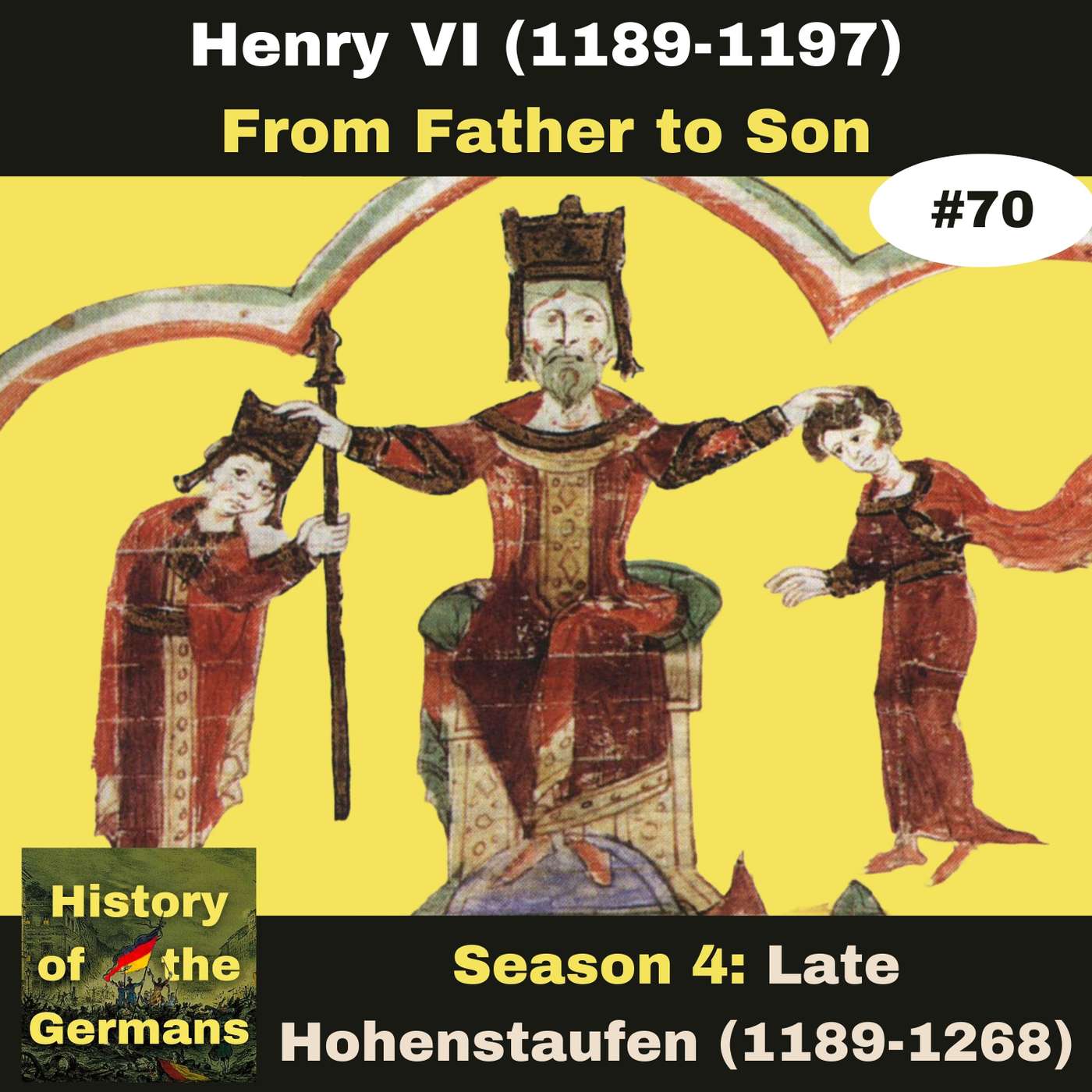
Ep. 70: Henry VI (1189-1197) - Conquest of Sicily - From Father to Son
from History of the Germans · host Dirk Hoffmann-Becking
When Barbarossa drowns in the river Saleph in 1190 the crown transfers to his eldest surviving son, Henry, known to History as Henry VI.This is the first time since the accession to personal rule of Emperor Henry III in 1039 that the imperial crown moves from father to grown up son without a glitch. In the previous 150 years, the passing of an emperor had been a dramatic event where all the cards were dealt anew. Just remember, Henry IV came to the throne as a child, Henry V by rebellion against his father, Lother III wasn’t in any meaningful way related to the imperial family, Konrad III came in by a coup against the named heir, as did Barbarossa. The French meanwhile had five transitions from father to son, with only one 6-year regency. This consistency in reproduction is one of the key reasons the Capetion dynasty was so much more successful than their German counterparts, though the greatest of the Capetions has only just appeared, Phillipp II Augustus (1180 to 1223). More, and a lot more about him later.Talking about famous protagonists, the other contemporary of Henry VI is of course Richard the Lionheart (1189 to 1199). Of him we will hear even more.But today’s episode is mainly about the lay of the land and the first attempt to achieve the main aim of his reign, control of the kingdom of Sicily.As always, this episode has a dedicated website with the transcript and maps, pictures and additional comments to read along. It is to be found at Episode 70 - From Father to Son • History of the Germans PodcastThe music for the show is Flute Sonata in E-flat major, H.545 by Carl Phillip Emmanuel Bach (or some claim it as BWV 1031 Johann Sebastian Bach) performed and arranged by Michel Rondeau under Common Creative Licence 3.0.As always:Homepage with maps, photos, transcripts and blog: www.historyofthegermans.comIf you wish to support the show go to: Support • History of the Germans PodcastFor do it yourself merchandise go to: Merchandise • History of the Germans PodcastFacebook: @HOTGPod Threads: @history_of_the_germans_podcastBluesky: @hotgpod.bsky.socialInstagram: history_of_the_germansTwitter: @germanshistoryTo make it easier for you to share the podcast, I have created separate playlists for some of the seasons that are set up as individual podcasts. they have the exact same episodes as in the History of the Germans, but they may be a helpful device for those who want to concentrate on only one season.So far I have:The OttoniansSalian Emperors and Investiture ControversyFredrick Barbarossa and Early HohenstaufenFrederick II Stupor MundiSaxony and Eastward ExpansionThe Hanseatic LeagueThe Teutonic KnightsThe Holy Roman Empire 1250-1356The Reformation before the ReformationThe Empire in the 15th centuryThe Fall and Rise of the Habsburgs ★ Support this podcast ★
Embed this episode
What this episode covers
When Barbarossa drowns in the river Saleph in 1190 the crown transfers to his eldest surviving son, Henry, known to History as Henry VI. This is the first time since the accession to personal rule of Emperor Henry III in 1039 that the imperial crown moves from father to grown up son without a glitch. In the previous 150 years, the passing of an emperor had been a dramatic event where all the cards were dealt anew. Just remember, Henry IV came to the throne as a child, Henry V by rebellion against his father, Lother III wasn’t in any meaningful way related to the imperial family, Konrad III came in by a coup against the named heir, as did Barbarossa. The French meanwhile had five transitions from father to son, with only one 6-year regency. This consistency in reproduction is one of the key reasons the Capetion dynasty was so much more successful than their German counterparts, though the greatest of the Capetions has only just appeared, Phillipp II Augustus (1180 to 1223). More, and a lot more about him later. Talking about famous protagonists, the other contemporary of Henry VI is of course Richard the Lionheart (1189 to 1199). Of him we will hear even more. But today’s episode is mainly about the lay of the land and the first attempt to achieve the main aim of his reign, control of the kingdom of Sicily. As always, this episode has a dedicated website with the transcript and maps, pictures and additional comments to read along. It is to be found at https://historyofthegermans.com/70-2/ The music for the show is Flute Sonata in E-flat major, H.545 by Carl Phillip Emmanuel Bach (or some claim it as BWV 1031 Johann Sebastian Bach) performed and arranged by Michel Rondeau under Common Creative Licence 3.0. As always: Homepage with maps, photos, transcripts and blog: www.historyofthegermans.com Facebook: @HOTGPod Twitter: @germanshistory Instagram: history_of_the_germans Reddit: u/historyofthegermans Patreon: https://www.patreon.com/Historyofthegermans
Ready to play
Ep. 70: Henry VI (1189-1197) - Conquest of Sicily - From Father to Son
No transcript for this episode yet
Similar Episodes
No similar episodes found.
Similar Podcasts
No similar podcasts found.