
EPISODE · Jun 16, 2026 · 1H 8M
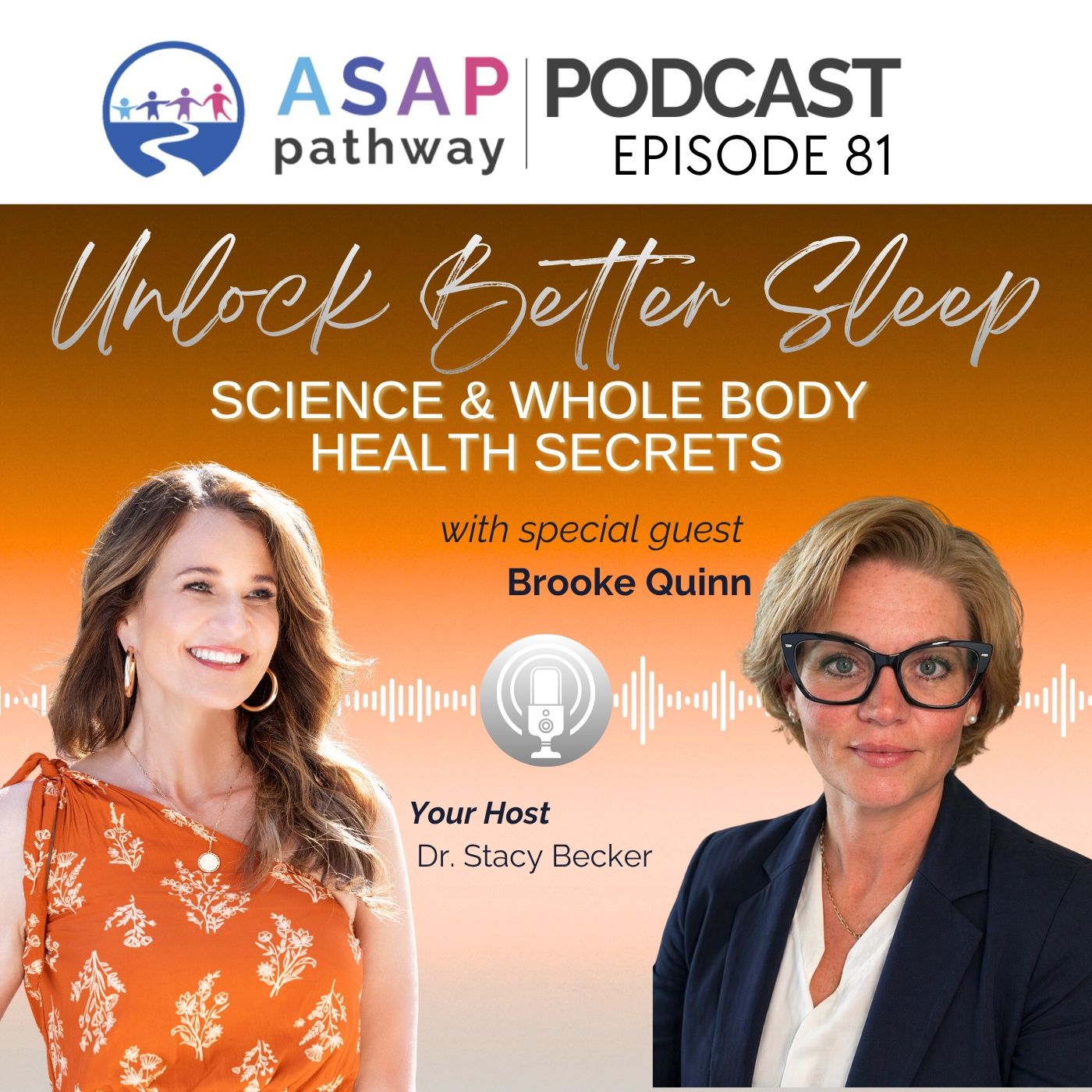
Ep.81, Body Literacy: Teaching Kids to Understand Their Health, Brooke Quinn, RPSGT, MSc
from ASAP Pathway: THE PODCAST · host Dr. Stacy Becker, DDS
What if many of the struggles we see in children—attention issues, behavioral challenges, learning difficulties, emotional regulation problems, and even poor academic performance—are actually symptoms of disrupted sleep and airway dysfunction?In this fascinating episode, Dr. Stacy Becker sits down with sleep scientist and educator Brooke Quinn, RPSGT, MSc, founder of Quinnspired and creator of the children's book series The Adventures of Watson and Sherlock.Brooke shares her unique journey from sleep technician to interdisciplinary sleep scientist and discusses why so many health conversations happen too late—after years of symptoms have already impacted a child's development.Together, Dr. Becker and Brooke explore:• The connection between sleep, airway development, and neurocognitive growth• Why adult sleep apnea often begins in childhood• The overlooked role of craniofacial development• ADHD, learning challenges, and sleep-disordered breathing• Why schools may be one of the most important places for sleep education• How dentists can help identify children at risk• The concept of "body literacy" and empowering children to understand their own health• The importance of moving healthcare conversations upstreamThis episode is a powerful discussion about prevention, education, and changing the trajectory of children's health before symptoms become lifelong problems.Brooke Quinn LinktreeBrooke's SubstackQuinnspired WebsiteBrooke's InstagramBrooke's LinkedInTikTok: @sleepbyquinnAmerican Dental Association's "Children's Airways" BrochureReferenced MARPE Expansion Article "RCT" Showing Improvement in Sleep DIsordered Breathing ParametersCHAPTERS:00:00 Introduction to Brooke Quinn01:23 What Is a Registered Polysomnographic Technologist?03:30 Seeing Sleep Through Physiological Data06:50 How Brooke Fell in Love with Sleep Medicine09:05 Why Craniofacial Development Matters11:15 Adult Sleep Apnea Begins in Childhood14:45 The Developmental Airway Trajectory17:05 Why Early Intervention Matters19:00 The College Student Airway Story22:00 Taking Sleep Education Into Schools25:00 The Missing Link Between Sleep and Learning29:00 Teachers, IEPs, and Sleep-Deprived Children33:00 Building Sleep Awareness for Families36:00 ADHD, Executive Function, and Sleep41:00 The Role of Dentists in Airway Screening45:00 New Research Supporting Maxillary Expansion49:00 The Cost of "Watchful Waiting"53:00 Body Literacy and Children's Health Education57:00 Mold, Congestion, and Environmental Health01:02:00 Final Thoughts and Future VisionKEY LEARNINGSAdult sleep apnea often starts decades before diagnosis.The anatomy and developmental patterns seen in adults frequently begin during childhood.Sleep is not passive.Sleep drives memory consolidation, growth hormone release, neurological development, emotional regulation, and physical recovery.Craniofacial development influences airway health.The structure of the jaws and face can significantly impact breathing and sleep quality throughout life.Children rarely "grow out of" airway problems.Many children simply compensate until symptoms worsen later in life. Sleep-disordered breathing can mimic ADHD.Poor sleep may contribute to attention issues, impulsivity, emotional dysregulation, and learning challenges.Teachers may be observing sleep problems every day.Classroom behavior often reflects physiological issues that extend beyond academics.Early intervention creates opportunity.Developmental windows exist where change is easier and outcomes can be dramatically improved.Body literacy should start early.Children benefit from understanding how their bodies work and how their choices affect health.Awareness must be followed by action.Education alone isn't enough—families need clear pathways to next steps and appropriate providers.Dentistry has a critical role in screening.Dentists see children regularly and are uniquely positioned to identify developmental risk factors.Airway health is not owned by one specialty.Successful care requires collaboration among dentists, physicians, therapists, educators, and families.Waiting has consequences.Many developmental opportunities are missed when intervention is delayed until symptoms become severe.This is the ASAP Pathway Podcast, Airway, Sleep, and Pediatric Pathway, where sleep and airway health take center stage, one breath at a time. VISIT: ASAP Pathway Please subscribe, share, and tune in to future episodes of how we can help children live their best lives, one breath, and restful night's sleep at a time. Don't miss this exciting launch into a world of knowledge and transformation.Because Kids Can't Wait...CLICK HERE To Find an ASAP Pathway ProviderCLICK HERE To Become an ASAP Pathway ProviderCLICK HERE FOR ASAP Pathway IN-PERSON COURSESCLICK HERE To See If Your Child Is At Risk!ASAP FREE GIFT AND E NEWSLETTERSUBCRIBE AND SHARE AT OUR OTHER PLATFORMS BELOW ⬇️ASAP YouTube ▶️ 🔗ASAP YouTube Music 🔗 ASAP on Spotify 🔗ASAP IHeartRadio ❤️🔗 ASAP Amazon Music 🎵🔗 ASAP Apple Podcast 🍎🔗ASAP Pathway MEMBERSHIP OPTIONS, LEARNING and COURSES BELOW ⬇️ 🙌Join The Practice Breakfast Club! ☕️🔗2026 ASAP Pathway Courses 🙌🔗WANT TO BE A MEMBER IN ASAP Pathway? ASAP Membership Options BELOW: 🎉👇ASAP Immersion Membership🔗ORComprehensive ASAP Pathway Membership🔗
Embed this episode
What this episode covers
What if many of the struggles we see in children—attention issues, behavioral challenges, learning difficulties, emotional regulation problems, and even poor academic performance—are actually symptoms of disrupted sleep and airway dysfunction? In this fascinating episode, Dr. Stacy Becker sits down with sleep scientist and educator Brooke Quinn, RPSGT, MSc, founder of Quinnspired and creator of the children's book series The Adventures of Watson and Sherlock.Brooke shares her unique journey from sleep technician to interdisciplinary sleep scientist and discusses why so many health conversations happen too late—after years of symptoms have already impacted a child's development. Together, Dr. Becker and Brooke explore: • The connection between sleep, airway development, and neurocognitive growth • Why adult sleep apnea often begins in childhood • The overlooked role of craniofacial development • ADHD, learning challenges, and sleep-disordered breathing • Why schools may be one of the most important places for sleep education • How dentists can help identify children at risk • The concept of "body literacy" and empowering children to understand their own health • The importance of moving healthcare conversations upstreamThis episode is a powerful discussion about prevention, education, and changing the trajectory of children's health before symptoms become lifelong problems. Brooke Quinn Linktree Brooke's Substack Quinnspired Website Brooke's Instagram Brooke's LinkedIn TikTok: @sleepbyquinn American Dental Association's "Children's Airways" Brochure Referenced MARPE Expansion Article "RCT" Showing Improvement in Sleep DIsordered Breathing Parameters CHAPTERS: 00:00 Introduction to Brooke Quinn 01:23 What Is a Registered Polysomnographic Technologist? 03:30 Seeing Sleep Through Physiological Data 06:50 How Brooke Fell in Love with Sleep Medicine 09:05 Why Craniofacial Development Matters 11:15 Adult Sleep Apnea Begins in Childhood 14:45 The Developmental Airway Trajectory 17:05 Why Early Intervention Matters 1 9:00 The College Student Airway Story 22:00 Taking Sleep Education Into Schools 25:00 The Missing Link Between Sleep and Learning 29:00 Teachers, IEPs, and Sleep-Deprived Children 33:00 Building Sleep Awareness for Families 36:00 ADHD, Executive Function, and Sleep 41:00 The Role of Dentists in Airway Screening 45:00 New Research Supporting Maxillary Expansion 49:00 The Cost of "Watchful Waiting" 53:00 Body Literacy and Children's Health Education 57:00 Mold, Congestion, and Environmental Health <br...
Ready to play
Ep.81, Body Literacy: Teaching Kids to Understand Their Health, Brooke Quinn, RPSGT, MSc
No transcript for this episode yet
Similar Episodes
No similar episodes found.
Similar Podcasts
No similar podcasts found.