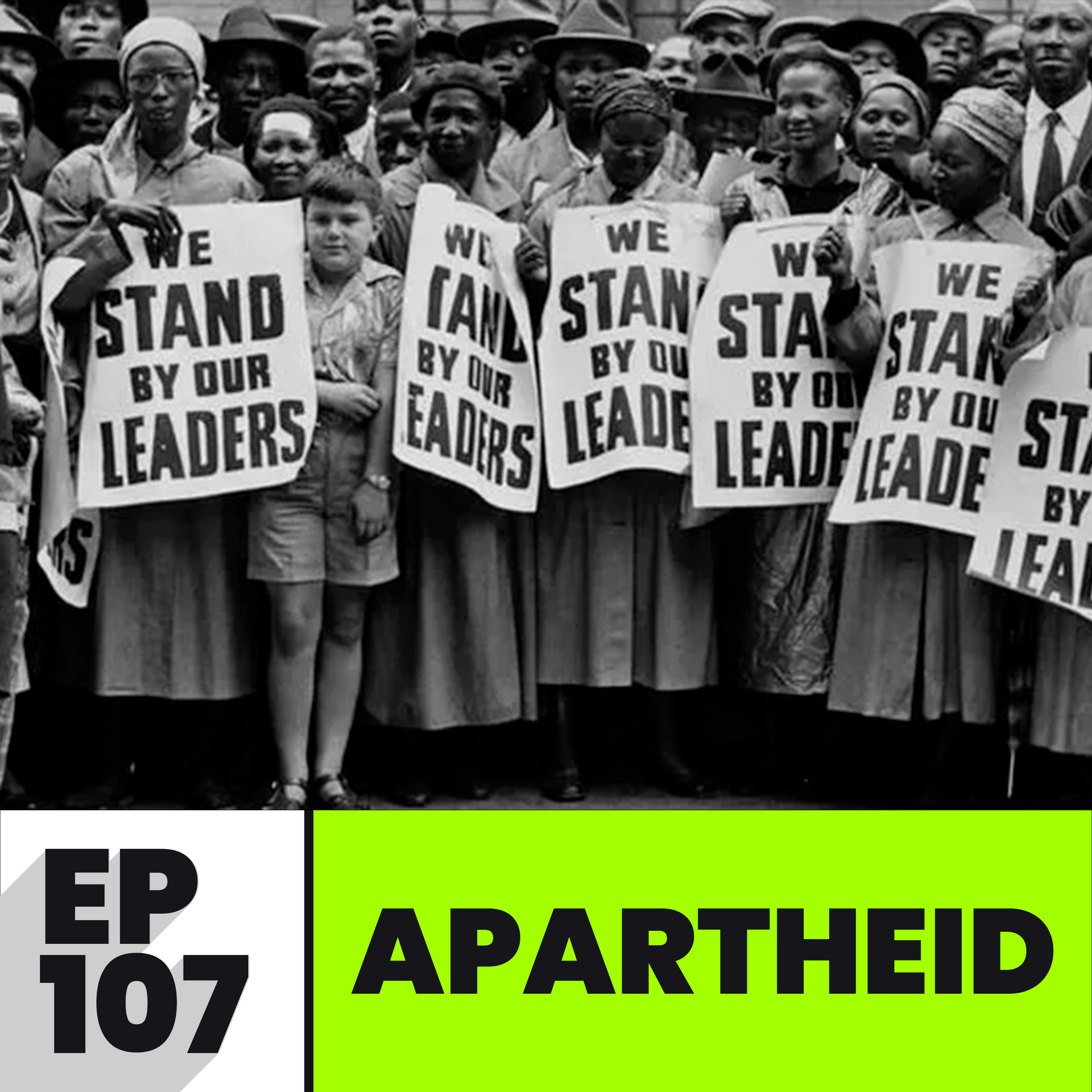
EP107 | Apartheid episode artwork

EPISODE · Mar 10, 2024 · 18 MIN

EP107 | Apartheid

from História em Versões · host M7 STUDIOS

O Apartheid foi um regime de segregação racial que vigorou na África do Sul de 1948 a 1994. Durante esse período, a elite branca do país detinha privilégios, enquanto os negros eram excluídos dos espaços públicos, da educação e dos postos de trabalho. O regime começou a declinar devido à pressão internacional, aos protestos internos e à liderança de Nelson Mandela. Em 1994, o Apartheid chegou ao fim. A política de segregação racial baseava-se na classificação e separação dos habitantes em grupos raciais, como “negros”, “brancos”, “de cor” e “indianos”. O Apartheid nasceu do conceito de superioridade racial defendido na Europa no século XIX e se materializou na hierarquia racial e na discriminação legal na África do Sul. Somente em 1990, após negociações iniciadas pelo presidente Frederik Willem de Klerk, o regime racista foi abolido, e eleições democráticas em 1994 levaram à vitória do Congresso Nacional Africano, sob o comando de Nelson Mandela. Esse período de segregação deixou um legado de violência, resistência interna e embargo comercial contra a África do Sul, marcando uma página sombria na história do país. CONTATO: Instagram: @historiaemversoes E-mail: [email protected] Imagem da capa: Eli Weinberg

O Apartheid foi um regime de segregação racial que vigorou na África do Sul de 1948 a 1994. Durante esse período, a elite branca do país detinha privilégios, enquanto os negros eram excluídos dos espaços públicos, da educação e dos postos de trabalho. O regime começou a declinar devido à pressão internacional, aos protestos internos e à liderança de Nelson Mandela. Em 1994, o Apartheid chegou ao fim. A política de segregação racial baseava-se na classificação e separação dos habitantes em grupos raciais, como “negros”, “brancos”, “de cor” e “indianos”. O Apartheid nasceu do conceito de superioridade racial defendido na Europa no século XIX e se materializou na hierarquia racial e na discriminação legal na África do Sul. Somente em 1990, após negociações iniciadas pelo presidente Frederik Willem de Klerk, o regime racista foi abolido, e eleições democráticas em 1994 levaram à vitória do Congresso Nacional Africano, sob o comando de Nelson Mandela. Esse período de segregação deixou um legado de violência, resistência interna e embargo comercial contra a África do Sul, marcando uma página sombria na história do país. CONTATO: Instagram: @historiaemversoes E-mail: [email protected] Imagem da capa: Eli Weinberg

NOW PLAYING

EP107 | Apartheid

0:00 18:42

No transcript for this episode yet

We transcribe on demand. Request one and we'll notify you when it's ready — usually under 10 minutes.

PodQuesting Dwight J Randolph- WolfShield Media PodQuesting: -By WolfShield Media and Dwight J RandolphJoin us on an exciting journey to master the world of fiction podcasting! At PodQuesting, we document our quest to improve and innovate, sharing valuable insights, strategies, and behind-the-scenes tips along the way. Whether you're an experienced podcaster or just starting your first show, our podcast is your go-to resource for everything podcasting.Discover practical advice, creative techniques, and lessons from our own experiences as we explore the ever-evolving podcasting landscape. Ready to level up your skills and embark on this adventure with us? Tune in and join the quest!Have questions or feedback? Reach out to us at [email protected] and visit our website:WolfShield.Media Discworld 03 - Equal Rites Raghvendra Singh Equal Rites is a comic fantasy novel by Terry Pratchett. Published in 1987, it is the third novel in the Discworld series and the first in which the main character is not Rincewind. It introduces the character of Granny Weatherwax, who reappears in several later Discworld novels. The 48 Laws of Power by Robert Greene (Full Audiobook) Robert Greene Amoral, cunning, ruthless, and instructive, this multi-million-copy New York Times bestseller is the definitive manual for anyone interested in gaining, observing, or defending against ultimate control – from the author of The Laws of Human Nature.In the book that People magazine proclaimed “beguiling” and “fascinating,” Robert Greene and Joost Elffers have distilled three thousand years of the history of power into 48 essential laws by drawing from the philosophies of Machiavelli, Sun Tzu, and Carl Von Clausewitz and also from the lives of figures ranging from Henry Kissinger to P.T. Barnum.Some laws teach the need for prudence (“Law 1: Never Outshine the Master”), others teach the value of confidence (“Law 28: Enter Action with Boldness”), and many recommend absolute self-preservation (“Law 15: Crush Your Enemy Totally”). Every law, though, has one thing in common: an interest in t Third Eye Edify Podcast Jorge Mesa Get my new book:Paperback: https://a.co/d/httI0daEbook: https://books2read.com/u/mBAx6OCheck out my website: http://thirdeyeedify.com/Join my Bass Player University:https://jorgemesamusic.com/bassplayeruniversityThis podcast is on a relentless quest for truth, no matter what dark corner it is hiding in. Hosted on Acast. See acast.com/privacy for more information.

Frequently Asked Questions

How long is this episode of História em Versões?

This episode is 18 minutes long.

When was this História em Versões episode published?

This episode was published on March 10, 2024.

What is this episode about?

O Apartheid foi um regime de segregação racial que vigorou na África do Sul de 1948 a 1994. Durante esse período, a elite branca do país detinha privilégios, enquanto os negros eram excluídos dos espaços públicos, da educação e dos postos de...

Can I download this História em Versões episode?

Yes, you can download this episode by clicking the download button on the episode player, or subscribe to the podcast in your preferred podcast app for automatic downloads.
URL copied to clipboard!