
EPISODE · Jan 24, 2023 · 31 MIN
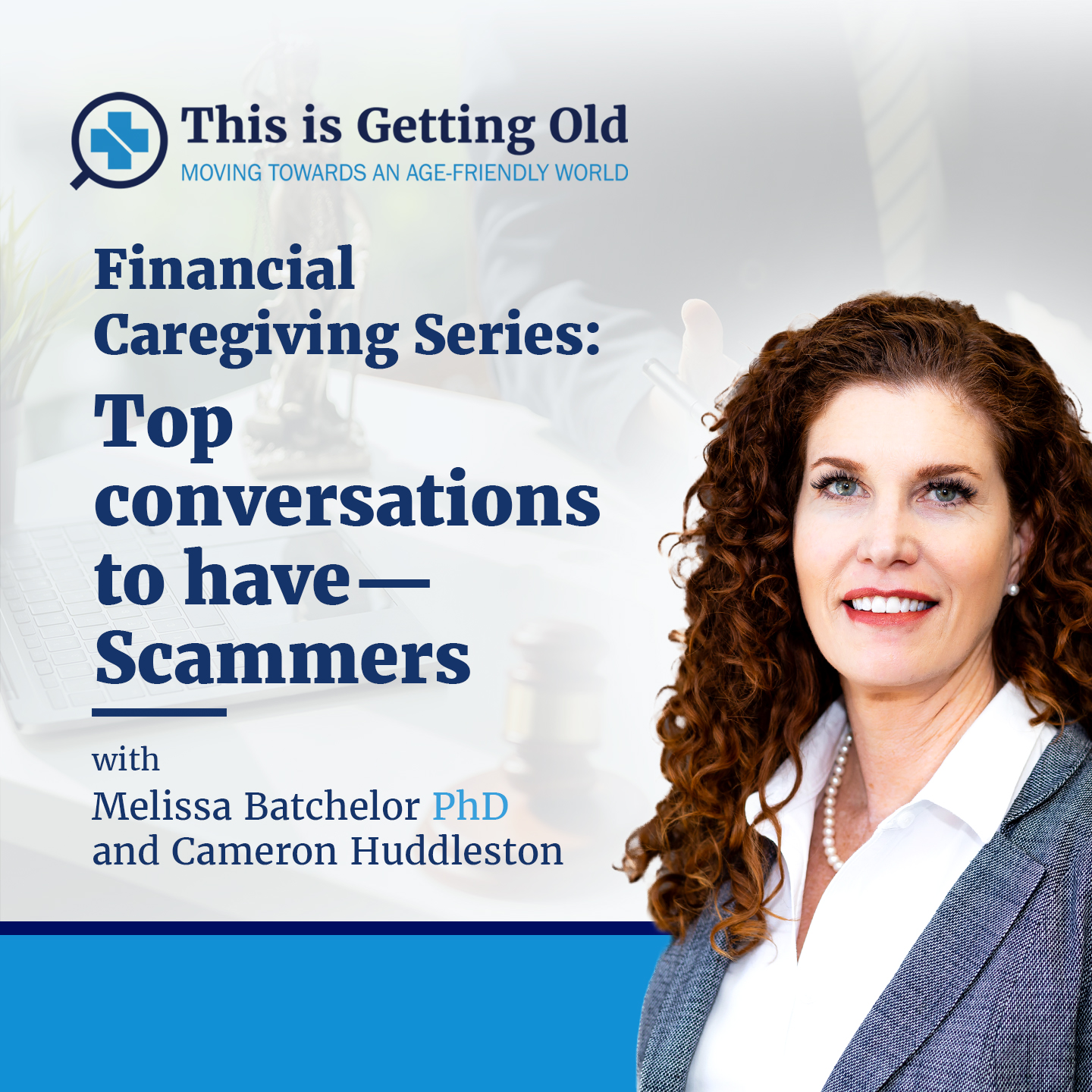
EP125: Financial Caregiving Series: Top Conversations to Have—Scammers with Cameron Huddleston
from This Is Getting Old: Moving Towards an Age-Friendly World Podcast with Dr. MELISSA BATCHELOR · host Melissa Batchelor
Crooks exploit these vulnerabilities but make no mistake: All of us — young and old — are susceptible to the bad actors who show up uninvited in calls, emails, mail, texts and social media accounts. Some are so bold as to knock on our front doors. Everyone wants to protect their loved ones, and Cameron Huddleston offers the perfect solution—a journey into This Is Getting Old: Moving Towards An Age-Friendly World. So tune in now for all those practical tips you need as I talk with my guest, Cameron Huddleston. Key points covered in this episode: ✔️ How To Recognize A Scam? Scams tend to have certain red flags, and whatever the story might be, they usually come back to a one thing— an urgent request for money. Use the Scam RED Flags to learn more about the telltale signs of scams. ✔️ What Are the Most Common Forms of Payment Requested Gift Cards Peer-to-Peer payments (eg. Venmo, Zelle, PayPal, etc.) ✔️ What Are the Different Types of Scams In 2021, scammers stole over $6 billion from Americans—this is happening all the time. If you're over the age of 80, the number one way they will get in touch with you is through your landline. The second contact method is through social media, and if you're between 60 and 69, it's highly likely that you're going to be contacted through social media. Any time somebody asks you for money—that's a red flag. Common types of scams among older adults are: Government Imposter Scams Identity Theft Business Impersonation & Shopping Scams Robocalls/ Unsolicited Calls Health Care & Health Insurance Scams Sweepstake & Lottery Scams Tech Support & Computer Scams Romance Scams Financial Services Impersonation & Fraud Grandparents Scams/ Person-in-Need ✔️ How to Protect Yourself From Scams? Don't trust people who were not involved in your life and now are suddenly there. Now that you are older and perhaps need care, make sure you've already named that financial power of attorney to ensure your bank and other financial institutions know who that person is. Also, it would be best to observe the following; Don't answer a call from an unknown number; if you do, hang up immediately. Be aware that your Caller ID showing up as a local number doesn't necessarily mean it's a local caller. Do not respond to any questions asked by a stranger on a call If you answer the phone and the automatic message wants you to press a button to stop getting the calls, just hang up. Scammers often use this to identify potential targets. Do not respond to any requests via social media ✔️ Helpful Resources The Consumer Financial Protection Bureau has resources for protecting older adults against fraud and a guide called Money Smart for Older Adults Help your senior loved one get on the national "Do Not Call" registry Reporting fraud against you or anyone you know that has been a victim of fraud by calling the US Senate Special Committee on Aging's Fraud Hotline Monday-Friday 9am to 5pm EST at 1-855-303-9470; or email them at https://www.aging.senate.gov/fraud-hotline Learn more by accessing the 2021 Top Scams Report If you have questions, comments, or need help, please feel free to drop a one-minute audio or video clip and email it to me at [email protected], and I will get back to you by recording an answer to your question. About Melissa Batchelor, PhD, RN, FNP, FGSA, FAAN: I earned my Bachelor of Science in Nursing ('96) and Master of Science in Nursing ('00) as a Family Nurse Practitioner (FNP) from the University of North Carolina Wilmington (UNCW) School of Nursing (SON). I genuinely enjoy working with the complex medical needs of older adults. I worked full-time for five years as FNP in geriatric primary care across many long-term care settings (skilled nursing homes, assisted living, home, and office visits), then transitioned into academic nursing in 2005, joining the faculty at UNCW SON as a lecturer. I obtained my PhD in Nursing and a post-master's Certificate in Nursing Education from the Medical University of South Carolina College of Nursing ('11). I then joined the faculty at Duke University School of Nursing as an Assistant Professor. My family moved to northern Virginia in 2015 which led to me joining the George Washington University (GW) School of Nursing faculty in 2018 as a (tenured) Associate Professor. I am also the Director of the GW Center for Aging, Health, and Humanities. Please find out more about her work at https://melissabphd.com/.
Embed this episode
NOW PLAYING
EP125: Financial Caregiving Series: Top Conversations to Have—Scammers with Cameron Huddleston
No transcript for this episode yet
Similar Episodes
No similar episodes found.
Similar Podcasts
No similar podcasts found.