This is Babes of Science. Oh, no, I gotta think about that, though. That's female scientist. I'm Ponzi.
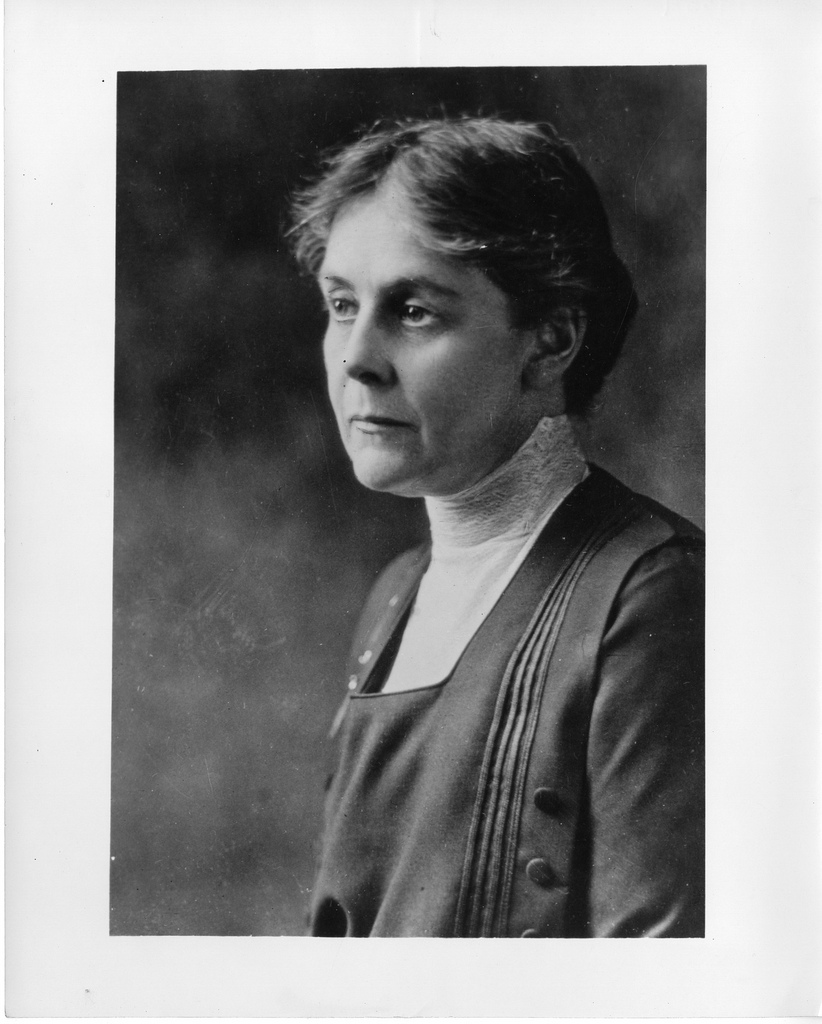
Alice Hamilton takes one finger and dabs it in a little box of white powder, then touches the dust coating her fingertip to the surface of her eye. A few minutes later, the pupil of her eye has dilated, and Alice knows the white powder is cocaine. It's 1904 in Chicago. The first laws banning cocaine use in the US are starting to gain momentum.
Coca-Cola just removed the drug from its strengths a few years earlier, but because of pressure from the public, not because of any legislation. cocaine is so wildly popular, and most people can find it easily at their local drug stores. Some pharmacists offer samples of cocaine, of happy dust, to kids on their way home from school. And this means that they're 12-year-olds who are cocaine addicts, and they return to the drug store's hooked on this feeling of going up in a flying machine or being able to do anything I pleased.
They're so desperate for more cocaine that they smash windows in rob drug stores. So who's at fault here? The child addict for breaking a few windows? Or the drugist who create those addicts?
When the police catch the kids, they collect the small boxes of cocaine and hand them over to Alice Hamilton for testing. Yes, there is a lab test she can run, but that test often gives false positives. The test might indicate cocaine, or it might indicate one of two still very legal cocaine derivatives. So when faced with a lab test, the drugist's plead that any positive result means they were just selling the legal derivative, and they escape any sort of punishment.
So Alice tests the confiscated cocaine on rabbits their eyes dilate too, but she stops when defense lawyers try to villainize her in court as a rabbit torturer. The villain's scientist's story sways the jury, and the drugist still go free. Alice's surest and most convincing method is her own eyes. I knew it would not injure my eyes, and other people were quite understandably reluctant to take the risk, she writes.
I used to go around the laboratory with one why and one narrow pupil. Till everyone was so used to it, they took no notice. So Alice testifies in court, and she secures the conviction of a handful of Chicago drugists. The punishments aren't harsh enough for her liking though, so she works for a new law.
Cocaine would be banned in the US in 1922, but by then Alice Hamilton had built herself a career in what was then known as industrial medicine. She'd work with the laborers in coal mines, in steel mills, in munitions factories. She'd investigate exhaustion and fatigue, as well as workplace toxins. And she'd become the very first woman on the faculty at Harvard Medical School.
Today we might call her a public health investigator, but when she first began nosing around, no one seemed to question why the workmen at an enamel plant were paralyzed from lead poisoning. Or why the men who worked in match factories choked with phosphorus were developing swollen jaws. That was just part of the job. Alice Hamilton grew up in Fort Wayne, Indiana.
She was the second of five children, and her family was well off. Alice recalls the hired hands who carried water in and out of the house, no plumbing, and hauled wood for the furnace to keep the family warm throughout the winter. Alice was not lacking an opportunity, although she remarks in her autobiography that she must find a job to support herself in her 20s. So she completes medical school.
Even though she'd avoided math and science growing up, she imagines that as a doctor, she could go anywhere she wants and meet all sorts of people. She studies in Germany where the best bacteriologists and pathologists were trained in 1895. She enjoys it, but writes that she, quote, had to learn to accept the thinly veiled contempt of many of my teachers and students, because I was at once a woman and an American. Therefore, uneducated and incapable of real study.
Back in the US, she landed a job teaching pathology at the women's medical school of Northwestern University. She applies to live at Whole House, which was a settlement house. Located in questionable neighborhoods, settlement houses aimed to bridge connections between the many classes and cultures of their home cities. Whole House's founder, Jane Adams, believed that such bridges would help the well to do just as much as they helped the poor.
Alice certainly feels that way, too. Yet there's a strange feeling of cultural voyeurism that saturates her thoughts. Like Alice, multiple women who live at Whole House are privileged, single, educated women. Alice sees it as an adventure.
She compares selling down in the slums of Chicago to trekking across the prairie in a covered wagon. And yet, it's an adventure rooted in curiosity. And that curiosity means that when Alice starts a small clinic for the children of immigrants in her neighborhood, she really listens. She finds that she learns more from the parents about caring for their children than she ever teaches them.
The Italian babies who suck on slices of salami turn out no different from the ones who followed her advice to drink only milk. Education and culture have little to do with real wisdom, the wisdom that comes from life experience, she writes. She asks the women about contraception and learns that all of them, even the Catholics, practice birth control. They begin a lively discussion of the best methods to procure an abortion, typically throwing themselves down flights of stairs.
But what really plunges Alice into her investigations is what she hears about jobs that force people to work closely with lead. Wives would find the insides of their husband's lunchboxes coated with white lead dust. Their husbands hastily ate their sandwiches in the minute-long breaks between enameling bathtubs. She meets one enamiller who was faded into a coma after just 18 months at his job.
He recovers, but remains paralyzed and unable to work. Alice starts poking around at factories that include lead, grinding lead paint, sealing the freight cars or train travel, trimming coffins or polishing glass. And the federal government takes an interest in her work. The labor commissioner in the Department of Commerce asks Alice to complete some surveys on the lead trades.
Factory owners invite her in willingly to tour the plants. What could they possibly have to hide, they seem to think? She investigates and then meets with management, telling them what they can do to minimize lead poisoning amongst their workers. One manager tries to clean up his factories act just for her visit, but Alice isn't fooled by that.
The factory looks too clean and some of the housewives' alice visits mention that their husbands have been asked to stay home, so that Alice can't evaluate their lead poisoning symptoms. And when Alice offers her evaluation, she tells the managers quite candidly that she can't evaluate the factory, since they've worked to conceal any evidence of lead poisoning. There was an appalled silence, right, Alice? The young managers looked like guilty schoolboys.
It was so funny that I could not help bursting out laughing, and as they all joined in, the situation lightened. They gaily admitted the fraud, she says, and invite her to come back to look at the doctor's reports. Alice insists that the factory managers don't know that they're poisoning their employees with lead or phosphorus, and once they do know, it's in their best interest to change the environment, not just because Alice will come after them, but because it means a lower employee turnover rate. And Alice's polite empathy?
It works. Each factory she visits seems to shape up within a few years. We could say that Alice's strategy is fitting for a woman of the 1900s, less Cheryl Sandberg or Upton Sinclair, more mismanors. But I don't think that's true.
The thing that Alice understands is that working in these toxic factories supports families. It's not about one man or even a hundred or a thousand men quitting because of lead poisoning. If the factories close, whole populations of laborers and their families won't be able to support themselves. Alice recognizes that the relationship between the laboring classes and their employers is complicated.
You can't just point a finger or villainize the factory owner, because as long as people want bathtubs, someone will have to make them. And someone else will need the work, need the income. You have to take a hard look at your own bathtub or your own drugstore or your laws, and then you have to find a way to make some of those things better in a way that the system doesn't just collapse. It's not exactly the kind of holistic reform one thinks of when they imagine one of the very first health inspectors.
Thanks for listening to Babes of Science. You can find out more about this project at BabesofScience.com or you can follow me on Twitter at Babes Science. See you next month!