
EPISODE · Feb 5, 2026 · 54 MIN
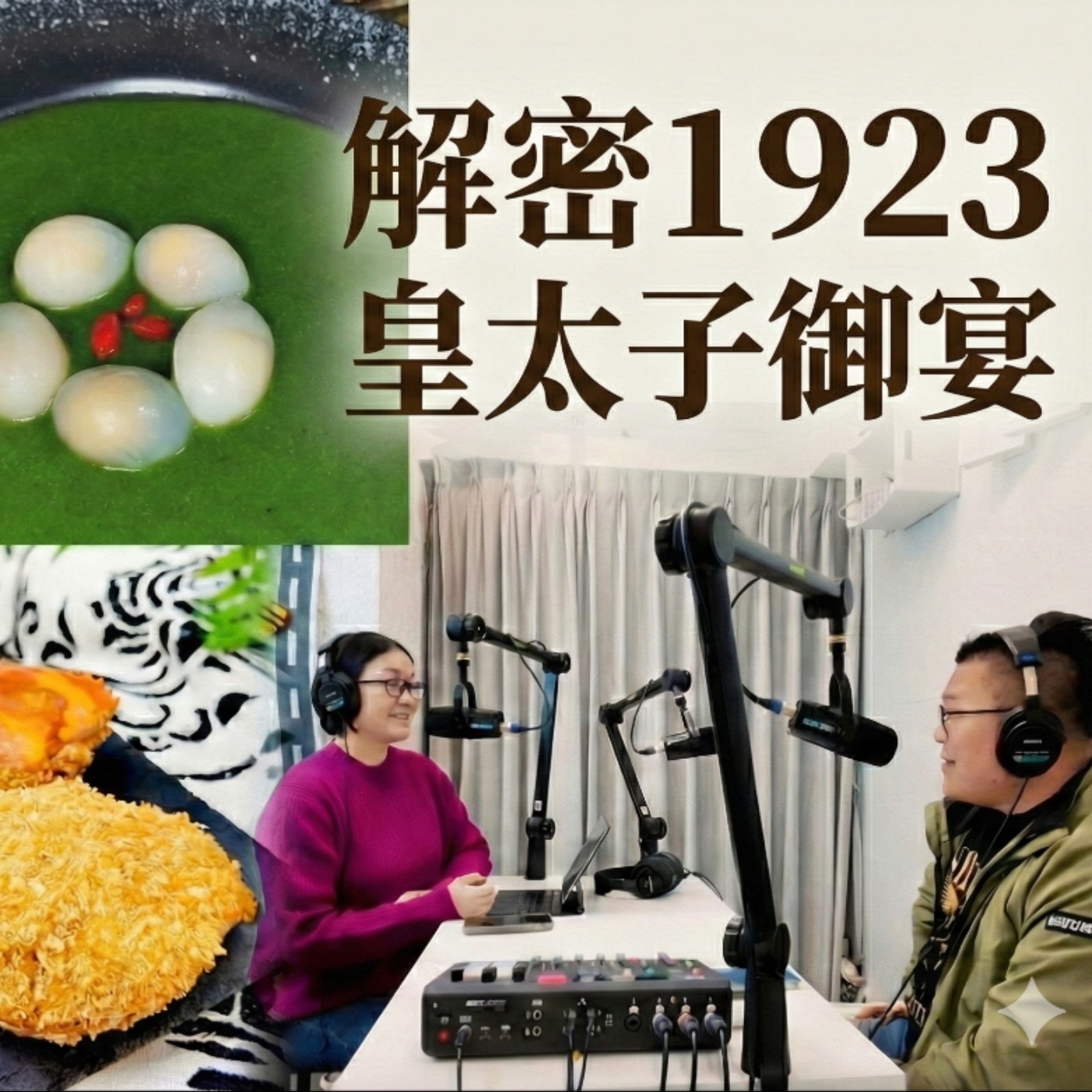
EP43 解密台灣第一場國宴:1923年皇太子御宴 —— 皇太子連吃8碗的「八寶飯」是甜還是鹹?水晶鴿蛋哪裡有水晶?阿富師說給你聽!
from 豐食光 · host 豐辦桌Taiwanese Roadside Banquet
本集《豐食光》由主持人郡秋邀請到致力於台灣飲食研究與復刻的「大師兄」阿富(林敬富),帶領聽眾穿越百年,揭開1923年裕仁皇太子來台時,那一場傳說中「台灣料理宴席」的神秘面紗。阿富師以「修復古蹟」的精神,不僅詳細考究江山樓與東薈芳八大名廚的食譜,更親手重現了當年皇室餐桌上的奢華滋味。 討論焦點從一道極其珍稀的「水晶鴿蛋」展開,阿富師分享為了尋找純正鴿蛋狂燒萬元、失敗數百次的崩潰過程,只為還原那帶有人蔘味的透明蛋白。節目中更打破許多大眾對日本時代的飲食迷思,例如:水餃並非國民政府遷台才帶來、百年前台灣人早已習慣享用冰品與「叭噗」,以及「油炸」在當時是主人家展現財力與好客的最高禮遇。從「八寶焗蟳」的繁複工序到「咖哩大蝦」中加入台灣芭蕉的神來一筆,兩人深入探討料理背後的文化自信,呼籲透過真實的味覺體驗,找回台灣飲食歷史的正確記憶,避免被錯誤資訊淹沒。 重要時間序 00:00–04:20:傳說中的「水晶鴿蛋」與萬元成本 主持人郡秋與大師兄阿富開場直擊本次復刻最困難的食材——「鴿蛋」。阿富分享為了煮出蛋白透明如水晶、帶有人蔘味的鴿蛋,耗資近萬元並經歷數百顆失敗的過程。解析鴿蛋與市售鵪鶉蛋的巨大差異,以及江山樓食譜中「鴛鴦鴿蛋」的變通智慧。 04:21–08:50:1923年皇太子宴席背景與復刻挑戰 介紹1923年裕仁皇太子來台,在基隆享用的唯一一場台灣料理宴席,由江山樓與東薈芳名廚聯手操刀。阿富師兄講述如何依據殘存的江山樓食譜,加上跟隨老台菜師傅學藝的經驗,以「修舊如舊」的方式補足文獻空白,復刻出「八寶菊」、「雪白木耳」等失傳菜色。 08:51–13:40:復刻菜色解析:八寶焗蟳、雪白木耳與火腿冬瓜 深入解析重點菜餚。「八寶焗蟳」並非焗烤,而是將蟹肉拆解重組的炸物工藝;「雪白木耳」展現了當時將木耳燉煮至出膠的高級雞湯技法;「火腿冬瓜」則反映了日本西化運動下,西式食材(洋火腿)經過日本詮釋後進入台灣宴席的文化融合。 13:41–18:10:打破歷史迷思:水餃、冰塊與油炸文化 阿富師根據史料與《日日新報》,打破大眾對台灣飲食史的刻板印象。證實日本時代台灣已有水餃專賣店、西門町紅樓早有製冰庫供市民使用,並解釋早期大量使用豬油「油炸」,是主人家為了展現奢華與挽留賓客的象徵,而非單純的烹調手段。 18:11–22:30:金錢火雞、玉筆白菜與咖哩的秘密 討論具吉祥寓意的「金錢」系列菜色,以及當時已有火雞肉的史實。介紹極具文人雅趣的「玉筆白菜」,以及讓人驚豔的「咖哩大蝦」——阿富師揭露百年前的咖哩加入了「芭蕉」,創造出帶有果香與Q彈口感的獨特風味。 Decoding Taiwan's First State Banquet: The 1923 Crown Prince's Imperial Banquet — Was the "Eight Treasure Rice" that the Crown Prince ate 8 bowls of sweet or savory? Where is the crystal in "Crystal Pigeon Eggs"? Master Afu explains it all to you! Program Summary In this episode of Taiwanes Dishes, host Junqiu invites "Big Brother" Afu (Lin Jingfu), a specialist dedicated to the research and recreation of historical Taiwanese cuisine. He leads listeners on a journey spanning a century to unveil the mystery surrounding the legendary "Taiwanese Cuisine Banquet" served during Japanese Crown Prince Hirohito's visit to Taiwan in 1923. Adopting the spirit of "restoring historical artifacts," Master Afu not only meticulously studied the recipes of the eight great chefs from Jiangshan Lou and Donghuifang but also personally recreated the luxurious flavors once served on the royal table. The discussion spotlights an extremely rare dish, "Crystal Pigeon Eggs." Master Afu shares his frustrating journey of spending over ten thousand yuan and enduring hundreds of failed attempts in search of authentic pigeon eggs, all just to recreate the transparent, ginseng-flavored egg whites. The episode also shatters many popular myths regarding food during the Japanese colonial era. For instance, it reveals that dumplings (shui jiao) were not introduced solely after the Nationalist government relocated to Taiwan; that Taiwanese people were accustomed to enjoying frozen treats and "babu" (traditional ice cream) a century ago; and that "deep-frying" was the ultimate gesture of hospitality used by hosts at the time to demonstrate their wealth. From the complex preparation of "Eight Treasure Fried Crab" to the inspired touch of adding Taiwanese plantains to "Curry Prawns," the duo delves into the cultural confidence inherent in these dishes. They urge listeners to reclaim the accurate memories of Taiwan's culinary history through authentic taste experiences, preventing them from being overwhelmed by misinformation. Key Timestamps 00:00–04:20: The Legendary "Crystal Pigeon Eggs" and the Ten-Thousand-Yuan Cost Host Junqiu and "Big Brother" Afu dive straight into the most challenging ingredient of this recreation: "pigeon eggs." Afu shares the arduous process of spending nearly ten thousand yuan and enduring hundreds of failures to achieve pigeon eggs with whites as transparent as crystal and a distinct ginseng flavor. He explains the vast difference between pigeon eggs and commercial quail eggs, as well as the resourceful adaptation of "Mandarin Duck Pigeon Eggs" found in the Jiangshan Lou recipe. 04:21–08:50: Background of the 1923 Crown Prince Banquet and Recreation Challenges An introduction to the sole Taiwanese cuisine banquet enjoyed by Crown Prince Hirohito in Keelung during his 1923 visit to Taiwan, orchestrated jointly by celebrated chefs from Jiangshan Lou and Donghuifang. Master Afu recounts how he used remaining Jiangshan Lou recipes, combined with his experience learning from old masters of Taiwanese cuisine, to fill in the gaps in documentation using the "restoring the old as it was" approach, successfully recreating lost dishes like "Eight Treasure Chrysanthemum" and "Snow White Wood Ear." 08:51–13:40: Analysis of Recreated Dishes: Eight Treasure Fried Crab, Snow White Wood Ear, and Ham with Winter Melon A deep dive into key dishes. "Eight Treasure Fried Crab" is revealed not to be baked, but a deep-frying craft involving disassembling and reassembling crab meat. "Snow White Wood Ear" showcases the sophisticated technique of the time of stewing wood ear mushrooms in chicken soup until gelatinous. "Ham with Winter Melon" reflects cultural fusion during the Japanese Westernization drive, where Western ingredients (Western-style ham) entered Taiwanese banquets after being interpreted by the Japanese. 13:41–18:10: Shattering Historical Myths: Dumplings, Ice, and Deep-Frying Culture Citing historical records and the Taiwan Nichinichi Shimpō, Master Afu shatters popular stereotypes regarding Taiwanese culinary history. He confirms that dumpling specialty shops existed in Taiwan during the Japanese colonial era and that the Red House in Ximending long possessed ice storage facilities for public use. He also explains that the heavy use of lard for "deep-frying" in early times was a symbol used by hosts to demonstrate luxury and hospitality to encourage guests to stay, rather than a simple cooking method. 18:11–22:30: Secrets of Money Turkey, Jade Brush Cabbage, and Curry A discussion on the "Money" series of dishes, which hold auspicious meanings, and the historical fact of turkey meat's availability at the time. Introduction of the "Jade Brush Cabbage," a dish imbued with scholarly elegance, and the stunning "Curry Prawns"—Master Afu reveals that curry from a century ago incorporated "plantains," creating a unique flavor profile with fruity aromas and a bouncy texture. #甘苦人食堂相關訊息 水晶鴿蛋 https://www.facebook.com/share/p/1XAUG6Sgfv/ 八寶焗蟳 https://www.facebook.com/share/p/1APA39K6rw/ -- Hosting provided by SoundOn
Embed this episode
Ready to play
EP43 解密台灣第一場國宴:1923年皇太子御宴 —— 皇太子連吃8碗的「八寶飯」是甜還是鹹?水晶鴿蛋哪裡有水晶?阿富師說給你聽!
No transcript for this episode yet
Similar Episodes
No similar episodes found.