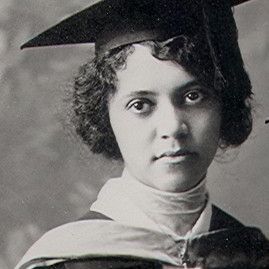
This is Babes of Science. Oh, no, I gotta think about that, though. That's a female scientist. I'm Posse.
The Kalopapa Peninsula is almost completely surrounded by the Pacific Ocean. The one connection to land, the rest of the island of Molokai in Hawaii, is blocked by cliffs about 2,000 feet high. Starting in 1966, any Hawaii resident who shows signs of leprosy, things like skin lesions, ulcers or growths, muscle weakness, pain, or paralysis, any people who show any of these things, are sent to the Kalopapa Peninsula by force if necessary. At first they're dropped by boat onto the jagged cliffs of the peninsula.
Nearly half of the people sent there die in the first five years the Kalopapa exists as a leper colony. But later, a whole community springs up, with food and homes and care. People with leprosy were basically dead to the rest of the population. Their wills were executed, and their spouses received legal divorce papers.
Kalopapa would be a home to more than 8,000 people before the colony opened up and set its residents free. And it was just one of many leper colonies in the world. Doctors thought that leprosy was highly contagious, and they could only control it by placing those infected in quarantine. They had no cure.
Their treatment sometimes eased the patient's symptoms and sometimes made them worse. Or at least, that was the case before Alice Ball got to work. Alice Ball is born in Seattle in 1892. When she's 10, her family moves to Hawaii, hoping that the warm weather will ease her grandfather's rheumatism.
His name is James Presley Ball, and he's a relatively well-known photographer. He made a pretty famous portrait of Frederick Douglass in 1869. You've probably seen it. Alice's parents and her aunt are also photographers, so the family sets up their home and studio in Honolulu.
Alice watches her family as they develop film, and learns the chemistry behind the process. Yet, she doesn't stick with photography. She starts studying chemistry in other fields. Alice completes two bachelor's degrees, one in pharmaceutical chemistry and one in pharmacy at the University of Washington.
And then she heads to Hawaii again for her master's degree. She's the College of Hawaii's very first graduate student. And then she stays on to teach chemistry there. A professor named Harry Coleman takes notice of Alice.
He works at a nearby hospital where potential leprosy patients come for evaluation and diagnosis. He asks Alice to work with him on a treatment. When Alice begins her research, the best treatment for leprosy is chalmugra oil, so named by the Hawaiian tree that it comes from. Rubbing it on the skin of patients with leprosy offers some relief from pain and skin numbness.
Swallowing the chalmugra oil works better, if the patients can keep it down. The oil is so bitter that it makes most patients vomit before it has any impact on the disease. Some people try injecting chalmugra oil, but it doesn't dissolve into tissue. It kind of sticks around as a lump of oil just under the surface of people's skin.
It usually hurts, and sometimes the patients tell up a fever after having the oil injected. The human body is mostly water, so Alice has to find a way to make the chalmugra oil water-soluble. Otherwise, it's kind of like adding melted butter into water. Usually pharmacists get fatty substances into the bloodstream by changing them into salts, which is all pretty easily in water.
But doing this to chalmugra oil makes big salt molecules, which would damage the blood cells if the solution is injected. Alice is busy teaching chemistry during the day, so she spends her nights with the chalmugra oil. Eventually, she tries mixing the oil with alcohol. This turns the fatty acids in the chalmugra oil into ethyl esters, which are water-soluble and small enough that they won't damage the body's cells.
Some historians say that leprosy went into spontaneous remission at Kalopapa, but the factor means that a few months after Alice Ball's chalmugra injections begin, about half the patients recover. Many leave and return to their families, on parole, as it was called, from the lever colony. Alice Ball dies in 1916, most likely of chlorine poisoning. She's demonstrating a chemical reaction in one of her classes when she inhales chlorine gas.
Turns out, if you inhale enough chlorine gas, way more than is in a swimming pool, the chlorine reacts with the water in your body to form hydrochloric acid and hydrochlorous acid, both very, very toxic. Now people use fume hoods when they handle chlorine in labs, but Alice wasn't using one of those. She receives medical attention in Seattle, but after three months of treatment, she dies. She's 24.
A lot of things have changed for people who contract leprosy. The first drugs that could truly put the disease into remission appeared in the 1940s, but Alice's method was used as late as 1999 in some remote locations. Now anyone who has leprosy can receive care and lead a very normal life. Some people choose to call it Hansen's disease, named after the man who identified the bacteria behind leprosy.
They say that the name has too much of a stigma attached. And the leper colonies? Most were gone by the 1960s. The new drugs made leprosy non-contagious so people could rejoin their families.
But some colonies remained open, so the people who'd spent their lives there could choose to stay. Some of the colonies were home. At last count, the colony at Kalupapa hosts fewer than two dozen patients and staff. Alice died before she could publish her findings about Talmuger oil, and she hasn't received much attention since.
Her critics say that the Talmuger oil injections weren't all that effective. They say that the injections helped maybe half of the people at Kalupapa recover. But measuring Alice's influence in numbers doesn't really make sense to me. She was the reason why the first people with leprosy were let out of isolation, and that made everyone on the outside realize that leprosy was not necessarily contagious, and perhaps more importantly, that people with leprosy are people too.
Without that push, that knowledge that people who are sick are just the same as everyone else, who knows where people with leprosy would be today? No, I have a sneaking suspicion that few people remember Alice Ball because of her identity. Being a young black woman in early 20th century America probably doesn't help build a legacy. Babes of Science is produced by me, Ponsi Rutsch.
If you like the show, leave a rating on iTunes or whichever app you use to listen. Or write a review. It helps more people find Babes of Science. I tweet fun facts and photos about the Babes and about women in science using the handle BabesScience.
And of course, you can learn more about the project at babesofscience.com. Thanks for listening. Babes of Science