
EPISODE · May 7, 2021 · 1H 15M
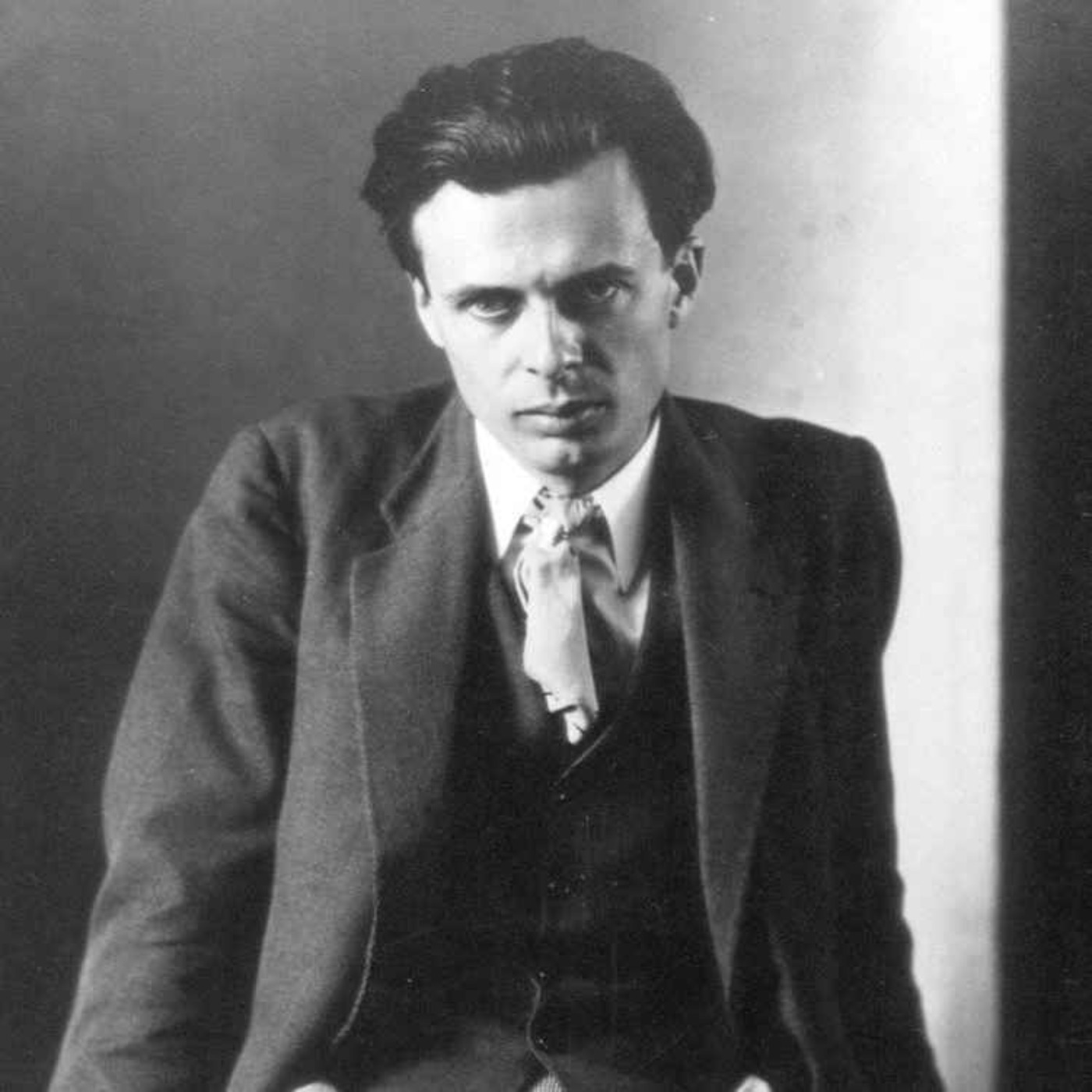
Episode 040 - The Visionary Experience w/ Aldous Huxley
from Midnight, On Earth
In this episode Brynn and I listen to a very rare lecture from one of the greatest philosophical and psychedelic minds of the 20th century...Aldous Huxley. Aldous talks about the different ways the visionary experience has manifested for humans throughout the centuries, and how these experiences can help us. Listen In! Aldous Huxley Bio:Aldous Leonard Huxley was born in Godalming on 26th July, 1894 in an upper scale family. He came from a literary background, his father also being a biographer, editor and poet. Huxley was educated at Eton College in Berkshire from 1908-1913. When he was just fourteen years old, his mother died. During his teenage years, he also suffered from an attack of Keratitis Punctata and thus became blind for about eighteen months, but then by wearing some special kind of glasses, he was able to recover his eye-sight a little and at least read, but consequently also learned Braille. Even though he had frequent conditions of near blindness, Huxley went on relentlessly with his studies at Balliol College in Oxford, where he received his B.A in English. He was confused whether to pursue his career as a scientist or take part in the World War. Since, he was unable to decide, he took up writing.He wrote several poems, which appeared in 1916 and the second volume, which appeared in 1920. Huxley’s novel, Crome Yellow came in 1921, which blended criticism, dialogue, wit and satire and also established Huxley as one of the most important literary authors of the decade. Within a period of 8 years, Huxley had written several books. Amongst these novels, the most notable ones are Point Counter Point published in 1928 and Do What You Will published in 1929.At this time, Huxley became involved in the study and practice of mysticism. His new philosophical outlook informed his novel Eyeless in Gaza (1936), which promoted pacifism on the eve of World War II.After Many a Summer Dies the Swan (1939) makes the case for the emptiness of materialism. Gradually, Huxley moved toward mystical writings, far from the tone of his early satire. The Perennial Philosophy(1945) and The Doors of Perception (1954) represent Huxley’s non-fictional expression of his interests, including even experimentation with psychedelic drugs. The Doors of Perception is a book by Aldous Huxley. Published in 1954, it elaborates on his psychedelic experience under the influence of mescaline in May 1953. Huxley recalls the insights he experienced, ranging from the "purely aesthetic" to "sacramental vision", and reflects on their philosophical and psychological implicationsHuxley’s last novel, Island (1962), returns to the theme of the future he once explored so memorably in Brave New World. The later novel, in which Huxley tried to create a positive vision of the future, failed to come up to readers’ expectations. Brave New World Revisited, a series of essays addressing the themes of his early novel, represents a more successful rethinking of future (and present) social challenges.Huxley died of cancer in California on November 22, 1963. Hosted on Acast. See acast.com/privacy for more information.
Embed this episode
NOW PLAYING
Episode 040 - The Visionary Experience w/ Aldous Huxley
No transcript for this episode yet
Similar Episodes
No similar episodes found.
Similar Podcasts
No similar podcasts found.