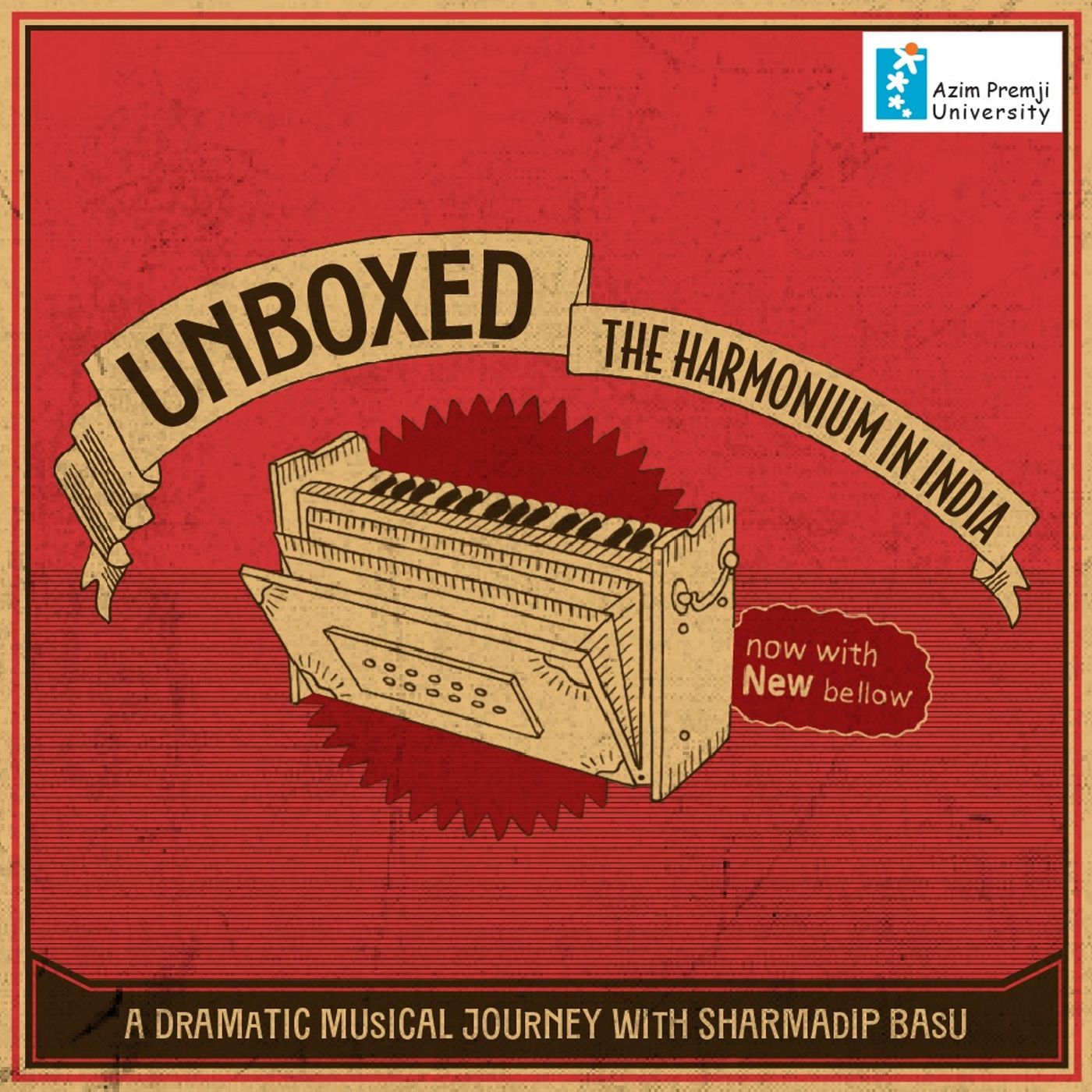
Episode 1 | Unboxed - The Harmonium In India With Sharmadip Basu episode artwork

EPISODE · Jan 9, 2024 · 31 MIN

Episode 1 | Unboxed - The Harmonium In India With Sharmadip Basu

from Radio Azim Premji University · host Radio Apu

Growing up in West Bengal, Sharmadip Basu believed the harmonium, a common sight in the region’s middle-class households, was an Indian instrument. However, while reading Milan Kundera’s The Joke, he stumbled upon a mention of the harmonium in Moravian folk music, prompting him to delve into its origins. His findings fascinated him even more. The harmonium had arrived in India through Christian missionaries but was then adapted and embraced by musicians across various religious groups, being used in Brahmo Samaj hymns, Sikh kirtans, ghazals, bhajans, and more. Initially transformed by a Bengali instrument-maker to suit Indian conditions and playing styles, affordable versions flooded the market, gaining popularity among folk musicians. Despite criticism from nationalists, purists, and figures like Gandhi, Nehru, and Tagore, who disparaged its sound, the harmonium remained widely loved. Despite All India Radio banning it, its popularity endured. In the first part of our two-episode series on Radio Azim Premji University, explore the tale of how the harmonium took root in India and captured the hearts of Indians. Credits: Akshay Ramuhalli, Bijoy Venugopal, Bruce Lee Mani, Narayan Krishnaswamy, Prashant Vasudevan, Seema Seth, Shraddha Gautam, Supriya Joshi, and Velu Shankar

Growing up in West Bengal, Sharmadip Basu believed the harmonium, a common sight in the region’s middle-class households, was an Indian instrument. However, while reading Milan Kundera’s The Joke, he stumbled upon a mention of the harmonium in Moravian folk music, prompting him to delve into its origins. His findings fascinated him even more. The harmonium had arrived in India through Christian missionaries but was then adapted and embraced by musicians across various religious groups, being used in Brahmo Samaj hymns, Sikh kirtans, ghazals, bhajans, and more. Initially transformed by a Bengali instrument-maker to suit Indian conditions and playing styles, affordable versions flooded the market, gaining popularity among folk musicians. Despite criticism from nationalists, purists, and figures like Gandhi, Nehru, and Tagore, who disparaged its sound, the harmonium remained widely loved. Despite All India Radio banning it, its popularity endured. In the first part of our two-episode series on Radio Azim Premji University, explore the tale of how the harmonium took root in India and captured the hearts of Indians. Credits: Akshay Ramuhalli, Bijoy Venugopal, Bruce Lee Mani, Narayan Krishnaswamy, Prashant Vasudevan, Seema Seth, Shraddha Gautam, Supriya Joshi, and Velu Shankar

NOW PLAYING

Episode 1 | Unboxed - The Harmonium In India With Sharmadip Basu

0:00 31:12

No transcript for this episode yet

We transcribe on demand. Request one and we'll notify you when it's ready — usually under 10 minutes.

No similar episodes found.

Frequently Asked Questions

How long is this episode of Radio Azim Premji University?

This episode is 31 minutes long.

When was this Radio Azim Premji University episode published?

This episode was published on January 9, 2024.

What is this episode about?

Growing up in West Bengal, Sharmadip Basu believed the harmonium, a common sight in the region’s middle-class households, was an Indian instrument. However, while reading Milan Kundera’s The Joke, he stumbled upon a mention of the harmonium in...

Can I download this Radio Azim Premji University episode?

Yes, you can download this episode by clicking the download button on the episode player, or subscribe to the podcast in your preferred podcast app for automatic downloads.
URL copied to clipboard!