
Welcome to the Movement Movement, the podcast for people who want the truth about having a healthy, happy, strong body. Remember, your body was meant to move. Now here's your host, Stephen Sashin. I'm Stephen Sashin from the Movement Movement Podcast.
You can find us at JoinTheMovementMovement.com or all the various places where you can think of where you find Join The Movement Movement. If you actually go to JoinTheMovement.com, you'll see Twitter and Facebook and YouTube and iTunes and everywhere else. And this is a podcast for people who want to learn the truth about how to move healthily, happily strong, out of healthy, happy, strong bodies and to cut through the mythology that people have been propagating that might keep you from doing that. If you've been listening to the podcast, you know that typically it's just me doing a lot of ranting while I'm happy that that's not the case this time.
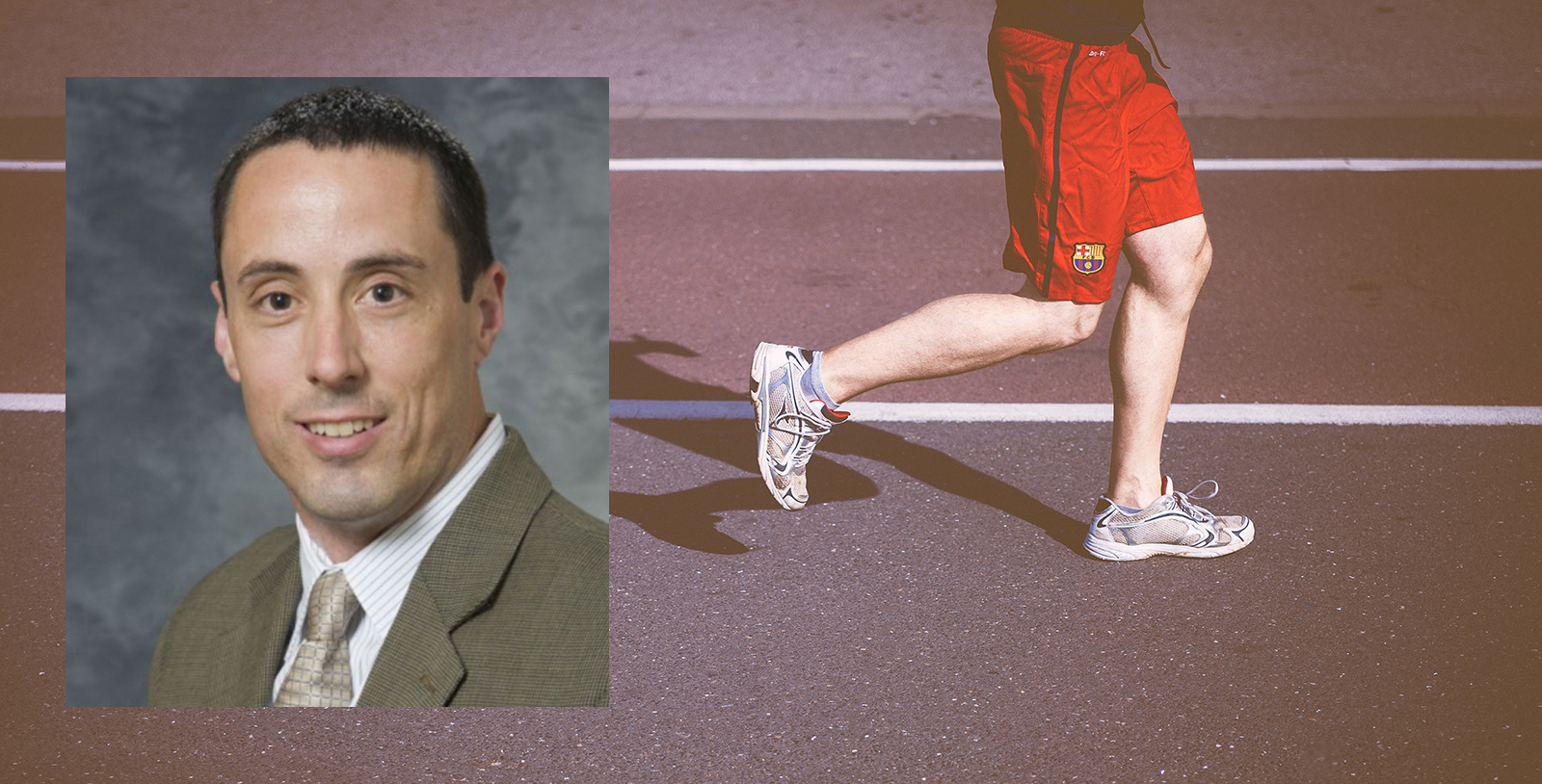
I have my friend, Dr. Brian Hidershite. We will be exploring something interesting. One of the many things we'll be exploring, could you improve your running and get rid of your injuries by moving faster without running faster?
That sounds crazy, but we'll jump in and find out how that works. So first of all, Brian, hello. Hi, Steve. Thanks for having me on.
Appreciate it. Yeah, that's really kind of you, not for saying, hey, thanks for doing this again because the recording didn't work last time. So that's what happened here. We are again.
So I'm going to ask you a question that I asked before. Maybe you have a better answer now. You're a PhD, which means you have a doctor of philosophy technically. So say something philosophical.
No improvements at all. It's going to be the same. I have nothing to press up to say. That's actually very Zen of you.
There's no improvements at all. Oh, I did. Okay. I'm just going to stick with that one.
I'll stick with them after Zen mountains or mountains and rivers or rivers. That's awesome. That's true. Okay.
So we started this conversation originally 20 minutes ago and I asked you how you got to where you got to and you were talking about how originally you were doing research on footwear. Shoe companies were selling you stuff. If you had to sum up what you discovered from that in like an elevator pitch, elevator sentence, what would you say that you discovered? One of the challenges definitely is that when we tried to do the testing on the different shoes on the material properties of the shoe that they did not well represent what would happen when people ran.
Ooh, that's interesting. So what happens in the lab does not equal what happens in real life. Right. Exactly.
And you know, that wasn't our intent of testing the shoes was actually to give information about the shoes themselves, not to interpret 5, 6, 7 miles down the road and say what they actually would do in terms of injury or performance. But of course, that's many times how information is exactly. So wait, you're saying that you did not give information that showed that shoes improve performance or reduce injury, but the shoe companies then would take your data and say that's what they did? Yes, correct.
We did not do that. Whether the shoe companies or others who interpreted incorrectly. Yes, they did not do that. It's funny.
I know some researchers who will remain nameless, but if they're listening, they will know who they are, who especially trying to prove that minimalist and barefoot running is frankly bullshit. They have studied VO2 Max, which is basically how well your body uses oxygen for people who don't know. And what they showed in a small study that has not been replicated that involved people who were claimed to be proficient barefoot runners, even though I know none of the people that were in that study and I know all the local barefoot runners and the conclusion was that the barefoot runners, their VO2 Max was lower than the people who were running in regular running shoes. By the way, the regular running shoes were sponsored by the company that sponsors this entire lab.
So my argument was, hey, who cares? Because what your VO2 Max is in a lab doesn't say anything about how you're going to perform in real life. And luckily, the same lab is now saying, well, you know, we're still seeing VO2 Max improvements with the so-and-so I won't mention the brand by name, but it rhymes with flaky vapor fly. But we don't know why and we're not saying that it's going to change the way you perform in real life.
And I actually had someone say, well, how can so many people are saying personal best in that shoe? I said, but the same reason people are other people are saying personal best in other shoes. It's not what people say. So anyway, so that's the short version of what you discovered then.
And now what's got your interest now? What are you doing both either in research and or clinically? Yeah, so both environments were really trying to look at how people are moving. And if we think that their movement could be in blue-tinner injury risk, and we do think so, what changes can we make now?
Ooh, so we'll jump into that in a second. But I realized that since we skipped in our intro second time, I didn't give you the luxury of saying where you are and what you do. Oh, sure. Dinner party.
Dinner party. Hey, what do you do? I work at the University of Wisconsin-Madison, professor in the Department of Mathematics and Rehab as well as physical therapy program. I direct the University of Wisconsin-Health-Rangers Clinic and have a clinic with NWS Linux to help with the major athletes.
Cool. So Brian and I met through an event that he puts on with Dr. Irene Davis from Harvard and Dr. Chris Powers at USC called the Science of Running Medicine, which you can find at science-of-running.net.
If you're a physical therapist, you're going to want to go to one of these events. This is where the three of them, let's just say, argue to some extent, about the best way to evaluate and treat runners and running injuries. And we will jump into that in just a bit, in fact. So when you're analyzing movement now and trying to find ways for people to run better, healthier, et cetera, what's the thing that you're focusing on primarily?
So we try to accomplish standards that can be done in just about any sort of clinical setting. So we don't, we've done a number of high-tech research studies that have shown us some relationship to movement patterns and potential biomechanical loads in injury risk. But the challenge is that most clinicians don't have access to that sort of technology or at least can afford a lot of the technology. We try to make other measurements that they can do in a clinic setting.
So that's not that you're talking about involves force plate data and just looking at kinematics based on how we're moving and joint angles and various things like that? Yes. So in order to research studies, we've got an optic motion capture system. Eight cameras all synchronized with force plate platform data, some muscle EMG pattern recordings, all being fed back into a single computer.
We can recreate that individual movement as best we can using some of our models. So when you say this, it reminds me. So the panel discussion that I was on at the American College of Sports Medicine last year, there were some guys from Adidas who had their motion capture stuff and they were all really proud of it. They showed two things that I didn't have the time to go, are you kidding me?
But the two things were, the first was showing a runner from the side and how when the runners looked at the ground. It's like, look, we can actually see the impact force when they hit the ground. Isn't that cool? But what they showed was this massive spike of force that was heading in the opposite direction the person was running.
So like they're slamming on the brakes while they're landing on their heel and they're going, it's not amazing. We can study this like, no, no, no, no, no, you're missing the big thing here. They just put on the brakes. I was like, talk about what it means to send that force.
It's like through your body. There's some arguments about that. I think they're bad arguments. I think it's pretty obvious you don't want that as much as you can reduce it.
But regardless, even if you think that it's totally fine, it makes no sense to be having that much force going in the opposite direction you're trying to run. The second thing they showed a runner from behind just when they're foot hit the ground and they showed the direction and the amount of force that was going in different directions. And so what they showed the runners first hits the ground and there's a force vector pointing at like 45 degrees out. I don't remember what was it in or out, frankly.
But then it almost immediately switched to 45 degrees from the other direction and then to like 30 and then it finally gets straight up and now when the runner hits mid stands. All I could think is, dude, this is in the motion control shoe that you've spent 50 years developing. Really? That's the best you can do.
And they were looking at it again. Like it was super cool that you could capture this. And I'm looking at it like, wow, that's super cool. You just proved that what you do doesn't work.
Yeah, I think that's the truth, I'm sure. So when you simplify things to give clinicians something that they can work with, what have you landed on pun intended? Well, the main thing is that the most clinicians are going to have access to what they see. But of course, you're going to realize the eyes are not going to capture the level of detail that you need to look at some other running mechanics pieces.
So we provide a way that they can utilize it as a simple high speed camera that most of them are able to, as to our phones or something else that allows us to slow down the movement pattern and look at very particular aspects of the movement pattern that can give us insights in the biomechanical ones. Can you be a little more vague, please? Yes, I can absolutely be more than that. I've got to make sure that the specific things that we look for in terms of flaws and movement is how much the person moves up and down, how much they're centered mass if you want to call it up.
How bouncy they are. They're head, you can use their shoulders. Yeah. Another one is on the clock there.
That's an interesting thing. So because a lot of runners that I see, they collapse in their midsection, they basically run and they look like a sprint. They look like a sprint. Yeah.
So if you only watch their head move, their head may stay straight while their body is just collapsing, left or right, or the other way around where people get super stiff and then they get really bouncy, Glenn Mills, who's using Bolt's coach, Glenn says that before you say he became an actual 100 meter runner, they spent a year just working on his core strength because he had been really collapsing and they had to tighten that up. So that's an interesting thing to consider, it's like watching how bouncy someone is, but if they're not bouncy, it could be that they're not necessarily doing the right thing still. So that's intriguing. Yeah.
Yeah. So ideally you'd be tracking it after him, right? Right. How much that's moving up and down.
But you're actually right because we do see the same thing where they're trunk tends to kind of flex and extended flex as they're moving and so their foot or head does the same. So exactly what you're just trying to do. Yeah. Okay.
So we're checking to see how bouncy they are and what else? Yeah. So much about second thing to look for is what we think of as being overstrider and overstriding is one that left a lot of people like how do you define that overstriding is not being along strike length. As you went faster, you have to have a long strike length strike increase.
Overstriding really is what we're talking about is that the incident landing where that foot is positioned relative to your center of mass. And so what would you call bad versus good? So in terms of distance, that's the hard part because all of its, that's the hard thing on a sort of movement mechanics that almost all its scales with speed to some extent. So if we talk about value one and say, oh, you should land tensed under the header center.
Right. Well, then we worked if I'm running out of speed. Well, you know, and this is something that I pointed out to people is they'll watch video of somebody running and they'll talk about them overstriding or not and have no sense of what speed is. Yeah.
And the real effect of speed is if you're moving across the ground much faster, your foot can touch the ground further in front of your body, but it's not getting weighted until your body's over it because your body's moving that fast. And so really that's where a force plate comes in handy because you can see where the force happens in relation to the center of mass, but in lieu of that. So when you're giving people guidance about what they want to look for, what's good or bad in terms of our striding, what do you tell people if they don't have access to a force plate and they're just looking at video and, you know, have trying to maybe factor in speed. Yeah.
So what we try to do is, is there's a couple of other surrogate measures such as looking at their, the knee angle flight, the knee is at initial contact and also looking at your shank or the lower leg material and how far off a vertical that is right, a bit closer toward a roof. So you want, so ideally then you're looking for more of your lower leg, your tibia to be more vertical and the knee angle to be 25 degrees roughly. Yeah. So basically, I mean, with that small knee angle and a vertical tibia that basically means you're trying to get your foot underneath your body.
I mean, so what do you do? Do you care or do you have any thoughts about where your foot is sitting around in that situation? In terms of like a foot strike angle, foot inclination. A foot angle or basically the obvious, you know, heel strike, mid foot, forefoot.
Yeah. So our big approach with that is that we are less concerned about the exact angle at the ground and or if they use a forefoot mid foot or rear foot strike pattern, but we, I usually you'd find it four way. So you've got a forefoot, mid foot, rear foot and then heel strike. So I consider heel strike to be this bigger category, right?
Because we think about potential angles that your foot can get in. You can go into 40 degrees of an angle, right, and go beyond your towards your rear foot. Whereas forefoot strikers are going to be much, much smaller. You don't see a 40 degree forefoot strike.
No, but the thing, the thing also though is obviously footwear is going to make a difference because if you put a big heel underneath someone, then you're more likely to hit that in advance and have it hit ahead of your body or more accurately or another way of saying that is if you actually have that small knee angle and vertical shin angle, it's actually harder to land under heel because it's basically already kind of behind you. So those factors I assume play into it as well, especially do you ever do test people both like in and out of shoes to see what that looks like? We don't do much out of shoes. But what we do, like for example, with our athletes who are unclean, most of our wearing exact same shoes or very, very similar shoes and we test them at a whole range of running speeds.
So we're going to make comparisons and look at, you know, do individuals with different shoes, land in different distances out of themselves or the same shoe, which is a factor. And interestingly, not even when they're wearing similar shoes, they can have a whole range of overstriding risks. When I was spending time in Bill Sands lab, who's a former head of Biomechan for the U.S. Olympic Committee, he was at Colorado Mesa University is what they've, I think, since renamed themselves to what he saw is every different shoe changed to people's gate unless they were like internationally ranked typically mill distance runners and lower like anyone running the 1500 or lower, you could put bricks on their feet, nothing changed.
But anybody nor to that or anyone who's not that skilled every shoe made a difference. And same thing, if they were jogging, it was sometimes different than if they were at full speed. I also saw things we took some habitual or people who were well trained bare for runners and put them in a pair of five fingers and they went from bare for running with a mid foot or four foot strike to heel striking and over striding and over five fingers. And here's the kicker, they didn't know they were doing it.
So it was fascinating to see now the one thing that Bill would do, he put you on the treadmill and it was like five feet wide, ten feet long, he puts you on a mission impossible harness in case you're covering, you don't land on your face and go flying back in the treadmill and make an American funny snow video video. But he would put you in your favorite shoes and watch you filming at 500 frames a second, many have you run barefoot. And we saw that maybe 95% tops when they went barefoot their gate changed into something that was way closer to what you described without any instruction. And I found when I was in this lab, if I gave people who were still over striding and heel striking, like 30 seconds of instruction, it would change.
So we were seeing dramatic differences with just that simple intervention. Now, whether that would stick when they put on shoes or not, it's a different story, but it was incredible to see how quickly people would adapt. Yeah, I agree. I can't change your kit, like you said, whether it's an external trigger that does it, such as the shoes or terrain or cradients or whatever it might be, or if you try to use some sort of verbal cue.
Yeah, the verbal cues, I found people doing two things that really surprised me when I first started seeing it, but it made sense after I saw it, the first was people who would overstride they'd have their foot way out in front of them and then they'd plan their flex, they'd point their toe to the ground. So they're prancing when they ran. Why are you doing that? They're supposed to land on my forefoot.
It's like, but not like that. Exactly. Exactly. So I've seen quite a few people, you know, it's not just for forefoot strikers, but those who have read something and decide that they're going to adopt that running style, they adopt it in a way that you're like, wait a second, that's not what we were after.
Whether it's some other cue or change that they run out. Right. Well, the other one that I found is people who run, they look like groucho marks. So they bend their legs a whole lot and they still overstride, but they're kind of catching their foot on the ground and then pulling it below them.
So they're not applying a lot of force. But it looks like... It's like a ski. Yeah.
Yeah. It looks kind of like cross-country ski. I think that's right. Yeah.
And again, it's like how did you think to do that? And then I realized, oh, you're supposed to put less force on the ground, you're supposed to bend your knees, they came up with those cues and they found a way that works with them. I talked to some people who refer themselves as accomplished barefoot runners because they've run half marathons and marathons and then they run like that. I mean, it's allowed them to do it, but I wouldn't call it necessarily the best choice for the future.
Yeah, absolutely. I can automatically run faster. No, you definitely got to limit. And that's the thing is when you...
One of the things that I've seen, especially if they're barefoot runners doing that, when they put on something like one of our products, which allows them to run faster, suddenly they discover form cues or form problems that they didn't know they had because their form changes. And they say, hey, the shoe is making a bunch of noise. No, no, you're making noise. You're slapping the shoe down because it's just a variation that you've made from your gradual marks thing to being able to have more form or better form, but you haven't adapted to that yet.
It's really fascinating. I mean, we call it Laina likes to call our shoes a coach because they're giving you information you can use, but I've seen some people have interesting relationships with their coaches. No, yeah, for sure. And so I know, and partly what inspired this conversation is that one of the things that you focus on in the science of running medicine events is cadence.
That's another thing that you look at and this is full of mythology. Oh my goodness, is it ever? So please jump in. The reason we went toward cadence and separated is not because it was the solution, but because it was something that people could understand and could utilize as a cue to trigger some of the changes we were after mechanically.
And that's what's been the challenge is people forget about the rest of them. What I just said, they focus on, separate is the answer and the solution. And therefore we got all these issues that we're trying to correct now. Well, so let's talk about what is valuable in cadence and define it for humans who don't know it.
And then let's talk about the part that gets lost where people think it's a one size fits all panacea for all running problems. Yeah. So separate is the number of foot strikes that occur per minute. So how many times your foot is the ground or both feet the ground?
No, you have a number of steps. But I want to jump in here and highlight something that cracks me up. When people talk about, especially barefoot running, in middle, in general, the phrase that gets used a lot is shorten your stride. And I, when I hear that, my head wants to pop off my shoulders and spin around and explode, or explode, either way, because people don't realize that stride length is just the distance from when your foot hits to when your foot hits.
And you can have an appropriate quote, short stride, barefoot stride and have a long stride length because you're running fast, get a lot of force in the ground when you do that. But for many people, you know, that is the cue that makes sense because they can't see behind themselves. They realize that their stride is actually the same length. And so that is happening in what's referred to as backside mechanics instead of frontside mechanics.
Well, when the backside mechanics or whether it's float mechanics, most of your increase in stride length as you run faster and better occurs in the air. Correct. Yeah. Yeah.
Yeah. So anyway, back to cadence. Yeah. So you're right.
So when we think about rank speed, let's just say you're running an eight-minute mile, right? And you have your number of steps per minute and you've got the length of each step. And so we put those together and now you have speed. And so like what you've said is if you increase your number of steps per minute, that means you have to decrease the stride length.
And while there is some, some, some, but they're also is a way you can do so without compromising the advantages of stride length. Because you're fast. You have to have a decent stride length. So to clarify, if you're staying at the same speed and you have longer stride length, you have to have, yeah, you have to have faster turnover, faster cadence.
But obviously if you're just increasing cadence and stride length stays the same, that's the same thing I just said. Then that's going to make you run faster. So what is it about cadence that is both interesting to you clinically and from an electoral perspective and talk about just how it's become this sort of, you know, magic holy grail? I mean, what's going on?
So the reason I got into it was because I mentioned before about the flaws of running, which is like excessive bumps in over striding. And when you increase somebody's cadence, you will reduce their homes and you can reduce how far they hit the ground at other center of mass. They will reduce their over stride. And so what we do is we utilize those cues of a higher step rate so they can, so we can force them to feel what we want them to feel.
And then without necessarily saying, oh, what we've done is now we've taken you from 158 steps per minute to 168 steps per minute. That means from now on, you are 168 steps per minute. That's what you were born with. And look under the, your scalp, you'll see tattoo on your forehead, 168, because that's what you were prescribed.
And that's completely false, right? Obviously you're faster than the rest of change if you're in a conduit. So are you suggesting that this idea that most people have that you're supposed to run at 180 steps per minute might not be true? Right.
And so then you hear it. Yeah, when 80 comes into play and says that that is like this is optimum for all, which just flies in the face of common sense, right? When you think of how differently our terms of our body size and shape and fitness levels, and now we're also supposed to get up and run at exactly the same step rate, regardless of what speed we are. So then two questions come to mind.
One is talking about how you work with someone and obviously they're doing this on a treadmill that first they have to get out in the wild and find it differently. But talk to me about how you work with someone to find what is, let's call it an optimal range, you know, given conditions changing. And also talk about what the value of doing that is, what's happening when people, other than the fact that by increasing their cadence while not running faster, you're more likely to end up with that niengle and shin angle, so vertical shin angle, slight niengle, foot underneath your body, basically. But what else happens and how do you guide people to finding what's right for them?
Yeah, good, good point. So the first one that we want to make sure on is that it's always relative to where they're starting from. So we're not making a estimate, looking at them and measuring their body height and the body mass and the running speed and putting it into an equation and coming up with, this is your optimal step rate. Those don't exist.
You haven't done that because you don't want to be rich. Yeah, unfortunately, I think people have tried to do that back in the 70s and it failed pretty miserable. It's really not something that we're able to be able to pick up in any sort of a predictive way. Other than what we do is we look at their mechanics and like I said before, if they're knee flushing angle, if the tibial angle for bounces too much, whatever step rate they're running at when they're showing those flawed mechanics, then we want to adjust that step rate could be as low as four steps from minute.
It could be as many as 14 steps per minute to a point where we see improvements in those flaws. And then the idea is we use the metronome to guide that change initially. And why do we use the metronome? Because we didn't even before we started using separate.
We would just do verbal cueing. Like you described before, hey, Ben Janile, a little bit more bring a foot learner center mass, don't bounce as much, bring a tibial more. And number one, the people didn't necessarily understand that we were asking them to do it. Number two, there's too many verbal cues for them to even conceptually understand and figure out who should do it.
So we try to take a lot of that initial thinking away and say here, follow this rule. And then once we think we got the rhythm a little bit, then we'll supplement with verbal cues in a sense of saying what feels different. Do you feel like you're bouncing less? Do you feel like you're knee is more softer?
Do you feel like you're more on your center of mass off your heel? Three thoughts. And we have to give them to you all at once or I'll lose them. One is how would you guide people to play with this on their own?
Two is what does it take for people to get used to that new cadence? Because we do the one we do because we're used to it and something that will feel weird. And the third is do you in that process, once it looks better to you, do you try to move them over that so they can kind of pendulum swing towards where you think might be kind of ideal? It's something I do with people where I try to think of the specific thing that I have and do.
It's about lean or various things. We're having to try to exaggerate something just because otherwise what's correct feels weird and if you exaggerate it, then coming back feels more normal. So again, for people who aren't going to go into a clinic necessarily want to experiment with this, the process of getting more comfortable with that cadence and then kind of going further and coming back to just how you might use that in the lab. I'm going to take this on board.
The second one, first being how do we get people to get more comfortable with and how long does it take even. Comfort is a hard one because that tends to be very quite a bit between people. People can reproduce what we're asking immediately within one or two sessions and bring them back a month later and say, I want you to run by the way I showed you to run before. They can reproduce this for it to respond on.
That doesn't mean that they're doing it the whole time, but they've recalled enough where they can reproduce it. Comfort element is something that I think we struggle with and that is that there's always this. If you take a runner and put them in a very distracted environment, even after undergoing very good heat retraining, that distracted environment, many times you will see their old pattern start to push itself up. It's always there.
It's just being masked and pushed down pretty highly, which means that again, for a while, their running is going to take some thought and some cognitive override to make it happen. Comfort becomes challenging because of that. Related to that in terms of somebody being able to do it on their own, I'm hesitant about doing any changes on people outside of the clinic. For what we said before, which is, I don't have to pattern that you're like, whoa, that is not what I was after.
That's actually very injury risk increasing, such as that grout to run pattern described. That is a huge issue for hip flexural rehabilitation and all the problems that are running. When we utilize gate retraining in my clinic, it is strictly for injured runners. Lures us to add injuries, chronic injuries, try to get back from an injury, then we utilize this as a solution.
I think where I struggle with, and this is an area that we've explored briefly, which is do we ever try to change gate in people who are not injured? Or from a performance standpoint, we've tweaked performance issues a little bit or a gate for performance issues a little bit, but the idea of trying to prevent running injuries through gate chains, that is a really tough one. And the science is way. That would, yeah, I mean, it's one of the things when people ask me about running a zero excuse, for example, like, well, there's three reasons I can think of you, wouldn't want to do it.
One is if you don't want to just spend some time to get used to it, which is kind of silly. It's like saying, hey, my arm came out of a cast, but I'm never going to use my arm again. So, you know, it's going to take some time to get stronger. A second is, crap, I don't know what the second is, I'm having trouble with listening three right now.
I get three in my head and one disappears. But the biggest one is if you are a competitive athlete, don't do it. If your livelihood depends on what you're doing, don't mess with it for now. Now, if you get injured, that's a different story.
There's other reasons you may in the off-season want to start experimenting, but, you know, don't be a bonehead. And that's a really interesting point. Now, the idea that people putting themselves in a dangerous situation by experimenting with cadence, I will, of course, say, look, we're not, it's not rocket science. Play with it and see what happens.
Use your body as a guide. If something feels wrong, maybe it is. If something feels awkward, that's a slightly different story because you're not used to it. But definitely if you can't get video feedback, that would be really helpful because then you can watch and see where your foot's landing, see what the shin angle is.
And these are things that you could, many people can see relatively simply. I'm going to come back to that point in a second. But there's another thing about cadence that's interesting. And I'd love for you to comment on it.
I don't know who study it was. Maybe it was going to get to your lab for all I know about cadence and force. And I'd made a U-shaped curve because it seemed that with increased cadence, the amount of force, the impact loading forces were lower up to a certain point. And then they started getting higher.
And of course, speaking as a sprinter, sprinters are trying to get the maximum impact force because that's what makes you run faster, mass-specific force. But distance runners, by and large, are looking to decrease force within kind of a window. So can you tell me about that aspect and what you've noticed there? That I'm not just familiar with that particular relationship.
So no, I understand the right between the VO2 and cadence and loading rate and full inclination angles. So it's a curvilier relationship. But impact force gets lower and higher. Well, I think the basic idea is that if you are landing in the way we're describing, which is basically foot under your body, rather than way out in front of your body, you're just not going to get that massive spike of force initially.
And you're actually, if you're landing the way that we're talking about, you're going to be using your muscles like a mince intended as this, bringing some shock absorbers. They're supposed to be more than using your joints to try to absorb that or the shoe, which will never do it to try to absorb that. So I think that's the gist is that increasing cadence is another cue that just leads to that form change that can lead to reduced loading forces. But then you get to a certain point again, as you start becoming a sprinter, you're putting more force in the ground.
That's the only way you can do that. So I thought you were going to know that when we were going to have a minute. Sorry, I should have known that. If I can find it, it's something that I remember seeing seven years ago, if I can find it, I'll track it down and send it to you.
Yeah, because you're actually right. I think when you're talking about any of these metrics, even in terms of how much you bounce up and down, you want to bounce less and less and less to zero. If you don't bounce at all, you are very inefficient as well. It's interesting you say that there's some runners that you see that look like there's just skating on ice and it looks so cool because it doesn't move at all.
And some of them are really fast. But yeah, it's not that that's ideal. That's just it. It's skating on ice thing.
It looks super cool. But I think the other thing too, is you're coming. You're a lot of that example. You're just coming out and also through the sprinting realm.
And again, you're going from distance running speeds to sprinting. It's not just a linear change. It's not just a linear change. It's not a linear change.
It's not a linear change. It can't exchange in much different ways. Yeah. Well, there are certain mechanical changes that are very different and some that are exactly the same.
So the basic idea of where you want your foot to land is basically the same. The gist of how you're applying force is basically the same. There's just extremes in sprinting that you don't see in distance running. If you look at a good distance runner and a good sprinter and you look at it in super slow motion, some of those differences are really hard to see unless you're staring at someone at 500 frames a second in super slow-mo.
It has to do with how well your knee extends as you're entering the swing phase. I mean, there's all these really weird things that when you know them, they're really obvious. But if you don't know, it just looks like someone sprinting is just running faster than someone who's a distance runner, which is not the case at all. So here's where I want to get into something fun.
So back to the science of running medicine events. You and Chris and Irene, you kind of argue about a number of points and you sort of agree on a certain number of points. And I have a theory about, I'm going to say this way. I'll say something I want to ask you to comment on.
So I said to Irene, who does this amazing presentation about her research, which essentially shows how regular running shoes can be the cause of problems and getting out of those and into something truly minimalist and under truly minimalist. She goes, what she calls minimalist and partial minimalist. I call it true minimalist and fake minimalist. So in a true minimalist category, there's us zero shoes and Viva Barefoot and some five-finger shoes and one innovate shoe that's no longer made.
But anyway, she shows, you know, here's why running shoes can cause these problems. Here's why natural movement in a truly minimalist shoe can get rid of those. And it's a very well thought out linear presentation. And I said, it's almost ridiculous that at the end of your presentation, people don't come running to my booth and tackle me and steal my shoes.
But they don't. Typically, about half of the people in the room will come up to get more information. And then about half of them will end up trying what we're doing and seeing what's going on. And I have two theories about why that doesn't happen.
But actually, first, I want to stop there and just have you comment on just what Irene has shown and how that doesn't relate to what you're doing and what your thoughts are. Yeah, so you're right. We do argue quite a bit. And Irene is a fantastic presenter and has a wealth of knowledge and studies that she's put on over the last several decades that's really informed her approach to it.
I think that there are some extrapolations in their data, not over speculation that's suggesting that. But to take it to the level of saying that this will reduce injuries and this will enable you to run faster, perform better. Those are elements that are still big gaps. And then we all have gaps.
I'm going to interrupt there and say, because I don't think that she ever says this will make you run faster or perform better. No, I think you're right. I think that's true. I think that's true.
Which actually I think is a gap, right? So it's funny. It's funny. It's funny Phil Maffetone.
He wrote a book on 159 and his prediction is the first person to run a real marathon, sub two hours will be barefoot or in our shoes. Something that's as light as possible but just giving you know something to predict you from the ground. But basically as light as possible. So we're not going to determine whether, and we have people who claim they're setting and they are setting PRs all day every day.
We hear about people. I'm not saying that we do that. There's more to it than that. But yeah, the long term study on injury prevention and improved performance, that's an interesting one and a tricky one and an expensive one and a type consuming one.
So that doesn't exist right now in large part because the people on my side, the truly minimalist camp, we don't have the cash to put out that money from that research. And what a shock the big shoe companies. They're not going to do it because the last thing they want to find out is they're right. So and I know a number of them suspect that we're right because that's well, anyway, they look at the research, they've experimented on their own, they have that.
So ignoring the performance injury part or the injury prevention part, although she does talk about that and does have some ideas about how making these changes would be preventative. But regardless, okay, so that was an interruption just about what she's saying and where you're going from there. I was going to say that a lot of her data based on loading rate information, what we know about how people run in loading rates without loading rates. As it changes, as it goes down, that's a good thing that has all the potential advantages for it.
And that's the hard part where I think the three of us argue on it and that is the importance of loading rate from a ground reaction force measurement, vertical ground reaction force loading rate. It obviously has relevance to meaning and can, has been shown to have some relevance towards certain types of injuries. It's just the extrapolation of is this the one size? No, it's interesting to say that way.
I'm going to toss out one argument and then another theory about why people don't rush and tackling after her presentation. The other thing she talks about is more than just loading rate is loading patterns and styles. So for example, if you owe a shoe with a flared sole, the flared sole is going to hit the ground first is going to get a fulcrum that actually causes your foot and lower leg and all of your body to move in unnatural patterns that then you have to compensate for. And then of course, like we talked about before, if a shoe breaks down, then that's going to cause problems as well.
If wearing a higher heel shoe tends to make you be a heel striker and I like to point out here, I can reach and grab this. I can point out that your heel is a ball and if you land on a ball, that's unstable and suddenly you need all these other things to combat that. So there's other pieces to what she's doing other than that. I'm going to tell you the argument that I made to her about why people don't rush my stage and then I'm going to say something about you.
Here's the argument I made to her. I said, the people who are in that room think they've made the decision about what they have on their feet through a rational process. They think they have concluded by whatever analysis and whoever they listen to that they're wearing those shoes for a specific good reason. And if they think what they've done is rational, you can't argue them out of that with data.
You can't give them other rational things that are going to make them. In fact, they'll look for the tiniest little chink in the armor and go, oh, see, that's got to be all crap because that I don't believe in that. And that's why I'm wearing these shoes that are five inches high and look like stilts and only people will bring their brothers where they're going out on the clown circus. So that's one thing.
And I think there's a way around that. I mean, what I like to say is just look at what's natural. If you have a quarter of the bones and joints or feet and ankles, quarter of the bones and joints of your whole body and more nerve endings in your soles and anywhere but your fingertips and your lips, clearly you're supposed to use these things and they're supposed to give you certain kinds of information and do certain things. Do your shoes let you do that?
Do your feet feel better at the end of the day than they did at the beginning of the day? Do you feel better taking off your shoes than you did putting on your shoes? So there's ways of having the conversation that isn't just about data. But here's the other one.
This goes to both you and Chris. What Irene, and actually it's interesting with what you said about how you've changed the way you're working with clinicians, Irene presents a very detailed and let's say complicated argument. But even more, it's something that most clinicians aren't going to either have the equipment to implement or the skill to implement or the desire to implement. It's like a whole process for analyzing what's going on, coming up the right intervention and presenting that to the client, the injured runner, so that they can make these changes and monitoring that over time.
It's a very involved thing that I'm willing to bet some of those people in the audience just go, oh wow, I just can't do that. And some of them may be right. Some of them, you know, you know that different people have different skill sets about how to look at something and analyze it and know what a common factor is versus an extraneous factor in various things. Then you come out and Chris, even more than you, you come out with something really simple and you go, hey, let's just take a look at cadence and let's take a look at bounce and just look at those two things.
They go, oh, thank God, I can do that. And so I'm not saying that you're right or wrong. I'm saying that what you're presenting is a simpler story for people to latch on to. And I'm intrigued by that because I'm intrigued by the stories that we tell and how that leads to different behaviors.
And I would argue that you guys actually agree on many more things than you disagree on, but when you're able to present a story that's as simple as let's play with cadence and bounce, then that just gets, it just seems like it's easier to wrap your hands around. And then Chris's story, arguably, is even simpler, which for people who don't know, it really has to do with the angle of your torso when you're running. And that's even simpler for people to go because they can just look at that and show other people and it's just the simpler stories seem to not always but can win. And I'm concerned about that because I'm not saying again that the simple story is incorrect, but I would argue that it's probably incomplete.
And if we give people something they can latch on to that is simple, then they're not going to pick up something more complicated. You know, human beings try to avoid doing shit this hard. And so this is my kind of fundamental concern, like, and I'll stop ranting in a second, you know, my simple story in a way is take off your shoes, find a nice smooth hard surface, go for a really short run, 20 seconds, see how you feel the next day, if you feel good, try to add 30 seconds, if you feel sore, wait until you feel better, then do it again so you don't feel sore. If you feel hurt, then you want to change something and here's a few cues until you're having fun, that's the guide and then start increasing the time.
And in a way, that's a simple story as well and it overcomes a lot of these things because some of the things that I say is the intervention, pick up your cadence, check where your foot is, see where your body is, all of those little things, but they're secondary to go do a short run, see if you're having fun, if you're not, come back to you can and then things to play with. So anyway, but that was my calf criticism of, you know, what happens in that event in your conversation, I'm curious what your thoughts are. Yeah, well, I'm servicing, I think you oversimplified my solution. Good.
So I don't think I hope that I don't just simply manipulate Taden's and or a shot recall, because I think there's a big element to it, because that would be akin to me saying, really, I read solution is just laying in your forehead and I'll take everything else because that is a big element of what you describe it's true. It's true. That's the nugget take on. Yeah, yeah.
Okay. So for clarification, the elements behind the justification for it, much bigger. Okay. But then so to make sure that people don't walk away thinking that's just about bouncing cadence, get a little more specific, but I would like you to address just the phenomenon, if you will, how these conversations happen and what people do with them with the goal, of course, is make people have a better time to be healthy, happy, fun, strong bodies.
Yeah. But I think it goes back to what we said before, which is that we used to kind of approach what we're hearing with our own biases that we're coming into the conversation with. I mean, I think you have obviously a biased toward a reeds approach, given what you've explored on your own and where you're at now. I'm not saying that you are close minded to other options.
I'm saying that you have a meeting more open to what it reads. I would actually, I would actually contend, I'm not going to disagree, but I would contend that my approach is consistent with both definitely with you with Chris, maybe a little less so because I don't think what he's saying is as important. I don't think it's going to create the effects necessarily that are important. I'm not saying that I just miss it.
I just diminish the value of it a little more. I'm happy to talk to him about that because I don't know what he's done in critical setting to see how that works. But I'm kind of open to it because what I'm more interested in is just what's the thing that's going to basically lead to people having a happy, healthy, good time using their bodies. That includes what you're doing.
Again, I'm exploring this because I want to know what the best story is to tell so that people can explore and experiment and discover what does work. It is true that ideally is based on actual research and data, not just anecdotal. I mean, granted, look, we have what 15,000 reviews and God knows how many emails and phone calls. So while I don't think that anecdotes, the preponderance of anecdotes equals data, when you have this much anecdotal information, you can't dismiss it.
I told I hear you're coming from it. I think the element that clinically where we evolved to goes, this is not what we started. We started like, like, practice 20 years ago, 20 years ago. It wasn't like, hey, I'm going to do stuff right because I had a lot of it.
So it's one thing that I have to do after the next part of it is I think where the clinicians that again, I'm speaking to the audience who comes to the science of our medicine and where they need gravity toward a lot of us do with what they're hearing from their patients and what they think their patients will actually follow through on it. You hear it because obviously patient adherence and compliance is enormous. And insurance companies getting involved in payers systems. Irene's system is unique because she does have insurance involved with a lot of its cash pay as well.
Chris is a completely insurance based. We have, if people are out of that work, then we may be cash that option for that. So you've got a lot of other barriers and constraints. That's really interesting.
You do take Irene's approach, which she will admit right off of that. It's more involved. Like I said, a lot more complex in terms of how she goes to this retraining, how many sessions, if you are going to more affordable landing and the shift to low to the Achilles and the calf, you've got to prepare all that. You've got to have a patient group who is committed at that time.
And frankly, if we're dealing with some high school students in the area in the middle of season, it's not going to work. If we're dealing with our collegiate athletes, it's not going to work. Not in the middle of season anyway, unless they're broken. Well, yeah, look in the middle of season.
You don't want to melt things in the middle of season anyway. But back up, I don't want to lose your accusation that I oversimplified things. It would be the first time. So if you want to clarify that or add in the points that I overlook or dismissed or discounted so that people really get it, what you can give them, that would be great.
Well, I do give those little details. I'll talk. So again, the idea of looking at all the interacting elements of the mechanics, the kids is one of those first steps to bring out a lot of the pieces of the plane. It doesn't always work.
You mentioned people can create some sort of solution that you're not totally after. Similar to over striding and against the key element, but how do you do that at different speeds and how do you really train that properly and how much is too much. That comes into a lot of different elements as well. So it gets more complex and if you just assign a particular separate of what you do.
No, no, no. I wasn't suggesting you just separate because I don't say that. I have written a number of articles and done a number of things about how the whole mythology of 180 steps per minute is complete mythology. But I do say experiment with that and I do say play with that.
And I do recommend video. I mean, I have a whole theory, a neurological theory about what it takes to make changes in movement patterns. In part, because I did research when I was at Duke on cognitive aspects of motor scale acquisition. And one of the things that I noticed is some people, they just have no relationship to what's below their neck.
You say, are you hungry? I'm expecting them to say, well, I feel this whole in the pit of my stomach. What do you mean? I'm hungry.
And they literally don't have a relationship to feelings in their body. And they need a whole different kind of intervention than people who can feel things, but they don't have good proprioceptive skills. You ask them to put your arm parallel around and it looks like it's not so Germany because they don't know what parallel is. So they need a lot of video feedback because they have a disconnect between what they think they're doing and what they're doing.
Some people, they can feel things, they've got good proprioceptive skills. They just need cues to speed up the process because they'll figure it out on their own, but you can accelerate the learning process. Some people are just natural. So the problem is they have so much fun doing something new.
They get tired and they revert to one of those previous steps. And then there's a phenomenon that we forget that the process of learning is by nature frustrating because the feeling of frustration is the feeling of laying down neural pathways and trying to get out of an existing groove. And we forget that we're supposed to feel frustrated when we try it and then we rest and it integrates a little and then we come back and it's a little better until we can't remember how to do the old way. And that is a process.
Irene and I are kind of competing on something. We have some theories about how to do what you're describing to improve adherence and to make this data available so that people can learn it better on their own or at least keep it better when they leave a clinic. And we're not surprisingly thinking very much the same way for a number of reasons. I don't really care who wins this contest because I want people to be able to move whether they're running, hiking, I don't give any special magic to running but it's just movement in general.
And I do think there are ways to give people information in a way that works for them that allows them to learn these new patterns and integrate them. And integrating means getting to the point where they're in the back of your brain and you're not thinking of them anymore. You just do them. And we know it's possible because if it weren't, no one could do a double-twisting double backflip.
So we know it's possible to learn highly complex things that we're not wired to learn. It takes certain kinds of information presented in a certain way to do it. And no one has done that yet. And I think we're on the brink of that.
That's very well said. And I think there's always, like you said, a lot of commonalities between the three of our approaches. And we'll admit that we utilize all three of the approaches depending on the patience and the purpose of the time and what they're doing. But figuring out how to teach every person who walks on the clinic, that's the challenge because there is no one teaching solution for every person that's the same.
It has to be lost enough to be able to adjust itself depending on who that listener is. It's interesting someone asked me once about, you know, if you could make an app that just gave people the right cue. I can't do that. That's right.
The right cue is what changes. And sometimes it's the right cue at the wrong time. Right. Right.
So I was like, it's totally unrelated to this. When Laina and my wife and I, before we were a couple, I was visiting her and I don't know what I did or said something that got her very upset. And after, you know, a little while of the silent treatment, I went in and said or did something else that made it even worse. And she said, did you think that was going to be helpful?
I said, of course I did. And either I was wrong or under death bed. You'll look back and I asked for good. Right.
Right. And I don't know which, you know, my apologies. I was trying to be helpful. I get it.
Sorry about that. So to be mindful of time that is both yours and the fact that I got an appointment happening soon. What are you looking at for the future? What's upcoming that has you interested in excited?
Yeah. So what we're trying to do now is recognizing that running injuries are way more than just movement mechanics. That's a part of it, but there's a whole lot more going on there. But in the middle of prospective observation study, we've been collecting data on the online numbers for the last three years, or from training volume and training habits to sleep habits to nutrition habits to bone density measures to running mechanics to change the speed of running mechanics over time and eventually start to sift through all those things.
I want to ask you a weird question. Given the fact that we are as the book title and best selling album from two unrelated people says born to run, as soon as we start walking, we start running. Since this is something that is just part of our DNA, if you will, how do we match that phenomenon that really is something that we start doing and we start doing well when we start doing it with the seeming added complexity of trying to address it in the ways that you're describing? Well, I think so much of it is to do with like we are, it is innate in the sense that we know how to do it.
That doesn't mean we know how to do it well. In the sense that you see some really unbelievably bad runners. Yeah. Or they just can't figure it out.
They've done as they've taken walking and just walk faster and to point where there's just a barely a flight phase and it's really still walking. It's like walking with a little hop walking with a little leap. Yeah. Or the fact that people would have run very well when they were in kids and playing around the playground and whatnot and then they stopped.
Right. And then in the mid 30s, you know, and if they've had a couple of kids in their own and their bodies have completely changed and it's 20 years later, they now decide that they want to pick up running as an activity or as a hobby and remembering how to do that and recognizing that you're not the same person as you were then. Oh. The movement patterns better change.
Oh, you got problems. I was just printing at 45 after a 30 year break and was injured pretty much constantly for about the next two years. The biggest lesson that I learned and it took me literally two years to learn this is when I have the thought, you know, let me just do one more. That's when I should stop.
It's like my brain until 18 is like, you know, I could totally do another 45. It's like, uh, I just cut it out. And you know, that extra day, no, I can't do that either. And watching sprinters get older, watching what changes in sprinting biomechanics is very interesting.
You just aren't as strong as you get. I was at the senior games. I just turned 50, I guess. So I just qualified and all the six year old guys are hanging out with me saying, oh, God, you know, when you get to be 60, it just goes over a cliff and 80 year old guys want that one.
You guys have no idea what you're talking about. But it's true. And you watch what changes when you know, muscles atrophy, I mean, sarcopenias are real thing. You just can't say muscle mass and same strength as you're older and then you have to make changes and the changes are relatively similar that these guys have.
And you just hope that you can figure it out in real time because you can't do it in advance. If you try to make those changes in advance, it doesn't work. And interestingly, you know, the biggest change turns into cadence. I like that.
Yeah. They just try to get more steps in the ground and try instead of covering more distance. It's, yeah, it's really interesting to see. And some of these guys are still like crazy fast.
Both hopeful, inspiring and annoying. I just don't see it. So I, one of the most last questions I was going to, I was going to try to, well here, if people want to kind of find out more about what you're up to and get information about that, where would you direct them? All right.
So let me, for the general public, certainly check us out at University of Wisconsin's website, University of Wisconsin, Madison website and the Department of Art and Art, and we can see all of our research that we have going on. For the clinicians in the audience, physical therapists, physicians, other healthcare professionals across the board, if you're interested in running medicine, check us out at scienceoflearning.net for our annual Science and Re-medicine Conference, we know once a year. We're looking to do, most likely, they'll be at Mayo Clinic in Rochester. That'd be fun.
But yeah, I know you were also, there's other events. What's the one coming up? People might be. We also have the running summit that we host in partnership with Motelin, Physical Therapy based out of Utah.
So we will be in Park City, Utah in middle of September in 2019. It's been a spare fourth annual event. It's really a fun time. Agenda and itinerary changes every single conference.
We have new speakers internationally that are brought in for physicians, physical therapists, and conditioning coaches, a number of pharmacists, sleep medicine experts coming in and speaking on various running limited topics, again, to focus on healthcare provider audience. Yeah, it's going to be fun. I actually just signed up to be a sponsor. Fantastic.
We're really excited to be able to help out there. Yeah, no, I'm really looking forward to it. Well, you know, it's just over the mountain for me. So it's a pretty easy trip.
And then I go right down the hill in Salt Lake City and go to the Red Iguana for dinner. It's the best Mexican food I've ever had. So that was really good inspiration. I don't care about your runs.
Well, you all about that. There's a reason why we chose Park City, Utah. It's just about that. Yeah, it's a good one.
I'm sure it'll run into the green area. It's a pretty fine place. It's a pretty fine place. It's sort of bolder-esque if you just made it smaller, higher and richer.
That's sort of the gist of it. It's Aspen Light is another way of thinking of it. Anyway, Brian, not surprisingly, this has been a total treat. This is the longest we've actually gotten to do this.
And I did no prep for it, which I knew we wouldn't have to. So thank you. And I'm really looking forward to, obviously, whatever we can do to be helpful if there's anything. Hey, wait, I forgot to ask.
I say you appear pre-os. What do you think about? I love them. I wear them.
I wear them on the gym every day. They're fantastic. I haven't quite used them yet. Outdoor running.
I'm not early. It's about waiting. I'm just trying to run. You will find that you've been kicking yourself by not having done it sooner is my hunt.
So anyway, total treat and really quick just to do this sign off. First of all, thank you all for listening and being part of my non-Just solo rants. If you have any questions, feel free to chime in wherever we can do questions and we will answer them. If I see anything that Brian needs to answer, I will forward that to him.
Follow us in all the places. You can follow us, subscribe and like and share, et cetera. Come to www.jointhemovementmovement.com. So you can find out more about what it takes to have a happy, healthy, strong body and enjoy walking, hiking, or whatever it is you do for the rest of your life.
Steve and Sasha, and I just want to thank you. love to say live life feet first.