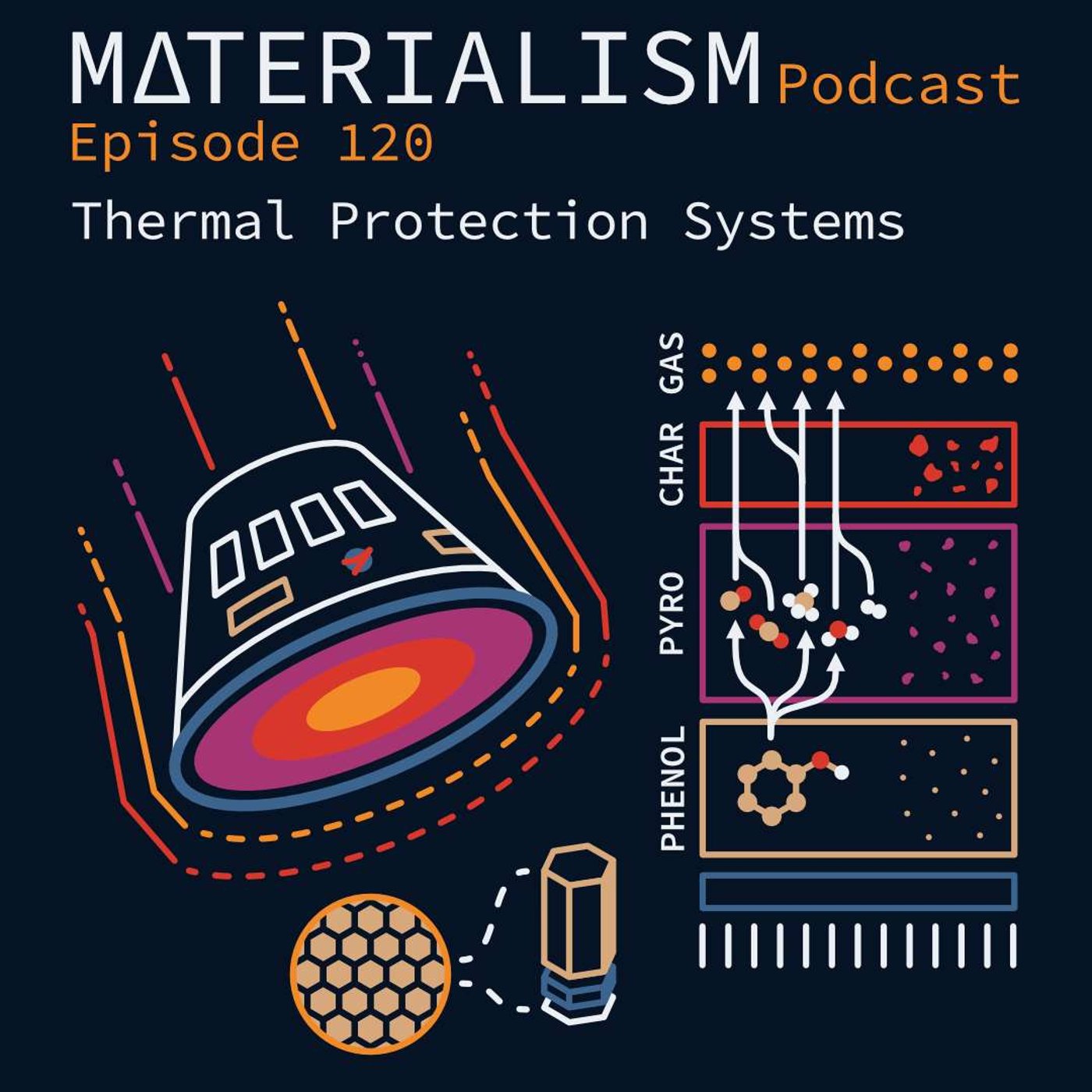
Episode 120: Thermal Protection Systems
from Materialism: A Materials Science Podcast
We have all seen the heat of atmospheric reentry depicted a thousand times in movies and TV shows, but how do we actually protect spacecraft from that danger? Taylor and Andrew sit down with Nate Olson, an aerospace engineer at NASA's Johnson Space Center, to explore the history of thermal protection systems. Nate unpacks the science of surviving atmospheric entry from the simple blunt-body design that made reentry physically possible, to the ~300,000 honeycomb cells hand-caulked with Avcoat on Apollo. We also touch on modern events like the Artemis I heat-shield anomaly and where he believes the technology could be headed. This episode was sponsored by Expert Lab Services. Learn more about their services on their website [LINK] The Materialism Podcast is sponsored by Materials Today, an Elsevier community dedicated to the creation and sharing of materials science knowledge and experience through their peer-reviewed journals, academic conferences, educational webinars, and more. [LINK] Thanks to Kolobyte and Alphabot for letting us use their music in the show! If you have questions or feedback please send us emails at [email protected] or connect with us on social media: Instagram, Twitter. Materialism Team: Taylor Sparks, Andrew Falkowski, & Jared Duffy.
Embed this episode
No transcript yet.