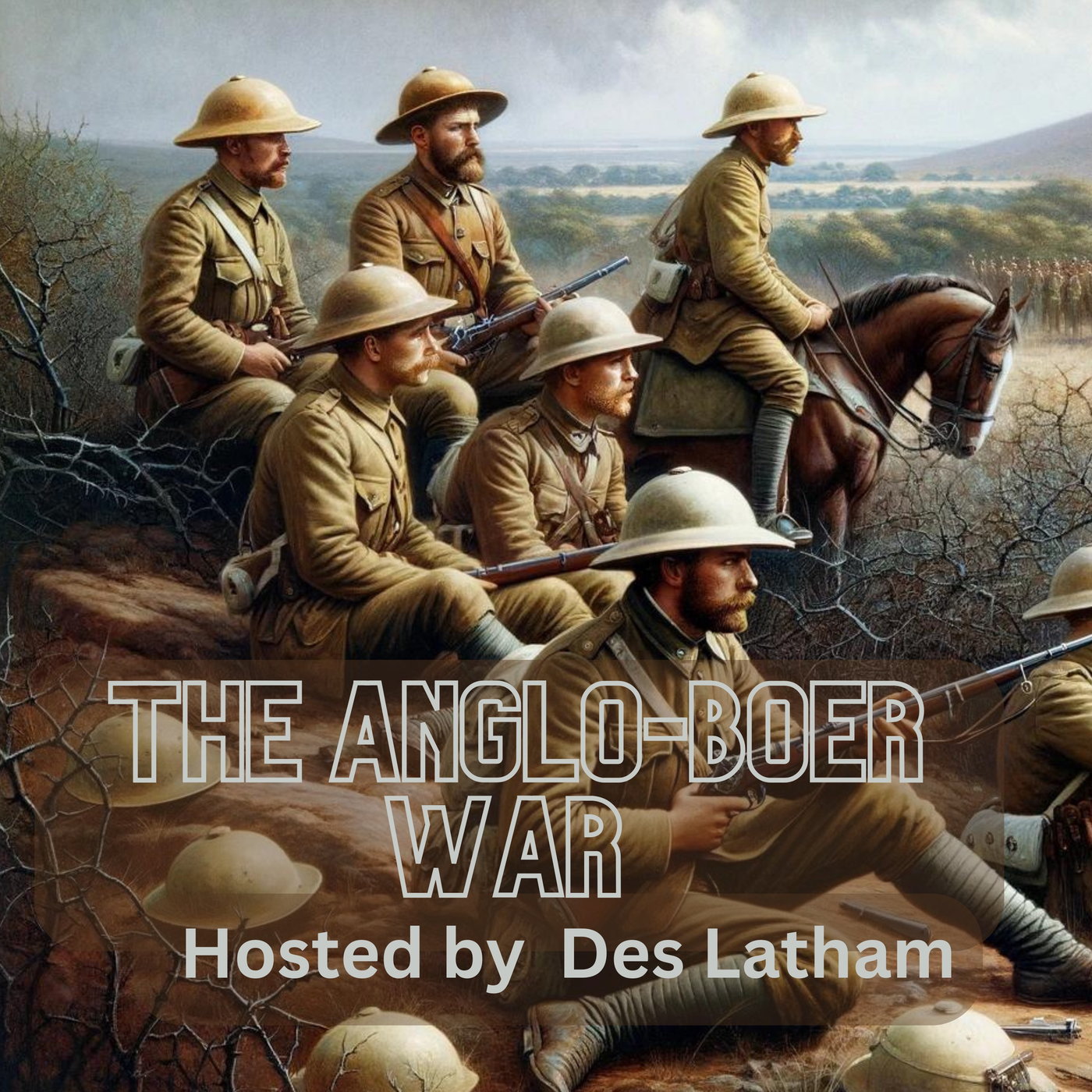
Episode 123 - Major Vallentin eats his last lunch & General Botha fights his last Transvaal battle episode artwork

EPISODE · Jan 26, 2020 · 18 MIN

Episode 123 - Major Vallentin eats his last lunch & General Botha fights his last Transvaal battle

from The Anglo-Boer War · host Desmond Latham

This is episode 123 and its January 1902. The war has four months to run, and there are still a few big shocks. One would be Lord Methuen’s capture by General Koos de la Rey. More about that in just over a month. But in the Eastern Transvaal, the last major battle in the region took place in January, and as I’ve explained in episode 121, General Louis Botha was convinced that he could no longer fight effectively there because the British actions had been so successful. Before he left, there was one more piece of violent business to attend to – the Battle of Onverwacht which the British called the Battle of Bankkop. The action took place in the first week of January and I have used Robin Smith’s excellent report into the battle published in the SA Military Journal as my main source. So it was then that on the 4th January 1902, on a ridge overlooking a fertile valley on the farm Onverwacht, the advance guard of a British column sat down for their midday meal. The commander of the detachment of 110 men of the 5th Queensland Imperial Bushmen was Major John Maximilien Vallentin. He was also in charge of a company of mounted infantry of the Hampshire Regiment and some Imperial Yeomanry. Valentin was a major of the Somerset Light Infantry and had been in South Africa since before the Anglo-Boer war started in 1899. He had been recognised for conspicuous gallantry during the battle of Elandslaagte in October 1899. After contracting enteric fever, he rejoined Brigadier General Ian Hamilton in Bloemfontein in late 1900, and then had been the military commissioner in Heidelberg south of Johannesburg. His name was mentioned in despatches four times and he is described in the Times History as an 'officer of proven gallantry and capacity'. So on the 4th January, Vallentin had halted his men on a flat area on the summit of the Bankkop range of hills, 30km east of Ermelo. There are many small wetland depressions here called pans which were an excellent source of clean fresh water for the horses and the men, so they off-saddled and prepared a meal. In order to prevent being caught by surprise, Vallentin placed pickets along the ridge running a few hundred metres to their front in a line stretching about three kilometres. This was a very strong position, secure from attack in front by the steep ridge while behind them were the soldiers of the Hampshire Regiment and the rest of the 19th Company of Imperial Yeomanry, Scots from the Lothian and Berwickshire. Attack from behind across the flat ground was thus highly improbable – and he had the guards out just in case. Westwards, towards Ermelo, there was a column led by Brigadier General Herbert Plumer, nearly a thousand men with mounted infantry and artillery. Even closer, to the east of them, was another column of similar strength commanded by Scots Guardsman Colonel William Pulteney. So you could say that with so many British units around, Vallentin could be forgiven for believing that the Boers would not attack.

This is episode 123 and its January 1902. The war has four months to run, and there are still a few big shocks. One would be Lord Methuen’s capture by General Koos de la Rey. More about that in just over a month. But in the Eastern Transvaal, the last major battle in the region took place in January, and as I’ve explained in episode 121, General Louis Botha was convinced that he could no longer fight effectively there because the British actions had been so successful. Before he left, there was one more piece of violent business to attend to – the Battle of Onverwacht which the British called the Battle of Bankkop. The action took place in the first week of January and I have used Robin Smith’s excellent report into the battle published in the SA Military Journal as my main source. So it was then that on the 4th January 1902, on a ridge overlooking a fertile valley on the farm Onverwacht, the advance guard of a British column sat down for their midday meal. The commander of the detachment of 110 men of the 5th Queensland Imperial Bushmen was Major John Maximilien Vallentin. He was also in charge of a company of mounted infantry of the Hampshire Regiment and some Imperial Yeomanry. Valentin was a major of the Somerset Light Infantry and had been in South Africa since before the Anglo-Boer war started in 1899. He had been recognised for conspicuous gallantry during the battle of Elandslaagte in October 1899. After contracting enteric fever, he rejoined Brigadier General Ian Hamilton in Bloemfontein in late 1900, and then had been the military commissioner in Heidelberg south of Johannesburg. His name was mentioned in despatches four times and he is described in the Times History as an 'officer of proven gallantry and capacity'. So on the 4th January, Vallentin had halted his men on a flat area on the summit of the Bankkop range of hills, 30km east of Ermelo. There are many small wetland depressions here called pans which were an excellent source of clean fresh water for the horses and the men, so they off-saddled and prepared a meal. In order to prevent being caught by surprise, Vallentin placed pickets along the ridge running a few hundred metres to their front in a line stretching about three kilometres. This was a very strong position, secure from attack in front by the steep ridge while behind them were the soldiers of the Hampshire Regiment and the rest of the 19th Company of Imperial Yeomanry, Scots from the Lothian and Berwickshire. Attack from behind across the flat ground was thus highly improbable – and he had the guards out just in case. Westwards, towards Ermelo, there was a column led by Brigadier General Herbert Plumer, nearly a thousand men with mounted infantry and artillery. Even closer, to the east of them, was another column of similar strength commanded by Scots Guardsman Colonel William Pulteney. So you could say that with so many British units around, Vallentin could be forgiven for believing that the Boers would not attack.

NOW PLAYING

Episode 123 - Major Vallentin eats his last lunch & General Botha fights his last Transvaal battle

0:00 18:22

No transcript for this episode yet

We transcribe on demand. Request one and we'll notify you when it's ready — usually under 10 minutes.

No similar episodes found.

No similar podcasts found.

Frequently Asked Questions

How long is this episode of The Anglo-Boer War?

This episode is 18 minutes long.

When was this The Anglo-Boer War episode published?

This episode was published on January 26, 2020.

What is this episode about?

This is episode 123 and its January 1902. The war has four months to run, and there are still a few big shocks. One would be Lord Methuen’s capture by General Koos de la Rey. More about that in just over a month. But in the Eastern Transvaal, the...

Can I download this The Anglo-Boer War episode?

Yes, you can download this episode by clicking the download button on the episode player, or subscribe to the podcast in your preferred podcast app for automatic downloads.
URL copied to clipboard!