
EPISODE · Jan 26, 2026 · 10 MIN
Episode 1341: Old Testament Stories that Speak to the Second Commandment
from 1010 Thrive · host 1010 Thrive -- Home of the 1010 Podcast
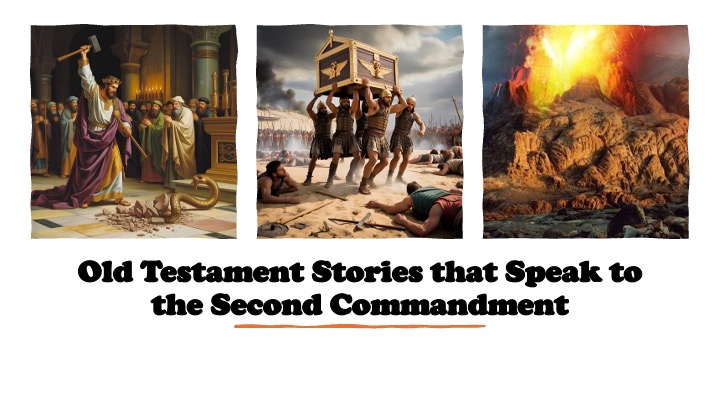
The Old Testament patterns of image-making reveal a fundamental tension between humanity’s desire for tangible certainty and God’s insistence on relational freedom. From the warnings of Moses on the plains of Moab to the departure of God’s glory from Ezekiel’s Temple, the biblical narrative serves as a diagnostic tool for the "seduction of sacred objects." Moses emphasizes that at Sinai, the people heard a voice but saw no form, establishing that God reveals Himself through speech and covenant rather than visual containment. This distinction keeps God relational and free; whereas a form is static and finite, a voice can always say something new, preventing the Creator from being domesticated by human craftsmanship or architectural boundaries. The stories of the Ark of the Covenant and the bronze serpent illustrate how even divinely sanctioned gifts can devolve into dangerous idols when they are used as magical talismans rather than pointers toward the Divine. When Israel brought the Ark into battle as a good-luck charm, they prioritized the possession of an object over obedience to God, resulting in a devastating defeat. Similarly, the bronze serpent—originally a vessel for healing—was eventually destroyed by King Hezekiah because the people had begun to worship the object itself. Hezekiah’s act of calling it Nehushtan (simply a piece of bronze) underscores a vital spiritual principle: symbols must never be allowed to fossilize, and when a gift from God outlives its purpose by obscuring the Giver, it must be broken. Ultimately, the prohibition against images in the Second Commandment protects the reality that God is a living, non-negotiable presence who cannot be stored, owned, or manipulated. Isaiah’s mockery of the craftsman who uses the same wood for cooking and for god-making highlights the absurdity of self-referential worship, where idols merely mirror human limitations rather than divine transcendence. Whether through the collapse of Egyptian deities during the plagues or Solomon’s admission that even the "highest heaven" cannot contain the Almighty, the scriptures consistently argue that God will not be trapped in any form—be it carved stone, frozen theology, or hollow tradition. To know God is to move beyond the safety of the object and into a transformative, unmanageable relationship with the Living Word.
Embed this episode
Ready to play
Episode 1341: Old Testament Stories that Speak to the Second Commandment
No transcript for this episode yet