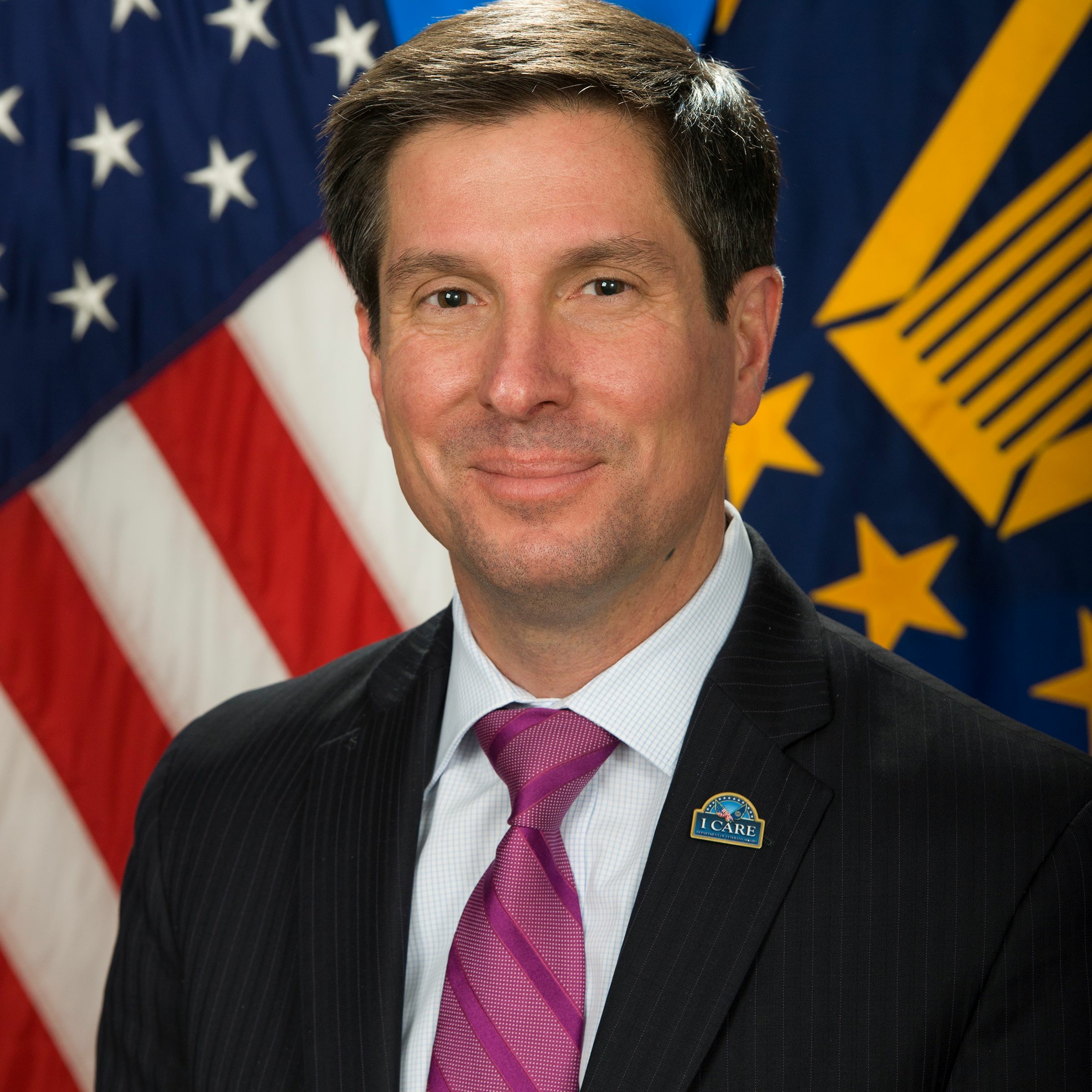
Hello and welcome to Risk Chats with your firm. I'm your host Paul Marshall. Hey, we're speaking with John Basso from Veterans Affairs, and all about their VRM program and the multiple HATC where's over there to make it a success. We'll talk about performance management, governance strategy, portfolio analysis, data analytics, and the impact of several new laws and regulations on how you should take these all into consideration by building out your program.
So without further ado, here's the show. Good morning and welcome to the podcast. Happy to have today on the show John Basso from the VA. Good morning, John.
Hey, good morning. How are you? Good, very good. So what do we start off just a little bit about your background, what you're doing over at the VA, and what your role is with the VRM program?
The Deputy Assistant Secretary for Planning and Performance Management, and in VA headquarters office, they pull together the main work streams inside that office. And I have five teams that are part of planning and performance management. I have the Department of Strategic Planning team. The Department's Performance Management team.
The Department's Enterprise Risk Management team. The Department's Governance team. And a team that we call Business Architecture and Portfolio now, and being able to look at it using business architecture so we can look across the enterprise. It's basically our data team to make sure that the decisions we make are informed by data.
I've been at VA for about three and a half or four years. And when I first got here, I ran the risk team and then ended up moving up to the position I'm in now. And because of that, I've really been involved with risk. And as for teaching foresight, for two areas that we combine at VA, since really it's re-invigoration following the publishing of A123.
OK. Well, speaking of invigoration, let's start with that. So my understanding was when you came to the program, you know, things were maybe needing a pick up kind of revitalizing the program. And I'd be very interested to hear how you went about doing that.
Over time, we developed a reasonable capability in that area. But also, it had lost the proposition from the eyes of leaders. Frankly, in many ways, it had become a little bit too complex. Four leaders, and they didn't see how the effort that went into it was leading to a high pay off-or agency was stand up a relatively large working-for-risk directly or business lines.
Since that's what we're really engaged with risk or perhaps auditing-for-risk. And our framework, not to do too much at once, to try to slowly move our way towards a reasonable risk profile. That would help priority areas work. The program level, identifying red came together as a group after we built the governance process.
At this lease, it helped to make sure that it was a simple process, that it is from becoming, focusing on that, as we built out our framework and the risk, meaning the amount of time, the number of us thinking through with the value would be to our leaders and other stakeholders. Right. And it sounds like you wear a lot of hats over the VA. And in a way, that's probably been very helpful for your success, because you're in the right rooms with the right people to kind of spread the message.
And for the areas that you lead, you incorporate a risk perspective or approach to it. Would that be fair to say? Yeah, I think that's fair to say. When we first started, we, like I said, really focused on getting our risk processes right on identifying risks in a simple way and raising them up and thinking about which ones would be enterprise risk.
And I'm connecting to internal controls. Over time, I think probably, sort of organically, because of the position I have, we've spent making sure we're connecting between how we look at strategy, how we need to do the right way to do risk management, enterprise risk management, and because it's more attractive to leaders. They tend to not want to talk about just risk. So really thinking about how to manage or mitigate those, and as you mentioned earlier, I'm fortunate enough to have those together in the last year as we've tried to mature the program, is that we also have a major voice in the government, along with the use of data, focus on whatever the major priorities are for the leaders, and then major management, users, they may forget that risk-taking at risk.
Right, so I think we'd be interested to hear a little bit about the actual mechanics of how you incorporate risks that you've identified into strategy sessions or planning sessions. So you've gathered the risks throughout the department. And then, again, what's the mechanics you physically go into these strategy meetings with that information in your pocket and bring it up, and make sure that they're incorporating that into their thinking? Or what's the strategy here?
Or merge or may emerge that can impact your ability to achieve your objectives? And so a strategic plan should lay out a set of goals, objectives, and strategies that help you to articulate what you're really trying to accomplish, and that helps focus the risk team on what's really important to the department, so we're zeroing in on the risks in those areas. And in turn, the strategy and risk team have always worked together. You know, the risk profile that we put together as part of A123 has to ask us to identify which objectives these risks align to.
So that all has been a pretty clear relationship. What we did was we also did a root cause analysis of all the candidate risks that had been turned into our risk profile. In order to see what are the root causes that are underlying, what may be going wrong in the department? And from that root cause analysis, we built a separate goal and set of objectives as well as strategies into the VA strategic plan.
So kind of flip this script there a little bit in reverse direction of the arrow, where not only did we have the risk team thinking about risk to achieve and have objectives, we had the strategic planning team working with the risk team to understand the root causes to a lot of our risk so that we could build a goal objective instead of strategies to address those root causes. So that we weren't just trying to, you know, gals, a small fire with a bucket of water, we were thinking about the long-term strategy of how to build fire breaks to keep major problems from emerging across the department with a risk-based look at things. So that's one piece where we do it. The other thing that we really spend a lot of time doing is as we build out this strategic plan, we build out a series of operational plans.
They're essentially large-scale implementation plans for the major things that we're doing. And with that, we first make sure that we've looked at the risk register and risk profile to see what risk may or may be occurring in that space so that the operational plan can address those risks. And secondly, we try to do a real risk identification and assessment effort with those operational plans, whether they're for a new initiative, that's typically important to the department, or something that we do year in and year out, but still need to understand what risks are both existing and may occur in the future emerging risks. And so that's two of the ways we put those in.
We've also spent quite a bit of time thinking about a relationship between risk and performance and perhaps we can talk about that a little bit later. Sure. No, actually, I'm curious to speak about it now because I want to understand then, okay, so you've got your strategy set, you've got your plans. So now we're out there, we're operating, you know, we're measuring our progress.
You know, where do you come in then at that point as far as your risk-based approach? That's a great, great question. I'm going to just add a few of the tackling. So we, you know, I mentioned we run the governance process and in the VA, a major meeting in that governance process is called the VA Operations Board.
And there's two different versions of operations for it. You made it simple. One is sort of a mid-month version that really focuses on what the CXOs are doing and what management issues we see that are emerging and we do keep dives into those. And as we do those, we take a hard look at what risks are both occurring in each of our CXO areas and what risks might be impacting the management issues.
So I want to put that aside for a moment and talk about the second iteration of our Ops Board each month. And that's one that focused on performance, budget, and risk. And by budget, I mean budget execution. And so we've purposely, over the last year, combined what was a separate execution review and a separate performance review into a single budget execution and performance review.
But the obvious point that we want to understand both of us were executing our budget effectively and how that's related to the performance that we're seeing in our key programs. And with that, obviously, as we both look at budget execution and performance, we start seeing some risks emerge. And we've found it pretty helpful to think about the three together performance, budget, and risk. In a monthly operations look.
And when we look at performance and budget, we are looking at a couple different areas. Just doing this long-term quarter after quarter, making towards our strategic ends. High visibility issue performance. On those particular issues that are most important to our stakeholders, what's our performance look like?
And we have a set of measures for that. And then operational performance. Then we can group into five quick categories just so you know. We can look at access for those programs that deal with access.
Then we look at timeliness, quality, efficiency, and customer experience or customer satisfaction. And so we look at those in our operational performance. Now I mentioned those three categories of performance. Strategic performance, high visibility issue performance, and that operational performance because they kind of serve as three circles that come together in a Venn diagram and because there is overlap between them.
And in each case what we're using some of the performance measures to understand is do we see some risks starting to emerge? Both in how we're dealing, whether or not we're achieving our performance path that we ought to be on, or whether or not we're starting to see some underlying operational issues that are going to cause a risk in the future, how we reduce our disability backlog, or how we bring veterans in to give them health care, whatever it happens to be. So we do tie in essentially key performance indicators with key risk indicators to understand what's really happening and try to get us able to what might go wrong. And so this is this earlier conversation we had where we believe that if you can look at strategy performance and risk together and in this case add in budget execution, then you have a much more complete set of information for a leader to make a decision on.
And then perhaps in a little bit we can also talk about how we use risk appetite as part of that. Right. Well, and actually as far as decision making. So there's a new law of evidence based decision making, decision making law.
I believe you're part of the folks that are trying to get that going at the VA. Can you maybe talk a little bit about that? The law of the foundation, foundations for evidence based policy making act, we think open to managing an organization. So I'm just going to try to draw a quick mental map for these evidence in at least three major ways.
They're asking us to think about how we use evidence and how we build a quote unquote learning agenda to make informed decisions about our policies, our major big P policies. Number two, how do we use evidence to make budgetary decisions and to make major investments? And then number three, how do we use evidence to improve how our programs perform over time? And so those are, think of those as kind of three columns to a table.
The three rows to the table then, and a simple way to think about this construct, is that are kind of the types of evidence we're talking about. One, can we look at performance evidence of any sort of group in risk based evidence into that though I think it crosses a number of different screens here. So that's one row of performance evidence. Number two, can we take a look at program evaluations and understand what's really happening over time and how that influences what we need to learn about and how we make decisions in those earlier three categories I mentioned.
And then number three, can we do some thoughtful research into these areas so that we're making both policies, investment decisions, and program improvement that are based on research. It's kind of a nine cell matrix that I just drew, three rows and three columns. And so the evidence act is asking us to look at that and to do it in a statistically involving data to understand whether or not we, you know, what evidence would suggest we should be doing in our major policy, major budgetary investment, and major program improvement decisions. And it gives us this broad risk community, is it be pre-effective, it has been pre-effective at doing policies to build up how we should be doing our major policy with how we should improve programs.
So nine cell matrix and think through how we can, turning that's necessary to make a plan to be that's a real, in 2019, that's a really key element of how we approach enterprise risk management, particularly in a large enterprise like ours, is the solidated data look that... Right, yeah, and I think the evidence-based approach just, you know, philosophically beyond the law for risk management seems very important because, you know, think back to that book, Freakonomics, you know, they kind of had all these... People have theories as to why things happen or why things work and then they look at the actual data and they're like, oh, nope, that's not really the reason at all. This is the reason and that's what we should be worried about.
So, I mean, it seems like... Yeah. Well, let's turn back to risk appetite and even just risk culture in general. I mean, I think everybody knows several years ago that VA had some high profile things happening and, you know, things are always coming up, unfortunately.
But, you know, so what would you, how would you characterize the risk culture and then the appetite that you all have over there? Chaka, start with culture and appetite. You know, I think the risk culture of any organization like ours has so many disability compensation business and so I think the risk appetite is a little bit different in each of them and the culture is a lot in each of them. What you've tried to do is, and we've had great support from our leaders, is coming increasingly transparent about the risk.
It certainly starts from the top. The VA did a state of the secretary came up and laid out, and in a situation where we talked about how to transfer the right tone, and ways from a risk team perspective, what it helped us do is really zero in all what was important, mitigate a risk. And so, for people to be willing to identify things that have to happen, one, they certainly can't be punished, so to speak, identifying risks and as a risk and they're unwilling to voice flip that and it's an expectation that you should position that we talked about at the beginning of the part of the value is getting them additional resources to help solve their proper organization. And so, it did not make it too difficult to do.
I mean,stallizationers and program leaves simple use don't make it overly complex, and I think that begins to get the climate where it needs to go. But it takes time to, I think it's really meaningful to include risk and decision-making meetings as I was talking about earlier and just that that kind of proper mis-form mitigation plan, it'll impact and likelihood and reduce it to a point where it's within the appetite, and by putting it like that, by putting it in concrete terms, then you start getting a real feel for how you can use risk to put prioritise and do the key mechanisms in planning. Right and I'm guessing you need to constantly assess, reassess if these things are at the right level tolerance because your appetite may be 20% today but then something crazy happens and now it needs to be zero percent or whatever. Things change, you have to constantly reassess.
Yeah, I think that's right. I think actually you're reassess it. It's a pretty meaningful conversation with your leaders. It really makes you think through many things, the strategy that you're taking to solve something and whether it's appropriate including how many resources you're putting forward something, so on and so forth.
Okay. One last question to wrap it up and bring it all back together again. In your opinion as a risk professional, what do you need to think about as far as your program? We don't want things to stagnate.
What's the best way to make sure your program is successful and keeps evolving throughout the years? Yeah, great question. I think the most important is to not be a risk team that waits for folks to come to you. You need to go out and spend co-holders, find out what's important and tailor products to their needs on the timeline that works for them.
So for instance, if you believe risk has an important voice and how you do programming or how you build your out-years program, then you need to go to the programming team and ask what their timeline is and what information might help them build a program that is helping you and your team and program owners mitigate risk over the long run. Same thing holds true with strategic planning, with your information technology professionals and certainly with your leadership. If you have regular conversations with your leadership on what's important to them, then you can build risk products that mean fully help them make decisions. And I do think you almost always need to have your ear to the ground because there ends up being a series of both requirements, government requirements and opportunities that emerge over time.
PMIA, the Program Management Improvement Accountability Act, the Foundations for Evidence-Based Policy Making Act, changes to A123, changes to how your organization is approaching something or a new priority for your organization are all places where risk teams can come in with meaningful products that help folks make effective decisions and help steer the ship in a way that is more conducive to achieving our objectives. And so all I would say is that as we've matured our risk program over time, one, we've tried to add elements of that modernize it like a heavy use of data and analytics and simple tools that we put up online so that people can follow through and have simple work keeps to do and that sort of thing. And then two, that we've really tried to figure out where the value is for our business partners and stakeholders that we're coming to them, not asking them to come to us. Right, yeah, and what I really like about what I'm hearing about your program is that it's not like you're a Chief Risk Officer has just kind of taken some nodes writing down a risk list and saying, okay, good luck to you.
It's more, you're coming in there with, we've identified some issues, but hey, let's hear some approaches that we can actually manage this. Let's hear some data analytics we could do. Here's some policies we could put in place. I mean, you're very active, it sounds like, and really putting forward value and solutions.
Yeah, we try to be, we have to get in general different parts of our inventory levels and each part we know we can get better. So we have a great group of tied together and integrate how we do business use it. Well, John, I really appreciate you coming on the show and sharing your efforts at VA with everybody. I really appreciate that.
I'd like to thank you very much for giving me the time. That's our show. Thanks for tuning in. Visit us at a firm.org.
We'll see all our list of podcasts. Keep coming back as we'll be putting out many more, many more. Try to get them out every couple of weeks to you guys. And if you have any recommendations or folks you'd like to listen to, please let us know.
So until next time, this is powerful for risk chats with a firm.