
EPISODE · Mar 27, 2026 · 1H 7M
Episode 14: The Dress Doesn’t Begin With You with Lizzie Wheeler (Studio Dorothy)
from Showroom Theory · host Showroom Theory
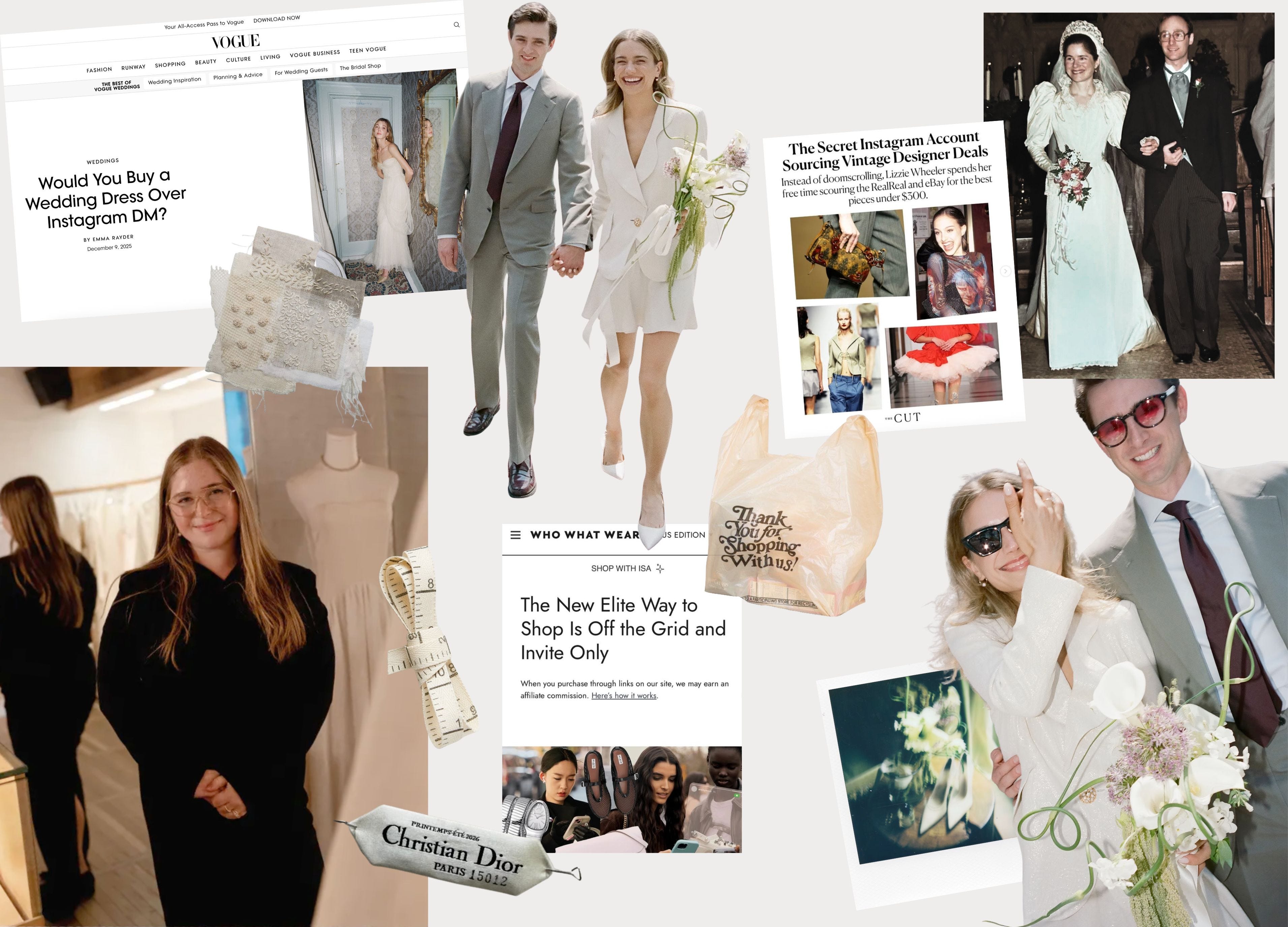
This essay is a companion to a conversation with Lizzie Wheeler, curator of Studio Dorothy, on the Showroom Theory podcast. While our discussion centers on her work sourcing and placing archival garments, the ideas it surfaces extend far beyond a single business model. At its core, this is a conversation about access, authorship, and the quiet shift happening within bridal culture. This essay expands on those themes, examining what it means to move from creation to selection in an increasingly networked fashion landscape.Bridal has always operated differently.* You enter a space specifically designed for that moment.* You try on what has already been decided is worth trying.* You choose something that doesn’t yet exist, but will be made to exist… specifically, for you.The process is controlled, it’s sequential, it’s predictable… and it assumes that the dress begins (and ends) with you. And for a lot of brides, there’s something quietly reassuring about that model. It offers clarity and a sense that if you follow the steps correctly, you’ll arrive at the right answer.But that structure depends on a single idea: that the dress is something you create. Increasingly, that’s no longer the only way to find it.And more importantly, for a certain kind of bride, it’s no longer the most interesting way.A Parallel MarketWhen I spoke with Lizzie Wheeler, the curator of Studio Dorothy, what emerged wasn’t a new idea, but proof of an existing one. Outside of bridal, the resale market hasn’t just grown - it’s fundamentally changed how fashion circulates.The global secondhand apparel market has surpassed $200 billion and is projected to nearly double again within the decade (ThredUp Resale Report). Platforms like The RealReal, Depop, and eBay have normalized pre-owned purchasing to the point where it no longer reads as secondary.But that’s not where the most interesting shift is happening.Lizzie’s first resale project, s**t.u.should.buy, didn’t operate like a business at all.“I was doing about 300,000 a year in sales… this was something I was just doing on the train ride to and from my office.”“Even when I had a thousand followers, I was doing crazy numbers.”There was no infrastructure to speak of. No storefront, no scale strategy, and no reliance on visibility. And yet it worked.Not because it was casual, but because it was precise. Built on taste, timing, and trust.The Whisper NetworkThere’s a particular kind of message that circulates in fashion-adjacent groups:A screenshot forwarded from someone who knows someone who found something.A DM to the seller.An archival dress - rare, specific, context-heavy - gone in minutes.The best pieces don’t wait to be discovered, they move between people who already know what they’re looking at. And in that system, scale becomes almost irrelevant. What matters instead is proximity…Who you know.What you can identify.How quickly you can act.This isn’t a market you enter. It’s one you’re admitted into… through taste, timing, and the ability to recognize what matters.Status, Not NostalgiaVintage used to signal something a bit softer. Frugality, sentiment, and a kind of aesthetic referencing. But that framing no longer holds, at least not at the level where archival bridal is operating. What’s emerging instead is something much sharper.In a world where everything is visible, especially what you choose to wear as a bride,the rarest thing you can wear is something no one else can access.Not just financially, but logistically, socially, and culturally.That’s not nostalgia, it’s status. Not the loud, logo-driven kind, but something quieter, and far more specific. The kind that only registers if you know what you’re looking at.The most expensive dress is no longer the most impressive one. The hardest one to find is. Exclusivity used to be priced or gatekept behind appointments, trunk shows, and access. Now it’s sourced.Therefore, scarcity isn’t manufactured anymore, it’s discovered.Bridal, Under PressureBridal has held onto its process longer than almost any other category. Not because it hasn’t been challenged, but because the meaning attached to it is different.“The only time your average consumer is dedicating real budget to creating a fantasy is bridal.”That level of emotional investment raises the stakes, and when the stakes are higher, the criteria shifts.It’s no longer just a matter of what’s available, what’s flattering, or what’s expected. It becomes more about what feels singular, what feels specific, and what feels like it could only belong to you.The fashion bride isn’t looking for the best dress in the room. She’s looking for the only one that speaks to her. She wants what hasn’t already been seen on five of her friends, and so she’s no longer asking her local bridal boutique what’s available. She’s asking herself, and sometimes Lizzie, what’s worth finding.From Creation to SelectionThis is where the shift becomes structural. We understand the traditional bridal model as something built on creation. Order > wait > receive. But archival introduces a different logic, one where the dress already exists with its own past, with a designer attached, and with a context that predates your moment.And instead of creating something new, the bride is selecting something already in motion. Not from a rack, but from a network.What Lizzie is doing with Studio Dorothy doesn’t fit neatly into existing categories.She isn’t only selling, she’s translating.“I want someone to take a dress from me… and make it into something you’ve never seen before,” she told me, dreaming of what’s possible for the designer heirlooms housed in a charming Manhattan apartment that has been in her family for generations.The dress is no longer the finished object, but a starting point. And the person facilitating that process becomes something else entirely.Not a retailer. Not a stylist.A source.A filter.A kind of cultural intermediary.What No One Is Saying YetThe future of bridal might not be made-to-order… it might already exist.If this model continues to gain traction, even at a niche level, it doesn’t just coexist with made-to-order bridal. It competes with it. Because vintage offers something traditional bridal cannot easily replicate:immediacyraritycultural specificityMade-to-order depends on belief, but archival doesn’t - it just needs to be found. And while the made-to-order model depends on time, production, and controlled access, archival bypasses all three. But there is one aspect of this shift that I keep coming back to:If the most fashion-literate brides stop ordering dresses… what happens to the system that depends on them?The Emotional Weight of That ChoiceAfter all is said and done, there’s a different kind of awareness that comes with choosing something archival. You’re not the first person the piece has belonged to. You’re entering its timeline.I don’t think that makes the experience any less personal. If anything, it makes it more so, because the process becomes less about whether something is right for you and more about what you add to a tangible legacy.The bridal industry still treats vintage and resale as adjacent, and it might continue to do so for a while, but behavior suggests something else - a parallel system is already operating. And it is quietly reshaping how the most fashion-literate brides approach one of the most visible decisions they’ll ever make.And for some brides, the fact that it didn’t begin with them is exactly what makes it feel like theirs.Thanks for reading! Subscribe for free to receive new posts and support my work. This is a public episode. If you would like to discuss this with other subscribers or get access to bonus episodes, visit showroomtheory.substack.com
Embed this episode
Ready to play
Episode 14: The Dress Doesn’t Begin With You with Lizzie Wheeler (Studio Dorothy)
No transcript for this episode yet
Similar Episodes
No similar episodes found.