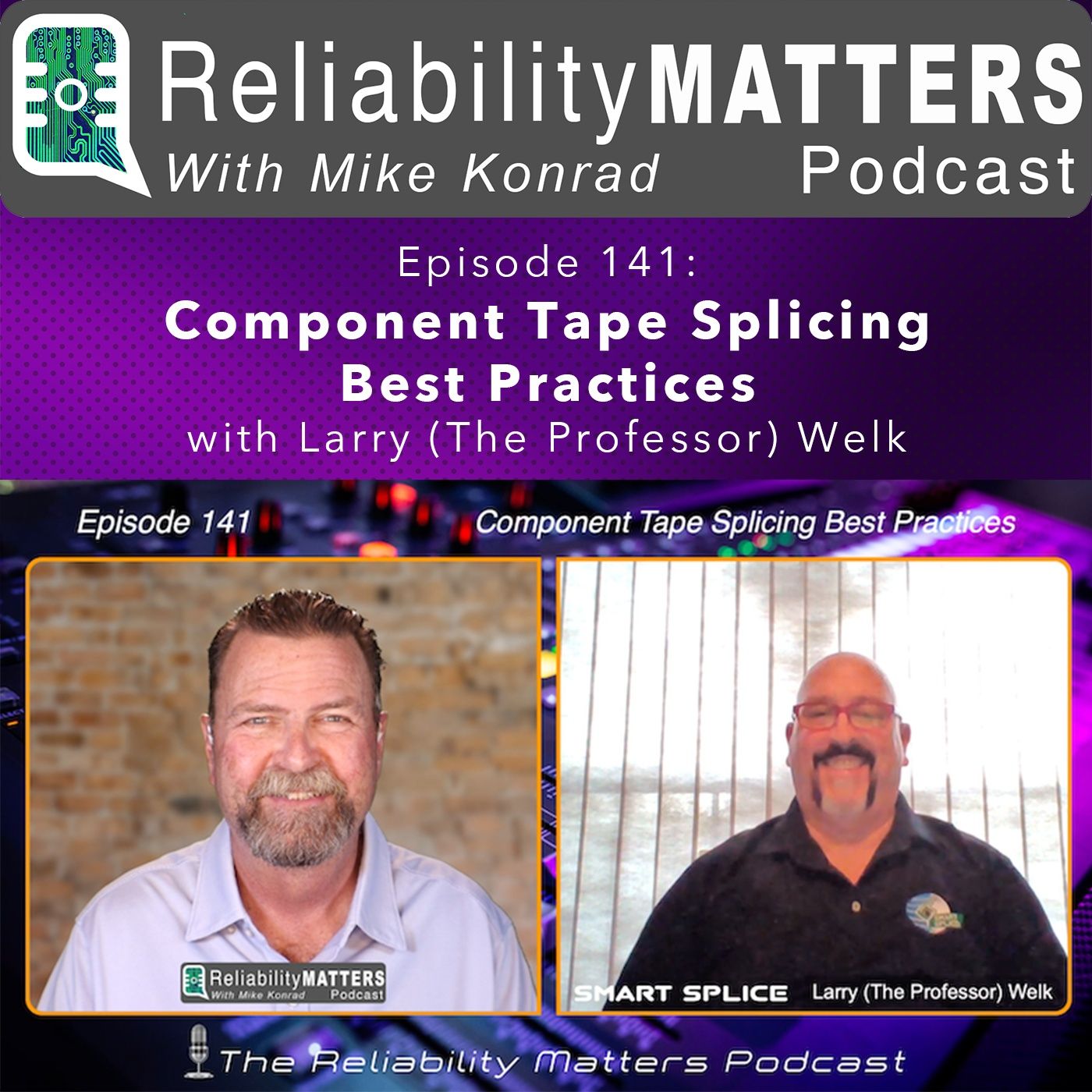
Episode 141: Component Tape Splicing Best Practices with Larry (The Professor) Welk episode artwork

EPISODE · Apr 9, 2024 · 57 MIN

Episode 141: Component Tape Splicing Best Practices with Larry (The Professor) Welk

from Reliability Matters · host Mike Konrad

Optimization has become an important goal within the electronic assembly industry. While modern electronic assembly techniques utilize a variety of equipment, one specific type of equipment often consumes a disproportionate percentage of the overall equipment budget, that is the place machine. The cost of the machine, associated conveyors and feeders, require that the machine is running as often as possible.The airline Industry refers to this as “wheels up” time. Airlines make money when the aircraft is in the air “wheels up”. On the other hand, anytime the wheels are down, the aircraft is not making money for the airline.I listened to an interview a few years ago with the CEO of Southwest Airlines, a US discount carrier. Unlike most other airlines, Southwest does not charge its customers to check bags. The CEO was asked by the reporter why they have not joined the rest of the industry in charging for checked bags. The CEOs answer was genius. If Southwest Airlines began charging for check bags, it would actually slow down the boarding process as more and more passengers would drag their bags onto the aircraft most likely resulting in a number of those bags having to be checked at the gate. Southwest Airlines is famous for having the fastest aircraft gate turns in the industry, frequently under 30 minutes. Yes Southwest airlines charged for checked baggage, it would require more time at the gate before the next flight would be ready to depart. That would result in fewer flight segments per aircraft per day. In other words, allowing customers to check bags for free equates to more “wheels up” time and, subsequently, more profit for the airline.The same principal can apply to pick and place machines. When Pick and machines are running product, they are making presumably making money. When they sit idle, they are arguably costing money. What can assemblers do to improve the optimization or “wheels up” time on their pick and place machines?My guest today, Larry Welk believes he has an answer. Larry Welk, a.k.a. Professor spice is the co-owner of Smart Splice, a manufacturer of tape splicing tools.Larry will review tape splicing best practices and explain how tape splicing, when performed correctly, can lead to higher pick and place machine optimization.So, buckle your seatbelt this podcast episode is officially wheels up!Larry's Contact Information:Larry [email protected]://smartsplice.com/

Optimization has become an important goal within the electronic assembly industry. While modern electronic assembly techniques utilize a variety of equipment, one specific type of equipment often consumes a disproportionate percentage of the overall equipment budget, that is the place machine. The cost of the machine, associated conveyors and feeders, require that the machine is running as often as possible.The airline Industry refers to this as “wheels up” time. Airlines make money when the aircraft is in the air “wheels up”. On the other hand, anytime the wheels are down, the aircraft is not making money for the airline.I listened to an interview a few years ago with the CEO of Southwest Airlines, a US discount carrier. Unlike most other airlines, Southwest does not charge its customers to check bags. The CEO was asked by the reporter why they have not joined the rest of the industry in charging for checked bags. The CEOs answer was genius. If Southwest Airlines began charging for check bags, it would actually slow down the boarding process as more and more passengers would drag their bags onto the aircraft most likely resulting in a number of those bags having to be checked at the gate. Southwest Airlines is famous for having the fastest aircraft gate turns in the industry, frequently under 30 minutes. Yes Southwest airlines charged for checked baggage, it would require more time at the gate before the next flight would be ready to depart. That would result in fewer flight segments per aircraft per day. In other words, allowing customers to check bags for free equates to more “wheels up” time and, subsequently, more profit for the airline.The same principal can apply to pick and place machines. When Pick and machines are running product, they are making presumably making money. When they sit idle, they are arguably costing money. What can assemblers do to improve the optimization or “wheels up” time on their pick and place machines?My guest today, Larry Welk believes he has an answer. Larry Welk, a.k.a. Professor spice is the co-owner of Smart Splice, a manufacturer of tape splicing tools.Larry will review tape splicing best practices and explain how tape splicing, when performed correctly, can lead to higher pick and place machine optimization.So, buckle your seatbelt this podcast episode is officially wheels up!Larry's Contact Information:Larry [email protected]://smartsplice.com/

NOW PLAYING

Episode 141: Component Tape Splicing Best Practices with Larry (The Professor) Welk

0:00 57:05

No transcript for this episode yet

We transcribe on demand. Request one and we'll notify you when it's ready — usually under 10 minutes.

Hyperfluent Hypio Hyperfluent transmits straight from the heart of Hyperliquid, where culture, creativity, and capital converge. Anchored by the architects of Hypio—the decentralized cultural virus—each episode archives the minds engineering the blockchain built to house all finance. These conversations are traceable artifacts in HyperEVM’s evolution: not just what’s being built, but why it matters, how it mutates, and where it’s taking us next. Listen in for the blueprints, the blind spots, and the narrative weapons shaping tomorrow’s markets.Hyperfluent: learn the language, ride the wave, spread the strain. Mobile Money by moomoo Mobile Money by moomoo Hear from seasoned traders, financial influencers, and industry insiders as they discuss money matters and market news and share their personal finance stories.Disclaimers: https://www.moomoo.com/us/support/topic4_523 Somali Motivation podcast Istahil Aideed At the heart of the Somali Motivation Podcast lies a profound mission: to uplift, inspire, and catalyze personal growth in the lives of our listeners. With a steadfast dedication to mental health awareness and domestic abuse awareness, our podcast embraces vulnerability, encourages healing, and fosters resilience within the Somali community and beyond. Through heartfelt conversations, expert insights, and shared experiences, we create a warm and welcoming space where every voice matters. Join our transformative journey as we embark on a quest to empower our community, spark meaningful change, and weave a tapestry of hope and strength. Together, we can make a difference, one episode at a time. The Up and to the Right | Small Business | Practical, Actionable, Sustainable Improvements beyond50percent Welcome to Up and to the Right, the no-nonsense podcast where we blend your passion with proven business principles and practical tips, empowering you to create the impact and success you envision.Hosted by Stephen Krausse, the show covers what matters to small business owners, startups, and people interested in becoming entrepreneurs. No buzzwords and no hyped-up trends!A graduate of Colorado State University's College of Business, Stephen has an academic background that compliments over 25 years of business operations and management experience. He started his first business as a freshman in college in 1987, recording and producing demo tapes for local bands. Since that time, he’s been involved with numerous successful small businesses, including the operation and management of a niche high-tech company with customers and suppliers worldwide.As a business professional by education and trade, he works with select business owners to blend their passion with proven principles, givi

Frequently Asked Questions

How long is this episode of Reliability Matters?

This episode is 57 minutes long.

When was this Reliability Matters episode published?

This episode was published on April 9, 2024.

What is this episode about?

Optimization has become an important goal within the electronic assembly industry. While modern electronic assembly techniques utilize a variety of equipment, one specific type of equipment often consumes a disproportionate percentage of the overall...

Can I download this Reliability Matters episode?

Yes, you can download this episode by clicking the download button on the episode player, or subscribe to the podcast in your preferred podcast app for automatic downloads.
URL copied to clipboard!