
EPISODE · May 4, 2022 · 50 MIN
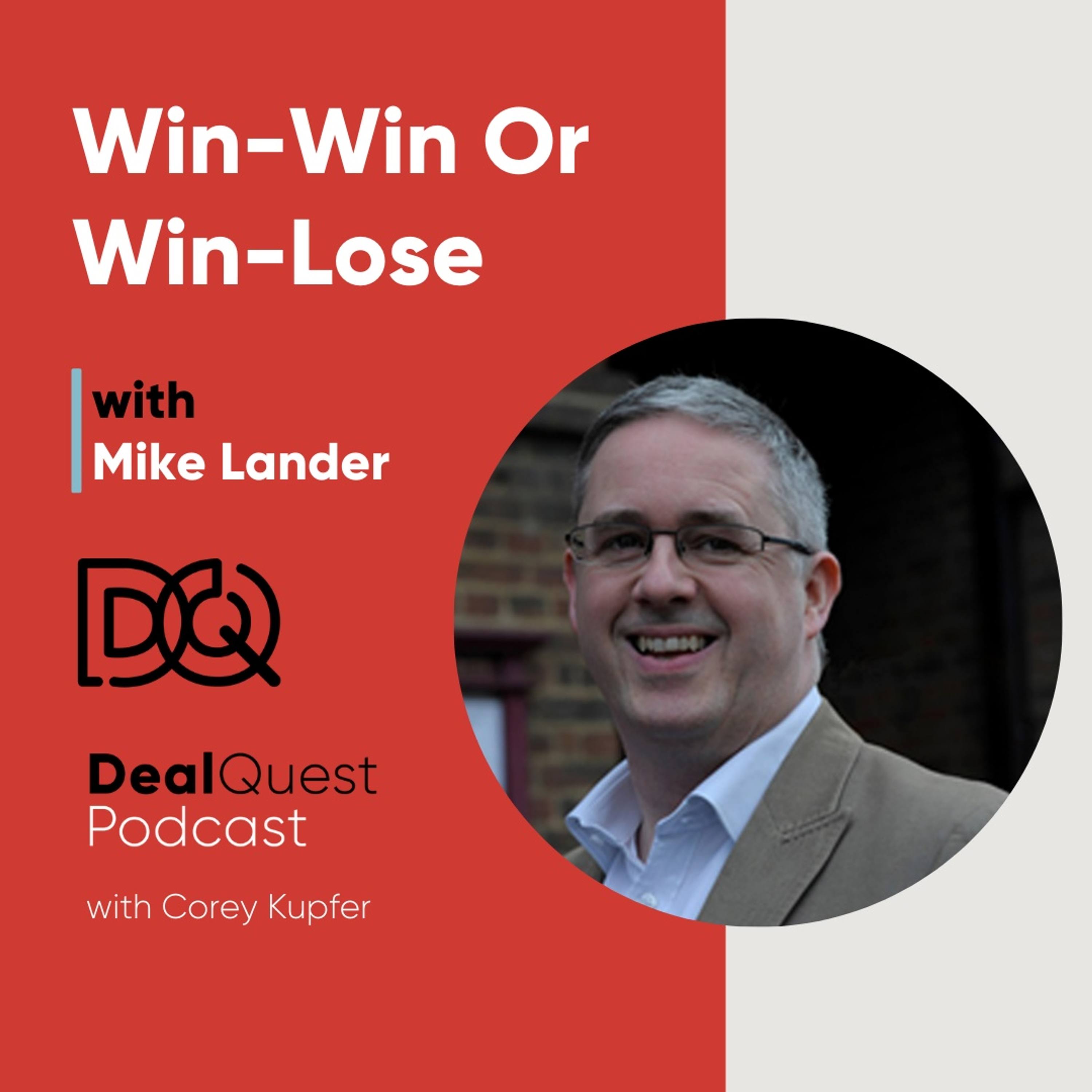
Episode 171: Win-win or Win-lose with Mike Lander
from DealQuest Podcast with Corey Kupfer · host Corey Kupfer
Mike Lander is a successful entrepreneur and an expert negotiator based in London, UK with a proven track record of buying, growing and selling businesses. He has a valuable perspective on dealing with commercial deals. He worked on both sides, as a procurement director in MSP organizations and as an entrepreneur. Mike has negotiated hundreds of deals. He is the ideal person to give negotiation lessons based on his experience. Win-Win Negotiations Mike shares that one thing to always keep in mind when in a negotiation is the true motivation of the counterparty. He believes that most deals, in the early stages, are win-lose by their nature, as you’re not creating more value for both parties. If measured from a long-term view, deals can be a win-win if one party really grows their business or establishes clients. When trading, you need to look at the risk profile. It doesn’t matter the size of the organization when doing business. To become a win-win deal, the important thing is how big that client is going to be as a percentage of your profit in the future. Negotiations Take Time In any kind of deal, the important thing is the attention to detail, as well as your ability to listen and capture what’s going on. If you are in an hour-long trade, perhaps the counterpart will pressure you to close the deal at the end of the meeting. The best alternative is always to take a break to reflect on what’s been discussed. In this break, go back to the agreed-upon points to make sure you agree. As in the heat of the moment, they can go unnoticed. The question often arises: who should make the first offer? But there is no rule, and it depends on each deal. What makes somebody a skilled negotiator is to know the situation and feel. Be careful with the last minute cheapskate. If you’re negotiating with a company for a while and there’s no tension in the deal, don’t be surprised when they try to pay cheaper than agreed. Choose a Business Framework Mike shares that having a framework for your deal negotiation is essential. Without one, you can’t negotiate. He uses the simple four-step process that allows anyone to negotiate anything: 1 - What are the goals of each side or the interests of each side? 2 - How long is it still going to take to close the deal? 3 - Which issues come up during the deal, who raised it and what’s behind it? Lessons From Mike Lander In the industry, Mike Lander notes that negotiation frameworks have changed very little in the last 15 years. When three or four buyers may be interested in your company, the challenge that presents to most entrepreneurs, no matter what scale, is how do you negotiate the deal properly. He advises having people who are in the deal space who know how to run a process, and especially, know how to create tension. If you don’t engage the right professionals to help with the deal, you might have no money in your pocket. An important part of the negotiation is negotiating commercial terms that don’t stretch your working capital too far. In Mike’s experience, he shares that it’s necessary to have deep insights into your sector and client issues. As a procurement professional, Mike says everyone thinks their work is only about price. But that is not true, anyone can buy cheap, but you can’t buy quality and high-quality delivery and timely delivery. As a buyer, it is necessary to create value for your organization. Building Relationships For Negotiations It is necessary to see negotiations as the beginning or the continuation of relationships. In the industry you are in, you need to realize that you will see your counterpart again and again. Be careful and strive to have an ongoing relationship. If you don’t see it that way, you may even win the negotiation, but you will lose the relationship. I believe that my success comes from the relationships I’ve built over the years. And also because I’m always catching up. In 2015, I decided to go virtual in my business. When the pandemic came, we had no adjustment. We’re already operating that way. Nothing changed in the relationship with my clients. Cash Flow Control Many companies get into trouble as they don’t manage capital. Once you get past being a really small company, you can’t survive on a spreadsheet. You need a system to manage that cash flow. To improve this management, the ideal is to organize within the month, not at the end or beginning of the month, because on a day-to-day basis, you need to know your cash flow absolutely. For better control, there are some simple rules to help: - Have six months of cash on the balance sheet - Have your investment capital on top - Have a separate bank account with your tax payments and trading account If you concentrate everything on the same account, you’re taking loans from other parts without analyzing the impact where the money’s coming from. The last thing I want to remind you about is that negotiating tactics are useful things to know. But they are not rules to be blindly followed. It all depends on the situation. And the more experience you have, better negotiations will happen. To connect with Mike for more: Website: https://piscari.com/ LinkedIn: https://www.linkedin.com/in/mikelander To connect with Corey for more: Website: https://www.coreykupfer.com LinkedIn: https://www.linkedin.com/in/coreykupfer Facebook: https://www.facebook.com/CoreyKupfer Twitter: https://twitter.com/coreykupfer
Embed this episode
NOW PLAYING
Episode 171: Win-win or Win-lose with Mike Lander
No transcript for this episode yet
Similar Episodes
No similar episodes found.
Similar Podcasts
No similar podcasts found.