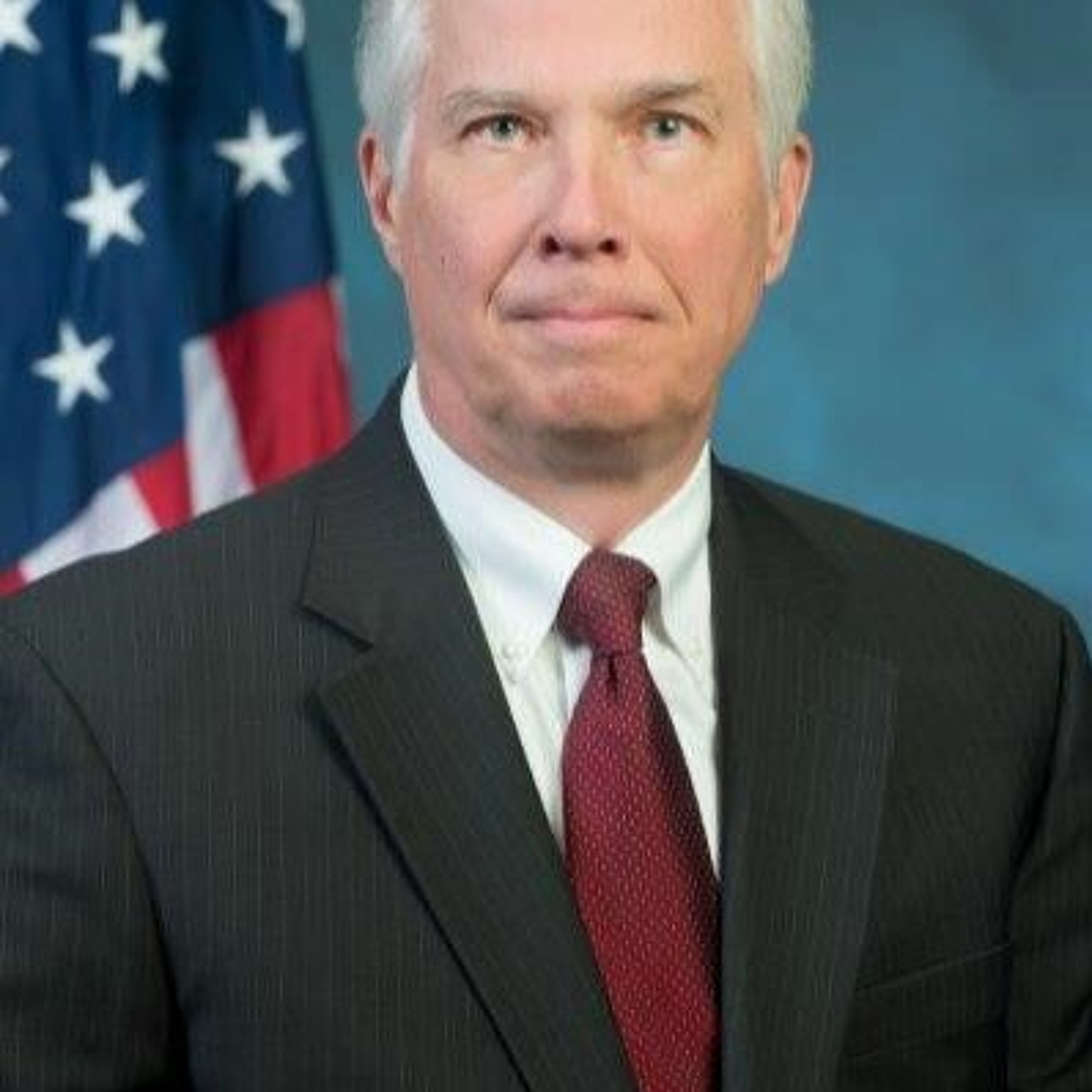
Hello, and welcome to Risk Chats with Affirm. I'm your host, Paul Marshall. Today, Tal and I will speak with Chief Risk Officer at HUD, Larry Koskinen. Larry shares many insights to HUD's significant risk management program with risk officers throughout multiple program areas.
So let's talk to Larry. Hello, and welcome to the podcast. Today, we're happy to have with us Larry Koskinen from HUD. Welcome.
Good morning, Larry. Good morning. Good to be here. And we also have our illustrious co-host, Mr.
Tal Seaman. Good morning. It's great to be here. Absolutely.
Nice day today. So let's jump into a HUD's program here. So why don't we start off a little background on yourself, Larry, and then maybe get into some of a HUD's unique situation. Terrific.
At an earlier ATA conference, in order to save time, I reduced my CV to a tweet, so I'll read that for you right now. 40-plus years in public service, government, private, non-profit, international, recovering lawyer, now does risky business, retiring soon. That's my background. If I would unpack that a little bit, I have an undergraduate degree in photography and a law degree, which means that my left brain and right brain are constantly at war, but it's very useful, actually, in the work that I'm doing around risk management.
I've held or supervised nearly every C-suite job in my 40-plus year career, many happy years working for the Peace Corps, both as a volunteer and a staffer, one of the finest organizations in Washington for my money. And I think one of the most significant and useful experiences I've had recently has been as an executive and two of the biggest inspectors general, one of the IRS and one of the Postal Service, where data is everything, and risk management is baked into the work that we do. It's been my privilege to serve on two major innovation efforts, one in the rate administration on the Grace Commission, and then fairly recently the administration on the National Performance Review. I was Vice President of the Council for Excellence in Government, those programs, and now I'm sort of doing the partnership for public service.
So I've been doing innovation work for much of my career. It's been very interesting. At HUD, I'm the Chief Risk Officer. That office now resides in the Chief Financial Officer's Office.
I report directly to that Senate-confirmed political appointee. A lot of profile and visibility at the department. We had an all-hands meeting yesterday with the secretary, and they called out our risk programs from the dias several times. So there's a lot of visibility there.
We have 16 different risk programs at HUD, and so my job is basically as a cat wrangler, saying it says the future is already here, it's unevenly distributed. We have some excellent programs at HUD, and we have programs that really are just getting going, and so my day-to-day work is about hand-holding and exhorting and everything in between. So those cities have 16 risk programs. So talk about that a little bit.
Is that because it's spread throughout the country, or just different offices, or how does that structure that? How do you split them up? Yeah, how do you split them all that up? So they are lined by program, and although they are distributed geographically, we've got about 100 people, I figure, working on risk and risk issues.
At HUD, we have a diverse mission. We're a federated agency, so major grant-making efforts, some at the retail level, some at the block grant level, which is a challenge in and of itself. We have underwriting activity approaching $4 trillion now with FHA and GMA security, so we care about that. We do regulatory affairs, risk-making around lead.
I grew up in Flint, Michigan. I care about this stuff a lot, and it's my privilege to be able to give back to the town that was so important in my development. That was a great place to grow up. And then we've got all of the C-suite operational risks as well.
HUD has been traditionally understaffed. We've lost 10,000 employees over the last decade or so, and that has been a fundamental risk issue for the department in program management and oversight as well. So coordinating all of that at the department level is my challenge. I'm not doing their work for them, so they maintain their own profiles, and all of that work is their work.
We negotiate very carefully around the visibility that I have and that our external oversight partners have into their working risk profiles. But then declared risks come up to me, and we get a handful from each of those programs, and my work is to work with the risk management council to surface the top-level risks and develop mitigation strategies around those. We drive standards, we drive compliance behavior for the different external requirements. We do a lot of socializing in the program.
I lead tough conversations often when it's more useful for me to come in and take that departmental point of view. So, as you said, so your role is kind of to centralize, just kind of coordinate all this, and then bring it all together. Now, how did you get leadership and other stakeholders involved? And it sounds like, obviously, HUD is one of the major jobs there is to manage risks.
It's just an agency, right? Right. So, but how did you get leadership and all to get bought into this? Well, to say that we got them bought in implies that once you get them bought in, they stay bought in.
And so I think it's not a secret that this administration, we've seen a lot of churn in the political cadre. That's been true at HUD. And so I spend a very large amount of my time in briefing new executives, new political appointees, and continuing the conversation with our internal leadership about the evolution of our program. It's one thing to get them to do a risk profile.
It's another thing, then, to start to prioritize and develop mitigation strategies. Each one of those phases takes, you know, conversations, trust building. And you can't run a risk program from 30,000 feet. It's a very personal, trust-built, you know, one conversation at a time kind of effort.
And to pursue this buy-in a little bit. I mean, usually when you get these senior folks come in, one thing they care about most is understanding how the gears grind, and what are the inputs, and how do you shape the process to achieve whatever their priorities are. Right. So how right now, in terms of maintaining buy-in, how effective has HUD been in inserting these risk processes into your strategic planning, the strategic priorities, the capital planning, the execution of funds on an annual basis?
And is that supporting and enhancing the role of risk management in the agency or not? I would say we've made some important innovations in that area. My team will tell you that I talk all the time about the four horsemen, which are really the focus of our work. That is strategic planning, performance management, the whole issue of budget planning, and then capital investment, which is different than budgeting, because it's so much about the future, the transformational future of the enterprise.
Right. So when we started out with the launch of the risk program in 2017, I actually had the strategic planning analysts as my deputies in the development of the first risk profile. It was embedded into our strategic planning beginning at that point. We were co-located with the performance management team, so our annual performance plan includes the risk elements as well.
And now I've got two budget analysts that are permanently assigned to me, whose job it is to analyze the financial implications of mitigation efforts. They look at the budgets that the reporting, the risk-owning offices currently have, and they ask the question, could this mitigation be funded within their existing resources? Sometimes it can, sometimes it can't, but what's the total cost of mitigation? And then maintain a level of accountability around mitigation efforts so that we know that those are going forward.
With capital planning, right now IT planning and personnel planning are the big risk areas that we're dealing with. We have a new Chico. We have a new CPO. They are both focused like a laser on improving the processes of HUD.
And we've recently briefed them out on three years' worth of risk mitigation work so that they don't have to start over from scratch. Of course, they have their own opinions. These are both highly skilled professionals. But what they see resonates with them.
And also, I think this is really quite important. We have some very important activity going on right now about internal controls and financial integrity. It's not a secret that has had challenges around financial integrity in the past. We have a superb new CFO, a political appointee who's focused like a laser on that.
And he understands that if this, the work that he's taken on, which is basically large-scale mitigation work with funding to audit findings and his own sense of what is excellent in the private sector. If it's going to live beyond his departure, it's got to be instantiated in a way that we have external oversight aligned with our priorities. So GAO cares about what's on our risk profile. OMB cares about it.
The IG cares deeply about it. And this is for the first time in my professional experience, an opportunity to build continuity of mission execution around improvement efforts in a way that really didn't exist before in my experience. And that's kind of exciting. So we're really moving out in all those directions.
I know that integration is the only success path forward. Right. And so if I were not working up with these four horsemen that I was describing, I would be reduced to a compliance exercise that is enterprise list management, not enterprise risk management. I like that.
Put that on a t-shirt. Well, I'm allergic to the actual mechanics of, you know, how do you work with strategy and budget and performance folks? Is it, I mean, as a CRO, do you literally just brief them periodically or are you integrated in, you know, periodic meetings about other subjects and you're kind of part of that? What's the actual mechanics?
Yeah, so we hit it two ways. One is the integration that I talked about, sort of marry your daughter's office. So, you know, you've got actually incentivized integration with people who are shared staffers that are actually co-located with us. And that's working out very well.
We have a risk management council, which is the senior political leadership. We've had a couple of meetings with the risk management council. That was important to get them on board, understand their role. And then we worked through the top risks.
We've done some consensus work with them to identify the top person that we need to work on. We've validated our taxonomy with them. And I expect that in the late summer we'll be meeting with them again to have our first really meaningful conversation about risk appetite and tolerance. Now, beneath that, we've got between 16 and 20, depending on how many people we engage, the chief risk officers and risk liaison folks.
And they really are sort of like the PMO for the risk management council. They're the ones who are pulling together our inventory of appetite statements. They are the ones with whom we coordinate on the work that we do around putting the new profiles together as we're doing our prioritization and heat mapping. They're the ones we interact with as we're looking at costing strategies and implementation strategies on mitigation efforts.
They're the ones that are in the trenches. We meet with them every month. We share data back and forth routinely with them. We're really building them both as an intermediate working body, but also a community of practice.
And it's a community of action and a community of practice. These are good folks. Highly motivated. They know their programs.
They're career folks. And they're very interesting to work with them. And we're, I think, succeeding in a pretty good way with that. And then you mentioned risk appetite.
Have you guys thought about, have you developed a statement of risk appetite? So that's our big challenge this summer. And we've taken it on first by developing an inventory of risk appetite options or opportunities. Our programs are diverse.
As I said, we do grant making, we do underwriting regulatory affairs and so forth. So it's not a one size fits all kind of environment for us. But what we have begun to slowly step up to is the top level issue with HUD. HUD exists really to mitigate risk in private equity investing in many, many important ways.
We leverage private equity for public good. That's sort of the unstated mission of the department. That's why financial accountability is so essential for us because it's not just about process hygiene. It's about product.
Equity investors need to know that if they make an investment, whether you're in a PHA, a nonprofit, a community, a tribe, whatever, whoever's cutting a check to build something, they need to be confident that HUD numbers matter. And we're working very, very hard to ensure that that's true from the secretary on down. There's a deep commitment to that. So what do you think your approach is going to look like?
Previously, you were talking about 16 real major product lines. Right. So as an agency that's dealing with this public risk through all these different programs with programmatic risk, how do you see yourself structuring a risk appetite statement that will set policy, especially on strategic planning and performance planning, for these programs and guide your operations? Well, that's a great question.
And we could spend the rest of an hour talking about that one. So I think the first issue is what I was talking about earlier, and that is coming to grips with the fact that HUD employs, and it's interesting, we're rather risk adverse like most bureaucratic organizations, but HUD employs, their natural instinct is to run to the risk. If you look at our disaster recovery activity, we put highly skilled, experienced, passionate people on the ground to help American citizens at their worst moments. And these folks are not checking the rule book all the time when they're doing that work on the ground.
And often what will occur is someone will get beyond the race occasionally, and the IG will come in afterward, and it doesn't always go well. So one of our abiding interests is to protect the best and the brightest at HUD so that they know where the bright lines are. And they are different in a disaster recovery area operation than they are in a normal day-to-day operational setting. So that's really important in terms of maintaining the bigger and the sense of confidence that our people in the field need to have, that management has their back on it.
And writing that stuff down is really important for them. You know, coming from an emergency first responder type agency, we've been in the field doing it, we had those sort of risk appetite statements, we didn't know what we called them yet, where it says get there, make the assessment, take action, report later. And as I look back on it now, it's like that was not only a risk appetite statement, but it's one of these opportunity sites. Usually when we get into risk appetite statements or risk management, we focus on loss and harm and not the opportunity.
Right, right. And I think what you're describing here in this emergency side is getting statements that encourage the person with the boots on deck to capture the opportunity for the mission. Right. Are you, it's not discussing that specifically, it's opportunity side of the risk appetite.
Oh, absolutely. Mother Nature does not respect the federal acquisition regulation. And, you know, we deal with earthquakes and fires and floods and hurricanes. And, you know, these are environments where, you know, we've got to have a single-minded focus on the citizen.
And making sure that our, like you said, the boots on the deck, these folks really understand where they can cut corners and clean up later and where they really can't. Right. That's good. Make that clear, you know, this is absolutely, you cannot do X, but there's got to be leeway here because things have to be done.
Exactly. So if you look on our underwriting side of the story of the 2008-2009 crisis, Ginny May really stepped up. We maintain our capital reserve very mindfully. We've got some superb risk management work going on at Ginny and FHA, highly skilled folks.
It's very interesting for me to sit with them and listen to the work that they do every day. But leaning in on market issues is very big in the work that we do and very consequential. If you look at Ginny May's role in 2009 in essentially recapitalizing the American housing market, it's a heroic story. That's huge.
And it meant that we had to, you know, blow through our cap reserve numbers in a very mindful way. Timidity was not called for in that setting. You were focused on the opportunity. Right, exactly.
The upside risk, as they say. It's funny, you know, in my work with managers, often people conflate risk and riskiness. And that's like saying that speed and fast are the same idea. Right.
It's a pity that risk and risky sounds so similar. But there's no good word for upside risk. It's the opposite of risky, you know. There's no tidy little term for that.
Right. But looking for that opportunity risk is huge. And in the government, we typically don't do that. Right.
And it's an opportunity for us at HUD to really sort of break through on some of that. Shaking the culture. Well, that's huge. That's huge.
It's all about that. So, why don't we talk a little bit about maybe some unique approaches or things that you guys are doing. I understand you have some interesting data analytics approaches. Yes.
I'm very excited about that. In fact, in large measure, I think I'm at HUD because of the work that I've done at Postal and IRS around this area. So, when I was an IG executive, my team had a motto, which was sharp eye, sharp mind, sharp teeth. And that meant see the threat, understand the threat, attack the threat.
Right. And that's the way our program is built. Sharp eye, sharp mind, sharp teeth. And each one is necessary but insufficient.
Okay. So, we're working on a project right now. One of the big challenges at HUD is that we put a lot of our grant money out into the field in block grants. And so, we get pressured by Congress to get out of their way when they're assigning block grants out into their constituent communities.
But also there are countervailing voices that say you need to be accountable in those programs where we don't have line of sight on day-to-day operations except when we send an auditor in. As I mentioned earlier, we've reduced HUD's complement by more than half. And so deploying oversight resources ends up being a huge challenge for us. So what we've got now going on, and I'm really excited about this.
I have a great implementing partner in KPMG. They've brought in. Their core caps are pretty good in the space, although there are other good vendors out there as well. But they've got a firm called Elder Research who's doing a lot of work in the intelligence community, SEC, IRS, DOD.
And they've made some very interesting and important inroads in the inspector general community. And they've worked with us to take all of the only circular A-133 single audits, which is largely unexploited, although increasingly there's a lot of good activity going on around A-133. And using computational linguistics and sentiment analysis, begin to use reputation from the outside as a way to focus our IG, I'm sorry, old habits that I heard, our oversight activity. Although I'd like to talk a little bit later about our emerging relationship with the IG as well.
So that actually has gone pretty well. And we have ground-truthing our analysis with the program managers. And this is every data analyst's dream come true. I walked into a setting where we had done our work in computational linguistics modeling.
We showed the results to the program managers, and the comment that was made was, you've got the high risks right, and you've got them in the right order. And there's a lot of tie-fiving going on amongst the data scientists. But we know there's more to do. And so that, and every one of these efforts is a bootstrap.
You know, you start out with a small demonstration project, you build confidence. People need to know that it's constructive and even safe to do this work. And the leadership at the program level said, this is significant. Let's take it to the next level.
So now they've made available to us all of their internal transaction data. We've got sentiment analysis as a foundation, which is important at HUD, because we are sometimes accused of playing favorites on who we audit. And that's a very difficult place to be, especially in the political era, where there's a lot of real estate activity in amongst your political leadership. And it's very important for us to be able to demonstrate objectivity and even-handiness in how we assign audit targets.
And we take that seriously regardless of the political environment. And by doing a fully horizontal analysis of the A133 data, it allows us to be objective in a very, very transparent and important way. Our taxonomy is something we're happy to share. And so at any rate- Speaking of taxonomies, sentiment analysis.
For the listeners, what is that for me? What is that? So the approach that we used was we found a SME who was a data scientist and an auditor. And God love him, he sat down in a closed room for a week or so and went through a whole bunch of A133 audits and said, if you were to identify terms that would be dispositive in terms of the quality of the narrative in these audits, what would they be?
And how would you assign point values to them and so forth? So, you know, a material weakness would have a high value, a disallowed cost. So, you know, the kinds of things that you would hope nepotism would be a deal killer. So we came up with a large number of terms, both upside terms, positive terms and downside terms, and then assigned plus numbers and negative numbers to them.
And we're working on tweaking that model. As it turns out in grant making, Elder had done a lot of work in contract fraud. When I was using it at the Postal Service, they did a lot of excellent contract fraud work for me. And it turns out that the internal dynamics, fraud detection dynamics in a grant and a contract are 85% the same.
So being able to go in and look at these dynamics, I think the broad applicability throughout government contracting and government grant making, we're really beginning to document what that looks like. And so it ends up being very practical. We were able to, as I said, using that sort of auditor's view to be able to really detect it. It's actually the most practical example of knowledge management that I've ever seen.
So basically embedded the auditor into the analytic process. Electronically uploaded data from auditor's reports with this scoring and analysis of the taxonomy used by the auditor's revenue methods. That's exactly right. So, you know, it's not binary.
This is risk-based. So you're assigning a 100-point scale, a score on 100-point scale. And, you know, being able to say, you know, we started with this huge haystack, we're now bringing it down to a much smaller haystack. This is what we want our oversight efforts to really focus on.
Prioritization. Prioritization. And we, you know, we, I mean, this is about risk appetite. We don't have enough people, we don't have enough votes on the ground to do everything.
The old approach of compliance-based auditing is a brute force, you know, sledgehammer approach. And what we need to be is smarter and more elegant about the way that we go after these efforts. And that's playing out in our experience now. So a lot of your data analytics effort aimed at basically discovering maybe the truth or what's really going on out there.
We might have an assumption in our head of XYZ, but until you really gather the data and analyze it, you don't really know, are you on the right way? Well, you know, to talk about this meaningfully, we've got to really bring in the role of the OIG. Yeah, sure. So we are in a very important, evolving relationship now with our Inspector General.
And, you know, coming out of the IG world, I understand them, I understand their internal dynamics. I'm not afraid to have a conversation with raised voices with them occasionally. These are good, well-intentioned people, highly skilled in most cases, and really want to do the right thing. And so what we have done is very carefully negotiate our way forward.
We don't collaborate with them. We don't even cooperate with them. And that's very mindfully determined. What we do is we coordinate with them.
And so there are lots of opportunities for us to coordinate around data structure and reporting, around the heat map, how many elements do you have in your heat map, how you define them, and so forth. Our taxonomy, we share that routinely. Our top risks. So with our IG last year, we have a new one.
She is tough, but she's also open-minded about new methods, which I think is a terrific combination. You don't want an IG that rolls over. The IG independence is there for a reason. It's good for them, but it's also very good for the department.
And so we're not about compromising that nor compromising our own prerogatives. So as we worked the alignment last year, we had informal conversations with their strategic planning team as they were building out their management challenges memo and doing their strategic planning for their audit portfolio. When we saw the management challenges memo this past year, our CFO team said, what happened? This is the best one we've ever seen.
And it wasn't any better from a quality standpoint, but it was aligned in a more careful way to the internal risks that were perceived on the CFO side. And we've seen a body of very good work come out of that and very encouraging work. You know, I will never hold myself out as a partner of the IG. I think that's inappropriate.
But getting that alignment right has been useful. And the slogan that I use is that if we do this right, we are working hard to agree on the facts so that we can have meaningful arguments about the truth. That's the slogan that I use. And I think it's an important one.
I think the IG really wants to make that meaningful contribution to excellence that we do. And I think that at HUD right now, you know, it's going to take a while to fully get there. But I think we've got the right cast of characters. Our chief financial officer has a huge amount of respect for our new inspector general.
I think that's reciprocal. We actually have had our dentist, who is our CFO, going to meet with the senior audit staff and very frank conversations about his priorities and objectives and so forth. And that's been received well on both sides. And so we've been invited back again this year to meet with the strategic planning team as they build their audit portfolio as we go forward.
And we'll see. It's a careful dance that we're starting to do. But we're beginning by being very prudent about how we observe the bright lines. I think we're doing some useful and breakthrough work in there.
So, Laura, if you had a moment to speak to all the practitioners in our space. I've got one thing to tell you. All right. All right.
So it would be to be strong. Okay. The work that we're doing is very important. It is not technically complicated work.
What it is, is hard. And it's hard because it matters. And when you get involved in these kinds of efforts, you know, the expression that I use is we are managing, not data, we're not managing lists, we're managing conversations of consequence about issues that really matter, where resources are stretched and where success is ambiguous. And so, you know, you're really the focal point of decisions through the years that have been swept under the rug because they're tough.
And they're politically sensitive and they're economically and financially sensitive. And if you're going to be in that, you're going to be in the center of the storm quite a bit. And I would say be strong, be tough, you know, reach across boundaries wherever you can. You're going to drink a lot of coffee building trust relationships with your constituents.
And I commend that to you. And, in fact, we found that the salutary benefits of malt beverage are not to be pushed aside if you're something that's not a bad thing occasionally. And we found that by building those trust relationships and carefully respecting the right lines, you can do a lot. Reach out for the two-pitcher solution.
There you go. The big picture. The two-pitcher. You always have to maintain the big picture.
So I just have a couple more questions for you here. And I want to get into the fraud reduction, some of the fraud things going on. And we'll just kind of talk about what's on your wish list for the next steps for you guys. But let's start, I mean, you know, how are you all involved in some of these fraud initiatives, the Fraud Reduction Act, or even the new evidence-based decision-making?
So we embrace both of those. I listened to one of your podcasts recently with Linda Miller, which is terrific. The work that she did at J.O. was wonderful.
We embrace it. And, you know, why invent it when it's been brilliantly invented? Plus, they're going to be the ones auditing you, so they've already given you the answers to the clues. The data-driven decision-making, I think, is hugely important as well.
We are the flagship customer of the Treasury Department's shared service offering. They've got lots and lots of customers, but we dwarf them all. You're the big guys, yeah. We're the big guys.
And, yeah, I spent a lot of time in Parkersburg, which is what you've got to do. You've got to go over the mountain. These are good folks working hard for us, but they need to be brought into your processes in meaningful ways. And we think that if we solve problems at HUD, that they're replicable out in that entire shared service community.
We're eager to make available our learnings more broadly. So evidence-based decision-making, I think, is huge. It's also not a magic bullet. You know, evidence is important, but not everything that matters can be measured.
And despite the popular wisdom and Rutgers wisdom, you know, some of the most important things can only be described. And it's important not to shy away from that. So the interplay between quantitative and qualitative is huge. And where that comes from, you take your clues from data, but at the end, you're going to make management decisions based on conversation and qualitative evaluation.
And you should be sanguine about that. And how about the fraud piece? How is the RNN directly involved in the efforts of the fraud? Oh, absolutely.
So I'm also the cognizant official for antifraudics, and so I'm the named free of person, which is good. When I took this role at HUD, one of the things I talked about was my experience in the IG community, where you have auditors and investigators who pass each other in the hall but almost never talk to each other. Right. That's the way it seems.
But, you know, every internal control failure is an invitation to fraud, and every fraud event is an indication of internal control failure. And, you know, so I think that they're really two sides of the same coin. It's important that the antifraud efforts have their own center of gravity and their own visibility, and, you know, the interventions are going to be different than antifraud work. But the detection activity and the governance and the data management and the staffing and, you know, the bodies of folks that you pull together to talk about this, those are really all the same.
So we actually talk about our program as the EFRM program, the Enterprise and Fraud vs. Management Program, to make sure that people understand, although both sides have their own characteristics, that, in fact, what we're working on is one effort. And that effort is to be smarter about how we do this work. I think pretty successful in doing that.
No pushback from the department. I know, again, coming out of the IG world, that the vigor that is represented by the investigative side is always tempered by the wisdom that comes out. We've talked about the Greeks and the Romans in my last time, you know, the contemplatives and the people of action. Being able to have a conversation where the power of both of their skills and positions is brought together really creates a much more successful program, I think.
Okay, well, just one last question. And so, again, you know, what's on your wish list? What's the next thing you want to achieve in your program on the maturity scale here? What's that?
Well, you know, funding would be nice. We're built into the budgets for 2021. I'm sort of tinkering a lot of the work that we're doing in 19. Although that's going well, I'm getting a lot of good leadership support.
Larry, what would you do with the body? Oh, man. So I know exactly where I would go with it. Training, huge.
We're getting certified fraud examinations and status for some of our folks, and they're responding very well to that. They're very excited about it. But what I would love to do is build out an analytics capability where we can begin to leverage the good work that's going around the government in a much more consistent way. During the, we had a thing called the Recovery Board for a while, and they had an analytics capability that was really pretty terrific.
It got sunsetted with that work. But we saw, and I'm not holding that out as an exemplar, but we saw a lot of synergy going on. I generally hate the term synergy. It gets misused all the time.
I think it's apt in this case. At HUD, we are demonstrating now to our leadership and to our line managers that we can see things more clearly than we have in a really actionable way. And to develop a high-continuity, integrated, robust, cloud-based data environment so that we can do this kind of analytic work and work routinely with the Treasury Department. I spent a lot of time with their pre- and post-payment integrity folks.
We're active partners with the Do Not Pay Initiative, which we think is important. I got a briefing from Grant Solutions recently on their analytic modeling, which is very exciting, what they're doing. So there are a lot of centers of excellence out there. What would be terrific is if either OMB or Treasury really took it to the next level and created an analytic environment where we could reliably, in a well-governed way, make effective management decisions based on those data insights that are coming.
I think, you know, we can talk all day about this stuff, but if it's driven by data, it creates an objectivity, a dynamic level of quick turnaround on the insight delivery, and an opportunity to give it a fighting chance for political leaders to make decisions that matter around how we structure and really manage our programs. So it would be definitely in the analytics realm. I think that there are wonderful opportunities using sentiment analysis to hear from the citizenry on this stuff, too. The social media world is filled with opportunities to learn from the citizens in very practical, very actionable ways.
And I think we're just on the cusp of that. If I were 20 years younger, I would devote the next two decades of my life to this. And, you know, when I retire, eventually I think I probably will keep a hand in it as well. So what an exciting time to be a mid-career professional in government.
It's just a perspective. I think the work we're doing is going to actually have an impact on day-to-day management in a very, very important way. You know, just like the CFO Act really revolutionized the way finances could be seen and understood across organizations now, you know, maybe there'll be a CRO Act on that sometime soon that puts all these pieces together. Because all these pieces are emerging.
They're being put together in different ways in different places, but soon, you know, the guidance for they'll help every agency put it together in a consistent way that provides those kind of benefits. So it's like you're the pioneer out there right now, you know, wayfinding. Well, my chief financial officer, Ergenis, a terrific fellow, H-Out, executive from Ernst & Young, just kind of an uber auditor, very, very sophisticated thinker about this stuff, is working on a paper about this. And we're looking at all the different accountability, procedural guidelines, and law that really adds up to financial integrity for the government.
And by the time we're done with this work, we've got 20 different OMB circulars and laws and so forth, and there's no one coherent place where the business proposition is laid out. We've had to construct a business proposition and align it with all of this other guidance. And, you know, I could spend an hour just talking about that work. Well, that'll be the next podcast.
Well, Larry, thanks for joining us. We learned a lot. Absolutely. It's been my pleasure.
It's been terrific. That's our show. Thanks for tuning in. On our website, affirm.org.
We have many, many podcasts for you to enjoy there, and of course, many more to come. So until next time, this is Paul Marshall signing off for Wrist Chats to the Firm.