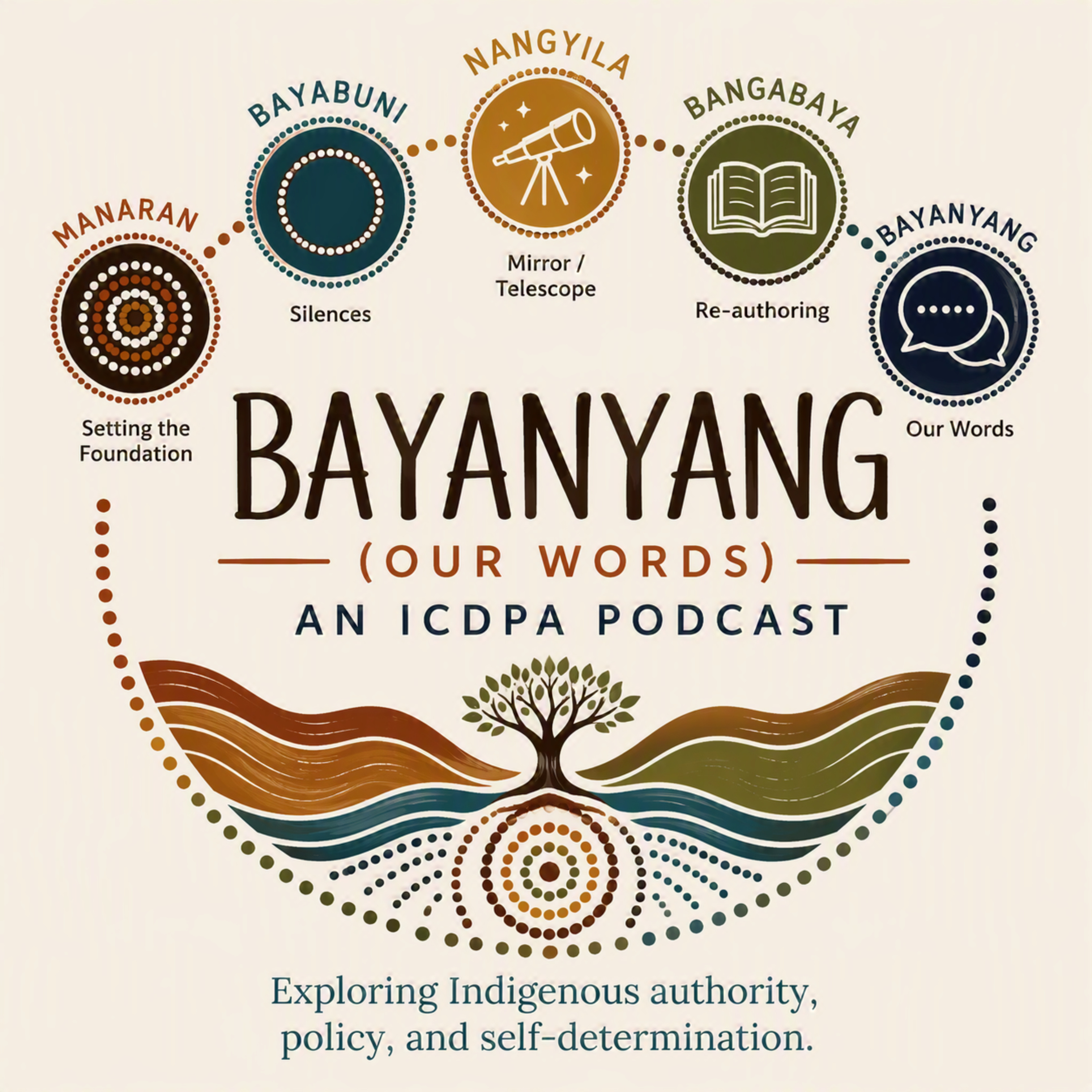
Episode 2: Manaran – Setting the Foundation
from Bayanyang: An ICDPA podcast Hosted by Anissa Jones
Before we can determine whether a policy supports Indigenous self-determination, we first need to understand where it came from, who created it, and what assumptions sit beneath it. In Episode 2 of Bayanyang (Our Words): An ICDPA Podcast, Anissa Jones introduces Manaran, the first phase of Indigenous Critical Discourse Policy Analysis (ICDPA). This foundational phase examines the context, purpose, authorship, and assumptions that shape policy before deeper analysis begins. This episode explores: What Manaran means within the ICDPA framework Why policy should never be viewed as neutral How governments define policy problems and solutions The influence of Indigenous Standpoint Theory, the Cultural Interface, and Indigenist Research Methodology Why understanding context is essential before identifying silences, power, and authority within policy Using examples from Vocational Education and Training (VET), this episode demonstrates how policies are shaped by the systems, priorities, and assumptions from which they emerge. Key questions include: What is this policy about? Who created it? What problem is it trying to solve? Who benefits from the way the problem is defined? Whose knowledge shaped the policy's development? Manaran reminds us that effective policy analysis begins not with judgement, but with understanding. Bayanyang (Our Words): Exploring Indigenous authority, policy, and self-determination. Bayanyang (Our Words) is based on the doctoral research of Anissa Jones. Indigenous Critical Discourse Policy Analysis (ICDPA) is an Indigenous-developed analytical framework and remains Indigenous Cultural and Intellectual Property (ICIP). Please acknowledge the framework appropriately when referencing or applying its concepts.
Embed this episode
No transcript yet.