
EPISODE · Mar 12, 2026 · 36 MIN
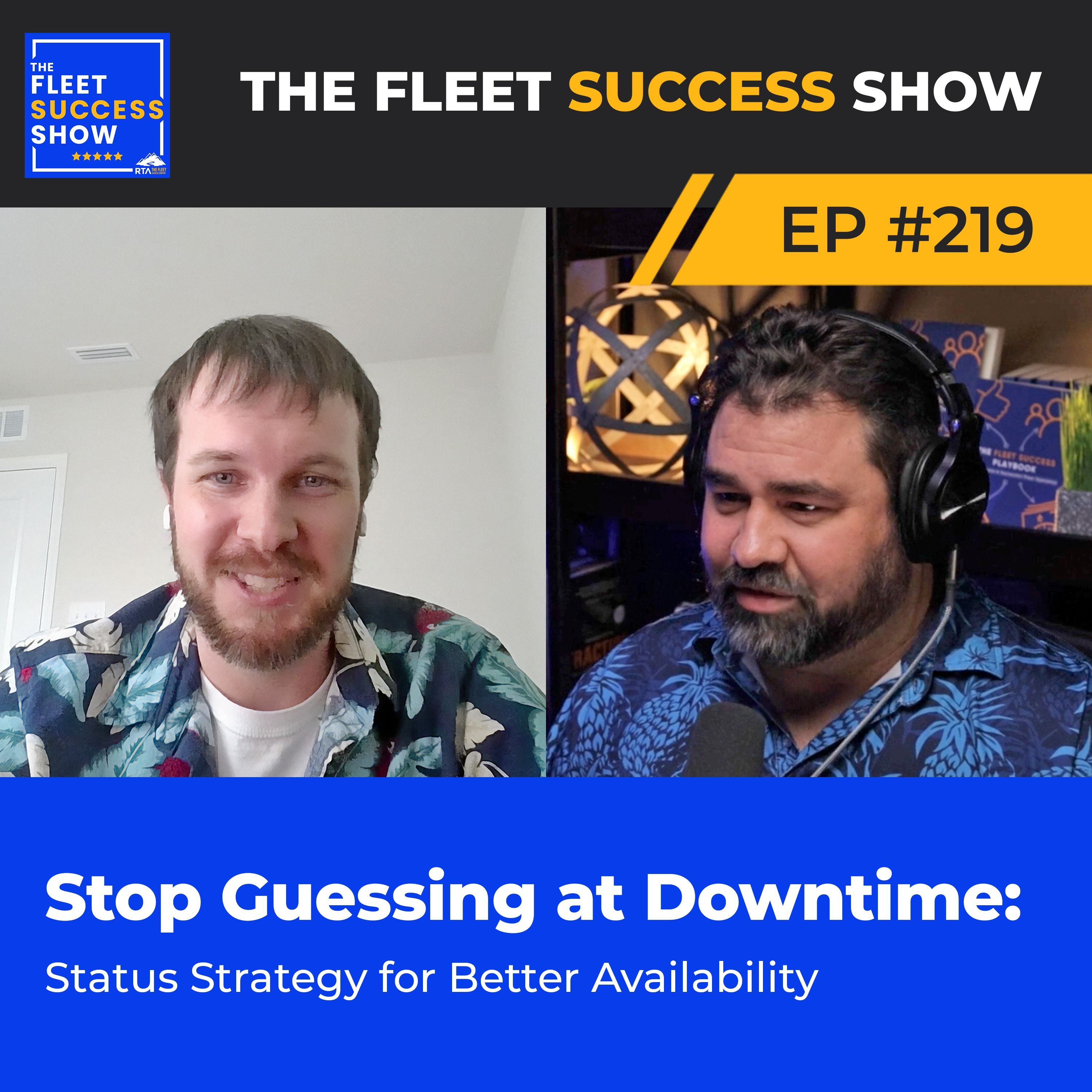
Episode 219: Stop Guessing at Downtime: Status Strategy for Better Availability
from The Fleet Success Show · host Marc Canton, Andrew Finch
Improving fleet availability isn’t just about working faster—it’s about understanding why assets are down in the first place. In this episode, Marc Canton sits down with Andrew Finch, Fleet Management Analyst at RTA Fleet, to unpack one of the most underutilized tools inside a fleet management system: asset statuses and work order statuses. Andrew explains the critical difference between the two, why a single “in the shop” status doesn’t provide meaningful insight, and how better status design can uncover real bottlenecks—whether that’s waiting on parts, waiting on vendors, waiting on approvals, or even waiting on operators to pick up completed units. They also discuss common mistakes fleets make when setting up statuses, including overlap, over-complication, lack of technician buy-in, and tracking data without a clear purpose. The conversation shifts from theory to practical strategy: how to build a status structure that drives clarity, improves communication across departments, and helps leaders defend staffing, budget, and process decisions with real data. If you want to move from guessing at downtime to managing it strategically, this episode gives you a framework to start. Key Takeaways Asset status and work order status are not the same thing. Asset status answers “Where is the unit in its lifecycle?” while work order status answers “What stage is this repair in?” “In the shop” is not a diagnosis. Without more granular statuses, you can’t identify true bottlenecks. Availability improves when bottlenecks are visible. Waiting on parts, vendors, approvals, or pickup can all look identical unless tracked properly. Statuses should have a purpose. If you can’t explain what decision a status supports, you probably don’t need it. Avoid overlap and ambiguity. Each status should be clearly defined and mutually exclusive. Technician buy-in is critical. If statuses feel like “big brother,” data quality will suffer. If they feel useful, adoption improves. Data supports leadership conversations. Clean status data helps justify staffing, process changes, and budget requests with evidence instead of anecdotes. Start simple and refine. You don’t need dozens of statuses—just the right ones that align with operational goals. Marc Canton Marc Canton is the Vice President of Product and Consulting at RTA Fleet and the host of the Fleet Success Show, a podcast focused on helping fleet organizations improve performance, efficiency, and leadership. With deep experience in fleet operations, technology, and consulting, Marc works closely with public and private fleets to improve data management, operational processes, and asset availability. Marc is a recognized voice in the fleet industry and frequently speaks about topics such as fleet performance metrics, operational efficiency, and the strategic use of fleet management information systems (FMIS). Through his consulting work and educational content, he helps fleet leaders translate data into actionable insights that improve reliability, stakeholder satisfaction, and organizational outcomes. Andrew Finch Andrew Finch is a Fleet Management Analyst at RTA Fleet, where he specializes in fleet analytics, operational data strategy, and performance measurement. In his role, Andrew works with fleet organizations to interpret data from fleet management systems and uncover insights that improve availability, efficiency, and decision-making. Andrew entered the fleet industry early in his career and quickly developed expertise in fleet analytics, including CAFM training and professional development through industry organizations such as NAFA. His work focuses on helping fleets better structure their data, particularly through effective asset and work-order status tracking, to identify operational bottlenecks and improve maintenance workflows. Andrew frequently collaborates with fleet teams to turn raw operational data into meaningful performance improvements. Looking to take the next step to fleet success? Start by requesting your free copy of The Fleet Success Playbook. Written by fleet professionals for fleet professionals, the Playbook breaks down the four key pillars of fleet success, and gives you the tools you need to build a truly great fleet. Request your free (yes, really, free!) copy here: https://rtafleet.com/resources/fleet-success-playbook?utm_source=simplecast&utm_medium=footer_notes&utm_campaign=episode_213 Control fleet chaos with RTA Fleet360, proven software designed by fleet managers for fleet managers: https://rtafleet.com/book-a-demo?utm_source=simplecast&utm_medium=footer_notes&utm_campaign=episode_213
Embed this episode
What this episode covers
Learn how asset and work order statuses reveal fleet downtime bottlenecks and improve availability with smarter FMIS tracking and data clarity.
NOW PLAYING
Episode 219: Stop Guessing at Downtime: Status Strategy for Better Availability
No transcript for this episode yet
Similar Episodes
Similar Podcasts
No similar podcasts found.