
Welcome to the Movement Movement, the podcast for people who want the truth about having a healthy, happy, strong body. Remember your body was meant to move. Now here's your host, Stephen Sashin. Could any problem that you've ever had with your feet, with your ankles, with your knees, with your hips, with your back, just be because of something going on with your toes?
I don't know, but we're going to find out on today's episode of the Movement Movement, the podcast for people who want to know the truth about what it takes to have a happy, strong body feet first because that is your foundation. We're going to debunk the mythology that propaganda sometimes that lies that people have told you about what it takes to run or walk or play or dance or climb, enjoyably and healthily. That's why we're here. I'm Stephen Sashin, your host for the Movement Movement.
Podcast, if you want to engage with us, please do go to jointhemovementmovement.com where you'll find all the places you can find the podcast on iTunes and Google Play. You'll also find out where you can see this video on YouTube if you're not already there and make sure to do that sharing, liking, reviewing, clicking the bell if you're on YouTube so you hear about it coming podcast. The shorter version is we are trying to make natural movement the obvious, better, healthy choice way. Natural food currently is and we need your help to do that to say grassroots things.
If you want to be part of the tribe, please subscribe. Why don't we jump right in? I want to say hello to Dr. Ray McThanahan, say hi Ray with headphones.
Ray, I'm not doing interest for other people. What would you like to tell human beings about who you are and why you're here? Yeah, I'm a natural sports psychiatrist and I have a passion for helping people heal naturally. I'm classically trained but I found that a lot of the medical problems that people experience can actually be alleviated if not completely prevented just with proper footwear.
So Ray, you and I have been on numerous email volleys and chains for years but this is literally the first time that we have done this. So love it man. Thank you. It's really funny.
There was one email volley we were on that included Irene Davis and it was like years again. I said we have to do an introduction. We've got to say hi. We've got to get in Skype.
What up babe? And here we are. So what up Ray? What up bro?
So before we get into what I said in my intro about toes being the problem for everything, we always like to start with movement because we are the movement with podcasts and rumor has that you have something that you want to share with the human beings who are listening. You bet. I have a stretch called the toe extensor stretch that probably could be effective for all of your audience, Steven. Up until your footwear company came about and some of the other natural footwear companies came about, everybody was wearing footwear that held our toes above the support service.
It's a feature called toe spring. So unfortunately the tendons to the top of our foot oftentimes become tight and contracted. So I have a stretch that's really, really good at helping. Yeah, yeah, yeah.
So not sure how many of you are going to shoot us. Oh, this is going to be good. So keep in mind there are some people who are in their cars and some people who are listening. So you have to describe it.
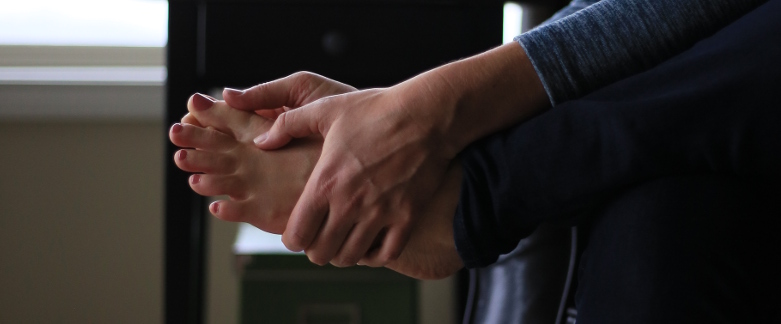
But I say go for the video too if you want to. You bet. So essentially what the stretch is doing is it's putting your toes in exactly the opposite position from what most conventional footwear will hold it in. So I'll actually show from my hand first most conventional footwear has our heel up and our toes up.
Right. So the tendons to the top of the foot get tight. So the stretch that we're going to do is to bend our toes in under. I'm going to see if I can tilt the camera here.
I don't know if this is going to work or not. Not bad. Yeah, there you go. You let me know if you can see what I'm doing here.
I can see your left foot. I can't see your right foot. Okay. Dude, you're not wearing a pair of your shoes.
What's up with that? Oh, I got him, brother. I got him. I know you do.
One of the problems with my work is even as I'm constantly wear testing all different kinds of shoes. I have to say you guys are definitely up there in my top favorite. So I'm not sure if I was able to show that to the group or not. Do it again, actually, and show it because I got what you're doing.
But since I didn't see the starting position, it was hard to tell what the end position was. Yeah. So the end position is basically you're trying to create greater toe flexion at the at the all of your foot. So most adult Americans, especially runners will have a hard time getting more than about five to 10 degrees.
So you want to work. So basically just trying to get the top two toes on the ground and then trying to get your heel down as much as you can and work on that stretch. Exactly. Yeah.
And most people will get a cramp in the arch muscles because most of our arch muscles are long and weak. Interesting. So this stretch puts them into their proper length, attention, relationship and the brain thinks it's time to contract, but most people are weak. So it'll feel like a cramp instead of contraction.
So like how long should someone hold that stretch and how often should they do it? We actually have people do it for about 20 to 30 seconds the first day and increase 10 to 15 seconds a day to where they can get up to four or five minutes without getting the cramp. So I'm just going to say something funny about this. I just realized, do you recommend doing this standing sitting or both?
I recommend standing because a lot of the, a lot of foot strengthening exercises that people are studying right now, we want to engage our butt muscles at the same time. We engage our intrinsic. So if you're doing the stretch or doing short foot or doing toes spreading exercises, it's good to actually activate your glutes at the same time. It's funny.
I'm going to do this. I'll probably do this in an upcoming podcast, but I want to make a video just showing how if you're just standing and you just tighten your butt, what that does, your arch, which is puts an arch in your foot. And most people don't have any frame of reference that what's going on in your foot could be starting from your butt. Absolutely.
Yeah. So I was an all American gymnast way back when, and when I got into gymnastics, my coach made the comment that, you know, pointing your toes, of course, a very big deal in gymnastics. And just to get into habit of doing that, he would sit during all his classes doing what you just described with his toes underneath working on that stretch. So needless to say, once he said that, we all started doing that.
So I smet the majority of my junior high school and high school, you're sitting with my toes curled under like that and doing that stretch. No wonder you're such an awesome athlete. That's it. It has nothing to do with genetics or anything else.
It's just from sitting with my toes underneath my feet. So so in the intro, I made the comment that, you know, hey, maybe your toes are the cause of all your problems, including having a high mortgage and your kids not getting into the gym, but definitely the oil pan leaking. So that was a set up for you. Cause you are famous for a product called correct toes.
Would you like to talk about, I'm curious, I don't even know this to be an answer to this. How did that come about and tell people, we'll tell people what the hell they are and how this came about and what you're seeing as a result of letting people use this product. There are medical grade silicone toe separator with a greater dimension between the first and second toes and the fourth of fifth toes. Sorry, when you say medical grade silicone, all I can think of is that you remove these from boobs.
Same kind of silicone. Yeah. Same kind of other words, it's another biologically or body, not surgery. Yeah.
Yeah. And I got a bun and for the audience, what that is, it's a dislocated big toe. And I also got a hammer toe. So my second toe on my big toe and my knees hurt, my back hurt.
I was taking an ad-vil and getting corded on shots and so forth. And then I read the work of Dr. William Rossi, who was on my website. I don't know if you've come across Dr.
Rossi stuff or not. No. He's fascinating. He definitely needed to look into him.
He traveled all over the world. He did compare it to the analysis between barefoot cultures and our culture. In other words, we were shoes with heels. We were shoes that have a pointed toe box.
We were shoes with a toe spring. So we essentially changed our foot structure of the course of our lifetime. I didn't learn this in podiatry school. I learned this from this Dr.
William Rossi. So point being, I didn't want to have an operation on my own foot. So I invented this correct hose. And essentially for the audience members, a lot of Americans are not familiar with the notion that our feet naturally are supposed to be wide set of the toes, not at the ball.
And so we look at each other's feet. Our feet look wide set of balls. So we don't think anything of it. But essentially, if we can position our feet naturally, which your company allows us to do, some very wonderful things happen.
And a lot of it has to do with the achieve and that natural foot state. A lot of times that will happen spontaneously, just getting into people, getting people into zero shoes or some flatter shoes or going back to tomorrow. The feet want to go back to that natural presentation. The correct hose is that it's a medical device that tries to augment that or accelerate that process.
It creates better balance. It helps us strengthen our feet, reverses bunnions and hammer toes and tailors bunnions. So that's what that's about. Sweet.
The point that you made about what you didn't learn in podiatry school is the thing that's so fascinating to me. It's like all of this information, those of us who are fans of natural movement, none of us learned it in school, whichever school we went to or whichever thing we went to. I did undergraduate research when I was at Duke on cognitive aspects of motor scale acquisition. And this whole thing of learning, how it is that we learned to move differently.
No one talks about that. No one talks about how if you're trying to develop a new movement pattern, at first it's going to feel frustrating because that's just a phenomenon of your brain laying down neural pathways. And many people take that. It's like, oh, that doesn't work.
It's annoying. It's like, no, no, that's called learning, baby. So just give it some time. You'll see that when you take a couple of days off and try again, it'll be better because that's how learning happens.
It happens during the rest period, the integration period. It's incredible to me that we just have this completely warped idea of what comfort is, what natural movement is, what learning is. And so you're dealing with this on a daily basis. What's your practice like?
Who are you seeing mostly? Yeah, I mostly see competitive athletes and mostly runners. I also see some racewalkers and hikers, but I'd say overwhelmingly, I'm the guy that people see kind of runners who are looking for natural foot health. So I spend about an hour with people.
I teach them about the footwear. Like I shared a moment ago, most people have no idea that wearing an old made heel isn't healthy or having their toes up near his head. Their toes pinch together isn't healthy. So this is what we do.
We basically educate people. So even I hardly ever do anything to people anymore. I'm just talking about the shoes. Yeah, yeah, yeah.
Seriously. I know you've seen it. We get people in the better footwear. They start moving better.
Life gets better for them. Yeah. Well, you know the story of how shoes came to have the shape that they have now. Yeah.
You know this one? Oh, I think I know elements I've heard. I dove deep about a month or two ago. And Jonathan Beverly on the pointed tapered toe box.
Oh, what do you find from that one? Because that's a slightly different thing than the part I'm thinking of. Yeah, we found a bunch of different things. We obviously found out it had nothing to do with health or being naturally positioned, had everything to do with royalty and having a certain look.
And it's really funny. They back in the day they had these long, long pointed toe boxes and the longer the more famous you were. So they actually passed laws against people who were in poverty from having these long toe boxes. So it was all fashion.
And what the average adult American today doesn't realize is that most athletic shoes are fashion athletic shoes. Right. Well, I'm remembering I grew up outside of Washington, DC. And we would spend many holidays down in Williamsburg, Virginia.
And I hadn't thought about this in a long time. And when you go to Williamsburg, there's all these things they're showing you colonial arts and crafts and artisanal things that they did. And I remember hanging out with the shoemaker. And I was like, totally into the shoemaker thing.
And one of the reasons that they were making pointed toe shoes is that they didn't make left some rights. So they had to make something that was symmetrical. So it didn't matter which you put it on. It would eventually mold a little bit to your foot because they were using leather.
But regardless, I mean, they were doing it in part because for the symmetry for the use of production and in part also because people were riding courses a bunch and they wanted to be able to get in stirps easier. Fascinating. I remember when the last time anyone that you and I know got into stirps and needed pointy shoes for doing that and then had to be prepared at any moment to jump on a horse. That's out here in Colorado.
Maybe that's appropriate. But I've been out here 26 years and I've never had an occasion where I really need to get on a horse. So I am trying to add horsepower to my car. But that's a completely different thing I'm told.
Indeed. That's really fascinating. Well, do you know about the whole elevated heel thing and where that came from? I've heard a couple different things.
I've heard that apparently there were some short kings that married taller women. And so they had their cobbler make a high heel so that they could be as tall as their queen. I've also heard that the sewage used to run down the streets in some of these cities so that they would elevate themselves above the streets so they didn't step in the sewage. So I've heard a couple different features.
I'm not sure exactly what's true and what's true. Well, the athletics shoe one, the story that I've heard from a couple of people who were there at the time is that there were some, I think sports podiatrists don't hold me to the exact title that they had. Let's call them sports podiatrists for the sake of argument. Actually, when Irene and I were having this conversation on our podcast, she actually had the names of these three guys who were in the same building that Bill Barriman was in when they were getting Nike started.
And he came in saying, you know, we're getting these guys who are getting Achilles tendonitis. What do you recommend? Well, clearly they've been wearing higher heel dress shoes. So they were Achilles is shortened.
And so we need to make higher heel running shoes to accommodate their Achilles. So put some foam in there because that'll also help with the cushioning when they're landing on their heels the way they're walking. And so that's what they did sold really, really well because Nike was pushing it hard. And the footwear industry used a bunch of copycats.
And so that became fundamentally the ubiquitous design. Now one of these same guys was at a track meet with a friend of mine who was at Nike for a long time. And my friend said, so you know, your design has become the ubiquitous design for athletic footwear. What do you think?
And the response was a biggest mistake we ever made. Indeed. I couldn't agree more. I've got a good study on my website where they took two groups of ladies, one group of ladies was on a two-inch heel and a lot of running shoes are one and a half inch heel.
They took another group of ladies and they had them go in flat shoes and then they did MRI of their calf muscles. And the two-inch heel group were 13% shorter. That's interesting. There's a study.
I don't know if it came out yet. Irene mentioned it at a presentation sheet recently where they just took regular, I don't know if those runners or not, but just people who had no problem, no presenting symptoms of any sort and they just put insoles in their shoes. They just put an orthotic in their shoe. And in some very short amount of time, let's call it 12 weeks, but don't call me to it.
And MRI revealed that they're intrinsic foot muscles, the diameter decreased by up to 17% in that amount of time. Yeah. That doesn't surprise me at all. And I will admit what I like to say is imagine what that'll do for the rest of your life.
And I will concede that I'm being misleading when I say that because what it implies is that it'll just keep going down forever, which is of course not the case. It'll go down and then plateau. But it's fun to say. It's imagine because it is true.
It'll get worse. Yeah. You might be interested to know that they did a study on people with chronic what we used to call plantar fasciitis. You and I, they grouped it in the book a while ago.
My favorite turn plantar fasciosis, but they actually studied MRI study. These people have chronic plantar fasciosis and their clinic and their intrinsic muscles are weak. Yeah. What a shock.
Yeah. It's again, it's just amazing to me that. So I think I might have said this at the American College of Sports medicine event a year ago. I said, people keep asking me to show the proof about natural movement and I go, wait, you need me to prove that using your body is good because it'll stay or get stronger and not using it as bad.
You won't be to prove that. And yet that's what we're having to do. I mean, it's absolutely right. Absolutely right.
Same thing with the footwear. You know, people want us to prove why natural footwear is better. Right. You know, and as you know, what we've been wearing for the last 30 years is really bad.
Yeah. Yeah. And we know we've been, the oldest footwear that we found is I think was sagebrush sandal that came from Oregon. And so this is 10,000 years ago.
So for 99.95% of what's called recordable human history, people have been wearing shoes that were just enough to protect their foot and then something to hold on. And suddenly we're the intervention. Exactly. It's incredible.
Well, let me ask you this question. I asked this to Mark Coozella. I think I asked it to Irene as well. What we're doing, people like you and me and a number of others, is in this whole idea of making natural movement the obvious, better, healthy choice.
We're fighting against 50 years of marketing and propaganda and sometimes flat out lies. What do you think it's going to take or what do you think it might take to get people to wake up to the reality that natural is better than trying to immobilize your foot and put it in a cast or as we refer to that as a foot coffin? What I've seen in 25 years is I think it requires people to be in pain. You know, I don't think it's even on people's radar.
What certainly wasn't on my radar early in my running career, you know, until I started breaking down and then I started wondering why am I breaking down. So I think people have to suffer personally a little bit before they can actually think deeper about really where's the problem coming from. It's funny, human beings as a group, we don't tend to take action until we're back up against the wall and something is really painful and that's problematic. I'm hoping that we don't have to go that far.
On the other hand, one of the things, when people ask me what I do for a living, I go, let me ask you a question. At the end of the day, do you feel better than they did at the beginning of the day? And I've never had anyone say yes. And so I might argue that almost everybody is already in pain of some sort, but either they don't know that that's not normal or okay or that there's an option.
Or they found a way to mitigate it to a certain extent where they think it's okay, like they've got some heavily padded in. So that can be helpful. And basically, put your foot on a temper-pieding mattress and don't use it. That can be okay.
You can get around. You can think that it's comfortable. You're getting progressively weaker and you might end up doing what my dad did, which is having no balance, no foot muscle strength, tripping over a little ledge, falling down, breaking a sip and dying two weeks later. So I'm going to contend that there are enough people who are already in enough pain but that they don't know there's an option or they don't know that what they're doing is not normal.
I've had a weird variation that I've compromised spine. I've got a for people who care. And L5S1, a grade two, L5S1, spondylolisthesis. My spine is not working well and therefore my sciaticoners not working well.
The number of things that I thought were normal because I've just been living with it for 30 years is really high when a doctor said, yeah, that's not the way that's supposed to happen. It's like, really? You mean when you're washing the dishes, you're not supposed to double over in pain when you're done? I had no idea.
So let's assume for the fun of it then that people are, that there's a critical mass of human beings who are having enough problems. I mean, look, the orthotics industry is a multi-billion dollar industry. Dr. Scholz is a multi-billion dollar company.
Clearly, we've got people in pain. So assuming that that's true, then what do you think would be the next thing that would have to happen to get people out of this trance? Yeah. I think really one of the things that needs to happen is we need to get the education to the parents, to the moms and the dads.
I appreciate what you said a moment ago. There's lots of misinformation out there. In fact, part of the reason why we have to spend an hour with people is to try to counteract all the other voices in their head, other voices of their other podiatrists telling them they need supported shoes and they need their orthotics and so forth. So I think we need to get to the parents.
I think people need to suffer like we just mentioned a moment ago. And I think also, guys like you and I and Mark and the rest of us need to keep working to reach those one by one by one. Yeah. I want to believe we're going to achieve a critical mass at some point.
It's sort of inevitable if we keep growing. But back to how you work with people when they come in. When they have these ideas, not here all the time, well, I need our support because I have flat feet or I need our support because I have high arches, which cracks me up. It's like, so you actually think it's the same intervention for two totally different issues, not alone to tell you there's bullshit, but regardless.
So people, they have these ideas. I need cushioning. I need our support. I need motion control.
I pronate or whatever they think. Since we know another thing about human beings is if they have a belief, just presenting them conflicting information or contradictory information typically doesn't work. What's been your experience with that? Or what are the conversations you have to educate people and get them to have that aha moment?
Yeah. The powerful piece of that conversation, Stephen, is to have people stand up in front of me and I hold their big toe in shoe position, which is tapered, meaning that the bump on the side of the big toe is prominent. So the big toe pushing over towards the second toe. Pushing the big toe in.
Yeah. And I show them how much they can pronate there. Then I pull their big toe out into natural position and ask them to pronate again. All but the most hyper-mobile people will pronate to neutral and then they'll stop.
Versus having their toe in an unnatural position, they'll pronate more than they should. So this whole pronation paradigm is not only deeply flawed if people are starting to recognize it. They're not really intervened on just by changing the big toe position. So we were joking around before the podcast about what if your back hurts, your hip hurt, your foot hurts, what it's really down to your toes.
I honestly believe that's not far-fetched. Honestly, I believe it really does break down to our big toes and the position of our big toe. It couples right up the chain and people can see this. When we hold their big toe in natural position, they pronate to neutral.
Their knee is on top of their foot. Their hip is not internally or externally rotated. So really, the toes are where it's at, in my opinion. Well, there's two things.
One, obviously, if you move your big toe so that it's put in towards your other toes, then you can't use your arch naturally. You can't use your arch naturally. Again, that's going to roll upward. I think Sarah, I don't know if she did this study.
So I hope I'm not talking out of school or pre-release of some information. But I remember talking to her. She said she was doing study. We're looking at doing study that seemed to show that by just moving your big toe in, pushing your big toe in the way most shoes do, immediately cuts off blood flow into your foot, which again, not surprising, but it's one of those things where people are like, what?
Yeah, you'll like this, Steven. We had an energy auditor from Spain purchase a pair of correctos. He's got an infrared camera and he goes to building managers and he shows the building manager whether he's in heat and losing energy. Oh, I love where this is going.
Keep going. So correctos on his right foot, not on his left foot, had them on for half an hour. Took pictures of both of his feet. And one of the things that correctos does is it opens up that vascular channel that Sarah was talking about.
And we have that one of those in between each of the toes. That's another irony of the tapered toe box that she would actually pinch his off circulation with its match. But the point being we were interested to see that the foot that had correctos on was five degrees warmer, fair and high than the foot that was pinched in. So five degrees.
That's significant. It really is. So we mess up so many things with our shoes. We mess up circulation.
We mess up nerve function. We mess up with reception, balance, intrinsic muscle function. So it's really compelling what we're talking about here. And sadly, more people need it all about it.
Yeah. I'm trying to... This is not surprisingly both my mission personally as well as with our company. I would be doing this even if I didn't have a company that was all about this.
It's just how to create a message that's compelling enough that, again, it wakes people up. And it can't just be data. It can't just be information. It can't be...
I mean, I have a number of ideas about this that I'm starting to play with where in a way we make an end run around the arguments that people would normally make. Because many people, I realized, have had the experience of remember being kids and playing outside in the summer in bare feet and just having no problems. Yeah. So get the hand.
And just that alone, just that idea of that memory of how much fun it was to feel the grass or the sand or the dirt or the water under your feet. Now you just go out all day long, you kick off your shoes as soon as you could. I have vivid memories of getting my first pair of dress shoes and just crying over these things. And we just forget this, which is sort of amazing.
Or I like doing things that just make people kind of stop and say, you know, the number podiatrist in America, I think, is more than there are any other... If you take all the third world countries and look for podiatrists, it won't come anywhere close to the number we have in America. And they're only treating actual real problems. I mean, people who have serious congenital problems or injuries, not this, hey, my foot hurts, hey, my back hurts.
Exactly. I had a lady from India come and visit about a year ago and she looked at me during the visit. She said, there's two things we don't have in India, podiatrists and chiropractors. Oh, that's good.
I love what Mark Cozzella says. Mark Cozzella says, how can we don't have handologists for hand-on? Oh my God, that's great. Well, I will say though, what they do have in India is something that we don't have here.
I had a guy clean out my ears with like, you know, these incredible foot-long instruments. I have pictures of it where this guy's got something, you know, the size of a yardstick shoved down by you stationed to practically. It was one of the weirdest experiences I ever had in very entertaining. So I'm not even saying it was good for you, but I'm saying there's nothing in India that we don't have and it's a good thing.
I got to tell you my favorite shoe story from India. So we were over there about 10 years ago for a friend's wedding and he's Indian, his wife is American and so they had the LA wedding and the Indian wedding. And the shoes that they have, I mean, talk about pointy toes, they have some crazy ass ridiculous don't fit your feet by any stretch of the imagination shoes that we had to get to go with the rest of our outfits. And I can barely wear them for more than 10 seconds, but it was crazy fun.
So who cares? But I'm negotiating with a guy who's selling them and I don't want to say it was 100 rubies or 200 rubies and I'll give you 20 rubies. And he says, you know, no, no, I can't do that. I said, sure, you can't.
He's what am I going to tell my family if I sell you these shoes for 20 rubies? I said, you finally met an American who knows the actual price of the shoes. I cracked up and said, okay, 30 rubies, perfect, we're done. And then we have actually I have a friend who's Indian, she's from Mumbai and she said, she was over shopping for shoes and there was an American woman and they're haggling a little bit and this Indian woman says in Hindi, says, if I tell her that what you're saying is the right price, will you give me a free pair?
He goes, absolutely. It's a whole different game over there. I think, you know, the other thing I keep thinking in terms of what it's going to take is the right kind of celebrity. And ideally, like you said, someone who went from being in pain to not being in pain, there actually is someone like that in Australia and a lot of people know him and know his story, but he hasn't had enough influence yet.
And this is Anthony from the, you know, the Wiggles. Oh, the Wiggles is the most successful popular kids entertainment thing in the world. You have to look him up and Anthony, Anthony Wiggles, if you look up, Anthony, I think he's the blue wiggle, but don't hold me to it. Anthony had like major, major foot issues and somehow I don't know how he got introduced to James Stockson and James, who is actually a chiropractor, but he doesn't do straight chiropractic by any stretch of the imagination.
Most of what he's doing is working on mobility and getting people's feet to move naturally. And it totally changed Anthony's life. And he went from thinking he was going to have to quit the most interesting lucrative influential thing he's ever done because he couldn't get around. And now, you know, then he went back to being practically an Olympic level athlete almost, just getting his feet working naturally.
So, but no one knows who he is over here. He makes a big difference in Australia and among kids. But even then, you know, the kids are going, oh, I want to do what Anthony's doing, but the parents haven't quite put two and two together yet. Again, I find just this whole question of how to communicate, how to change a, to change what is now quote, common wisdom that is neither common nor wise and it's something that's actually legit.
Anyway, it's plaguing me right now. If we can get people to start going their foot more or wear zero shoes or some other more natural footwear, almost 100% of the time those people will not be able to wear their old footwear. Oh, yeah. We have so many emails from people saying, you've ruined me.
Yes. Yeah. And, and, or my favorite on Facebook a little while, someone posted a picture of the eight pairs they had and said, you know, look at my eight pairs of zero shoes and everyone's like, I can talk that. So that was very satisfying.
Here's, you mentioned something else that I also think is related to this is that we look at other people's feet and we see there's looking similar to ours and we think it's normal. And that's a fascinating something to adjust. Like, I find it incredible when people say things like they don't like looking at bare feet or they don't like looking at people in flip flops. Like, why?
I mean, what's the big deal? I mean, yes, there are some feet that are prettier than others aesthetically for whatever reason, but I'm amazed at this whole anti barefoot thing from an aesthetic perspective. Yeah. I see it too.
I also find people are not only having a version to bare feet. People have an aversion to naturally shaped feet and naturally shaped shoes. Oh, well, you know, this is one of the biggest things that we try to do is make things that have a natural fit that don't look orthopedic or clownish. And there's obviously a way of doing that.
But yeah, again, I think you're right. It is really just that we've gotten so used to it that we think that's the way it is. And you go to Europe, for example, and there's way more footwear. This design for the foot shape that we're describing and there no one has that issue.
So that's a fascinating piece as well. The reason it's been wrestling around my brain so much lately is because, and this is relevant for you and for everyone else who's trying to promote natural movement is that to a certain extent when we're doing advertising, we're preaching to the choir or we're preaching to the people who would like to hear the choir. And but I said from marketing perspective, the last thing you want to say is our product is right for everybody because that's just never true, but everybody wears shoes often too. And so to a certain extent, you know, what we're doing is right for everyone.
It's going to take a while till you can till that message kind of permeates, obviously, but because there's no one for whom that I've ever seen other than someone who's got some major, what sort of structural problem, you know, there's no one for whom this isn't right. It can become that big. It can become a life and world changing thing. And from a business perspective, we're just trying to start speaking to more people who don't already know this whole idea, who don't aren't familiar with what we're talking about.
And so I've just been talking to a lot of people in wrestling with what the messaging has to be to make that happen. That's just FYI. That's why I'm so obsessed about it in this conversation. I'm with you, brother.
So what's next for you? What are you trying to do? I mean, you're a single human being who's doing what you're doing. What I mean, is that cool?
Are you trying to stay in your own private Idaho or are you looking to expand or are you looking to what do you want to do? Yeah, we just launched the Natural Foot Health Institute and we had our first meeting here in Portland in April. We're going to be holding meetings throughout the country this coming year. What I really want to do is I want to get this message out to more people, but I want to empower other people to educate their local communities.
For instance, you guys probably get contacts from all over the states and if not all over the world wanting to know where is it naturally minded? Totally. We get it all the time. So we'll spend our hour with our patient.
They'll get the information, they'll implement it, they'll get better, and then they'll call it and they'll say, well, I've got a cousin in Baltimore or I've got an aunt in Cincinnati. Who can I send them to? There's a positive of people for us to send people to. So what we're doing is we're certifying people in Natural Foot Health.
We're certifying them in how to fit shoes, how to shoe shoes, how to rehab feet. So that's what my passion is right now, Stephen. It's just trying to get the message out. The people you're working with, are they podiatrists, chiropractors with pods?
What's their, what's the problem? All of those. Interesting. Yeah, all of those.
Actually, surprisingly, the interest is coming from reflexology, massage therapy, body workers, not so much orthopedists, some osteopaths, a lot of chiropractors, but even the general public, one of the things I've inspired with hanging out with Mark Cukazella is a lot of the things that he does, he doesn't just do them for medical people, he does it for the whole community. Right. And that's what we're trying to do too. But yes, it'll be medical people too that'll take us back to their communities and they'll have a certification in Natural Foot Health.
So if somebody calls us or they go on our website, they'll be listed there. So that's really what I got to do right now. You remind me, there's a chiropractor that I know who is, who teaches, let's call it a non-traditional form of chiropractic for the sake of simplicity. And he goes, why, why is it that you need to be a chiropractor to do this?
I can teach this to a 10 year old. And so he's actually just going out in the communities and teaching lay people, normal people. Here's how you do, I mean, you know, 80% of what he needs to do is just 10% of what he actually does. And so, so let me teach you how to do these things.
This will be really helpful for most people. And he's teaching just normal human beings and it's changing communities. And again, I love this idea of the grassroots groundswell component of making this happen. And I'm just trying to accelerate that because that's pun intended.
That's what has actual legs. You're that. Yeah, absolutely. Interesting.
I'm trying to think of anything else that's popping into my brain. So you said you were a runner. Are you still running? I'm still running.
Yeah. I'm still running out there. Are you a distance dude? You know, I do some distance.
I prefer 5k distance, you know, I've got some friends that are doing really long stuff. So all these are long training with them. But I actually like to go shorter and faster. That's so cute that you think 5k is short and fast.
I'm fine. I know you're a sprinter. Yeah. I hear that they exist.
I hear there's another side of the track. I've never experienced it. It would be like UFOs for all I know. Someone said to me, I think you have a phobia of the other side of the track.
I said, I can't be afraid of something that doesn't exist. That's ridiculous. I have no experience of that whatsoever. Interesting.
Do you have an opinion or any idea about why trail running and ultra running has become such a huge thing lately? I don't have as much time. I don't have any idea. I know where it is.
Yes, fast. I'm kind of averse to flat surfaces and starting to encourage people to engage in natural environment more. But I don't really have to answer for why that's happening. Well, let's talk about that part.
Because I, when I start people off and say, if you want to learn to run barefoot, find a nice smooth hard surface, take off your shoes, go for an extremely short run, like 20 seconds. If you're not having fun, do something different till you are, if it hurts, do something, you're having fun. I think that's a really good training thing. But once people have decent form, what they've learned, how to move more naturally, then I want to get them on as many various surfaces as possible.
Can you chat about what that does from a podiatric perspective? Yeah, definitely. I think what we get on uneven surfaces, not only does it stimulate our nervous system, it's really good for the intrinsic muscles of the arch. The idea of running on a flat surface all the time basically doesn't challenge us appropriately.
It's not another unnatural variable, if you will. I try to get people off, get them on the trail, get them on the trail, get them on the rocks and roots. It's funny, I've been on trails barefoot with people and we go flying by, people in shoes, they're going, you can't do that. It's like, well, we just did that.
But you should hear what you're saying about flat surfaces because one of the reasons I actually like flat surfaces is how to say this. My mind is not precise, but what the activities that I like doing are all about precision. So I love the flat surfaces because it really lets me dial in and see how much better I'm actually getting. When I'm on so many varied surfaces, I'm not getting that same kind of feedback about precision.
I like archery, I like target shooting, sprinting is totally about precision. I'm a little step wrong and you've lost the race and I've always been fascinated with that. But yeah, just for the extra stimulation alone and just the fun of it, my first real barefoot run, we were on every kind of surface you could possibly think of. And again, I'm a sprinter and it was just so engrossing that at the end of the run, I had no idea how far we had gone.
I wasn't paying attention. I was experimenting with my gait, changing how fast I moved, how fast I ran, how fast I ran, how fast I ran, how fast I landed on my feet, anything I could think of. And at the end, someone had a GPS watch on. I said, how far was that?
She's a little over 5k. I was like, sorry, what? I had no idea because it really is just so engrossing. So engrossing is like instant meditation.
Love it. Well, unfortunately we got to wrap things up just because that's the way the clockwork and scheduling works. So if people want to get in touch with you and experience correct toes or any of the work that you're doing or the new was a natural foot health institute, any of the ways that they could get in touch with you or involved in what you're doing, how should they do that? Yeah, a couple of websites, correctos.com is a correctos website and Wfoot.
So wait, some of you're cutting out, so I'm going to repeat it. So correct toes, so you're at ECTOES.com, and Wfoot Nagle, is that the second one? Yeah. I think we just launched our natural foot health institute website too.
I don't remember exactly what the tagline is there. The other thing that the audience members could do is if they're not finding a natural foot care provider in their community, we also do remote consultations. So they get called the clinic, we can Skype with them, we can FaceTime, we can zoom, people that don't live here in Portland, so they're going to get in touch with us. That's awesome.
I'm trying to read a website really. People just think of the website that they're going to go there. Yeah, you have got a lot of info on the website that is definitely valuable, so I encourage everyone to go well. Again, so I've got to wrap it up, so I want to thank people for being here and hopefully you will discover what you can do with your toes so you can make the rest of your body work better.
And obviously, if you want to engage with us more, go to jointhemovementmovement.com. If you have any questions or suggestions or people that you think should be on the show, drop an email to me at move at jointhemovementmovement.com. And of course, again, like and share and review and tweet and post and all this things like that. You know how to do it, I don't need to tell you how to do it.
Again, as I like to say, if you want to be part of the tribe, please do subscribe. And as always, thanks for being here and live life beat first. You've been listening to the Movement Movement podcast with host Stephen Sashan. Remember to join the tribe and subscribe at jointhemovementmovement.com.