
EPISODE · Sep 30, 2024 · 1H 9M
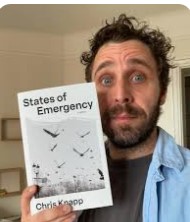
Episode 255 with Chris Knapp, Author of States of Emergency and Keen and Darkly Humorous Chronicler of Contemporary Chaos
from The Chills at Will Podcast · host chillsatwillpodcast
Notes and Links to Chris Knapp’s Work For Episode 255, Pete welcomes Chris Knapp, and the two discuss, among other topics, a fascination with Elena Ferrante, James Joyce, and other dynamic writers, the interplay between journalism and fiction writing, seeds for his debut novel, the significance of its title, the drawbacks and benefits of writing about such recent times, and salient themes and issues in his novel like colonialism, marital alienation and connection, ennui, and the creep of dystopian mores. Christopher Knapp’s work has appeared in print in the Paris Review and the New England Review, and online at Granta and n+1, among others. He’s been a work-study scholar at the Bread Loaf Writers' Conference, and earned an MFA in Creative Writing at the University of Virginia. His novel, States of Emergency, was published on September 3 by Unnamed Press. He lives in Paris with my wife, and teaches in the journalism program at the Sorbonne. Buy States of Emergency Chris Knapp's Website At about 2:50, Chris talks about what it’s been like in the run-up to publication At about 4:00, Chris describes his early literary life and battles with spoilers At about 7:10, Pete and Chris discuss and cite the greatness of Faulkner and Joyce’s work At about 9:30, Pete highlights a wonderfully Joycean sentence (one of many) from Chris’ novel At about 10:25, Chris shouts out inspiring and thrilling writers, including Rachel Cusk, Don DeLillo, and Sebald, and Elena Ferrante At about 14:10, The two discuss Paris and Naples and prices and experiences At about 16:30, Chris responds to Pete’s questions about the interplay between his journalistic background and his fiction writing At about 19:45, Pete and Chris reflect on the interesting ways in which the book’s narrator functions in the book and connects to At about 21:15, Chris speaks about seeds for his novel At about 22:20, The two discuss Chris deciding to start the book with a heat wave and political and cultural At about 24;45, Chris talks about the fertility procedures that run throughout much of the book and the way waiting relates At about 27:00, Chris delineates between hope and optimism and how these two qualities characterize the narrator and his wife Ella At about 29:20, The two discuss ideas of sympathy and empathy and comfort and shared pain At about 31:50, Chris responds to Pete’s questions about the narrator’s writing and charting his and Ella’s experiences At about 32:45, Chris reflects on the narrator’s writing and the way that Ella sees him and his writing; he references Raven Leilani and writing on grief At about 34:45, The two discuss the ways in which French colonialism and racism is seen (or not) in the book and in the world At about 36:40, Pete highlights the dark humor of the book, and Chris expands on some of the humor and how it flows for him At about 39:35, The two discuss the “carnality” of a climatic scene in Ella and the narrator’s relationship At about 42:20, Chris charts the importance of a getaway for Ella in Skopje At about 44:20, Pete cites a period of separation between the two main characters and asks Chris about the significance of the book’s title At about 49:00, Chris responds to Pete’s questions about the drawbacks and benefits and vagaries of perspective in the novel At about 55:25, Chris reflects on narrative and its connections to history and to the novel At about 57:00, Pete compliments two anecdotes/scenes from the book, compares Ella’s story of the French and Algerians to Wolff’s “In the Garden of the North American Martyrs,” and Chris expands on the views of the narrator’s family At about 1:02:50, Chris gives contact information, book purchasing info, and social media info At about 1:04:20, Chris talks about what he’s working on and wants to write about in the future You can now subscribe to the podcast on Apple Podcasts, and leave me a five-star review. You can also ask for the podcast by name using Alexa, and find the pod on Stitcher, Spotify, and on Amazon Music. Follow me on IG, where I’m @chillsatwillpodcast, or on Twitter, where I’m @chillsatwillpo1. You can watch this and other episodes on YouTube-watch and subscribe to The Chills at Will Podcast Channel. Please subscribe to both my YouTube Channel and my podcast while you’re checking out this episode. I am very excited about having one or two podcast episodes per month featured on the website of Chicago Review of Books. The audio will be posted, along with a written interview culled from the audio. A big thanks to Rachel León and Michael Welch at Chicago Review. Sign up now for The Chills at Will Podcast Patreon: it can be found at patreon.com/chillsatwillpodcastpeterriehl Check out the page that describes the benefits of a Patreon membership, including cool swag and bonus episodes. Thanks in advance for supporting my one-man show, my DIY podcast and my extensive reading, research, editing, and promoting to keep this independent podcast pumping out high-quality content! This month’s Patreon bonus episode features segments from conversations with Deesha Philyaw, Luis Alberto Urrea, Chris Stuck, and more, as they reflect on chill-inducing writing and writers that have inspired their own work. This is a passion project of mine, a DIY operation, and I’d love for your help in promoting what I’m convinced is a unique and spirited look at an often-ignored art form. The intro song for The Chills at Will Podcast is “Wind Down” (Instrumental Version), and the other song played on this episode was “Hoops” (Instrumental)” by Matt Weidauer, and both songs are used through ArchesAudio.com. Please tune in for Episode 256 with Andrew Maraniss, a New York Times-bestselling author of narrative nonfiction. His first book, Strong Inside, about Perry Wallace, the first African-American basketball player in the SEC, won the 2015 Lillian Smith Book Award. Andrew recently launched a series of early chapter books for young readers, BEYOND THE GAME: Athletes Change the World, which highlights athletes who have done meaningful work outside of sports to help other people. The episode will air on October 1. Lastly, please go to ceasefiretoday.com, which features 10+ actions to help bring about Ceasefire in Gaza.
Embed this episode
What this episode covers
Notes and Links to Chris Knapp’s Work For Episode 255, Pete welcomes Chris Knapp, and the two discuss, among other topics, a fascination with Elena Ferrante, James Joyce, and other dynamic writers, the interplay between journalism and fiction writing, seeds for his debut novel, the significance of its title, the drawbacks and benefits of writing about such recent times, and salient themes and issues in his novel like colonialism, marital alienation and connection, ennui, and the creep of dystopian mores. Christopher Knapp’s work has appeared in print in the Paris Review and the New England Review, and online at Granta and n+1, among others. He’s been a work-study scholar at the Bread Loaf Writers' Conference, and earned an MFA in Creative Writing at the University of Virginia. His novel, States of Emergency, was published on September 3 by Unnamed Press. He lives in Paris with my wife, and teaches in the journalism program at the Sorbonne. Buy States of Emergency Chris Knapp's Website At about 2:50, Chris talks about what it’s been like in the run-up to publication At about 4:00, Chris describes his early literary life and battles with spoilers At about 7:10, Pete and Chris discuss and cite the greatness of Faulkner and Joyce’s work At about 9:30, Pete highlights a wonderfully Joycean sentence (one of many) from Chris’ novel At about 10:25, Chris shouts out inspiring and thrilling writers, including Rachel Cusk, Don DeLillo, and Sebald, and Elena Ferrante At about 14:10, The two discuss Paris and Naples and prices and experiences At about 16:30, Chris responds to Pete’s questions about the interplay between his journalistic background and his fiction writing At about 19:45, Pete and Chris reflect on the interesting ways in which the book’s narrator functions in the book and connects to At about 21:15, Chris speaks about seeds for his novel At about 22:20, The two discuss Chris deciding to start the book with a heat wave and political and cultural At about 24;45, Chris talks about the fertility procedures that run throughout much of the book and the way waiting relates At about 27:00, Chris delineates between hope and optimism and how these two qualities characterize the narrator and his wife Ella At about 29:20, The two discuss ideas of sympathy and empathy and comfort and shared pain At about 31:50, Chris responds to Pete’s questions about the narrator’s writing and charting his and Ella’s experiences At about 32:45, Chris reflects on the narrator’s writing and the way that Ella sees him and his writing; he references Raven Leilani and writing on grief At about 34:45, The two discuss the ways in which French colonialism and racism is seen (or not) in the book and in the world At about 36:40, Pete highlights the dark humor of the book, and Chris expands on some of the humor and how it flows for him At about 39:35, The two discuss the “carnality” of a climatic scene in Ella and the narrator’s relationship At about 42:20, Chris charts the importance of a getaway for Ella in Skopje At about 44:20, Pete cites a period of separation between the two main characters and asks Chris about the significance of the book’s title At about 49:00, Chris responds to Pete’s questions about the drawbacks and benefits and vagaries of perspective in the novel At about 55:25, Chris reflects on narrative and its connections to history and to the novel At about 57:00, Pete compliments two anecdotes/scenes from the book, compares Ella’s story of the French and Algerians to Wolff’s “In the Garden of the North American Martyrs,” and Chris expands on the views of the narrator’s family At about 1:02:50, Chris gives contact information, book purchasing info, and social media info At about 1:04:20, Chris talks about what he’s working on and wants to write about in the future You can now subscribe to the podcast on Apple Podcasts, and leave me a five-star review. You can also ask for the podcast by name using Alex
Ready to play
Episode 255 with Chris Knapp, Author of States of Emergency and Keen and Darkly Humorous Chronicler of Contemporary Chaos
No transcript for this episode yet
Similar Episodes
No similar episodes found.
Similar Podcasts
No similar podcasts found.