
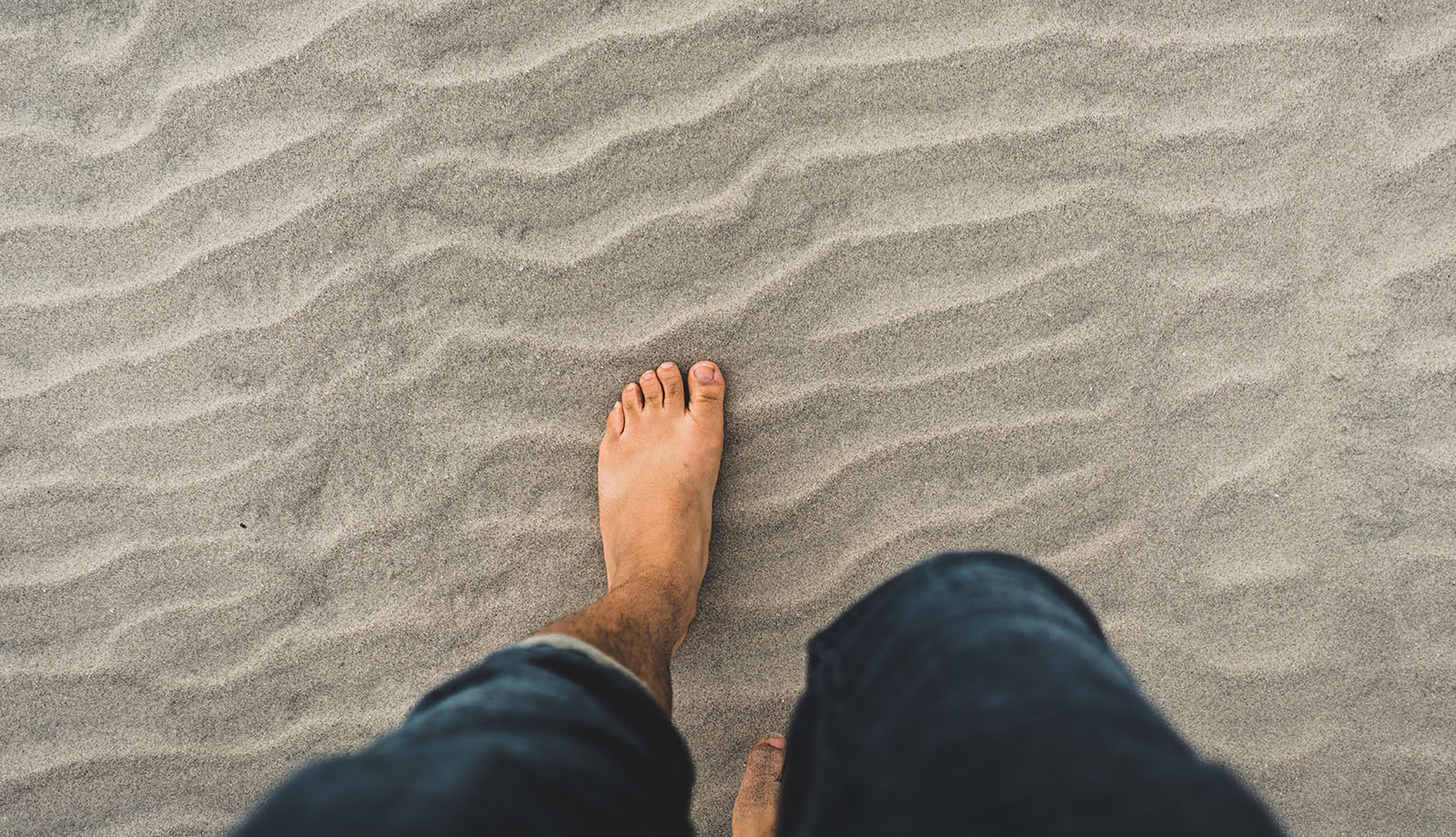
Welcome to the movement movement, the podcast for people who want the truth about having a healthy, happy, strong body. Remember, your body was meant to move. Now here's your host, Stephen Sashin. We all know how to walk, right?
I mean, you know, one foot in front of the other, we've been doing this as a big deal. Well, maybe we don't know how to walk as well as we could, or as well as you think you are. Here's a couple weird questions. Can you walk for hours without a problem?
Like many hours, many, many miles without a problem? When you do walk, what muscles feel like they're being used? Is it your butt and your hamstrings? Or is it maybe your hip flexors and your calves?
Maybe it's in your feet? At the end of the long walk, do your feet hurt? Do you walk for a long time? Barefoot.
Can you walk for a long time in shoes? These are all important questions that we're going to dive into in today's episode of the movement, movement podcast. The podcast for people who want to know the truth about how to have a happy, healthy, strong body starting with the feet first is feet are your foundation where we break down the mythology, the lies, and sometimes, well, sometimes you outright lies. The people have been telling you about what it takes to walk or run or dance or play or hike or do yoga or crossfit happily and enjoy.
I'm Stephen Sashin, your host for the movement podcast. And if you like what you're going to hear, well, that makes no sense. If you can go into the future and come back and say that you like it. If you like what we're doing, obviously we'd love you to subscribe and leave reviews.
You can do that at iTunes and Google Play. And if you find us on YouTube or wherever you find podcasts or on our website at www.jointhemovementmovement.com, you know how to do all those things. If you're on YouTube, you know, subscribe and hit the bell, blah, blah, blah. You get the gist.
I don't need to tell you how to do all those. But backing up to the website, if you have any questions or comments, feel free to leave them in all those different places or just drop us an email at move, m-o-v-e at jointhemovementmovement.com. Okay. Now, we always like to start with a movement whenever we can.
So this is going to be an isometric movement. It's one that you're not going to see a lot of movement on. And I'm not even going to be able to demonstrate it for you because you have to do it in standing up. So if you're not somewhere where you can stand up, just try it later when you can.
And you can do this in your car kind of, but I don't recommend it. And the gist is this. I'm going to try and do it. I'm going to try and stand up and do this.
You can't see me doing it, but I'm going to stand up and do it. So I'm now standing up and I've got my left hand on my left butt cheek. And so I want you to do the same thing. That is put your left hand on your left butt cheek, not on mine, because if you could, that would be amazing and really inappropriate.
And what I want you to do is squeeze it. I just want you to see if you can tighten, just tighten your butt. Just one. Just your left one, not your right one.
Keep the right one or the last. Just tighten it. And if you really do, first of all, it should get nice and tight. And it should also do two other things.
It should make your hips move slightly forward. You're not arching your back when you do this, but your hips are still moving forward. This is called hip extension. And if you actually check your foot, if you really engage your glutes properly, you might also notice that it's making your knee rotate outward a tiny bit and putting an arch in your foot or increasing the arch in your foot.
If you have your foot well planted and you squeeze your glute, by the way, I'm kind of turning it on and off, don't have to squeeze and hold it this whole time. Like squeeze and you'll feel your hips move forward a little bit and you'll feel your knee want to turn out. It doesn't have to turn out. In fact, if you resist it, turn it out.
That's what's going to help make that arch actually raise in height. And so you might get a hint that there's something valuable in that butt squeezing and you are right. I'm going to sit back down. So what I'm going to try and do in today's episode is something completely ridiculous.
And that is teach you how to walk while I'm sitting here and you might be listening rather than watching and is doable. It's honestly doable. But there's also a page on our website I'll link to in the show notes and on YouTube, etc. Where you can see a bigger conversation about what we're going to be talking about today.
If you actually just go to zeroshoes.com, XERoshoes.com, then you will see I think in the learn more section there's a little headline something like walk the natural way. That's another way of finding it. Okay. So how do you walk?
Now let me just ask you this weird question. Have you ever watched, especially anywhere where there's people usually women who have big things balanced on their head and they're walking? Have you noticed that when they walk it's like they're kind of gliding. That's the way walking should look even if you don't have something big balanced on your head.
And if you look at the way most human beings walk, especially in the West, that is not what we do at all. We're kind of bouncing up and down. It looks like we're just sort of swinging our legs and then plopping them on the ground and then trying to hop over that leg and repeat. Well, that's basically exactly the difference.
So how is it that you get that sort of elegant walking style where you're using the right muscles in the right way? That's what we're going to talk about. Let's start with what are the correct muscles to be using. You have the largest muscles, but it's actually largest muscle groups.
Among the large muscle groups in your body is your glutes and your hamstring, your butt muscles, which is actually there's three of them and your hamstrings is actually kind of two. Those are what are referred to as prime movers. In other words, those are the muscles that you're supposed to use to move yourself and most people in the West, they don't use their butts when they walk. They don't use their hamstrings appropriately.
If you look at, even like a lot of distance runners, even they have found a way to run where they're not actually using their butt and their hamstrings to move them. They're again kind of like finding a way to almost pogo stick when they run and they end up with these flat asses, which is not as interesting as, look at sprinters. Hold it in game. Sprinter, you have to do it with your butt.
Sprinters, great butts. I'm not just saying that because I'm a sprinter, although not bad for a 57 year old butt. The biggest thing is that you're supposed to use your butt. You're supposed to use your hamstrings.
Those are the things that are supposed to move you and it's supposed to be pretty easy. It's not supposed to be hard. It's supposed to be something that you really can do for hours and hours without causing blisters on your feet, without causing your hips to get tired, without making your back get tired or your back hurt. I technically have kind of a broken spine for people who want to get into the details.
I have a grade two L5 S1 spondylolisthesis with a pars defect and my doctors are really kind of stunned that I walk as much as I do and even more than I run as much as I do. And what allows me to do it is that I'm using my butt and when you use your butt, it supports your back better. So hopefully when you follow the instructions I'm about to give you all, this is going to help you walk better and protect all those things that need protection and make things more relaxed that need to be relaxed and use the things that you want to be using, which will be really beneficial in a number of ways. So here's the instruction for how to walk.
Okay. And again, I'm going to try and do this without demoing it. A way to get an image in your head. Think about speed skaters or if you've ever been ice skating or roller skating.
You know that you have one foot that you have on the ground and you use your, let's say it's your left foot that's planted. That's the one that's going to be gliding on and the way you glide on that left foot is you push the right foot back. So now when you're in skates you're pushing it at a bit of an angle, which you don't need to do when you're walking. But that's the same idea is that you're going to be using, let's use your right leg as the back leg.
So that's the one that pushes you and the left leg really kind of glides. So here's how I want you to do it. Stand up and bend your left knee just enough to get your foot off the ground. Just a tiny little bit.
Keep your foot flexed so that it's basically the bottom of your foot is parallel to the ground. That's dorsiflexed if you want to get exact on that. And what I want you to do now is think about being a speed skater and I want you to drive your heel, your right heel back. Now obviously it's staying on the ground, but you want that feeling of like you're pushing your left foot back and when you do this, you don't want to do anything.
Sorry, that's your right foot. You're pushing your right foot back and with your left leg you don't want to do anything with it. You don't want to move it forward. It is, use your left foot to keep you from falling on your face.
So you're going to push your right foot back by thinking of driving your heel back and you should feel that in your right glute, your right butt cheek should feel that you're actually pushing. In fact, you can even think about tensing your glute first and then pushing back so that way you know you're really engaging it. You'll have to try and see if you can do that. And if you need to stick your hand on your butt to feel if you're actually using it, do that because a lot of us don't have a good connection between our brain and our body.
We can't tell if we're actually doing things like tensing your butt. So feel it. And if you don't feel it kind of poke yourself a few times and then try and get it tight. And then again, so the first move, try this a few times is left foot slightly in the air, right foot, drive your heel back by using your butt to do that and left foot just catches you so that you don't fall on your face.
Okay. Now I want you to do it one more time and notice where your left foot lands. If you don't do anything with it, relax your left leg as much as you can be possible. Again, you're just going to use it to stop you from falling over.
And if you do that without putting any extra effort into your left leg, not lifting your hip or not flexing your hip, not lifting your knee, what you're going to find is that you're going to land with your foot pretty flat footed. It might land a little heel first. It might land a little on the ball of the foot first, but it's going to be relatively flat footed. And if you look down, it's going to be like right underneath your center of mass, right underneath you, you'll be able to see it and I'm going to stand up to do this.
So if we push, I'm going to push, yeah, I can see my toes just sort of in front of my knees, but I can also get the sense that, you know, I can just balance on that left foot. It's supporting me. I don't have to move back or forward to get that balanced. I land on that foot and I can lift my right leg off the ground and I'm perfectly balanced because that means my foot is right underneath my center of mass.
Try that. Again, stand up, left foot slightly in the air, drive your right heel back, you're using your butt in your left foot, just let it land on the ground comfortably easily. And then you try lifting your right foot off the ground a little bit and you'll see, you should be perfectly balanced. Now if you're not, try it until you are.
Relax that left leg, don't do anything with it. Use the right leg and the prime movers to drive you forward. Okay. Now, once you can do that, here's the second step.
Repeat in reverse. In other words, now that your left leg is on the ground, just bring your right leg forward until you're basically even and use your left leg to drive back. Don't do anything with your right leg. Keep it relaxed.
Just make sure the foot stays off the ground, but drive your left heel back using your left butt cheek. Hold it if you need to and then use your right leg just to catch you so you don't fall on your face. Okay. So you're just taking two steps.
The third phase for this is just to keep doing that. So it's like right foot pushes back, landing your left foot, left foot pushes back, landing your right foot. And it will look like you are a really bad robot from a bad 50 sci-fi show. That's what you want because you really want to emphasize that pushing back and using your butt and that's the thing that moves you and then the other foot is just catching you and then you're just going to repeat on the other side.
You will look and feel like a dork. Awesome. The dork here you feel the better you are. The more you feel it in your butt, the better you're doing it.
So now again, you can't do this during a podcast specifically, but the next phase is just practicing that. It's like four, five, six steps and then rest and then try it again. I want to emphasize something about the resting because this may feel really awkward because it is. It's supposed to be and it could be a whole new movement pattern for you.
Don't worry about if you're landing on your forefoot or your heel or your midfoot or if you're landing flat footed. That's not the important part. The important part is getting that push and relaxing the other leg, the gliding leg if you will. But the resting thing, because you're learning a new movement pattern, it's going to feel awkward and that awkward feeling is just what it feels like when you're learning a new movement because the way we walk, have you ever noticed how much people walk like their parents?
I mean, they'll pick one that they end up emulating for some reason. I don't know why we do that, but boy, most of our parents walk like crap. So talk about bad habits as bad enough when you say things to your kids that are things that you said to yourself, you would never say to them because that's what your parents said to you. It was a stupid thing to say and there we do it anyway.
But we move like our parents and our parents rarely have good movement patterns. So our brain wires these movement patterns in, those movement patterns are very linked to our identity to who we think we are. It's why we often can see people moving way off in the distance and just from watching them take a few steps, we know who they are. It's so linked to their identity.
So this might kind of shake up the who you think you are or who you want to be seen as. If you walk, you think you have a big power walk, what I'm going to show you now might change that into something that frankly might be a little confrontational to yourself image. Oh, well. So the other point is that learning happens in the rest periods.
You don't have to do this in a single day. Listen to this podcast or watch the video multiple times over the course of a week or so because as you're resting, that's when those new neural pathways start to develop and the older ones can start to atrophy. It takes a while for that to happen. I've half joked I was an all-American gymnast way back when.
And so when I was learning gymnastics and competing was from the time I was I guess about 12 to 18 or so and then I kept doing gymnastics until I was 32 and I'm now 57. I spent the last 25 years trying to get the gymnast out of my body. And what that means is instead of having these rounded, hunched shoulders because there's a position called hollow back in gymnastics is really important. And that's imagine just lifting weights straight up in front of you with your arms straight.
That's the most important move you can do in gymnastics and it just creates this thing where your shoulders are a little rounded, your chest is a little caved in while still really, really strong. I've spent 25 years like getting my shoulders back in place, getting my chest to relax, getting my back to be in the right orientation. Anyway, point is it might take you a while to get this whole walking thing down. No rush.
Don't worry about it. The awkward thing is good that's just on your laying down your neural pathways. The rest is the important part because that's when those lay down. Frankly the reason I've been talking so much the last three minutes is so you can go for it.
I tell you what stage three is. Stage three is really simple. You just want to try and even out that walking. So you still push with the right foot, land on the left, push with the left foot, land on the right, but just try to smooth it out.
Just try to use a little less effort. Just try to see how easy you can make it. Now I should have said this at the beginning. I recommend you do this in bare feet.
And the reason that I recommend you do it in bare feet is because it's valuable to see where your foot is landing, how your foot does contact the ground. And if you're wearing shoes, especially shoes with a higher heel, that's going to get in your way. If you're wearing shoes with a thick sole, that's going to keep you from feeling things. So best if you can learn to do this bare foot.
So you want to start by just again, that kind of awkward robot walk, then just try to use a little less effort and just smooth it out. And that's step three is really just lather, rinse and repeat. It's just see how smooth you can make it. At first you want to try and really feel your butt working.
But that's just to give you the cues to know if you're doing it right. But once you know how to do it, once you can feel your glutes engaged, then you can just relax more and know that that's going to happen. Now there's certain times when you're going to feel your butt working and you want to remind yourself, especially if you're doing things like trying to walk fast. Because when you try to walk fast, we tend to kick our legs out and go back to old patterns.
But what you want to do instead is try to really think about pushing out of the back, use that back leg and again, gliding with the front leg. So you don't have to kick your foot out so much. You want to just drive yourself again with those prime movers. You will really feel it in your butt.
And I even do this to this day when I'm walking. At least once a day, I just take some steps where I really emphasize that push out of the back so I can really feel my glutes engaged and then just smooth it out and relax. As you do this, you may notice there's two other things that come into play. One is that your feet land underneath your body, which gets your hips in the right orientation and it can get your shoulders right above your hips.
So your whole body can become more aligned and that's actually something that you want to do when you do this. You don't want your hips too far behind you. You don't want your hips in front of you. You want to, again, if you just use the prime movers right, your foot lands under the center of your body, which means it's underneath your hips, your shoulders can be right on top of your hips.
So this whole thing is all about getting everything nice and comfortable in a line. And when you can do that, you can walk for hours and hours and hours. Now you might notice I didn't emphasize the calves. You're going to use them, but you don't need to use them a lot.
You're not pushing a whole lot to get moving out of the ground. It's really just driving that foot back. And then when you land, you're ready to kind of let that back foot swing forward and relax as you push backwards from the other leg. And so the other reason for barefoot is that you want to get used to the fact that as you change the speed that you're walking, whether you're going uphill or downhill, it's going to change where your foot lands.
When more accurately, it'll change which part of your foot contacts the ground first. Could be the ball of your foot and then your heel drops down. Could be your midfoot, which means you're landing kind of like on the outside edge of your foot, then your whole foot gets flat. Could be that your foot lands really flat.
And it could be that you roll over your heel and then use your foot. All of those are fine when you're walking. When I'm walking, especially in our house, because I try to walk quietly, I typically land on sort of the ball of my foot, not my toes, but on the ball of my foot. And then my heel comes down because doing that is like the quietest way to walk.
I don't exaggerate that. I don't reach my foot way out in front of my body and land on the ball of my foot and then drop my foot. I'm not prancing. I'm just walking you so that I let the ball of my foot contact the ground first.
So don't worry so much about foot strike. If you're doing that pushing out the back thing first and relaxing your front leg as much as possible, that'll take care of itself. So lather rinse and repeat, push out the back, relax the front leg, let it land, switch sides, reverse it, use less effort. See how easy you can make it.
Use fun as your guide. If it's not comfortable, then try something different till it is. Quite ironically, the instructions that I'm giving are pretty much exactly the same instructions that I would give for someone who wants to learn to run barefoot. If you're doing something different, you're going to have to move your shoes, find a nice, smooth hard surface, go for a very short run.
If it hurts, do something different till it doesn't hurt and you're having fun. Same idea with walking. So give it a try and let me know what you discover. If you have any questions, just send an email to movement.
Join the movement movement. Go to that post.com and learn more section and see what else people have said there. But more importantly, again, we want you to see what you can do to move better, to move more enjoyable. It'd be part of our movement, where we're trying to create and make natural movement the obvious better healthy choice, the way natural food is.
And by walking better, that's one way you're going to do it. You might notice that you're sort of delighting a little more, your head staying a little more, level, everything gets a whole lot easier than you know you're doing it right. So once again, thank you for being part of the movement movement, for joining us on this podcast. If you have any questions, just leave them wherever you can.
You can send an email to movement, join the movement movement.com. Go to join them movement movement movement.com to find all the previous podcasts and engage with us in all the different ways you can. Find us on Google Play and iTunes and everywhere else that podcasts are shared and leave your comments and reviews there. Give us some thumbs up to subscribing.
You know what to do. In other words, if you want to be part of the tribe, please subscribe and most importantly, live life, feet first. You've been listening to the Movement Movement podcast with host Stephen Sashan. Remember to join the tribe and subscribe at jointhemovementmovement.com.