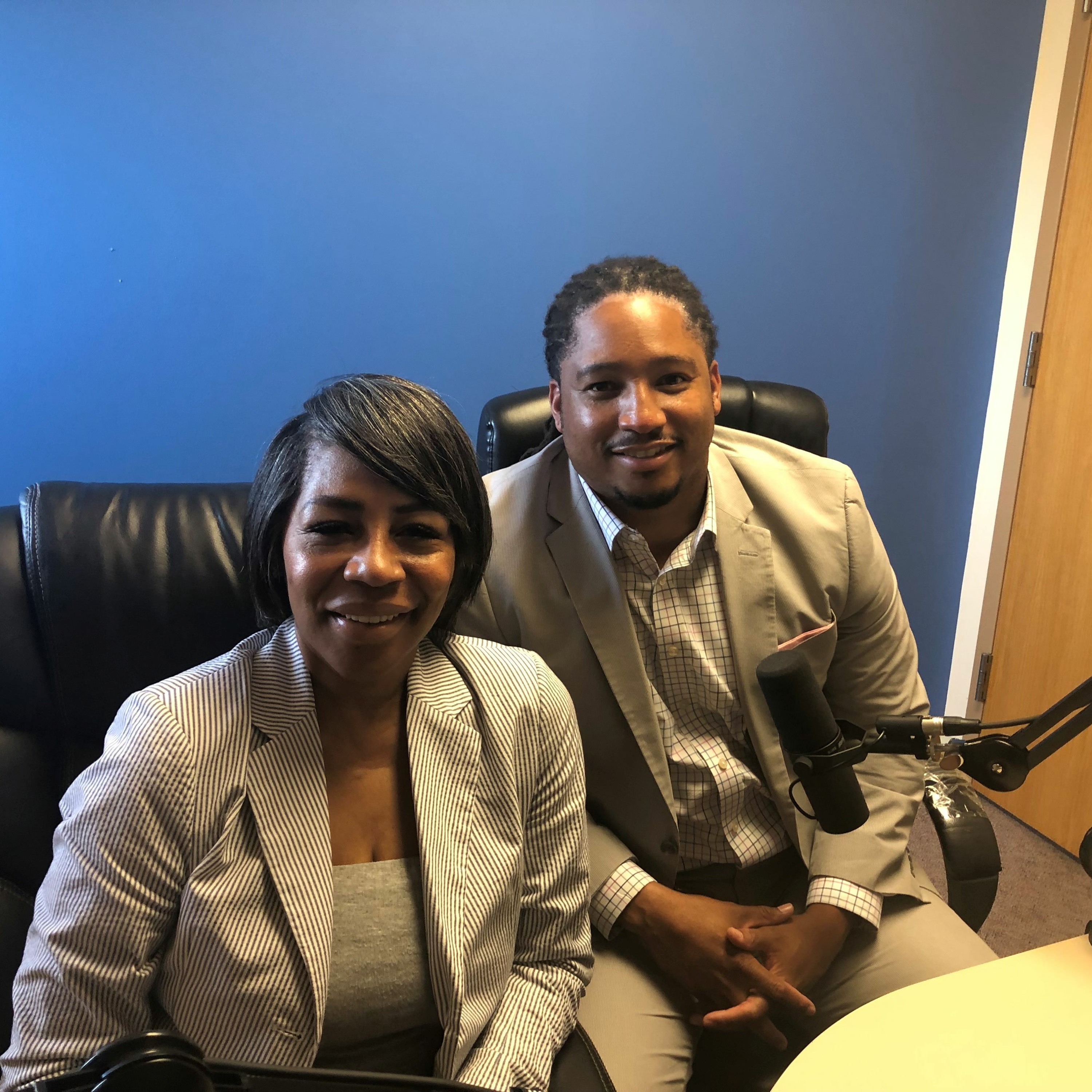
Hello and welcome to RISC chats with a firm. I'm your host Paul Marshall. Today we speak with Curtis McNeil and the TIGA Pranjur. How about the Affirm Data Analytics Community of Practice?
So our equipment kind of went down this day and we had to use our iPhone to record it. So sound quality might be a little different than usual, but I think it turned out alright. So hopefully you all will enjoy the podcast. Hello and welcome to the podcast.
So today we're speaking about the Data Analytics Community of Practice. I'm very happy to have here two of the leaders from that group. So what do we start off with? Let's take it.
Good morning. Good morning. I am the Enterprise Risk Manager at the Chief Risk Manager at the Census Bureau. I've been working on ERM for since 2011 actually.
We have a small office, but we have a very much short ERM practice. Very dedicated to the discipline of the ERM. And as far as we've come, I still know that we have a long way to go. Right.
Absolutely. And we also have Curtis. How are you going to Curtis McNeil from the Architect of the Capital on the Risk Management Officer? I lead our ERM program in Sonoma Controls, Data Analytics, and Audit Liaison.
I've been at the Architect a little over two years now. Prior to that, I spent basically my whole career in federal consulting on the private side. So I've worked at a lot of different agencies doing process improvement, ERM, and total control type work. So I'm happy to be here.
All right. Well, when we start off, Curtis, give us a little bit of the background to this community of practice. Why did you all decide to put it together? So yeah, it's funny.
It actually started while we were, I was walking into the REM CRMP, Certified Risk Management Professional Exam. And before going into that exam, I was just having a conversation with a colleague. He mentioned that he was using Tableau through some dashboards with his risk data. And it's like, oh, that's pretty ironic.
I'm doing the same thing. I have a SharePoint solution, and I'm trying to figure out the best way to integrate SharePoint with Tableau to do some visualizations that I think will help support the advancement of our ERM program within the agency. And we were just having that conversation just one on one. And there was an affirmative board member that was there that kind of overheard that conversation.
It came over and you jumped in. I was like, hey, you think there's any interest in the overall community, and maybe starting up a community of practice that will help kind of lead this initiative. We both thought it was a great idea. I have a tremendous passion for this stuff, both data and ERM.
So I thought it was a marriage that kind of made sense. So that was kind of the impetus for how we kind of kicked it off. Fast forward to kind of where we are now. Let's take it and I ended up speaking on a panel at the 2018 Affirm Summit last year, and that conversation was around leveraging data to better support our advanced ERM program.
So after we had that session, I approached Let's take it about participating in helping media culture on this community of practice. And it just made sense. She's at the Census Bureau. They know data.
Exactly. They certainly know data. And she had a very, very mature ERM program. So I thought it was once again, it kind of logically made sense.
We heard of the effort. I thought we had great chemistry. Our presentation went really well and luckily she accepted it. So that's kind of the origins of how it got started.
From a purpose perspective, it's really about facilitating the collaboration of public ERM practitioners focused around data analytics with really the purpose of maturing your ERM program. So if you think about the upcoming summit, right, so this is all about Affirm and plug in the good things that they're doing. The 2019 Forum is about the next generation of ERM, what you need to know. And I feel like what you need to know is how to better use data to support your ERM program.
That's right. That's the direction of ERM, just the world as a whole data that's becoming more and more accessible. So how do you take advantage of the data that's out there to help inform strategic decision making? Right.
How do you know the truth, best you can figure out, you know, your data to give you some ground truth and maybe give you insights you didn't realize or things that, you know, way things are operating, you had no idea until you really look at the data the right way. Things like that. Absolutely. Getting insights I think is the key, right?
You don't want to go in. You can go in with preconceived notions around which you may or may not think, right? But at the end of the day, I think the data helps to really tell that story and give you the insights you need to make a decision. Right.
Absolutely. Yeah. So let's talk about the membership. You know what kinds of folks are involved in the COP.
So we limited the practice to federal workers so that oftentimes federal workers tend to speak more freely without the field of competition or some sort of competitive influence. We just want to have very frank conversations about where we are and where we see our needs. And so we've limited to either federal workers, also a firm members or a person's federal workers considering becoming a firm member as well, and after them as well. It's free.
Registration is required. And we've seen a number of attendees that range, you know, that cover the full range of federal workers from the agency level to bureau and office department levels, and their interest is very strong. So we're very proud of that. And you see, yeah, there are some state and local folks on there.
Absolutely state. Also we open the doors to all of us. Yeah, I think another thing as well is that, you know, right now this is open to, you know, all federal employees. I think the ultimate intent as we kind of grow and develop is that, you know, we want folks to be paid a firm member to be able to participate and gain all the good insights that we're developing within this process, right?
So we're going to share within the community. So I think that's part of being able to effectively market the benefits of being a firm member, is being able to contribute and participate in this community of practice. So that's our ultimate goal, but in order to kind of just gain interest from the community and see what that looks like, we wanted to make sure that we were inclusive and open to all within the federal government. Another thing that we want to consider is, you know, what's a smart and what's the effective way to leverage the knowledge that's in the private sector as well.
You want to make sure that we're tapping into that accordingly as well. So we're open to suggestions and potential proposals on the best ways to do that, to make sure that we can make the community of practice, you know, all the consensus. Right. Yeah, I mean, I think it might make sense.
I mean, maybe you always want to have a government-only type session, but maybe at some point you can invite private in on special occasion or separate meetings or something. Right. Yeah. Everything about energy days, right?
Yeah. So folks can come in and, you know, maybe share tools and techniques, things that they've seen across, you know, that they've maybe developed or clients that they serve and, you know, just what that looks like so people can get, you know, an idea of what's in the marketplace. Yeah. I will say that we have seen a vast array of maturity and the memberships, ERM programs, and we have to figure out how to not speak to just one level of maturity and have the sessions open.
For conversation, for even the less, or even the very much you are in, so I think it's very important that we sort of try to meet them where they are. We address our topics based on what they're interested in. So our group is very engaged. I look forward to so many more people coming that we can meet across the agencies.
Great. Well, I think you got to touch on it a little bit, but let's talk more about, you know, where do you actually see the intersection between data analytics and a good ERM program? Put the connection together for us. So for me, in connecting the dots, you know, really no pun intended, I feel like that's what ERM is, right?
As a discipline, as a capability, it's really around connecting the dots across the enterprise within our respective agencies. So if you can effectively do that, and I think you have an effective ERM program, it's also about, you know, compelling storytelling, right? So if you connect the dots and you can tell a compelling story, what better way to contribute to that storytelling effort than to incorporate data, right? So to give some additional validity to that conversation, to that story.
So from my perspective, you know, you look at ERM as kind of, ERM data analytics, it's kind of really a collaboration. As far as informing, potentially informing the risk that you have within your agency, leveraging data, different data sources to identify risk. Then it's also, in my opinion, you can really help you support how you manage your risk, right? So it's really a two-way street from that perspective where, you know, you can gain insights and say, hey, these are some areas that are potentially risky or determining how risky or not something may be right, leveraging data.
And then, you know, once you've identified whatever risk is, you know, how do we manage this risk in an effective manner and how do we leverage data to help, you know, provide those insights into the direction that we go with what we can potentially tolerate from a risk appetite tolerance perspective. So if you kind of marry the two, I just think it makes a lot of sense and it really takes, you know, your ERM capability to the next level, to the extent that you can effectively leverage data. So, you know, hope and tell that story, connecting the dots, I think is what, you know, what the two look like together, it makes a lot of sense to me. Right.
I think at the Census Bureau, what we found is that our ERM process is a communication tool. I think that there's a lot of information out there. We have to make sure that we're speaking the same language. We waste a lot of time.
We're not using somebody's standards and think that we can take into our ERM programs. The time that it takes, for instance, to identify risk. And so if we can share that information, that's a very good thing. The other thing I think is that a lot of times we use data sort of, you know, from a historic perspective, which has its place.
But I think as technology enables us to do, we want to be able to use the data to kind of predict future risks or risk or opportunities. Or we do track both risks, opportunities, issues, and the more that we can sort of orchestrate data that can help us make decisions around those things, the better off we are. So we use our ERM technology sort of as a tool to sort of give us that insight. What we have found is that, you know, you start with basic information.
To me, ERM is just data. It is data. And how you process that data and how you share that data is what's important. I think in this era where technology is so strong and yet is easier for us to use, we leverage that with the tableau and the visualization tools and all of those things to help make, you know, what we're seeing crystal clear.
And then the decisions that we need to make are supported by that. So this sort of evolution of significant amount of data that's coming at us and our ability to process in a useful way is a beautiful thing. I think that's where we are right now. And, you know, so obviously data is great if you can get it.
But what kind of challenges have you all found out they're, you know, getting access to data or having the right data? Yeah, I think that's definitely one of the challenges, you know, access to data, making sure it's quote unquote good data that you have access to, having the skills, the analytical skills to be able to process the data that you receive. You know, I think all of those components of some of the challenges of making sure that you can effectively leverage data in your program. So access to the data, I'll start with that one.
I think it's just, it's a communication mechanism, right? So you have to be able to effectively communicate. You have to establish relationships within your agency to be able to get that data because when you think about it, the program themselves don't own a lot of the data, right? Right.
So those data come from the different program offices, the different areas within your organization, you know, that have that data. So being able to establish those relationships and tap into those networks so you can get access to that data. Better understand how they're currently using that data, right? You know, figure out how they're analyzing it, what their need is, and then figure out, you know, how you can incorporate that data into your program.
I like to use the example of a very basic way to kind of start is just, you know, maybe look at your enterprise level risk, right? Pick maybe your top two or three risks and figure out what data sources align to those risks. Right? Exactly, right.
What should you start to do that? Then you can start gaining your insights. So what should identify what data is available for those particular risks? Then you start, you know, having conversations with those folks to figure out, okay, this is an enterprise risk that we have.
This is the data that we have available. You know, what's our risk appetite? You know, what's our tolerance? What do we feel comfortable with from a performance perspective, right?
So, you know, we're trying to figure out what's going on in this particular area of risk and how can we leverage data to help measure that, help determine the direction that we go, you know, how risky something may or may not be. You can leverage data to gain all kind of insights into that kind of strategic thinking, right? So I'll let it take its own as well. So, of course, in the Census Bureau we are the agency and we do exactly on this broad scale what we're trying to do in ERM and that is to collect data.
And we're specific about what kind of data we want, what we mean. I think that is at the Census Bureau level, but at the ERM level we're still understanding, you know, all of the areas, areas where we can collect data that will help inform our risk process across the organization. One area that we've been doing that is our audit area. We have a mature audit oversight group that oversees all the various audits we have, a dozen or more audits going on at any point in time.
And we began to realize that the data that resulted from the audits, the recommendations and findings was a rich source of risk data. Not just the threats that they represent, that we may be repeating across the organization, but also the treatments for those, the kinds of actions that are developed to address those risks. So, we figured, you know, this is going to inform our risk process. It can inform the risk identification process.
It can inform the risk treatment process. And so, we developed a system that sort of relates to our ERM process. The relationship has to do with our enterprise risk category, so that we can categorize those findings and recommendations based on the same categories that we use for our risk process. So, we are interested to see what other areas around our organization have been possibly overlooked as being able to contribute to our risk ERM goals and whether it's identification process, the treatment process, or any other, as well as opportunities.
So, when I say that we're just really just sipping the iceberg for what we can do with ERM, we do know that data just for the sake of data does nobody get it good. So, our focus now is trying to identify good quality consistent data. I think if you're able to use data in more than one way, as a sense of fear, that's a good thing. And so, we're just beginning and just having the tools that can help us process and visualize what that data is telling us is what I'm most excited about right now.
And what it can do too, is having access to that data is being able to really help us go creep right? It can really help you hone in on a particular area, right? There's a lot of data out there that can get really, really broad quickly. So, in order to really focus in on a particular problem area, the data can help you really drill down so you can answer that specific business question or that problem that you're signing to solve.
So, that's, I mean, data analytics to me is really about effective problem solving. So, in order to use that data appropriately, you can really drill down to that level of granularity that allows you to answer a specific business question and or need. And being able to use the data that way, I think, is a smart approach. And I'd like to say when we were on our panel yesterday, I love when we're not only trying to inform those that are there to hear speak, but we're also learning.
And so, we were talking about, I think, one gentleman of the panel used an example where there was a risk problem and they just threw an answer to it. And they said, well, wait, no, let's see if this is really a problem or what's contributing to it. And so, what we discussed was that the risk process itself forces everyone to think at a deeper level about cause and effect and things of that nature. And so, you're able to impact the organization with cost-saving and efficiency.
And it just contributes in so much a bigger way than just a risk list. And so, having that data available and having it sort of a required component to think through how we're treating it and how it's moving and then it's improving is a really big thing. So, discipline goes beyond just the bounds of just a simple risk list. It really does come to our management.
Absolutely, I completely agree because one other thing is I think data is a great conversation start. You take that data, you put it up in front of senior leadership, and now you have a conversation. It helps me interpret that data in different ways, but it's a great conversation start. And one of the true opponents of ERM is really having good conversation around whichever is scarred.
I think data can help contribute to that good conversation. Yeah, I think executives are good too at seeing a chart or something and saying, what is this spike? And you may not have the answer, but it's still a conversation start, I need to go investigate that. Exactly.
And as we talk about risk being a full-letter word to some folks, what are the things that I like to talk about in my agency, especially with my senior leadership, is that risk is neither good or bad. Risk is inevitable. We do things that are inherently risky on a day-to-day basis, personal lives and not professional lives. So, how you manage that risk is something that you can be evaluated in judgmental.
It's not about risk being good or bad. So, if there is a risk, now you start looking at how that risk data is trending, you can ask questions like, okay, what's contributing to the upward tick in this particular risk? Or what's contributing to us reducing this risk? You gain those insights, and now you're getting things that management can now use and maybe replicate a lot of agency to identify commonalities in areas where you can be smarter around how we do business and move forward accordingly.
So, I think just being smart with how we take the insights that we're getting from that data and informed decision-making is what we also need to want to do. So, I want to ask you guys, have you found that your agencies or your member agencies in the group have some of these questions come up? Do we have this data? Do we have that data?
Has that spread with parts of the organization to start gathering certain types of data? Or even like, hey, we need to measure those business before our performance or performance metrics or measures. Have you guys seen that at all? Absolutely.
I think that as in order to mature your program, you have to let the organization sort of help drive what the needs are. And so, if we get to a place where we're trying to make decisions and we have a question and we don't have the answer to it, but we realize that it's an important component to solving how we address the situation and we go for it. If another area is using something that we hadn't considered the enterprise level and we think the whole organization can benefit from it, we use it. And we incorporate it into our system, we customize our system to address that and make it easy.
And one of the other things is that the accessibility of the data is so important. We're using all sorts of, we're using technology to make sure that through business intelligence and visualization that is on their desktop, that's available. Because when we started, we just sort of live in a PowerPoint world where we prepared reports based on, say for instance, data that maybe a small group kind of only maintained, but now everyone owns this data, everyone can see it, you can query it, and you can. So in order to get sort of the data out there, everyone's using it, that's where the questions come in.
We have a risk users group so they can bring to the table how they're using it or what the needs are for the data. And if we uncover that there's something that we didn't think of that can improve our process, we write it in. And that's one of the benefits of having sort of an organic customizable tool. So what are some of the current topics that the COP is discussing right now?
So, so far we've had two meetings. We had the first, an algorithm meeting back in April, and the topic for that meeting was leveraging technology to enhance your agency's ERM capabilities and data analytics. What is it? So, the basics.
Exactly. And the second one is building the data analytic framework for ERM. So I'll speak a little bit to the first meeting, I'll let the second meeting. So the first meeting, it was really just let's take in that transition in the session that we had at a firm, because we both have tools that we use for our ERM programs.
I have a SharePoint based tool, she has a tool with technology, so we thought it was important to really just kind of get that out in the community. So, we thought that was a good starting point to say, hey, this is how we currently leverage tools and data within our respective organizations. This is what's out here, this is how you can do it in a scalable, you can do things on a granospere, you can, you know, we want to meet people where they are. So we wanted to give them options as to, hey, this is what's out there, these are the capabilities that we have within our respective organizations.
Then we had a conversation around data analytics and what is it? Data analytics means a lot of different things to a lot of different people. So one of the things we wanted to do is really just kind of start that conversation with the community. We're not there to once again, we're not there to dictate, we're there to be a part of voice of the community.
So we thought it was good to just, you know, let's show some research on what data analytics is, you know, how people define it, how it can be used. And one of the things that we did was we pulled a recent gardener survey, so just talk about how data analytics is being used in ERM programs. So that was a really good start. One of the things that we learned in that is that with an our community.
So the gardener survey, I think, had about 112 or so respondents. At that particular meeting, I think we had respondents running from 25 to 26 people. So one of the first questions we asked were, are you currently using the tools to support your ERM activities? And 68% of the people said no.
So that's telling, right? So, you know, right out of the gate, you know, we figured out, you know, where we stood as a community as far as what people have, what they get to have. So that was insightful for us because that kind of helps us figure out, okay, how should we progress in this process? You know, what do people want to know?
I think the good thing about it is that one of the things we did learn was that there's a ton of interest in this area, which I think is a good thing. So one of the other questions is, you know, if you don't have a tool, do you plan to get a tool and win? And what we saw was, you know, the vast majority of folks within a year or two wanted to invest in some kind of tool or system that can help support their ERM process. So you can see the direction where people want to go.
It's just about, you know, how do we get there? Right? So another one of the questions was, you know, how do you currently use for the folks that are using it? How do you currently use, you know, your GRC tool?
So the top three answers were data aggregation and storage, data analysis. And the final answer was, you know, don't have a tool, right? We're talking about where that's still in the spectrum. So what was cool was that the data from our group really aligned with the data that Gardner had as well.
So it was cool to kind of see the correlation. So that's one of the things that we wanted to do was be able to see, you know, where we are as a community compared to some other benchmarking that Gardner had already done as well. So I think all in all, what we found was that, you know, we're very nascent in the federal government. You know, ERM overall as a capability is new for folks based on the guidance that came out in 2016.
Let's say in her team, obviously we're headed to the curve and starting their program in 2011, but most programs are relatively at an emphasis stage. So you would expect to see that. So those are the results that we expected a lot of that. I think as we think about, you know, the next generation of ERM and where it's going next, it involves data.
So you have to figure out effective ways to leverage data. And that's some of the insights that we kind of gained from that initial session. So I thought we had a really good first session. They were still engaged questions throughout, which I love, they'll hold them because you totally lose them.
But for the second session, Curtis did some polling questions. We decided that we wanted to have interaction in all of our meetings. We didn't want to have them just sit there listening to us. So we tried to bake in some sort of way in which they can contribute.
Actually, we had to take away. But for the second one, we focused on building a data framework for ERM. We looked on cover. We liked to touch on things like we are still constantly reminding to levels that what we think data analytics is.
It's like Curtis said, it can be different things. So we always talk about what it is to us and to this group. We touch on things, but we don't necessarily drill down to every little thing. But in this second session, we were looking to understand our environmental scans for data, like mining for data around your organization, considering what data could inform your ERM program, the sources of that data that you want to include in your ERM framework, the types of data that inform the risk process, and the accessibility of data too.
That's a very important thing because having it doesn't do any good if it's just a small ERM office. We also talked about the types of data analytics that are descriptive, what sort of answers, what happens, diagnostics, which kind of looks at historical perspective and kind of helps understand why it happened. But what we consider advanced analytics, or predictive analytics, has to do with sort of telling why something, you know, telling what is likely to happen, or even that's predictive and prescriptive sort of describing what action to take. That's a level of maturity that very few organizations, including the Census Real have, no matter how mature our program is.
In fact, I think 63% in another survey that was done by Gardner indicates that 63% don't use advanced analytics. So most of us are still in that diagnostics descriptive state here of what's happening in our risk world. So that sort of gives us some where to go, some where to evolve to, how they're leveraging the technology and the data to inform their programs, their key RI tracking and things of that nature with something that we wanted to consider, and the potential sources, which we all have sort of these process steps related to our ERM, the way we approach ERM, and we thought, well, can you decompose the process and see are there sources of data that could inform each process? We talked about the risk identification process, where the sources of risk identification come from, and also the treatment, where can we get help with that?
We talked about the tools for the ice centers and this intelligence- What I think is the visualization components and how we can sort of use that. So I think that just getting the community thinking about the sources of data and the marriage between technology and hosting that data, and how to sort of get it out is where we thought we wanted to send the group to be. Right. You know, it's the fact that old thing about if you don't measure it, then you're not really going to manage it, or you're just going to morph us, you know, what's going on out there.
And what I like when I'm hearing is, sounds like you guys are, I think early stages ERM was maybe more of an art versus a science, so it's kind of like I have this instinct that these things are bad and we got to worry about them, and we were getting some real data, putting science to it, trying to predict things. I mean, that really is the next maturity level for sure. How do we make sense of it? Data just for the sake of data doesn't nobody any good.
I mean, honestly, I was at a conference, I think at a partner conference recently, and one of the interesting things I found when you do networking is that some of the participants or attendees were focused on the data that they're company data, whereas my entire business is data. So if I don't get this right, there's something wrong with me. I've got plenty of colleagues who have been managing data for a long time, when we just introduced HABLO recently, we've been using HABLO for a long time. I think that when I say we're just scratching the surface, tip the iceberg, like you said, you start off with an art and now it's by getting real serious.
It's more important that we not just have fillers, that we have useful data, and honestly, I think that data, if it's worth collecting, you should be able to use it for more than one thing. That's what I think. That's where we are, not trying to put in what we don't need. We're willing to take out what we thought we needed and realize it's not adding much value.
We did have some final points for that particular, that second session we shared with everybody, and we talked about the difference between the types of data and the trends. We think it's important for you to keep your ears around. I'll have a couple more questions for you guys. I guess not Q1, both of them, but one was really just what kind of things is the group sharing with each other, actual best practices or white papers, things like that, and then what are some future topics you guys would like to discuss?
I'm going to start off with some of the things you actually share with each other, or plan to share with each other with agencies. I think what we're attempting to share now is the insights that we have in our respective agencies. What we're doing, that practical application that I talked about earlier, which I think is important, is a nice takeaway. Giving them real-life examples of what we're experiencing as we try to go through this ERM data journey.
What struggles do we have? We're sharing tools and techniques for what we have, in addition to research that we've done, both with taking our members of the Guard and our Business Management Leadership Council. Any insights from surveys and data that they're doing there, we're contributing that to the group as well. Data analytics community practice, I feel like it's coming up on us to collect data while we're in these sessions.
The surveys that we collect while we're in the data, we're taking that data and we're sending it back out to them so they can understand it from a community perspective where we are, so we can benchmark what we want to go. Those are the things that we want to share. We want others to be able to share as well. I think we're getting our feet wet, so we're taking our doing a lot of the sharing right now.
But eventually, I do have other folks that I know are doing really good things with data in the federal space that I want to come in and maybe not are currently participating in the group, but to lead some presentations and discussions and dialogue to be able to share to the community as well. So we definitely have some thoughts on that. We'll talk about that. I'm a big proponent.
I'm also a PMP and I'm under Census Bureau. I do not only ERM, but Program and Project Management, Policy, Standards, Tools, and I'm a big tool girl in addition to being data. I think I like to share tools, for instance, process maturity. I think that you should keep an eye on not only where you are, but where you can go.
Once you embed a good practice and you want to continue to improve upon it, you have to have some sort of measure. We have one of the partners that we use, but then we also once we sort of hit that advanced level of maturity, we look outside for other tools, I think implementation plans, I think organizations that have a smaller level of maturity in their ERM, sometimes that's what they need to get them really going, is an indication of some sort of implementation plan. And they go off and run with it. So, like I said, here's an eye talk about what can we share that is usable, like tangible, engineering, you know, on the group.
So tools, templates, tips that help sort of get folks off the ground is what we hope to share. Right. And the plan is that there is an avenue on the firm website, on the member portion where you can actually post documents that we're talking about and the content that we're talking about. So, once again, as far as having the benefit of being in the firm member and participating in this community of practices is being able to have access to that repository of information as well to be able to go back to.
Right. Yeah, and I mean, I talked to a couple of other folks on this podcast as well, and they had data analytics strategies and all kinds of interesting things, maybe those things I can share, or you guys can share. Yeah, there's all kinds of templates and ideas, you guys can definitely. Absolutely.
What I would say about the Gardner license that we have, Gardner absorbs CEB and CEB, appropriate exact for kind of sort of a different model where unlike Gardner, if you had a license, you could share the research across your organization. Anyone that had a census op-out email could tap into the information. And so, once we sort of create a culture of risk awareness, and we have a risk-group group, we want to keep it sort of stimulated, and we want to make accessible to them all kinds of information, whether it's webinar opportunities, or just some of the latest research around in some area that may be plaguing their particular program area. So I just think that the sharing of information is really, really good, and I'm glad that Gardner sort of kept that model when they adopted CEB.
I think the other thing that we talked about was case studies. I'm sure case study at our last event where we're talking about how we approach something, I mentioned the oversight audit management data that we created using SharePoint, some process around so that we could capture and share that data. And I just think sometimes when you just point out what you're doing, you get ideas, and you can just go off to your own agency to do that. And so, like for this, I look forward to seeing what little nuggets we can get from the community, so that we can continue to expand our own program.
And the case study that I introduced to that group was how we're currently trying to manage our deferment and scalar rule backlog with any agency, right? So, it's a great data point to be able to share with the community, so that was a good one as well. Which is my fascinating look at the Victoria of the Beautiful Historic Building. Well, thank you.
It's a pride. Well, last question, we kind of said here, where are some future discussion areas or activities you would like the COP to do? Or discussion? So, go ahead, first.
So, like we talked about, we tried to poll the community. So, based on our original poll, these are some of the topics that we kind of came up with, where really understanding the benefits of data analytics and ERM, assessing your organization's data analytics capabilities, surveying sources of risk data, mining data to enhance your ERM capabilities. So, we're open to, you know, just whatever the community, we want to be the voice of the community, right? So, we don't want to dictate the content and conversation.
We want to make sure that, you know, it's a two-way conversation between, you know, essence, you know, leaders of the community, and part of the community, that we're taking, you know, what they want to learn, grow with, and make sure we kind of put that out there for the community to absorb. So, that's the direction that we'd like to go. If anyone has any suggestions on topics or, you know, things that they would like to contribute, you can reach us both at, if you go to the firm.org website under Member Services, and then there's a community's of interest and practice, and you'll see the DescopLink that has our contact information in there. So, yeah, you can reach out to us, feel free to give us suggestions where we're open books or we're open to, you know, getting what we can from the community.
And the last thing I'll say is that we always want to remember the Descop way, which is to start building growth. We want to start somewhere, build content, and grow capability. So, that's right. The same contact to actually join the group too, if you're governmental, you can reach out to you as well.
Yes, you can reach out to the table and get you plugged into the community. Very good. Well, thank you both for being here today. This was a really very informative session, so I thank you very much for coming today.
Thanks for having us. Join us. Check us out at firm.org. We have a summit actually this week.
So, I'm going to see when this podcast gets published, I'm probably going to be after, but I'm looking forward to that. I've got a lot of you there. I'm sure why plenty of interesting topics to discuss after that. Some big podcasts.
So, until next time, this is Paul Marshall signing over for Chris Chatsby the Fur.