
EPISODE · May 26, 2025 · 22 MIN
Episode 3: Costa Rica 1940
from History of Elections Podcast · host Mathew Nicolson
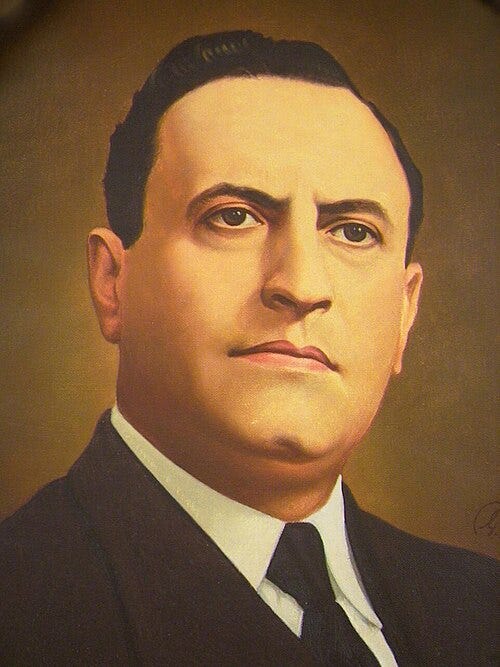
In 1940, Costa Rica held elections for its president and legislature amid a transitional period in the country's history that laid the path to civil war.Hello, and welcome to episode 3 of the History of Elections podcast. This month we will be exploring the 1940 general election in Costa Rica, held during a transformative period in the Central American country’s history that would define its political trajectory for the rest of the century.February, 1940. The Soviet Union begins a massive attack on Finnish forces defending Karelia during the Winter War, two months after the Soviet invasion first began; in Tibet, the 4-year-old Tenzin Gyatso is proclaimed the 13th Dalai Lama, the leader of Tibetan Buddhism; the radioactive isotope carbon-14, which would from the basis of radiocarbon dating, is discovered by researchers at the University of California, Berkeley; the Soviet theatre director, Vsevolod Meyerhold, is executed as part of Joseph Stalin’s purges; and, in Costa Rica, voters go to the polls to elect their next president and parliament.Since gaining independence from Spain in 1821, Costa Rica has developed a reputation as one of the most stable and democratic countries in Latin America. Like many of its neighbours, Costa Rica has experienced blips in that record—notably, a series of coups d’etat in the 1860s—but, by 1870, a sequence of stable if not always democratic liberal administrations governed the country for several decades. Another coup in 1917 led to a short-lived military regime that was overthrown by a popular uprising two years later, after which constitutional government was restored.From 1910, the dominant party in Costa Rican politics was the Republican Party. Founded in 1901, it first came to power under the presidency of Ricardo Jiménez, who served three non-consecutive terms between 1910 and 1936—immediate re-election being forbidden by the constitution, as in many other Latin American countries. Within Costa Rica’s liberal consensus, the party was founded along similarly liberal lines, though appealing to a new social base among local peasant leaders. The Republican Party oversaw the introduction of direct presidential elections in 1913—the president was previously elected via an electoral college—and expanded the franchise. It was also the party in power at the time of the 1917 coup.Following the restoration of constitutional rule in 1919, Costa Rica experienced several competitive elections as power rotated between different parties and presidents. A secret ballot was introduced in the 1920s, although accusations of fraud and ballot stuffing remained a consistent feature of elections. In fact, it has been argued that the secret ballot actually produced more blatant acts of fraud, albeit at a lower rate, as parties resorted to more extreme measures to influence results.In 1932, the Republican Party suffered a split, as Ricardo Jiménez—who had served his second term as president between 1924 and 1928—led a breakaway grouping named the National Republican Party, or PRN. Despite the split, the new PRN won the presidential election held that same year, electing Jimenez to a third non-consecutive term. This initiated a period of electoral dominance for the party, which elected its candidate for president in 1936, León Cortés, by a landslide.Cortés’ presidency was marked by a series of public construction and infrastructure works, including the construction of the country’s first international airport. He also supported new banana plantations, established new ports and introduced banking reforms. Most controversial, however—particularly in subsequent decades—was Cortés affinity with Nazi Germany. At the outset of the Second World War he barred entry to Polish Jews fleeing Nazi authorities, and he even appointed Max Effinger, the German-born leader of Costa Rica’s local Nazi foreign branch, to be his director of migration.The PRN’s popularity continued to surge during its second term in power. The 1938 midterm election for half the seats of the Constitutional Congress, the country’s legislature, saw the party rise to 62% of the vote, the highest vote share it had yet achieved in any election, and a promising portent ahead of the 1940 presidential election.As the 1940 election approached, Cortés began exploring ways to run for a second term, despite the constitutional prohibition on doing so. However, he was eventually persuaded not to make any such attempt, and committed to standing down at the end of his term in 1940.During Cortes’ term, the PRN began to experience another internal division. The influence of its founder, Jiménez, began to wane as he aged—he would be 80 by the time of the 1940 election. At the same time, a young doctor and congressman named Rafael Calderón began to grow in status within the party. Educated in Belgium, where he had been influenced by social Christian ideas, an ideology that fused Christian theology with the political ideals of social welfare, public ownership and egalitarianism, Calderón advocated a shift to the political left. His commitment to these ideas has also been interpreted by some historians as a pragmatic measure to replace the PRN’s declining support among the coffee oligarchs with a new support base in the labour movement.In doing so, he sought to follow in the footsteps of several other Latin American countries, notably Chile, Uruguay, Brazil, Argentina, Peru and Bolivia, each of which had established social security programmes by the 1930s. In contrast, such programmes were much rarer in Central America, where the ruling, typically liberal elites resisted such reform. Calderón’s political ascendancy thereby challenged the liberal consensus that had prevailed in Costa Rica since the 1870s.Despite the political stability of the past decade, Calderón’s attitude represented growing discontent with how Costa Rica had handled the Great Depression amid an upsurge of industrial unrest in the 1930s, particularly within banana plantations. Costa Rica’s banana plantations were largely owned by the United Fruit Company, an American company whose presence in central American states directly led to the term ‘banana republic.’This culminated in the wonderfully named ‘Great Banana Strike’ of 1934, which ended in failure for the workers but contributed to a growing political consciousness among the workers. Growing political attention began to be placed on poverty and economic inequality; communist, socialist and anarchist movements grew in popularity; and immigrant groups began making growing contributions to the labour movement.Calderón secured the PRN’s nomination in 1940, with the reluctant endorsement of President Cortes, in exchange for a commitment—which would later fall apart—to support Cortes’ candidacy in the 1944 election.Calderón did not end up facing substantial opposition in the 1940 election. The old Republican Party had withered away, as had the National Party, a liberal party—or, perhaps more accurately, a brand—that had contested elections in 1928 and 1936. Moreover, Calderón maintained his party’s support among the powerful coffee oligarchs. In an attempt to prevent Calderón from taking power, there was a brief bid to coax Ricardo Jiménez into a fourth presidential campaign, but he ultimately declined.As a result, Calderón faced two opposing parties, neither of which had substantial political or financial backing. One of those parties, the Guanacastecan Brotherhood, did not even seek to represent the entire country, instead focusing on regional interests in the province of Guanacaste in the north-east of Costa Rica since its formation three years earlier. The Brotherhood nominated Virgilio Salazar as its candidate.The other party was the Costa Rican Communist Party. Founded in 1931, the party was, as might be expected, a member of the Communist International, although it retained some independence from Soviet directives, calling instead for a ‘creole communism’ based on Costa Rican traditions and with a greater focus on rural areas . The party’s candidate was its founding leader, Manuel Mora, who had previously contested the 1936 election against Leon Cortés, winning 5% of the vote.According to the constitution, whoever won a majority of the vote would be duly elected president. If no candidate won a majority—which, due to there being three candidates, remained a possibility—it fell to the Constitutional Congress to decide which of the two top-placed candidates would be elected. As the Congress was utterly dominated by the PRN by this point, a run-off would effectively ensure a victory for Calderón.Voting in the election was open to all men over the age of 20, a limit that was lowered to 18 for men who were married or, to quote the constitution, “professors of some science.” Women were denied the vote, a status that would not change until 1949.The campaign was contested over the radio airwaves and in Costa Rica’s newspapers, which often reprinted speeches delivered over radio. Newspapers also contained news of party activities and, presumably to build a sense of momentum, lists of the names of party supporters.Calderón largely avoided discussing social welfare or reforms in the campaign, hoping that his party’s structural advantages and his personal popularity could propel him to victory without having to get dragged into divisive issues. Only on the night before the election did he publicly discuss the extent of his plans for social reform, stating that his “fundamental preoccupation” as president would be with the poor.His assessment was entirely correct. Without facing any great unified opposition, Calderón won the election in a landslide, securing 84.5% of the popular vote. His victory for the PRN was the first time any party had won three successive terms since the 1880s. Calderón’s second closest competitor was Mora, who took 9.9% for the communist cause, nearly doubling his vote share from four years earlier. In last place was Salazar with 5.7%. Turnout was 80.9%, or just over 100,000. This was an increase on 1936, which can be attributed to the introduction of compulsory voting that year.Calderón swept every province of Costa Rica, though performed slightly less well in Guanacaste due to Salazar’s candidacy. Calderón also very slightly underperformed in the populous central valley region in the geographic centre of the country, though his landslide was so absolute that this did not make any great difference.There were some allegations of fraud, especially in rural areas, and the lack of any serious competition against Calderón did not suggest the kind of healthy, competitive electoral culture that had existed in Costa Rica in the 1920s and 1930s. Indeed, Lehoucq and Molina describe the 1940s as “one of the most infamous and fraud-ridden” decades in Costa Rican political history—though this would get worse as the decade progressed. The 1940 election itself was somewhat free and fair, at least among the male electorate; even if all the accusations of fraud had been true, it would not have been enough to overturn Calderón’s victory.Thus, Calderón was sworn into office with a genuine and sizable mandate. The PRN similarly swept the congressional election for half the seats in the Constitutional Congress, building on the party’s landslide for the other half in 1938. This provided a clear majority for Calderón’s agenda.He put that mandate to good use. 1940 has been identified by historians as a turning point in Costa Rica’s history, when the ‘Liberal State’ that had prevailed for the past 70 years gave way to the ‘Reform State.’After a slow start focused more on public health measures, he eventually established the Costa Rican social security fund, a public pension and healthcare system. He brought together four independent higher education schools to create the University of Costa Rica, a public university. Calderón’s government also pursued some cautious land reform, allowing people to acquire land on the condition that they cultivated it. In 1942, he implemented the “social guarantees,” which gave workers the right to form unions and strike and introduced a minimum wage. These rights were enshrined in the constitution in 1943.With these policies, Mark Rosenberg described Calderón as a leader “who reoriented the state as an instrument of the working and middle groups.” Many of these policies were modelled on the welfare state that had been established in Chile, illustrating the transnational and regional influences that fed into Calderón’s policy decisions.Calderón’s reformist policies faced some resistance in the Constitutional Congress, despite the PRN’s majority. His proposed expansion to the administrative structures that were needed to administer the social security programme proved controversial, as did the programme’s eligibility. What emerged was a system of compulsory social security payments for workers on lower incomes while wealthier citizens could opt out from the system and access private healthcare, a watering down of Calderón’s initial proposals. Unlike other Latin American countries, the eligibility for social security was set by income rather than by profession or trade. In part, these decision were based on the resources available as much as ideological considerations (though those were certainly present); Costa Rica in the early 1940s lacked the resources to establish a more universal public healthcare system.Calderón also took Costa Rica into the Second World War, joining other central American states in supporting the United States after the attack on Pearl Harbour in 1941. Costa Rica did not make a significant contribution to the war, though it did suffer a German U-boat attack in 1942. More substantial was Costa Rica’s contribution to the American-led internment programme against citizens of Axis countries, under substantial American economic pressure. During the Second World War, most of which fell under Calderón’s presidency, it is estimated that hundreds of German, Italian and Japanese citizens were internally detained or deported to the United States, where they also endured internment. The U-boat attack in 1942 also triggered a wave of anti-German looting in San Pablo, affecting more than 120 German-owned shops.Opposition to Calderón’s reform agenda, concerns at allegations of electoral fraud—the 1942 congressional mid-term elections saw another landslide victory for the PRN—and, in some quarters, outrage at the treatment of Axis citizens, led to growing opposition, particularly among the coffee oligarchs. Indeed, Germany had been a major source of coffee exports prior to the war, while descendants of German immigrants were well represented among the landowner class. Wartime trade disruption also led to shortages of goods such as food, gasoline, tires, cement and steel, shortages which Calderón’s government proved ill equipped to deal with. Rumours abounded of coup plots, though none came to fruition.To build societal consent for his reforms and combat his opponents, Calderón assembled a curious civic coalition. On the one hand, he reached out to the Catholic Church, promoting a brand of Christian socialism that he had been influenced by in Belgium. Although he could not bring the entirety of the church behind him, with conservative clergy officials continuing to oppose his agenda, he made considerable inroads.Notably, he gained the support of the newly seated Archbishop of San José, Victor Sanabria, a figure who had risen from a humble background and who had campaigned for many of the social reforms that Calderón was enacting in power. Like Calderón, Sanabria had also been influenced by the reformist ideas that he had picked up during his time in Europe, which viewed Christian social reformism as an alternative to Marxism.At the same time, in the second half of his term, Calderón reached an agreement with the Communist Party and Manuel Mora. The party was willing to moderate somewhat in exchange for the opportunity to influence state policy, even changing its name in 1943 to the Popular Vanguard Party and reforming itself along non-communist roots. This helped to glue together Calderón’s alliance; Archbishop Sanabria proceeded to announce that membership of the PVP was compatible with membership of the church.Indeed, the Communist Party had claimed partial credit for Calderón’s social reforms—the Social Guarantees in particular—stating in 1941 that “We ourselves have fertilized the ground so that the seed can be sown.” This alliance helped Calderón make inroads among parts of the labour movement and also gave Calderón and the PRN Government access to militias under communist control, something that would become significant in the coming years.The alliance between Calderón, the clergy and communists reshaped Costa Rican politics and laid the foundation for the ideology of Calderonism, a fluid, populist, social Christian outlook that would remain enormously influential throughout the twentieth century and has sometimes been compared to the influence of Peronism in Argentina. Calderón’s critics began accusing him of what they called ‘Caldero-communism’ and of establishing a nascent dictatorship.Unlike his predecessor, Calderón made no attempt to extend his period in power and stood down at the end of his term in 1944. However, also unlike his predecessor, Calderón had reshaped both the country and his PRN to the extent that he was able to retain substantial influence out of office.His handpicked successor, Teodoro Picado, the President of the Constitutional Congress and a prominent historian, was endorsed by both Archbishop Sanabria and by Mora and the Popular Vanguard Party, thereby bringing together the entire Calderonist coalition behind his candidacy. Moreover, the PRN Government was growing increasingly comfortable utilising state resources for the benefit of its election campaigns, while accusations of electoral fraud markedly increased throughout the 1940s. Picado accordingly won another landslide victory for the PRN in 1944, against none other than former president León Cortés, who had turned against his former party after Calderón reneged on his pledge to support his candidacy for the PRN.Although not entirely a puppet of Calderón, Picado’s presidency was very much understood as keeping the seat warm for his predecessor, who indeed sought a second term at the next election in 1948. This election would benefit from its own full episode, but it significantly shaped Calderón’s continuing legacy in Costa Rica.To very briefly summarise, the PRN’s string of landslide victories that began in 1940 came to an end as Calderón lost fairly decisively to the high-profile newspaper owner, Otilio Ulate. Both sides made accusations of electoral fraud and violence began to spill out onto the streets. The Constitutional Congress, controlled by the PRN and the Popular Vanguard Party, voted to annul the election and call for a new vote, allowing Picado to continue serving as president on an acting basis.This turn of events precipitated the six-week Costa Rican civil war, when an uprising led by José Figueres, a businessman briefly exiled under Calderón’s presidency, successfully overthrew the Picado Government with the aid of the Caribbean Legion, a transnational group of pro-democracy and Marxist guerillas that included Fidel Castro among its members. Calderón was sent into exile with Picanto while Figueres established a provisional Government that drafted a new constitution. Among other things, the new constitution abolished the Costa Rican military, leaving Costa Rica one of the few countries in the world to this date that does not possess a standing army.Yet, this spectacular defeat would not be the end of Calderón’s political career. He fled first to Nicaragua and then to Mexico, where he reverted to practising as a doctor. In this time, his political rival, José Figueres, reshaped the Costa Rican state and was democratically elected to a full term in office in the 1950s under the banner of his National Liberation Party, while Calderón’s political reputation was one of failure and disgrace. He gained the status as a villain to Figueres, who assumed a status as a national hero—although, Calderón did retain some support in the country. The PRN was temporarily banned but was permitted to begin contesting elections again from 1953.Costa Rica’s third post-war president, Mario Echandi, allowed figures from the defeated side of the civil war to return to the country in 1958, including Calderón himself. Not content to return home as a private citizen, Calderón threw himself into political activity once again, getting elected to the Legislative Assembly—the body that replaced the Constitutional Congress under the 1949 constitution—and even made a third attempt at the presidency. In 1962—another election that would warrant its own episode—Calderón went down to a second defeat, this time against Francisco Orlich, an ally of Figueres. Calderón won just 35% of the vote, a far cry from the 85% he achieved in 1940. Ironically, the election was also contested by Otilio Ulate, whose victory Calderón had sought to overturn 14 years previously, though he came a distant third.Even this defeat did not bring Calderón’s political career to a close, as in 1966 he was appointed Costa Rica’s ambassador to Mexico, the country where he had lived in exile just eight years earlier—quite a redemption arc! He served until 1969 and then, after 36 tumultuous years as a leading figure in Costa Rican politics, died in 1970 at the age of 70.Nor did Calderón’s death end his influence in Costa Rica. In 1974, he was named ‘Benefactor of the Homeland’ by the Legislative Assembly, and the ideology of Calderonism lived on. A two-party system emerged between the 1970s and 1990s and one of the parties, the Social Christian Unity Party, positioned itself as the inheritor of Calderón’s legacy. The other party was Figueres’ National Liberation Party, ensuring that the political divisions of the 1940s would continue to define Costa Rican politics into the 1990s.Calderón’s son, Rafael Ángel Calderón, was a key figure in the Social Christian Unity Party, contesting elections in 1982, 1986 and 1990. He was finally successful on the latter occasion, serving as president between 1990 and 1994—when he was succeeded by José María Figueres, the son of José Figueres, who returned to contest a presidential election as recently as 2022. The two-party system was as much a product of those two opposing dynasties as it was deep-rooted ideological differences.The 1940 Costa Rican presidential election was not, at first glance, especially significant. The PRN remained in control of Costa Rica’s governing institutions and the election was relatively uncontested, allowing Rafael Calderón to be elected president without any great opposition. Yet, the 1940 election set Costa Rica onto a political trajectory that would shape the next half century. Under Calderón, the ‘Liberal State’ gave way to the ‘Reform State’ and the PRN consolidated power throughout the 1940s, only to be overthrown during the dramatic events of 1948. A turning point in Costa Rican history, the political cleavages and dynasties that emerged in the aftermath of the 1940 election provided the country with its key partisan divides for many decades to come.Such tensions embodied many of the faultlines prevalent in mid-twentieth century global politics, particularly in Latin America. A literal “banana republic,” Costa Rica had a particularly intense experience of debates on the relationship between the state and its citizens; the state’s social responsibilities to the wellbeing of its people, the extent to which it intervenes in their lives to secure that wellbeing, and the form of government that determines such relationships. The 1940 election steered Costa Rica in a much greater interventionist direction and, though not resolved for another eight years, the conflict this course provoked led to Costa Rica’s modern identity as a stable, demilitarised and social democratic country.Reading ListJohn A. Booth, ‘Costa Rican Democracy,’ World Affairs 150.1 (Summer 1987), pp. 43-53.Fabrice E. Lehoucq and Ivan Molina, Stuffing the Ballot Box: Fraud, Electoral Reform, and Democratization in Costa Rica (Cambridge: Cambridge University Press, 2002).Mark B. Rosenberg, ‘Social Reform in Costa Rica: Social Security and the Presidency of Rafael Angel Calderón,’ Hispanic American Historical Review 61.2 (1981), pp. 278-296. This is a public episode. If you would like to discuss this with other subscribers or get access to bonus episodes, visit historyofelections.substack.com
NOW PLAYING
Episode 3: Costa Rica 1940
No transcript for this episode yet
Similar Episodes
Mar 26, 2026 ·1m
Mar 19, 2026 ·34m
Feb 18, 2026 ·11m
Feb 11, 2026 ·45m