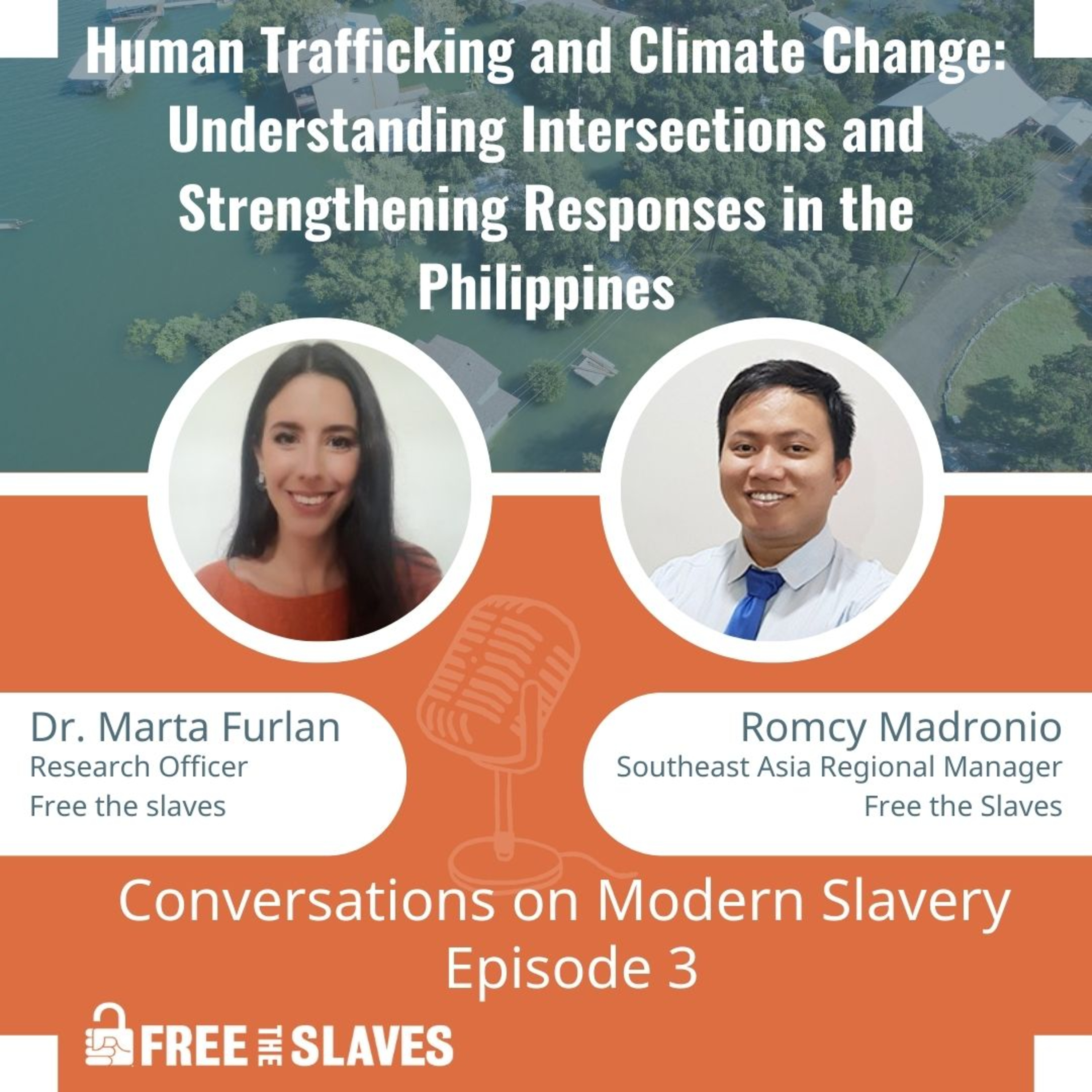
Episode 3: Human Trafficking and Climate change: Understanding Intersections and Strengthening Responses in the Philippines episode artwork

EPISODE · Nov 2, 2023 · 42 MIN

Episode 3: Human Trafficking and Climate change: Understanding Intersections and Strengthening Responses in the Philippines

from Conversations on Modern Slavery · host Free the Slaves

Free the Slaves Research Officer Dr. Marta Furlan and Southeast Asia Regional manager join the podcast to discuss the research report on the intersection between human trafficking and climate change in the Philippines recently published by FTS. The Report: Human Trafficking and Climate Change: Understanding Intersections and Strengthening Responses in the Philippines contains findings from research by FTS and JPIC-IDC. The research examines the linkages between climate change, climate change-related hazards, and human trafficking in the regions of Eastern Visayas and Caraga (Eastern Philippines). The research finds that communities affected by climate change become exposed to the risk of exploitation by human traffickers. Exploitation can take different forms, but in Eastern Visayas and Caraga it is mostly labor trafficking and forced labor, child hazardous labor, sexual trafficking, commercial sexual exploitation of children (CSEC), and online sexual exploitation of children (OSEC). Recognizing that natural hazards heighten the vulnerability of individuals and communities to exploitation by human traffickers, actions that address climate change-related vulnerabilities become a much-needed strategy to end the conditions that allow human trafficking to exist."

Free the Slaves Research Officer Dr. Marta Furlan and Southeast Asia Regional manager join the podcast to discuss the research report on the intersection between human trafficking and climate change in the Philippines recently published by FTS. The Report: Human Trafficking and Climate Change: Understanding Intersections and Strengthening Responses in the Philippines contains findings from research by FTS and JPIC-IDC. The research examines the linkages between climate change, climate change-related hazards, and human trafficking in the regions of Eastern Visayas and Caraga (Eastern Philippines). The research finds that communities affected by climate change become exposed to the risk of exploitation by human traffickers. Exploitation can take different forms, but in Eastern Visayas and Caraga it is mostly labor trafficking and forced labor, child hazardous labor, sexual trafficking, commercial sexual exploitation of children (CSEC), and online sexual exploitation of children (OSEC). Recognizing that natural hazards heighten the vulnerability of individuals and communities to exploitation by human traffickers, actions that address climate change-related vulnerabilities become a much-needed strategy to end the conditions that allow human trafficking to exist."

NOW PLAYING

Episode 3: Human Trafficking and Climate change: Understanding Intersections and Strengthening Responses in the Philippines

0:00 42:22

No transcript for this episode yet

We transcribe on demand. Request one and we'll notify you when it's ready — usually under 10 minutes.

No similar episodes found.

No similar podcasts found.

Frequently Asked Questions

How long is this episode of Conversations on Modern Slavery?

This episode is 42 minutes long.

When was this Conversations on Modern Slavery episode published?

This episode was published on November 2, 2023.

What is this episode about?

Free the Slaves Research Officer Dr. Marta Furlan and Southeast Asia Regional manager join the podcast to discuss the research report on the intersection between human trafficking and climate change in the Philippines recently published by FTS. The...

Can I download this Conversations on Modern Slavery episode?

Yes, you can download this episode by clicking the download button on the episode player, or subscribe to the podcast in your preferred podcast app for automatic downloads.
URL copied to clipboard!