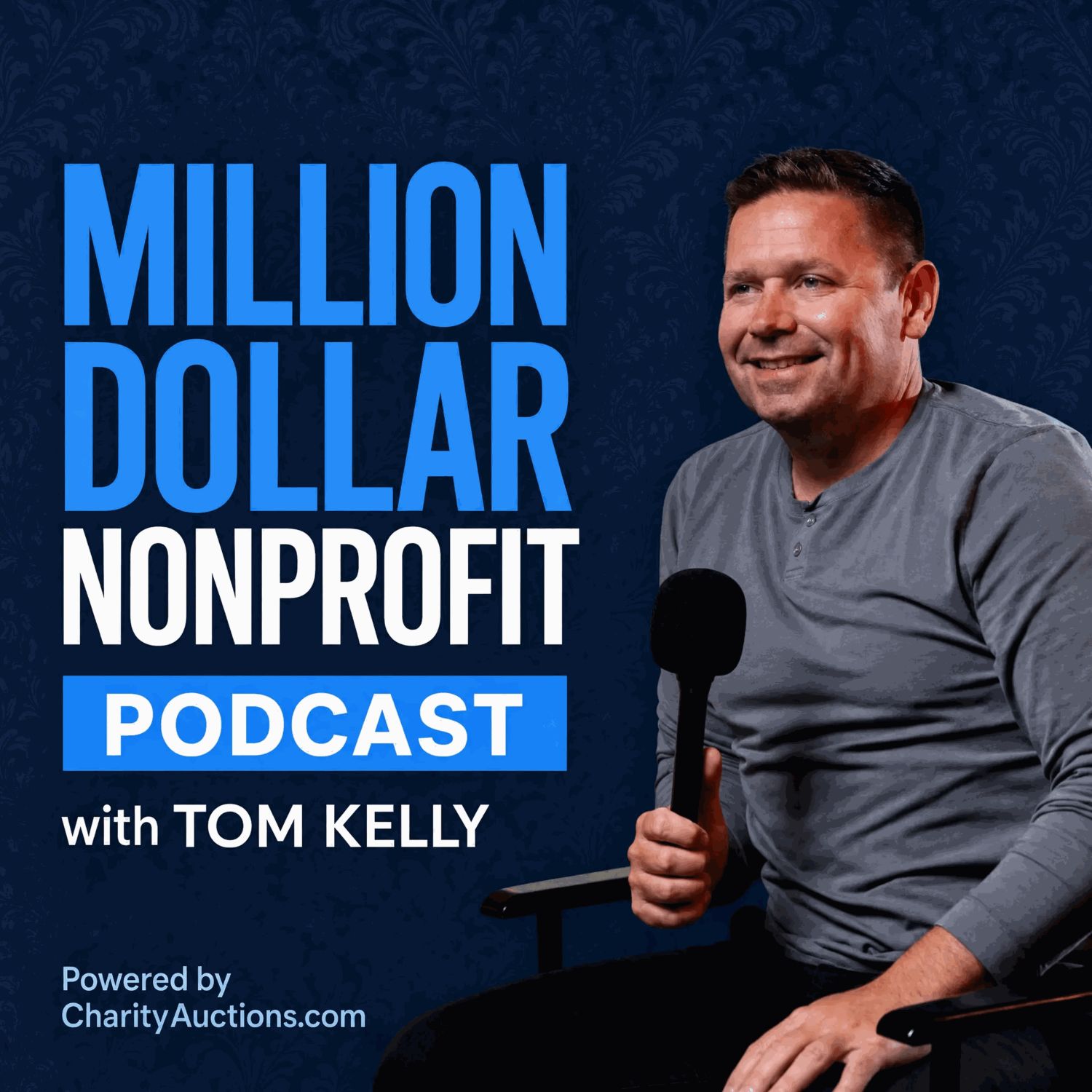
Episode 324: Unlock Hidden Auction Revenue: Add-On, Upgrade, Extend — The Post-Bid Upsell System for Nonprofits episode artwork

EPISODE · Apr 30, 2026 · 2 MIN

Episode 324: Unlock Hidden Auction Revenue: Add-On, Upgrade, Extend — The Post-Bid Upsell System for Nonprofits

from Million Dollar Nonprofit · host Tom Kelly

📚 Grab your copy of Tom Kelly's book, The Million Dollar Nonprofit: https://ip.charityauctions.com/free-book-podcast Let me tell you where most auctions quietly leave the real money on the table. It’s not in the winning bids. Not even in your headline items. It’s in the moments right after someone decides to give — and most nonprofits completely miss it.Welcome back to The Million Dollar Nonprofit. I’m Tom Kelly. Today we’re breaking down the hidden upsells every auction leaves behind. Because if your strategy stops at “sold,” you’re not running a system — you’re running a transaction. And that’s the shift: auctions shouldn’t end at the bid. They should expand from it.Here’s the core problem. Most auctions follow a simple flow: bid, win, checkout, done. Clean. Linear. Limited. But that structure quietly caps your revenue.Here’s the shift: every action should open the door to another opportunity. Use this framework: Add-on. Upgrade. Extend. Repeat.Add-on. This happens at checkout — the highest-intent moment you have. Someone just won. They’re emotionally invested. They’re already giving. This is where small, frictionless asks work best: “Round up your donation.” “Add $25 to support the mission.” “Cover processing fees so 100% goes to impact.” Tiny ask. Big conversion.Upgrade. This happens during or immediately after bidding. You’re not changing the item — you’re expanding the experience. A hotel stay becomes an extra night. A standard package becomes VIP access. A dinner becomes a chef’s table experience. Same auction item. Higher perceived value. Higher revenue.Extend. This is one of the most overlooked strategies in fundraising. If an item is popular, don’t limit it to one winner. Offer it multiple times or repackage it for additional bidders. One experience becomes multiple revenue opportunities — without needing new inventory.Repeat. After the auction ends, most nonprofits go silent. That’s where momentum dies. Instead, follow up. Re-engage. Offer related giving opportunities while attention is still warm. Someone who just gave is far more likely to give again — if you stay present. This is where systems matter. Tools like DonorBooks help you track donor behavior so you can automatically identify who to re-engage, when to reach them, and what to offer next.Here’s the key mindset shift: your auction is not an event. It’s the entry point into a donor journey.And upsells don’t work because they’re aggressive — they work because they’re timely, relevant, and optional. That’s the balance most organizations miss. If you interrupt the moment, you lose trust. If you align with it, you increase impact.Let me say this clearly: the money isn’t just in the bids. It’s in what happens after the bid.Your three action steps:First, add a simple “round up” or add-on donation option at checkout.Second, convert at least one auction item into a multi-winner or expanded experience.Third, create one structured follow-up offer within 72 hours after your auction ends.Tomorrow, we go even deeper — how to turn your auction into a year-round donor machine so revenue doesn’t spike and disappear, but compounds continuously.Don’t forget to subscribe. And download my book The Million Dollar Nonprofit — it’s free through the link in the description and packed with systems to help you scale without burnout.Because the real growth doesn’t happen during the auction, it happens after it. See you tomorrow.

📚 Grab your copy of Tom Kelly's book, The Million Dollar Nonprofit: https://ip.charityauctions.com/free-book-podcast Let me tell you where most auctions quietly leave the real money on the table. It’s not in the winning bids. Not even in your headline items. It’s in the moments right after someone decides to give — and most nonprofits completely miss it.Welcome back to The Million Dollar Nonprofit. I’m Tom Kelly. Today we’re breaking down the hidden upsells every auction leaves behind. Because if your strategy stops at “sold,” you’re not running a system — you’re running a transaction. And that’s the shift: auctions shouldn’t end at the bid. They should expand from it.Here’s the core problem. Most auctions follow a simple flow: bid, win, checkout, done. Clean. Linear. Limited. But that structure quietly caps your revenue.Here’s the shift: every action should open the door to another opportunity. Use this framework: Add-on. Upgrade. Extend. Repeat.Add-on. This happens at checkout — the highest-intent moment you have. Someone just won. They’re emotionally invested. They’re already giving. This is where small, frictionless asks work best: “Round up your donation.” “Add $25 to support the mission.” “Cover processing fees so 100% goes to impact.” Tiny ask. Big conversion.Upgrade. This happens during or immediately after bidding. You’re not changing the item — you’re expanding the experience. A hotel stay becomes an extra night. A standard package becomes VIP access. A dinner becomes a chef’s table experience. Same auction item. Higher perceived value. Higher revenue.Extend. This is one of the most overlooked strategies in fundraising. If an item is popular, don’t limit it to one winner. Offer it multiple times or repackage it for additional bidders. One experience becomes multiple revenue opportunities — without needing new inventory.Repeat. After the auction ends, most nonprofits go silent. That’s where momentum dies. Instead, follow up. Re-engage. Offer related giving opportunities while attention is still warm. Someone who just gave is far more likely to give again — if you stay present. This is where systems matter. Tools like DonorBooks help you track donor behavior so you can automatically identify who to re-engage, when to reach them, and what to offer next.Here’s the key mindset shift: your auction is not an event. It’s the entry point into a donor journey.And upsells don’t work because they’re aggressive — they work because they’re timely, relevant, and optional. That’s the balance most organizations miss. If you interrupt the moment, you lose trust. If you align with it, you increase impact.Let me say this clearly: the money isn’t just in the bids. It’s in what happens after the bid.Your three action steps:First, add a simple “round up” or add-on donation option at checkout.Second, convert at least one auction item into a multi-winner or expanded experience.Third, create one structured follow-up offer within 72 hours after your auction ends.Tomorrow, we go even deeper — how to turn your auction into a year-round donor machine so revenue doesn’t spike and disappear, but compounds continuously.Don’t forget to subscribe. And download my book The Million Dollar Nonprofit — it’s free through the link in the description and packed with systems to help you scale without burnout.Because the real growth doesn’t happen during the auction, it happens after it. See you tomorrow.

NOW PLAYING

Episode 324: Unlock Hidden Auction Revenue: Add-On, Upgrade, Extend — The Post-Bid Upsell System for Nonprofits

0:00 2:58

No transcript for this episode yet

We transcribe on demand. Request one and we'll notify you when it's ready — usually under 10 minutes.

The 48 Laws of Power by Robert Greene (Full Audiobook) Robert Greene Amoral, cunning, ruthless, and instructive, this multi-million-copy New York Times bestseller is the definitive manual for anyone interested in gaining, observing, or defending against ultimate control – from the author of The Laws of Human Nature.In the book that People magazine proclaimed “beguiling” and “fascinating,” Robert Greene and Joost Elffers have distilled three thousand years of the history of power into 48 essential laws by drawing from the philosophies of Machiavelli, Sun Tzu, and Carl Von Clausewitz and also from the lives of figures ranging from Henry Kissinger to P.T. Barnum.Some laws teach the need for prudence (“Law 1: Never Outshine the Master”), others teach the value of confidence (“Law 28: Enter Action with Boldness”), and many recommend absolute self-preservation (“Law 15: Crush Your Enemy Totally”). Every law, though, has one thing in common: an interest in t Growth Triggers Luis Diaz Discover how to use your podcast to generate leads, sales, and influence in any market.On this show Luis shares his best tested and proven secrets, tips, and strategies from launching over 300 podcasts in over a dozen different niches and generating over 59 Million Downloads for his clients.Learn how to increase your podcast listenership, create multiple new revenue streams with your podcast, sell more of your core offer and build a show that gives you leverage and authority in your space. From picking the right monetization strategy for your podcast to learning how to position your podcast in a crowded market on Apple and Spotify; this is show is the ultimate marketing and sales resource for online business owners who want to know what works with podcasting.Get in touch over on Instagram <a target="_blank" rel="noopener noreferrer nofollow" class="link" href="https://www.instagram.com/luisr Awaken With JP Sears Show JP Sears Comedian, Life Coach, and curious student of life, JP Sears shares connected conversations with high level, inspiring, authentic, wickedly fascinating guests. Just being himself on the show, JP combines the humor that’s garnered him over 300 million online video views with his insight from over 15 years of being a life coach. This injection of empowerment will help you overcome challenges, uplevel your thinking, find more passion and purpose, and leave you entertainedAF! Ask your doctor if this podcast is right for you. But first, ask your chiropractor if asking your doctor is right for you. PDF feed of Interpreter: A Journal of Latter-day Saint Faith and Scholarship PDF feed of Interpreter: A Journal of Latter-day Saint Faith and Scholarship The Interpreter Foundation is a nonprofit educational organization focused on the scriptures of The Church of Jesus Christ of Latter-day Saints (the Book of Mormon, the Pearl of Great Price, the Bible, and the Doctrine and Covenants), early LDS history, and related subjects. All publications in its journal, Interpreter: A Journal of Latter-day Saint Faith and Scholarship, are peer-reviewed and made available as free internet downloads or through at-cost print-on-demand services. Other posts on the website are not necessarily peer-reviewed, but are approved by Interpreter’s Executive Board.Our goal is to increase understanding of scripture through careful scholarly investigation and analysis of the insights provided by a wide range of ancillary disciplines, including language, history, archaeology, literature, culture, ethnohistory, art, geography, law, politics, philosophy, statistics, etc. Interpreter will also publish articles advocating the authenticity and historicity

Frequently Asked Questions

How long is this episode of Million Dollar Nonprofit?

This episode is 2 minutes long.

When was this Million Dollar Nonprofit episode published?

This episode was published on April 30, 2026.

What is this episode about?

📚 Grab your copy of Tom Kelly's book, The Million Dollar Nonprofit: https://ip.charityauctions.com/free-book-podcast Let me tell you where most auctions quietly leave the real money on the table. It’s not in the winning bids. Not even in your...

Can I download this Million Dollar Nonprofit episode?

Yes, you can download this episode by clicking the download button on the episode player, or subscribe to the podcast in your preferred podcast app for automatic downloads.
URL copied to clipboard!