
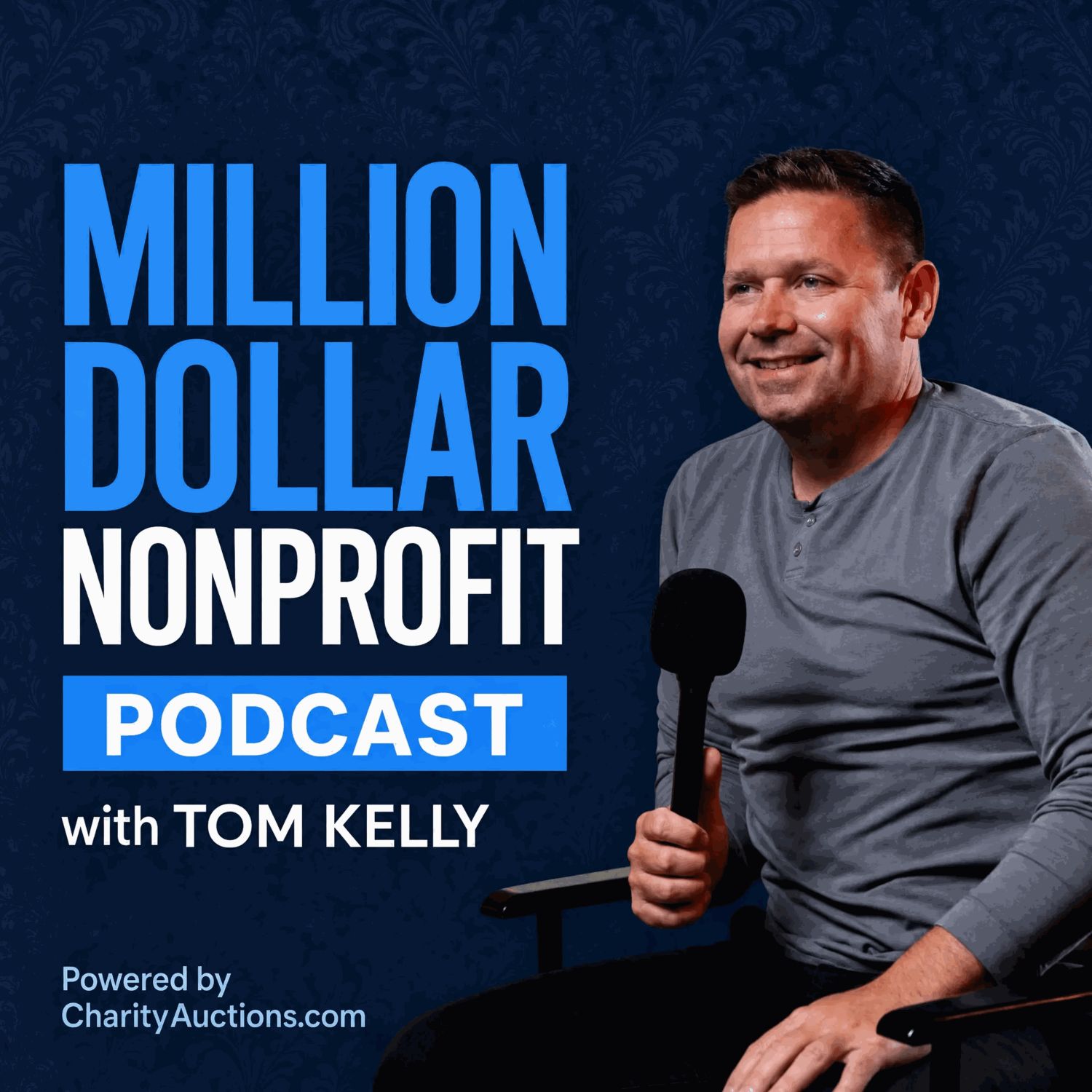
PODCAST · business
The Million Dollar Nonprofit Podcast
by Tom Kelly
Are you leaving money on the table at your fundraising events?Most nonprofits, schools, and churches run the same auction year after year and wonder why the numbers barely move. The answer is almost never the cause — it is the strategy. And strategy is exactly what this show delivers.Million Dollar Nonprofit is the daily podcast for fundraising practitioners who want one specific, actionable tip they can use before their next event. Every episode is under 10 minutes. Every episode delivers a tactic you can implement immediately — no fluff, no inspiration without execution.This show is for development directors trying to hit their annual fundraising goal, school auction chairs planning their biggest event of the year, gala organizers who want to raise more without spending more, and nonprofit leaders who know their events could perform better.Hosted and sponsored by CharityAuctions.com — the platform behind thousands of live fundraising events every year. Every tip on this show
-
381
Live vs. Silent Auctions: The Data Behind the Hybrid Model
Your board wants a live auction because they think it brings more energy. You want a silent auction because it is easier to run and lets guests mingle. It is the most common debate in event planning, and today we are ending it with data.A live auction generates twenty to thirty percent more revenue on premium items, but it only engages the top five percent of your room. A silent auction engages the other ninety-five percent, making it your best donor acquisition tool. In this episode, we break down exactly when a live auction wins, when a silent auction wins, and how to structure the "Hybrid Model" timeline to maximize revenue from both without exhausting your guests before the paddle raise.What You'll Learn:• Why live auctions win on the "Revenue Per Item" metric and why you should never sell more than seven items with an auctioneer.• How the silent auction dominates the "Audience Factor" by turning passive spectators into active, first-time donors.• The exact timeline for the "Hybrid Model" that captures high-end competition without draining the room's energy.Timestamps:[00:00]: # "Introduction — the great auction debate"[00:45]: # "Sponsor: CharityAuctions.com"[01:30]: # "Revenue Per Item: Why live auctions dominate premium packages"[03:30]: # "The Audience Factor: Why silent auctions win on participation"[05:30]: # "The Hybrid Model: Structuring the perfect event timeline"[07:30]: # "Recap & Free Resource"Resources Mentioned:• Free Event Night Checklist (50-Point): CharityAuctions.com/event-checklist• Book a Free Demo: CharityAuctions.com/demoFollow the show so you never miss a daily tip. Leave a 5-star review on Apple Podcasts — it takes 30 seconds and helps us reach more fundraisers. Visit CharityAuctions.com to see the platform behind the data we share every day.
-
380
What Donors Think in the 60 Seconds Before They Give
A donor lands on your giving page, holding their credit card, ready to give. Then they pause, look at the form, and close the tab. You just lost a gift that was ninety-nine percent complete because you did not understand the sixty-second internal monologue happening before the transaction.When a donor abandons your page, they are talking themselves out of the gift based on three predictable psychological triggers. In this episode, we map the exact 60-second decision sequence that happens when a donor lands on your site. We break down the silent questions they are asking and the specific page edits you can make today to capture the revenue you already earned.What You'll Learn:• How to pass the 10-second visual "Credibility Scan" before the donor reads a single word of your mission statement.• Why you must tie specific dollar amounts to human outcomes to beat the "Impact Doubt" in the middle of the minute.• How to identify and remove the "Exit Triggers" on your giving form that create friction and cause donors to quit.Timestamps:[00:00]: # "Introduction — losing the gift at the finish line"[00:45]: # "Sponsor: CharityAuctions.com"[01:30]: # "Seconds 0–10: Passing the visual Credibility Scan"[03:30]: # "Seconds 11–40: Beating the Impact Doubt"[05:30]: # "Seconds 41–60: Removing the Exit Triggers"[07:30]: # "Recap & Free Resource"Resources Mentioned:• Free Event Night Checklist (50-Point): CharityAuctions.com/event-checklist• Book a Free Demo: CharityAuctions.com/demoFollow the show so you never miss a daily tip. Leave a 5-star review on Apple Podcasts — it takes 30 seconds and helps us reach more fundraisers. Visit CharityAuctions.com to see the platform behind the data we share every day.
-
379
The Post-Event System That Captures $41,000 in Hidden Revenue
Your gala just ended, the room was full, and the paddle raise hit your goal. You go home feeling like you won. But a second revenue window opened the moment your event ended — and for most nonprofits, it closes without a single dollar coming through.Organizations that understand post-event follow-up routinely capture $41,000 or more in secondary revenue, while those that skip it leave that money on the table. Donor responsiveness drops by more than 50 percent after two days with no contact. In this episode, we break down the exact three-part follow-up system that captures this hidden revenue before the 48-hour window closes.What You'll Learn:• Why sending a mission-anchored thank-you within 24 hours prevents the massive 48-hour drop in donor responsiveness.• How to frame the Day 7 "Warm Re-Ask" as the next chapter of your event story rather than a cold solicitation.• The exact "Lapsed Donor Rescue" email script that brings back supporters who skipped this year's event.Timestamps:[00:00]: # "Introduction — the second revenue window"[00:45]: # "Sponsor: CharityAuctions.com"[01:30]: # "The 48-Hour Lapse: Why speed beats perfection"[03:30]: # "The Warm Re-Ask: Framing the 7-day follow-up"[05:30]: # "The Lapsed Donor Rescue: Reconnecting honestly"[07:30]: # "Recap & Free Resource"Resources Mentioned:• Free Donor Thank-You Email Templates (5-Pack): CharityAuctions.com/donor-emails• Book a Free Demo: CharityAuctions.com/demoFollow the show so you never miss a daily tip. Leave a 5-star review on Apple Podcasts — it takes 30 seconds and helps us reach more fundraisers. Visit CharityAuctions.com to see the platform behind the data we share every day.
-
378
What "Double Your Bids" Actually Means (And How to Do It)
If your silent auction items are closing with only one or two bids, you are leaving half your potential revenue on the table. The frustrating part is that the bidders are already in the room — they just never came back to the bid sheet.Doubling your bid count does not mean finding more bidders; it means re-engaging the ones who already raised their hands once. Most organizers accidentally suppress bidding by using default platform settings that were designed for convenience, not for charity auctions. In this episode, we break down the three specific mechanics you can implement before your next event to lower the barrier to entry, make competition visible, and pull outbid guests back to the table.What You'll Learn:• Why the "Bid Increment Trap" is the most common reason auctions underperform and the exact percentage to use instead.• How to use the "Social Proof Nudge" to make bid activity visible and contagious, whether on mobile or paper.• The exact 10-word "Re-Engagement Text" to send in the final fifteen minutes that lifts return bid rates by up to 40 percent.Timestamps:[00:00]: # "Introduction — why items close with one bid"[00:45]: # "Sponsor: CharityAuctions.com"[01:30]: # "Mechanic 1: Fixing the Bid Increment Trap"[03:30]: # "Mechanic 2: The Social Proof Nudge"[05:30]: # "Mechanic 3: The Re-Engagement Text (15-minute warning)"[07:30]: # "Recap & Free Resource"Resources Mentioned:• Free Silent Auction Pricing Calculator: CharityAuctions.com/pricing-calculator• Book a Free Demo: CharityAuctions.com/demoFollow the show so you never miss a daily tip. Leave a 5-star review on Apple Podcasts — it takes 30 seconds and helps us reach more fundraisers. Visit CharityAuctions.com to see the platform behind the data we share every day.
-
377
What Donors Are Thinking in the 60 Seconds Before They Give
Your donor clicked the link, they are on your donation page, and their credit card is ready. But something happens in that final minute: they hesitate, they look at the form, and they close the tab. You just lost a gift that was ninety-nine percent complete.Every development director fears losing a donor at the finish line. When a donor abandons your page, it is almost never because they changed their mind about your mission — it is because the experience on the page killed the donation. In this episode, we break down the exact internal monologue of a donor in those final sixty seconds, the three silent questions they ask, and how to fix your page to capture the revenue you already earned.What You'll Learn:• How to pass the 10-second visual "Trust Check" before the donor reads a single word of your copy.• Why you must tie specific dollar amounts to human outcomes to beat the "Impact Doubt" in the middle of the minute.• How to conduct a "Friction Audit" to remove the fields and links that cause donors to abandon the transaction.Timestamps:[00:00]: # "Introduction — losing the gift at the finish line"[00:45]: # "Sponsor: CharityAuctions.com"[01:30]: # "Seconds 0–10: Passing the visual Trust Check"[03:00]: # "Seconds 11–30: Beating the Impact Doubt"[05:00]: # "Seconds 31–60: Conducting a Friction Audit"[07:00]: # "Recap & Free Resource"Resources Mentioned:• Free Donor Thank-You Email Templates (5-Pack): CharityAuctions.com/donor-emails• Book a Free Demo: CharityAuctions.com/demoFollow the show so you never miss a daily tip. Leave a 5-star review on Apple Podcasts — it takes 30 seconds and helps us reach more fundraisers. Visit CharityAuctions.com to see the platform behind the data we share every day.
-
376
What the Top 10% of Silent Auctions Do in the Final Hour
Most silent auction organizers spend the final sixty minutes of their event hoping guests will keep bidding. Elite organizers do not wait — they use the final hour to actively manufacture urgency and drive a late revenue surge that changes the total.If your final hour feels like a slow deflation where guests drift toward the bar and ignore the bid sheets, you are leaving money on the table. In this episode, we break down the three specific tactics the top ten percent of auctions use to capture every dollar in the room before the doors close. These tactics cost nothing, require zero new technology, and can be implemented at your very next event.What You'll Learn:• How to rewrite your "Closing Countdown" script so it anchors to the mission rather than just the clock.• The "Bid Clustering" geography tactic that saves slow-moving items in the final twenty minutes.• How to train one volunteer for the "Floor Walk" to personally invite outbid guests back into the auction.Timestamps:[00:00]: # "Introduction — the final hour deflation problem"[00:45]: # "Sponsor: CharityAuctions.com"[01:30]: # "Tactic 1: The mission-anchored Closing Countdown script"[03:30]: # "Tactic 2: Bid Clustering near high-traffic areas"[05:30]: # "Tactic 3: The VIP Floor Walk to instigate late bids"[07:30]: # "Recap & Free Resource"Resources Mentioned:• Free Event Night Checklist (50-Point): CharityAuctions.com/event-checklist• Book a Free Demo: CharityAuctions.com/demoFollow the show so you never miss a daily tip. Leave a 5-star review on Apple Podcasts — it takes 30 seconds and helps us reach more fundraisers. Visit CharityAuctions.com to see the platform behind the data we share every day.
-
375
The 3-Sentence Auction Item Description That Doubles Bids
If your silent auction items are closing at the starting bid, the problem is not the item — it is the copy. Most organizations write item descriptions that read like receipts. And nobody bids on a receipt.When you list an item as a "two-hour massage and facial, value three hundred dollars," you are selling facts. But bidders do not bid on facts; they bid on what the facts make them feel. In this episode, we break down the exact three-sentence copywriting formula that turns any silent auction item into an experience people actively compete for.What You'll Learn:• How to write an "Experience Hook" that places the bidder inside the moment before they read a single feature.• Why the "Value Anchor" must go in the second sentence to make your starting bid feel like an immediate bargain.• The "Exclusivity Kicker" that answers the one question every bidder asks and creates the urgency needed for a bidding war.Timestamps:[00:00]: # "Introduction — why nobody bids on a receipt"[00:45]: # "Sponsor: CharityAuctions.com"[01:30]: # "Experiential value framing: selling feelings, not facts"[02:45]: # "Sentence 1: The Experience Hook"[04:30]: # "Sentence 2: The Value Anchor"[06:15]: # "Sentence 3: The Exclusivity Kicker"[08:00]: # "Recap & Free Resource"Resources Mentioned:• Free AI Auction Item Description Generator: CharityAuctions.com/item-descriptions• Book a Free Demo: CharityAuctions.com/demoFollow the show so you never miss a daily tip. Leave a 5-star review on Apple Podcasts — it takes 30 seconds and helps us reach more fundraisers. Visit CharityAuctions.com to see the platform behind the data we share every day.
-
374
Why Donors Bounce from Your LinkedIn Profile in 8 Seconds
A corporate sponsor just found you on LinkedIn, clicked your profile, and decided whether to reach out or move on in exactly eight seconds. Most fundraisers treat their LinkedIn profile like a resume, which gives potential major donors and corporate partners absolutely no reason to stay.When a donor lands on your profile, they only see three things before scrolling: your headline, your photo, and the first line of your About section. If those elements do not immediately communicate what you make possible for them, they bounce. In this episode, we break down the three specific profile fixes you can make in under thirty minutes to turn your LinkedIn presence from a static resume into an active donor acquisition channel.What You'll Learn:• How to rewrite your headline from a static job title into a promise that ranks in LinkedIn search.• Why the Featured section is the most valuable real estate on your profile and exactly what proof point to pin there.• The one-sentence pivot for your About section that centers the donor's outcome instead of your past experience.Timestamps:[00:00]: # "Introduction — the 8-second LinkedIn bounce rate"[00:45]: # "Sponsor: CharityAuctions.com"[01:30]: # "The resume mistake: what donors see before they scroll"[02:45]: # "Fix 1: The Headline Hook"[04:30]: # "Fix 2: The Featured Section Trap"[06:15]: # "Fix 3: The About Section Pivot"[08:00]: # "Recap & Free Resource"Resources Mentioned:• Free 12-Month Fundraising Calendar Template: CharityAuctions.com/fundraising-calendar• Book a Free Demo: CharityAuctions.com/demoFollow the show so you never miss a daily tip. Leave a 5-star review on Apple Podcasts — it takes 30 seconds and helps us reach more fundraisers. Visit CharityAuctions.com to see the platform behind the data we share every day.
-
373
70% of First-Time Donors Disappear. This 14-Day Fix Stops It
Seventy percent of first-time donors never give a second gift — not because they were unhappy, but because nobody gave them a reason to stay. The fourteen days right after your event are the only window that changes that number.If your only follow-up touch after an event is an automated tax receipt, you are telling your newest supporters they are a transaction, not a partner. Retention is not won at year-end; it is won in the first two weeks with three specific, well-timed messages. In this episode, we walk through the exact 14-day, copy-and-paste sequence that interrupts the normal attrition pattern and converts one-time event attendees into durable, monthly supporters.What You'll Learn:• Why sending an "impact receipt" within 48 hours can lift second-gift rates by nearly 40 percent.• The exact structure of the Day 7 "no-ask update" that builds trust and makes your next email welcome.• How to frame the Day 14 soft recurring gift invitation so it feels like an easy, high-impact community upgrade.Timestamps:[00:00]: # "Introduction — the 70% first-time donor attrition stat"[00:45]: # "Sponsor: CharityAuctions.com"[01:30]: # "Why the first 14 days determine your retention curve"[02:45]: # "Step 1: The impact receipt (Day 1–2)"[04:30]: # "Step 2: The behind-the-scenes no-ask update (Day 7)"[06:15]: # "Step 3: The soft recurring gift invitation (Day 14)"[08:00]: # "Recap & Free Resource"Resources Mentioned:• Free Donor Thank-You Email Templates (5-Pack): CharityAuctions.com/donor-emails• Book a Free Demo: CharityAuctions.com/demoFollow the show so you never miss a daily tip. Leave a 5-star review on Apple Podcasts — it takes 30 seconds and helps us reach more fundraisers. Visit CharityAuctions.com to see the platform behind the data we share every day.
-
372
The 30% Starting Bid Rule That Triggers Silent Auction Wars
Items that receive a bid in the first thirty minutes of your event attract three times more total bids by the end of the night. Items that sit empty early usually stay empty. The difference is almost never the item itself — it is the starting bid you set before the doors ever opened.Most committees instinctively set silent auction starting bids at fifty percent of fair market value. This creates a "cold start" problem, where the opening price is just high enough to scare away the crucial first bidder. In this episode, we break down the exact three-step psychological formula for setting starting bids, engineering early action, and using premium pricing anchors to guarantee a bidding war.What You'll Learn:• Why setting your silent auction pricing at 30 percent of retail actually leads to higher final closing bids.• How to leverage auction psychology and recruited early bidders to overcome the cold start problem in the first 15 minutes.• The exact formula for setting a buy it now price that acts as a psychological anchor rather than an early exit ramp.Timestamps:[00:00]: # "Introduction — the loudest silence in the ballroom"[00:50]: # "Sponsor: CharityAuctions.com"[01:45]: # "Why most starting bids fail: the cold start problem"[03:00]: # "Step 1: The 30% rule — set starting bids at 30% of fair market value"[05:00]: # "Step 2: Engineer the first bid with recruited early bidders"[06:45]: # "Step 3: Use Buy It Now at 150% of FMV as a price anchor"[08:15]: # "Recap & Free Resource"Resources Mentioned:• Free Silent Auction Pricing Calculator: CharityAuctions.com/pricing-calculator• Book a Free Demo: CharityAuctions.com/demoFollow the show so you never miss a daily tip. Leave a 5-star review on Apple Podcasts — it takes 30 seconds and helps us reach more fundraisers. Visit CharityAuctions.com to see the platform behind the data we share every day.
-
371
Your Donation Page Is Losing Donors in the First 8 Seconds
Your donation page has exactly eight seconds to earn a visitor's trust before they leave for good. Most nonprofit pages are designed as if donors have all the time in the world to read paragraphs of text — and it is quietly killing conversions on every campaign you run.When someone lands on your page, their brain is not reading; it is scanning for trust signals. If your headline is about your organization instead of the donor, or if your page lacks immediate social proof, the visitor defaults to the safest decision: leaving. In this episode, we break down the three most common donation page conversion killers and the one-sentence fixes you can implement for each one in under twenty minutes.What You'll Learn:• How to rewrite your donation page headline so the donor becomes the hero of the story.• Why your lowest suggested donation amount might be anchoring your donors downward and leaving money on the table.• The exact type of social proof you need above the fold to convert a skeptical first-time visitor.Timestamps:[00:00]: # "Introduction — the 8-second donation page problem"[00:50]: # "Sponsor: CharityAuctions.com"[01:30]: # "What happens in the first 8 seconds: trust signals"[02:30]: # "Killer 1: A headline about you instead of the donor"[04:15]: # "Killer 2: Suggested gift amounts that anchor too low"[06:00]: # "Killer 3: No social proof above the fold"[07:45]: # "Recap & Free Resource"Resources Mentioned:• Free Donation Page Audit Checklist: CharityAuctions.com/page-audit• Book a Free Demo: CharityAuctions.com/demoFollow the show so you never miss a daily tip. Leave a 5-star review on Apple Podcasts — it takes 30 seconds and helps us reach more fundraisers. Visit CharityAuctions.com to see the platform behind the data we share every day
-
370
The 3-Email Sequence That Triples Monthly Donor Conversions
Most nonprofits ask for a monthly gift at exactly the wrong moment and it is costing them two-thirds of their potential recurring donors. Donors who receive this specific three-message follow-up sequence convert to monthly giving at three times the rate of those who get a single thank-you email.When someone bids at your auction or donates at your event, they are in a temporary, emotionally elevated state. If you wait until your annual appeal to ask for a recurring gift, you are treating it like a cold transaction. In this episode, we break down the exact timing and language for the 48-hour thank-you, the 14-day impact story, and the 30-day soft ask that turns one-time event attendees into reliable, long-term supporters.What You'll Learn:• The exact sentence to include in your 48-hour donor thank-you email to set up future contact.• Why the 14-day follow-up must be a single human impact story with absolutely no ask attached.• The exact word-for-word script for the 30-day soft ask that frames monthly giving as a low-risk community upgrade.Timestamps:[00:00]: # "Introduction — the wrong moment to ask for a monthly gift"[00:45]: # "Sponsor: CharityAuctions.com"[01:30]: # "Why timing matters: the emotional window after your event"[02:45]: # "Message 1: The 48-hour thank-you that plants a seed"[04:30]: # "Message 2: The 14-day impact story"[06:15]: # "Message 3: The 30-day soft ask (word-for-word language)"[08:00]: # "Recap & Free Resource"Resources Mentioned:• Free Donor Thank-You Email Templates (5-Pack): CharityAuctions.com/donor-emails• Book a Free Demo: CharityAuctions.com/demoFollow the show so you never miss a daily tip. Leave a 5-star review on Apple Podcasts, it takes 30 seconds and helps us reach more fundraisers. Visit CharityAuctions.com to see the platform behind the data we share every day.
-
369
The Last 10 Minutes of Your Silent Auction Are Worth $8,000
The last ten minutes of your silent auction are worth more than the first two hours combined. Most organizations have no idea, and because of that, they leave thousands of dollars on the table every single event.In this episode, we break down the behavioral psychology behind the final-minutes bidding spike, why loss aversion is the most powerful force in your auction room, and the exact three-step system to engineer a last-minute surge intentionally. This is one of the highest-leverage tactics you can implement before your next event, and it costs nothing to execute.What You'll Learn:• How to script a 10-minute warning announcement that activates loss aversion and drives a bidding spike.• Why deploying volunteers to walk the room in the final minutes adds thousands in revenue.• How a countdown close for your top items turns the end of your silent auction into a mini live auction.Timestamps:[00:00]: # "Introduction: The Final 10-Minute Revenue Window"[00:45]: # "Sponsor: CharityAuctions.com"[01:15]: # "The Psychology: Loss Aversion & Social Proof"[02:45]: # "Step 1: Script Your 10-Minute Warning Announcement"[04:30]: # "Step 2: Deploy Volunteers to Walk the Room"[05:45]: # "Step 3: Use a Countdown Close for Top Items"[07:30]: # "Recap & Free Resource"Resources Mentioned:• Free Platform Demo (see your real-time bidding data): charityauctions.com/demo• Book a Free Demo: charityauctions.com/demoConnect & Subscribe:Follow the show so you never miss a daily tip. Leave a 5-star review on Apple Podcasts, it takes 30 seconds and helps us reach more fundraisers. Visit CharityAuctions.com to see the platform behind the data we share every day.
-
368
The 48-Hour Donor Thank-You Window That Saves Your Retention Rate
Your event ended last night. Your donors are already forgetting. Not because they don't care, because life moves fast. And if you're not in front of them within 48 hours, you're losing donors you already earned.In this episode, you'll learn the exact three-step follow-up system that turns one-time bidders into long-term supporters. We break down why the 48-hour window is backed by donor psychology research, what a personal thank-you email must include to actually move people, and why a 30-second phone call to your top 25 donors is one of the highest-ROI activities in all of fundraising.What You'll Learn:• Why donor retention drops sharply when thank-yous are delayed past 48 hours.• The three elements every post-event thank-you email must include to feel personal, not generic.• How a 30-second phone call from your executive director can increase next-year giving.Timestamps:[00:00]: # "Introduction: The 48-Hour Window"[00:45]: # "Sponsor: CharityAuctions.com"[01:15]: # "Why Timing Is the #1 Retention Variable"[02:30]: # "Step 1: Send a Personal Thank-You Email Within 24 Hours"[04:00]: # "Step 2: Call Your Top 25 Donors Within 48 Hours"[05:30]: # "Step 3: Post a Public Thank-You on Social Media"[07:30]: # "Recap & Free Resource"Resources Mentioned:• Free Donor Thank-You Email Templates (5-Pack): charityauctions.com/donor-emails• Book a Free Demo: charityauctions.com/demoConnect & Subscribe:Follow the show so you never miss a daily tip. Leave a 5-star review on Apple Podcasts, it takes 30 seconds and helps us reach more fundraisers. Visit CharityAuctions.com to see the platform behind the data we share every day.
-
367
How to Raise $12,000 More by Fixing Your Silent Auction Timing
Silent auction timing is the most overlooked revenue lever in nonprofit fundraising and today's episode shows you exactly how to fix it.Most silent auctions close 30 minutes too early, costing nonprofits thousands in lost revenue. By adjusting your timeline and triggering the "scarcity effect," you can capture last-minute bids and consolation buyers. In this episode, we break down the exact 3-step closing strategy used by the highest-grossing events on the CharityAuctions.com platform.What You'll Learn:• Why staggering your closing times into three groups builds bidding urgency.• The psychological power of the "10-minute warning" announcement.• Why you should keep your final, highest-value items open during checkout.Timestamps:[00:00]: # "Introduction"[00:42]: # "Sponsor: CharityAuctions.com"[01:13]: # "The Problem: Closing Too Early"[02:30]: # "Step 1: Separate Your Closing Times"[03:30]: # "Step 2: The 10-Minute Warning"[04:18]: # "Step 3: Keep the Auction Open During Checkout"[05:00]: # "Recap & Free Resource"Resources Mentioned:• Free Silent Auction Pricing Calculator: charityauctions.com/pricing-calculator• Book a Free Demo: charityauctions.com/demoConnect & Subscribe:Follow the show so you never miss a daily tip. Leave a 5-star review on Apple Podcasts, it takes 30 seconds and helps us reach more fundraisers. Visit CharityAuctions.com to see the platform behind the data we share every day.
-
366
Episode 365: The 5-Minute AI Workflow That Replaced Nearly Half Our Admin Work
What if you could eliminate hours of administrative work every week with a single AI workflow?For many nonprofits, the biggest challenge isn't a lack of passion or commitment. It's the endless repetition. Meeting notes. Donor follow-ups. Board updates. Task lists. CRM entries. The same information gets rewritten and repurposed over and over again.In this episode of The Million Dollar Nonprofit, Tom Kelly shares the simple AI workflow that helped his team replace nearly half of their administrative workload in just minutes.The breakthrough came when a set of meeting notes was dropped into ChatGPT and transformed into multiple deliverables at once: a donor follow-up email, board summary, social media post, task list, and CRM update. What normally took hours was completed in under five minutes.Tom breaks down the process using a simple framework: Capture. Generate. Deploy.Capture: Collect information immediately after donor calls, meetings, events, volunteer conversations, or team discussions. Whether through voice notes, meeting notes, or quick summaries, the goal is to centralize information quickly before details are lost.Generate: Use AI to transform one set of notes into multiple outputs simultaneously. Instead of manually creating separate documents, a single prompt can generate donor communications, board reports, social media content, task lists, and CRM updates all at once.Deploy: AI creates the first draft, but your team provides the final review. Small edits and approvals turn hours of administrative work into minutes, creating significant time savings without sacrificing quality.Tom also explains how tools like DonorBooks help organize donor history, communication records, and tasks in one place, making AI-generated workflows even more effective. He shares how organizations using CharityAuctionsToday can automate event follow-ups, sponsor reports, volunteer summaries, and donor communications immediately after fundraising events conclude.The biggest takeaway is simple: AI is not about replacing people. It's about eliminating repetitive work that prevents people from focusing on relationships, creativity, strategy, and mission-driven impact.If your nonprofit team feels overwhelmed by administrative tasks, this episode will show you how to create systems that save time, reduce burnout, and increase productivity without adding more staff.
-
365
Episode 364: The Donor Psychology Principle That Explains Why People Say Yes
📚 Grab your copy of Tom Kelly's book, The Million Dollar Nonprofit: https://ip.charityauctions.com/free-book-podcast People don't give because they fully understand your mission. They give because they see themselves in it.That's one of the most powerful fundraising principles nonprofit leaders can learn. Donors aren't simply supporting a cause—they're reinforcing who they believe they are. Generous. Compassionate. Helpful. Hopeful. Every donation is an identity decision.In this episode of The Million Dollar Nonprofit, Tom Kelly explores the donor psychology principle that explains why people say yes and how nonprofits can use this understanding to build stronger relationships, increase donor retention, and improve fundraising results.Tom introduces a simple but powerful framework: Identity. Belonging. Consistency.Identity: Most nonprofits focus their fundraising messages on organizational needs, programs, and goals. But donors are asking a different question: "What does supporting this cause say about me?" The most effective fundraising messages reinforce donor identity and highlight the impact supporters create through their generosity.Belonging: People want more than a transaction. They want to be part of something meaningful. When donors feel like participants, partners, and members of a community, they become more engaged and more committed to the mission. Tools like DonorBooks help organizations create personalized donor experiences that strengthen this sense of connection over time.Consistency: People naturally behave in ways that align with how they see themselves. When someone identifies as generous or mission-driven, they are more likely to continue supporting causes that reinforce that identity. Every positive donor experience strengthens that connection and increases long-term loyalty.Tom also explains why storytelling is one of the most effective fundraising tools available. Facts help people understand a problem, but stories help people identify with it. That's why emotional connection often drives action more effectively than statistics alone.You'll also learn how platforms like CharityAuctionsToday help transform supporters from passive donors into active participants, strengthening both community and commitment.The key lesson is simple: people may donate to a cause, but they stay because it becomes part of who they are.If you want to improve donor engagement, increase retention, and create fundraising messages that truly resonate, this episode will change the way you think about donor communication.
-
364
Episode 363: How to Raise More Money Without Asking More Often
📚 Grab your copy of Tom Kelly's book, The Million Dollar Nonprofit: https://ip.charityauctions.com/free-book-podcast What if the easiest way to raise more money wasn't asking for more money?It sounds backwards, but some nonprofits constantly ask for donations and see little growth, while others ask less often and consistently raise more year after year. The difference isn't the number of fundraising appeals. It's the strength of the relationships behind them.In this episode of The Million Dollar Nonprofit, Tom Kelly explains why fundraising is less about maximizing asks and more about maximizing trust.Tom introduces a simple but powerful framework: Deposit. Demonstrate. Invite.Deposit: Every donor relationship functions like a bank account. Before making another withdrawal through a fundraising appeal, make deposits through stories, impact updates, encouragement, gratitude, and meaningful communication. Donors stay engaged when they feel connected, not constantly solicited.Demonstrate: Show supporters the results of their generosity. Share progress, outcomes, and real stories that prove their contributions matter. Tools like DonorBooks help automate impact reporting and donor communication, making it easier to keep supporters informed and emotionally invested in your mission.Invite: The most effective fundraising doesn't feel like pressure. It feels like participation. Instead of focusing on requests, create invitations that help donors become part of the next chapter of your organization's story. This shift transforms fundraising from a transaction into a partnership.Tom also explains why successful fundraising events focus on connection before contribution and how platforms like CharityAuctionsToday create experiences that naturally encourage donor participation and long-term engagement.The key lesson is simple: connection comes before contribution.When nonprofits spend more time nurturing relationships than making asks, donors stay longer, give more generously, and become advocates who help grow the mission.If you want to increase donor retention, improve fundraising results, and build stronger relationships without increasing the number of appeals you send, this episode provides a practical roadmap to get started.
-
363
Episode 362: The Thank-You Message That Turns First-Time Donors Into Long-Term Supporters
📚 Grab your copy of Tom Kelly's book, The Million Dollar Nonprofit: https://ip.charityauctions.com/free-book-podcast What if one message could determine whether a donor gives once or gives for years?Most nonprofits focus heavily on fundraising appeals, campaigns, and events. But one of the most important moments in the donor journey happens immediately after the donation. Unfortunately, many organizations waste that opportunity with generic thank-you emails that feel more like receipts than relationships.In this episode of The Million Dollar Nonprofit, Tom Kelly reveals the psychology behind donor retention and explains why the right thank-you message can dramatically increase long-term giving.Tom introduces a simple but powerful framework: Celebrate. Connect. Confirm.Celebrate: Don't just thank donors for what they gave. Celebrate the impact they created. Help supporters see the difference their generosity made and reinforce their identity as someone who creates positive change.Connect: Bring donors closer to the mission through stories, moments, and real examples of impact. People remember emotional connections far more than transactional acknowledgments.Confirm: Reassure donors that they made the right decision. Share progress, outcomes, and updates that reinforce the value of their support. When generosity feels meaningful, donors are more likely to give again.You'll also learn how donor management tools like DonorBooks can personalize follow-up communication based on donor interests and giving history, and how platforms like CharityAuctionsToday help create memorable donor experiences that continue long after an event ends.The biggest takeaway is simple: the donation is not the finish line. It's the beginning of the relationship.If you want to increase donor retention, strengthen donor loyalty, and turn first-time supporters into lifelong advocates, this episode will show you exactly where to start.
-
362
Episode 361: Why Some Nonprofits Raise Millions with Tiny Audiences
📚 Grab your copy of Tom Kelly's book, The Million Dollar Nonprofit: https://ip.charityauctions.com/free-book-podcast What if the key to raising more money isn’t growing a bigger audience?What if it’s building a deeper connection with the audience you already have?In this episode of The Million Dollar Nonprofit, Tom Kelly reveals why some nonprofits consistently raise millions with surprisingly small audiences. No massive email list. No celebrity endorsements. No viral social media campaigns. Just a highly engaged community of supporters who care deeply about the mission.Tom challenges one of the biggest fundraising myths: that more people automatically mean more money. While audience growth can help, connection often matters far more than attention.Using a simple three-part framework, Depth. Trust. Ownership. Tom explains how nonprofits can create stronger donor relationships that lead to sustainable fundraising growth.Depth: Most organizations focus on reach, impressions, followers, and clicks. But the real question is: how many people truly care? A small audience with deep emotional engagement often outperforms a large audience with little connection.Trust: Trust is the ultimate fundraising multiplier. Donors who trust your organization give more frequently, stay involved longer, and become advocates for your mission. Consistent communication, transparency, storytelling, and follow-through all help strengthen trust over time. Tools like DonorBooks help nonprofits maintain these meaningful donor relationships at scale.Ownership: The strongest supporters don’t feel like donors. They feel like partners. Builders. Insiders. When people feel ownership of the mission, they become active participants who share, promote, and champion your cause.Tom also explores how platforms like CharityAuctionsToday create opportunities for participation, helping supporters feel personally invested in outcomes rather than simply making transactions.If you’ve been focused on growing your audience, this episode offers a powerful reminder: attention may be rented, but trust is owned.Because sustainable fundraising growth doesn’t come from having more people. It comes from having more connected people.
-
361
Episode 360: The Hidden Reason Your Donation Page Isn’t Converting
📚 Grab your copy of Tom Kelly's book, The Million Dollar Nonprofit: https://ip.charityauctions.com/free-book-podcast Have you ever wondered why someone reaches your donation page and then leaves without giving?Most nonprofits assume they need more traffic. More visitors. More clicks. But often, the real problem is much simpler: friction.In this episode of The Million Dollar Nonprofit, Tom Kelly reveals why small obstacles on your donation page may be quietly costing your organization thousands of dollars in lost donations.By the time a donor reaches your donation page, the hard work is already done. They opened your email, connected with your story, and clicked through because they were interested. At that point, your donation page has one job: make giving easy.Tom shares a simple three-step framework: Clarity. Confidence. Convenience.Clarity: Can donors instantly understand what to do next? Confusing layouts, too much text, multiple options, and unnecessary distractions create hesitation, and hesitation kills conversions.Confidence: Donors need reassurance before they complete a gift. Trust-building elements like testimonials, impact statements, security indicators, and personalized experiences help increase confidence and drive action. Tools like DonorBooks can help create more meaningful donor experiences that strengthen trust.Convenience: Every extra field, unnecessary click, or complicated step increases the likelihood of donor drop-off. Today's donors expect a fast, simple, and mobile-friendly giving experience.Tom also explains why platforms like CharityAuctionsToday focus heavily on reducing participation friction and how the same principle applies directly to online giving.You'll discover why the donation page is not where persuasion happens; the persuasion already happened before the click. The donation page simply needs to remove obstacles and make action easy.If you want to improve donation conversions, increase donor participation, and stop losing supporters at the final step, this episode will help you identify and eliminate the hidden friction holding your fundraising back.Because sometimes the problem isn't a lack of traffic. It's too much friction.
-
360
Episode 359: How Automated Donor Follow-Ups Increased Donations by 32%
📚 Grab your copy of Tom Kelly's book, The Million Dollar Nonprofit: https://ip.charityauctions.com/free-book-podcast What if the biggest reason donors stop giving isn’t that you’re not asking enough, but that you’re not following up consistently?In this episode of The Million Dollar Nonprofit, Tom Kelly shares how a simple donor follow-up automation strategy helped increase donations by 32%. The secret wasn’t fancy technology or aggressive fundraising. It was consistent.Many nonprofits work hard to acquire donors but struggle to maintain the emotional connection after the first gift. A donor gives, receives a generic thank-you, and then hears nothing for weeks or months. That silence slowly erodes trust and engagement.Tom breaks down a simple three-step framework: Respond. Reinforce. Repeat.Respond: Speed matters. Donors should feel acknowledged immediately after giving. Automated thank-you messages, confirmation emails, and personalized follow-ups help maintain emotional momentum while creating a positive donor experience.Reinforce: Don’t let communication stop after the donation. Share impact updates, success stories, photos, and progress reports that remind donors their support is making a difference. Tools like DonorBooks help automate these touchpoints while keeping communication personal and relevant.Repeat: Consistency creates trust, and trust creates generosity. When donors regularly hear from your organization, they feel remembered, appreciated, and connected to the mission.Tom also explains how event platforms like CharityAuctionsToday can capture donor engagement during fundraising events while automated follow-up systems continue building relationships long after the event ends.If you want to improve donor retention, increase recurring support, and create stronger donor relationships without overwhelming your team, this episode will show you how automation can strengthen, not replace, the human connection.Because consistency builds trust. And trust builds growth.
-
359
Episode 358: The Storytelling Trick That Makes People Want to Give
📚 Grab your copy of Tom Kelly's book, The Million Dollar Nonprofit: https://ip.charityauctions.com/free-book-podcast Why do some fundraising stories inspire action while others fall flat?The answer is simple: most nonprofits focus on outcomes instead of transformation.In this episode of The Million Dollar Nonprofit, Tom Kelly reveals the storytelling shift that can dramatically increase donor engagement and giving. Because facts may inform people, but stories are what move them to act.Tom shares a simple three-part storytelling framework: Before. Bridge. After.Before: Start with a real human moment that illustrates the problem. Skip the statistics and reports. Focus on a specific person, situation, or challenge that creates emotional connection.Bridge: Show what changed and how supporters became part of the solution. This is where donors step into the story and become participants in the transformation.After: Highlight the emotional outcome. Confidence. Hope. Relief. Belonging. While numbers matter, it’s the emotional impact that people remember and respond to.You’ll also learn why simple stories outperform complex ones, how donor-centered storytelling strengthens fundraising results, and how tools like DonorBooks can help personalize stories based on donor interests and engagement history.Whether you're writing emails, creating campaigns, hosting events, or sharing impact updates, this episode will help you craft stories that inspire action and deepen donor relationships.Because people don’t donate to information. They donate to transformation.
-
358
Episode 357: The Fundraising Mistake That Quietly Destroys Donor Trust
📚 Grab your copy of Tom Kelly's book, The Million Dollar Nonprofit: https://ip.charityauctions.com/free-book-podcast What’s the fastest way to lose a donor’s trust?It’s usually not a major scandal or a dramatic mistake. More often, trust disappears slowly through small broken promises, inconsistent communication, and a lack of transparency.In this episode of The Million Dollar Nonprofit, Tom Kelly reveals the fundraising mistake that most nonprofits don’t recognize until it’s already costing them donor loyalty and long-term support.You’ll learn why donors evaluate more than your mission; they evaluate your reliability. Do you follow through? Do your actions match your words? Can supporters trust your organization to communicate honestly and consistently?Tom introduces a simple three-part framework: Expectation. Consistency. Transparency.Expectation: Avoid the temptation to exaggerate impact or make promises that are difficult to deliver. Honest messaging builds credibility, while overpromising creates skepticism.Consistency: Trust grows through repeated follow-through. Regular donor updates, timely thank-you messages, and dependable communication strengthen relationships over time. Tools like DonorBooks can help automate these touchpoints and ensure no donor feels forgotten.Transparency: Donors don’t expect perfection, they expect honesty. Sharing challenges, setbacks, and lessons learned often strengthens trust more than polished success stories ever could.You’ll also discover why silence damages trust faster than mistakes, how emotional memory influences future giving decisions, and why transparency is becoming one of the most valuable assets a nonprofit can build.If you want stronger donor retention, deeper relationships, and a reputation people believe in, this episode is essential listening.
-
357
Episode 356: How One Small Nonprofit Raised More Money Than a National Charity
📚 Grab your copy of Tom Kelly's book, The Million Dollar Nonprofit: https://ip.charityauctions.com/free-book-podcast What if the biggest advantage in fundraising isn't having a bigger budget, larger team, or national brand recognition?In this episode of The Million Dollar Nonprofit, Tom Kelly shares the surprising story of a small local nonprofit that consistently raised more money than a much larger national organization. The lesson wasn't about spending more, it was about connecting better.Many nonprofits assume that bigger organizations automatically have the advantage because they have larger donor lists, bigger marketing budgets, and more resources. But growth can sometimes create distance. Smaller organizations often possess strengths that are difficult for large nonprofits to replicate: closeness, authenticity, speed, and community.Tom breaks down the framework that helped this nonprofit outperform organizations many times its size: Clarity. Connection. Community.Clarity: The organization communicated its mission in a simple, specific, and memorable way. Donors immediately understood the problem, why it mattered, and exactly how their gift would make an impact.Connection: Supporters experienced real stories, personal communication, and genuine relationships. Donors didn't feel like numbers in a database; they felt known, valued, and appreciated. Tools like DonorBooks help organizations scale these relationships while maintaining a personal touch.Community: The nonprofit created opportunities for supporters to participate, not just donate. Through events, engagement, and shared experiences, supporters became advocates who helped spread the mission organically. Platforms like CharityAuctionsToday supported this by turning fundraising into an interactive community experience.Tom explains why emotional connection often beats organizational size, how small nonprofits can leverage their natural advantages, and why speed and authenticity have become powerful competitive advantages in today's fundraising environment.If you've ever felt disadvantaged because your nonprofit is smaller than larger organizations in your space, this episode will show you why being small may actually be your greatest strength.
-
356
Episode 355: The AI Workflow That Saved Our Nonprofit 17 Hours in One Week
📚 Grab your copy of Tom Kelly's book, The Million Dollar Nonprofit: https://ip.charityauctions.com/free-book-podcast What if one AI prompt could save your nonprofit nearly an entire workday every week?In this episode of The Million Dollar Nonprofit, Tom Kelly shares the AI workflow that left his team staring at the screen in disbelief. In less than ten minutes, a single structured prompt generated work that would normally take hours to complete. By the end of the week, the team estimated it had saved 17 hours.The lesson wasn’t about using AI for small tasks like writing emails or fixing grammar. It was about something much bigger: building repeatable workflows that eliminate entire categories of work.Tom introduces a simple framework: Context. Structure. Refinement.Context: AI performs dramatically better when given a clear role, goal, and tone. Instead of vague instructions, the team positioned AI as a donor communications manager responsible for creating warm, emotionally engaging donor communications.Structure: Specific prompts create repeatable systems. By clearly defining outputs, such as donor updates, thank-you emails, social media posts, fundraising calls-to-action, and subject lines, one prompt could generate an entire communication package at once.Refinement: AI doesn't need to be perfect. It needs to create momentum. Teams can review, edit, and improve the output while saving hours of repetitive work every week.Tom also explains how tools like DonorBooks enhance AI-driven communication by providing access to donor engagement history, campaign performance, and relationship data. Meanwhile, platforms like CharityAuctionsToday can combine automation with AI-powered communications such as reminder emails, bidder follow-ups, and thank-you messages to extend fundraising momentum.The biggest takeaway? AI isn't replacing nonprofit teams. It's removing repetitive friction so teams can spend more time building relationships, creating impact, and focusing on strategy.For small nonprofits especially, saving 10 to 15 hours every week can be transformational. This episode shows how to build systems that create leverage without increasing staff workload or burning out your team.
-
355
Episode 354: Why Donors Stop Caring After the First Gift: The Retention Mistake Most Nonprofits Make
📚 Grab your copy of Tom Kelly's book, The Million Dollar Nonprofit: https://ip.charityauctions.com/free-book-podcast The most dangerous moment in fundraising isn’t before the first donation, it’s right after it.In this episode of The Million Dollar Nonprofit, Tom Kelly reveals why so many donors make one gift and never return. The problem isn’t donor generosity. It’s what happens after the donation.A donor gives because they feel inspired, connected, and hopeful. But if they receive nothing more than a generic receipt and then months of silence, that emotional momentum disappears. And when the emotion fades, the relationship fades with it.Tom shares a simple framework to improve donor retention and build stronger long-term relationships: Acknowledge. Reinforce. Reconnect.Acknowledge: Move beyond transactional thank-you emails. Show donors the impact of their gift and reinforce that their contribution truly mattered.Reinforce: Keep impact visible through stories, updates, milestones, and progress reports. Tools like DonorBooks can help automate meaningful donor communications that maintain engagement over time.Reconnect: Stop communicating only when you need funding. Invite donors into the mission through updates, feedback opportunities, and ongoing conversations that strengthen trust and loyalty.This episode explores one of the biggest mistakes nonprofits make: spending enormous effort acquiring donors while investing very little effort in keeping them emotionally connected. The result is lower retention, weaker relationships, and an endless cycle of finding new donors.You'll learn why donor retention is often more valuable than donor acquisition, how to create meaningful post-donation experiences, and why long-term fundraising success depends on maintaining emotional connection long after the first gift.If you want donors to become lifelong supporters instead of one-time contributors, this episode will show you where to focus.
-
354
Episode 353: The 3-Word Change That Raised $41,000
📚 Grab your copy of Tom Kelly's book, The Million Dollar Nonprofit: https://ip.charityauctions.com/free-book-podcast What if the difference between an average fundraising email and a high-performing one came down to just three words?In this episode of The Million Dollar Nonprofit, we explore a powerful lesson in donor psychology: small language changes can create massive shifts in fundraising results. In one case, changing just three words in a donation ask led to a $41,000 increase in giving—without changing the campaign, the audience, or the offer.This episode breaks down why that happened and what it reveals about how donors actually make decisions.At the center of it is a simple truth: fundraising is not just about what you ask—it’s about how the donor emotionally experiences the ask.We introduce a clear framework for writing more effective fundraising language:Agency — Make donors feel personally responsible for creating impactSpecificity — Replace vague asks with clear, visual outcomesEmotion — Use language that creates feeling, not just informationYou’ll learn why donor-focused language consistently outperforms organization-focused messaging, how specificity increases emotional clarity, and why small copy changes can dramatically improve conversion rates.The episode also explores how tools like donor management systems and fundraising platforms can support personalization and emotional targeting, but why language remains the most powerful lever of all.If you’ve ever wondered how to improve fundraising results without rebuilding your entire strategy, this episode shows how small shifts in wording can unlock major performance gains.🔹 Key TakeawaysTiny wording changes can create major fundraising resultsDonor-focused language outperforms organization-focused messagingThe emotional framing of an ask matters as much as the offer itselfAgency increases donor motivation and engagementSpecific outcomes create stronger emotional visualizationDonors respond to feeling involved, not just informedEmotion drives giving; logic justifies it afterwardCopywriting is one of the highest-leverage fundraising toolsSmall changes compound into large performance differencesTesting language is often more effective than rebuilding campaigns✅ 3 Action StepsAudit your donation asks for organization-centered language. Replace phrases that focus on the nonprofit with phrasing that centers the donor.Rewrite one fundraising ask to increase donor agency. Focus on what the donor is making possible, not just what the organization needs.Test small wording changes before redesigning campaigns. Optimize language first instead of rebuilding entire fundraising systems.
-
353
Episode 352: The Silent Yes Every Donor Gives Before They Click Donate
📚 Grab your copy of Tom Kelly's book, The Million Dollar Nonprofit: https://ip.charityauctions.com/free-book-podcast What if the donation button is not where fundraising decisions actually happen?In this episode of The Million Dollar Nonprofit, we explore one of the most misunderstood truths in fundraising: by the time a donor clicks “give,” the decision has already been made—emotionally, internally, and often long before they reach the checkout page.This episode breaks down the concept of the “silent yes”—the invisible moment when a donor decides, this matters, I trust this, I want to be part of this.You’ll learn why donations are emotionally driven first and logically justified second, and how nonprofits can design communication that creates that internal commitment before the ask ever appears.We introduce a simple framework for building that silent yes:Trust — Establish emotional safety through stories, consistency, and transparencyIdentity — Help donors see who they become when they giveMomentum — Maintain emotional energy so inspiration turns into actionYou’ll also discover why fundraising is less about persuasion and more about alignment—helping donors connect to values they already hold rather than trying to convince them from scratch.The episode also explores how friction in the donation process can destroy momentum, why emotional readiness matters more than technical design, and how tools and systems can support smoother donor experiences that convert inspiration into action.If you’ve ever wondered why people show interest but don’t complete a donation, this episode reveals what’s happening behind the scenes—and how to fix it.🔹 Key TakeawaysDonation decisions are made emotionally before they are made technicallyThe donation button confirms a decision—it doesn’t create itThe “silent yes” happens during emotional connection, not checkoutTrust is built before the ask through stories, tone, and consistencyDonors give to reinforce identity (who they believe they are)Identity alignment is a major driver of generosityMomentum is fragile and can be lost through friction or confusionFundraising is about alignment, not persuasionEmotional readiness matters more than optimized checkout designReducing friction increases the chances of converting intention into action✅ 3 Action StepsAudit your donor communication for trust-building moments. Check whether your messaging builds emotional safety before making an ask.Rewrite one fundraising message to focus on donor identity. Highlight what giving says about the donor, not just what the organization needs.Simplify one step in your donation process. Remove friction that could interrupt emotional momentum before completion.
-
352
Episode 351: How One Typo Accidentally Doubled Donations
📚 Grab your copy of Tom Kelly's book, The Million Dollar Nonprofit: https://ip.charityauctions.com/free-book-podcast What if one of your biggest fundraising breakthroughs came from a mistake?In this episode of The Million Dollar Nonprofit, we explore the surprising story of how a simple typo in a fundraising email led to significantly higher engagement, more donor replies, and nearly double the expected donations. The lesson isn't about grammar or email marketing tactics—it's about the power of authenticity and human connection.Many nonprofits spend enormous amounts of time polishing every word, refining every sentence, and perfecting every communication. While professionalism matters, over-editing can sometimes remove the very thing that creates donor engagement: genuine humanity.This episode introduces a simple framework for creating fundraising communication that feels real, relatable, and emotionally engaging:Authenticity — Focus on being genuine rather than perfectly polishedRelatability — Embrace the human moments that help donors connect with your messagePresence — Communicate with timeliness and energy instead of waiting for perfectionYou'll learn why donors often respond more strongly to messages that feel personal, how emotional honesty can outperform flawless marketing copy, and why speed and authenticity frequently create stronger engagement than endless revisions.The episode also explores how modern fundraising success depends on building trust through real human communication. Whether through emails, donor updates, fundraising campaigns, or events, people are drawn to messages that feel sincere rather than manufactured.If you've ever delayed sending a message because it wasn't "perfect enough," this episode may change the way you think about fundraising communication forever.🔹 Key TakeawaysDonors connect more strongly with authenticity than perfectionSmall human imperfections can make communication feel more relatableOverly polished messaging can create emotional distanceEmotional honesty builds trust and donor engagementSpeed and authenticity often outperform excessive editingRelatable communication strengthens donor relationshipsPeople respond to messages written by humans, not marketing machinesPresence and timeliness can increase fundraising momentumEmotional connection drives action more effectively than polished copyTrust grows when communication feels genuine and personal✅ 3 Action StepsReduce unnecessary editing on your next fundraising message. Focus on clarity and authenticity instead of endlessly refining every sentence.Prioritize emotional honesty over perfect wording. Share real stories, emotions, and experiences that help donors connect with your mission.Send an important communication sooner than feels comfortable. Avoid letting perfectionism delay meaningful conversations with supporters.
-
351
Episode 350: The Fundraising Advice I Ignored That Changed Everything
📚 Grab your copy of Tom Kelly's book, The Million Dollar Nonprofit: https://ip.charityauctions.com/free-book-podcast What if some of the most common fundraising advice is actually holding you back?In this episode of The Million Dollar Nonprofit, we explore why breaking a few traditional fundraising “rules” can sometimes create stronger donor relationships and better fundraising results. For years, nonprofit leaders have been told to sound more professional, be more polished, and carefully refine every message before sending it. But in many cases, that polished approach can make communication feel distant, generic, and forgettable.This episode introduces a simple framework for creating fundraising communication that feels authentic and human:Honesty — Lead with authenticity instead of perfectionPersonality — Let your unique voice and stories stand outConversation — Write like you're speaking to one person, not broadcasting to thousandsYou'll learn why some of the highest-performing fundraising emails are often the simplest, how vulnerability can build trust, and why donors are increasingly drawn to communication that feels genuine rather than highly produced.The episode also explores the difference between sounding professional and sounding relatable. You'll discover why plain-text emails often outperform heavily designed campaigns, how personality creates stronger emotional connections, and why donors are more likely to engage with messages that feel like conversations rather than marketing.If you're tired of fundraising messages that sound polished but fail to connect, this episode will help you create communication that feels more human, more memorable, and more effective.🔹 Key TakeawaysConnection is often more powerful than perfectionHonest communication builds stronger donor trustPersonality helps nonprofit messages stand out from the crowdDonors respond to authenticity more than polished marketing languageVulnerability can create deeper emotional engagementConversational writing feels more personal and relatablePlain-text emails often outperform highly designed campaignsGeneric messaging makes organizations easy to ignoreHuman connection remains the most important fundraising assetTrust grows when communication feels genuine and sincere✅ 3 Action StepsWrite one email without over-editing it. Focus on authenticity and clarity instead of trying to make every sentence perfect.Use shorter, more conversational language. Write the way you naturally speak to a supporter or friend.Let your personality come through. Share a real story, personal observation, or authentic emotion that makes your message memorable.
-
350
Episode 349: What Happens When You Stop Asking for Money All the Time
📚 Grab your copy of Tom Kelly's book, The Million Dollar Nonprofit: https://ip.charityauctions.com/free-book-podcast What if one of the fastest ways to increase donations is to ask for them less often?In this episode of The Million Dollar Nonprofit, we explore a counterintuitive fundraising principle: donor relationships grow stronger when every interaction isn't centered around a donation request. While many nonprofits focus heavily on fundraising appeals, constant asking can unintentionally weaken emotional connection and cause supporters to disengage.This episode introduces a simple but powerful framework for building stronger donor relationships and creating sustainable generosity:Connect — Build genuine relationships without an agenda or donation requestContribute — Give supporters meaningful ways to engage beyond financial givingInvite — Create opportunities for involvement that feel welcoming rather than pressuredYou'll discover why relationship-building communication often generates greater long-term support than frequent fundraising appeals, how appreciation and storytelling strengthen donor loyalty, and why trust is built through consistent, non-transactional interactions.The episode also explores how supporters can contribute through volunteering, feedback, advocacy, and community participation—creating deeper emotional investment that often leads to future generosity. You'll learn why donor engagement extends beyond donation totals and how tracking meaningful touchpoints can strengthen fundraising outcomes over time.If you're looking to increase donor retention, deepen supporter relationships, and create a fundraising culture built on trust rather than pressure, this episode provides practical strategies to help you get started.🔹 Key TakeawaysConstant fundraising asks can reduce donor engagement over timeStrong donor relationships are built through connection, not transactionsAppreciation-focused communication strengthens trust and loyaltySupporters want opportunities to contribute beyond financial giftsStorytelling often creates more engagement than direct fundraising appealsNon-transactional interactions build emotional equity with donorsTrust compounds through consistent relationship-building effortsDonors are more generous when they feel valued and includedInvitations create participation more effectively than pressureSustainable fundraising is rooted in long-term relationships✅ 3 Action StepsSend one donor communication with no fundraising ask. Share a success story, express appreciation, or celebrate an impact milestone without requesting a donation.Create a non-financial engagement opportunity. Invite supporters to volunteer, provide feedback, share your mission, or participate in your community.Review your last 10 donor communications. Count how many focused solely on asking for money versus building relationships. Use the results to create a more balanced communication strategy.
-
349
Episode 348: The Psychological Trigger That Makes Donors Give Again
📚 Grab your copy of Tom Kelly's book, The Million Dollar Nonprofit: https://ip.charityauctions.com/free-book-podcast Why do some donors give once and disappear, while others become lifelong supporters?In this episode of The Million Dollar Nonprofit, we explore one of the most powerful drivers of donor retention: appreciation. While many nonprofits focus almost entirely on securing the first donation, sustainable fundraising growth comes from what happens after the gift is made.This episode reveals the psychology behind repeat giving and why donors are more likely to contribute again when they feel valued, connected, and included rather than pressured or forgotten.Using a simple three-part framework, you'll learn how to create donor experiences that strengthen loyalty and encourage ongoing support:Affirm — Reinforce the donor’s identity and the meaningful role they played in creating impactShow — Share updates, stories, and results that demonstrate the difference their gift madeInclude — Invite donors into the journey through communication, community, and engagement opportunitiesYou’ll discover why transactional thank-you messages often fail to build lasting relationships, how timely impact updates increase emotional connection, and why belonging is one of the strongest motivators for continued generosity.The episode also explores how donor management systems and thoughtful follow-up strategies can help nonprofits create meaningful experiences that strengthen trust, deepen engagement, and improve retention over time.If you're looking to increase repeat giving, build stronger donor relationships, and create a fundraising program that grows sustainably, this episode provides a practical framework to get started.🔹 Key TakeawaysDonors are more likely to give again when they feel appreciatedRepeat giving is driven by emotional connection, not pressureDonors want to feel good about the impact they helped createIdentity reinforcement strengthens donor loyaltyTransactional thank-you messages rarely inspire future givingTimely impact updates keep donors emotionally engagedInclusion creates a stronger sense of belonging and commitmentSilence after a donation can weaken donor relationshipsUnexpected appreciation builds trust and long-term loyaltyRetention strategies often generate more value than constant donor acquisition efforts✅ 3 Action StepsRewrite your donor thank-you message. Focus on reinforcing the donor’s impact and identity rather than simply acknowledging the gift.Send a quick impact update within days of a donation. Share a story, photo, or result that demonstrates the difference their contribution made.Invite donors into something that isn't another fundraising ask. Offer behind-the-scenes updates, volunteer opportunities, surveys, or community engagement activities.
-
348
Episode 347: Why Donors Open Your Emails But Don’t Give
📚 Grab your copy of Tom Kelly's book, The Million Dollar Nonprofit: https://ip.charityauctions.com/free-book-podcast Have you ever looked at your fundraising email metrics and wondered why people open, click, and read your message—but never donate?In this episode of The Million Dollar Nonprofit, we uncover one of the most common frustrations in fundraising: attention without action. Many nonprofits assume low donations are caused by poor open rates or lack of visibility. In reality, the problem often lies in what happens after the click.This episode introduces a simple but powerful framework to help turn donor interest into donor action:Emotion — Create genuine emotional connection instead of simply sharing informationFriction — Remove barriers that make giving feel confusing, slow, or difficultDirection — Give donors a clear, specific reason to act nowYou’ll learn why curiosity and commitment are two completely different stages of the donor journey, how emotional storytelling drives generosity, and why simplifying the giving experience can dramatically improve conversion rates.The episode also explores the hidden ways fundraising emails lose momentum—from vague calls to action and overwhelming information to donation pages that unintentionally create friction. You'll discover how donor-focused communication, stronger storytelling, and clearer asks can help transform attention into meaningful support.If your emails generate clicks but not contributions, this episode provides practical strategies to help donors move from interest to action.🔹 Key TakeawaysOpening an email is curiosity; donating is commitmentEmotion motivates action more effectively than information aloneDonors give because they feel connected, hopeful, inspired, or neededEvery extra step in the donation process creates frictionConfusing donation pages reduce conversion ratesClear and specific fundraising asks outperform vague requestsAttention does not automatically equal donor intentEmotional momentum must be maintained throughout the donor journeyOne story and one clear ask are often more effective than multiple messagesSuccessful fundraising focuses on action, not just engagement metrics✅ 3 Action StepsSimplify one fundraising email this week. Remove unnecessary information and focus on one core message.Build your message around one emotional story. Choose a single compelling example that helps donors feel connected to the impact.Make your fundraising ask specific and actionable. Clearly explain what a donation accomplishes and why it matters right now.
-
347
Episode 346: The Email I Almost Didn’t Send That Raised $27,000
📚 Grab your copy of Tom Kelly's book, The Million Dollar Nonprofit: https://ip.charityauctions.com/free-book-podcast What if the fundraising message you’re afraid to send is actually the one your donors need to hear most?In this episode of The Million Dollar Nonprofit, we explore the powerful story behind one simple, honest fundraising email that almost got deleted — but instead raised $27,000.After weeks of flat campaign performance, average open rates, and slow donations, the breakthrough didn’t come from better graphics, smarter tactics, or polished marketing language. It came from honesty.This episode breaks down why authentic, emotionally real communication consistently outperforms overly polished fundraising copy. You’ll learn a powerful three-part framework for writing fundraising emails that truly connect:Truth — Say what’s real instead of what sounds impressiveTension — Create urgency around a real moment that matters nowTrust — Build connection through honesty and vulnerabilityYou’ll also discover why simple emails often outperform designed campaigns, how conversational writing builds stronger donor relationships, and why people respond to messages that feel human instead of corporate.The episode also explores how tools like ChatGPT, DonorBooks, and CharityAuctionsToday can support fundraising systems while still keeping emotional connection at the center of donor engagement.If your fundraising emails feel ignored, overly polished, or disconnected, this episode will help you write messages that sound less like marketing and more like one person speaking honestly to another.🔹 Key TakeawaysHonest fundraising often outperforms polished marketingVulnerability builds trust and donor connectionEmotional honesty creates stronger engagementSimple emails can outperform heavily designed campaignsDonors respond to authenticity more than perfectionReal urgency motivates action better than artificial pressureConversational writing increases donor response ratesGreat fundraising emails sound spoken, not writtenTrust is built through transparency and sincerityEmotional connection drives giving more than strategy alone✅ 3 Action StepsWrite one email that sounds more honest than polished. Focus on authenticity instead of trying to sound impressive.Share one real story or emotional moment. Avoid overwhelming donors with too much information.Write like you’re speaking to one person. Make your message feel personal, conversational, and human.
-
346
Episode 345:The Nonprofit of the Future: Build Smarter Systems Before Everyone Else Does
📚 Grab your copy of Tom Kelly's book, The Million Dollar Nonprofit: https://ip.charityauctions.com/free-book-podcast What will the most successful nonprofits look like five years from now?In this episode of The Million Dollar Nonprofit, we explore why the future belongs to nonprofits that move faster, operate smarter, and build systems that scale without burning out their teams.This episode introduces a simple but powerful framework for future-ready organizations:Automate repetitive work so your team can focus on relationships and strategyPersonalize donor experiences to increase trust and retentionDecentralize leadership and engagement so growth doesn’t depend on one personYou’ll learn how AI, automation, CRMs, and community-driven systems are changing fundraising and nonprofit operations forever. This episode also explores why small nonprofits may actually have an advantage in the future because they can adapt and move faster than large organizations stuck in outdated systems.You’ll hear practical examples of using AI tools like ChatGPT for workflows, donor engagement, and communication, while platforms like DonorBooks and CharityAuctionsToday help nonprofits create ongoing engagement instead of one-time campaigns.If you want your nonprofit to stay relevant, scalable, and sustainable over the next decade, this episode gives you the blueprint to start building now.🔹 Key TakeawaysBigger teams are no longer the primary growth strategySmart systems create leverage and reduce burnoutAutomation frees people to focus on creativity and relationshipsPersonalized donor engagement increases trust and retentionFuture nonprofits will rely on systems, not heroic effortSmall nonprofits can outperform larger organizations through adaptabilityTransparency and real-time communication are becoming essential for trustSpeed and experimentation create long-term competitive advantagesAI helps nonprofits move faster without sacrificing authenticityCommunity-driven growth multiplies impact over time✅ 3 Action StepsAutomate one repetitive task this week. Identify one manual process — like follow-ups, scheduling, or reporting — and automate it.Personalize one donor interaction. Use donor data and AI tools to create a more relevant and meaningful communication.Start thinking in systems, not campaigns. Build repeatable processes that continue working long after a campaign ends.
-
345
Episode 344: The Death of One-Time Campaigns: Why Continuous Fundraising Is the Future
📚 Grab your copy of Tom Kelly's book, The Million Dollar Nonprofit: https://ip.charityauctions.com/free-book-podcast Let me tell you something that’s quietly dying in the nonprofit world: the one-time campaign.Welcome back to The Million Dollar Nonprofit. I’m Tom Kelly. Today, we’re talking about why the future of fundraising is not occasional—it’s continuous.The old model was simple: launch a big campaign, push hard, raise money, then go silent until the next ask.But that creates spikes, not stability.Here’s the shift: fundraising is becoming an ecosystem, not a campaign.Use this framework: Capture. Nurture. Activate.Capture: Every donor, bidder, volunteer, and attendee is a relationship—not just a transaction. Tools like DonorBooks help track those relationships continuously.Nurture: Stay connected between asks through stories, updates, and behind-the-scenes moments. AI tools like OpenAI can help create ongoing communication without overwhelming your team.Activate: Replace isolated fundraising pushes with recurring opportunities like monthly giving, auctions, peer-to-peer campaigns, and micro-fundraisers.Platforms like CharityAuctionsToday fit perfectly into this model by turning events into ongoing donor engagement systems instead of one-time moments.Here’s the truth: one-time campaigns create temporary momentum. Continuous systems create long-term growth.Your three action steps:Create one way to stay connected with donors between campaignsBuild one recurring communication rhythm that stays consistentTurn one isolated campaign into an ongoing relationship strategyTomorrow, we’re looking at the nonprofit of the future—and how to start building it today.Don’t forget to subscribe. And grab my book The Million Dollar Nonprofit free in the description.The future is not one big campaign. It’s continuous connection.
-
344
Episode 343: Predictive Analytics and the Future of Fundraising: Why Anticipation Beats Reaction
📚 Grab your copy of Tom Kelly's book, The Million Dollar Nonprofit: https://ip.charityauctions.com/free-book-podcast Let me tell you what’s about to change fundraising forever: prediction.Welcome back to The Million Dollar Nonprofit. I’m Tom Kelly. Today, we’re talking about how predictive analytics is reshaping fundraising—and why the future belongs to organizations that anticipate donor behavior instead of reacting to it.The old model was reactive: launch campaigns, wait for results, then adjust later.The new model is proactive.Use this framework: Detect. Predict. Act.Detect: Your organization already has valuable donor data—email engagement, donation history, event attendance, and bidding behavior. Tools like DonorBooks help centralize and organize those insights.Predict: AI can identify patterns humans miss, such as which donors are likely to upgrade, disengage, or respond to a campaign.Act: Data only matters if you use it. Personalized follow-ups, retention campaigns, and re-engagement strategies help you move before opportunities disappear.Even fundraising events are becoming smarter. Platforms like CharityAuctionsToday capture real-time bidder behavior that can help predict future donor engagement and giving patterns.Here’s the truth: the future of fundraising belongs to organizations that understand behavior.Your three action steps:Review the donor behavior data you already collectIdentify one engagement signal tied to stronger giving or donor drop-offBuild one follow-up strategy based on that predictionTomorrow, we’re diving into the death of one-time campaigns—and why continuous fundraising is replacing occasional fundraising.Don’t forget to subscribe. And download my book The Million Dollar Nonprofit free in the description.The future is not reacting. It’s anticipating.
-
343
Episode 342: AI-Powered Generosity: How Artificial Intelligence Is Changing the Future of Giving
📚 Grab your copy of Tom Kelly's book, The Million Dollar Nonprofit: https://ip.charityauctions.com/free-book-podcast Let me tell you something that would have sounded crazy five years ago: AI is not just helping nonprofits raise money. It’s starting to influence generosity itself.Welcome back to The Million Dollar Nonprofit. I’m Tom Kelly. Today, we’re talking about the rise of AI-powered generosity—and why this is bigger than automation or writing emails.The real opportunity is relevance.AI helps the right message reach the right person at the right time. That changes fundraising completely.Use this framework: Predict. Personalize. Prompt.Predict: AI can identify donor patterns humans often miss—who’s engaged, who may stop giving, and who’s likely to donate. Combined with tools like DonorBooks, nonprofits can make smarter decisions faster.Personalize: Generic fundraising is fading. AI helps create donor communication based on real interests, behaviors, and engagement history.Prompt: AI can create timely moments of generosity through relevant reminders, stories, and personalized outreach that connect emotionally.Even fundraising events are evolving. Platforms like CharityAuctionsToday already create interactive donor experiences, while AI adds smart follow-ups, behavior-based engagement, and personalized donor journeys.Here’s the truth: AI will not replace generosity. It will amplify it.Your three action steps:Identify one donor message that feels too genericUse AI to personalize one donor interaction this weekStart tracking donor behavior patterns, not just donation totalsTomorrow, we’re diving into predictive analytics—and how anticipating donor behavior may change fundraising forever.Don’t forget to subscribe. And download my book, The Million Dollar Nonprofit free in the description.The future is not AI replacing generosity. It’s AI helping generosity grow.
-
342
Episode 341: Why Recurring Giving Is Becoming the New Membership Model for Nonprofits
📚 Grab your copy of Tom Kelly's book, The Million Dollar Nonprofit: https://ip.charityauctions.com/free-book-podcast Let me tell you something that’s quietly changing fundraising forever: recurring giving is no longer just a donation strategy. It’s becoming a membership model.Welcome back to The Million Dollar Nonprofit. I’m Tom Kelly. Today we’re talking about why recurring giving is transforming how nonprofits build stability, connection, and long-term growth.The old fundraising model was simple: one campaign, one ask, one donation—then start over. But recurring giving changes the game with predictable revenue, deeper relationships, and stronger donor retention.Here’s the shift: people don’t want to feel like monthly donors. They want to feel like members.Use this framework: Belonging. Consistency. Identity.Belonging: Invite donors into a community, not just a payment plan.Consistency: Ongoing updates, stories, and insider communication keep donors emotionally connected. Tools like DonorBooks help automate and personalize that experience.Identity: People support causes that reflect who they are. Monthly giving reinforces that identity over time.Even events powered by CharityAuctionsToday can strengthen recurring giving by creating moments of excitement that lead to long-term commitment.Here’s the truth: recurring donors are not transactions. They are your core community.Your three action steps:Rename your recurring giving program to feel like a communityCreate one monthly update specifically for recurring donorsBuild a welcome experience that makes new members feel included immediatelyTomorrow, we’re exploring the rise of AI-powered generosity—and how technology is changing the future of giving.Don’t forget to subscribe. And grab my book The Million Dollar Nonprofit free in the description.Don’t build donors. Build members.
-
341
Episode 340: Gen Z Isn’t Hard to Reach: Why Authenticity, Access, and Agency Change Everything
📚 Grab your copy of Tom Kelly's book, The Million Dollar Nonprofit: https://ip.charityauctions.com/free-book-podcast Let me tell you something, most nonprofits are getting completely wrong about Gen Z: they think they don’t care. That they’re distracted. That they don’t give. That they’re hard to reach. That’s not true.Welcome back to The Million Dollar Nonprofit. I’m Tom Kelly. Today, we’re talking about what Gen Z really wants from your cause, because they’re not the future anymore. They’re already here, and they’re changing the rules. Here’s the shift: Gen Z doesn’t want to be asked. They want to be included. Use this framework: Authenticity. Access. Agency.Authenticity: They reject polished, corporate messaging. They want real stories, real people, and honest communication, not perfection.Access: They want to see behind the scenes, how decisions are made, where money goes, and what impact it actually has. Tools like DonorBooks help you track and share real engagement and impact in a transparent way.Agency: They want to participate, not just donate, through input, feedback, and influence over decisions.This generation doesn’t want to watch your mission; they want to be inside it. Even platforms like CharityAuctionsToday show this shift in action by turning fundraising into shared experiences where people feel included, not just asked.Here’s the truth: Gen Z gives based on identity. What they support reflects who they are. If your message feels like a brochure, they scroll past it. If it feels like a conversation, they engage.Your three action steps:Rewrite one message to sound more authentic and humanShare one behind-the-scenes story this weekAsk your audience for input on something small but meaningfulTomorrow, we explore why recurring giving is becoming the new membership model, and what that means for long-term sustainability. Don’t forget to subscribe. And download my book The Million Dollar Nonprofit, it’s free in the description. Gen Z cares. You just have to meet them where they are.
-
340
Episode 339: Beyond the Hype: How Blockchain and NFTs Could Redefine Trust, Ownership, and Donor Engagement
📚 Grab your copy of Tom Kelly's book, The Million Dollar Nonprofit: https://ip.charityauctions.com/free-book-podcast Let me say something that might surprise you: blockchain and NFTs are not about hype. They’re about trust, ownership, and connection. And if you ignore that, you might miss what’s coming next.Welcome back to The Million Dollar Nonprofit. I’m Tom Kelly. Today we’re talking about how blockchain and NFTs might actually help nonprofits, not as trends, but as tools for transparency, engagement, and long-term trust.Because donors are asking better questions now: Where did my money go? What impact did it create? Can I see it? That’s where transparency becomes everything. At its core, blockchain is about verifiable trust, clear, traceable records of movement and impact. Even without full adoption, the principle matters: clearer reporting builds stronger donor confidence.Now let’s talk NFTs. Forget the hype. Think digital ownership. Instead of a generic thank-you, donors can receive something that represents their contribution, recognition, access, or belonging. Something they can actually hold, share, and identify with.Here’s the framework: Transparency. Ownership. Engagement.Transparency: Make impact visible and traceable so donors trust what they can seeOwnership: Give supporters something meaningful that reflects their contribution and identityEngagement: Turn giving into an ongoing experience, not a one-time transactionPlatforms like CharityAuctionsToday already move in this direction by creating interactive giving experiences, while tools like DonorBooks help track engagement and deepen relationships over time. Let’s be clear: you don’t need to launch NFTs tomorrow. But you do need to understand where donor expectations are heading, toward more transparency, more ownership, and more identity.Your three action steps:Increase transparency in one area of your donor communicationCreate one form of recognition that feels unique and shareableExperiment with one idea tied to digital ownership or deeper engagementTomorrow, we shift to the next generation of giving, what Gen Z really expects from your mission. Don’t forget to subscribe. And download my book The Million Dollar Nonprofit, it’s free in the description. It’s not about the technology. It’s about what it makes possible.
-
339
Episode 338: The Donor Behavior Shift: Why Attention, Control, and Identity Are Redefining Fundraising
📚 Grab your copy of Tom Kelly's book, The Million Dollar Nonprofit: https://ip.charityauctions.com/free-book-podcast Let me tell you something most nonprofits are missing right now: your donors have already changed. Their behavior. Their expectations. Their attention. And if you’re still operating the old way, you’re not just behind, you’re invisible.Welcome back to The Million Dollar Nonprofit. I’m Tom Kelly. Today, we’re breaking down the three biggest shifts happening in donor behavior right now and why everything else depends on them. Because donors didn’t get harder. They got faster, smarter, and more selective.Here are the shifts: Attention. Control. Identity.Attention: Donors decide in seconds. If your message doesn’t land immediately, it’s gone.Control: Donors want choice, when they give, how they give, and what they support. Tools like DonorBooks help you track preferences so you can respond, not guess.Identity: People don’t just give to causes; they give to reflect who they are.This is why experiences matter so much. Platforms like CharityAuctionsToday turn events into shared moments where donors feel part of something bigger.Here’s the truth: donors don’t just ask “what does this do?” They ask, “What does this say about me?” If your message is about you, it gets ignored. If it reflects them, it gets attention. That’s the shift.Your three action steps:Rewrite one message to grab attention immediatelyAdd one flexible giving option to increase donor controlReframe one message to reflect donor identity, not just your missionTomorrow, we explore a new frontier: how blockchain and NFTs may actually reshape nonprofit giving. Don’t forget to subscribe. And download my book The Million Dollar Nonprofit, it’s free in the description. Donor behavior has changed. Now it’s your move.
-
338
Episode 337: The Game Has Changed: Why the Next Decade of Fundraising Looks Nothing Like the Last
📚 Grab your copy of Tom Kelly's book, The Million Dollar Nonprofit: https://ip.charityauctions.com/free-book-podcast Let me tell you something you might not want to hear: the strategies that got you here will not get you there. Not because they were wrong, but because the world has changed, and it’s still changing fast.Welcome back to The Million Dollar Nonprofit. I’m Tom Kelly. Today we’re talking about why the next decade of fundraising will look nothing like the last, and what you need to do right now to stay ahead.Fundraising used to be linear: build a list, send emails, host events, raise money, repeat. That era is over. Now it’s dynamic, always-on, and experience-driven.Here’s what’s changing: Speed. Expectation. Connection.Speed: Donors act fast. Your systems must respond in real time or risk losing attention instantly.Expectation: Donors expect personalization and clarity. Tools like DonorBooks help you understand behavior so communication feels relevant, not generic.Connection: People don’t just want to give, they want to belong. Movements and experiences matter more than transactions.Even platforms like CharityAuctionsToday reflect this shift, turning auctions into real-time experiences, not just fundraising events.Here’s the truth: the future of fundraising is not more outreach, it’s better experiences. And attention is now the currency that matters most. If you can earn it, keep it, and direct it, you win. If you can’t, you disappear. The good news? Small teams can now compete with large organizations because systems and AI level the playing field.Your three action steps:Speed up one part of your donor journey this weekPersonalize one message using real donor insightsCreate one experience that builds connection, not just transactionsTomorrow, we go deeper into donor behavior, because when you understand behavior, you can predict outcomes. Don’t forget to subscribe. And download my book The Million Dollar Nonprofit, it’s free in the description. The game has changed. Now it’s your move.
-
337
Episode 336: Human With AI: The Remove–Enhance–Multiply Framework for the Future of Philanthropy
📚 Grab your copy of Tom Kelly's book, The Million Dollar Nonprofit: https://ip.charityauctions.com/free-book-podcast Let me tell you where a lot of people are getting this wrong: they think AI is coming for their jobs, replacing fundraisers, relationships, and the human side of giving. That’s not what’s happening.Welcome back to The Million Dollar Nonprofit. I’m Tom Kelly. Today, we’re talking about the future of philanthropy and why it’s not human versus AI; it’s human with AI. Because the nonprofits that win won’t be the most automated. They’ll be the most human, powered by the right systems.Here’s the shift: AI should not replace relationships. It should remove friction so humans can focus on connection. Use this framework: Remove. Enhance. Multiply.Remove: Eliminate repetitive work like admin, follow-ups, and data entry, so your team can focus on people.Enhance: Improve personalization and timing using tools like DonorBooks so communication feels human, even at scale.Multiply: Expand capacity so one team can do the work of many without losing quality or care.Even platforms like CharityAuctionsToday show this shift; AI and automation handle operations while your team focuses on experience, storytelling, and connection.Here’s the truth: AI won’t replace great fundraisers, but great fundraisers using AI will replace those who don’t adapt. The goal isn’t fewer human connections. It’s more of it.Your three action steps:Automate one repetitive task using AI this weekImprove one donor message using AI for personalizationUse the time saved to have one real donor conversationTomorrow, we explore how the next decade of fundraising will completely reshape what nonprofit growth looks like.Don’t forget to subscribe. And download my book The Million Dollar Nonprofit, it’s free in the description. It’s not human versus AI. It’s human with AI. And that changes everything.
-
336
Episode 335: Lead From Purpose, Not Pressure: The Anchor–Align–Activate Framework for Sustainable Nonprofit Growth
📚 Grab your copy of Tom Kelly's book, The Million Dollar Nonprofit: https://ip.charityauctions.com/free-book-podcast Let me tell you something most leaders don’t say out loud: pressure works… for a while. Deadlines. urgency. pushing harder. It all creates results until it doesn’t. Until your team burns out, your message feels forced, and your mission starts to feel heavy.Welcome back to The Million Dollar Nonprofit. I’m Tom Kelly. Today we’re talking about the quiet power of leading from purpose, not pressure because the best leaders don’t just drive results, they create momentum that lasts. Here’s the shift: pressure creates motion, but purpose creates momentum. Use this framework: Anchor. Align. Activate.Anchor: Clarify your real purpose, your why. Not your target, your reason.Align: Make sure your systems, messaging, and tools reflect that purpose. Platforms like DonorBooks help ensure your donor relationships stay connected to meaning, not just data.Activate: Turn purpose into simple, clear actions that people can actually respond to.Even event platforms like CharityAuctionsToday work best when they’re driven by purpose, not pressure, creating experiences people remember, not just transactions.Here’s the truth: people don’t burn out from meaningful work; they burn out from meaningless pressure. When purpose is clear, teams move with more ownership, less friction, and more consistency.Your three action steps:Write your core purpose in one clear sentenceReview your recent communication for alignment with that purposeReplace one pressure-driven message with a purpose-driven one this weekTomorrow, we go into the future of philanthropy: human with AI, not human versus it. Don’t forget to subscribe. And download my book The Million Dollar Nonprofit, it’s free in the description. Lead with purpose, and pressure becomes optional.
-
335
Episode 334: Create Ripple Effects That Outlive You: The Plant–Empower–Repeat Framework for Lasting Nonprofit Legacy
📚 Grab your copy of Tom Kelly's book, The Million Dollar Nonprofit: https://ip.charityauctions.com/free-book-podcast Let me tell you what most people get wrong about legacy: they think it’s what they build, the organization, the revenue, the growth. But that’s not what lasts. What lasts is what keeps growing after you’re gone.Welcome back to The Million Dollar Nonprofit. I’m Tom Kelly. Today we’re talking about how to create ripple effects that outlive your career, because real legacy isn’t ownership, it’s continuation. You don’t control how long you lead, but you do control what continues without you. Here’s the framework: Plant. Empower. Repeat.Plant: Build systems, ideas, and relationships that don’t depend on your presence. Tools like DonorBooks help preserve donor relationships so they continue beyond you.Empower: Give your team real ownership so the work expands through others, not just you.Repeat: Reinforce your message and behaviors consistently until they spread on their own.Even platforms like CharityAuctionsToday matter beyond the event itself; the real ripple is what happens afterward: who stays, who returns, and who brings others with them.Here’s the truth: ripples are invisible at first, but over time, they become an impact you can’t contain. And the most powerful leaders don’t just build organizations, they build builders.Your three action steps:Identify one system that must work without youEmpower one person to own something you currently controlRepeat one core message until your team can say it without youDon’t just build something. Build something that keeps building.
-
334
Episode 333: It Was Never About the Money: The Moment–Meaning–Memory Framework That Redefines Nonprofit Fundraising
📚 Grab your copy of Tom Kelly's book, The Million Dollar Nonprofit: https://ip.charityauctions.com/free-book-podcast Let me tell you about a moment that changed everything. We had just finished a major campaign. The numbers looked great, the team was proud, but something felt off. We were celebrating money, not meaning.Welcome back to The Million Dollar Nonprofit. I’m Tom Kelly. Today, I’m sharing the day I realized fundraising was never really about money; it was about moments that move people.In a donor conversation, I asked a simple question: “What made you give?” The answer wasn’t about strategy or campaigns. It was about a story they saw themselves in. That’s when it clicked. People don’t give because you need money. They give because something moves them. Money is just the result.In this episode, we break down the Moment–Meaning–Memory framework so you can shift from transactions to transformation:Moment: What stops someone and makes them pay attentionMeaning: Why it matters to them, personallyMemory: What they carry forward after the interactionThis shows up everywhere, in emails, campaigns, and especially events. Platforms like CharityAuctionsToday help create giving opportunities, while tools like DonorBooks help you track behavior, but the real shift is understanding the human story behind the data.Here’s the truth: money is the scoreboard. Meaning is the game. When you focus on meaning, everything changes, your messaging, your engagement, and even your revenue.Your three action steps:Ask one donor what truly made them giveListen for the moment behind their answerUse that moment in your next message or campaignTomorrow, we go deeper into how to create ripple effects that outlive your work, because legacy isn’t what you build, it’s what keeps growing. Don’t forget to subscribe. And download my book The Million Dollar Nonprofit, it’s free in the description. It was never about the money. It was about the moment.
-
333
Episode 332: Measure What Matters Without Losing Meaning: The Numbers–Narratives–Nurture Framework for Nonprofits
📚 Grab your copy of Tom Kelly's book, The Million Dollar Nonprofit: https://ip.charityauctions.com/free-book-podcast Let me tell you something that can quietly break a great nonprofit: chasing numbers and forgetting people. Because success is easy to measure, revenue, donors, growth. But meaning is harder to see. And if you lose that, you lose everything.Welcome back to The Million Dollar Nonprofit. I’m Tom Kelly. Today we’re talking about how to measure success without losing your heart, because you need both. Growth and meaning. Data and emotion. Results and purpose.Here’s the problem. Most nonprofits measure what’s easy: Total raised. Number of donors. Event revenue. And those matter a lot. But if that’s all you track, you start optimizing for numbers instead of impact. Here’s the shift: don’t replace metrics, balance them. Use this framework: Numbers. Narratives. Nurture.Numbers. Track your performance clearly. Revenue, conversion rates, donor retention, campaign results. This is your scoreboard. Tools like DonorBooks help you see what’s working, what’s not, and where to improve. You need this clarity to grow, but it’s only one part of the picture.Narratives. What are the stories behind the numbers? Every donation has a reason. Every campaign has a moment. Every result has a human outcome. “You raised $50,000” is a number. “What changed because of it?” is the story. Who was helped? What shifted? Why did it matter?When you connect numbers to real human experiences, your data becomes meaningful, not just measurable. A simple prompt you can use with AI or your team: “Turn this campaign data into a short story that highlights real human impact.” That’s how you bring your metrics to life.Nurture. How are your relationships growing? Are donors staying? Engaging? Feeling connected? Because success isn’t just getting a donation, it’s building a relationship that lasts. Your CRM helps track engagement, follow-ups, and communication so you can measure depth, not just volume.Let me say this clearly: more donors do not always mean more connections. If your team only celebrates numbers, they will chase numbers. But if you celebrate stories, relationships, and real impact, you protect the heart of your mission.Let’s talk about events. They can easily become transactional: bid, win, raise money, done. But platforms like CharityAuctionsToday also create something deeper: connection, shared energy, and community experience. Measure that too. How many people stayed engaged? How many came back? How many deepened their involvement? That’s real success.Here’s another simple prompt you can use: “Create a balanced nonprofit dashboard that includes financial metrics, engagement metrics, and impact stories.”Now you’re measuring the full picture.Let’s talk real. If you only measure numbers, you will burn out, because numbers are never finished. There’s always another goal. But when you measure meaning, you see progress. You feel the impact. You stay motivated. That’s sustainability. And your team needs both: clear goals and a clear purpose. If they only see targets, they feel pressure.If they see impact, they feel pride. That’s the difference between exhaustion and engagement. Let’s bring this home.Your three action steps:First, keep tracking your key numbers, but don’t stop there.Second, add one real story to every report or update you share.Third, track one relationship metric like donor retention or engagement.That’s how you create balance.Tomorrow, we’re getting personal, the day everything shifted, and why the mission was never really about money in the first place.Don’t forget to subscribe. And download my book The Million Dollar Nonprofit, it’s free through the link in the description and packed with frameworks to help you scale without burnout. Measure what matters. But don’t forget why it matters. See you tomorrow.
-
332
Episode 331: Legacy Is Built Daily: The Decide–Demonstrate–Duplicate Framework for Nonprofit Leaders
📚 Grab your copy of Tom Kelly's book, The Million Dollar Nonprofit: https://ip.charityauctions.com/free-book-podcast Let me tell you something most leaders don’t realize until it’s too late: your legacy is not what people say about you when you’re gone. It’s what your organization does when you’re not there. That’s the real test.Welcome back to The Million Dollar Nonprofit. I’m Tom Kelly. Today, we’re talking about why your legacy is already being written, right now, in real time, through your decisions. Because legacy isn’t a future conversation. It’s a present behavior.Let’s get honest for a second. Every decision you make is training your organization. What you accept. What you ignore. What you reward. What you repeat. That becomes your culture. And culture is what your team follows when you’re not in the room.Here’s the shift: you don’t build legacy through intention. You build it through repetition.Use this framework: Decide. Demonstrate. Duplicate.Decide. What do you actually stand for? Not in your mission statement, in your behavior. Do you value speed or clarity? Growth or sustainability? Short-term wins or long-term trust? You can’t claim both in practice. Your decisions reveal your true priorities.Demonstrate. Your team doesn’t follow your words. They follow your actions. If you say relationships matter but rush conversations, they follow urgency. If you say details matter but skip steps, they follow shortcuts. If you say donors come first but delay follow-ups, they follow inconsistency. Let me say this clearly: you are always modeling something.Make sure it’s what you want multiplied. This is where systems reinforce your standards. Tools like DonorBooks don’t just organize donor data; they reflect how seriously you take relationships. Clean systems create consistent communication. Disorganized systems create reactive behavior. The same applies to your events. Platforms like CharityAuctionsToday don’t just manage auctions; they reflect your commitment to donor experience. Every detail communicates what matters.Duplicate. What you do consistently gets repeated. If you follow up quickly, your team follows up quickly. If you prepare thoroughly, your team prepares thoroughly. If you cut corners, your team cuts corners. That’s how culture scales, not through instruction, but through imitation.Here’s another truth: legacy is built under pressure. When things are easy, anyone can lead well. When things are hard, your decisions get louder. Do you stay calm or create chaos? Do you communicate clearly or go silent? Do you support your team or withdraw? Those moments don’t fade. They define your culture.Let me say this clearly: your hardest days teach your team the most. So lead them well. Here’s a simple prompt you can use with AI or reflection: “What leadership decisions am I making that shape long-term culture, and how can I reinforce them consistently?” That’s how you shift from reactive leadership to intentional legacy-building. Let’s bring this home.Your three action steps:First, write down three things you want your organization to be known for.Second, review your recent decisions. Do they align with those standards?Third, choose one behavior to model consistently starting today.That’s how legacy begins, not someday, but now.Tomorrow, we’re diving into how to measure success without losing your heart, because growth matters, but meaning matters just as much. Don’t forget to subscribe. And download my book The Million Dollar Nonprofit, it’s free through the link in the description and packed with frameworks to help you scale without burnout.Your legacy isn’t later. It’s now. And it’s showing up in everything you do. See you tomorrow.
We're indexing this podcast's transcripts for the first time — this can take a minute or two. We'll show results as soon as they're ready.
No matches for "" in this podcast's transcripts.
No topics indexed yet for this podcast.
Loading reviews...
ABOUT THIS SHOW
Are you leaving money on the table at your fundraising events?Most nonprofits, schools, and churches run the same auction year after year and wonder why the numbers barely move. The answer is almost never the cause — it is the strategy. And strategy is exactly what this show delivers.Million Dollar Nonprofit is the daily podcast for fundraising practitioners who want one specific, actionable tip they can use before their next event. Every episode is under 10 minutes. Every episode delivers a tactic you can implement immediately — no fluff, no inspiration without execution.This show is for development directors trying to hit their annual fundraising goal, school auction chairs planning their biggest event of the year, gala organizers who want to raise more without spending more, and nonprofit leaders who know their events could perform better.Hosted and sponsored by CharityAuctions.com — the platform behind thousands of live fundraising events every year. Every tip on this show
HOSTED BY
Tom Kelly
CATEGORIES
Loading similar podcasts...
Frequently Asked Questions
How many episodes does The Million Dollar Nonprofit Podcast have?
The Million Dollar Nonprofit Podcast currently has 50 episodes available on PodParley. New episodes are automatically indexed when they're published to the podcast feed.
What is The Million Dollar Nonprofit Podcast about?
Are you leaving money on the table at your fundraising events?Most nonprofits, schools, and churches run the same auction year after year and wonder why the numbers barely move. The answer is almost never the cause — it is the strategy. And strategy is exactly what this show delivers.Million Dollar...
How often does The Million Dollar Nonprofit Podcast release new episodes?
The Million Dollar Nonprofit Podcast has 50 episodes. Check the episode list to see recent publication dates and frequency.
Where can I listen to The Million Dollar Nonprofit Podcast?
You can listen to The Million Dollar Nonprofit Podcast on PodParley by clicking any episode. We provide an embedded audio player for direct listening, and you can also subscribe via your preferred podcast app using the RSS feed.
Who hosts The Million Dollar Nonprofit Podcast?
The Million Dollar Nonprofit Podcast is created and hosted by Tom Kelly .
URL copied to clipboard!