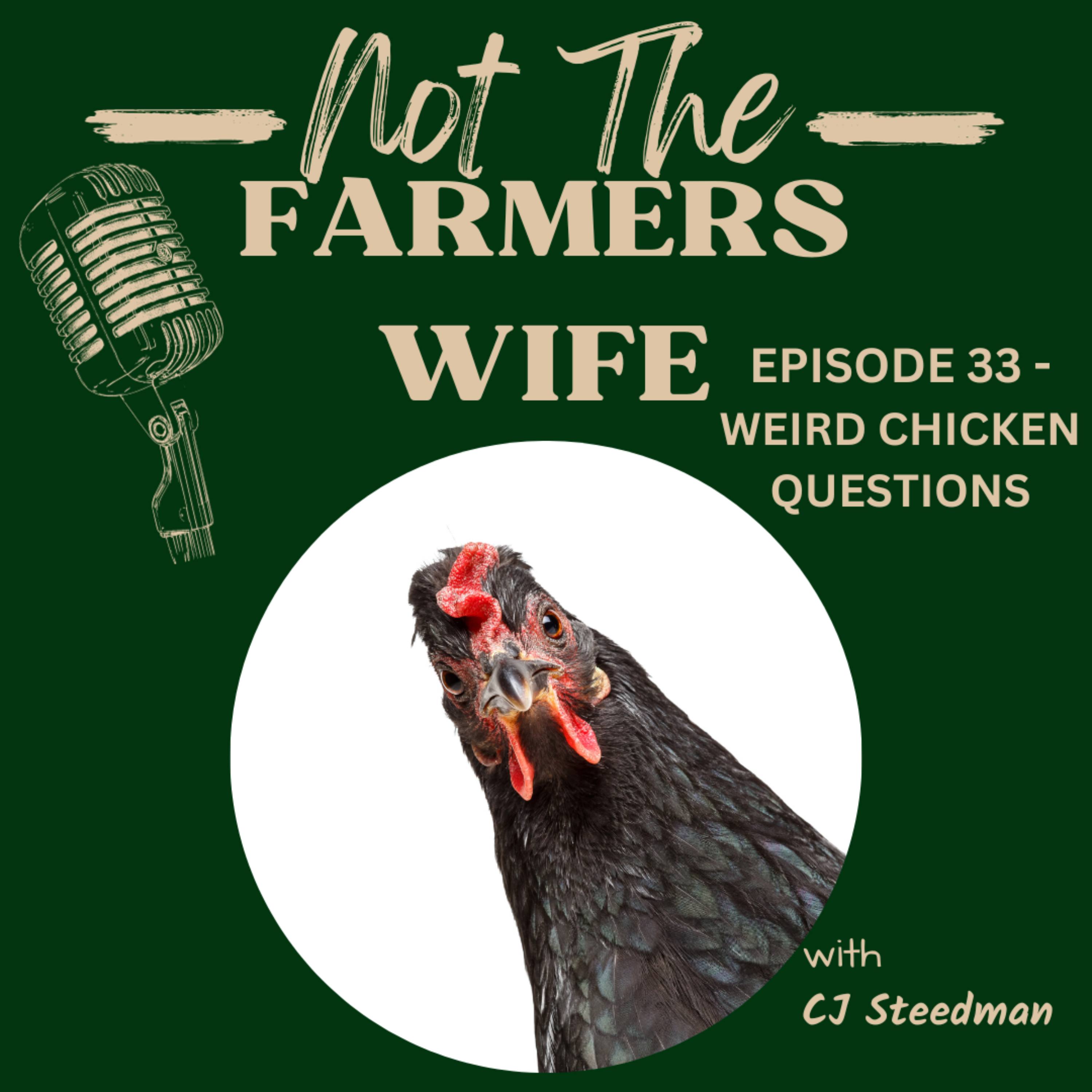
Episode 33 - Weird Chicken Questions episode artwork

EPISODE · Oct 8, 2023 · 55 MIN

Episode 33 - Weird Chicken Questions

from Ditch The Store · host CJ Steedman

The chicken or the egg? The egg did! Chickens are the closest living thing to dinosaurs. And eggs are how dinosaurs reproduced… So I’m going to say the egg was first.   I was asked why I sell bleached eggs with my farm-fresh brown ones. It's a common misconception that brown eggs are always farm-fresh, but egg color depends on the chicken's breed. Both brown and white eggs can be fresh and delicious What do I feed them (my chickens) to get colored eggs? The color of an eggshell is determined by the chicken's breed, not its diet. Feeding them a balanced diet ensures healthy eggs.   Are the green eggs rotting because of the color? No, green eggs are not rotten. They come from certain chicken breeds and are perfectly safe to eat.   Don’t you need a rooster to get eggs? No, hens can lay eggs without a rooster. Roosters are only needed for fertilized eggs.   You eat their eggs? Aren’t baby chicks inside? Eggs sold for consumption are unfertilized, so there are no baby chicks inside.   Eggs from backyard chickens are always safer than store-bought eggs. The safety of eggs depends on proper handling and cleanliness, not just their source. Both can be safe if handled correctly.   Brown eggs are healthier than white eggs. Egg color doesn't determine healthiness; it's about the chicken's diet and care.   All eggs sold in stores are fertile. Most store-bought eggs are not fertile because they aren't exposed to roosters.   Eggs with blood spots are unsafe to eat. Blood spots in eggs are not harmful. They occur during the egg's formation and don't indicate spoilage.   Eggs should be washed before storing them. It's generally best to leave eggs unwashed until you're ready to use them. Washing can remove their protective coating.   Double-yolk eggs are rare and unique. Double-yolk eggs are relatively rare but not unsafe to eat.   The color of the eggshell determines the egg's taste. The eggshell color has no impact on the taste; it's all about the chicken's diet.   Eggs should be refrigerated at all times. Eggs can be kept at room temperature for a short time. Refrigeration extends their shelf life. Roosters Do you need a rooster to get eggs from a chicken? No. A rooster is only needed if you want fertilized eggs. As usual, very few male animals are needed except for meat purposes.   Why would a hen lay an unfertilized egg? It's just the way mother nature operates! It's probably because as the eggs develop, they are too large to remain inside the hen.   How does a hen fertilize an egg? When a rooster mates with a hen, the semen is stored in the oviduct for later use. When she gets ready to lay the egg, a sperm fertilizes the egg before the shell surrounds it. The sperm is viable for about a month in the oviduct.   How do roosters mate with hens? The sex organ of a rooster is located internally, inside the cloaca, which is the opening where the feces comes out, and in the hen, the eggs. When mating, the rooster's organ is extruded (comes out) to place the sperm in the cloaca of the hen.   Flocks do better with roosters, as it helps a natural pecking order develop. Roosters can help establish a pecking order, which can promote orderliness in a flock.   Roosters mating practices may seem a bit harsh to us, but it is natural to chickens. Hens are certainly not bothered by it enough to avoid the rooster. Rooster behavior is natural for chickens and doesn't harm hens.   They prefer males at the top of the pecking order, but other roosters with lower status will force the hens -- about half their size -- to mate. Rather than attempt to fight off the undesirable mates, hens appear to have developed a more subtle way to reject them. Hens may have evolved strategies to avoid unwanted mating, such as ejecting sperm from less desirable roosters. When mating with a series of roosters, hens ejected more semen from the later mates. Since lower-status roosters don't get the first shot at the hens, for this reason alone, their sperm are more likely to be ejected   Some studies have shown that chickens can recognize who they are related to within a flock. Chickens may have the ability to recognize their relatives in a flock, which can influence social dynamics.   Diet Chickens only eat grains and seeds. Chickens have a diverse diet that includes grains, seeds, insects, vegetation, and more. Everything Else Alektorophobia is the fear of chickens. This term is derived from the Greek word "alektor," which means rooster or chicken, and "phobos," which means fear. People with alektorophobia experience intense anxiety and fear when they are in the presence of chickens or even think about them. This fear can be debilitating and may lead to avoidance of situations involving chickens. Alektorophobia is a specific phobia related to chickens and can cause significant distress in affected individuals. On average, an average hen lays around 260 eggs in a year. This number may vary depending on factors such as breed, age, and environmental conditions. Hens are known for their ability to produce eggs regularly, with some breeds being more prolific layers than others. However, it is important to note that not all hens will lay eggs every single day, and there may be periods of time where egg production decreases or stops altogether. The average egg production of a hen can vary, but they generally lay around 260 eggs per year, with individual variation. Chickens typically have an average lifespan of 10-12 years. This is determined by factors such as breed, diet, and living conditions. While some chickens may live shorter lives due to disease or predation, others can live longer with proper care. The 10-12 year range is a general estimate for the lifespan of a chicken. Chickens can live for 10-12 years on average, but their lifespan can vary due to various factors. Hens typically lay eggs for about 2 years. This is the average lifespan of their egg-laying capability. After this period, their egg production gradually decreases and eventually stops. Therefore, it is safe to say that hens lay eggs for approximately 2 years. Hens have an average egg-laying span of about 2 years, after which their egg production declines.

The chicken or the egg? The egg did! Chickens are the closest living thing to dinosaurs. And eggs are how dinosaurs reproduced… So I’m going to say the egg was first.   I was asked why I sell bleached eggs with my farm-fresh brown ones. It's a common misconception that brown eggs are always farm-fresh, but egg color depends on the chicken's breed. Both brown and white eggs can be fresh and delicious What do I feed them (my chickens) to get colored eggs? The color of an eggshell is determined by the chicken's breed, not its diet. Feeding them a balanced diet ensures healthy eggs.   Are the green eggs rotting because of the color? No, green eggs are not rotten. They come from certain chicken breeds and are perfectly safe to eat.   Don’t you need a rooster to get eggs? No, hens can lay eggs without a rooster. Roosters are only needed for fertilized eggs.   You eat their eggs? Aren’t baby chicks inside? Eggs sold for consumption are unfertilized, so there are no baby chicks inside.   Eggs from backyard chickens are always safer than store-bought eggs. The safety of eggs depends on proper handling and cleanliness, not just their source. Both can be safe if handled correctly.   Brown eggs are healthier than white eggs. Egg color doesn't determine healthiness; it's about the chicken's diet and care.   All eggs sold in stores are fertile. Most store-bought eggs are not fertile because they aren't exposed to roosters.   Eggs with blood spots are unsafe to eat. Blood spots in eggs are not harmful. They occur during the egg's formation and don't indicate spoilage.   Eggs should be washed before storing them. It's generally best to leave eggs unwashed until you're ready to use them. Washing can remove their protective coating.   Double-yolk eggs are rare and unique. Double-yolk eggs are relatively rare but not unsafe to eat.   The color of the eggshell determines the egg's taste. The eggshell color has no impact on the taste; it's all about the chicken's diet.   Eggs should be refrigerated at all times. Eggs can be kept at room temperature for a short time. Refrigeration extends their shelf life. Roosters Do you need a rooster to get eggs from a chicken? No. A rooster is only needed if you want fertilized eggs. As usual, very few male animals are needed except for meat purposes.   Why would a hen lay an unfertilized egg? It's just the way mother nature operates! It's probably because as the eggs develop, they are too large to remain inside the hen.   How does a hen fertilize an egg? When a rooster mates with a hen, the semen is stored in the oviduct for later use. When she gets ready to lay the egg, a sperm fertilizes the egg before the shell surrounds it. The sperm is viable for about a month in the oviduct.   How do roosters mate with hens? The sex organ of a rooster is located internally, inside the cloaca, which is the opening where the feces comes out, and in the hen, the eggs. When mating, the rooster's organ is extruded (comes out) to place the sperm in the cloaca of the hen.   Flocks do better with roosters, as it helps a natural pecking order develop. Roosters can help establish a pecking order, which can promote orderliness in a flock.   Roosters mating practices may seem a bit harsh to us, but it is natural to chickens. Hens are certainly not bothered by it enough to avoid the rooster. Rooster behavior is natural for chickens and doesn't harm hens.   They prefer males at the top of the pecking order, but other roosters with lower status will force the hens -- about half their size -- to mate. Rather than attempt to fight off the undesirable mates, hens appear to have developed a more subtle way to reject them. Hens may have evolved strategies to avoid unwanted mating, such as ejecting sperm from less desirable roosters. When mating with a series of roosters, hens ejected more semen from the later mates. Since lower-status roosters don't get the first shot at the hens, for this reason alone, their sperm are more likely to be ejected   Some studies have shown that chickens can recognize who they are related to within a flock. Chickens may have the ability to recognize their relatives in a flock, which can influence social dynamics.   Diet Chickens only eat grains and seeds. Chickens have a diverse diet that includes grains, seeds, insects, vegetation, and more. Everything Else Alektorophobia is the fear of chickens. This term is derived from the Greek word "alektor," which means rooster or chicken, and "phobos," which means fear. People with alektorophobia experience intense anxiety and fear when they are in the presence of chickens or even think about them. This fear can be debilitating and may lead to avoidance of situations involving chickens. Alektorophobia is a specific phobia related to chickens and can cause significant distress in affected individuals. On average, an average hen lays around 260 eggs in a year. This number may vary depending on factors such as breed, age, and environmental conditions. Hens are known for their ability to produce eggs regularly, with some breeds being more prolific layers than others. However, it is important to note that not all hens will lay eggs every single day, and there may be periods of time where egg production decreases or stops altogether. The average egg production of a hen can vary, but they generally lay around 260 eggs per year, with individual variation. Chickens typically have an average lifespan of 10-12 years. This is determined by factors such as breed, diet, and living conditions. While some chickens may live shorter lives due to disease or predation, others can live longer with proper care. The 10-12 year range is a general estimate for the lifespan of a chicken. Chickens can live for 10-12 years on average, but their lifespan can vary due to various factors. Hens typically lay eggs for about 2 years. This is the average lifespan of their egg-laying capability. After this period, their egg production gradually decreases and eventually stops. Therefore, it is safe to say that hens lay eggs for approximately 2 years. Hens have an average egg-laying span of about 2 years, after which their egg production declines.

NOW PLAYING

Episode 33 - Weird Chicken Questions

0:00 55:07

No transcript for this episode yet

We transcribe on demand. Request one and we'll notify you when it's ready — usually under 10 minutes.

Big Old Life: Heather Blackbird interviews people on planet earth. Heather Blackbird loves asking questions. This podcast is a learning experience. Join me, Heather Blackbird, as I talk to people about their lives. Frequency of new episodes is a little all over the place and I'm learning as I go. Big Old Life is a small way of talking about the vastness of life, one person at a time. If you are reading this or found this podcast it's probably because someone you know gave you a link to it. :) Explicit Tales Of A Superstar DJ The Insomniac Spun seemingly out of nowhere from her complacent life in the corporate world, turned seemingly overnight from 16-Hour shift work and into the life of a literally starving artist and working musician, The Protagonist navigates her supposed rise to fame and superstardom on a journey through spiritual awakening, coming-of-age, and intimate self-realization--guided by an omnipresent force and equipped with the power of love, magic, and music. {Enter The Multiverse.} [The Festival Project] The Festival Project, Inc.™ is a multidimensional multimedia platform which encompasses exploratory and artistic social personifications and expressions on cosmic theory, spirituality, growth, health & wellness, philosophy and theoretic dynamics in entertainment such as music, design, film, television, radio, dance and festival culture, art, fashion, literature, and science. The Festival Project™ and its subsidiary Non-Profit, The Collective Complex © aims to challenge modern artistic and philosop Explicit Bitcoin Is Dead Trey Carson Welcome to Bitcoin is Dead, the ultimate Bitcoin variety show where host Trey takes you on a journey through the ever-evolving world of Bitcoin. Each episode brings new personalities, fascinating locations, and insightful conversations with politicians, educators, and innovators shaping the future of Bitcoin. Whether you're a seasoned Bitcoiner or just starting your journey, tune in for thought-provoking discussions, unique perspectives, and a deep dive into the ideas and people driving the Bitcoin revolution. Explicit The Sacred +Profane Podcast nephtaragrace The Sacred + Profane Podcast is a provocative conversation dedicated to cementing a better future for all. We specialize in unpacking the nuances of what is considered sacred and profane, particularly focusing on sex, death, and all that pertains to the circle of life. Our aim in focusing on such ”taboo” subject matter is to demystify what is unconscious, bring to light what has been known for centuries as ”the occult,” and empower the rapid transformation that is occurring on the Planet. Explicit

Frequently Asked Questions

How long is this episode of Ditch The Store?

This episode is 55 minutes long.

When was this Ditch The Store episode published?

This episode was published on October 8, 2023.

What is this episode about?

The chicken or the egg? The egg did! Chickens are the closest living thing to dinosaurs. And eggs are how dinosaurs reproduced… So I’m going to say the egg was first.   I was asked why I sell bleached eggs with my farm-fresh brown ones. It's a...

Can I download this Ditch The Store episode?

Yes, you can download this episode by clicking the download button on the episode player, or subscribe to the podcast in your preferred podcast app for automatic downloads.
URL copied to clipboard!