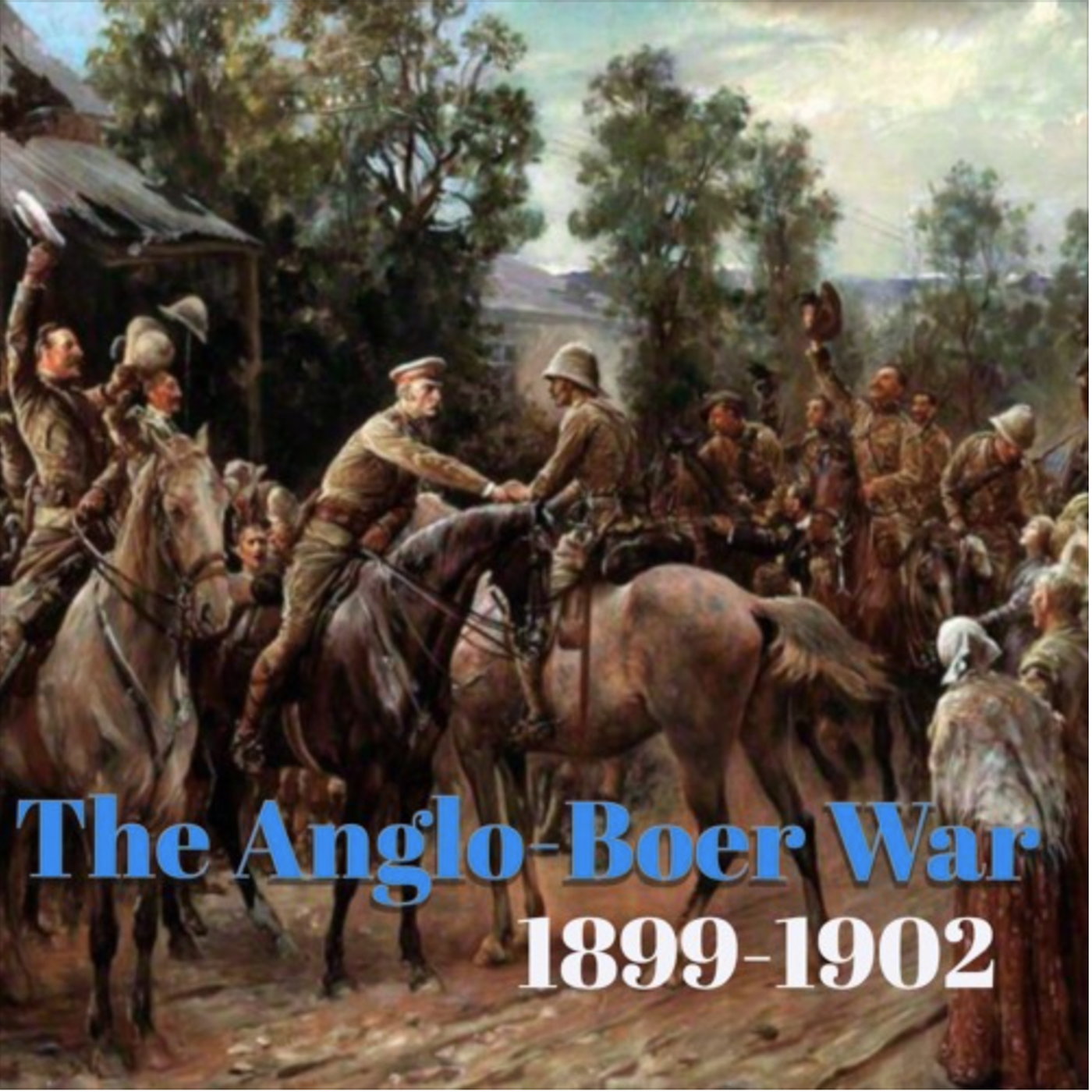
Episode 39 - General Buller defeats the Boers at Allemansnek and enters the Transvaal episode artwork

EPISODE · Jun 17, 2018 · 26 MIN

Episode 39 - General Buller defeats the Boers at Allemansnek and enters the Transvaal

from The Anglo-Boer War · host Desmond Latham

We’re up to episode 39, and we’re concentrating on the Natal front - or what was known as the Eastern Front. The Natal town of Ladysmith was relieved by General Sir Redvers Buller on 28 February 1900, following the battle of the Thukela Heights. Buller rode into the town on 1 March 1900 and if you’ll remember, made movie history by being the first general filmed entering a town to relieve a siege. On 19 May, Buller planned the next stage. The Boers had crossed the Drakensberg at Lang's Nek and those who could be persuaded to remain had established well concealed trenches on either side of the pass. Realizing this, Buller decided to create the impression that Lang's Nek was his target, rather than his true objective which was actually Botha's Pass named after the Boer Leader, Louis Botha. The 4th Brigade and the 1st West Surrey Regiment were ordered to form the advance guard. They marched to Ingogo or what the Boers called Schuinshoogte where they bivouacked for nine days. Their camp could be clearly observed as usual by the burghers from their positions at Lang's Nek. Lyttelton's division commenced clearing the Doornberg to the south-east near Landman's Drift, while general Hildyard reached Utrecht on 29 May. After a considerable amount of discussion, the landdrost or magistrate formally surrendered the town of Utrecht and the Boers retreated, taking up a position on the hills above in return for the assurance by the British that Utrecht would not be shelled if they remained there. The Transvaal flag and six rifles were taken away as a sign of submission and Buller's proclamation of surrender by the town was posted up on its notice boards. But Hildyard had hardly left Utrecht before the Boers returned, re-occupied the town, tore down the proclamation and arrested the landdrost who had surrendered. Despite the comical aspect of this incident, it proved once again how adept Buller's commanders were at wasting time. He had halted in Newcastle for no less than sixteen days and had failed to move further than Ingogo and Utrecht. Meanwhile Lyttelton moved his division northwards having cleared Christiaan Botha's force from the Doornberg, and advanced as Wakkerstroom in the eastern Traasvaal which he captured on 13 June. So at this stage that we shall leave Lyttelton and return to Buller and the remainder of the Natal Army. It may be recalled that during the vacillation following the relief of Ladysmith, Lord Roberts eventually gave up any hope of co-operation from Buller and informed him by telegram on 25 May that he could manage without him.

We’re up to episode 39, and we’re concentrating on the Natal front - or what was known as the Eastern Front. The Natal town of Ladysmith was relieved by General Sir Redvers Buller on 28 February 1900, following the battle of the Thukela Heights. Buller rode into the town on 1 March 1900 and if you’ll remember, made movie history by being the first general filmed entering a town to relieve a siege. On 19 May, Buller planned the next stage. The Boers had crossed the Drakensberg at Lang's Nek and those who could be persuaded to remain had established well concealed trenches on either side of the pass. Realizing this, Buller decided to create the impression that Lang's Nek was his target, rather than his true objective which was actually Botha's Pass named after the Boer Leader, Louis Botha. The 4th Brigade and the 1st West Surrey Regiment were ordered to form the advance guard. They marched to Ingogo or what the Boers called Schuinshoogte where they bivouacked for nine days. Their camp could be clearly observed as usual by the burghers from their positions at Lang's Nek. Lyttelton's division commenced clearing the Doornberg to the south-east near Landman's Drift, while general Hildyard reached Utrecht on 29 May. After a considerable amount of discussion, the landdrost or magistrate formally surrendered the town of Utrecht and the Boers retreated, taking up a position on the hills above in return for the assurance by the British that Utrecht would not be shelled if they remained there. The Transvaal flag and six rifles were taken away as a sign of submission and Buller's proclamation of surrender by the town was posted up on its notice boards. But Hildyard had hardly left Utrecht before the Boers returned, re-occupied the town, tore down the proclamation and arrested the landdrost who had surrendered. Despite the comical aspect of this incident, it proved once again how adept Buller's commanders were at wasting time. He had halted in Newcastle for no less than sixteen days and had failed to move further than Ingogo and Utrecht. Meanwhile Lyttelton moved his division northwards having cleared Christiaan Botha's force from the Doornberg, and advanced as Wakkerstroom in the eastern Traasvaal which he captured on 13 June. So at this stage that we shall leave Lyttelton and return to Buller and the remainder of the Natal Army. It may be recalled that during the vacillation following the relief of Ladysmith, Lord Roberts eventually gave up any hope of co-operation from Buller and informed him by telegram on 25 May that he could manage without him.

NOW PLAYING

Episode 39 - General Buller defeats the Boers at Allemansnek and enters the Transvaal

0:00 26:18

No transcript for this episode yet

We transcribe on demand. Request one and we'll notify you when it's ready — usually under 10 minutes.

No similar episodes found.

No similar podcasts found.

Frequently Asked Questions

How long is this episode of The Anglo-Boer War?

This episode is 26 minutes long.

When was this The Anglo-Boer War episode published?

This episode was published on June 17, 2018.

What is this episode about?

We’re up to episode 39, and we’re concentrating on the Natal front - or what was known as the Eastern Front. The Natal town of Ladysmith was relieved by General Sir Redvers Buller on 28 February 1900, following the battle of the Thukela Heights....

Can I download this The Anglo-Boer War episode?

Yes, you can download this episode by clicking the download button on the episode player, or subscribe to the podcast in your preferred podcast app for automatic downloads.
URL copied to clipboard!