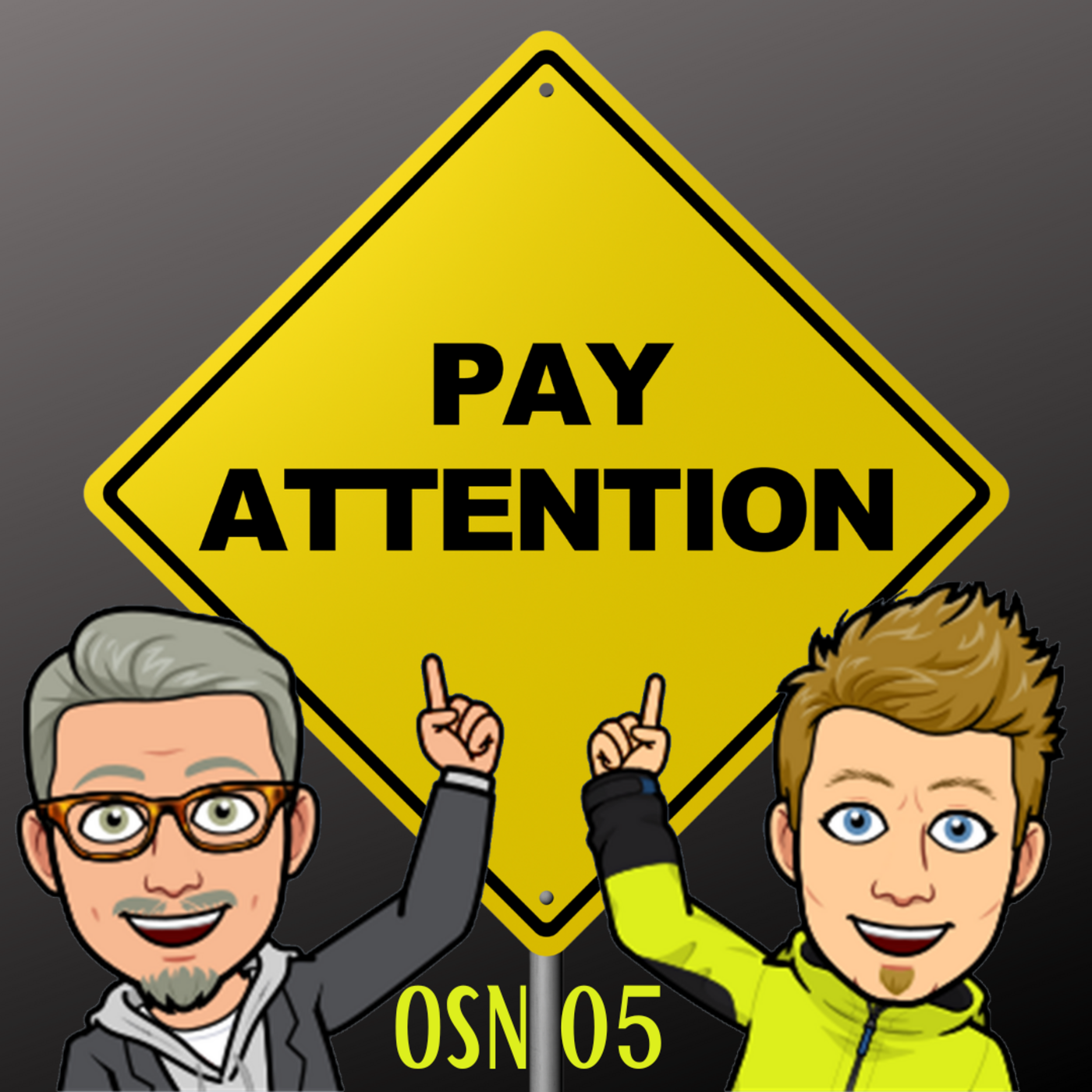
All right, all right, all right. Welcome, welcome one. Welcome all. Welcome, Steve O'Haze to Old School Nerds. Take five. Yes, sir. Representing the nerds, baby. Here we are in all of our glory. Here we are. On one of my apps, I saw they had a team on one of the games that was called Nerd Love. I'm like, now you're talking. I need to change the team just because of that name. We're bringing the Old School Nerd Love, baby. That's right, the Old School Nerd Love. As Steve and I have talked about in the past, we were nerds before nerds were cool.
But the purpose behind that, as we've shared many times, was not to be cool, but to make people happy, to get people to smile, to share the joy, or to bring the joy where there wasn't, didn't seem like there was much. And I got to say, Steve, just from my observation. And to take something that, and to take something that I think we're lagging here a little bit on my end, but, and to take something that was a pain to us, something that took away our happy or something that tried to take away our happy, which was our image of ourselves, and then flip it on its head, man, you know, flip it on its head and use it to make other people realize how valuable they are. I just love the dichotomy of that. Yeah, that's really good.
So Steve-O and I, for those that don't know, have been friends since the 1900s. We went to- Wow, what are you saying like that? That's awesome. Yeah, I got my wooden legs down here. I can prove that. We met back in college and have been friends ever since with some disconnect in the middle, but back together again, as we were singing before we went live, we were together again. And I'm so grateful.
for the connection, for the friendship. Just this last weekend, Steve and I were with our brother studio, with our brother, Tim McCaffrey at his place in Southern California. Steve flew down from the Northwest and we got to hang out again, which we've done this before at Superbowl, Superbowl Sunday, which was exceptionally fun because Tim and his family are crazy Chiefs fans. And so they were fully on, full on into the game. And it was great to be hanging out. I'm so into the game that they, they, they begged me to come down. They paid for my ticket.
to come down and just party at the Super Bowl with him. Of course, I put business against with that one and spoke that very same day. But, and then the house was just packed. There was food everywhere. I mean, you would talk about a Super Bowl party. That was, that was just a very cool one. And then there was a couple of Niners fans in there that were like, what in the world? I mean, it was a great game. It was a, it was a crazy, crazy game, man. And it was intense where we were at, but it was fun as well. You know, it was a blast. And then you, you were gone, Joe, but afterwards, Tim and his kids, I was driving them in this great big, huge, probably.
Oh, how big was that trailer? 15 foot trailer. Like it was about 10 feet high. And he had the bubble machine going. He had this red kingdom, this cool music in the background. He had a video screen behind him, a large screen TV. And he was just on the microphone. He had a sound system and I'm driving slow through the neighborhood. Yeah, baby. Chiefs won, baby. His kids are singing red kingdom. It was just, it was pretty incredible. It was so fun. I wish you could have seen that, Joe. It was like, but they took it, they took the Superbowl serious and it was a blast. It was so much fun hanging out with you in it. It was just very cool. And I love being with you again, man.
That was some serious fun, right? They take their fun seriously. It's great. And I just love the raw enthusiasm. The kids jump up and down, waving the flags. Even the dog was howling at one point. Yes, we have a... I thought you were the 40 whiner. He sounded like a 40 whiner.
Don't know if the dog knew what he was howling about, but he was howling nonetheless, which just the whole place was filled with fun and joy, like you said, and food. In fact, at one point I'd eaten so much, I kind of went into a food coma and found myself trying to stay awake towards middle of the quarter. I said, Joe, that's a spot I hit. And I'm telling you what, it wasn't long before you were fighting the carb coma, that's for sure. That's great, the carb coma. One of the comments that came up, which helps us with this conversation too, during the Super Bowl. Well, before we get into that, Steve, for those that haven't met you before, give people a little intro as to who Steve O'Hays is and what Steve O'Hays does. What are you all about, brother?
I'm a messenger. I'm here to help. That's the acronym for I'm here to bring healing. I'm here to bring encouragement. I'm here to bring laughter. And I'm here to make people ponder. I'm a happypreneur. I'm not about finding creative ways to make money or start businesses. I'm here to help creatively help people find their happy, to navigate, activate, and advocate your happy life. And we do that mostly through Happy Life Studios. We do live speaking as well. We do live coaching. And we are based out here in the great Northwest, sunny Northwest Seattle area. And it's just an honor to do what I get to do. In fact, it's cool to be able to be brother studios, Happy Life Studios with Mojo Studio.
you're kind of about the same thing yourself too, aren't you? Yeah, well, Mojo Studio really is an outcropping of our friendship because after a few, well, a few decades, I suppose, of us living lives separately, I began to make connections with you online, seeing your podcasts and your social media posts, all very positive, happy, funny type of stuff as has been your MO since I've known you, right? And so I was fully engaged, enjoying it very much so. And then we ended up following up with phone calls and conversations and I was just picking your brain like, how do you do what you do? Podcasting, what's that all about? And Steve will very graciously walk me through that process.
and ignited in me the desire to then do a podcast on my own. So if it weren't for my friendship with Steve Hayes, there might not be Mojo Studios. So thank you. Thank you for that. The world would be a sadder place without Mojo Studios, that's for sure. And you're a pro, bro. You caught on. Now I'm learning from you, man. I mean, I've been doing it for seven or eight years when you contacted me. And I was so honored that you even contacted me. But when you said that I got so excited inside because I was like, the world needs, I mean, the world already has Mojo, but.
You need to be shared with more than just the friends that are around you and the workmates that are around you. Your joy, your mojo, your happy, your love, your wisdom needs to be shared on a global level. And so that's why I'm glad that you're out there with Mojo Studio. So check him out at mojo.studio. His blog is unbelievable. His podcast is amazing, but his blog is also amazing. And Joe, I love your thoughts and your insights. And they're quick, short little blogs. They don't take long to read at all, but what a great way to start off the day to read one of those blogs.
So here we are. We're together again, man. We're doing it online. You know, we are a thousand, some hundred miles away and we're old school nerds, baby. Happy hour, pre-happy hour, lunch, happy hour on Friday of all days. Well, whenever we're together, it is happy hour for sure. So what a joy to do this together. So let's, let's dig into this topic and Superbowl made for a great segue because I do remember even while we were there, someone asked the question, might've been me, said, anybody know how much they're paying for advertising this year's Superbowl? And it wasn't verified, but what I heard was about $7 million for a 30 second ad on the Superbowl.
$7 million for 30 seconds. And of course, my mind goes, which it does every year when I hear these statistics. But for the companies that spend or invest $7 million into a Super Bowl ad, they must... have this full belief and experience that they're going to have a return on that investment rate, that that is worth $7 million. But when I began to think about that, I think, well, they're not getting direct sales necessarily. I guess some might be, but not necessarily direct sales from the commercial. So what are they really paying for? What is any advertiser or even the movement about Jesus gets us? Why would they spend $7 million for 30 seconds? And if they have multiple commercials, of course, you multiply that out. And really what they are after.
more than anything, is our attention, right? They're trying to get our attention. That's why they're funny or they're moving or they've got the great backstory or great special effects. They put all of the time, energy, attention, creativity, who knows how long they plan ahead for the Super Bowl commercials, but what they're really paying for isn't just the time on the television, it's the time in front of you and I and the other billion viewers, however, to get their attention. And they know that that's one place where there's so many people have put their attention on for a particular time of year. It may be the only television.
event where people, where a lot of people watch it just for the ads, for the commercials. It's about the only time that, and sometimes if there's teams that I could care less about whether they win or lose, if there isn't even a team that I can really despise winning, right? To cheer for the other team, I'll watch a Super Bowl just for the ads, for the, you know, for the commercials because, well, they used to be super, super funny. This year they had some that were funny. They didn't seem as good this year as, you know, which is a bummer because it's $7 million in ad, but, but Joe, the whole concept of, I mean, just, we got to sit on that for a second. I know you're planning on sitting on that for a second, but.
They did all that, not to mention all the money they spend to make that ad and all the money they spend on what would be not the biometrics, but what word are they looking for? But the analytics, just to know how they're going to do their ad. And they pay an advertiser to put their ad together and they pay, I mean, all the money that they pay for something that we own. something of high value to them, worth millions of dollars to them. And you have it. You who are listening to this, you who are watching this, you have that. You are worth a lot because these advertisers are paying a lot to get what you have, which like you said, Joe, it's your attention. Yeah. Yeah. Some people say, you know, advertisers are paying for your eyeballs, whether that's on social media or wherever, but they're not really because if you're just scrolling past and your eyeballs are glazed over, then that's not.
They're not getting what they want. What they really want is you to stop and to engage and to like or to comment or to share or ideally, you know, to purchase, to purchase whatever it is that they're selling. But it's just, I think it can't be understated how we devalue our attention. And yet everything around us in media is saying how incredibly priceless it is, right? If advertisers, if, you know, I've heard it said that the social media moguls, right, are paying some of the brightest minds, the greatest engineers, top dollar to do what? To engineer a way to keep.
to both capture and to keep our attention, right? Because the longer they can keep our attention on whatever media it is, then the more ads can be served, which is the business model. And so this is just such a, the Super Bowl in particular is such a wake up call for me again to say, hey, Joe, do you realize how much people are paying to get your attention? Do you value, do I value my attention as much as these advertisers do, right? Who are making millions of dollars by capturing attention. And I think there's a disconnect between us.
understanding the value of our attention versus those who are making money off of our attention. Yeah. So my question for you then, Joe, I love that whole concept. They see our attention as valuable, but we don't. We tend to, you said, I think your words were something along the lines of we, something they value, we devalue our attention. So how do we do that, Joe? How do you think that we devalue our attention?
I think one of the ways is by giving it away for free, right? And so even this two-word phrase, pay attention, caught my attention a while back. And you and I had this discussion. And I'd love to bring it back into this conversation that if you think about it, pay attention, the phrase alone is a transaction, right? When you pay for something, then you get something in return and you own it. But we don't really think about that a lot in terms of paying attention. But if attention is as valuable as it's clear through our advertisers and social media that it is, and yet we give it away for free, then what are we getting back?
in return for something that's so valuable. So we wouldn't take a million dollars and just hand it over to somebody and say, I don't expect anything in return or what to get returns only worth of $5 or less, right? We were very careful about our money, but I think we get careless. about the value of our attention, that where we put our attention, we are paying for something, but what are we getting in return? Are we getting something back that is of the same or more value than what we've exchanged it for? And it's very easy to go through life just giving our attention away as if it's valueless or valued very little. And either we don't get anything in return or what we get in return isn't even what we want. And we become owners of something that's negative, that's ugly, that's divisive, that turns us off, that makes us upset, that causes negative feelings inside of us. Why? Because we've paid our attention to it. Now we've owned that, which we paid our attention to.
And the other phrase that we use a lot too is you get what you pay for, you know? So our attention is valuable. And when we pay our attention, for instance, just to, I don't know, break it down a little bit. And Joe, your mind works really good on stuff like this. So I think this is probably going to spark a lot for you on different particular ways that we get something of low value because we pay our attention to that. You, you get what you buy, you get what you pay for. And when you pay attention, like you said, what are you getting in return? What are you paying your attention to? So when now politics season is coming up, right? The elections are coming up.
And it seems like both sides love to yell and shout and point the fingers and say how stupid the other side is. When you pay attention to anger, you are purchasing anger. When you pay attention to worthless things, stupid things, you are getting stupid things. Don't get me wrong. We all watch the dumb videos or listen to the stupid jokes or whatever, because laughter, in my opinion, even if there's something, laughter usually is often because of something silly. You're getting something of value from that. When you laugh, you're getting happy, right? But when we keep...
Reason why the politics do that, politicians do that is because they're getting what they're asking for. When they get that stuff out, as long as people pay attention to it, they will keep on doing it. And I can't stop how the political race is going to go, but I can monitor how much attention I give these negative ads, how much attention I give. And I can find out information about the politicians and about the things that they stand for by reading or by finding sources that aren't full of a lot of anger, full of a lot of discouraging depression. It's just like there's a part of it doesn't even want.
that the race to come. I think a lot of us feel that way because we know what's coming next, but we don't have to pay attention to that. And if we don't pay attention to it, you can still vote. You can still be a citizen and still vote without paying attention to all the other garbage that goes on. And oftentimes then when there's a lot of noise going on, when there's a lot of anger going on, when they're trying to stir something up, it's like a magician. He's doing this so he can sneak something in, you know, look at my, look what I'm doing up here so I can.
trick you, you know, why are they making all the noise? Why are they wanting to pay all that attention? Because there's something else that's going on. And there's a way you can find that stuff out without paying attention. So that's one way I think that we, we waste our attention. We make it worthless by paying. I mean, none of us likes to be angry. I mean, maybe some do my dad always said you wouldn't, cause you wouldn't be, why is that happening dad? Cause you wouldn't be happy if you weren't angry. Right. And now I get what he was trying to say. Right. But honestly, everyone, one of us wants to be happy. If you want to be happy, then we should pay attention to things that make us happy. We should pay attention to things that are happy to people that are happy, you know, and not.
all this other stuff so to me that's one example of making your attention worthless by throwing it at anger by throwing it at division and strife and talk about is trump and collusion are we in collusion collusion means to connive against and we pick a side and say that other side is dumb that's collusion and by definition you know but the word collusion i'm sorry i'm talking a lot here i'll turn it over to you but the word collusion originally came from two words calm and luderre i think they're french words pretty sure the french words but it means to play with And when you're in collusion, you're not in collusion, right? When you're playing with somebody, you are not fighting against them. You're not conniving against them. You are seeing them as a human being. Like Kristen said last week when we were talking in our live cast, which you guys should really check out. It was so good. But she said when her and her husband kind of get in a heated argument, they hold each other's hands. What are they doing? They're colluding at that point. When they're holding each other's hands, they realize that person's a human being. I just can't connive against them. But it also goes to another side. When you're conniving against somebody, when you are debasing somebody, you don't see their humanity.
You can't collude with them. You can't play with them or be together with them. And what you were doing at that point, and you might say, well, what's the big deal? I don't want to anyway. But what we're doing at the time is we are paying attention to collusion in a negative way. We're paying attention to everything that makes life unhappy, that makes life unbearable. It's not all these things that have happened to us over the last several years that make us unhappy. It's what we are paying attention to. Right. Yes. Absolutely. Very, very well. I love it. Got you going. Don't can't stop you now. It's all good.
You know, it's no secret that the media starts off with all the negative stories, right? Because the sensation of a tragedy or something's going wrong or the negativity seems to sell. It seems to attract people's attention, right? And that's what they want to do is they want to get your attention and keep it there. And there's very little, as you would say, good news on the news. The news is primarily bad news. And I think there's actually a shift happening in our society where people are tired of just hearing bad news all the time. And so they don't give as much attention to the news, especially the mainstream media. But it doesn't just have to be.
It doesn't have to be just bad news that we pay attention to, right? That we're getting back that negativity and the negativity bias that just feeds something inside of us that isn't good, isn't giving us life, isn't giving us joy, isn't making life fun or worthwhile or full of love or whatever, right? The news rarely does that because it's feeding us all the negative stories. And I think it's obvious that there's something very attractive about that in us. So all that to say, if we find ourselves like a moth to the flame, attracted to something that's going to harm us, then we have to be very intentional, right? About steering away. Rather than...
rather than just being drawn in and then consumed by the fire of negativity, is to flab our wings, right? To take our intention and say, okay, I don't want to spend or invest my attention on things that are divisive, things that are negative, things that are depressing, things that paint such a terrible picture of humanity and make me feel pretty bad about myself in the long run that steals my joy, that puts me in a low level of anxiety or a high level of anxiety, right? Those things are the natural outcomes when I'm paying attention to those type of things. But it takes a little bit more work, right? It takes a little more intention to say, What are the things that I can pay attention to that I will earn or own that are really helpful, right? That feed my mind, that feed my soul, that feed my spirit, that feed my relationships, that make me stronger, right? That make me wiser, that cause me to laugh, as you said, because laughter is such a powerful creative force inside of us. It actually changes our biochemistry, right? It changes the way we view life. And I can't help but think of, there's even a Bible scripture that says, hey, here's the things you should think about. Think about things that are good and pure and beautiful and praiseworthy and honest and all these things. It says, think about these things.
And I think as a kid, I kind of listed that as like a command. Here's what you should do. What I realize now is this is like a prescription to say, hey, you want a life that's full of joy and beauty and goodness and wholesomeness? Well, then give your attention to those things because those are the things that you will receive in return. And we all know how powerful gratitude is, right? If we pay attention to what we're grateful for, then it changes the way we see ourselves in the world around us. I love that. I mean, I love that. When you think about it, when you're paying attention to something that's pure, you are buying purity. So what negative emotions do we experience? If you're feeling dirty or worthless.
then find something that's worth something and pay attention to it because you are buying. When you're paying attention to something worthwhile, you're buying worth. When you are paying attention to something that's happy, whether it's watching a happy movie, a funny movie, whether it's looking at jokes online or whether it's talking to somebody who is up a lot, when you're paying attention to that thing that's hopeful, you are buying hope. And it might be a small amount, but you buy enough small amounts, you're investing. When you're paying attention to that, you are investing in your life. And yet, when we pay attention to baseless, insignificant, worthless things or things that...
go against our hope, go against our faith, go against our happy, go against our peace. We are not investing, but we are draining from that account that we all have inside of us. We'll have an emotional bank account inside of us. And whether we have money in that or whether we have positive energy in that or not, depends on whether we're depositing or we're withdrawing. And when we're paying attention to the negative, we withdraw from that happy account. We withdraw from our spirit. We withdraw from our soul. But when we pay attention to someone, something that's pure, that's beautiful, that's funny, that's hopeful, that's loyal.
That's, I mean, and that can be simply as, as simple as finding someone who's loyal and just watch what they do. Finding if you struggle, if you have struggles in your family, find someone who has a family that has that part down. I promise you they have other parts that they don't have down, but have the parts down that you don't have and just watch them. Watch them in the shadows. They don't need to know you're watching them. You want to go next up, talk to them, you know, go up to them and ask them, how did you do that? How do you have such a relationship with your kids, with your spouse? Or how do you keep a happy in your, how do you, right? And when we do that, when we're paying attention to that, we are purchasing that for our inner.
What a powerful concept. So really, my happy, my hope is in my hands. It's as simple as I think. And you know me, so correct me, Joe, if I'm wrong. I tend to oversimplify everything. Don't correct that. We both know that that's right. I oversimplify things, right? But to me, it seems as simple as my happy, my hope, my peace is in my hands. It all depends on these eyes, these ears, this mind, this heart. Basically, it depends on what I am paying attention to. Am I oversimplifying there? Or is that truth?
Well, it is true. It's simple, but not easy, right? I think some of the great truths of our world are simple, but they're not easy. And again, it takes awareness and it takes intention for us to not just be at the mercy of whatever thing is coming our way and just allowing it to pour in. It's been said that our eyes are the windows to our soul. So that goes both ways, right? If we're allowing things into our soul through our eyes, that brings darkness, that brings pain, that brings sadness, that brings the negativity, right?
then we should be careful where we're opening our windows to, right? If the storm outside is, so you and I went to school in Minneapolis together and there were times when it was blizzard outside. It was nasty cold. The wind's blowing. And if you open up the windows, you would bring the blizzard in and it wouldn't take very long before you get the snow and the cold right in there. But if the eyes are the wind to the soul, then we just have to be mindful and aware and willing to close the window to the things that are freezing us on the inside, right? That are bringing a blizzard or storm into our souls. Because the truth is, there's...
Myriads of things clamoring for attention all the time. The world's full of both beauty and darkness and anywhere you look, you can find either. But I think because the tendency again is drawn towards the sensational or the negative at times or kind of the bias that way is that we have this opportunity. Are we going to spend our attention, right? Where now it's lost or are we going to invest it? I hear Warren Buffett, right? Warren Buffett talks a lot about money. He says, I don't spend any money on things that will lose value.
I invest money in things that will gain value. I think we can take that exact same principle into our attention and say, am I going to just spend my attention so now it's gone and I have nothing to show it in return or something negative? Or will I be mindful to invest my attention on things that bring a great return, whether that's growth or it's joy or it's connection or the things that really matter that are purposeful because both are available at all times. And I don't get this right all the time. In fact, I get it wrong way too often, but it doesn't mean I can't make that change in deciding.
Because out of this awareness, am I going to spend my attention or give it away? Or am I going to invest it in something that will bring a return and reap a harvest like fruit in my life that is valuable? So good. I like that. I like that a lot. You talk about investing versus spending. And when people have money, they invest their money, right? But when they invest their money, they keep an eye on their money or they hire somebody else. There's brokers out there that get paid to watch other people's money.
especially like if you're in the stock market. Like if you're just an amateur on the stock market, you don't pay a broker or anything, you put some money in. If you don't watch that on the regular, you need to pay attention to that stock that you purchased. Otherwise, the possibility of you losing money is large. Or you could gain money and not even realize it and then lose it because the stock was right back down to where it was when you bought it. So when people invest their money, right, they pay attention to that on a regular basis. And you said earlier that it's not easy to do. It's simple, but it's not easy. You have to, and again, we say it, you have to pay attention to that. And I think we have to really be...
really be on point with what we're paying attention to. And I think one way, one litmus test to take with that is, I think that's why we have emotions. Emotions are important. We don't like negative emotions, but negative emotions are trying to be our friend. Nobody likes pain. But if you break your foot and you keep walking on it because you don't have pain, because if you didn't have pain, you would ruin your foot and you would lose your foot. So pain is saying, stay off of that. Something is wrong. Get that checked out. Negative emotions like anger, like anxiety, they're positive. They're not being...
an enemy to you. They're trying to be your friend. They're trying to tell you something is wrong. Pay attention to what I'm telling you so you can get past anxiety and into peace is what you really desire. And I think, I wonder if anxiety doesn't really want a resolution. Our body feels anxiety, but we want peace and anxiety is trying to get us there. So the litmus test for me is what I'm paying attention to will tell me how I'm feeling about myself rather will tell me what I'm paying attention to. So when the anger rises up, what am I paying attention to? Why am I angry? Well, what have I been looking at? What have I been thinking about? What have I been listening to? Why am I so anxious? Well, what have I been looking at?
What have I been listening to? What have I been thinking about? And at Happy Life Studios, we talk about all the time. We talk about look, listen, and remember. And if what you're looking at isn't causing creating happiness, if what you're listening to isn't creating happiness, if what you're thinking about isn't creating happiness, then look at something else. Think about something else. Listen to something else. And so I think, you know.
And when all of a sudden your bank account, you get the notification that says it's low, it's empty. Well, that's a sign. Okay, I better pay attention to what's going on. So I think one way to tell if we're paying attention, what we're paying attention to is how we are doing, how we are feeling. And negative things happen in life. I'm not talking about that. But I think that we think that happiness comes from nothing negative ever happens. But there's poor people that are happier than rich people. And there's sick people that are happier than healthy people. It's not on the circumstances. It's on the perspective. It's on what we pay attention to. You talk about changing your perspective. Really, what we're doing is when we're changing our perspective, we are changing what we are paying attention to.
Yes. Wow. A lot of great things came to mind here. And you talked about how sometimes a negative emotion is actually just a call to action, right? Saying something is wrong here. Just like if you've got pain in your foot and you ignore that too long, you can cause all sorts of problems. And so you go to the doctor and you say, something's wrong with me. I've got pain in my foot. And the doctor, really the response should be, no, you're actually, something's right with you. Your body is doing what it's designed to do to point out the fact that you've got an issue that needs to be addressed. So your body's actually working. It's working exactly the way it's designed to work. So you bring this into this equation of paying attention. And I think they're the extreme that.
could work against you is when something negative that needs to be addressed gets your attention to ignore it, right? Ignoring something doesn't make it go away. And in fact, over time, you can get negative compounded interest on something negative by ignoring it because it will continue to grow and it'll be much harder to pull out the weed when it's huge than when it's just in the bud. So I think this is the flip side of attention is that when our attention is drawn to an issue, a problem, a challenge, something that's popped up, if we... Like if we try to ignore it or if we do ignore it or put it off so that, oh, I'm just going to pay attention to all the happy stuff, that actually isn't necessarily a prescription for health because, right, the bells and whistles are going off to say this needs your attention in order to take care of whatever the issue is while it's still young, while it's still small, while it's still manageable. And by just saying, well, I don't want to pay attention to something like that, you can actually do yourself harm in the long run. So it's just a matter of discernment here, right, is knowing that sometimes the short-term pain.
is a call to attention. Pay attention to this so that you don't, like if you're bleeding, metaphorically or literally, you don't bleed to death. You ignore it. All the blood's going to go out. That's not a good result, right? So paying attention is doing the action. And so this is what comes to mind here, Steve, is that there's a...
very common phrase that says where your attention goes, your energy flows. So where your attention goes, your energy flows. So if my attention is drawn to a challenge, a problem, something that needs my attention, and I turn away from that, even if it seems negative, well, like I said, it's going to grow. But if I give my attention to it, my energy will flow to it. Rather than causing it to make it worse, the energy is there to help me address that, to pull the weed, to put the bandage on the wound, to ask for forgiveness, whatever needs to be done in that arena. Sometimes the attention is drawn to it.
Not to make it worse, but to allow us to have the energy to pour into it, to take care of it now before it grows into something bigger, badder, uglier, and more damaging. Yeah, that's so good. That's so good. It reminds me of what we talk about in our, when we do school assemblies, is that, you know, we tell the students, if I have a gouge in my arm, if I have a gash in my arm, right, I got a couple options there. One is I can go to the doctor. I can go to the hospital. If I go to the hospital, if I go to the doctor, they're going to poke around in there. It's going to hurt. They're going to maybe even do surgery on it. I don't want that. So they have a thing called Tylenol. They have a thing called ibuprofen, right? They have a thing called bandage, right? So if I put a bandage on that and take ibuprofen so I don't feel the pain anymore, I'm good, right? Except that's not going away.
That gas, I'm not talking about a small cut here. I'm talking about a gas because we don't want someone to deal with it. And we have so many triggers these days. At least that's the hot term. I think oftentimes we have triggers because we're putting a bandage over it and we're taking Tylenol. We're trying to medicate this problem with.
relationships with money with we're trying to get happy by throwing things out by paying attention to the wrong things instead of saying wait a minute i have a pain here let's deal with this so it doesn't turn into gangrene i lose the whole arm you know and it's not like the things are going to just go away you got to pay attention to them so i think our negative emotions are telling us pay attention to this where your energy what is it where your attention goes your energy flows so if you see something go there and say wait a minute why am i feeling this way why am i in pain why does that anger me so much let's deal with my side of things i can say joe what you said made me angry but why Why? I can't control you, Joe, but I can control my reaction to you. And truth is, nobody can make me angry. I have to allow them. I'm the one that chooses where my attention is going to go and therefore where my energy is going to flow. Yeah. Yeah. And you know what just reminds me too is that sometimes our attention needs a reframe, right? Sometimes our attention needs a reframe. In other words, my initial reaction to something that I'm paying attention to, maybe this is...
terrible. This is awful. This is against me. This is negative. But I have that opportunity, right, to reframe the meaning behind something that happened. And maybe the initial response is, oh, that's not what I want. That's not what I expected. That's exactly opposite of where I thought it was going to be at this time or at this place. Here's a real life example. This morning, I was listening to Tom and Lisa Bilyeu on the Impact Theory podcast, and they said they had two guests that they had vetted that were prepared to be on the show. And first one called in sick, and then the other one couldn't make it because of travel issues. And so both of their guests canceled the day of.
And they had this whole crew set up to do a high-end podcast. And Lisa said, she's like, this is terrible. This is the worst thing ever. And her husband, Tom, says, this is great. This is awesome. And she says, how can you say that? And he said, well, depending on how you look at it, maybe this is an opportunity for us to do something new, to try something we haven't tried before, to give time, energy, and attention to things that keep getting put off because of our routine. And Tom went on to say at great length, he says, I'm not wired that way. That doesn't just come out of me naturally. I've had to learn that that is the best strategy, that when life gives me something that I didn't expect, or something fails, or it's not going the way I want, I can wallow.
which only makes me stuck more in the quicksand. Or I could start asking better questions. He says, you know, oftentimes the quality of our life is dependent directly on the questions that we ask. What is the benefit here? What's in this for me? How can I grow? What can I learn? How can I take what seems to be negative on the surface and turn it into an investment by pouring my attention to it and giving my resources, my time, my energy, I could actually create something that I couldn't get any other way other than through this, what I thought was a roadblock just turned out to be a detour for a great excursion. I absolutely, I absolutely love that.
And if it wasn't for the plan of those other people coming on, he probably wouldn't have planned that for him to happen. And he adapted to it. And I bet it turned out even better than if, you know, something happened that wouldn't have happened otherwise. And all that stuff you're talking about, it's got my mind just thinking, I'm hoping that I can make this intelligible. But there's a lot of talk these days I'm going to try. So there's a lot of talk these days about mental health, right? Mental health is simply you're paying attention to yourself. Now we talk about how advertisers think that your attention is worth millions of dollars. So we've talked about how we need to pay attention to things that are valuable.
When you pay attention to yourself, you're doing just that. Your attention is valuable because you're valuable. So if you'll pay attention to yourself, you're paying attention to value. And when you're paying attention to why am I feeling like this, your body is helping you. Your attitude is helping you to figure out what is wrong so we can get to that state of happy despite whatever a happy life we describe it as a lifestyle where one gets and keeps happy no matter what the circumstance is. And so the whole concept of we talk a lot about mental health these days and we should.
Because mental health is very important. But mental health also, and here I go simplifying things again, but it is simple. Mental health is paying attention to yourself, which includes, it isn't just spoiling yourself and ignoring everybody else. It's no, it's paying attention to my triggers. It's paying attention to my pain. Why is that there? Why is that triggering me? So I can do something about it. So my energy can flow to that. So the whole concept of when you pay attention to yourself, you're paying attention to something valuable.
Man, I think that we need to get that in our head. When you're paying attention to yourself, you're paying attention to something valuable. That's why people pay so much money to try to get that, to try to get your attention. But don't get sidetracked by paying attention to things that lead you down the wrong path. And that necessarily isn't negative emotions. Negative emotions, like you said, I liked when you said that earlier. It was so good. There's nothing wrong with you. It actually means there's something right with you. When someone pushes my buttons and I rise up inside, man, what's wrong with me? Something's right with me. I got it, but it's with me, not with that person.
Now that person's responsible for however they live their life. I'm not letting them off the hook, but I'm saying I don't have to allow them to infiltrate my mind, infiltrate my spirit, infiltrate my heart, and cause me to pay attention to something stupid, something angry, something whatever. But paying attention to yourself is paying attention to value. Yeah, but there's a nuance here too. I love where you're going here. And I think oftentimes when I pay attention to myself, I'm asking the question, what's wrong with me, right? So I'm actually looking for the problems that make me feel less valuable. What's wrong with me? And we do that on the external world. What's wrong with the world? What's wrong with you? What's wrong with the system? What's wrong with fill in the blank? But we also do that with ourself. So I think what's really important here is that that question, what's wrong with, is actually paying attention to.
what's negative, right? It's giving our time, energy and attention. And in return, when our attention goes there, the energy flows and it creates a world of what's wrong with, and it becomes very dominant in our mind. And so that's a reminder too, Steve, of asking what's right with me. What's right with the world. What's right with the circumstance. What's right with this relationship so that we don't get so.
skewed in our view and our vision and our understanding of how blessed, how valuable we are of all the great things that we enjoy, including the breath in our lungs and the friendships that we have, the connections, the contributions and opportunity to serve and create because we can change the world. Here's the phrase that comes up a lot for me. And I've shared this with you before is that we create the world that we pay attention to. We actually create the world that we pay attention to. What does that mean? That means that there's an infinite number of things to pay attention to, but the ones we pay attention to creates in our mind, what kind of world that we're going to experience, whether it's external and or internal.
So really, this is why our attention is so valuable because it actually creates the world that we experience. And if we're always paying attention to what's wrong with me, what's wrong with you, what's wrong with the world, then we've painted a world where everything is wrong. But if we can, simple but not easy, make the time, the energy, the attention, take the moments to say what's right with the world, what's right with me, what's right with my relationships, whatever that is, and give that the attention that it's due, then we actually create a different world even without changing any circumstances. We just change where we give our attention. Yeah, that is so good. And when we're, when we're not doing well, what's the first thing we want to do when we're angry? We want to find the reason for that. We want to blame people on today's culture. It just seems at least maybe just, maybe it's just social media, but we're always blaming somebody else for our, for our sadness, for our unhappiness, for our being ill at ease or whatever. But truth is we've got to be looking at ourselves. We can't change, you know, go back to, I want to go talk about that just for a minute. The, what I just, did that make sense what I just said right there? Yeah, certainly. Yeah. And you know, this is the, to me, this is the idea of blaming versus responsibility. If, if we're always blaming.
circumstances for our happiness or for our sense of wellness. Well, then we've given away the... But one of the beautiful things that we can be thankful for about ourselves is the power of adaptability, right? Is that regardless of the circumstances, I can change the way I view it. I can change the way I address it. I can change my response to it, right? The meaning that I assign to it, that's called response ability. It's the ability to respond in a different way. And oftentimes I've misunderstood responsibility as blame and nobody wants to take the blame and certainly don't want to put the blame on me, right? And so, but if I embrace the idea, no, it's not blame, it's responsibility. It's like, okay, I can't change what has happened.
but I can certainly change my response to it. What is my ability to respond, both in my thoughts, my perceptions, my feelings, my actions, so that it doesn't matter what the circumstances may be, I still have the power of my responsibility, my ability to respond with positivity, with power. And like you said earlier, you can focus on what's wrong or you can focus on what's right. It's the same amount of energy to do either one. Now, if we've gotten used to focusing on negative, it's going to take a little bit of attention and a little bit of effort to learn how to focus on. So it might take a little more energy because we are so used to, we've got a rut built. We love to go down the negative. We love to go down the negative. So it takes a little bit of energy to get out of that rut. But honestly, when it's on a level playing field, it takes as much energy to say what is right with this or what is right with me as it does say what is wrong with me. And that for me has changed. It has changed my world. It is my word for this year is moment. It represents living in the moment.
When I'm living in the moment, I'm paying attention to right now. And we've spent a lot of our time, a lot of our energy focusing on the future, focusing on the past. And usually when we're focusing on the future, it's because of dread. It's because of fear. We're fearing what is coming up. When we focus on the past, we focus on regret. We're paying attention to regret. We're paying attention to shame. Oftentimes, not all the time. We're supposed to look at the past. When you're driving a car, you have a rearview mirror. But the rearview mirror should not trade places with the windshield, right? And the windshield, you're looking at...
You know, the first 50 yards, 100 yards, depending on how fast you're going, how many yards. But you're also looking way down the road. You're looking at the horizon. But if you're spending your whole time looking at the horizon, you're going to get into an accident. You're going to be a dangerous driver. So you glance at the horizon. You glance at the future. You glance at the past. But you spend your time in the moment. And that is when I'm in the moment. This goes back to saying what's wrong with me versus saying what's right with me. And when I find myself lately.
Going into old habits of feeling negative, of feeling like, you know, sometimes you feel like you're a failure. You feel like you've blown it or whatever the situation may be that causes you. It tries to take away your happy, your peace, your hope. When that happens inside, I stop myself and say, wait a minute. What am I doing right? And that goes away. Or if it's something I'm thinking.
And I'll say, wait a minute, hold on. Why am I feeling this way? What am I, what am I, what am I, what am I, what do I, instead of saying, what do I not have right now? I wish I had this. I wish I had that. Man, if I didn't do this, I'd have this. I stopped myself. I'm like, why am I feeling this way? I'm paying attention to those feelings that are trying to get me to a place of contentment. And I say, wait a minute, what do I have right now? It was the other night I couldn't sleep. And I was like trying to get to sleep. And my old self was trying to get all worked up. I'm like, you gotta get to sleep. You gotta wake up in the morning. You gotta, and I stopped myself. So wait a minute, why am I feeling this? I was paying attention to that. I said, wait a minute, what do I have? I'm in a very comfortable bed. I
I love my house. I love my wife. And she's laying right next to me. So if I was asleep, I couldn't enjoy this moment. So I'm just going to enjoy this moment. So the whole idea of saying when I'm going, what is wrong with me? I stop that and pay attention to what is right with me. What am I doing right right now? What do I have right now? And those things, they just fall off. They fall off a cliff. And I'm here in this moment. I'm paying attention to right now, which is the only thing that we really have is the right now. So that whole idea of, you know, what am I doing right? Instead of what am I doing wrong? That's one of the biggest keys to.
I mean, it's paying attention. You're buying value. It's a key to happiness. It's a key to living a life in a healthy way that will help change other people's lives in a healthy way as well. And you also pointed out so eloquently that you went from the question of what do I lack, right? To what do I have? That's just a matter of paying attention. It's exactly what we've been talking about from the beginning of this conversation is that I can pay attention to what I wish I had, what I wish was different, what I lack, right? And then I will feel less than, or I have the power.
with some intention here to, as you said, to pay attention. What do I have? How am I blessed? What talents, abilities? And even this idea of looking at the past and the future, you said very clearly, by default, we tend to look at the past with regret or shame, or we look at the future with dread. But that's that negativity bias we've been talking about. But here's another tip, and I'm learning to practice this myself, is that when I look at the past, I also have the opportunity.
If I just shift my mind a little bit, ask a little bit of questions to say, what about, what has happened in my past, right? That is awesome. I'm grateful for, to think of moments of my past that brought me great joy or sense of accomplishment or sense of connection or aliveness or the things that make life worthwhile. Those things I've already experienced. And I can actually bring that emotion and that joy and that experience right into the now, just by changing what am I paying attention to in my own past? Am I paying attention to what went wrong? What I wish was different? Or will I pay attention to what went right? How, how did that go? Well, what does that, how fun was that? And actually you can pull into the, into the present moment.
of the great things from my past. And the opposite is true as well. When I look out to the horizon, yes, I can pay attention to what might go wrong, right? I can have the negativity bias, or I can look to the future with hope and say, what might happen? What could be? What's possibility? What might I be able to do if I continue along this route and I grow and I build and I add these things? And so again, the past and the future can be a drag. They can be an anchor or they can be a sale. It really just matters on whether you're paying attention to what you lack, what you wish was different, what you're afraid of, or pay attention to what do I have? What have I experienced? What have I gained? What have I...
you know, what blessings have I enjoyed in my life and what might be, which could be incredible, right? And that just, it's just a small but important shift in what am I paying attention to? That is so good, Joe. That is, I knew where you started going. I'm like, oh, I like where he's heading with this. And even the negative things that have happened to us in the past, when my dad passed away and my mom passed away, it was, man, it was tough. And when my dad, my dad went first, it was, you know, a long time ago. My mom just recently, you know, well, recently the last few years, but.
man, that was hard on me. And it's a negative thing, but I became a much stronger person, right? Even the negative things that happened in our past helped shape us into the people that we are today, you know? So. That is just so good. And I think we have to train ourselves. Do you have any tips, any happy hacks on how to train ourselves to pay attention on the goodness of the bad? Obviously, we're talking about we need to do that. Do you have any ideas that would help some of us to pay attention to the positive and not necessarily the negative? Well, as you and I have talked about many times, journaling doesn't have to be this daunting, scary thing that's going to take huge amounts of time. Journaling can be as easy as...
as bullet points, you know, three things I'm grateful for that have happened in the past, three things I'm hopeful for about the future, three things I'm grateful for right now. I mean, those are easy things to do, but journaling, what that does is that takes my attention off of whatever else there is and puts it onto what am I writing, which is an outflow of what I'm thinking, right? So people say prayer and meditation, and I've experienced this myself too, prayer and meditation. I can spend my time in prayer asking God for what I don't have, as I've done many times throughout my life, or I can spend my time in prayer thanking God for what I do have and being grateful for who I am and who he is and all the wonders of creation around me. And so it really is a matter of, for me, the practical tip is to be intentional about taking time out of your day. Maybe you set an alarm on your phone at a certain time of day or several times throughout the day to say, okay, stop for a second and think about three great things that have happened today or this last week, three things you're looking forward to, three things you're grateful for right now, whatever that might be, just to break the pattern, the habits of just going with the flow, especially when the flow is just churning all around me to break that mold and say, I'm going to give my attention, I'm going to pay, I'm going to invest my attention in something that will reap a good reward.
Yeah. We even create a thing called a happy journal, which does the same thing, but it's just a, and you can put a piece of paper by your bed. You can put a, but it's good to have something by your bed. Otherwise you're going to forget about it. But it's by your bed and it, and you write down one thing you're thankful for that day or three things you, you decide how many you want to make, right? Some people could do 10. Some people, one is, might be a challenge for them. It doesn't really matter. The point is one of the last things you do before you go to bed is you think about what you were thankful for that day. Or you think about what you did well that day. And you write down something, you write down something positive. You're happy is going, your happy level is about to increase dramatically. And it's going to pause. It's going to create you to cause you to pay attention.
to what I did do, right? Just when you see that thing there. And it might take a while some nights for you to come up with something, but you need to come up with something because you need to go to bed, not feeling like you failed today, but go, wait a minute. I must've did, I did something right, you know? And I like the term too about setting an alarm, call it a happy alarm, call it a pay attention alarm. But, and you know why that alarm is there. You title your alarm on your phone, you know? And you know, when that alarm goes off, what did I do right? What am I looking forward to? Whatever it is that helps you be you the best. But that alarm, I like that because it awakens you out of your normality, your normal, it's a change, it's a shift that,
And after a while, that becomes natural. You know, when you set your alarm over and over again, you find yourself, at least I do, find myself waking up before the alarm even goes off. Or on a day when I don't have to wake up, I still wake up because I have this inner alarm now. Well, the same is true when we set a happy alarm. Pretty soon we find ourselves just being grateful for what we have. We find ourselves saying, I did that well. And that's not egotistical. If we can spend the amount of time going, I'm such a failure. I'm not very good at that. I keep blowing it. If we can spend time talking like that.
then it's not egotistical to flip that and say, I did a pretty good job today. I'm not perfect, but I did a good job. At least I did this well. And you're shifting where you're paying attention, which shifts the value that you feel in return. When you're asking God for what you don't have, that's all right. That's cool, right? But when you're thanking God for what you do have, at the end of those two prayers are night and day difference how you feel because it's what you paid attention to.
I think another thing too, that's a very practical tip is both paying attention to and then sharing how much you appreciate somebody else. Right. So I think it was Brendan Burchard, one of many people I listened to who talks about, you know, that sending a text to somebody saying, I appreciate you. I love you. I'm so grateful for you. It's good. But sending a voice message, right? It doesn't have to be a phone call, but just send your voice to their text that says in your own voice, that vibration, the energy of your voice that says, Hey, I was thinking about you today. Hope you have a great day. I appreciate you.
I love you. Or if you could be very specific, hey, here's something that you did that's made a big difference in my life. Or here's the thing about you that I just find so appealing, right? Imagine, I mean, that's a win-win because that's putting your attention on what you love about somebody else, which is talking about the blessing that they are in your life. But it also then brings their attention to, hey, somebody sees me, somebody appreciates me, somebody loves me, somebody's thinking about me right now. And that's free, but it's so invaluable, right? It's one of those things that can actually change your life and the person on the other end, if even for a second, which is still invaluable. It's still priceless to share that joy with somebody else.
And you reap what you sow, you harvest what you plant. So when you start pouring honor in other people, you start investing value in other people, you'll find people doing the same to you. That's how it goes. Joe, I love talking with you. I love hanging out with you. Your brain, I just love it, man. I love this talk. What we pay attention to will determine the value. We already are valuable, but we might not feel valuable because we're paying attention simply to just the wrong things.
Really good. Really good. And I love the fact that we just lived out exactly what we're talking about. So for this last 59 minutes and 39 seconds, we were paying attention to ourselves, our each other, to what's important, to how to make a difference in the way I experienced life. Right. And it didn't take a ton of energy. It didn't cost any money, but it certainly does change the way I feel about the world I'm experiencing. Right. We're creating right now. We are creating the world that we're paying attention to. So to all of you that have tuned in either live or out of the fact, thank you for giving your time and energy and attention because Steve and I, it is.
completely. Our desire is that if you give attention to what we're saying, that you'll receive something really valuable in return. It actually makes your life better. That changes the way you feel about yourself and about the world around you. And we can't do that for you. All we can do is plant the seed and you can harvest it in your own life. So on behalf of Steel Hayes and Happy Life Studios, I'm Joseph Mojo McCarthy from Mojo Studio. And I am so grateful for my brother, for my friend, and for the time we get to spend together. And I say, let's pay attention to what will flourish in our lives. Pay attention. Don't just pay. Don't spend it. Invest it.