
EPISODE · Apr 6, 2026 · 20 MIN
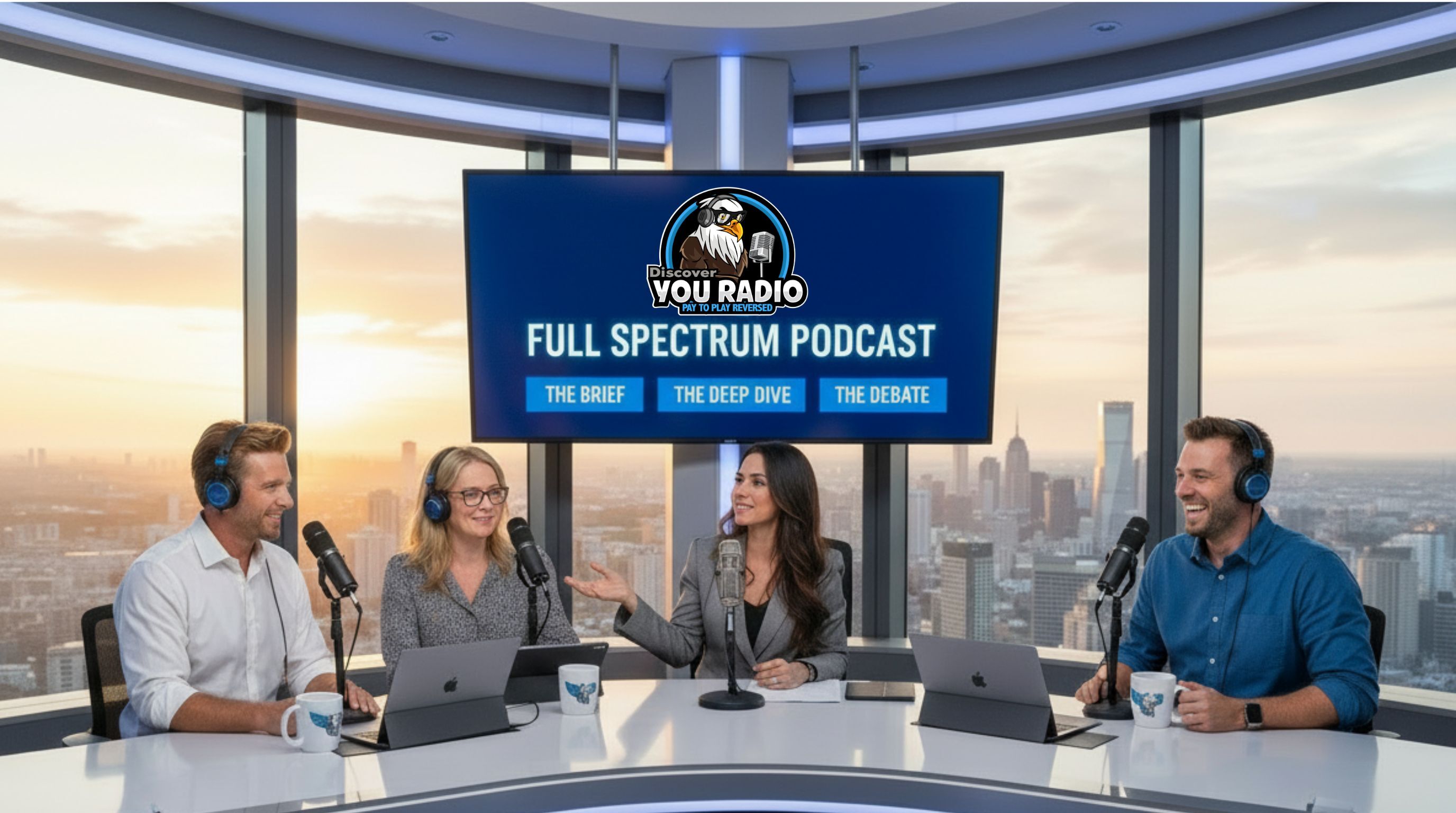
Episode 40C Discover YOU RADIO's Discussions The Debate hosted by Dakota Freeman and Lauren Miller featuring Author Brandon Eagle
from Discover YOU RADIO’s Discussions The Full Spectrum · host Will Stenner
The Service Drive Dilemma: Setting Professional Boundaries Imagine walking into a high-end restaurant, dropping a grocery bag full of raw chicken onto the kitchen counter, and asking the executive chef to cook it. You tell the chef that your friend already figured out the recipe, so you only want to pay for the use of the stove. Security would escort you out of the building before you could even finish your sentence. Yet, step into the world of automotive service, and this exact boundary completely evaporates. Customers regularly walk into dealerships with a cardboard box of unverified aftermarket parts bought online. They announce that their neighborhood mechanic already diagnosed the problem, and they just need the shop to install the pieces. This daily, high-stakes conflict at the service desk takes center stage in a recent episode of Discover YOU RADIO's The Debate, part of the Full Spectrum series. Hosts Dakota Freeman and Lauren Miller dive deep into this volatile scenario. They frame their intense discussion around the powerful insights detailed in Brandon Eagle's rapidly selling book, You: Guide to Customer Service (The Mirror Edition). The episode exposes the hidden mechanics of daily service interactions. It highlights the challenges of customer service in the automotive industry, the critical importance of diagnostic fees, and the precarious balance between customer satisfaction and professional boundaries. The Frontline Collision: Policy vs. Reality Dakota Freeman and Lauren Miller masterfully present two opposing sides of the service drive conflict. The dynamic perfectly captures the tension between management's structured policy and the tactical reality faced by frontline service advisors. From a management perspective, protecting the team is non-negotiable. Strict adherence to shop rules—like requiring a mandatory diagnostic fee and refusing to install unverified outside parts—is the only logical way to protect technicians. It shields the business from massive liability traps. As Eagle points out in his book, "Mechanics twist bolts and hope; technicians diagnose, verify, and document." On the other hand, standing behind a rigid policy sounds great from an office, but refusing service carries severe immediate costs on the floor. Service advisors face an immediate revenue loss for the day. They must also absorb the emotional toll of a confrontation and manage the customer's very real threat of destroying the business with a highly visible bad review. When an advisor enforces a rigid policy, they protect the shop's liability. However, they potentially sacrifice their own paycheck if a furious customer tanks their Customer Service Index (CSI) score out of spite. Understanding the Diagnostic Denier A core theme of the episode revolves around dealing with a specific customer archetype: the "diagnostic denier." These customers view diagnostic fees as a cover charge or a scam. To them, the intellectual heavy lifting is already done by their internet research or a backyard mechanic's guess. However, finding the root cause of a vehicle's issue involves far more than simply plugging in a scanner. For example, a customer might bring in a cheap aftermarket mass airflow sensor. They assume replacing it is a simple process of unplugging one wire and plugging in another. But modern vehicles operate on complex networks. If a cheap sensor misreports voltage by even a fraction, it can cause secondary systems, like a transmission, to fail. If a shop agrees to bolt on a cheap piece of plastic to save the customer a few dollars, they take on an enormous risk. When the car inevitably breaks down again, the customer rarely blames their cheap part. Instead, they blame the shop's installation. The Danger of Asymmetric Risk This brings the podcast to the concept of asymmetric risk. A customer bringing their own parts engages in an unauthorized risk transfer. They want to save fifty dollars on a component, but they expect to transfer thousands of dollars of reputational and legal liability onto the repair shop. Brandon Eagle's golden rule of the service drive makes this perfectly clear: "If we touch it, we own it." Installing a customer-supplied part is like co-signing a mortgage for a complete stranger. The shop gets absolutely none of the upside, as they make no margin on the part. Yet, the moment the cheap component fails, the customer holds the shop entirely accountable. Bypassing the diagnostic process and bolting on a mystery part forces the shop to abandon its expertise and assume unacceptable financial risks. The Comeback Cascade Many managers might feel tempted to cave to a screaming customer just to get them out of the showroom. They want to avoid a viral one-star review or a public tirade. However, appeasing these demands creates a much larger structural problem known as the "comeback cascade." If a technician installs a low-quality part on Tuesday and it fails on Thursday, the vehicle is towed back to the shop. Suddenly, the shop deals with a furious customer demanding a free rental car. A valuable service bay is tied up doing warranty work instead of generating new revenue. Furthermore, the technician is angry because they must work for free to fix a problem they did not even diagnose. The long-term brand impact and internal cultural damage of a comeback far exceed the immediate revenue gained from that single labor charge. You cannot run a facility that manages complex, high-liability machinery through appeasement. You cannot negotiate with physics, and you should never negotiate with someone carrying a trash bag full of internet parts. Emotional Intelligence and Professional Boundaries The debate ultimately zeroes in on a shared, necessary outcome: establishing strong professional boundaries. Refusing toxic revenue is not a sign of bad customer service. Instead, it is the ultimate display of professional responsibility and emotional intelligence. Service advisors desperately need professional workplace boundaries. They must learn how to hold the line without internalizing the verbal abuse from frustrated customers. The diagnostic fee serves as a vital structural filter. It weeds out the people who want to outsource their risk for free, leaving the shop with customers who respect the professional process. Management must back their advisors when they enforce these rules. If leadership caves just because someone is yelling in the showroom, they destroy the entire policy structure. They announce to every advisor on the floor that their boundaries mean nothing. They tell the technician that their diagnostic expertise is entirely optional if the customer is loud enough. Transforming Everyday Service Nightmares Dakota Freeman and Lauren Miller deliver a brilliant breakdown of the psychological warfare that takes place on the service drive every single day. Their discussion proves that you cannot build a healthy, profitable business by appeasing customers who demand you take on their liability for free. We must look at ourselves both as service providers setting boundaries and as consumers. Sometimes, we might occasionally demand the impossible without realizing the massive liability we are forcing onto someone else. If you want to dive deeper into these complex psychological dynamics and master the art of the service drive, you need the right resources. Brandon Eagle's book cuts right through the corporate fluff. It teaches you how to actually handle difficult customers, build a strong professional presence, and transform everyday service industry nightmares into empowered professional partnerships. Whether you are a seasoned service manager, a frontline advisor, or just someone fascinated by customer service mechanics, this book is an absolute must-read. Level up your customer service skills and professional confidence today. Secure your copy of You: Guide to Customer Service (The Mirror Edition) by Brandon Eagle right now by visiting: https://counterpointpublishing.com/brandon-eagle.
Embed this episode
What this episode covers
The Service Drive Dilemma: Setting Professional Boundaries Imagine walking into a high-end restaurant, dropping a grocery bag full of raw chicken onto the kitchen counter, and asking the executive chef to cook it. You tell the chef that your friend already figured out the recipe, so you only want to pay for the use of the stove. Security would escort you out of the building before you could even finish your sentence. Yet, step into the world of automotive service, and this exact boundary completely evaporates. Customers regularly walk into dealerships with a cardboard box of unverified aftermarket parts bought online. They announce that their neighborhood mechanic already diagnosed the problem, and they just need the shop to install the pieces. This daily, high-stakes conflict at the service desk takes center stage in a recent episode of Discover YOU RADIO's The Debate, part of the Full Spectrum series. Hosts Dakota Freeman and Lauren Miller dive deep into this volatile scenario. They frame their intense discussion around the powerful insights detailed in Brandon Eagle's rapidly selling book, You: Guide to Customer Service (The Mirror Edition). The episode exposes the hidden mechanics of daily service interactions. It highlights the challenges of customer service in the automotive industry, the critical importance of diagnostic fees, and the precarious balance between customer satisfaction and professional boundaries. The Frontline Collision: Policy vs. Reality Dakota Freeman and Lauren Miller masterfully present two opposing sides of the service drive conflict. The dynamic perfectly captures the tension between management's structured policy and the tactical reality faced by frontline service advisors. From a management perspective, protecting the team is non-negotiable. Strict adherence to shop rules—like requiring a mandatory diagnostic fee and refusing to install unverified outside parts—is the only logical way to protect technicians. It shields the business from massive liability traps. As Eagle points out in his book, "Mechanics twist bolts and hope; technicians diagnose, verify, and document." On the other hand, standing behind a rigid policy sounds great from an office, but refusing service carries severe immediate costs on the floor. Service advisors face an immediate revenue loss for the day. They must also absorb the emotional toll of a confrontation and manage the customer's very real threat of destroying the business with a highly visible bad review. When an advisor enforces a rigid policy, they protect the shop's liability. However, they potentially sacrifice their own paycheck if a furious customer tanks their Customer Service Index (CSI) score out of spite. Understanding the Diagnostic Denier A core theme of the episode revolves around dealing with a specific customer archetype: the "diagnostic denier." These customers view diagnostic fees as a cover charge or a scam. To them, the intellectual heavy lifting is already done by their internet research or a backyard mechanic's guess. However, finding the root cause of a vehicle's issue involves far more than simply plugging in a scanner. For example, a customer might bring in a cheap aftermarket mass airflow sensor. They assume replacing it is a simple process of unplugging one wire and plugging in another. But modern vehicles operate on complex networks. If a cheap sensor misreports voltage by even a fraction, it can cause secondary systems, like a transmission, to fail. If a shop agrees to bolt on a cheap piece of plastic to save the customer a few dollars, they take on an enormous risk. When the car inevitably breaks down again, the customer rarely blames their cheap part. Instead, they blame the shop's installation. The Danger of Asymmetric Risk This brings the podcast to the concept of asymmetric risk. A customer bringing their own parts engages in an unauthorized risk transfer. They want to save fifty dollars on a component, but they expect to tr
NOW PLAYING
Episode 40C Discover YOU RADIO's Discussions The Debate hosted by Dakota Freeman and Lauren Miller featuring Author Brandon Eagle
No transcript for this episode yet
Similar Episodes
No similar episodes found.
Similar Podcasts
No similar podcasts found.